 United StatesJFK
 MexicoMEX
 BrazilGRU
 ArgentinaEZE
 ChileSCL
 ColombiaBOG
 PeruLIM
 PanamaPTY
 Costa RicaSJO
 Dominican RepublicPUJ
 JamaicaMBJ
 BahamasNAS
 BarbadosBGI
 United KingdomLHR
 IrelandDUB
 FranceCDG
 GermanyFRA
 NetherlandsAMS
 BelgiumBRU
 SwitzerlandZRH
 AustriaVIE
 ItalyFCO
 SpainMAD
 PortugalLIS
 GreeceATH
 TurkeyIST
 DenmarkCPH
 SwedenARN
 NorwayOSL
 FinlandHEL
 PolandWAW
 Czech RepublicPRG
 HungaryBUD
 IcelandKEF
 United Arab EmiratesDXB
 QatarDOH
 Saudi ArabiaRUH
 IsraelTLV
 EgyptCAI
 MoroccoCMN
 South AfricaJNB
 KenyaNBO
 NigeriaLOS
 IndiaDEL
 PakistanLHE
 Sri LankaCMB
 SingaporeSIN
 MalaysiaKUL
 ThailandBKK
 VietnamSGN
 PhilippinesMNL
 IndonesiaCGK
 Hong KongHKG
 ChinaPVG
 TaiwanTPE
 JapanHND
 South KoreaICN
 AustraliaSYD
 New ZealandAKL
The Auschwitz-Birkenau Memorial and Museum preserves the site of the largest Nazi German concentration and extermination camp, in the Polish town of Oświęcim. UNESCO inscribed it on the World Heritage List in 1979. It is a place of remembrance for the more than one million people murdered there, most of them Jews, and it is run as a memorial and museum, not as an attraction.
That sets the standard for this guide. The logistics are straightforward, but the visit asks for preparation, time and respect. A driver cannot make it easier emotionally; a driver can make sure the practical parts, the pass, the timing and the journey, do not intrude.
How do you actually get in?
Entry to Auschwitz I and Birkenau requires a personalized entry pass, and the number is limited. Passes are reserved online only; none are available at the entrance. Book early, choose either a guided tour or an independent visit slot, and arrive at least 30 minutes before your start time.
According to the Memorial's visiting pages, access to the grounds is free of charge, but groups must hire a guide-educator, and individual visitors choose between touring independently within certain time bands or joining a guided tour. Demand is high. The Memorial advises reserving guides at least two months before a planned visit; online guide bookings close five days before the visit, and phone bookings are taken two to five days before. Check the current rules on the booking site, since they change.
The Memorial is open every day except 1 January, 25 December and Easter Sunday. Entry hours run from 7:30 in the morning to 14:00 in December and as late as 19:00 from June to August, and visitors may remain for 90 minutes after the last entry hour. Because passes are personalized, enter names as they appear on your passport.
A note on how to approach the visit
The Memorial asks visitors to behave with solemnity and to dress appropriately, and that is more than a formality. This is a cemetery in all but name. Speak quietly, avoid eating or drinking inside the exhibition spaces, keep your phone away and photograph only where permitted. Follow the visitor regulations on photography, because rules differ between spaces.
The Memorial does not recommend a visit for children under 14, and offers online guided tours, with their own recommended minimum age, for those who cannot travel. If you are traveling with a teenager, read the Memorial's educational material together beforehand. Even well-prepared adults find the experience heavy. Give yourself an easy evening afterward rather than a packed dinner reservation.
How far is Auschwitz from Kraków, and what does the road look like?
The Memorial is about 70 km (43 miles) west of Kraków's Old Town. By car it takes roughly 1 hour to 1 hour 20 minutes using the motorway and the final local road into Oświęcim; weekday traffic on the way out of Kraków is the main variable. The Memorial's own page lists the nearest airports as Kraków-Balice and Katowice-Pyrzowice, each within about 50 km of Oświęcim.
The Visitor Services Center and the free car park are at Więźniów Oświęcimia 55, in Oświęcim; the Memorial suggests entering that street from Legionów Street. A paid municipal car park serves the Birkenau site. The page does not describe a drop-off lane, so the chauffeur parks in the free lot and waits there while you tour, which is exactly why a driver is useful: you do not carry a bag around the grounds.
Our guide to Kraków's Old Town covers the starting point, and the airport transfer hub explains how flight tracking and waiting time work if you are arriving in Poland the same morning.
Bags, security and what you can bring
Allow at least 30 minutes for the security check at the start. Backpacks and handbags may not exceed 35 by 25 by 15 centimeters; larger luggage must be left in the vehicle or on the bus. The free car park has luggage lockers, but with a private car the simplest solution is to leave everything except a small bag in the vehicle with the driver.
Pack for the weather, since much of the visit is outdoors and the distances at Birkenau are considerable. The Memorial states that you must cover more than 2,000 meters on a tour of Birkenau. Wear comfortable shoes, bring water and carry a light waterproof layer. Be prepared for cold winds across the flat site in winter and for heat with little shade in summer.
Parts of the Memorial and exhibitions are periodically closed for conservation. The visiting page lists the current closures, including sections of Birkenau and certain exhibition blocks. Read it before you travel and again a few days before your visit.
The structure of the visit: Auschwitz I and Birkenau
The standard guided tour lasts about three and a half hours. The Memorial suggests allowing at least 90 minutes each for Auschwitz I and Auschwitz II-Birkenau. The two sites are roughly 3.5 km (2 miles) apart. A free museum shuttle connects them, and the vehicle has a wheelchair platform, though the rules about who may use it are specific to the type of visit, so confirm with the Memorial.
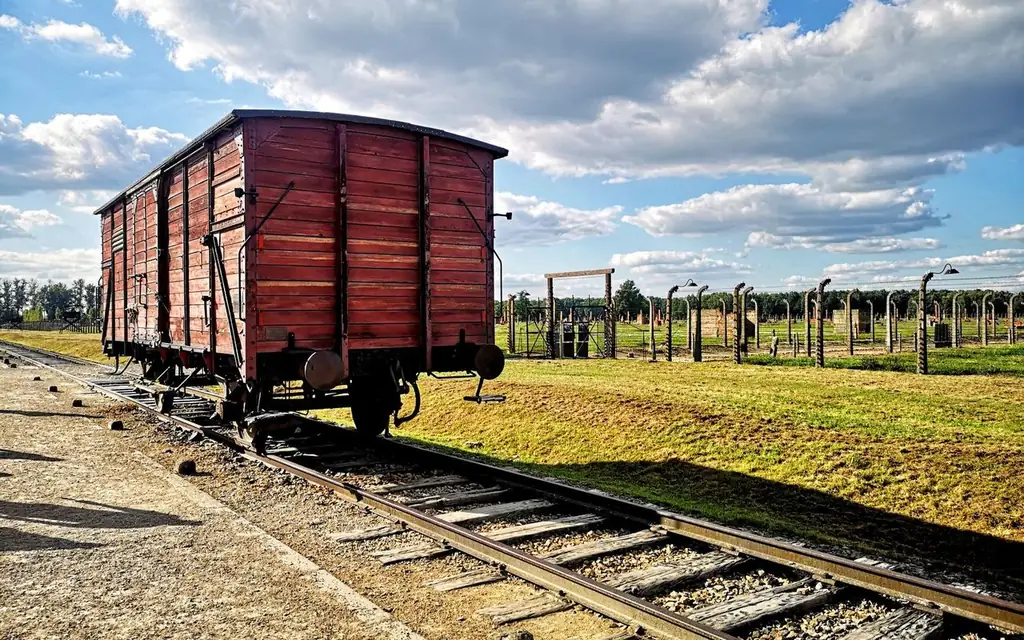
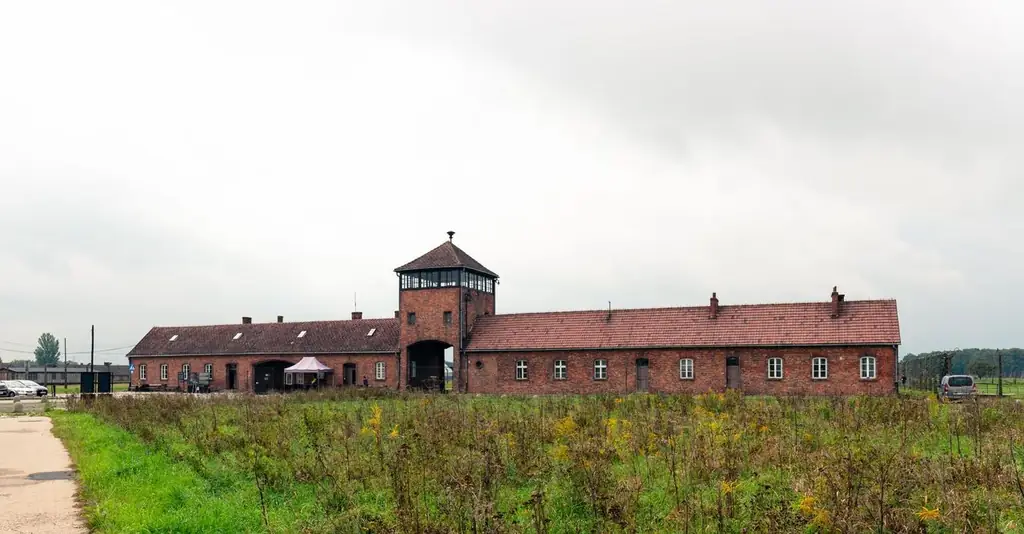
Auschwitz I was the original camp and now holds the main exhibitions, in the former brick blocks. Birkenau, the much larger second camp, is where most of the killing took place; its scale is hard to take in from a car, and a walk along the railway ramp and the preserved structures tells the story more directly than any description. Guides are professional educators, and independent visitors can read the exhibition texts at their own pace.
What you are about to see: a brief orientation
It helps to arrive with a basic outline in mind. Auschwitz I began as a camp built by Nazi Germany in occupied Poland in 1940 and later became the administrative center of a vast complex. Birkenau, the second camp, was built nearby and became the main site of mass murder. UNESCO's description of the property speaks of the annihilation of over one million people, the great majority of them Jews, alongside Polish and other prisoners. The surviving buildings, ramps, barracks and ruins are the evidence, and the preservation of that evidence is why the site is a memorial and a museum.
Reading a short history before you travel changes the day. You will understand the sequence of the exhibitions, the meaning of the railway ramp and the reason guides ask for silence in certain places. The Memorial publishes educational material and recommended reading on its website, and the tour guides are trained educators who answer questions directly. Ask what you want to know; they would rather you did.
Before and after: Kraków, Kazimierz and the evening
Many visitors stay in Kraków and make the Memorial a single, long day. If you have time, spend the afternoon before in Kazimierz, the old Jewish quarter, where the synagogues and small museums give context for what you will see the next day. Our guide to Kraków's Old Town explains the restricted traffic zones there, and the attractions hub lists other European guides in the same series.
After the visit, plan something quiet. A long lunch, a walk by the river or an early night are all reasonable choices. Do not feel obliged to continue sightseeing. Our drivers are used to guests who say little on the road back, and will keep the car quiet unless you speak first. If you have questions about the day, our FAQ covers the booking terms.
Tickets, guides and when to go
The Memorial states that grounds admission is free and that a guide is a paid service for individuals who choose it. An independent visit is possible at certain times of day, and a guided tour is generally the better route if you want context. Book whichever you choose well before your travel date, since popular times sell out.
Spring and autumn offer comfortable temperatures and shorter queues. Summer is the busiest period and the heaviest with heat, while winter is quiet and cold. For many visitors the first slot of the day is the calmest.
Whatever the season, leave a little unscheduled time at each end of the day. Arriving without hurry lets you use the facilities, settle your thoughts and walk to the security check calmly, and an unhurried return leaves room for silence in the car. Our drivers do not fill that silence unless you wish to talk, and the desk can keep the car on standby if your party finishes earlier than planned or wants a longer pause before the road back to Kraków.
If you book a guided tour, tell the driver the start time and the meeting point; the chauffeur then works backward from the 30-minute arrival buffer. From Kraków, a 9:30 tour usually means a 7:45 departure.
A realistic day from Kraków
- 07:45 Depart from your hotel.
- 09:00 Arrive at the free car park, use the facilities and go through security.
- 09:30 Start of your guided tour at Auschwitz I.
- 11:30 Move to Birkenau, by shuttle or on the Memorial's route.
- 13:00 Finish. Spend a few minutes in quiet, then return to the car.
- 14:30 Drive back to Kraków. A quiet lunch near the Old Town is better than a late afternoon of sightseeing.

We do not recommend adding another major sight the same day. The Wieliczka Salt Mine, a short drive from Kraków, makes a fine attraction for the following morning, but not an afternoon follow-up to Auschwitz.
Ways to reach the Memorial compared
| Option | Time from Kraków | Cost note | Best for |
|---|---|---|---|
| Direct bus (Lajkonik) to the Museum car park | Check the timetable | Lowest | Independent travelers on a tight budget |
| Train to Oświęcim, then local bus or walk (about 1,500 m) | Check the timetable | Low | Rail travelers comfortable with connections |
| Organised tour coach | Fixed schedule; check the operator | Per-seat price | First-time visitors who want a packaged day |
| Rental car | 1 to 1 h 20 | Fuel, parking | Confident drivers on a free schedule |
| Private chauffeur | 1 to 1 h 20 | Fixed fare via the booker | Families, small groups, mobility needs, precise timing |
The direct bus from Kraków to the Museum car park is the least expensive and a perfectly good option for a solo visitor who has booked a pass. A chauffeur earns its place when you have a fixed entry time, limited mobility, a group or a tight onward schedule, and when you want to avoid managing bags and timetables on an emotionally heavy day.
Accessibility on the day
The Memorial publishes a page for visitors with mobility difficulties. Read it when you book, and let us know your needs so the driver can plan the closest approach and the wait. The shuttle between the two sites has a wheelchair platform, and distances at Birkenau are long. A shorter, more selective visit can be as meaningful as a long one, and it is worth telling your guide at the start if anyone in the group needs to rest or avoid long stretches on foot. Ask the Memorial in advance about seating and rest points rather than assuming they exist along the route, and tell the desk if you want the driver on standby for an early finish.
Booking a private driver for the Memorial
The transport, and only the transport, is what we provide. A vetted, licensed and commercially insured Polish chauffeur operator from our worldwide directory drives; our 24/7 desk books, confirms and invoices the trip. The driver does not guide the tour and cannot take the place of the Memorial's educators. Most guests choose a Mercedes-Benz E-Class or S-Class, a V-Class or Luxury SUV for a family, or a Sprinter for a group. Our private tours with driver page explains how the day is arranged, and the European directory shows the region.
Official sources worth bookmarking
- Visiting the Memorial for entry passes, hours, bag limits and parking.
- Getting to the Museum for the car park address and bus links.
- Reservations and passes for booking.
- Visitors with mobility difficulties for accessibility.
- UNESCO: Auschwitz Birkenau for the World Heritage record.
Frequently asked questions
How far is Auschwitz from Kraków?
About 70 km (43 miles), roughly 1 hour to 1 hour 20 minutes by car.
Do I need to book Auschwitz tickets in advance?
Yes. A personalized entry pass is required and the number is limited. They are reserved online only; none are sold at the entrance.
Is it free to enter Auschwitz?
Admission to the grounds is free, but the guide-educators are a paid service, and groups must engage one. Check the booking site for the current rules.
How long does a visit take?
A standard guided tour lasts about three and a half hours. Allow at least 90 minutes each for Auschwitz I and Birkenau.
Can I bring a bag?
Small bags only: no larger than 35 by 25 by 15 centimeters. Larger luggage stays in the vehicle.
Is Auschwitz suitable for children?
The Memorial does not recommend visits for children under 14.
Where does the car park?
In the free Memorial car park at Więźniów Oświęcimia 55 in Oświęcim, where the chauffeur waits while you visit.
Can I combine Auschwitz and Wieliczka in one day?
It is possible but we do not recommend it. The two sites have very different moods, and Auschwitz deserves a quiet afternoon afterward.
What should I wear to Auschwitz-Birkenau?
The Memorial asks visitors to dress appropriately and to behave with solemnity. In practice that means modest, weather-ready clothing, comfortable shoes for the long distances at Birkenau and a waterproof layer, since much of the visit is outdoors.