
 United StatesJFK
 MexicoMEX
 BrazilGRU
 ArgentinaEZE
 ChileSCL
 ColombiaBOG
 PeruLIM
 PanamaPTY
 Costa RicaSJO
 Dominican RepublicPUJ
 JamaicaMBJ
 BahamasNAS
 BarbadosBGI
 United KingdomLHR
 IrelandDUB
 FranceCDG
 GermanyFRA
 NetherlandsAMS
 BelgiumBRU
 SwitzerlandZRH
 AustriaVIE
 ItalyFCO
 SpainMAD
 PortugalLIS
 GreeceATH
 TurkeyIST
 DenmarkCPH
 SwedenARN
 NorwayOSL
 FinlandHEL
 PolandWAW
 Czech RepublicPRG
 HungaryBUD
 IcelandKEF
 United Arab EmiratesDXB
 QatarDOH
 Saudi ArabiaRUH
 IsraelTLV
 EgyptCAI
 MoroccoCMN
 South AfricaJNB
 KenyaNBO
 NigeriaLOS
 IndiaDEL
 PakistanLHE
 Sri LankaCMB
 SingaporeSIN
 MalaysiaKUL
 ThailandBKK
 VietnamSGN
 PhilippinesMNL
 IndonesiaCGK
 Hong KongHKG
 ChinaPVG
 TaiwanTPE
 JapanHND
 South KoreaICN
 AustraliaSYD
 New ZealandAKL
The first thing most visitors notice at Giza is not the Great Pyramid. It is the traffic on the way to it. The plateau sits on the western edge of the Cairo conurbation, and the last few kilometers are a tangle of ring-road ramps, tour buses and minibuses all converging on the same gates. A pyramids of Giza private tour with driver takes that tangle off your hands: someone who knows which ramp, which gate and which hour is handling the approach, while you plan what to look at.
This guide explains how to get to the pyramids of Giza by car in the arrangement that has been put in place since 2025, what to book ahead, and how to build a half day or full day around the monuments. When you want a fixed fare for your hotel and your hours, reserve your chauffeur and the booker prices the exact route before you confirm.
Can a private car drive up to the Pyramids of Giza now?
No. Reports since April 2025 describe a new gate on the Fayoum Highway side and a ban on private vehicles and tour buses on the plateau itself. Your chauffeur stops at the gate parking area, and visitors continue on foot or by the on-site electric buses. Confirm current rules before you travel.
The change was covered by Euronews in April 2025, which reported that the new access point replaces the historic entrance near the Marriott Mena House, that horse and camel operators were being relocated, and that 45 electric buses were running every five minutes. Tour-operator accounts since then describe a visitor centre at the new gate with ticket machines and a shuttle loop to viewpoints. Details of this kind move quickly, and the Ministry of Tourism and Antiquities site, egymonuments.gov.eg, is the place to check what applies on your date.
What it means in practice: do not plan on a driver delivering you to the foot of the Great Pyramid. Plan on a drop-off at the gate, a short wait for the shuttle or a walk, and a pickup at the same place when you are done.
A Pyramids of Giza private tour with driver: the shape of a good day
Most visitors want three things at Giza: the three main pyramids up close, a proper look at the Sphinx, and a vantage point for the whole line-up. A chauffeured half day covers it in this order:
- Hotel pickup in Cairo, timed so you reach the gate before the tour-bus wave.
- Gate and ticket stage. The first twenty to thirty minutes go on tickets, the visitor centre and boarding.
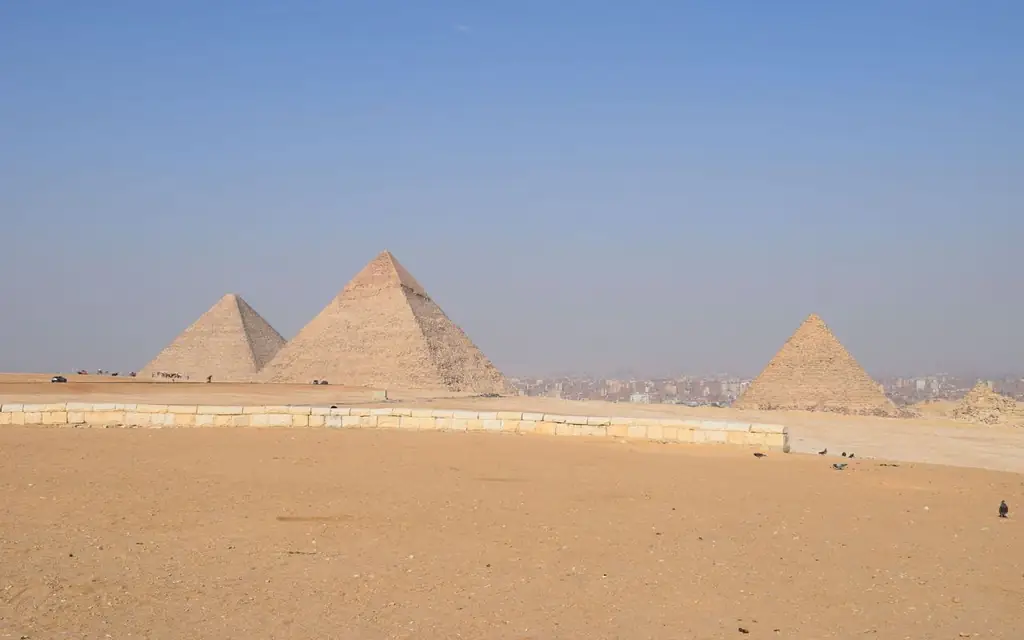
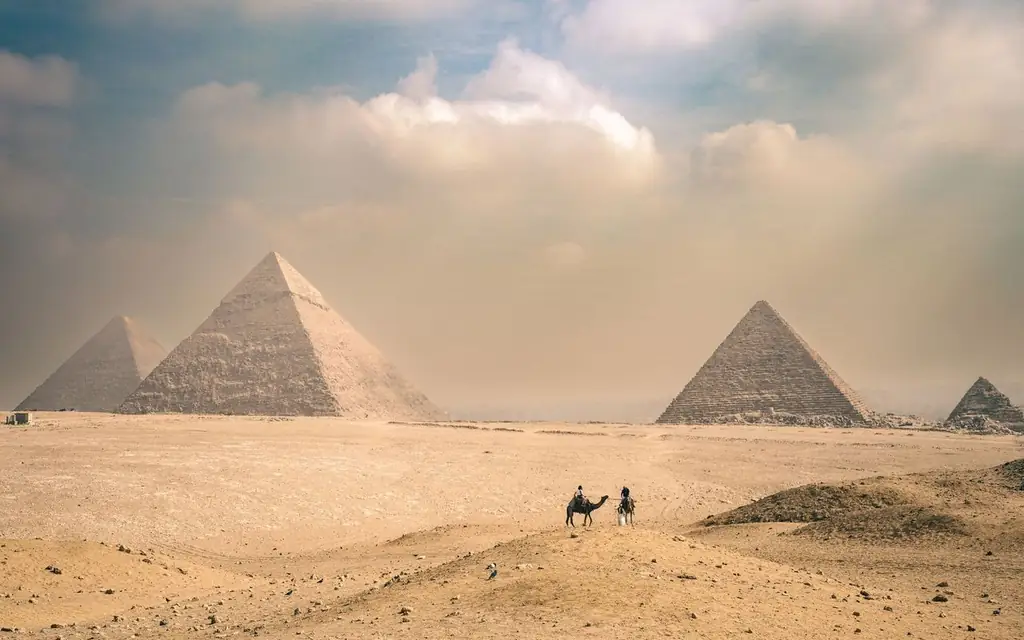
- Panoramic viewpoint. Reports describe a viewpoint on the plateau where the three pyramids line up together. This is the picture most people came for.
- Khufu, Khafre and Menkaure. The Great Pyramid is the largest; Khafre looks taller from some angles because it stands on higher ground.
- The Sphinx. Treat it as its own stop. Give it unhurried time.
- Rest, water and the way out. Return to your chauffeur at the agreed time.
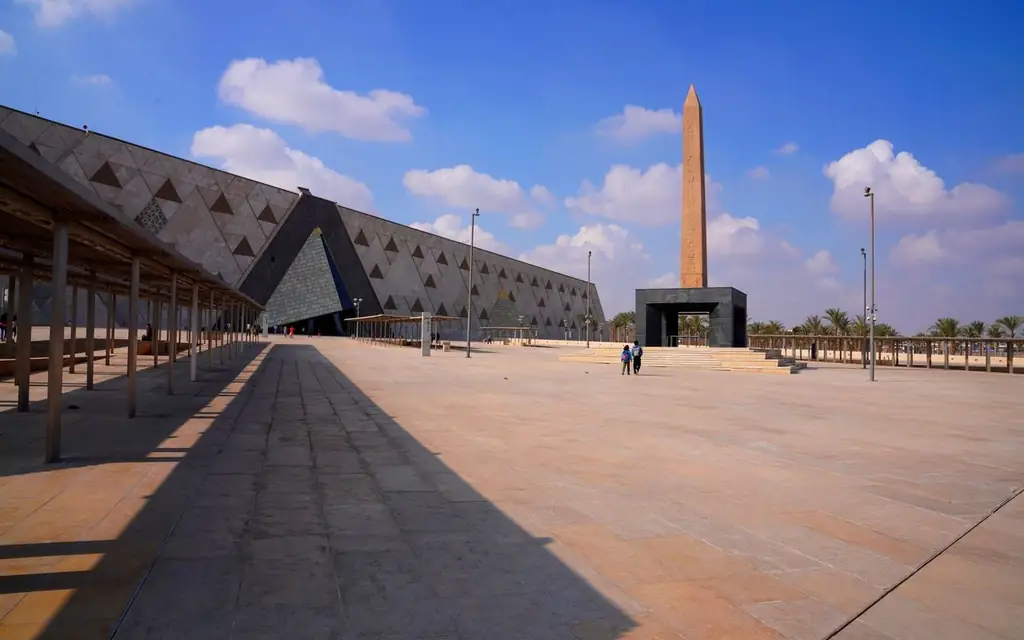
Then you can choose: back to the hotel, or on to the Grand Egyptian Museum about 2 km away, which we cover in our GEM guide.
From Cairo, the airport and your hotel: distances and traffic
Giza is not far, but it is rarely quick.
- Downtown Cairo to the pyramids: about 20-25 km (12-16 miles), from 30 minutes on a quiet morning to over an hour at peak.
- Giza and Zamalek hotels: often 20 to 40 minutes, depending on the bridge and the ring road.
- Cairo International Airport (CAI) to the plateau: about 55-65 km (34-40 miles), usually 60 to 90 minutes. Allow longer for a late-afternoon arrival.
- Grand Egyptian Museum to the gate: roughly 2 km (1.2 miles), a few minutes by car.
Egypt's weekend falls on Friday and Saturday, when roads are lighter but local families fill the monuments. Expect the heaviest weekday traffic in the early morning and again from mid-afternoon. A driver who does the run daily will take the ring road or the Giza side streets depending on how they look that morning. If you are flying in, our airports hub shows the terminals we cover, and the desk will confirm your meeting point.
Tickets, interiors and what the gate sells
Three layers of ticketing apply, and they are easy to confuse.
- General plateau admission covers walking up to the pyramids and the Sphinx area from outside.
- Interiors are separate. Entry into the Great Pyramid, the Pyramid of Khafre and the smaller pyramids is a separate ticket, and the Khufu interior is reported to be capped at a small daily number of visitors. Do not expect the Great Pyramid's interior to be available at short notice in high season.
- Museum entry is entirely separate. The Grand Egyptian Museum is ticketed online in advance through its own platform.
Current fees are published by the Ministry and change; we do not print them. Reports describe self-service ticket machines at the visitor centre taking cash and cards, so carry both. If the interior of the Great Pyramid matters to you, buy that ticket early and ask us to time your pickup to it. A narrow passage and a steep ascent make it unsuitable for anyone with claustrophobia or mobility problems; the exterior view costs nothing extra to enjoy.
Dawn, midday or dusk: choosing your hours
Published opening hours are inconsistent across sources and shift in Ramadan, so rely on the ministry listing for your date. What does not shift is the sun.
- First hour after opening. Cooler air, long shadows, far fewer buses. Best for photographs and for the interior.
- Late morning to early afternoon. Hot and crowded. If you must be there, spend it in the shade or at lunch.
- Last hour before closing. Softer light and falling numbers, but a tight margin for the shuttle and the exit.
- Evening. There is a night sound-and-light presentation at the Sphinx. Check the official schedule and ticketing, since it has run on and off and in different languages.
For most visitors, a morning arrival with lunch back in town is the best-balanced day.
Camels, horses and the kind of help worth accepting
Reports describe licensed camel and horse handlers working in designated zones and street vendors and unofficial guides moved to commercial areas away from the monuments. If you want a ride, agree the duration and the price before you mount and again before you dismount. A calm refusal is enough for most approaches. A licensed guide is worth hiring if you want the history; your chauffeur drives and can suggest stops, but a guide is a separate professional and should hold current accreditation.
Reading the plateau in two minutes
The three main pyramids belong to a father, son and grandson of the Fourth Dynasty: Khufu, Khafre and Menkaure. UNESCO lists the Giza plateau within "Memphis and its Necropolis: the Pyramid Fields from Giza to Dahshur," inscribed in 1979 under criteria (i), (iii) and (vi). The Great Pyramid of Khufu is the only one of the ancient world's seven wonders still standing, according to the UNESCO listing. The Great Sphinx guards the eastern approach. See the UNESCO listing for the full context, and hold on to the idea that the plateau is part of a much longer chain of pyramid fields stretching south.
Mobility, heat and what to carry
The plateau is sand, limestone and uneven paths, and the walking distances are longer than they look from a photograph. Tour-operator accounts describe a fully accessible visitor centre with ramps, and the on-site shuttle removes most of the long walks, which helps visitors with limited mobility, older travelers and families with young children. Tell the desk at booking if anyone needs step-free access or frequent rests, so the pickup time and the plan allow for it. The interior of the Great Pyramid is a different matter: a low, steep ascending passage with no alternative route, and it is not suitable for everyone.
What to carry:
- Closed shoes. The ground is dusty, uneven and in places sandy.
- A hat, sunglasses and sun cream. Shade is scarce away from the monuments.
- Water, which your chauffeur can hold in the car; carry a bottle for the walking stage.
- Modest, breathable clothing and a light scarf for sun and dust.
- A small bag only. At the Grand Egyptian Museum, bags larger than 40 x 40 cm go to the cloakroom.
- Cash in small notes for tips and ride fees. Add a power bank, since the day involves a lot of photographs and ticket QR codes.
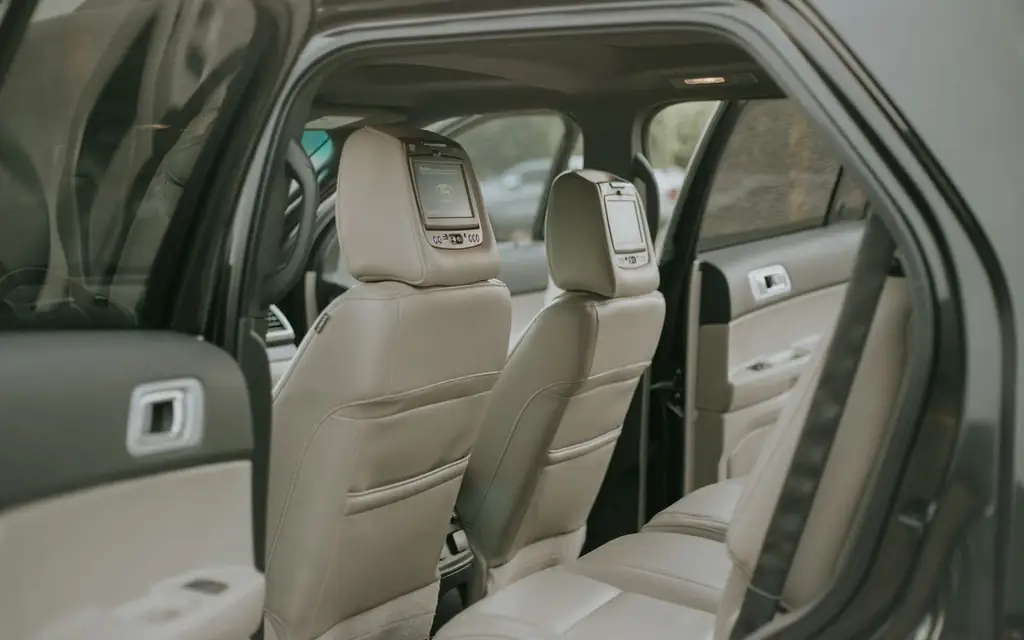
While you are on the plateau, the chauffeur stays with the vehicle at the gate parking area, so anything you do not need on foot can wait in the car: spare jackets, morning purchases and, on a departure day, your luggage. That makes it practical to finish the pyramids and be driven straight to the airport without a stop at the hotel. Send a message when you board the shuttle back toward the gate and the car will be at the agreed meeting point when you arrive.
A full day with the museum, timed around the sun
If you are in Cairo for a single day, this sequence works well:
- 7:30 a.m. Hotel pickup, driving west against the heaviest inbound flow.
- 8:30 a.m. At the gate and through ticketing before the group tours arrive.
- 8:45 a.m. to noon. The plateau on foot and by shuttle.
- Noon. Lunch in a shaded restaurant near the plateau, or back at the hotel.
- 2:00 p.m. Drive to the Grand Egyptian Museum for a timed entry slot, about 2 km (1.2 miles) away.
- Late afternoon. Return to Cairo, about 25 km (16 miles), allowing at least an hour for the evening ring-road traffic.
Reverse it if you prefer to see the museum while it is cool and quiet, and keep the plateau for the golden hour. Your chauffeur holds the car, the water and the schedule.
Ways to reach the pyramids compared
| Mode | Time from central Cairo | Cost feel | Who it suits |
|---|---|---|---|
| Private chauffeur | 30-60+ minutes | Fixed fare via the booker, quoted before you book | Door-to-door timing, families, late flights |
| Metro plus taxi | 45-75 minutes | Lowest | Budget travelers who accept a transfer at the end |
| Metered taxi or app car | 30-60+ minutes | Variable; agree the fare or use the meter | Short, flexible trips |
| Escorted coach tour | Half or full day | Priced per head | Travelers who like a guide and a schedule |
| Hotel shuttle | Varies | Often included or fixed | Guests at Giza hotels |
If cost is your first concern, the metro plus a short taxi ride is the lower-cost route, and for a single-site visit it is fine. A chauffeur is the better choice when you are combining the pyramids with the museum in one day, carrying luggage between the airport and your hotel, or traveling in a group.
Extending the day: Grand Egyptian Museum, Saqqara and Luxor
- Grand Egyptian Museum. About 2 km (1.2 miles) from the plateau. Book a timed slot on the official ticketing platform and allow up to four hours; see our Grand Egyptian Museum guide.
- Saqqara and Memphis. Roughly 30 km (19 miles) south, about 45 to 60 minutes. These are part of the same UNESCO property.
- Luxor. A different day entirely, reached by a short domestic flight; our Valley of the Kings guide covers the West Bank.
For wider routes, see the Africa chauffeur directory and our notes on private tours with a driver.
Reserve a chauffeur for Giza
Tell the desk your hotel, your preferred hours and whether the Grand Egyptian Museum is on the program. A local operator from our directory, vetted, licensed and commercially insured, takes the booking, and our 24/7 desk confirms it and invoices it once. The desk is staffed day and night, which helps when a flight lands at 3 a.m. and your driver must be at arrivals. Seats for children are available on request, and the fleet page shows the Executive Sedan, Luxury SUV and Executive Sprinter classes.
Frequently asked questions
How far are the Pyramids of Giza from Cairo?
About 20-25 km (12-16 miles) from downtown Cairo, which can take anything from 30 minutes to over an hour depending on traffic.
How far are the pyramids from Cairo airport?
About 55-65 km (34-40 miles), typically 60 to 90 minutes by road.
Can my driver take me to the base of the Great Pyramid?
No. Reports describe private vehicles barred from the plateau, with a gate parking area and on-site electric buses. Check the Ministry of Tourism and Antiquities for the current rule.
Do I need to book tickets in advance?
Plateau admission is sold at the visitor centre, per reports. Interior entry and the Grand Egyptian Museum should be planned ahead, since both have capacity limits.
How long should I spend at the pyramids?
Allow three to four hours for the plateau, plus extra if you enter an interior.
What is the best time to visit the Pyramids of Giza?
Early morning, just after opening, for cooler air and fewer buses. Friday is the busiest day for local visitors.
Is it worth hiring a licensed guide?
Yes if you want context. Your chauffeur drives and can suggest stops, but a licensed guide is a separate professional.
Can I combine the pyramids and the Grand Egyptian Museum?
Yes. The museum is about 2 km away, and the two fit into one long day with a timed museum slot booked in advance.