 United StatesJFK
 MexicoMEX
 BrazilGRU
 ArgentinaEZE
 ChileSCL
 ColombiaBOG
 PeruLIM
 PanamaPTY
 Costa RicaSJO
 Dominican RepublicPUJ
 JamaicaMBJ
 BahamasNAS
 BarbadosBGI
 United KingdomLHR
 IrelandDUB
 FranceCDG
 GermanyFRA
 NetherlandsAMS
 BelgiumBRU
 SwitzerlandZRH
 AustriaVIE
 ItalyFCO
 SpainMAD
 PortugalLIS
 GreeceATH
 TurkeyIST
 DenmarkCPH
 SwedenARN
 NorwayOSL
 FinlandHEL
 PolandWAW
 Czech RepublicPRG
 HungaryBUD
 IcelandKEF
 United Arab EmiratesDXB
 QatarDOH
 Saudi ArabiaRUH
 IsraelTLV
 EgyptCAI
 MoroccoCMN
 South AfricaJNB
 KenyaNBO
 NigeriaLOS
 IndiaDEL
 PakistanLHE
 Sri LankaCMB
 SingaporeSIN
 MalaysiaKUL
 ThailandBKK
 VietnamSGN
 PhilippinesMNL
 IndonesiaCGK
 Hong KongHKG
 ChinaPVG
 TaiwanTPE
 JapanHND
 South KoreaICN
 AustraliaSYD
 New ZealandAKL
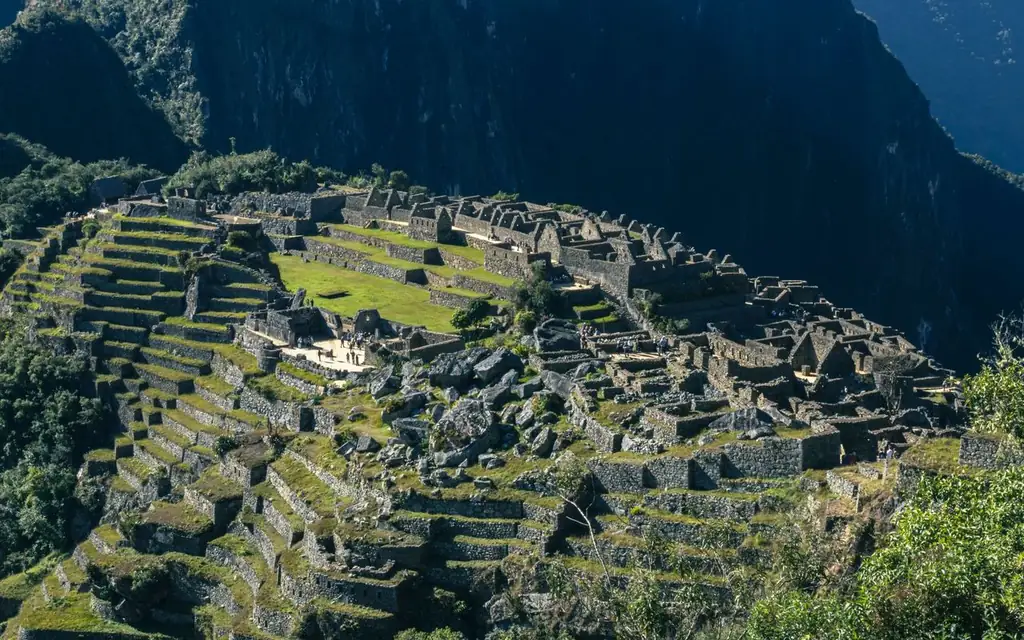
The first thing to understand about Machu Picchu is that it is not a place you drive to. The road network of the Cusco Region ends well short of the citadel, and the last stretch is covered by rail, then by a shuttle bus up a switchback road, then on foot. Any itinerary that promises a car at the gate is selling something that does not exist.
That does not make a Machu Picchu private tour with driver a poor idea. It makes it a logistics problem with a clear solution: a chauffeur handles every kilometer that happens on a road, and you step onto the right train at the right platform with your documents in order. This guide covers how to get to Machu Picchu by car as far as a car can go, what the Ministry of Culture requires at the gate in 2026, and where a private driver earns their place in the day.
Can you really get to Machu Picchu by car?
No. Cars cannot reach the ruins. A private driver takes you from Cusco to Ollantaytambo (about 60 km, 37 mi, 1.5 to 2 hours) or to Poroy, you ride the train to Aguas Calientes, then take the shuttle bus up to the entrance. The citadel itself is reached on foot.
Aguas Calientes, which PeruRail also calls Machu Picchu Pueblo, is the railhead and the base for the site. The highway from the west stops at the Hidroeléctrica station, roughly 10 km (6 mi) from the town, where travelers continue along the railway on foot or by train.
So the real question is where your car hands you over. There are three practical answers: the Ollantaytambo station in the Sacred Valley, the Poroy station on the edge of Cusco, or Hidroeléctrica by the long road route. Each is covered below.
The chauffeured leg: Cusco to the Ollantaytambo platform
Most visitors who care about time start in Ollantaytambo. The town sits about 60 km (37 mi) northwest of Cusco, and a private transfer typically takes 1.5 to 2 hours depending on traffic through the villages and on how many stops you make. The road crosses the high plateau, drops through Chinchero into the Urubamba valley and enters Ollantaytambo along a narrow main street.
Inca Rail describes Ollantaytambo as its more popular departure point, with more frequent schedules than the Cusco stations. A chauffeur matters here for two reasons. The station sits at the edge of a pedestrian-heavy old town, and a driver who knows the approach saves you from dragging luggage over cobbles. And a morning train is a hard appointment, so a driver already waiting at the hotel door removes the most common cause of missing it.
For a morning departure, a Cusco pickup between 4:30 and 6:00 a.m. is normal. Our desk confirms the pickup time against your train time, not the other way around. If you want to break the drive, the Sacred Valley lies directly on the route, and the guide to the Sacred Valley of the Incas shows which stops suit a morning and which belong to another day.
The Poroy option and the bimodal service
Poroy station lies on the edge of Cusco, between 9 and 13 km (6 to 8 mi) from the center, a transfer of roughly 20 to 40 minutes. PeruRail gives about 3 hours 30 minutes from Poroy to Machu Picchu by train, against about 1 hour 45 minutes from Ollantaytambo. The extra time buys a departure from the city.
PeruRail also runs a bimodal service from Cusco, a bus for the first leg and a transfer to the train at Pachar station, and Inca Rail runs a similar bus-plus-train arrangement. Both operators publish luggage allowances, and oversized bags are a recurring surprise at the platform. Large cases normally stay in Cusco or with the hotel in Aguas Calientes, which the pickup plan can allow for.
From the station to the gate: Aguas Calientes and the shuttle bus
The train arrives in a small town packed into a gorge at roughly 2,040 m (6,700 ft). Shuttle buses leave from a stop in town and take about 25 minutes up the zigzag road, and the queue is the only unpredictable part of the day. Inca Rail's own advice is that morning trains suit same-day visits and afternoon trains suit an overnight stay.
Many travelers sleep in Aguas Calientes the night before so that the first bus and the first entry window are minutes away. For a single day, the order is a pre-dawn drive, the train, the bus, your entry window, two or three hours inside, the bus down, a late train and the road back in the dark.
Tickets, circuits and entry windows in 2026
Entry is controlled by Peru's Ministry of Culture, and tickets are sold through its portal, tuboleto.cultura.pe. Andina, the state news agency, reports these 2026 rules:
- A daily cap of 4,500 visitors on most days and 5,600 on high-season days, including January 1, April 2 to 5, June 19 to November 2 and December 30 and 31.
- Three circuits, Panoramic, Classic and Royalty, each combining specific routes. The Inka Bridge and Huchuy Picchu routes operate only in high season.
- Separately priced mountain routes: Montaña Machu Picchu, Huayna Picchu and the Great Cavern Trail.
- Standard-circuit general admission at S/ 64 as of 2026, with lower fares for students and minors.
You present a passport, national ID or foreign resident card at the gate. Buy the ticket first and book trains around it, because the ticket fixes the day, and rail seats sell out on the same dates. Reports differ on the hourly windows and the grace period after the printed time, so rely on your own ticket.
The Andina summary does not state the entry time windows or whether a licensed guide is required. Check both on the official portal before you buy.
A licensed local guide is a separate professional from your chauffeur. The driver gets you to the platform and back, and a guide, if you want one, explains the terraces, the Temple of the Sun and the Intihuatana stone.
The long road alternative through Hidroeléctrica
A vehicle can take the long mountain route through the Santa María and Santa Teresa area to Hidroeléctrica, the end of the road. From there travelers follow the railway toward Aguas Calientes, a walk of roughly 10 km (6 mi), or take a train from the nearby station. It avoids the main rail booking but adds hours of winding driving and an afternoon walk in damp heat, so it suits fit travelers with slack in the schedule. Heavy rain in the wet season can close sections for days.
Altitude, weather and the best time to go
Cusco sits at about 3,399 m (11,150 ft), the Sacred Valley floor near 2,800 m, and Machu Picchu at about 2,430 m (7,970 ft). Visitors from sea level tend to feel the altitude in Cusco and improve on the descent, which is why many sleep a night in the lower Sacred Valley first.
The dry season, roughly May to September, brings clearer mornings and colder nights. The wet season brings heavier rain, mist across the terraces and a greater chance of landslides on road and rail. The high-season caps above cover most of the dry season, so peak dates sell early.
A realistic one-day schedule
| Time | Step | Notes |
|---|---|---|
| Before dawn | Pickup in Cusco | 1.5 to 2 hours to Ollantaytambo, about 60 km (37 mi) |
| 30 minutes before departure | Arrive at the station | Inca Rail advises at least 30 minutes early |
| Morning | Train to Aguas Calientes | About 1 hour 45 minutes |
| Morning | Shuttle bus to the gate | About 25 minutes, then the entrance queue |
| Entry window | Inside the citadel | Two to four hours, more with a mountain route |
| Afternoon | Bus down, late train | Keep a margin before the last convenient service |
| Evening | Chauffeur back to Cusco | Often after dark |
It is a tiring day, and many travelers prefer two with a night in Aguas Calientes. The circuits are one-directional, so choose the route when you buy the ticket, not at the gate.
Accessibility and who this trip suits
The site is steep and stone-built, with long staircases between terraces, and it is difficult for wheelchair users. Travelers with heart or lung conditions should ask a doctor about altitude. For executives, couples and families with limited days, the private driver is most useful at both ends: a calm start in Cusco and a safe return. The Cusco historic centre works well as the acclimatization day beforehand, and Lima's historic centre is the usual arrival city.

Arriving in Cusco and the airport question
Most visitors reach the region through Alejandro Velasco Astete airport, about 5 to 6 km (3 to 4 mi) from the Plaza de Armas, a ride of 10 to 25 minutes depending on traffic in the narrow streets. Flight tracking on the pickup means a delayed arrival does not strand the driver, and the first night usually goes to rest and acclimatization rather than sightseeing. Reporting in 2026 points to a new international airport at Chinchero opening in late 2027 at the earliest, so plan on the current airport for any trip this season.
The sensible rhythm is to land, drive straight down to a lower valley hotel if your schedule allows, then loop back to Cusco later. Travelers who go straight to the citadel from a long-haul flight tend to arrive tired and dehydrated, and the altitude makes both worse. A party of up to six fits one Luxury SUV with bags for a short stay, while a larger party needs an Executive Sprinter.
What to confirm with the desk before a Machu Picchu private tour with driver
Send the desk four things: the date and entry window on your ticket, the train operator and departure time, the number of passengers with luggage, and the hotel name in Cusco or the Sacred Valley. The pickup time is then worked backward from the platform, with a margin for the narrow roads and for any religious or civic procession in Cusco that slows the city center. Ask the desk to confirm the return pickup point at the station and the time of your last train, because a delay on the line is the most likely disruption of the day.
How to compare the ways of getting there
| Route | Duration | Cost note | Best for |
|---|---|---|---|
| Private car to Ollantaytambo, then train and bus | 1.5 to 2 hours by road, 1 hour 45 minutes by rail | Fixed fare for the road leg, quoted before you book | A timed, low-stress day |
| Train from Poroy | About 3 hours 30 minutes | Longer ride, shorter road leg | Visitors who prefer to board in Cusco |
| Bimodal bus and train | Bus to Pachar, then rail | One operator booking | One-ticket convenience |
| Shared van to Ollantaytambo | About 2 hours | Lowest | Solo travelers with flexible timing |
| Road to Hidroeléctrica, then walk | Most of a day | Moderate | Fit travelers with spare time |
The shared van is the cheapest way to Ollantaytambo and is the better choice for a solo traveler without luggage. The chauffeur is better with a fixed train time, a group, children or a start in the dark.
Planning the days around it
To book, send the desk your train times and ticket entry window. It fixes the pickup backward from them and confirms the vehicle class, from a Luxury SUV for a family to an Executive Sprinter for a group, before you pay. The drive is run by a vetted, licensed and commercially insured Peruvian operator from our worldwide directory, while the booking, confirmation and invoice stay in one place with the worldwide desk, which answers at any hour. Day-long bookings are explained on the private tours with driver page, other destinations sit on the Latin America and Caribbean hub, and arrival airports are indexed on the airports hub. Travel agents and tour offices can set up a trade account.
Official sources worth checking before you go: the PeruRail and Inca Rail timetables, Andina's report on the 2026 visitor limits, and the UNESCO record for the Historic Sanctuary of Machu Picchu.
Frequently asked questions
Can you drive to Machu Picchu?
No. You can drive as far as Ollantaytambo or Poroy for the train, or Hidroeléctrica on the western road. The last stage is the shuttle bus from Aguas Calientes.
How far is Machu Picchu from Cusco by car?
There is no through drive. Cusco to Ollantaytambo is about 60 km (37 mi), 1.5 to 2 hours. The train takes about 1 hour 45 minutes and the bus about 25 minutes.
Do I need a ticket in advance?
Yes. Tickets are sold on the Ministry of Culture portal, and the 2026 cap is 4,500 visitors a day, 5,600 on high-season days. Buy the ticket before booking rail.
What documents do I need at the gate?
A passport, national ID or foreign resident card matching the ticket. Minors aged 3 to 17 must be accompanied by a responsible adult under the 2026 rules reported by Andina.
Is it better to leave from Ollantaytambo or Poroy?
Ollantaytambo is faster, about 1 hour 45 minutes against about 3 hours 30 minutes, and has more departures. Poroy suits travelers who want to board near Cusco.
Can I do Machu Picchu as a day trip from Cusco?
Yes, with an early start and a late return. A private car for the road legs reduces the risk of a missed train, and many prefer a night in Aguas Calientes.
How long should I allow inside?
About two hours for a standard circuit, longer for a mountain route. Your ticket fixes the circuit and the entry window.
Does the driver wait at Ollantaytambo station?
The driver drops you at the platform. The desk then sets the return pickup against your last train, so send it the operator's timetable when you book.