
 United StatesJFK
 MexicoMEX
 BrazilGRU
 ArgentinaEZE
 ChileSCL
 ColombiaBOG
 PeruLIM
 PanamaPTY
 Costa RicaSJO
 Dominican RepublicPUJ
 JamaicaMBJ
 BahamasNAS
 BarbadosBGI
 United KingdomLHR
 IrelandDUB
 FranceCDG
 GermanyFRA
 NetherlandsAMS
 BelgiumBRU
 SwitzerlandZRH
 AustriaVIE
 ItalyFCO
 SpainMAD
 PortugalLIS
 GreeceATH
 TurkeyIST
 DenmarkCPH
 SwedenARN
 NorwayOSL
 FinlandHEL
 PolandWAW
 Czech RepublicPRG
 HungaryBUD
 IcelandKEF
 United Arab EmiratesDXB
 QatarDOH
 Saudi ArabiaRUH
 IsraelTLV
 EgyptCAI
 MoroccoCMN
 South AfricaJNB
 KenyaNBO
 NigeriaLOS
 IndiaDEL
 PakistanLHE
 Sri LankaCMB
 SingaporeSIN
 MalaysiaKUL
 ThailandBKK
 VietnamSGN
 PhilippinesMNL
 IndonesiaCGK
 Hong KongHKG
 ChinaPVG
 TaiwanTPE
 JapanHND
 South KoreaICN
 AustraliaSYD
 New ZealandAKL
Most guides describe the Sacred Valley as a list: Pisac, Chinchero, Moray, Maras, Ollantaytambo. The useful way to read it is as a road problem. The sites are spread across about 60 km (37 mi) of valley and highland, the roads climb and drop between 2,800 m and more than 3,500 m, and a visitor who picks the wrong order spends half the day backtracking. Direction matters more than the number of stops.
That is what a Sacred Valley of the Incas private tour with driver is for. A chauffeur does not replace a guide, and does not change what the sites are, but the car lets you start where the light and crowds are right, leave when you want and arrive at the train platform with margin. This guide lays out the two sensible loops, the distances between the stops, how the tourist ticket applies and what the day looks like when it goes well.
Where is the Sacred Valley, and how far is it from Cusco?
The Sacred Valley follows the Urubamba River northwest of Cusco. Pisac is about 32 km (20 mi) from the city, Chinchero about 28 km (17 mi), and Ollantaytambo about 60 km (37 mi), roughly 1.5 to 2 hours by car. The valley floor sits near 2,800 m, lower than Cusco.
The valley matters because it combines the Inca agricultural terraces, fortified towns and ceremonial sites in one corridor. The lower altitude is also a practical advantage. At roughly 2,800 m, the valley floor is about 600 m lower than Cusco at 3,399 m, which is why many visitors sleep there first and come back to the city once they have adapted.
The two loops that work
The geography suggests two day routes, and the choice depends on whether you end the day in Cusco or at a valley hotel.
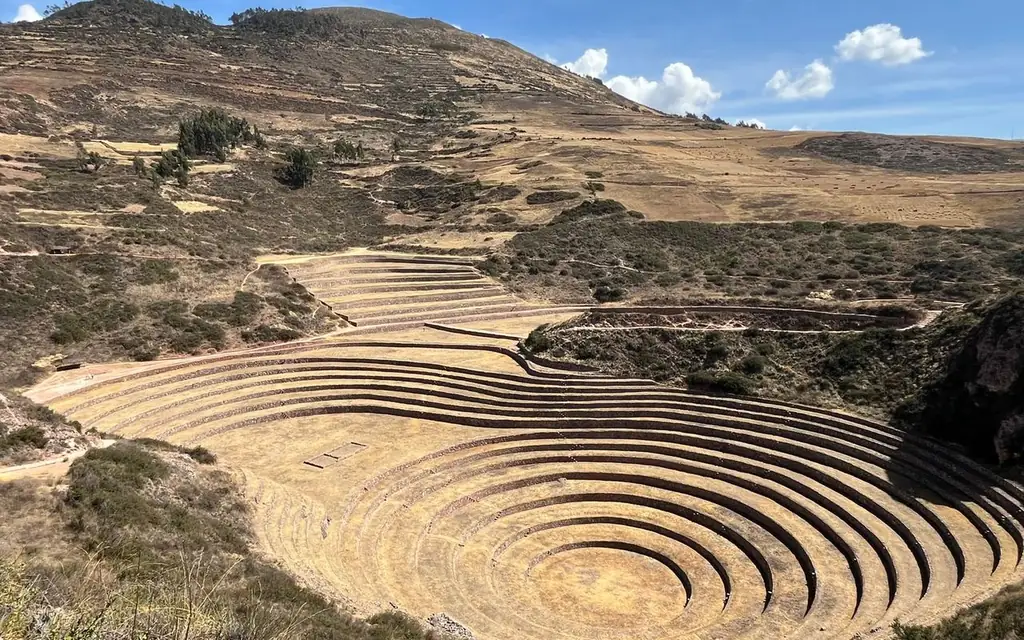
The upper loop leaves Cusco by the road to Chinchero, which at roughly 3,700 m is among the highest of the valley sites. From Chinchero the road continues to Maras and Moray on the high plateau, then descends to Urubamba and Ollantaytambo. It suits a day that ends at a valley hotel or at the Ollantaytambo station for a Machu Picchu train. The total is around 60 km (37 mi) with side trips adding another 20 to 30 km (12 to 19 mi), so allow a full day.
The Pisac side takes the other road from Cusco, which runs to Pisac and then along the valley floor through Calca and Urubamba. It suits a market morning, and then lunch in the valley. A one-day trip can include both, but the day is long.
A third option is to reverse the upper loop and begin in Ollantaytambo, ending in Cusco in the afternoon. That is the better direction if you want the fortress before the tour buses arrive.
Sacred Valley of the Incas private tour with driver: a stop-by-stop route
| Stop | From Cusco | What it is | Notes |
|---|---|---|---|
| Pisac | About 32 km (20 mi), 45 to 60 minutes | Inca terraces above the town, plus a market | Main market days are usually Sunday, Tuesday and Thursday; confirm locally |
| Chinchero | About 28 km (17 mi), 45 to 60 minutes | Highland village with Inca walls, a colonial church and weaving workshops | Included in the Cusco tourist ticket |
| Moray | About 50 km (31 mi), around 1.5 hours | Circular terraced depressions used for agriculture | Included in the Cusco tourist ticket |
| Maras salt pans | Near Moray, a short hop | Thousands of salt pans on a hillside | Run independently; not on the tourist ticket |
| Urubamba | About 60 km (37 mi) by the upper road | Valley town for lunch and hotels | Good rest stop |
| Ollantaytambo | About 60 km (37 mi), 1.5 to 2 hours | Inca fortress and living town | Train station for Machu Picchu |
Distances are approximate and depend on the road. Traffic on the Cusco side, road works and farm vehicles slow the highland sections, and a convoy of coaches can hold up the single lane near Moray.
Pisac: terraces and a market
Pisac has two parts: the Inca ruins on the ridge above the town and the market in the square below. The archaeological park is on the Cusco tourist ticket, the upper ruins sit on a steep ridge above the town, and the walk between terraces takes longer than most visitors expect. The town market is busiest on its main days, and parking near the square fills early. A driver who is told where you will finish can wait on the edge of the town instead of in the center.
Pisac is the better first stop on the Pisac side loop, since the ruins are quieter in the morning.
Chinchero, Moray and Maras on the plateau
Chinchero sits at about 3,700 m, which makes it the highest of the main valley stops and a poor place to start a day if you arrived from the coast the previous morning. The village has Inca walls, a colonial church and weaving workshops, and a new international airport is under construction in the Chinchero area. Reporting in 2026 points to opening in late 2027, so expect heavy machinery and the occasional diversion on the access road.
Moray is a set of concentric terraced depressions on the high plateau, and visitors usually walk a short path along the rim. It is on the tourist ticket. The Maras salt pans are a short drive on, an extensive hillside of small salt pans fed by a mineral spring, and the owners charge their own entry. The track between Moray and Maras is rough, and a chauffeur with a low car should avoid it in the rainy season. Ask the desk to match the vehicle to the road.
Ollantaytambo: fortress, town and rail platform
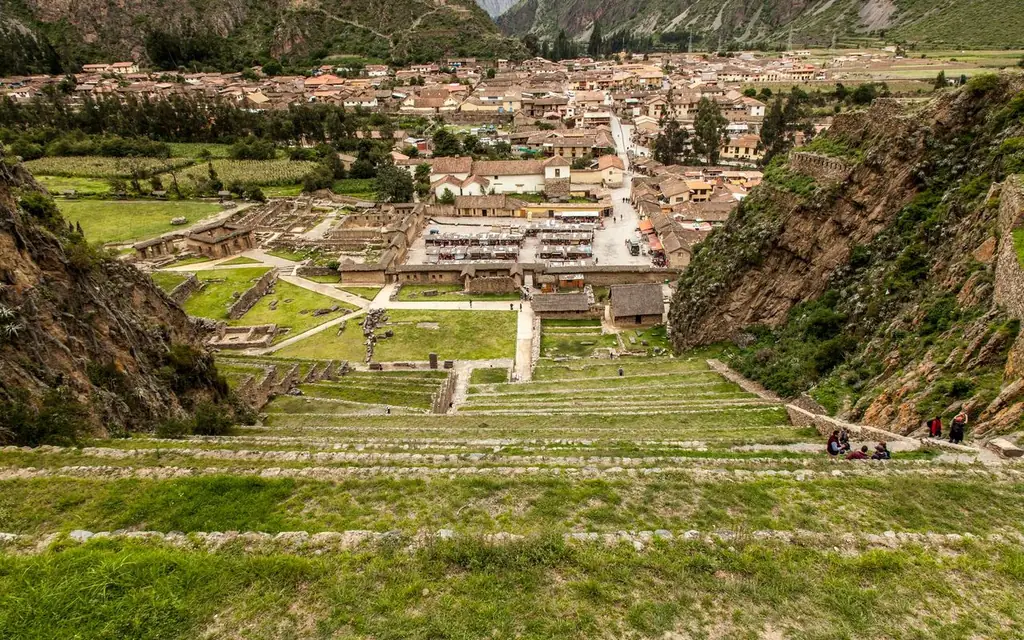
Ollantaytambo combines an Inca fortress with a town built on the original Inca street plan. The fortress terraces rise steeply behind the main square, and the stairs are the hardest physical part of the day. The town is also the station for the trains to Aguas Calientes. PeruRail lists it, along with Poroy, as a departure point for Machu Picchu, and Inca Rail calls it the more popular departure point, with more frequent schedules.
If you plan to join a train, build in a margin of at least 30 minutes, which is what Inca Rail recommends for arrival at the station. A lunch stop at Urubamba before the fortress works well when the train is late in the afternoon. For the Machu Picchu side, read the companion guide on reaching Machu Picchu by car, which explains the handover from road to rail.
Tickets: what the Boleto Turistico covers here
The Cusco tourist ticket, run by COSITUC, has a circuit for the valley. Circuit III covers Pisac, Chinchero, Ollantaytambo and Moray. The integral ticket lists S/ 130 for foreign adults on COSITUC's 2026 tariff page, valid 10 days, and also includes the Saqsaywaman sites and the city and south valley sites. A partial ticket for the valley circuit costs less and has a shorter validity. The Maras salt pans and Machu Picchu are not on the ticket.
If your plans include the city and its fortress sites, the integral ticket is the better fit. If the valley is the only thing you will see, a partial ticket for the Sacred Valley is enough. The guide to the Cusco historic centre explains how the other circuits work and how to pair them with a city day.
Altitude, weather and the best season
The valley has a milder climate than Cusco, with warmer days at 2,800 m, but Chinchero and Moray are colder and windier. The dry season from roughly May to September gives clear days and cold nights. The wet season, from about November to March, brings afternoon rain and muddy tracks, and heavy rain can close sections of road. Take a layer for the plateau and sun protection for the valley floor.

Altitude advice is the same as for Cusco: rest, drink water, and eat lightly on the first day. A chauffeur drive with short walks suits travelers who are not ready for a full day on foot.
Lunch, timing and the road back
The valley's tourist restaurants cluster around Urubamba and Pisac, and the best lunch stop is the one that matches your position, not your guidebook. Reserve if you are traveling with a group, because coach parties arrive at the same hour. A chauffeur can phone ahead from the road, and an early lunch at around noon puts you in the fortress at Ollantaytambo in the softer afternoon light.
The road back to Cusco is the same road you took out, and it is slowest at the end of the afternoon when tour coaches and local traffic share it. If you are not in a hurry, a later departure after dinner is quieter, and the drive of about 60 km (37 mi) takes the shorter end of the 1.5 to 2 hour range. The highland stretch above Chinchero can be foggy or wet after dark, so choose daylight if the weather is poor.
Children, mobility and the pace of the day
Families with young children should plan fewer stops than the table suggests, since the sites involve stairs, uneven paths and long stretches at altitude. Ask for child or booster seats when you book, and the desk passes the request to the local operator. Visitors with limited mobility will find the Ollantaytambo fortress and Pisac ruins demanding, and may prefer to see the terraces from below and spend more time in the towns and at Moray's rim. The attractions hub lists other destinations by theme, and the guide to Lima's historic centre is the usual city stop on the way into or out of the region.
Choosing the order: three sample days
A first-time visitor with one day often prefers the upper loop, ending at Ollantaytambo or Urubamba. Those with two days can split the valley into a Pisac morning and a plateau day, with a night at a valley hotel. Visitors with a Machu Picchu train booked for the next morning should end the day in Ollantaytambo and sleep there.

The table below compares the choices.
| Plan | Route | Best for |
|---|---|---|
| One day, upper loop | Cusco, Chinchero, Moray, Maras, Urubamba, Ollantaytambo | First visit, a train next morning |
| One day, Pisac side | Cusco, Pisac, Urubamba, Cusco | Market, relaxed lunch |
| Two days | Pisac on day one, plateau and fortress on day two | A slower pace, altitude adaptation |
| Arrival transfer | Cusco airport to a valley hotel | Sleeping low on the first night |
How to compare ways to do the valley
| Mode | Advantage | Catch |
|---|---|---|
| Private chauffeur | Own route, waits at each stop, fare confirmed before you pay | You choose and pay for the full vehicle |
| Group tour bus | Lowest cost per person, includes a guide | Fixed timing and stops |
| Shared van between towns | Cheapest between towns | Does not reach Moray or Maras easily |
| Taxi by the hour | Flexible | Prices negotiated on the day |
If you are traveling as a family or with a small group, a Luxury SUV seats up to six with bags, and an Executive Sprinter suits a larger party.
Booking the day and what the desk needs
Tell the desk the date, your hotel, the passenger count and any train you must catch, and the quote for the day comes back as a fixed fare before you book. A licensed, insured Peruvian operator from our directory runs the drive, we confirm and invoice it as one booking, and the desk answers around the clock. The private tours with driver page explains how a full day is structured, and the Latin America pages of the directory list destinations across the region. Tour offices and agents can ask about a trade account.
Official references: Peru Travel for the national tourism board, the COSITUC website for the ticket, and the PeruRail and Inca Rail sites for trains.
Frequently asked questions
How far is the Sacred Valley from Cusco?
The valley starts about 32 km (20 mi) from Cusco at Pisac, and Ollantaytambo is about 60 km (37 mi) away, a drive of 1.5 to 2 hours depending on traffic.
Can I see the Sacred Valley in one day?
Yes. The upper loop through Chinchero, Moray, Maras and Ollantaytambo is a full day. Two days is more comfortable and helps with altitude.
Is the Sacred Valley lower than Cusco?
Yes. The valley floor is around 2,800 m, about 600 m below Cusco at 3,399 m. Chinchero and Moray are higher than the valley floor.
Which sites are on the Cusco tourist ticket?
Circuit III covers Pisac, Chinchero, Ollantaytambo and Moray. The Maras salt pans and Machu Picchu are not included.
Can a car reach Moray and the Maras salt pans?
Yes, by road, though the track between them is rough. Tell the desk the season and your preferred stops so the right vehicle is sent.
Should I stay in the valley or in Cusco?
Many travelers sleep in the valley first because it is lower, then return to Cusco. If you have an early train from Ollantaytambo, sleeping there avoids a pre-dawn drive.
When is the Pisac market?
The larger market days are usually Sunday, Tuesday and Thursday, but confirm locally before planning your day around it.
Do I need a guide in the valley?
Pisac and Ollantaytambo make more sense with a licensed local guide, who is hired separately. Your driver handles the roads and can wait while you tour the sites.