 United StatesJFK
 MexicoMEX
 BrazilGRU
 ArgentinaEZE
 ChileSCL
 ColombiaBOG
 PeruLIM
 PanamaPTY
 Costa RicaSJO
 Dominican RepublicPUJ
 JamaicaMBJ
 BahamasNAS
 BarbadosBGI
 United KingdomLHR
 IrelandDUB
 FranceCDG
 GermanyFRA
 NetherlandsAMS
 BelgiumBRU
 SwitzerlandZRH
 AustriaVIE
 ItalyFCO
 SpainMAD
 PortugalLIS
 GreeceATH
 TurkeyIST
 DenmarkCPH
 SwedenARN
 NorwayOSL
 FinlandHEL
 PolandWAW
 Czech RepublicPRG
 HungaryBUD
 IcelandKEF
 United Arab EmiratesDXB
 QatarDOH
 Saudi ArabiaRUH
 IsraelTLV
 EgyptCAI
 MoroccoCMN
 South AfricaJNB
 KenyaNBO
 NigeriaLOS
 IndiaDEL
 PakistanLHE
 Sri LankaCMB
 SingaporeSIN
 MalaysiaKUL
 ThailandBKK
 VietnamSGN
 PhilippinesMNL
 IndonesiaCGK
 Hong KongHKG
 ChinaPVG
 TaiwanTPE
 JapanHND
 South KoreaICN
 AustraliaSYD
 New ZealandAKL
Cusco makes two demands of a visitor. The first is lungs: the city sits at about 3,399 m (11,150 ft), and the first afternoon is not the time for a stair-heavy walking tour. The second is patience with geometry. The old center was laid out by the Incas and then built over by the Spanish, and the result is a lattice of stone-walled lanes that were designed for foot traffic and llamas, not for a Suburban.
A Cusco historic centre private tour with driver is useful because of those two facts. A chauffeur handles the climbs and the drive-out sites at altitude, and knows which streets a car can enter, where it can stop and where the pickup will have to be a short walk away. This guide explains how to reach the historic center from the airport, what the tourist ticket covers, how to build a half day or a full day, and when the car is the right tool.
What is the Cusco historic centre and why does it matter?
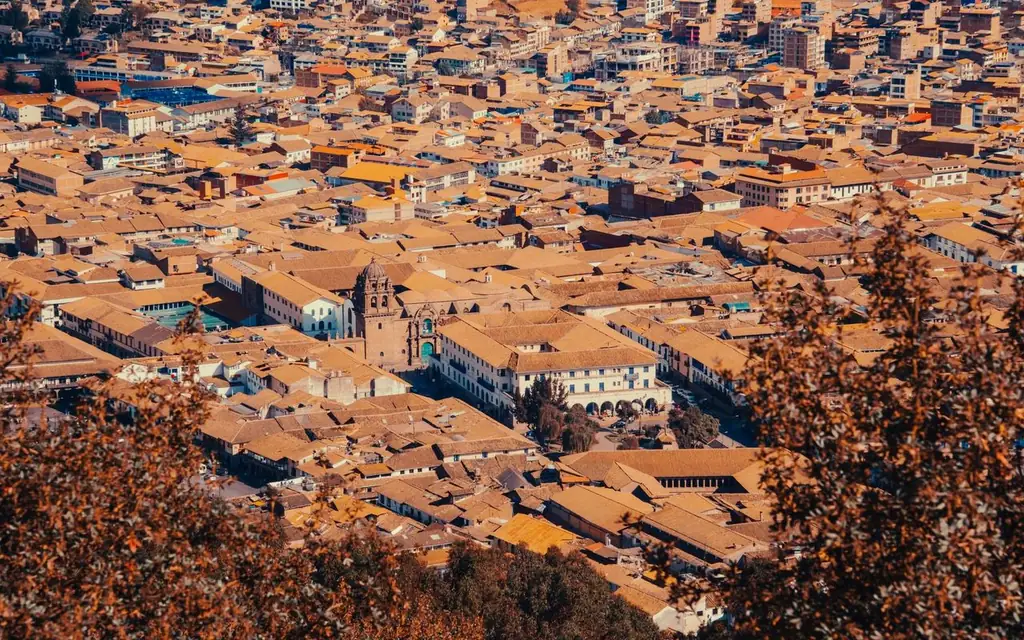
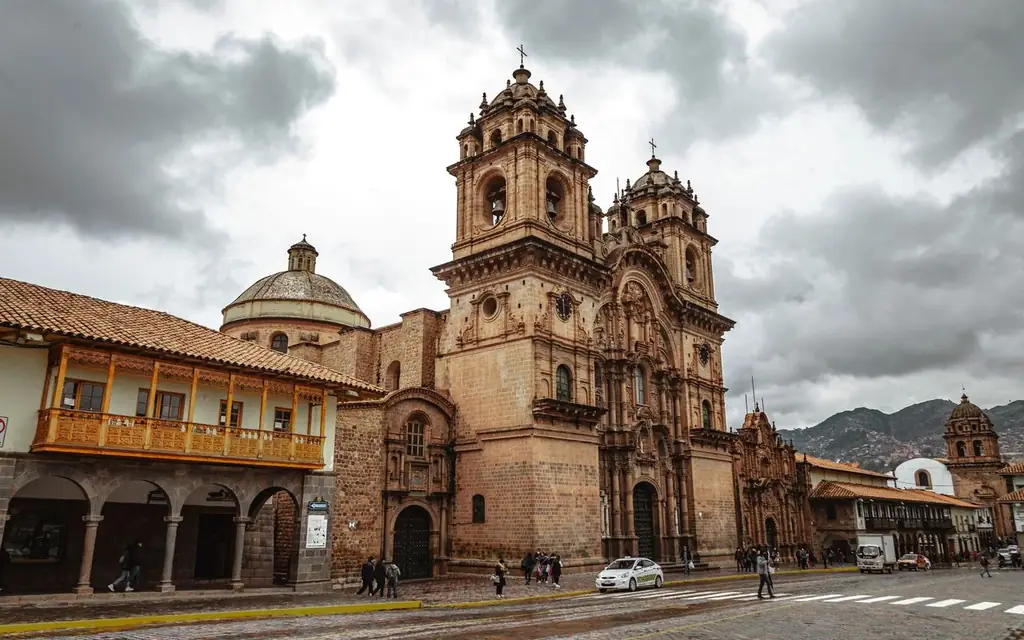
The historic centre of Cusco is the former Inca capital, listed by UNESCO in 1983. The Spanish raised churches and convents on top of Inca walls, so the Plaza de Armas, the Cathedral and the Coricancha temple sit on pre-colonial stonework. The district is compact and mostly walkable.
UNESCO's record for the City of Cuzco notes that the layout of the Inca imperial city survived the conquest, and that temples, monasteries and manor houses were built over it. The Coricancha temple is the clearest example, since the Santo Domingo convent stands on its walls. Most of what a first-time visitor wants to see sits within a few blocks of the Plaza de Armas, which is why a car is a tool for the edges of the visit and not for the middle.
From the airport: 5.5 km that can take 25 minutes
Alejandro Velasco Astete International Airport lies about 5 to 6 km (3 to 4 mi) from the Plaza de Armas. A transfer takes roughly 10 to 25 minutes, and the variation comes almost entirely from traffic on the avenues near the center and the narrow final streets. The airport has no direct public bus to the center, so most visitors take a taxi or a pre-booked car.
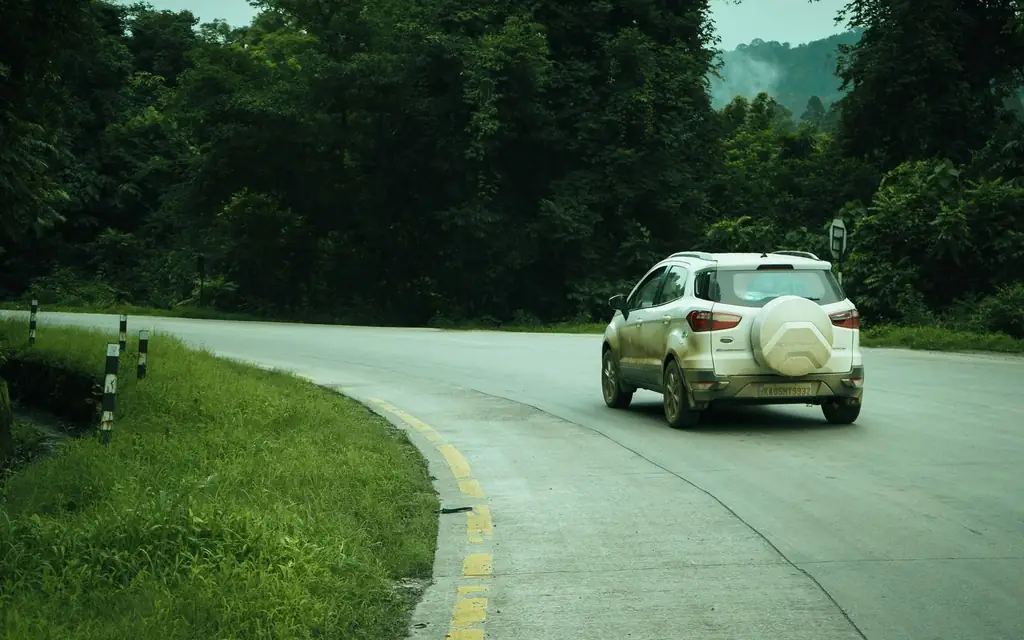
A pre-booked chauffeur fixes two things: the fare is quoted before you travel, and the driver is waiting after you land, with flight tracking on the arrival. Cusco taxis sometimes quote high prices to people straight off a plane, and that confusion is the thing a quoted fare removes. For a late arrival, ask the desk to share the vehicle details with your hotel so that the front door is staffed.
Where a car can and cannot go
The colonial core is a tangle of steep, narrow and partly one-way streets. Some blocks around the Plaza de Armas and the San Blas quarter are difficult or impossible for vehicles, particularly larger ones, and the last stretch to a hotel on a stepped lane is often covered on foot with a porter. In practice a chauffeur will stop at the nearest point a vehicle can reach and the hotel will move the bags. Tell the desk the exact name of your hotel, because a few properties have their own approach and a few do not.
On festival days, parade routes and religious processions close streets in the center at short notice. A driver who has been told your schedule can plan a drop-off one block away instead of waiting in a stationary line.
A walking loop of the center, with distances
The core is small enough to see on foot in two to three hours. A loop that works well starts at the Plaza de Armas, where the Cathedral and the Church of La Compañía face the square, then runs along Calle Triunfo toward the San Blas quarter, about 500 m (0.3 mi) uphill. San Blas is a quarter of craft workshops and viewpoints, and it is the steepest part of the walk. From there, a descent through the narrow lanes brings you to the stone walls near the Hatun Rumiyoc street, where the famous multi-angled Inca stone sits.
The Coricancha site, with the Santo Domingo convent built on top of it, is roughly 500 m (0.3 mi) from the Plaza de Armas, a short walk on the flat side of the center. The San Pedro market sits close to the Santa Ana quarter and is easy to include on the way back.
A chauffeur can wait with the car at a nearby point and meet you at the end of the loop, so that you walk downhill and ride uphill. That alone shortens a day at altitude.
Where the car earns its place: Sacsayhuaman and Circuit I
Sacsayhuaman is the Inca fortress above the city, a short drive from the center, usually 10 to 15 minutes depending on traffic. The Cusco tourist ticket groups it with three nearby sites, Qenqo, Puca Pucara and Tambomachay, as Circuit I. Together they lie along a road northeast of the city, within roughly 8 km (5 mi) of the Plaza de Armas. By car the four sites take about half a day with stops, and by taxi they cost time because each driver waits only on request.

South of the city, the same ticket includes the archaeological parks of Tipon and Pikillacta, which are along the valley road toward the southern edge of the Cusco basin. Circuit II also covers city museums, among them the Qorikancha site museum and the regional history and contemporary art museums. The Monument to Pachacutec is on the list as well.
The Boleto Turistico del Cusco
The official body, COSITUC, lists 16 sites on the integral ticket, which covers all three circuits: the city and south valley sites, the Saqsaywaman sites and the Sacred Valley parks of Moray, Chinchero, Pisac and Ollantaytambo. Its 2026 tariff page lists the integral ticket for foreign adults at S/ 130, valid 10 days, with partial tickets for individual circuits at lower prices and shorter validity. Student fares require valid student cards, and COSITUC publishes the categories on its own page. Machu Picchu is not included in this ticket, and the Maras salt pans are run separately.
If you only plan to see the fortress sites and a few museums, a partial ticket may be enough. If you will also visit the Sacred Valley, as most travelers do, the integral ticket is the better fit. Our companion piece on the Sacred Valley of the Incas explains which of those sites the ticket opens and which sit outside it.
Altitude: the first 24 hours
The sensible plan is a slow first day. Drink water, eat lightly, avoid alcohol, and keep stairs to a minimum. Many travelers use the Sacred Valley, which lies lower at around 2,800 m, as the first night instead of Cusco, and come back to the city after two days of acclimatization. If you are prone to altitude sickness or have a heart or lung condition, talk to a doctor before the trip.
A car helps in a practical way. After the airport arrival, a chauffeur can take you straight to the hotel without the steps and slopes of a walking transfer, and on the sightseeing day you can ride between the high sites and the lower ones, which spares your breath. Tell the desk if anyone in the party is unwell so the driver can adjust the plan.
Best time to visit and the big date
The dry season, roughly May to September, brings clear skies, sunny days and cold nights. The wet season runs from about November to March, with afternoon rain and the chance of landslides on mountain roads. The main city festival date is June 24, when the Inti Raymi ceremony is staged at Sacsayhuaman, and the city is crowded in the days around it. Hotels and drivers book early for that week, so reserve your chauffeur well ahead if you plan to be in Cusco on those dates. The ceremony is held every year on June 24.
Mornings are the best time to visit the plazas and churches, as visitor numbers rise from late morning. Late afternoon is the best light at Sacsayhuaman, though cold sets in as the sun drops, so bring a warm layer for the drive back.
Etiquette in churches and on the stonework
Many of the most visited buildings in the center are working churches and convents as well as monuments. Dress modestly for the interiors, keep voices low during services, and follow the posted rules on photography, which restrict cameras inside a number of church interiors. The Inca walls are not to be touched or climbed, and the fortress sites enforce path rules. A driver cannot negotiate these rules on your behalf, but opening hours differ from church to church, so check each one before you go and keep the open-air sites as the flexible part of the day.
Weather at this altitude changes within an hour. Pack a light waterproof layer and sun protection even in the cold months, because the sun at 3,400 m is strong, and keep water in the car for the drive between sites.
Half-day and full-day plans
| Plan | Route | Time on the road |
|---|---|---|
| Half day, city | Plaza de Armas, Cathedral, Coricancha, San Blas | 20 to 40 minutes in the car, rest on foot |
| Half day, fortress | Sacsayhuaman, Qenqo, Puca Pucara, Tambomachay | About 8 km (5 mi), 15 to 30 minutes between stops |
| Full day, south valley | Tipon, Pikillacta and city museums | Valley road southeast of the city |
| Full day, Sacred Valley | Chinchero, Moray, Pisac or Ollantaytambo | About 60 km (37 mi) to Ollantaytambo, 1.5 to 2 hours |
Mix the plans with care. A morning in the fortress sites followed by lunch and an easy afternoon in the plaza is gentler than a full valley day for a first visit. The valley day makes more sense after two nights above sea level.
Comparing ways to see the center
| Method | Strength | Weakness |
|---|---|---|
| On foot | Cheapest, the core is compact | Steep lanes at altitude |
| Taxi | Flexible for single hops | Prices vary; waiting is by negotiation |
| Local bus or colectivo | Lowest cost | Fixed routes and stops |
| Private chauffeur with a car | Door-to-door, waits at each site, fare fixed in the booker | Cannot enter every narrow lane |
| Organized group tour | Includes a guide | Pace set by the group |
A chauffeur is a driver, not a guide. Where the ticket office or the site recommends a licensed guide, as at Sacsayhuaman and in the cathedral, a local professional will explain the stonework, and your driver can wait.
Combining it with the rest of the region
Most visitors pair the city with the citadel, and the guide to Machu Picchu by car explains the rail and bus handover. Those arriving through the capital can read Lima's historic centre, the usual first stop. Multi-stop days are explained on the private tours with driver page, the wider Latin America section of the directory covers neighboring countries, and arrival terminals are indexed on the airports hub. The fleet page shows the classes, from an Executive Sedan for a couple to a Luxury SUV for a family of six.
Our desk takes Cusco bookings at any hour. Each transfer or day is driven by a licensed, insured operator from the directory in Peru, so the confirmation and the single invoice come from us whichever driver turns up at your hotel. Give us the hotel, the date and the head count, and the fare is quoted before you commit.
For official information, see the UNESCO listing for the City of Cuzco, the COSITUC website for the tourist ticket, and the national tourism site Peru Travel.
Frequently asked questions
How far is the Cusco airport from the historic centre?
About 5 to 6 km (3 to 4 mi) to the Plaza de Armas. The drive takes 10 to 25 minutes depending on traffic. There is no direct bus, so a pre-booked car is the simplest option.
Can a car drive into the Plaza de Armas area?
Parts of the colonial core are narrow, one-way or restricted, and some blocks are difficult for vehicles. A driver will stop at the nearest point the car can reach, and hotels usually help with bags.
What does the Boleto Turistico del Cusco include?
The integral ticket covers 16 sites over 10 days, including Sacsayhuaman, Qenqo, Puca Pucara, Tambomachay, city museums, Tipon, Pikillacta and the Sacred Valley parks of Moray, Chinchero, Pisac and Ollantaytambo. It does not include Machu Picchu.
How high is Cusco and how long does acclimatization take?
About 3,399 m (11,150 ft). Most people feel the effect on the first day and adapt within one to three days. Rest, water and light meals help, and a doctor can advise anyone with a medical condition.
How long should I spend in the historic centre?
Two to three hours for a walking loop, a full day with the museums and churches, and half a day more for the Circuit I fortress sites by car.
When is the best time to visit Cusco?
The dry season, roughly May to September, has the clearest skies. June 24 brings the Inti Raymi ceremony at Sacsayhuaman, so book early for that week.
Is Sacsayhuaman close to the center?
Yes, a short drive of about 10 to 15 minutes, though the climb on foot is steep at altitude. A car with a waiting driver makes the visit easier.
Do I need a guide in Cusco?
Not for the driving. For the Cathedral, Coricancha and the fortress, hire a licensed local guide separately, and the driver can wait outside.