
 United StatesJFK
 MexicoMEX
 BrazilGRU
 ArgentinaEZE
 ChileSCL
 ColombiaBOG
 PeruLIM
 PanamaPTY
 Costa RicaSJO
 Dominican RepublicPUJ
 JamaicaMBJ
 BahamasNAS
 BarbadosBGI
 United KingdomLHR
 IrelandDUB
 FranceCDG
 GermanyFRA
 NetherlandsAMS
 BelgiumBRU
 SwitzerlandZRH
 AustriaVIE
 ItalyFCO
 SpainMAD
 PortugalLIS
 GreeceATH
 TurkeyIST
 DenmarkCPH
 SwedenARN
 NorwayOSL
 FinlandHEL
 PolandWAW
 Czech RepublicPRG
 HungaryBUD
 IcelandKEF
 United Arab EmiratesDXB
 QatarDOH
 Saudi ArabiaRUH
 IsraelTLV
 EgyptCAI
 MoroccoCMN
 South AfricaJNB
 KenyaNBO
 NigeriaLOS
 IndiaDEL
 PakistanLHE
 Sri LankaCMB
 SingaporeSIN
 MalaysiaKUL
 ThailandBKK
 VietnamSGN
 PhilippinesMNL
 IndonesiaCGK
 Hong KongHKG
 ChinaPVG
 TaiwanTPE
 JapanHND
 South KoreaICN
 AustraliaSYD
 New ZealandAKL
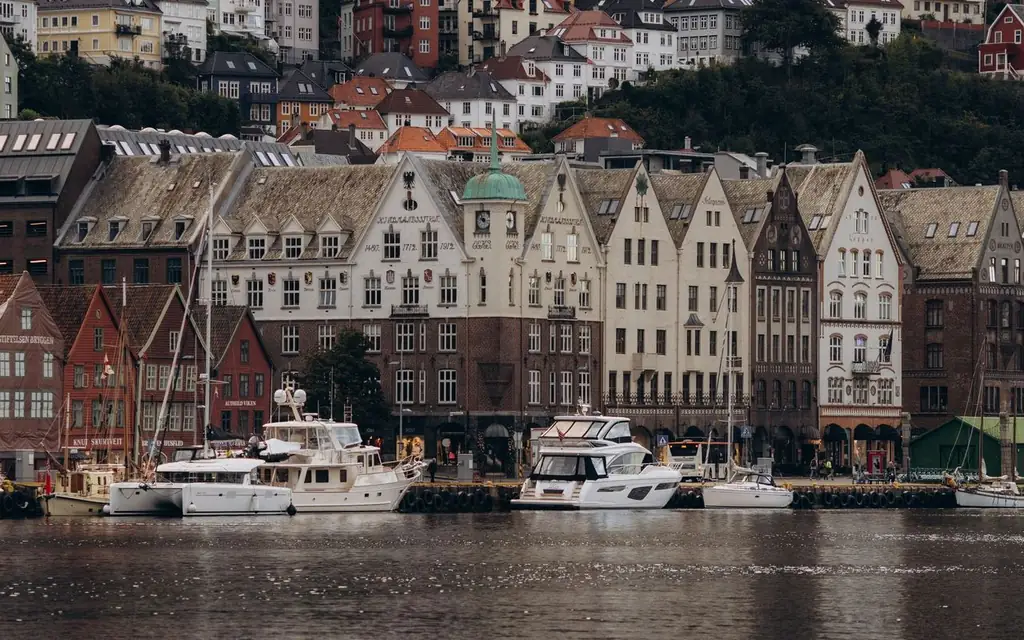
Bergen's old wharf has been photographed so often that visitors assume they already know what it is. The row of tall, narrow, gabled timber houses along the harbor looks like a film set, but it is a working medieval trading quarter that survived by being rebuilt, again and again, on the same plan. What the photographs do not show is how to reach it. A Bryggen private tour with driver is mainly a logistics question: where the car stops, how far you walk on cobbles with luggage, and how to fit the museums, the funicular and the fish market into a single dry window in a famously wet city.
What is Bryggen, and why is it a World Heritage Site?
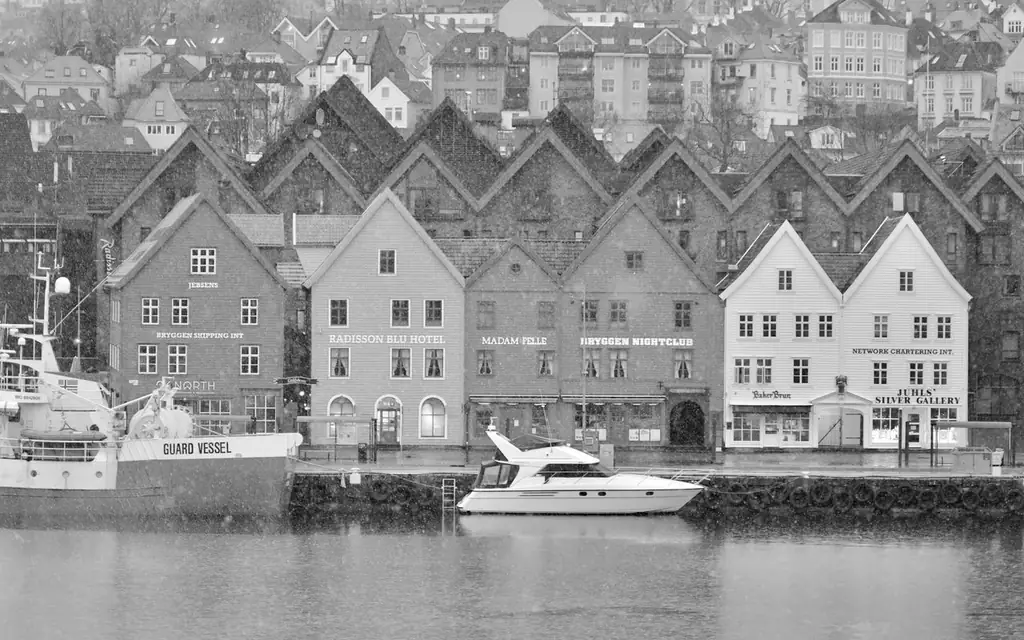
Bryggen is the old Hanseatic wharf on the north side of Bergen's harbor, Vågen. Merchants from the Hanseatic League ran one of their four overseas trading offices here, and the timber buildings that remain are listed by UNESCO as a World Heritage Site, inscribed in 1979.
The Hanseatic League's office at Bergen controlled the trade in stockfish from northern Norway, shipped to the cities of northern Europe in exchange for grain and other goods. The wharf was repeatedly damaged by fire, and the most recent major blaze was in 1955. The buildings visitors see today were restored in detail after those fires, and the site is described by the Hanseatic cities association as the last remaining former Hanseatic office of its kind. The official listing is on the UNESCO World Heritage page for Bryggen.
Many of the old houses are still in use: shops, galleries, restaurants and craft workshops occupy the front rooms, and the alleyways behind them are narrow passages between tall timber walls. This is the part that surprises visitors, because the wharf is lived in rather than preserved under glass.
How far is Bryggen from Bergen Airport and the cruise terminals?
Bergen is compact, so distances are short, but the road layout makes timing less obvious than the map suggests.
- Bergen Airport Flesland (BGO) to Bryggen: about 20 km (12 mi), usually 25 to 35 minutes. The airport sits south of the city, and the road in passes through the urban toll system.
- Cruise terminals to Bryggen: typically 1 to 3 km (0.6 to 1.9 mi), 5 to 15 minutes by car, depending on which quay your ship uses.
- Bergen railway station to Bryggen: about 1 km (0.6 mi), 5 minutes by car or a 10 to 15 minute walk.
- Fløibanen funicular base station to Bryggen: about 600 m (0.4 mi).
The light-rail line (Bybanen) from Flesland to the city center is the lowest-cost alternative and takes roughly 45 minutes; the airport also has an express bus, and Visit Bergen lists the options. A car makes sense when you have bags, children, or a schedule that includes more than one stop. For airport transfers across Norway, see our airport hub and airport limo service, and for the wider regional context, the Europe chauffeur directory.
Can a car drive onto the Bryggen wharf?
No, and that is the most important thing to know before booking. The wharf frontage and the alleys behind it are pedestrian space. The street along the harbor edge is shared with taxis and service vehicles at times, and stopping is restricted. Your chauffeur will normally stop in the harbor-front area near Torget and the Fish Market, or at a drop-off point on the Bergenhus side, and you walk the last few minutes. Confirm the stop at booking, particularly if anyone in the party has limited mobility.
Cobblestones and timber boards are uneven, wet and slippery in rain, and some alley surfaces are not step-free. Wheeled luggage is awkward. A better plan is to check bags in at your hotel first, since most central hotels are within a short walk or drive of the wharf, then visit Bryggen unencumbered. If you arrive from Flesland with luggage, ask the chauffeur to go to the hotel first.
The wharf is built of wood and has burned before. Smoking and open flames are not appropriate in the alleys, and many of the houses carry fire notices. Treat the buildings with care.
What is inside the wharf: museums, alleys and tickets?
The wharf itself is open to walk through, free of charge, every day, with individual shops and restaurants setting their own hours. The paid parts are the museums.
- Hanseatic Museum and Schøtstuene. The museum, in Finnegården on Bryggen, covers the daily life of Hanseatic merchants, and the assembly rooms (Schøtstuene) show where the merchants ate and met. The association's page notes that opening hours may vary because of renovation work, so check the museum's current page before you arrive.
- Bryggens Museum. A separate museum on Dreggsallmenningen at the south end of the wharf, built around archaeological finds from the medieval town. It is a good first stop if the weather is wet.
- Guided walks. Visit Bergen lists guided tours through Bryggen and Schøtstuene. A chauffeur is not a licensed guide; if you want the history explained in depth, book a guided walk and have the car bring you to the meeting point.
- Bergen Card. The city's visitor card includes free or discounted entry to many attractions; Visit Bergen states it covers the light rail from the airport. Check whether Bryggen's museums are included for your dates.
Do not rely on an old opening time from a blog or a map app. Museum hours change with the season, and the Hanseatic complex has been affected by renovation.
When should you come to Bryggen: hour, month and weather?
Early morning is the best time for photographs and the worst time for opening hours: the wharf is empty, the light is soft, but most shops are closed. Late morning to mid-afternoon is the busy window, especially on days when cruise ships are in. Evenings are atmospheric, with restaurants lit along the wharf, but museums are closed.
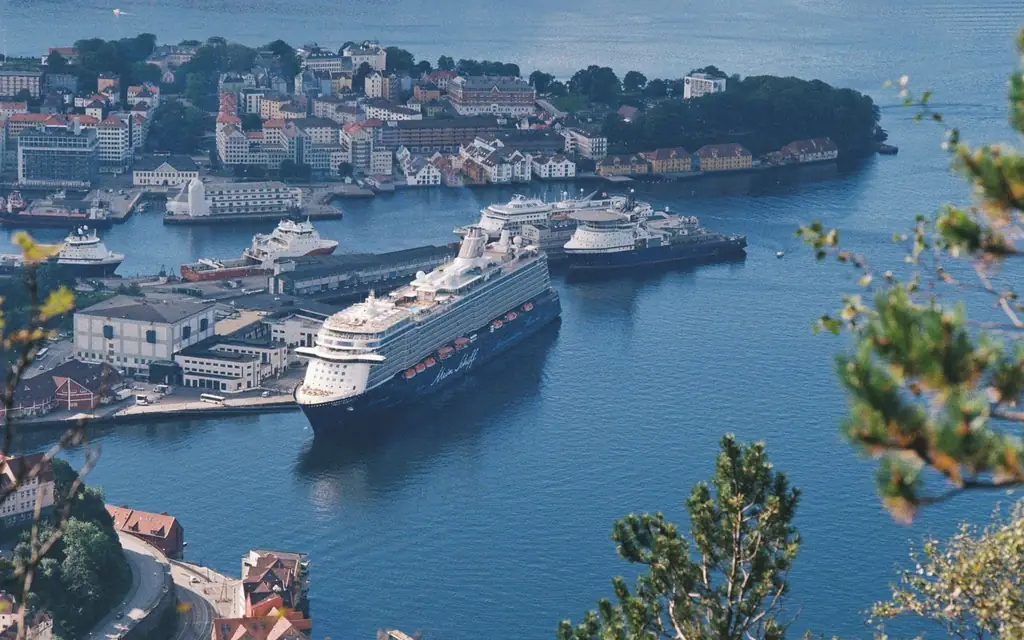
Bergen is known for rain in every season, and that shapes the plan. A dry hour is worth more than a booking: if the sky clears, go straight to Fløibanen for the view and leave museums for the wet part of the day. Summer brings long daylight and the most visitors, while winter is quiet, dark early and festive in December. Cobbles and boards are icy in cold snaps.
How do the ways of reaching Bryggen compare?
| Option | Time from Flesland | Cost note | Best for |
|---|---|---|---|
| Bybanen light rail | about 45 minutes | lowest | solo travelers with light luggage |
| Airport express bus | 25 to 40 minutes | low | direct to the center on a schedule |
| Taxi or rideshare | 25 to 35 minutes | metered or surge-priced | short hops |
| Hire car | 25 to 35 minutes plus parking | tolls and paid parking | those continuing to the fjords |
| Private chauffeur | 25 to 35 minutes | fixed fare via the booker | luggage, groups, clients, tight schedules |
For one person with a backpack, the light rail is the better choice and runs all the way to the center. The chauffeur advantage is door-to-door transfer with luggage, no parking search in a congested old town, and a direct connection to a fjord day trip.
Five things to look for on the wharf and beside it
A visit works better with a short list of things to notice, because the rows of gabled fronts can blur together.
- The leaning fronts. The timber buildings tilt, shift and lean on each other, a result of centuries of settling on soft ground and rebuilding after fires. The tilt is part of the character and is not a sign of neglect.
- The alleys behind the fronts. Step into one of the narrow passages and the plan becomes clear: a long row of storehouses, each with offices and living rooms at the front and storage behind, all in timber.
- Stockfish and the trade it explains. Dried cod from northern Norway was the commodity the whole wharf was built around, and the Hanseatic Museum explains the economy that depended on it.
- St. Mary's Church (Mariakirken). Just behind the wharf, a Romanesque church with twin towers that dates from the Middle Ages and is among the oldest buildings in the city; it was used by the German merchants as their parish church.
- Bergenhus Fortress. At the northern end of the wharf, about 400 m (0.25 mi) on foot, the fortress area holds the 13th-century Håkonshallen hall and the Rosenkrantz Tower. It is an easy extension if the weather is dry.
These are all within a short walk of each other, which is why the car matters less once you arrive than before. The chauffeur's job is to get you to the right end of the wharf with the right amount of time, and to be waiting at the other end.
A chauffeured half-day in Bergen
- Hotel or airport pickup, 09:00. Drop luggage first if you are arriving.
- Bryggen, 09:30 to 11:00. Walk the wharf and the alleys, then visit one museum.
- Fish Market and the harbor, 11:00 to 11:45. A short walk from the wharf.
- Fløibanen, 12:00 to 13:30. The funicular climbs Mount Fløyen for a view across the harbor and the seven mountains around the city. The base station is about 600 m (0.4 mi) from Bryggen.
- Troldhaugen, 14:00 onward. The former home of the composer Edvard Grieg lies about 8 km (5 mi) south of the center, roughly 20 minutes by car.
An evening alternative is a drive along the coast and the island bridges to see the outer fjords while the light lasts.
Beyond Bergen: fjords and the road east
Bryggen is often the first or last stop in a Norwegian fjord trip. From Bergen, a chauffeur can run the long day to the Sognefjord and the Nærøyfjord, which together with the Geirangerfjord form the UNESCO-listed West Norwegian Fjords: allow about 160 km (100 mi) and three hours each way for the Flåm area. For the other half of that listing, see our guide to the Geirangerfjord. For the capital, the Vigeland Sculpture Park in Oslo is the standard first-day stop, and the Oslo to Bergen road is about 460 km (286 mi), seven hours without long stops. If you are building a multi-day route, our private tours with driver page explains how the daily and multi-day bookings work.
Winter journeys follow different rules: mountain passes can close or require convoy driving, and a local chauffeur operator watches the road reports so you do not have to. Cross-border trips follow local cabotage rules, so confirm the route at booking.
Accessibility and practical notes
Bryggen's surfaces are the main challenge: cobblestones, boards and thresholds. Mobility-impaired visitors can see the wharf frontage and the Fish Market comfortably, then take a taxi-style drop at the museum entrance, but the alleys and the upper floors in the old buildings may be difficult. Fløibanen is a funicular and generally easier. Ask at booking and the desk will confirm the vehicle and the drop-off point. See the fleet page for classes.
Bring a waterproof layer in every season. The museum stops are indoors, but the walking is outdoors, and Bergen weather moves quickly.
Cruise and rail visitors
Bergen is a busy cruise call. If you are arriving by ship, our cruise transfer service and the cruise ports hub explain how pickups are arranged. Bergen's rail line from Oslo ends close to the harbor, and the train station transfers page covers the equivalent arrangement.
Frequently asked questions
How far is Bryggen from Bergen Airport?
About 20 km (12 mi), a 25 to 35 minute drive from Flesland. The Bybanen light rail takes roughly 45 minutes.
Can cars drive on Bryggen?
No. The wharf and alleys are pedestrian space, so a car stops nearby, usually around Torget or the harbor front, and you walk the last few minutes.
Is Bryggen free to visit?
Walking the wharf is free. Museums charge admission, and opening hours vary by season and renovation work, so check the current museum pages.
How long do you need at Bryggen?
Allow 60 to 90 minutes for the wharf and one museum. Add time for the Fish Market and Fløibanen for a half day.
Why is Bryggen a UNESCO World Heritage Site?
It is the last remaining former Hanseatic trading office of its kind and has been listed since 1979. The buildings were restored after repeated fires, the last in 1955.
Can I book a private tour with a driver in Bergen?
Yes. A vetted local chauffeur operator from our directory handles the transfer, booked and invoiced by our 24/7 desk. See private tours with driver and the online booker.
Is Bryggen accessible?
The frontage is easier than the alleys. Cobbles and boards are uneven, and some old buildings have steps. Ask for a drop-off close to your chosen entrance.
What is the best time to visit Bryggen?
Early morning or evening for photographs; midday for open shops. Plan around rain rather than the clock.
Is Bryggen worth visiting in winter?
Yes, if you accept short days and wet or icy surfaces. The wharf is quiet, the lighting along the harbor is atmospheric, and the Christmas season is festive. Wear shoes with grip, keep museum visits for the darkest hours, and let the chauffeur decide the drop-off point so you walk as little as possible on icy cobbles. Mountain roads beyond the city need local knowledge in winter.