 United StatesJFK
 MexicoMEX
 BrazilGRU
 ArgentinaEZE
 ChileSCL
 ColombiaBOG
 PeruLIM
 PanamaPTY
 Costa RicaSJO
 Dominican RepublicPUJ
 JamaicaMBJ
 BahamasNAS
 BarbadosBGI
 United KingdomLHR
 IrelandDUB
 FranceCDG
 GermanyFRA
 NetherlandsAMS
 BelgiumBRU
 SwitzerlandZRH
 AustriaVIE
 ItalyFCO
 SpainMAD
 PortugalLIS
 GreeceATH
 TurkeyIST
 DenmarkCPH
 SwedenARN
 NorwayOSL
 FinlandHEL
 PolandWAW
 Czech RepublicPRG
 HungaryBUD
 IcelandKEF
 United Arab EmiratesDXB
 QatarDOH
 Saudi ArabiaRUH
 IsraelTLV
 EgyptCAI
 MoroccoCMN
 South AfricaJNB
 KenyaNBO
 NigeriaLOS
 IndiaDEL
 PakistanLHE
 Sri LankaCMB
 SingaporeSIN
 MalaysiaKUL
 ThailandBKK
 VietnamSGN
 PhilippinesMNL
 IndonesiaCGK
 Hong KongHKG
 ChinaPVG
 TaiwanTPE
 JapanHND
 South KoreaICN
 AustraliaSYD
 New ZealandAKL
A car cannot take you onto Jemaa el-Fnaa, and that is the first fact worth knowing. The great square of Marrakech sits at the entrance to the medina, ringed by cafés, carriage stands and roads that fill with taxis and scooters, and the alleys leading off it are too narrow for anything but feet and motorbikes. So a Jemaa el-Fnaa private tour with driver is really two plans stitched together: a drive that ends at the right edge of the old city, and a walk that you do not have to improvise.
This guide explains how to get to Jemaa el-Fnaa by car from the airport and from the new town, where drivers can safely stop, what the square is like at different hours, and how to build a Marrakech day around it. When you have your arrival time, check your fare and the booker prices the transfer to your exact address.
Can a car drive onto Jemaa el-Fnaa itself?
No. The square is a pedestrian space, and most medina alleys cannot take cars. A chauffeur stops at the nearest accessible edge or at a prearranged point, you walk the last stretch, and the car waits or collects you later. If you stay in a riad, ask the host where luggage handlers meet arrivals.
Local guidance for visitors is consistent on this: cars cannot enter most of the medina's lanes, and the sensible approach is to leave the vehicle outside and proceed on foot. Some lodging guides mention a secure car park just behind the Koutoubia, near the square, but the layout of access roads changes and municipal rules are not always posted in English. We do not promise a specific bay; your chauffeur, who works the area daily, chooses the practical stopping point for the hour and the traffic.
What Jemaa el-Fnaa is, in a paragraph
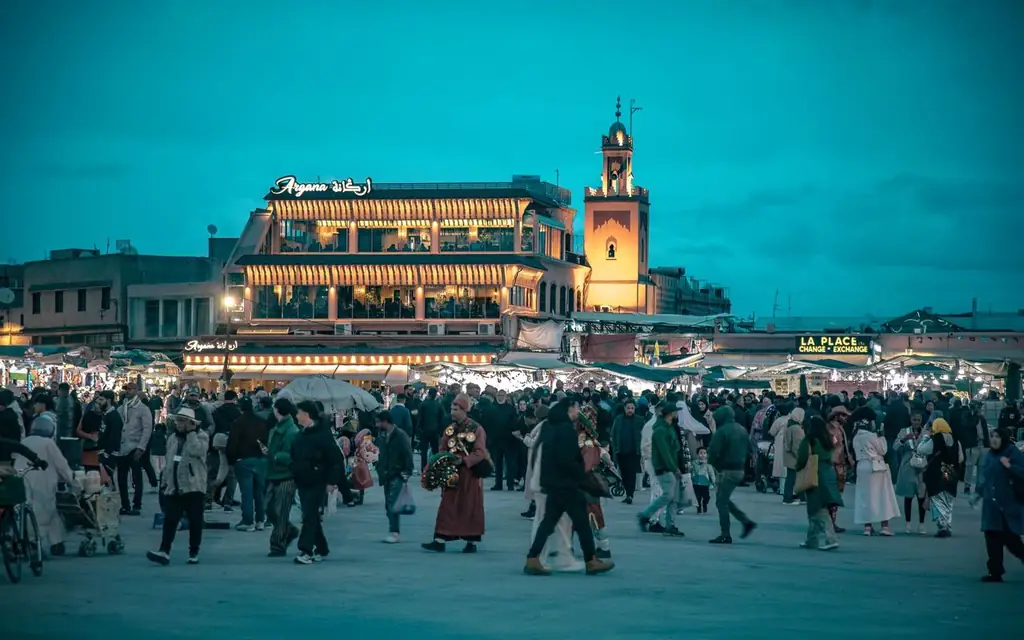
UNESCO inscribed the Cultural Space of Jemaa el-Fna Square on the Representative List of the Intangible Cultural Heritage of Humanity in 2008, following an earlier proclamation in 2001. The UNESCO record describes a triangular square at the entrance to the medina that has been a symbol of the city since the eleventh century, with daily commerce and services and performances that continue from day into night: storytellers, poets, Berber musicians, Gnaoua dancers and others. That is the point of the listing. The heritage is the living activity, not the pavement.
The medina around it is a separate, older UNESCO designation. The Medina of Marrakesh was inscribed on the World Heritage List in 1985, and the square forms its public front door. If you want a wider introduction to Morocco's cities, the national tourism board's Marrakech page lists the square among the city's main attractions.
Distances from the airport, the new town and the riads
- Marrakech Menara Airport (RAK) to the square: about 6 km (3.7 miles), generally 15 to 30 minutes depending on traffic.
- Gueliz and the new town to the square: around 3 km (1.9 miles), 10 to 20 minutes.
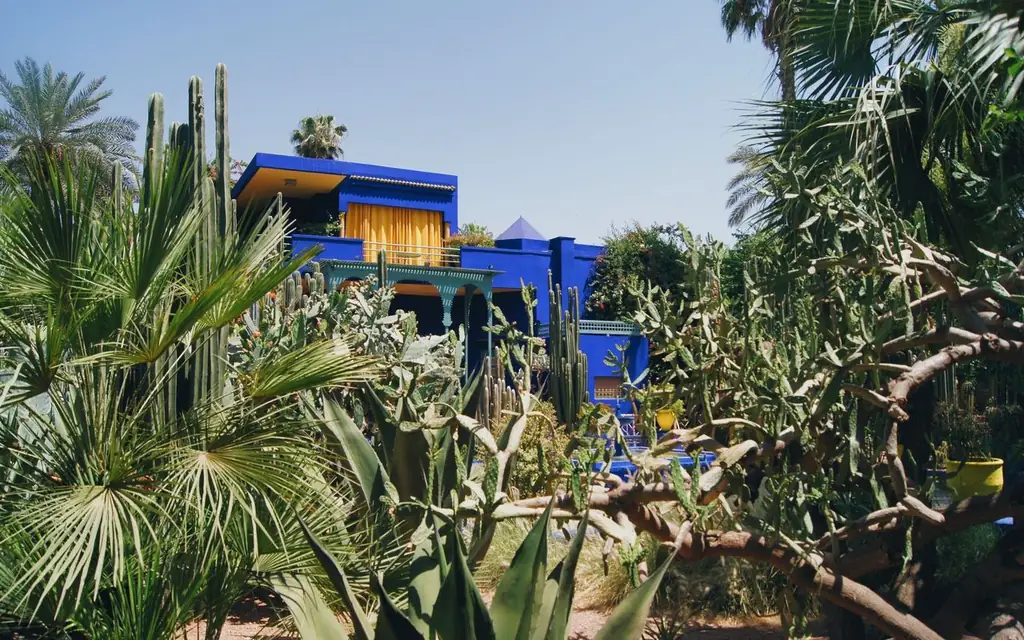
- Jardin Majorelle to the square: roughly 3 to 4 km (2 to 2.5 miles), 15 to 25 minutes in daytime traffic. See our Jardin Majorelle guide.
- Casablanca to Marrakech: about 240 km (150 miles), around two and a half to three hours on the motorway, the usual route for arrivals from Casablanca's airport.
The airport run is short, which is why late arrivals are straightforward. The delay comes at the end: even a 6 km trip can slow in the last few hundred meters near the square as taxis, delivery vans and carriages compete for the same streets. Our Marrakech chauffeur service page covers the wider city, and the airports hub lists the terminals we serve.
A Jemaa el-Fnaa private tour with driver, hour by hour
The square is two different places, and an itinerary should know which one you want.
- Late morning: the quiet version. Few performers, open space, fruit and drink sellers and a clear view of the layout. Good for orientation and photographs.
- Afternoon: a break. Return to the hotel. The square is at its weakest in the heat of the early afternoon.
- Late afternoon: the build-up. Stalls and stages are set up and the light softens. A rooftop café on the square's edge is the best place to watch this happen.
- Evening: the full version. Food stalls, music, crowds. Allow one to two hours.
- Return. Your chauffeur collects you at the agreed point, not at a random corner. Agree the meeting point and the time, then send a message when you are ready.
For a half-day, pair a late-afternoon arrival with dinner nearby and a driver on standby. For a full day, start at the Majorelle Garden in the morning, rest at midday, and come to the square for sunset.
Day, sunset and night: what changes
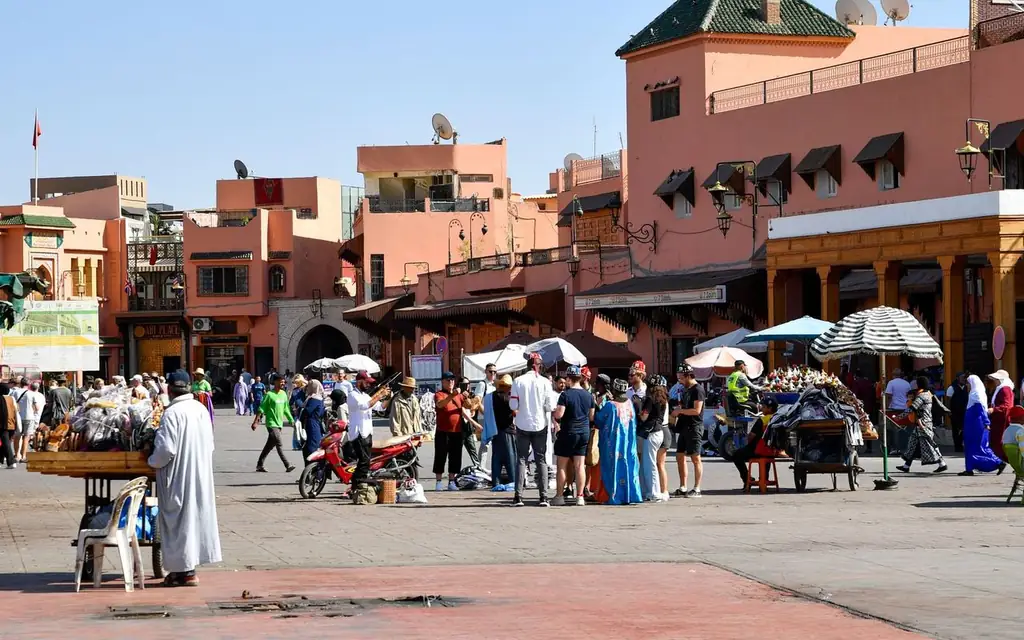
In daylight the square looks like a large open plaza with juice stalls, carriage stands and groups of visitors. At dusk the activity multiplies. According to UNESCO's description, the square hosts daily commerce and services, including food and drink sellers, traditional medicine and henna, with storytellers, musicians and dancers performing through the evening. The mood shifts from quiet to loud, and the experience is more intense than many visitors expect.

Seasons change the rhythm too. Summer afternoons are very hot, so the square wakes late and stays busy well after dark; winter evenings are cooler and the crowd arrives earlier. During Ramadan, activity follows the fast: the square is calm until sunset and then fills quickly. If you are traveling with young children or you dislike crowds, early evening just after sunset is calmer than 9 p.m. If you want the full spectacle, plan for later, but go with a plan for the exit. The memory of an evening in the square can be spoiled by a long, confusing walk back to the car.
A calmer way to take in the evening square is from above. Cafés on the edge of the square have upper terraces that look over the stalls, and a table there suits older relatives, young children or anyone who finds the crowd tiring. Arrive before the build-up so you can claim a seat, order a drink and watch the lights come on, then walk down for a short loop of the stalls once you have your bearings. Tell the desk which café you plan to use, so the chauffeur can place the pickup at the nearest accessible edge for your exit.
The walk from the car to the square, the Koutoubia and the souks
Once the car has stopped, three landmarks organize the old city on foot.
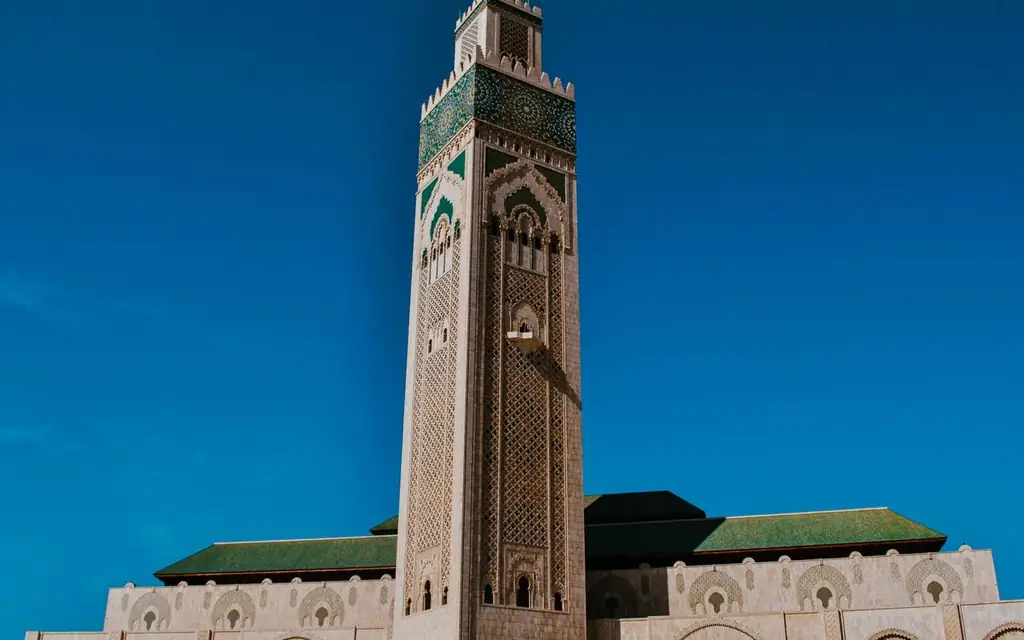
- The Koutoubia. The mosque and its minaret stand on the medina side of the new town, a short walk from the square, and give you a fixed point to navigate by. National tourism material ranks it among Marrakech's leading sights. Most working mosques in Morocco are closed to non-Muslim visitors (the Hassan II Mosque in Casablanca, which runs guided tours, is the well-known exception), so treat the Koutoubia as an exterior stop, and enjoy the gardens and the view of the minaret.
- The square itself. Once you see the carriage stands and the line of cafés, you have arrived. Agree with your chauffeur which corner you will return to, and photograph it on your phone.
- The souks. The covered markets run north from the square into the medina and are best explored with time, small change and a loose plan. Lanes narrow quickly, and many of them look alike. Keep your phone's map on, and do not be afraid to turn back.
A realistic walking allowance from a car drop-off to the middle of the square is five to fifteen minutes, depending on where the driver can stop. Add extra if you are carrying bags or traveling with older relatives. Tell the desk at booking if anyone has mobility needs, so the pickup point is chosen as close to the edge as possible and the plan does not rely on cobbles and steps.
Etiquette, tips and avoiding trouble
- Performers expect payment for photographs. Agree before you point a camera. A refusal is polite and enough.
- Ask a price before you accept anything. This applies to henna, tea, water and carriage rides.
- Keep valuables close. Crowds are dense at night. Use a zipped bag and keep phones in front pockets.
- Dress modestly, with covered shoulders and knees, out of respect and to reduce unwanted attention.
- Do not follow unofficial guides into side alleys, however friendly the offer. If you want a guide, book one through your hotel or the tourist office.
- Mind the animals. Keep your distance from performers' animals if you are not comfortable, and do not feel obliged to hold them for a photograph.
- Mopeds. Alleys are shared with motorbikes. Step aside when you hear a horn.
None of this should put you off. Used with ordinary city sense, the square is a lively and sociable place.
Where cars can stop, and what happens to your luggage
This is the practical core. The medina streets are narrow and many riads are reached by lanes where only trolleys and small carts can pass. Three ways to handle it:
- Drop at the nearest accessible point and walk. Fine if you have light luggage and a hotel near the square.
- Prearranged meeting at the edge, where a riad porter meets you with a cart. Tell the desk the name and address and we pass it to the driver.
- Stay outside the medina, in Gueliz or Hivernage, and use the car for dinner runs. Easier on luggage and parking, but you give up the sense of being inside.
A late arrival is the case that most often goes wrong. If your flight lands after dark and your riad is deep in the medina, send the riad's phone number and exact address with your booking, and ask the host to confirm the meeting point by message when you are twenty minutes out. Your chauffeur tracks the flight, so a delay moves the pickup time automatically; the only message left to send is the one to your host, who can then keep the porter and the doorway ready for the revised arrival. At night, drivers cannot always wait where they dropped you. A prearranged pickup point, not a roadside wave, is the safer plan.
Ways to reach Jemaa el-Fnaa compared
| Transport | From Menara Airport | Cost level | Good if |
|---|---|---|---|
| Private chauffeur | 15-30 minutes | Fixed fare via the booker, quoted before you book | Late arrivals, luggage, riad stays |
| Airport bus | 25-45 minutes | Lowest | Light luggage, flexible timing |
| Petit taxi | 15-30 minutes | Fares are set locally; agree before departing | Short, direct trips |
| Rental car | 15-30 minutes | Rental fee plus parking | Day trips beyond the city, not the medina |
| Hotel or riad pickup | Varies | Often a set fee | Guests who want a name-board greeting |
The airport bus is the lowest-cost route if you travel light and are comfortable with a walk at the end. A petit taxi is workable if you agree the fare first and do not mind negotiating. A private car is the better choice when you arrive late at night, carry bags, travel with children or older relatives, or stay in a riad where a porter must meet you.
Pairing the square with the Majorelle Garden and beyond
The most natural pair is the Jardin Majorelle, 15 to 25 minutes away in the new town, as a morning visit before the heat. Other options include the Koutoubia minaret, the souks, and a day trip to the Atlas foothills. Morocco's imperial cities and the coastal route to Casablanca also make sense as an onward chauffeur journey: our guides to the Hassan II Mosque and the Fes el-Bali medina cover the next stops. For the whole continent, see the Africa directory and private tours with a driver.
Arrange your Marrakech chauffeur
Good arrivals in the medina depend on small details: a riad's phone number, a named meeting point, a flight that is being watched. Share those with the desk and a vetted, licensed and commercially insured Marrakech operator is assigned, confirmed and invoiced as one booking by our 24/7 booking desk, which answers at any hour. A name-board greeting is available as an add-on, and an alias can appear on it if you prefer privacy. The fleet lists the vehicle classes.
Frequently asked questions
How far is Jemaa el-Fnaa from Marrakech airport?
About 6 km (3.7 miles), typically 15 to 30 minutes by car.
Can a taxi or private car drop me in Jemaa el-Fnaa?
Not in the square itself. Cars stop at the nearest accessible edge, and you walk the last stretch.
Is Jemaa el-Fnaa free to enter?
Yes, it is a public square. Performers, stalls and carriage rides charge separately.
When is the square at its best?
Late afternoon into the evening, when the activity builds. Daytime is calmer for orientation and photographs.
Is Jemaa el-Fnaa safe at night?
It is crowded and lively. Keep valuables secure, agree prices up front and avoid following unofficial guides.
How long should I spend there?
One to two hours in the evening is typical. Add time if you want a rooftop café or dinner.
Do I need a guide?
Not for the square itself. For the souks and the medina beyond, a licensed guide helps.
Can I combine Jemaa el-Fnaa with the Majorelle Garden?
Yes. The garden is about 3 to 4 km (2 to 2.5 miles) away, 15 to 25 minutes by car, and works well as a morning visit.