
 United StatesJFK
 MexicoMEX
 BrazilGRU
 ArgentinaEZE
 ChileSCL
 ColombiaBOG
 PeruLIM
 PanamaPTY
 Costa RicaSJO
 Dominican RepublicPUJ
 JamaicaMBJ
 BahamasNAS
 BarbadosBGI
 United KingdomLHR
 IrelandDUB
 FranceCDG
 GermanyFRA
 NetherlandsAMS
 BelgiumBRU
 SwitzerlandZRH
 AustriaVIE
 ItalyFCO
 SpainMAD
 PortugalLIS
 GreeceATH
 TurkeyIST
 DenmarkCPH
 SwedenARN
 NorwayOSL
 FinlandHEL
 PolandWAW
 Czech RepublicPRG
 HungaryBUD
 IcelandKEF
 United Arab EmiratesDXB
 QatarDOH
 Saudi ArabiaRUH
 IsraelTLV
 EgyptCAI
 MoroccoCMN
 South AfricaJNB
 KenyaNBO
 NigeriaLOS
 IndiaDEL
 PakistanLHE
 Sri LankaCMB
 SingaporeSIN
 MalaysiaKUL
 ThailandBKK
 VietnamSGN
 PhilippinesMNL
 IndonesiaCGK
 Hong KongHKG
 ChinaPVG
 TaiwanTPE
 JapanHND
 South KoreaICN
 AustraliaSYD
 New ZealandAKL
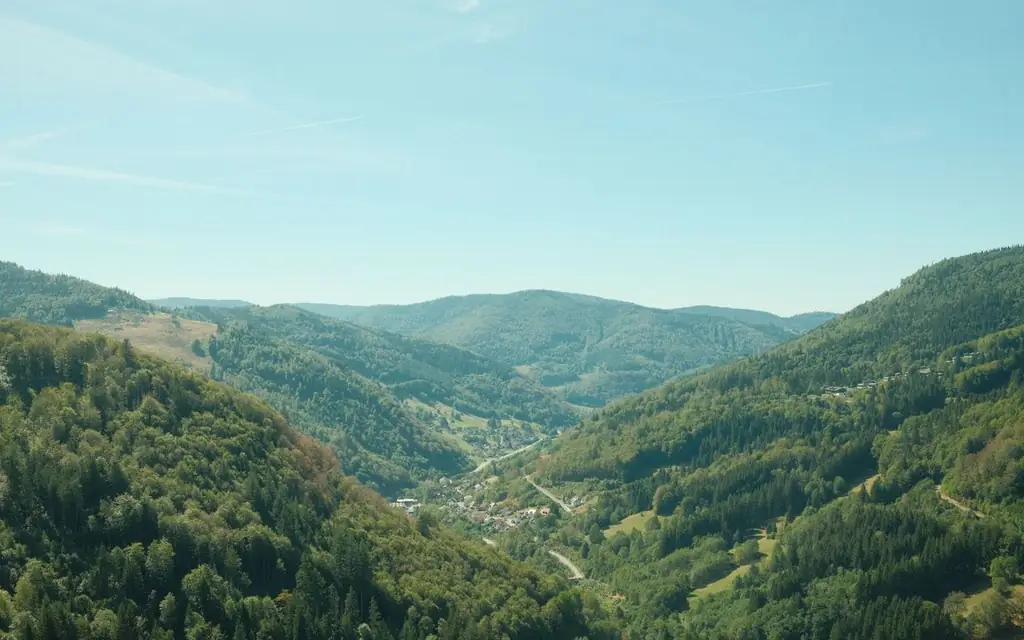
The Rhine Gorge is not a single attraction. It is a corridor of about 65 kilometers where the river cuts through slate hills, with castles on the ridges, terraced vineyards on the slopes and small towns squeezed between the water and the rock. A Rhine Gorge private tour with driver works because the corridor is long, the best stops are spread along it, and the roads on the two banks are slow enough that parking, ferries and one-way routing decide the day.
UNESCO inscribed the Upper Middle Rhine Valley in 2002, describing the stretch between Bingen and Rüdesheim in the south and Koblenz in the north. This guide gives the stops in the order a driver would take them, with the facts that matter for a car. Visitor details come from the region's tourism sites and UNESCO, and were read in October 2026.
How do you get to the Rhine Gorge by car?
The Rhine Gorge starts at Bingen and Rüdesheim, about 65 km (40 miles) west of Frankfurt Airport, usually under an hour, and runs about 65 km north to Koblenz. Roads run on both banks, the B9 on the left and the B42 on the right, with car ferries between them.
Frankfurt Airport is the natural gateway: it is the closest major airport to the southern end of the gorge. The Frankfurt Airport page and the Frankfurt chauffeur service page explain pickups. Cologne is the natural exit at the northern end, about 95 km (59 miles) from Koblenz. Between the two, a one-way drive with five stops is a full day of about 190 km (118 miles) of direct driving plus the gorge detours.
A corridor, not a point: the UNESCO stretch
The UNESCO listing describes a roughly 65 km section of river, from river kilometer 527 to 592, between Bingen and Koblenz. It was inscribed on June 29, 2002 for its combination of the Rhine as a transport route, its castles and its terraced vineyards. The deepest, narrowest part of the gorge lies around the Loreley rock, where the river runs through a channel less than 130 meters wide.
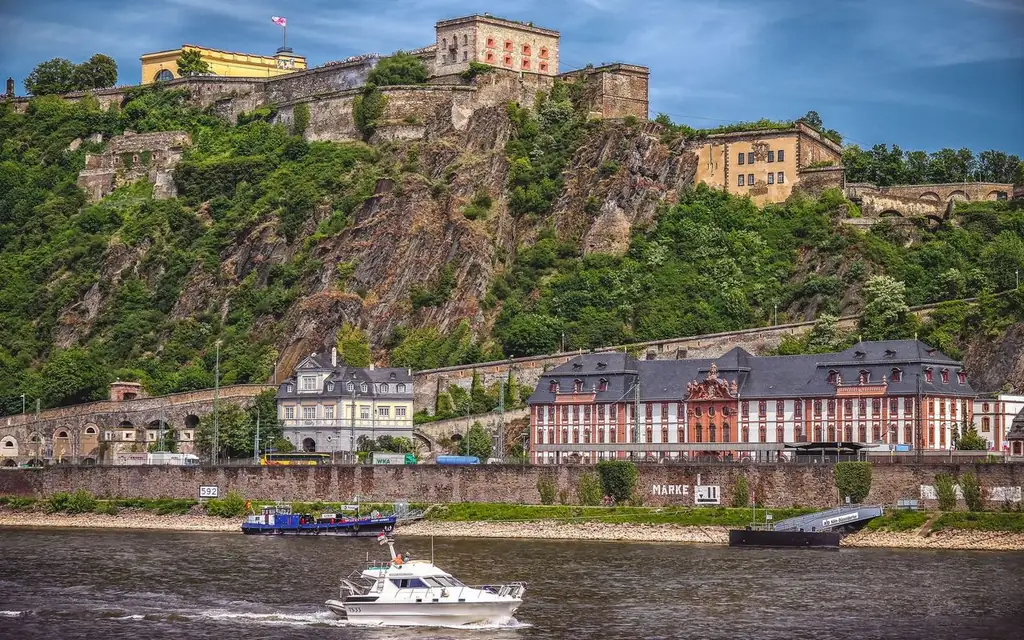
A short introduction on what is where. In the south, Rüdesheim and Bingen face each other across the river at the gorge's gate. Through the middle run Bacharach, Oberwesel, the Loreley, and the twin towns of St. Goar and St. Goarshausen. In the north, Boppard, Braubach with its castle, and the city of Koblenz close the stretch. The Romantic Rhine tourism board and the World Heritage Middle Rhine Valley site list the sights.
Left bank or right bank?
Both banks have a main road through the villages, and they are not the same experience.
- Right bank (the B42). Runs from the Wiesbaden area through Rüdesheim and the Rheingau toward Koblenz. It passes the Loreley rock side of the river and the town of St. Goarshausen. The views of castles are typically from the road to the opposite bank.
- Left bank (the B9). Runs from Bingen through Bacharach, Oberwesel and Boppard to Koblenz. It passes St. Goar and gives the view back to the Loreley from below.
Railway lines run along both banks, close to the river, and freight trains pass frequently, which affects how pleasant an outdoor terrace is. The towns are small, the roads pass through them with speed limits, and a drive that looks like an hour on the map can take twice that with stops. A chauffeur normally runs the route in a single direction on the bank that suits the day's stops and crosses once by ferry.
Stop one: Rüdesheim and the Niederwald
Rüdesheim am Rhein is the southern gate, 65 km (40 miles) from Frankfurt Airport. The town's cable car lifts visitors from the old town over the vineyards to the Niederwald Monument, a large statue above the river. The cable car replaced a rack railway in 1954, its valley station was converted in 2022, and it runs seasonally. Check the Rüdesheim cable car page for the current dates and hours, since the end of the season falls in autumn.
For a car, there is a paid parking area at the monument for those who drive up, with a daily rate for cars. The town's old center has narrow lanes, so the chauffeur sets you down at the edge of the pedestrian area. Allow 90 minutes for the town and the monument.
Stop two: Bacharach and the castles
North of Bingen on the left bank, Bacharach is a compact town of half-timbered houses with ridge-top castle ruins. It is a good place for a coffee stop and a short walk along the walls. Across the river at Kaub, on the right bank, the toll castle of Pfalzgrafenstein stands on a small island in the stream and is reached by a short boat ride from the shore. These are small, sensible stops, 20 to 40 minutes each, and a driver can choose one or two depending on the weather.

Stop three: the Loreley
The Loreley is the steep slate rock on the right bank at the narrowest, deepest point of the river. The legend of a singing woman who lures sailors to their deaths was shaped by the poets Clemens Brentano and later Heinrich Heine, according to the UNESCO documentation.
The Loreley visitor centre on the plateau above the rock opened in 2000. One published schedule lists it as open from 10:00 am to 5:00 pm from March to October and from 11:00 am to 4:00 pm from November to February, with free admission, while other sources give an Easter-to-late-October season, so check the hours before you plan a winter stop. A more famous view is from the river path below, where a statue of the Loreley sits on a harbor mole at the foot of the rock. Drive up to the plateau for the view; drive down to the harbor for the statue.
Stop four: St. Goar, St. Goarshausen and the car ferry
The two towns face each other across the river. A car and foot ferry links them, operated by Fähre Loreley, and it is one of the most frequently used crossings on this stretch. Because the Rhine has few bridges in the gorge, the ferries are the only way to switch banks between Bingen and Koblenz. Check the operator's timetable on the day, since services pause for events and low or high water.
On the left bank above St. Goar, the Rheinfels castle ruin is a large fortress with views over the river. On the right bank, Burg Katz stands on the slope above St. Goarshausen. A common chauffeured plan is to drive the right bank from Rüdesheim to St. Goarshausen, cross by ferry to St. Goar, visit the fortress and continue north on the left bank to Boppard.
Stop five: Boppard and Marksburg
Boppard is the largest town in the gorge and has a Roman fort wall, a riverside promenade and a good lunch stop. Marksburg, in Braubach on the right bank, is the one hill castle on the Rhine that has never been destroyed, according to the regional tourism site. The Lords of Eppstein built it from 1231 to protect nearby silver mines. For 2026 the official listing gives opening hours of 10:00 am to 5:00 pm daily from April 3 to October 31, with shorter winter hours of 11:00 am to 4:00 pm, and entry to the castle is on guided tours. See the Marksburg page.
Marksburg stands about 10 km (6 miles) south of Koblenz, so it works as the last major stop before the city. From Koblenz the road continues to Cologne or back toward Frankfurt.
Mixing the car with the river
The classic Rhine experience is the river boat, and boats run in season between several of these towns. A chauffeur can set the day up so that you take the boat for one leg and the car meets you at the landing. This lets you see the castles from the water on the best stretch, from Rüdesheim or Bacharach to St. Goar, and avoids the return trip by taking the car ahead to the next stop. Timetables and tickets are with the boat operator, and sailing days thin out in late autumn and winter, so check them before choosing a date.
The one-way day: Frankfurt Airport to Cologne
A plan that suits an arrival in the morning and a departure in the evening or the next day:
- Frankfurt Airport, 9:00 am: meet the chauffeur and drive west, about 65 km (40 miles) to Rüdesheim.
- Rüdesheim, 10:00 to 11:30 am: the old town and the cable car if it is running.
- Bacharach and the right-bank road, 12:00 pm: a coffee, then north to the Loreley.
- Loreley and St. Goarshausen, 1:30 pm: the plateau and lunch.
- Ferry to St. Goar, 3:00 pm: the fortress and the river, then north to Boppard.
- Marksburg, 4:30 pm: if the guided tour fits the hours.
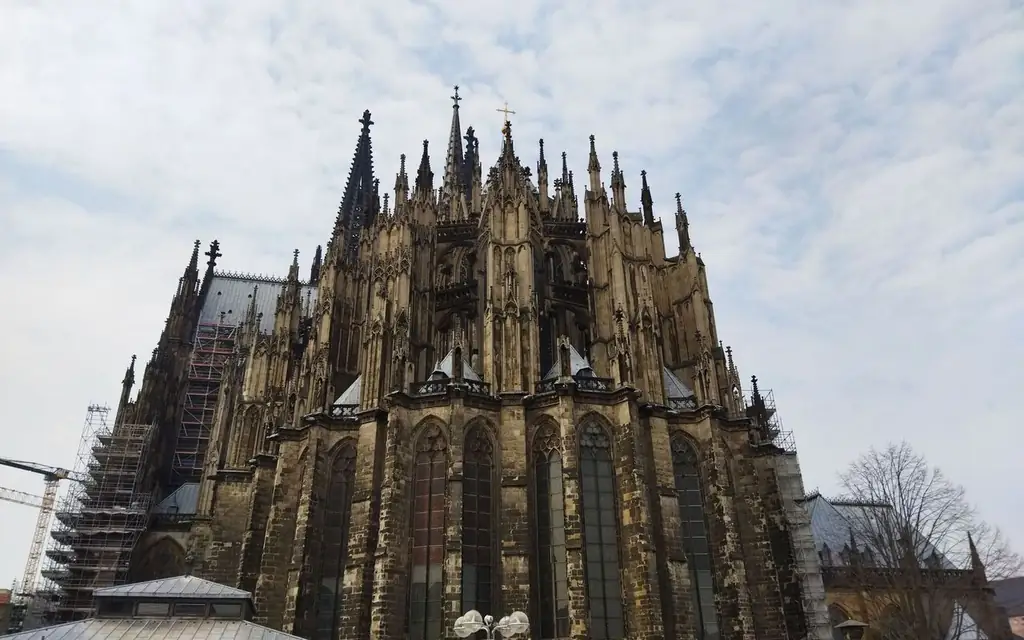
- Koblenz, 6:00 pm, then Cologne, 7:30 pm: about 95 km (59 miles) on from Koblenz, arriving at the Cologne Cathedral area for dinner.
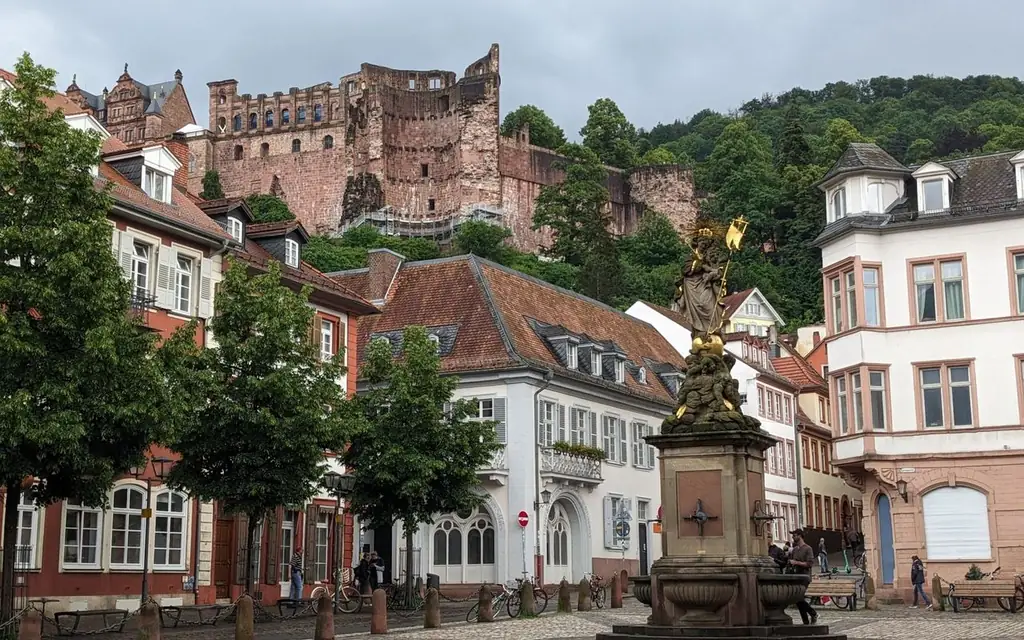
The route is more than 250 km (155 miles) of driving once the detours are counted, so it is a long day. A shorter version is a return trip from Frankfurt that covers Rüdesheim, the Loreley and one castle, about 4 to 5 hours of driving. Other connections are Heidelberg Castle to the south-east and the Black Forest further south, listed with the rest on the Europe directory, the attractions hub and the private tours with driver page.
Getting along the Rhine Gorge compared
| Option | Time | Cost note | Best for |
|---|---|---|---|
| Regional train along either bank | Frequent, village to village | Lowest | Walkers and solo travelers |
| Passenger river boat (seasonal) | Slow, scenic | Fixed ticket | The classic view of the castles |
| Rental car | Flexible, slow in villages | Rental plus parking | Self-drivers with a car for several days |
| Organized coach tour | Full day | Lowest per person | Fixed itineraries from Frankfurt or Rüdesheim |
| Private chauffeur | Flexible, one-way possible | Fixed fare via the booker | Airport arrivals, groups, a one-way route to Cologne |
On a clear summer day a boat plus the train is a pleasant and inexpensive way to see the gorge, and the train alone is excellent for a walker. The chauffeur is the better answer if you land at Frankfurt with luggage, want to stop where and when you choose, or need to end the day in a different city.
Practical notes for a driven day
- Luggage: the villages have little left-luggage space and the castles do not welcome large bags, so luggage stays in the vehicle and the chauffeur does not leave it unattended.
- Walking: the old towns are flat, but castle approaches are steep. Marksburg, Rheinfels and Pfalzgrafenstein all involve stairs or slopes.
- Timing: the afternoon sun lights the right-bank slopes from the river side, so a south-to-north day finishes with the best light at the Loreley and St. Goar.
- Parking: riverside car parks in the larger villages are busy on summer weekends and in the harvest season. A chauffeur sets you down first and parks afterward.
- Child seats: child, toddler and booster seats are available on request at booking.
Seasons and wine
Late spring to early autumn is the main season: boats run, castles are open and terraces are full. The grape harvest in September and October brings the busiest weekends in the wine villages, and the end of October brings shorter hours at the castles. Winter is quiet and atmospheric, but many attractions shorten their hours or close, and low mist can hide the view from the ridge. Riesling is the grape of the slopes, and tastings are offered in the villages. Remember that the driver should not drink; plan the tasting for the evening, or let the group taste while the chauffeur waits.
Frequently asked questions
How far is the Rhine Gorge from Frankfurt Airport?
The southern end at Rüdesheim and Bingen is about 65 km (40 miles) from Frankfurt Airport, usually under an hour. Koblenz, at the northern end, is around 120 km (75 miles).
How long is the UNESCO Rhine Gorge?
About 65 km (40 miles), from Bingen and Rüdesheim to Koblenz, inscribed by UNESCO in 2002.
Is there a bridge across the Rhine in the gorge?
No bridges cross the river between Bingen and Koblenz. Car ferries, such as the one between St. Goar and St. Goarshausen, connect the banks.
Which bank has the better road?
Neither is clearly better. The right bank (B42) passes the Loreley side, the left bank (B9) passes St. Goar. Many chauffeured days use both with one ferry crossing.
Can I do the Rhine Gorge in a day?
Yes. A one-way day from Frankfurt Airport to Cologne with five stops is about 250 km (155 miles) of driving and 9 to 10 hours with stops. A shorter loop from Frankfurt takes 5 to 6 hours.
Is Marksburg open in winter?
For 2026 the official listing gives shorter winter hours of 11:00 am to 4:00 pm after October 31. Entry is by guided tour, so check the schedule before you go.
When does the Rüdesheim cable car run?
It runs seasonally, from spring into autumn. The town's website lists the current dates and hours.
Can the chauffeur wait while I take a river boat?
Yes. The car can meet you at the next landing, or wait where you started. Tell the desk which boat leg you plan and the time is part of the quote.
Can I book a one-way Rhine Gorge transfer to Cologne or Koblenz?
Yes. Use the online booker to see the fare for your pickup point, drop-off and vehicle class.