 United StatesJFK
 MexicoMEX
 BrazilGRU
 ArgentinaEZE
 ChileSCL
 ColombiaBOG
 PeruLIM
 PanamaPTY
 Costa RicaSJO
 Dominican RepublicPUJ
 JamaicaMBJ
 BahamasNAS
 BarbadosBGI
 United KingdomLHR
 IrelandDUB
 FranceCDG
 GermanyFRA
 NetherlandsAMS
 BelgiumBRU
 SwitzerlandZRH
 AustriaVIE
 ItalyFCO
 SpainMAD
 PortugalLIS
 GreeceATH
 TurkeyIST
 DenmarkCPH
 SwedenARN
 NorwayOSL
 FinlandHEL
 PolandWAW
 Czech RepublicPRG
 HungaryBUD
 IcelandKEF
 United Arab EmiratesDXB
 QatarDOH
 Saudi ArabiaRUH
 IsraelTLV
 EgyptCAI
 MoroccoCMN
 South AfricaJNB
 KenyaNBO
 NigeriaLOS
 IndiaDEL
 PakistanLHE
 Sri LankaCMB
 SingaporeSIN
 MalaysiaKUL
 ThailandBKK
 VietnamSGN
 PhilippinesMNL
 IndonesiaCGK
 Hong KongHKG
 ChinaPVG
 TaiwanTPE
 JapanHND
 South KoreaICN
 AustraliaSYD
 New ZealandAKL
You notice Rotorua before you see it. The faint smell of sulphur drifts across the motorway as you come over the hills, steam rises from gardens and storm drains, and the lake below the city is ringed by vents and hot pools. This is one of the most active geothermal areas in New Zealand and the heartland of Te Arawa, the Māori iwi whose people have lived with this landscape for centuries and have hosted visitors here longer than almost anywhere else in the country.
A Rotorua private tour with driver suits the place well. The headline attractions are a few minutes apart in some cases and 30 km apart in others, entry times matter (one geyser performs at a set hour), and cultural evenings finish after dark. With a chauffeur the day is built around those fixed points rather than around parking.
How do you get to Rotorua by car?
Rotorua is about 230 km (143 mi) south-east of Auckland, roughly three hours by car. Rotorua Airport (ROT) is about 10 km (6 mi) by road from the city centre, around 15 minutes. From Hobbiton it is about 65 km (40 mi), roughly an hour, and Taupō is about 80 km (50 mi) to the south.
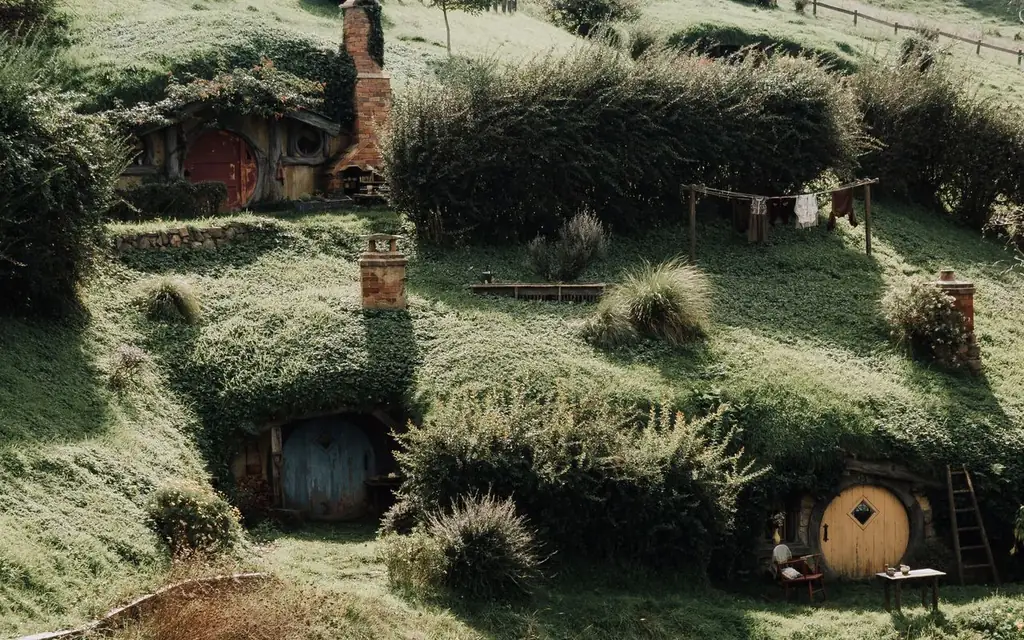
Most international visitors arrive through Auckland and either fly the short domestic hop to Rotorua Airport or make the drive. By road from Auckland the route follows State Highway 1 and the Waikato Expressway south before turning east; many travellers break the journey at the Hobbiton Movie Set, which sits almost on the way. Information on domestic flights and the terminal is on the Rotorua Airport site.
| Route | Distance | Typical drive |
|---|---|---|
| Rotorua Airport to city centre | about 10 km (6 mi) | about 15 min |
| Auckland to Rotorua | about 230 km (143 mi) | about 3 hr |
| Auckland Airport to Rotorua | about 220 km (137 mi) | 2 hr 45–3 hr |
| Hobbiton to Rotorua | about 65 km (40 mi) | about 1 hr |
| Tauranga to Rotorua | about 60 km (37 mi) | about 1 hr |
| Rotorua to Taupō | about 80 km (50 mi) | about 1 hr |
Rotorua in three zones
It helps to think of Rotorua's sights as three clusters, because a good chauffeured day moves between them in a logical order.
1. Whakarewarewa, on the southern edge of the city. The thermal valley of Whakarewarewa holds two separate experiences that are often confused. Te Puia, entered from Hemo Road, is home to Pōhutu, widely described as the largest active geyser in the Southern Hemisphere, together with the national Māori arts and crafts school and a kiwi conservation house; its guided daytime experience lasts about 90 minutes. Across the valley, Whakarewarewa – The Living Māori Village, entered from Tryon Street, is a living community of the Tūhourangi Ngāti Wāhiao people, where residents still cook in steam boxes and bathe in naturally heated water; guided village tours run roughly an hour. Both are less than ten minutes from the city centre by car.
2. The lakefront and city centre. Government Gardens, the lakefront and the Polynesian Spa sit on the edge of Lake Rotorua, within a short walk of central hotels. Kuirau Park, a free public park with steaming pools, is on the western side of the centre. The Redwoods Whakarewarewa Forest, with its walking tracks and treewalk, is about 5 km (3 mi) east of the centre. The Skyline gondola climbs Mount Ngongotahā on the north-west side of the city.
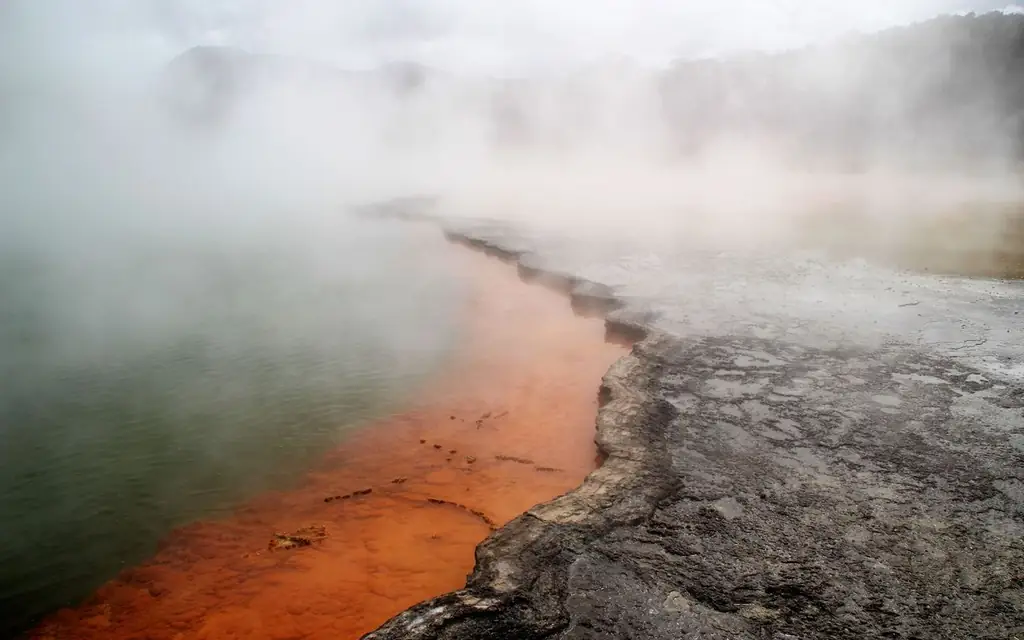
3. The volcanic corridor south on State Highway 5. This is where the most dramatic thermal landscapes are. Wai-O-Tapu Thermal Wonderland, at 201 Waiotapu Loop Road, is about 30 km (19 mi) south, roughly 25 to 30 minutes, with its coloured Champagne Pool and terraces. Waimangu Volcanic Valley, formed by the 1886 Tarawera eruption, lies off the same highway.
Why your day revolves around 10:15
Wai-O-Tapu's Lady Knox Geyser is presented at 10:15 every morning, and the site asks visitors to arrive by 9:45. The geyser sits a short drive from the main entrance, and the presentation is the reason the car park is busiest mid-morning. Wai-O-Tapu opens daily from 8:30 to 16:30, with last admission at 15:00, and it is closed on Christmas Day. It is also cashless, so bring a card.
The practical consequence for a chauffeured day is simple: leave central Rotorua by about 9:15, see Lady Knox, then walk the main Wai-O-Tapu tracks after the crowds disperse. Your driver collects you from the main car park and the rest of the day unfolds northwards, back towards the city.
East of the city: the lakes road to Tarawera
A second, quieter half day runs east from the city along Tarawera Road, through the Redwoods and past two small crater lakes. Tikitapu, the Blue Lake, has a lakeside reserve and a walking track around its shore. Next to it lies Rotokākahi, the Green Lake, which belongs to local iwi and is not open for swimming or boating; it is best appreciated from the roadside lookout on the ridge between the two.
The road ends at Lake Tarawera, about 15–20 km (9–12 mi) from central Rotorua and 20 to 25 minutes by car, below the long, flat-topped mountain whose 1886 eruption reshaped this whole district. On the way, the Buried Village of Te Wairoa preserves the excavated remains of a settlement covered by that eruption, with a small museum and a walk down to a waterfall. Lake Tarawera itself has a jetty and water-taxi and cruise operators, and the drive back offers some of the best views of the lakes in the afternoon light.
This route pairs well with an afternoon soak at the lakefront spa in town or a late lunch, and it is a good choice for the day after a long Wai-O-Tapu morning, when nobody wants to start before ten.
When to visit Rotorua
Rotorua is a year-round destination because most of what you come to see is underground heat. A few seasonal points are still worth knowing:
- Summer (December to February) brings the busiest roads and full cultural evenings; book shows and Te Puia guided experiences ahead, particularly around New Zealand school holidays.
- Autumn (March to May) is settled and mild, a good time for the forest walks and lake drives.
- Winter (June to August) is cool and damp, which makes the steam far more visible across the thermal parks and the city's hot pools especially appealing. Days are short, so start the Wai-O-Tapu run on time.
- Spring (September to November) is changeable but quieter at the main sites.
Whatever the season, the thermal parks ask for sturdy shoes, and a light rain layer is never wasted. Early mornings are calmest at the most popular viewpoints, which is another reason the 10:15 geyser presentation works well as the anchor of a chauffeured day.
Getting around Rotorua: options compared
| Option | Typical use | Cost note | Who it suits | Limitations |
|---|---|---|---|---|
| Walking | City centre, lakefront, Kuirau Park | Free | Anyone staying centrally | Whakarewarewa and the southern sites are too far |
| City bus | Fixed routes in town | Lowest | Budget travellers in town | Does not serve Wai-O-Tapu or Waimangu |
| Taxi or rideshare | Short hops, airport | Metered or surge-priced | Single transfers | Thin supply for waiting at sites, evening peaks after cultural shows |
| Rental car | Self-guided exploring | Daily rate plus fuel | Confident drivers on long trips | Driving on the left, unfamiliar rural roads after dark |
| Coach tour | Packaged circuits | Per seat | Solo travellers | Fixed timings, may miss the 10:15 geyser |
| Private chauffeur | Full or half days, transfers | Fixed fare via the booker | Families, groups, executives, evening dinners | Pre-booking needed |
If you are staying in the centre and only plan to walk the lakefront, soak at the spa and visit Te Puia, a taxi each way is the honest, simpler answer. The value of a driver shows on a day that includes Wai-O-Tapu, a second thermal park and an evening cultural experience.
Rotorua private tour with driver: full-day plan
- 09:15 pickup in central Rotorua; 25–30 minutes south on State Highway 5.
- 09:45 arrive at Wai-O-Tapu for the 10:15 Lady Knox Geyser presentation.
- 10:45–12:15 walk the Wai-O-Tapu tracks: Champagne Pool, the Artist's Palette and the mud pools.
- 12:30 optional stop at Waimangu Volcanic Valley, or straight back north.
- 13:30 lunch in the city.
- 14:30–16:30 Te Puia guided experience, or a guided tour of Whakarewarewa village.
- Evening a cultural evening with a hāngī meal, collected and returned by your driver.
Half-day alternative: 09:15 Wai-O-Tapu and Lady Knox, then the Redwoods forest on the way back, finishing in town by early afternoon.
Book a driver for the day in Rotorua
Cultural evenings and respectful visiting
Several Māori cultural experiences in and around Rotorua offer an evening programme: a welcome, performance and a hāngī, food cooked in an earth oven or steam vent. These are living cultural practices, not costume shows. Listen to your hosts' guidance at the welcome, follow instructions on when to stand, sit or take photographs, and remember that some areas of a marae or village are not open to visitors. If you are invited to share a hongi, the pressing of noses in greeting, your host will show you how.
Evenings finish after dark and often outside the centre, which is where a booked chauffeur is most useful: no waiting for a taxi with a full tour group on the same kerb.
Safety on geothermal ground
Rotorua's thermal features are beautiful and genuinely dangerous. Water in the pools can be at or above boiling point and the ground near vents can be thin. Stay on formed paths and inside barriers, keep children by the hand, and follow signage. Some thermal parks have uneven gravel tracks and steps; check accessibility with each operator if mobility is limited, and tell our desk so the vehicle is right for a wheelchair or walker.
The sulphur smell is harmless at normal levels and most visitors stop noticing it after a few hours.
Combining Rotorua with the rest of New Zealand
Rotorua sits in the middle of the North Island's most popular touring circuit. Hobbiton lies about an hour to the west; Taupō and the great lake are about an hour to the south, with Tongariro National Park beyond. Tauranga, with its cruise port and the beaches of Mount Maunganui, is about an hour to the north-east. A chauffeured multi-day itinerary can link them all with hotel-to-hotel transfers and luggage handled throughout.
On the South Island, our guides to Queenstown and Milford Sound cover the alpine side of New Zealand. For more ideas, the regional tourism organisation publishes events and opening information on Rotorua's official visitor site.
Vehicles and booking
LimousineWorldwideDirectory.com runs a 24/7 booking desk. Your Rotorua driver comes from a vetted, licensed and commercially insured local operator in our worldwide directory, and the trip is booked, confirmed and invoiced by our desk. Vehicles are late-model, maintained and inspected; classes are confirmed "or similar" at booking:
- Executive Sedan (Mercedes-Benz E-Class or similar), up to 3 passengers.
- First Class Sedan (Mercedes-Benz S-Class or similar), up to 3 passengers.
- Luxury SUV, up to 6 passengers with 5–6 large bags.
- Executive Sprinter, up to 12–14 passengers for groups and conference delegates.
Child seats are available on request; water and phone chargers are in most vehicles. Airport pickups include flight tracking and free waiting time (60 minutes after international landings, 30 minutes domestic). See the fleet, the airports we serve, the Asia-Pacific directory and all our private tours with driver. Tourist offices and visitor centres can book chauffeur services for their visitors through a trade account; see tourist offices in Asia-Pacific.
Frequently asked questions
How far is Rotorua from Auckland by car?
About 230 km (143 mi), roughly three hours. From Auckland Airport allow two and three-quarter to three hours, depending on traffic leaving Auckland.
What time does Lady Knox Geyser go off?
Lady Knox Geyser at Wai-O-Tapu is presented at 10:15 every morning. Wai-O-Tapu asks visitors to arrive by 9:45.
How far is Wai-O-Tapu from Rotorua?
About 30 km (19 mi) south on State Highway 5, around 25 to 30 minutes by car.
What is the difference between Te Puia and Whakarewarewa village?
Both are in the Whakarewarewa thermal valley. Te Puia, entered from Hemo Road, has Pōhutu geyser, the Māori arts and crafts school and a kiwi house. The Living Māori Village, entered from Tryon Street, is a residential community that offers guided tours of daily geothermal life.
Can I visit Hobbiton and Rotorua in one day?
Yes. Hobbiton is about 65 km (40 mi) from Rotorua, roughly an hour. A chauffeured transfer from Auckland can stop at Hobbiton on the way to Rotorua.
How far is Rotorua Airport from the city centre?
About 10 km (6 mi) by road, roughly 15 minutes.
Can I see the Blue and Green Lakes on a Rotorua private tour?
Yes. Both sit beside Tarawera Road east of the city, on the way to Lake Tarawera, about 15–20 km (9–12 mi) from the centre. The Blue Lake has a public reserve and a shoreline walk. The Green Lake belongs to local iwi and is not open for swimming or boating, so visitors view it from the roadside lookout between the two lakes.
Is Rotorua a good day out for young children?
Generally yes, with care. Geysers, mud pools and the kiwi house hold children's attention, and the distances between sites are short. Keep small children by the hand on thermal paths, choose shorter walks, and ask for child or booster seats when you book.
How much is a private driver in Rotorua?
It depends on hours, stops and vehicle. Put your plan into the online booker and it returns a fixed fare before you book.