
 United StatesJFK
 MexicoMEX
 BrazilGRU
 ArgentinaEZE
 ChileSCL
 ColombiaBOG
 PeruLIM
 PanamaPTY
 Costa RicaSJO
 Dominican RepublicPUJ
 JamaicaMBJ
 BahamasNAS
 BarbadosBGI
 United KingdomLHR
 IrelandDUB
 FranceCDG
 GermanyFRA
 NetherlandsAMS
 BelgiumBRU
 SwitzerlandZRH
 AustriaVIE
 ItalyFCO
 SpainMAD
 PortugalLIS
 GreeceATH
 TurkeyIST
 DenmarkCPH
 SwedenARN
 NorwayOSL
 FinlandHEL
 PolandWAW
 Czech RepublicPRG
 HungaryBUD
 IcelandKEF
 United Arab EmiratesDXB
 QatarDOH
 Saudi ArabiaRUH
 IsraelTLV
 EgyptCAI
 MoroccoCMN
 South AfricaJNB
 KenyaNBO
 NigeriaLOS
 IndiaDEL
 PakistanLHE
 Sri LankaCMB
 SingaporeSIN
 MalaysiaKUL
 ThailandBKK
 VietnamSGN
 PhilippinesMNL
 IndonesiaCGK
 Hong KongHKG
 ChinaPVG
 TaiwanTPE
 JapanHND
 South KoreaICN
 AustraliaSYD
 New ZealandAKL
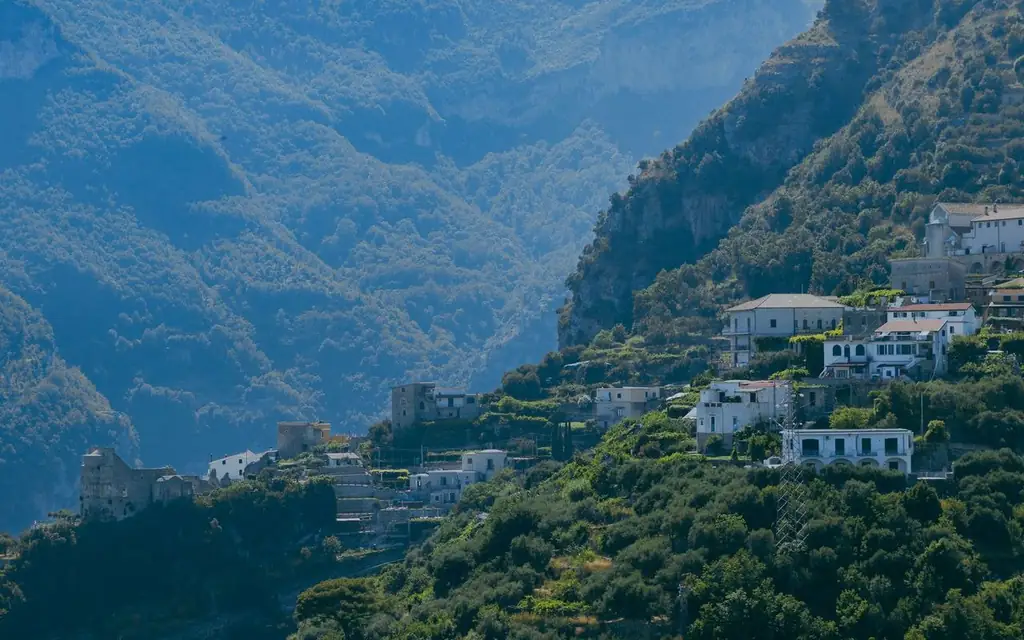
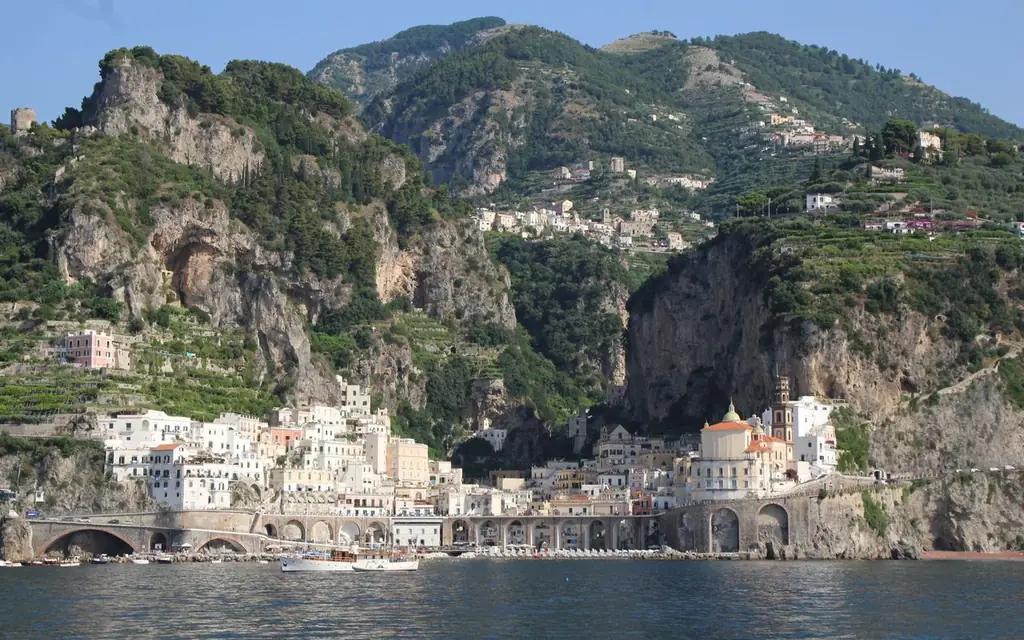
Nobody visits the Amalfi Coast for a destination. They visit it for the road: a single carriageway cut into limestone cliffs, with a drop of tens of meters on one side and a wall of lemon terraces on the other. The coast runs between the Gulf of Naples and the Gulf of Salerno, backed by the Lattari Mountains, and UNESCO has listed it as a cultural landscape since 1997. An Amalfi Coast private tour with driver hands the wheel to someone who drives that road every week, which is the single most useful thing you can buy here.
What follows is a practical briefing for visitors arriving from Naples, Sorrento, Salerno or Rome: how long the drive really takes, which direction to run it, what the traffic rules look like in peak months, where to stop, and when a boat or a bus beats a car.
What is the Amalfi Coast, and how long is a proper drive?
The Amalfi Coast is a stretch of the Campania shoreline between Sorrento and Salerno, made up of 16 municipalities, including Positano, Amalfi and Ravello. UNESCO listed it in 1997. The coast road, the SS163, is slow: allow 1 hour 30 minutes to 2 hours between Sorrento and Amalfi, and more in July and August.
Italia.it, Italy's national tourism site, names the 16 municipalities of the Amalfi Coast in the province of Salerno: Amalfi, Atrani, Cava de' Tirreni, Cetara, Conca dei Marini, Furore, Maiori, Minori, Praiano, Positano, Raito, Ravello, Sant'Egidio del Monte Albino, Scala, Tramonti and Vietri sul Mare. It also lists sights that anchor most itineraries: Positano, Amalfi with its cathedral, Vietri sul Mare for ceramics, Cetara as a fishing village, the gardens at Ravello, and the Path of the Gods, a 9 km trail from Agerola to Positano.
Which direction should the drive run?
There are two sensible approaches, and the right one depends on where you sleep and what you want to see.
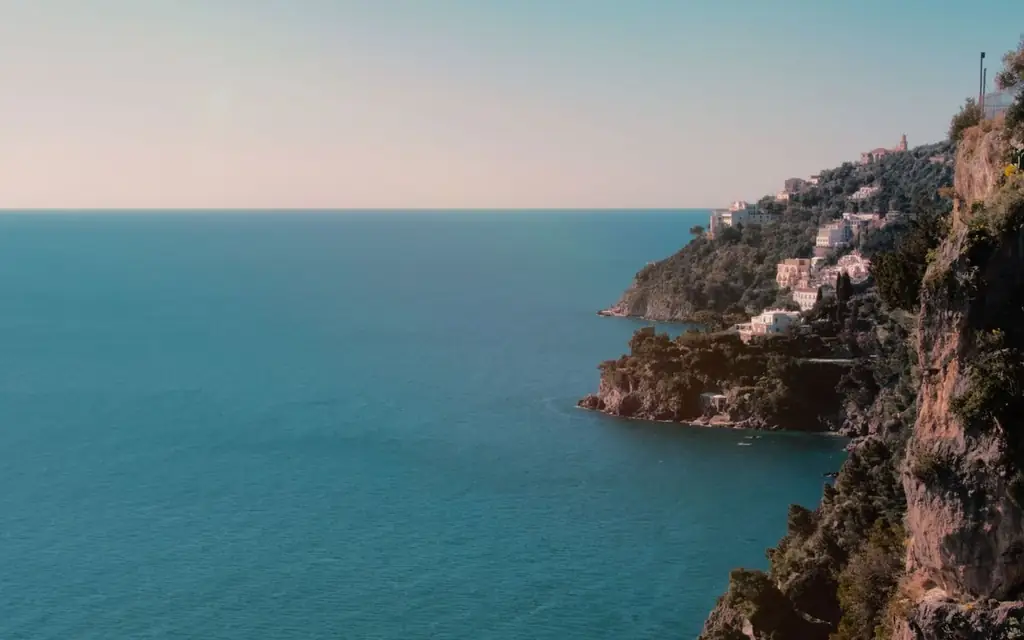
- West to east, from Sorrento or Naples toward Amalfi and Salerno. If you are staying on the Sorrento peninsula, this puts the sea on your right, which is the passenger side in right-hand traffic. It suits visitors who want the views from the car and an easy return by ferry or train.
- East to west, from Salerno toward Positano. Salerno has a rail station and a port, and this direction is useful for those arriving from Rome by train or from cruise ships.
A third pattern is a one-way trip with a ferry return. The driver takes you along the road, you travel back by sea, and the car meets you at the other end. The desk can plan these loops, because they spread the time on the road across a longer, calmer day.
How far is the coast from Naples, Sorrento and Rome?
Typical distances and drive times, in normal traffic and outside the worst July and August jams:
- Naples Capodichino Airport to Amalfi: about 70 km (43 mi), 1 hour 30 minutes to 2 hours.
- Sorrento to Positano: the first, most winding leg, about 17 km (11 mi). See the Sorrento guide.
- Positano to Amalfi: about 16 km (10 mi), 40 minutes to 1 hour 15 minutes. The Positano guide covers the village itself.
- Amalfi to Ravello: about 6 km (4 mi), 15 to 30 minutes. See the Ravello guide.
- Amalfi to Salerno: about 35 km (22 mi), 1 hour to 1 hour 30 minutes.
- Rome to Amalfi: about 290 km (180 mi), 3 hours 30 minutes to 4 hours 30 minutes. The Rome chauffeur service page explains the Rome pickup.
- Rome Fiumicino to Amalfi: about 300 km (186 mi), 3.5 to 4.5 hours. See the Fiumicino airport page.
Treat these as honest ranges, not promises. A single stuck coach in a narrow bend can add half an hour.
What are the traffic rules on the SS163?
In recent summers the local authorities have used an alternating-plate system on the SS163 in busy periods: on odd-numbered dates, vehicles with odd final plate digits may not circulate during set hours, and on even dates the reverse. Guides have reported exemptions for residents and for guests with confirmed accommodation, but the dates, hours and exemptions are set locally and can change from year to year. No official 2026 calendar was available when this guide was written, so check the current ordinance with the municipality or the regional agency before you rely on any specific dates.
For a chauffeur booking, the practical effect is simple. Tell the desk where you are staying and the day you travel, and the desk checks whether the vehicle and the route are allowed. Other facts that shape the drive:
- The road is narrow in places, and large coaches have priority on tight bends. A smaller passenger vehicle usually moves more easily than a big one.
- Parking is scarce and expensive in the villages, and many streets are pedestrian.
- Camera-enforced limited-traffic zones apply in several towns, so a driver with local knowledge avoids fines you might otherwise collect.
- Rental cars face the same rules as everyone else, and a driver unfamiliar with the bends needs more margin than the timetable suggests.
Where should you stop?
You cannot visit all 16 municipalities in a day, and nobody should try. A short list that works:

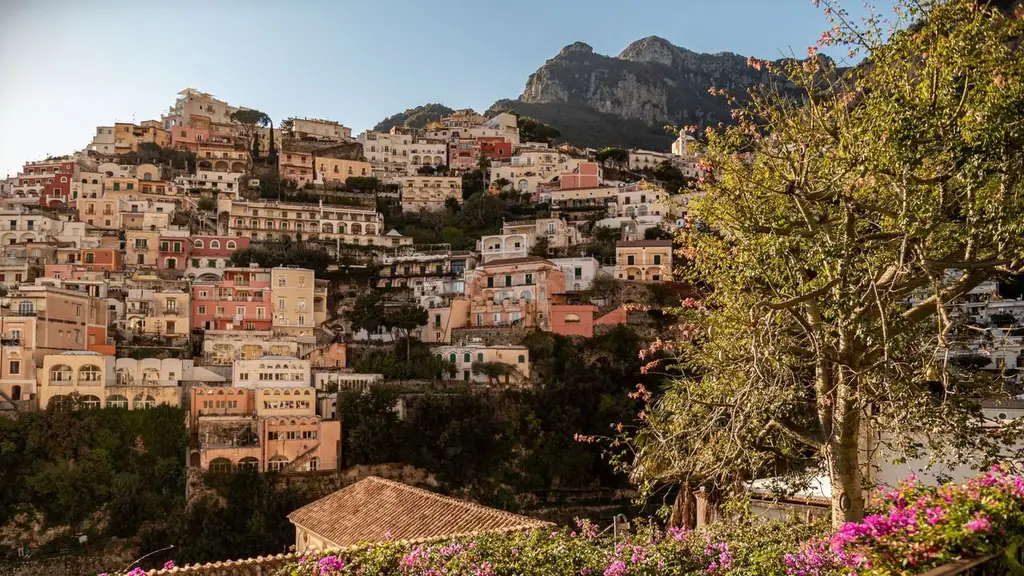
- Positano, the vertical village with the main beach and the church of Santa Maria Assunta, best seen from a viewpoint on the way in. Italia.it's Positano page describes the beaches and the stairways.
- Praiano and Conca dei Marini, quiet stretches between the two famous towns, where Italia.it places the Emerald Cave (Grotta dello Smeraldo).
- Amalfi, with the Cathedral of St Andrew the Apostle at the top of a broad staircase and the Cloister of Paradise reached through the church. Amalfi was a maritime republic between the 9th and 11th centuries.
- Atrani, a small village a few minutes from Amalfi.
- Ravello, over 350 meters above sea level, with Villa Rufolo, Villa Cimbrone and a quiet atmosphere; see Italia.it on Ravello.
- Cetara and Vietri sul Mare, on the Salerno side, for the fishing-village atmosphere, anchovy sauce and ceramics.
Which vehicle suits the coast road?
Size matters here more than badge. On a road where two coaches struggle to pass, a sedan or a van is easier to place than a large vehicle. For one to three travelers with luggage, a Mercedes-Benz E-Class or S-Class sedan or similar is the natural choice; families or small groups usually do better in a Mercedes-Benz V-Class or similar. Larger groups can ask for a Sprinter or a mini-coach, and the desk will say honestly whether the plan suits the road. Vehicles are late-model and fully maintained, and the exact model is confirmed at booking.
Is a boat day worth adding?
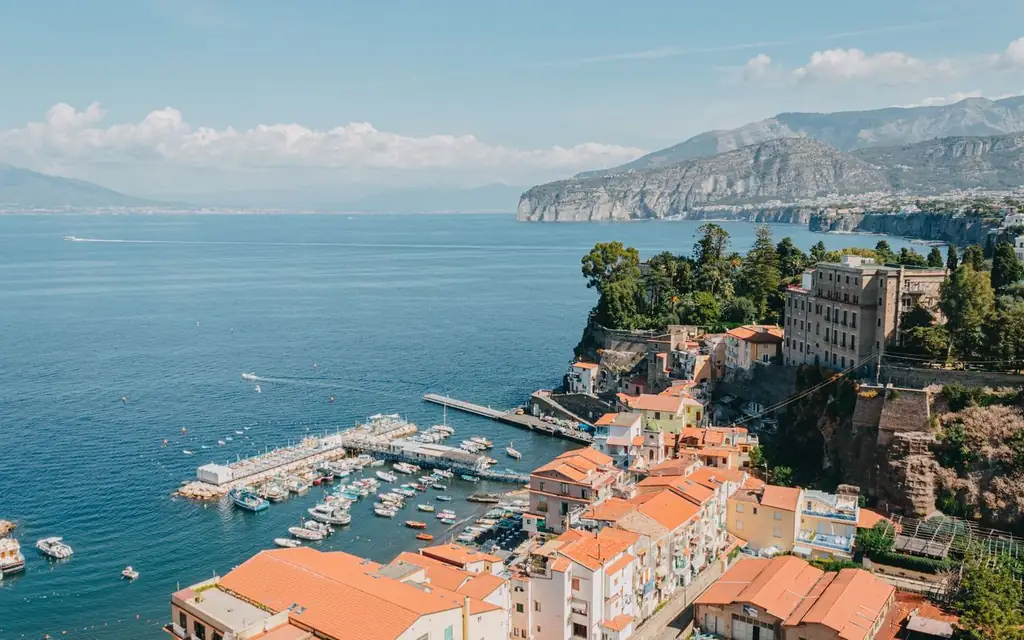
Often, yes. The coast looks different from the water, and some beaches are reachable only by sea, as Italia.it notes. It also says boats can be taken from the port of Salerno. Services are seasonal, and ferry timetables change, so confirm them on the operator's site. A good pattern is to drive the full coast in one direction, take the boat back in the other, and ask the driver to meet you at the pier. That avoids the evening queue on the SS163 and spreads the day between road and sea.
What should you eat on the way?
The coast has its own pantry. Italia.it lists Amalfi lemons with protected geographical indication, Cetara's anchovy sauce known as colatura di alici, local wines and 'ndunderi, a gnocchi of semolina and ricotta. A driver can fit lunch into the route at a town where the parking is less painful, and the desk can pass on dietary notes if you have them, but restaurant reservations remain your responsibility.
When is the best time to go?
The road is at its best in spring and autumn. In late spring the terraces are green and the sea is calm enough for ferries, and October is often warm with thinner crowds. High summer produces the longest queues and the hardest parking, and the alternating-plate rules usually apply then. Winter is quiet, and some hotels, restaurants and boat services pause for the season, so confirm opening before you plan a lunch.
Within the day, start early. The first hours after sunrise are the clearest for views, the last for tour buses, and the afternoon carries the heaviest traffic, especially on weekends. A driver who knows the pinch points will often choose a different order of towns to avoid them.
Should you go by car, bus, ferry or on foot?
| Option | Time Sorrento to Amalfi | Cost note | Who it suits |
|---|---|---|---|
| SITA Sud bus | About 1 hour 30 minutes or longer | Lowest | Light travelers with time; summer buses are crowded |
| Ferry or hydrofoil | Varies by season and route | Ticketed | Visitors who want views and no traffic |
| Metered taxi | About 1 hour to 1 hour 30 minutes | Metered; fares for long trips agreed | Short hops with little luggage |
| Rental car | About 1 hour to 1 hour 45 minutes | Variable | Confident drivers; plate rules, parking and narrow bends |
| Escorted coach tour | Fixed schedule | Ticketed | Those who want a packaged outing |
| Private chauffeur | About 1 hour to 1 hour 45 minutes | Fixed fare via the booker | Luggage, hotel transfers, multi-stop days, mixed-age groups |
If you are traveling light and are happy to plan around a timetable, the bus and the ferry are the lower-cost options, and SITA Sud publishes its bus timetables and notices online. The chauffeur wins on luggage, hotel doors, multiple stops and the flexibility to skip a town where the road has jammed.
What does a full day look like?
A balanced day from Sorrento, designed for a spring or autumn date:

- 8:30: Pickup in Sorrento and a drive along the coast road toward Positano.
- 9:45: A photo stop above Positano, followed by an hour in the village. See the Positano guide.
- 11:30: Continue to Amalfi, with a visit to the cathedral and cloister.
- 13:30: Lunch in Amalfi or Atrani.
- 15:00: Drive up to Ravello for the gardens and the views; see Ravello.
- 17:00: Return to Sorrento or continue to Salerno for a rail connection.
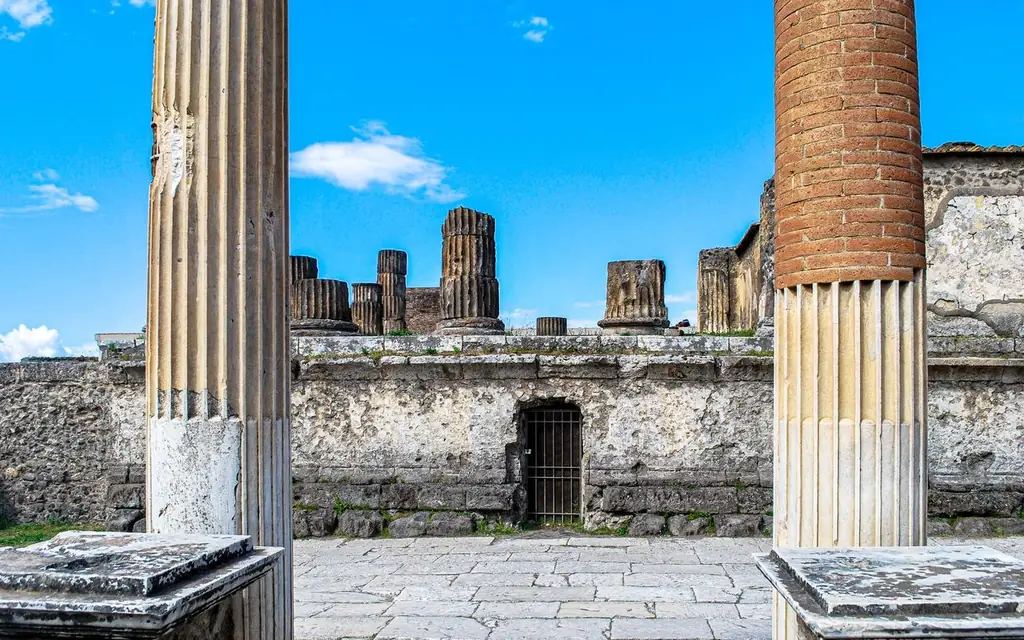
If you would rather link the coast with archaeology, Pompeii fits on the Naples side, and the Naples historic center is a half-day in itself. The page on private tours with driver explains how multi-stop days are booked.
What about luggage, hotels and accessibility?
Many hotels sit above or below the road with stairs, and some villages are pedestrian within the center. A driver can take your luggage as far as the vehicle can legally reach, and the hotel's porters often cover the last stretch. Tell the desk the exact property when you book, because the right set-down point differs between, for example, a hotel on the beach level in Positano and one on the upper road.
The coast is not easy for visitors with limited mobility. Lanes are steep, stairs are common and bus platforms can be crowded. A private car with a driver can reduce the walking distances, and seats for babies, toddlers and school-age children can be requested at booking. For official tourism information, Italia.it covers Amalfi and the other towns, and the coast's tourist offices can book cars for their visitors through a LimousineWorldwideDirectory.com trade account. The European directory shows where else in Europe we operate.
Frequently asked questions
How long does it take to drive the Amalfi Coast?
Allow 1 hour 30 minutes to 2 hours between Sorrento and Amalfi, and more in July and August. Naples Airport to Amalfi is about 70 km (43 mi), 1.5 to 2 hours.
Is it better to hire a driver than rent a car?
For most visitors, yes. The road is narrow, parking is scarce and plate rules apply in peak periods. A local chauffeur knows the pinch points and lets you look at the view.
What is the SS163?
It is the Amalfi Coast road, the Strada Statale 163. It links Sorrento, Positano, Amalfi and Salerno through a series of tight bends.
Are there traffic restrictions on the Amalfi Coast?
In recent summers an alternating odd-even plate rule has applied on busy days, with exemptions for some residents and accommodation guests. Dates and hours are set locally, so check before you travel.
Which is the best town to stay in?
Positano suits first-time visitors who want the postcard view, Amalfi suits those who want transport links, and Ravello suits quiet evenings. Sorrento is a practical base for those who also want Capri and Pompeii.
Can I do the Amalfi Coast as a day trip from Rome?
It is possible but long, at about 290 km (180 mi) and 3.5 to 4.5 hours each way. Most travelers do better with an overnight stay or a train to Naples with a driver there.
What is the Path of the Gods?
A 9 km hiking trail from Agerola to Positano, with views over the coast. It is a walk, not a drive, and your driver can meet you at either end.
Is the Amalfi Coast good in winter?
It is quiet, and some services pause for the season, but the road is easy and the light is clear. Confirm hotel and restaurant opening before you go.