 United StatesJFK
 MexicoMEX
 BrazilGRU
 ArgentinaEZE
 ChileSCL
 ColombiaBOG
 PeruLIM
 PanamaPTY
 Costa RicaSJO
 Dominican RepublicPUJ
 JamaicaMBJ
 BahamasNAS
 BarbadosBGI
 United KingdomLHR
 IrelandDUB
 FranceCDG
 GermanyFRA
 NetherlandsAMS
 BelgiumBRU
 SwitzerlandZRH
 AustriaVIE
 ItalyFCO
 SpainMAD
 PortugalLIS
 GreeceATH
 TurkeyIST
 DenmarkCPH
 SwedenARN
 NorwayOSL
 FinlandHEL
 PolandWAW
 Czech RepublicPRG
 HungaryBUD
 IcelandKEF
 United Arab EmiratesDXB
 QatarDOH
 Saudi ArabiaRUH
 IsraelTLV
 EgyptCAI
 MoroccoCMN
 South AfricaJNB
 KenyaNBO
 NigeriaLOS
 IndiaDEL
 PakistanLHE
 Sri LankaCMB
 SingaporeSIN
 MalaysiaKUL
 ThailandBKK
 VietnamSGN
 PhilippinesMNL
 IndonesiaCGK
 Hong KongHKG
 ChinaPVG
 TaiwanTPE
 JapanHND
 South KoreaICN
 AustraliaSYD
 New ZealandAKL
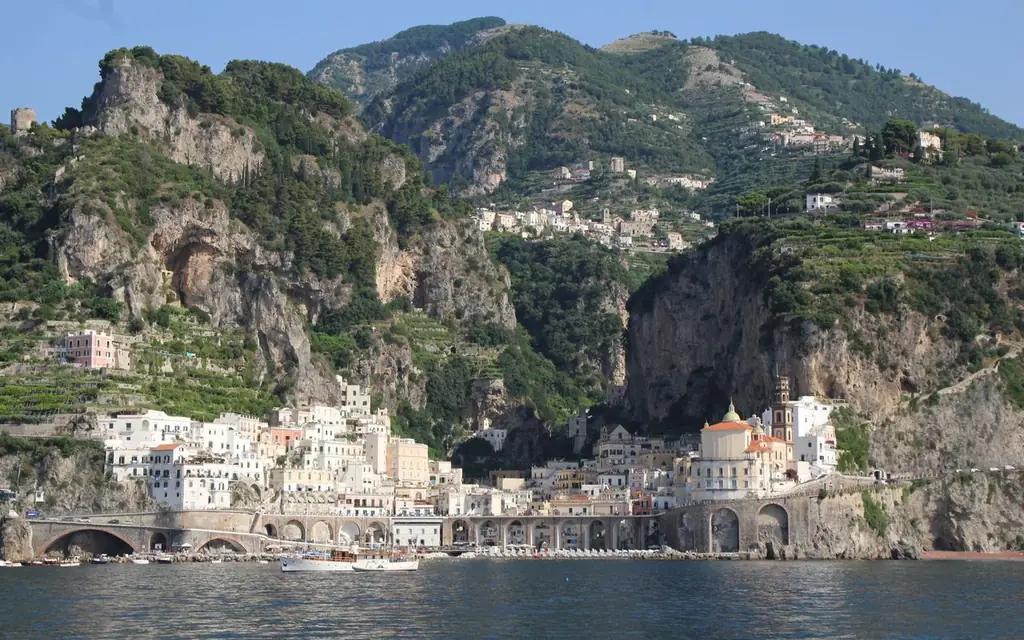
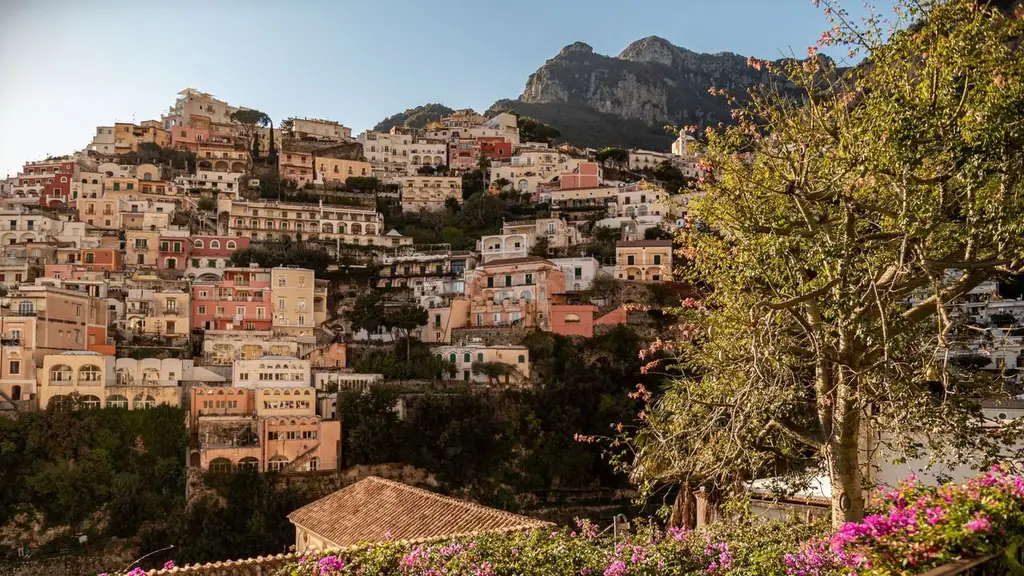
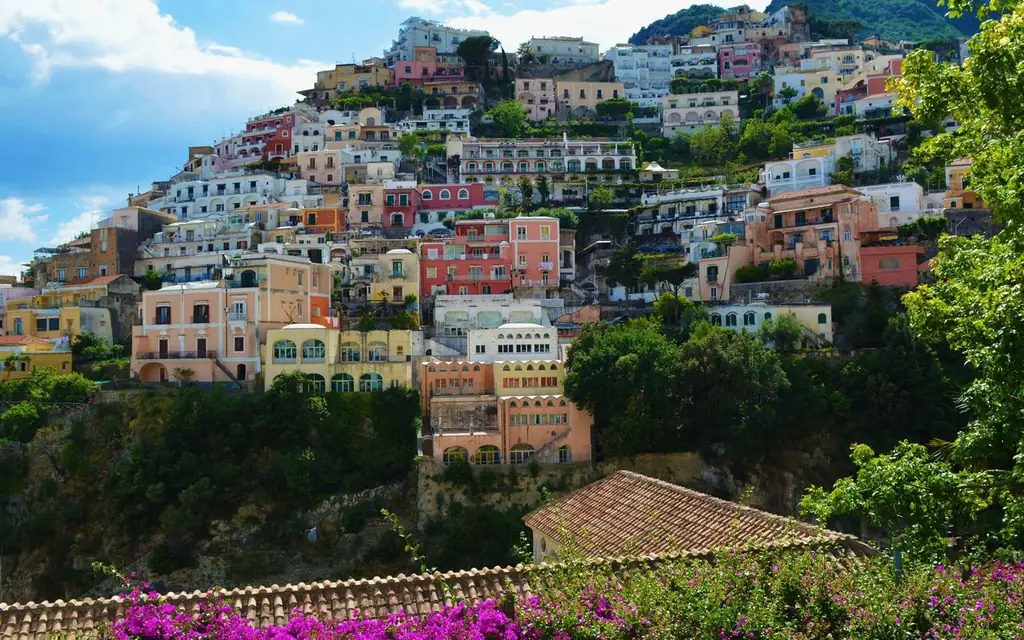
Count the stairs before you count the sights. Positano is what Italy's national tourism site calls a vertical village: houses stacked on a rock above the sea, joined by stairways and alleyways, with the main beach at the bottom and the coast road far above. Cars belong to the top of that picture, and almost everything you want sits below it. A Positano private tour with driver is therefore a question of logistics first and sightseeing second: where the car stops, who carries the bags, and what time you arrive.
Below you will find the real distances from Sorrento, Naples and Salerno, the way a local chauffeur approaches the village, the beaches and sights reached on foot, a comparison of buses, ferries and cars, and honest advice on when to come.
Why is Positano harder by car than it looks?
Positano is a terraced cliff village on the Amalfi Coast, with the SS163 road running above it and the beach far below. Streets are steep, many lanes are stairs, and the center is a limited-traffic area with little parking. Most visitors leave the car above and walk or ride the last stretch.
The description of a village built on a rock above the sea, with many stairways and alleyways, comes from Italia.it's Positano page, which also lists the beaches. Travel guides add that parking is scarce and that car parks fill early in July and August, and most agree that a car is a poor way to move within the village. The practical rule is to treat the car as a transfer vehicle, not as a base.
That is not a reason to avoid driving. The coast road is the best way to see the shoreline, and a chauffeur gets you to the right place without the circling that wastes an hour. It simply means setting your expectations: the last 200 meters will be on foot.
What are the real distances to Positano?
All figures are approximate and assume ordinary traffic. In summer weekends they stretch.
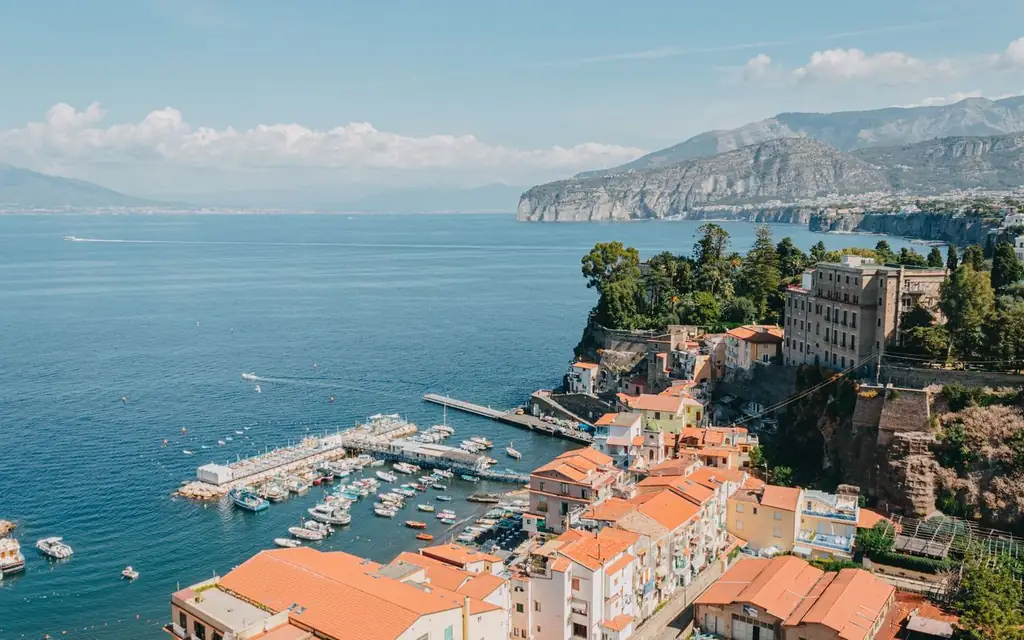
- Sorrento to Positano: about 17 km (11 mi), usually 45 to 75 minutes, more at weekends. The Sorrento guide describes the starting point.
- Naples Capodichino Airport to Positano: about 70 km (43 mi), 1 hour 30 minutes to 2 hours 15 minutes.
- Salerno to Positano: about 50 km (31 mi) along the full coast, 1 hour 30 minutes to 2 hours 30 minutes.
- Amalfi to Positano: about 16 km (10 mi), 40 minutes to 1 hour 15 minutes.
- Pompeii to Positano: about 50 km (31 mi), 1 hour 30 minutes to 2 hours. See the Pompeii guide.
- Rome to Positano: about 300 km (186 mi), 3 hours 45 minutes to 4 hours 45 minutes, using the motorway to Naples and then the peninsula roads. The Rome chauffeur service page and the airports hub explain long-distance pickups.
For the wider picture of the route, the Amalfi Coast guide covers the full road, the plate rules and the stops between Positano and Salerno.
Where does the car stop, and who carries the bags?
Positano's streets are narrow, many are one-way, and large parts of the center are pedestrian or restricted. A licensed chauffeur does not guess. The desk asks for your hotel's name and address, finds out where it sits in relation to the road, and the driver chooses between three typical outcomes.
- Direct hotel set-down. Some hotels sit on a road a car can reach. The driver stops at the door, the porter takes the luggage, and the rest is easy.
- Set-down at the upper road, with the hotel's staff meeting you to carry the bags down. This is common for properties on stairways.
- Set-down at the village entrance, with a short walk to the hotel and luggage handled by porters or a local arrangement.
Ask your hotel in advance how they handle arrivals. Many properties send a porter to meet guests, and it is easier to coordinate if the driver knows the name of the person to ask for. If you are traveling with several large bags, mention it when you book so the desk can plan the vehicle and the timing. The online booker shows an exact fixed fare for the addresses you enter before you confirm.
How long should you stay: a morning, an afternoon or a night?
The village is small, and the answer depends on what you want from it.
- Two hours: Enough for a walk down to the beach, a coffee and a look at the church. It is the right length if Positano is one stop on a coast drive.
- Half a day: Time for lunch, a swim and a wander through the lanes, without rushing the walk back up.
- An overnight: The best way to see Positano without day-trippers. Early morning and late evening are calm, and the light on the facades is at its best.
If you can only manage two hours, arrive before midday. The lanes are busiest from late morning until mid-afternoon, and the walk back uphill is easier when the sun has dropped.
What is there to do beyond the main beach?
Italia.it describes several places, all reached on foot or by boat rather than by car.
- Marina Grande beach, about 400 meters of sand in the inlet, with the pier from which boats leave for the Li Galli archipelago.
- Fornillo beach, a small, pebbly cove reached on foot, popular for snorkeling.
- Spiaggia di Laurito, a quieter beach under sheer cliffs, also on foot.
- The church of Santa Maria Assunta, close to the main beach, once a Benedictine monastery, with a pale stone facade, a majolica dome and a Byzantine icon inside.
- The Path of the Gods, a hiking trail in the Lattari Mountains with views over the coast, running through holm oak forest and ending at the village of Nocelle, according to the same source. The wider guide to the coast puts its length at 9 km from Agerola to Positano.
A driver can take you to either end of the Path of the Gods and collect you, which is the easiest way to avoid the steep descent back to the village. Wear proper shoes, and note that one branch descends by what Italia.it calls an almost endless flight of steps.
How do you handle the stairs?
Plan, rather than endure. Positano's stairways are part of the experience, but they are hard on knees, strollers and wheeled suitcases. A few habits help:
- Pack a small overnight bag for the hotel and keep the rest in the car if you are continuing along the coast.
- Wear shoes with grip. Stone steps are slippery after rain.
- Walk down first, rest, then ride or walk up; there is no prize for climbing at noon in August.
- Use the hotel's porters, who know the quickest route.
If someone in your party has a mobility limitation, tell the desk before you book. The driver then chooses the stopping point that shortens the walk, and the hotel can be warned in advance.
What should you pack for a day in Positano?
Less than you think. A small bag with a hat, sunglasses, a refillable bottle and a light layer for the evening breeze is enough. Add swimwear if you plan to use the beach, and sandals with grip for the lanes. Leave the rest of the luggage in the car when you are only stopping for a few hours, and agree where the driver will wait. A phone with the hotel's address saved, plus the desk's number from your confirmation, solves most small problems.
What does the Marina Grande pier offer?
The pier at the main beach is where boat trips begin. Italia.it says boats leave from it for the Li Galli archipelago, and notes that other coves are reached by traditional gozzo boats. Those trips are run by local operators, not by our desk, and they depend on weather and season. If you want a boat in the afternoon, plan the car for the morning and ask the driver to return after the trip, not before. A swimsuit, a hat and a light towel are enough for most visitors.
What happens after dark?
Positano is calmer at night, with day-trippers gone and the lanes lit. It is also the time when planning matters most. The coast road is narrow, and bus and ferry services thin out in the evening, so check the last departures before you rely on them. If you intend to dine in the village and return to Sorrento or Naples, arrange the return with the driver in advance and agree a pickup point and time. A driver can wait or return on request, and the 24/7 desk stays reachable if dinner runs long. Hotel guests who sleep in Positano avoid the problem altogether, which is one more argument for an overnight.

Which season and hour suit Positano?
Spring and autumn offer the best balance of warmth, light and space. In July and August the car parks fill before mid-morning, the road backs up, and the beach is packed. In winter, some hotels, restaurants and boat services pause, so confirm opening before you plan your stay. Within a day, the calmest windows are early morning and the hour before sunset.
When you need to arrive at a specific time, such as a hotel check-in or a ferry departure, tell the desk and the driver will build in margin. The road does not forgive tight schedules.
How does the bus or ferry compare with a chauffeur?
| Option | Time Sorrento to Positano | Cost note | Who it suits |
|---|---|---|---|
| SITA Sud bus | About 1 hour or more | Lowest | Light travelers; summer buses can be crowded |
| Ferry or hydrofoil | Seasonal, varies | Ticketed | Visitors who want to arrive at the beach with no traffic |
| Metered taxi | About 45 minutes to 1 hour 15 minutes | Metered; long-trip fares agreed | One or two travelers with light luggage |
| Rental car | About 45 minutes to 1 hour 15 minutes | Variable, plus parking | Experienced drivers; parking is the main problem |
| Private chauffeur | About 45 minutes to 1 hour 15 minutes | Fixed fare via the booker | Luggage, hotel transfers, groups, tight timetables |
Guides report that ferries serve Positano from Sorrento, Amalfi, Salerno and Capri in season, landing at the beach, and that SITA Sud buses connect the village with its neighbors. Check the operators for timetables, since services and piers change; SITA Sud posts notices and timetables for its bus network. The chauffeur is the best answer for hotel-to-hotel transfers and for anyone with a lot of luggage; the ferry is the better answer for a light-packing visitor who wants to arrive by sea. Neither choice is wrong.
Positano in a longer day on the coast
Positano often works best as one stop of three. A sample day: leave Sorrento at 8:30, arrive above Positano for a viewpoint and an hour in the village, continue to Amalfi for lunch, drive up to Ravello for the gardens, and return along the coast in the evening light. For a longer program, the page on private tours with driver shows how half-day and full-day plans are arranged, and the attractions hub lists other guides in the series.
What about children, seats and accessibility?
Infant, toddler and booster seats can be added when you book. The village itself is a challenge for wheelchair users and for anyone who struggles with stairs, and there is no way around that. The chauffeur can reduce the distance, but cannot remove the steps. Hotel concierges and local tourist offices can book cars for their guests through a trade account, and the European directory lists the destinations we cover.
Frequently asked questions
How far is Positano from Sorrento by car?
About 17 km (11 mi), 45 minutes to 1 hour 15 minutes depending on the day. In July and August, allow longer.
How far is Positano from Naples Airport?
About 70 km (43 mi). A private car typically takes 1 hour 30 minutes to 2 hours 15 minutes. The pickup moves with your flight.
Can a car drive into Positano?
Only to a limited extent. The center has limited-traffic rules and little parking, so a chauffeur sets you down at the nearest practical point and the last stretch is usually on foot or with hotel porters.
Is Positano worth a day trip?
Yes, as one stop on a coast drive. Two to four hours is enough for the beach, the church and a walk through the lanes, and an overnight stay shows the village at its calmest.
What is the best time of year to visit Positano?
Spring and autumn. Summer is crowded and the road is slow, and some services close in winter.
How do I get luggage to my hotel in Positano?
Tell the desk the hotel's name and address. The driver sets you down at the closest point, and hotel porters usually handle the last stretch.
Is the Path of the Gods suitable for everyone?
No. It is a 9 km hiking trail, with steps on some branches. A driver can meet you at either end, but you need good shoes and reasonable fitness.
Can I arrive in Positano by ferry instead?
Yes, in season. Ferries are reported to run from Sorrento, Amalfi, Salerno and Capri, but timetables and piers change, so check with the operators.