 United StatesJFK
 MexicoMEX
 BrazilGRU
 ArgentinaEZE
 ChileSCL
 ColombiaBOG
 PeruLIM
 PanamaPTY
 Costa RicaSJO
 Dominican RepublicPUJ
 JamaicaMBJ
 BahamasNAS
 BarbadosBGI
 United KingdomLHR
 IrelandDUB
 FranceCDG
 GermanyFRA
 NetherlandsAMS
 BelgiumBRU
 SwitzerlandZRH
 AustriaVIE
 ItalyFCO
 SpainMAD
 PortugalLIS
 GreeceATH
 TurkeyIST
 DenmarkCPH
 SwedenARN
 NorwayOSL
 FinlandHEL
 PolandWAW
 Czech RepublicPRG
 HungaryBUD
 IcelandKEF
 United Arab EmiratesDXB
 QatarDOH
 Saudi ArabiaRUH
 IsraelTLV
 EgyptCAI
 MoroccoCMN
 South AfricaJNB
 KenyaNBO
 NigeriaLOS
 IndiaDEL
 PakistanLHE
 Sri LankaCMB
 SingaporeSIN
 MalaysiaKUL
 ThailandBKK
 VietnamSGN
 PhilippinesMNL
 IndonesiaCGK
 Hong KongHKG
 ChinaPVG
 TaiwanTPE
 JapanHND
 South KoreaICN
 AustraliaSYD
 New ZealandAKL
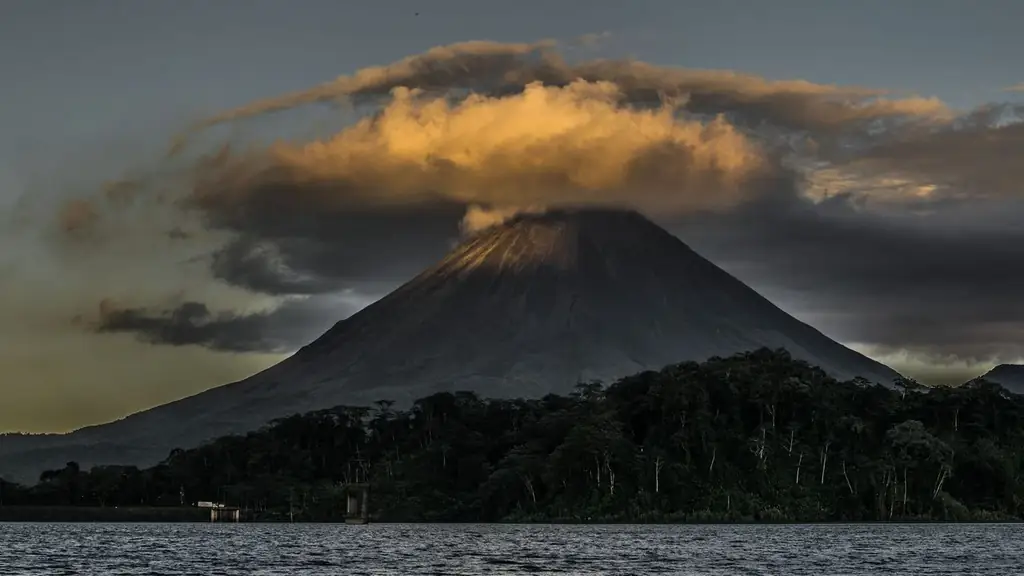
Many visitors reach Arenal with an old picture in their heads: a perfect cone, a plume, red rock rolling down the slope at night. That Arenal ended in December 2010, when more than four decades of continuous activity that began in 1968 came to a stop. The mountain is still there, the shape is still beautiful, and the area around it, with its hot springs, lake, waterfalls and forest, is as busy as ever. What has changed is what you should expect to see.
This guide is for travelers booking an arenal volcano private tour with driver. It covers what the volcano and park offer now, how far Arenal is from San Jose and Liberia, how long the drive actually takes, which stops pair well with it, and what to know about weather, safety and next-day transfers.
Reserve your Costa Rica chauffeur
What can you see at Arenal today?
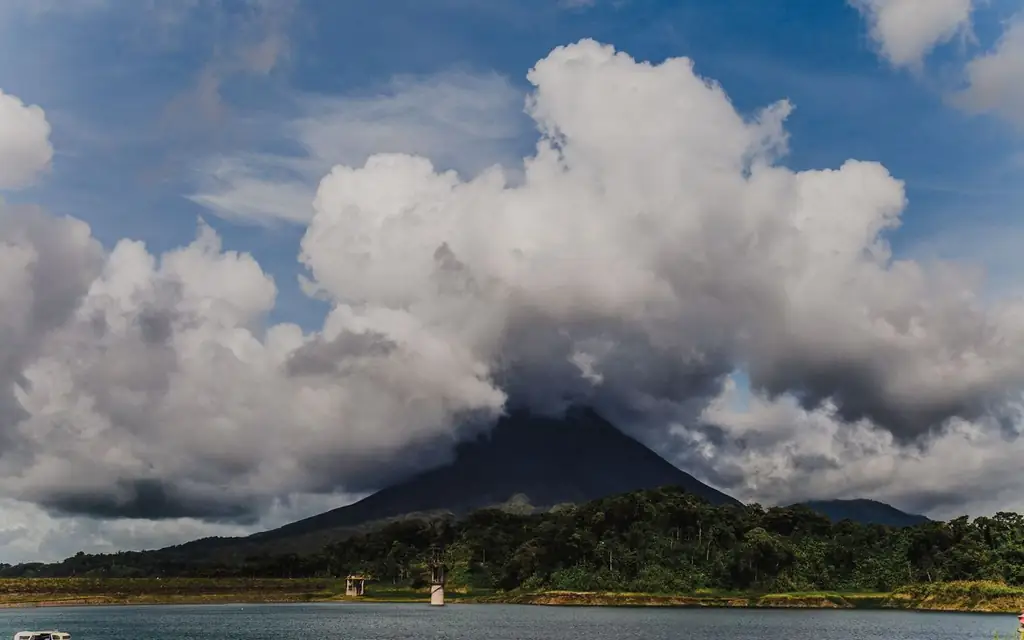
Arenal is a symmetrical stratovolcano inside Arenal Volcano National Park, in the Huetar Norte region. It has been dormant since December 2010. Visitors see the cone when clouds allow, walk forest trails and old lava fields, visit nearby hot springs and waterfalls, and enjoy Lake Arenal, Costa Rica's largest artificial lake.
The park, managed by the national conservation system SINAC, was established in 1991 and covers about 121 sq km (47 sq mi), including the lake shore. The official Costa Rica tourism board describes the volcano as active since July 29, 1968, with activity declining significantly since 2011, and says the area shows two landscapes: dense green vegetation and zones of lava and sand from recent eruptions. A second volcano, Cerro Chato, sits on the southeast side. Its crater holds a green lagoon, and it has been inactive for about 3,500 years.
The 1968 eruption is part of the local memory. It was sudden and violent, and it destroyed villages on the western flank with loss of life that sources put at 78 to 87 people. It is why the rules around the volcano are taken seriously, and why guides and park staff, not visitors, decide where you can walk.
How far is Arenal from San Jose, Liberia and La Fortuna?
The town of La Fortuna is the base for the volcano, and the tourism board puts the volcano roughly 7 km from the town. Published figures range from 7 to 8 km (4 to 5 mi), depending on where the measurement starts. The distances below are approximate road figures.
- San Jose (Juan Santamaria International Airport, SJO) to La Fortuna: roughly 130 to 150 km (80 to 95 mi), and 3 to 3.5 hours with a mountain section that includes slow trucks and frequent fog.
- Liberia (Daniel Oduber Quiros International Airport, LIR) to La Fortuna: roughly 2.5 to 3.5 hours. The route depends on conditions, and the driver chooses it on the day.
- La Fortuna to the park entrance and viewpoints: about 7 to 8 km (4 to 5 mi), 10 to 20 minutes.
The long mountain section is the main reason to use a chauffeur. The road climbs from the central valley, passes through towns where the speed limit drops quickly, and in the wet season runs through low cloud. A driver who does this route weekly knows where the slow sections are and when to leave to arrive in daylight. Request a Juan Santamaria or Liberia pickup in the booker; the airports directory lists other regional gateways.
For planning, the right mental picture is not "three hours to the volcano" but "three hours to the region, then a day of short hops." The first day is the drive; the second is the volcano.
What to expect at the park, and what to confirm
Park access is managed by SINAC. The tourism board's page on the country's national parks lists Arenal Volcano National Park among the parks with accessible viewpoints and trails, and tells visitors to check the SINAC reservation site to see which parks offer online tickets. Hours, ticket rules and trail closures change, so confirm them on the official sites before you travel: the Costa Rica tourism page for the Northern Plains has the regional overview, the national parks page explains how accessibility and tickets are handled, and SINAC is the authority.
The tourism board notes the Cerro Chato hike takes about five hours on a narrow trail, with the La Fortuna Waterfall, about 70 m tall, at the entrance to the road to Chato. Trail status can change, so confirm that the route is open and ask about guide requirements before you plan a Chato day. A chauffeur drops and collects; he does not hike.
Wildlife in the park, according to the park's public description, includes white-faced capuchins, coatis, deer and snakes such as the fer-de-lance, with a large bird list that includes the resplendent quetzal. Stay on marked paths.
Clouds, seasons and the honest odds of a clear view
Arenal makes its own weather. Even in a dry week the summit can be wrapped in cloud, and an afternoon view that was perfect at 9:00 may vanish by noon. The advice that works is to see the volcano early, to treat any clear view as a gift, and to build the rest of the day around things that do not need a clear sky. Many travelers find the drier months, roughly December to April, give better odds, but you cannot count on a clear summit in any month.
The regional tourism page describes the volcano as visible by day or night. Do not expect the night glow of the older photographs. What you can expect is a silhouette against the stars on a clear evening, the sounds of the forest, and warm water.
The classic Arenal day: waterfall, springs and lake
Because Arenal is a region, not a single stop, the typical day combines three things.
- The park and viewpoint, early. A morning walk gives the best chance of a clear summit.
- La Fortuna Waterfall. The 70 m waterfall is a short drive from the town, and the descent to the base is steep. Swimming conditions vary, so follow the signs.
- Hot springs. The tourism board describes the mineral-rich volcanic waters, with the River Tabacon springs averaging about 37 °C (99 °F) and flowing freely into the river. Several lodges have their own hot springs, so choose by comfort and check opening hours.
- Lake Arenal. The reservoir covers about 88 sq km (34 sq mi) at an elevation of 546 m (1,791 ft), with boat tours, kayaking, fishing, windsurfing and paddleboarding on offer.
A chauffeur ties these together without the hotel shuttle's timetable. The order is flexible: some travelers prefer to go to the springs at the end of the day and sleep soundly, which is a sensible plan after a morning hike.
The mountain road: what a local driver does differently
The drive to La Fortuna is the part of the trip people underestimate, so it is worth describing. The first hour leaves the capital's traffic and the central valley behind. The middle section climbs through small towns and farmland, with slow trucks, speed bumps and school zones. The last stretch drops toward the northern plains, where heavy rain can arrive without warning.
A driver who knows this road chooses his departure time to avoid the capital's rush hours, picks the safe passing places, and stops at a farm stand or a viewpoint when the light is good and the shoulder is wide enough. He also knows when a section is likely to be foggy and slows down earlier than a visitor would. The comfort is real: you arrive at the lodge with your energy intact, which matters when the plan for the next morning is a dawn hike.
Plan a break at about the halfway point. Coffee, a toilet stop and a stretch make the second half easier, especially for children and older travelers. Tell the desk if you want a longer stop, for a meal or a shop, and we add it to the booking.
Respecting the mountain: rules that keep you safe
Arenal is dormant, not extinct, and the park's managers set the rules for a reason. Walk only where the signs and guides send you. Do not enter closed areas to get a closer look at old lava flows, which can be unstable, and keep to the paths in forest areas where snakes and wasps are common. Take your rubbish out. If a guide tells you to turn around because of weather or ground conditions, follow the advice without argument.
The same applies to rivers and waterfalls. Water levels change with rain, and the base of the La Fortuna Waterfall can be slippery. Swim only where it is clearly permitted, and never dive. The hot springs have their own safety notices on water temperature and slippery surfaces, and the staff at each lodge can tell you which pools suit children.
Where to stay for an early start
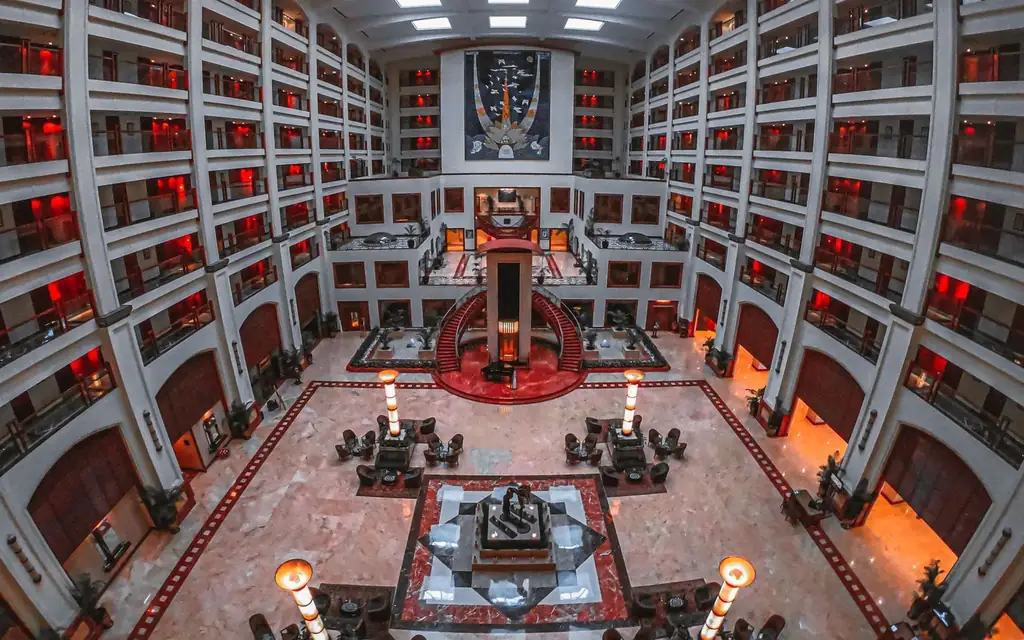
Many visitors base themselves in La Fortuna town, which has restaurants and shops within walking distance. Others stay in lodges nearer the park or by the lake, which are quieter and often have their own hot springs. If your plan is a sunrise walk, a hotel closer to the park saves a long pre-dawn drive. If your plan is dinner and a late return, the town is more convenient.
Whichever you choose, tell the desk your hotel's name and whether it has its own gate or access road. Some lodges sit on rough lanes that call for a slower approach. A booking made with the exact address lets us confirm the route and the timing, and the fare you see in the booker is for that address. Browse more ideas on the attractions hub and the blog.
Three hours to La Fortuna: your options
| Way to go | Time from SJO | What it costs you | Who it suits |
|---|---|---|---|
| Private chauffeur | About 3-3.5 h | Fixed fare, quoted before you pay | Families, hikers with gear, anyone who wants a stop at a farm stand |
| Shared shuttle | 3.5-4.5 h with hotel stops | Lowest per person | Solo travelers and couples who do not mind a set schedule |
| Public bus | 4.5-5.5 h | Lowest | Independent travelers with time |
| Rental car | 3-4 h | Fuel and insurance | Confident drivers comfortable with mountain roads |
The shared shuttle is the honest low-cost choice and, for a couple on a fixed budget, a fine one. A private chauffeur is the better option for families with children, for groups who want to stop at a farm stand or a viewpoint on the way, and for travelers whose flights do not line up with a shuttle's fixed departure time.
Moving on: the next day's transfers
Arenal sits at the north of the country's main tourism routes, so many itineraries continue south or west. The drive from La Fortuna to the Pacific coast beaches at Manuel Antonio is a long day, roughly 5 to 6 hours depending on the route and the stops. Our guide to Manuel Antonio National Park explains the southern end of the trip, including its park rules. Heading to Liberia airport, plan on 2.5 to 3.5 hours and leave generous time before the flight. If you are continuing to Panama, our Panama Canal Miraflores Locks guide covers a city day in Panama.
For multi-stop trips, the right booking is a series of transfers on one account, so the same desk handles the Costa Rica legs. Tell us the flight numbers and the hotels, and we build the sequence with one confirmation and one invoice. Our private tours with driver page explains day-hire, and the Latin America and Caribbean directory lists the other guides in this series.
Which vehicle for a three-hour road
On a long mountain drive, legroom matters more than badge. A sedan is fine for one to three travelers; a family or a group with hiking gear is better in a Cadillac Escalade-class SUV, and a bigger party can ask for a Sprinter. The exact model is confirmed at booking, and seats for children are available on request, with water and chargers in most cars.
Our booking desk runs at all hours. It hands the job to a licensed, insured and vetted local operator, tracks your flight, and sends one invoice. The fare is fixed and shown before you pay.
Frequently asked questions
How far is Arenal Volcano from San Jose?
Roughly 130 to 150 km (80 to 95 mi) to La Fortuna, a drive of about 3 to 3.5 hours. Published figures vary, so allow the longer end and add time for fog and slow trucks.
Is Arenal Volcano still active?
Continuous activity that began in 1968 ended in December 2010. The mountain is dormant, and you should not expect the glowing lava seen in older photographs.
How far is the volcano from La Fortuna?
About 7 to 8 km (4 to 5 mi) by road. The park, viewpoints, waterfall and hot springs are all within a short drive of the town.
What is the best time of day to see the volcano?
Early morning, because cloud often builds on the summit later in the day. A clear view is never guaranteed.
Are there hot springs near Arenal?
Yes. The tourism board describes mineral-rich springs, including the River Tabacon, which average about 37 °C (99 °F). Several lodges have their own pools.
Will the driver wait during a long hike?
Yes, but long hikes mean a long wait. Tell the desk how long you plan to be out. For a half-day hike, a drop-off and pickup at a set time is simpler.
Is the park accessible for visitors with limited mobility?
The tourism board lists Arenal Volcano National Park among parks with accessible viewpoints and trails, but access varies by route, weather and maintenance. Contact the park before you travel.
Can I do Arenal as a day trip from San Jose?
It is possible, but it means about six to seven hours on the road. Most travelers stay at least one night in the La Fortuna area.
How do I book a car for Arenal?
Use the online booker with your pickup address and flight details. You see the vehicle class and the fare before you commit.