
 United StatesJFK
 MexicoMEX
 BrazilGRU
 ArgentinaEZE
 ChileSCL
 ColombiaBOG
 PeruLIM
 PanamaPTY
 Costa RicaSJO
 Dominican RepublicPUJ
 JamaicaMBJ
 BahamasNAS
 BarbadosBGI
 United KingdomLHR
 IrelandDUB
 FranceCDG
 GermanyFRA
 NetherlandsAMS
 BelgiumBRU
 SwitzerlandZRH
 AustriaVIE
 ItalyFCO
 SpainMAD
 PortugalLIS
 GreeceATH
 TurkeyIST
 DenmarkCPH
 SwedenARN
 NorwayOSL
 FinlandHEL
 PolandWAW
 Czech RepublicPRG
 HungaryBUD
 IcelandKEF
 United Arab EmiratesDXB
 QatarDOH
 Saudi ArabiaRUH
 IsraelTLV
 EgyptCAI
 MoroccoCMN
 South AfricaJNB
 KenyaNBO
 NigeriaLOS
 IndiaDEL
 PakistanLHE
 Sri LankaCMB
 SingaporeSIN
 MalaysiaKUL
 ThailandBKK
 VietnamSGN
 PhilippinesMNL
 IndonesiaCGK
 Hong KongHKG
 ChinaPVG
 TaiwanTPE
 JapanHND
 South KoreaICN
 AustraliaSYD
 New ZealandAKL
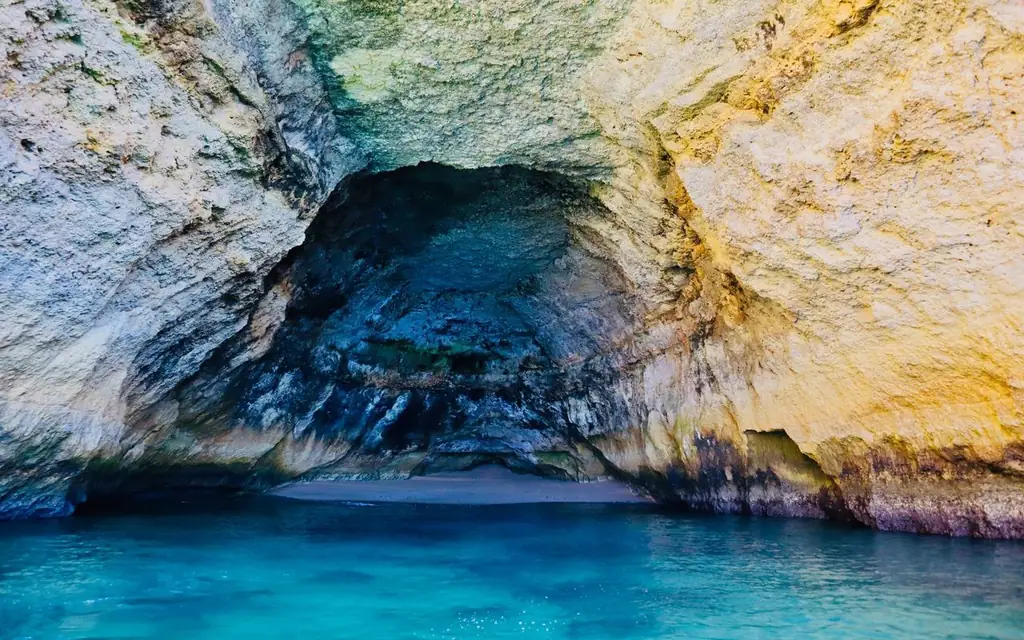
Benagil is the odd one out among the places a chauffeur can take you. You can reach the village by car, the clifftop by foot, and the cave itself only by water. A Benagil Cave private tour with driver is therefore two bookings joined by a drive: a licensed boat or guided kayak trip arranged with its operator, and a road transfer that gets you to the right place at the right time. This guide explains how to get to Benagil Cave by car from Faro and the main Algarve towns, what the rules now say about the cave, and how to avoid the crush that the village gets on summer days.
How do you get to Benagil Cave by car?
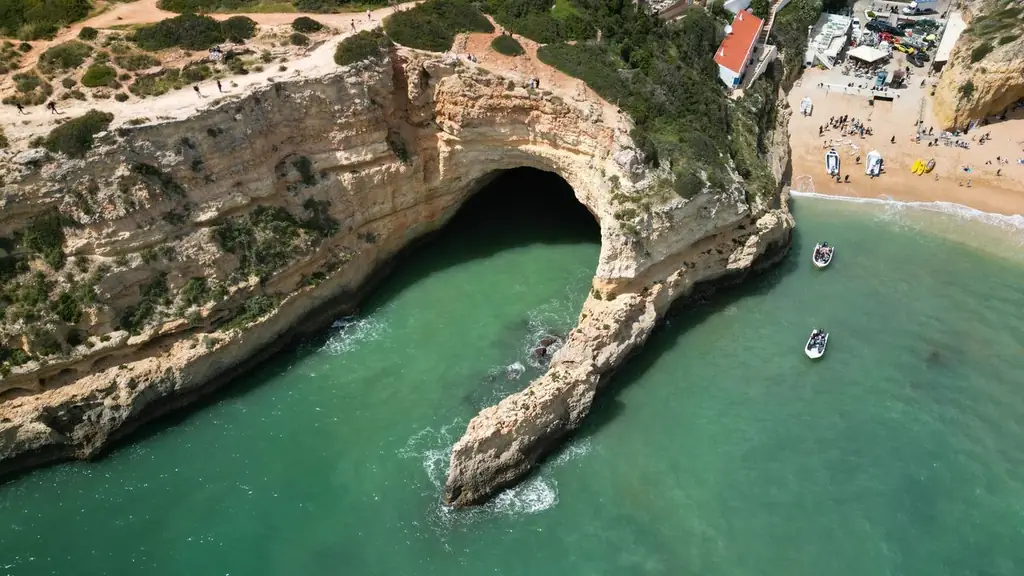
Benagil is in the municipality of Lagoa, about 60 km (37 miles) and 45 to 60 minutes from Faro Airport. You drive to the village or to your boat's departure point, board a licensed boat or guided kayak, and enter the cave from the sea. There is no walking route into it.
The distances are short, but the last kilometre is not. The approach road to the beach is narrow, the car parks are small, and in summer they fill early. A driver who knows the timing of the day can make the difference between a calm start and an hour in a queue.
What you can and cannot do at the cave
The rules were set in 2024 by a joint notice from the Portuguese Maritime Authority, issued by the Capitania do Porto de Portimão with the Lagoa municipality, the Algarve water authority and the nature conservation institute, and published on 30 July 2024. The authority's news page summarises the main points:
- Private individuals and companies may not land on or use the beach inside the cave.
- Kayaks may not be rented without a guide in the Benagil caves area.
- Swimming into the caves, or entering them with flotation aids, is prohibited.
- The number of boats and kayaks inside is limited, and maximum visit times apply.
- Guided kayak tours must keep to a ratio of one guide for every six kayaks.
- Fines for breaches run from 300 euros up to 216,000 euros under the framework law on environmental offences.
The notice also places the area within the Parque Natural Marinho do Recife do Algarve, Pedra do Valado. The full text, in Portuguese, is a PDF on the maritime authority's website, and it goes further than the news summary. Motorised boats enter and leave the cave through the western entrance, and no more than three under 12 metres, or one longer vessel, may be inside at a time. Kayaks and paddleboards use the eastern entrance in single file, in groups of six accompanied by a guide, with at most seven inside at once. The notice sets a visit time of 2 minutes for motorised boats and no more than 8 minutes for a kayak group. Access is barred when visibility is under 1,000 metres, and navigation between sunset and sunrise is not allowed. Rules like these can be amended, so ask your operator or the Capitania do Porto de Portimão if you need certainty.
The practical consequence for visitors is clear. Passengers stay aboard. They see the cave, its sunlit opening in the roof and the beach below, from the water. If a website or a street seller promises a landing on the sand, treat it with suspicion.
Choosing the boat, and what a chauffeur can and cannot arrange
The boat trip is run by licensed marine tourism operators, not by us. Visit Portugal lists several, and others advertise at the beach and in the harbours. Trips leave from several points along the coast, and the right choice depends on where you are staying and how long you want to be on the water. Look for an operator that states it is licensed and that follows the 2024 notice, and book a specific departure time.
What we do is the road leg. Send us your operator's departure point and time, and we plan the pickup so that you arrive 15 to 20 minutes before boarding. A chauffeur drives and can suggest stops; where an activity is run by a licensed operator, the operator handles the safety briefing and the boat. We do not book boats.
If the sea is rough or visibility is poor, a trip can be postponed or cancelled by the operator. Ask them how they handle this, and keep your afternoon flexible. The driver can wait in a nearby town for a replacement time.
Life jackets, helmets and the rockfall warning
The notice describes the caves as lying in a zone at risk of falling rocks, which is why its safety rules go beyond what many visitors expect. Visitors, crews and operators must wear a life jacket for the whole duration of the visit, and helmets are required when near the strips at risk of rockfall from the cliffs, caves and algares. Operators must also report rockfalls to the port authority within two hours of learning of one, and they must brief customers on safety and on the protected status of the site.
For you this is straightforward: expect a safety briefing, a life jacket that stays on, and, on some trips, a helmet. Do not argue with the crew about any of it. If a trip seems to skip the briefing or the equipment, that is a reason to choose a different operator. Our driver is not a lifeguard, and we do not supervise water activities. His or her job ends at the quayside, with the car waiting where you can find it.
Because the weather and sea conditions govern whether a trip runs at all, the notice also refers to navigation warnings that can restrict or ban visits. The practical advice is to book flexible times and to check the same morning with your operator.
The village approach, car parks and the early start
The village of Benagil sits above the beach, with a steep road down to the sand. Local guides consistently describe the access as narrow, with limited parking in small lots near the top and along the road, and with the lots filling early on summer mornings. Exact fees and numbers change, and we have not confirmed any official figure, so we do not quote them. The Lagoa municipality is the authority to ask.

What that means for your day:
- In July and August, aim to arrive in the village in the early morning and boat before the main crowd.
- Do not plan on the car waiting at the beach. The driver sets down, parks in a legal place and comes back on message, or waits in Carvoeiro or a nearby town.
- If your boat leaves from a harbour such as Portimão or a beach such as Armação de Pêra, the car has an easier time, because those have more space.
Taking a quieter month, such as May, June or September, makes everything easier. Winter is calm but the sea is less predictable.
Distances and drive times
- Faro Airport: about 60 km (37 miles), 45 to 60 minutes.
- Albufeira: about 25 km (15 miles), 25 to 35 minutes.
- Portimão: about 20 km (12 miles), 25 to 30 minutes.
- Carvoeiro: about 4 km (2.5 miles), 10 minutes.
- Lagos: about 45 km (28 miles), 45 to 55 minutes.
- Lisbon: about 290 km (180 miles), around 3 hours on the motorways.
The A22 and the EN125 carry most of the Algarve traffic, and the coast road is slower in July and August. For the capital's end of the trip, see our Lisbon chauffeur service page and the airports hub for the airports we cover; the Algarve does not yet have its own page in our directory.
When to go
Operators run departures through the day, and the light inside the cave changes with the sun, so ask your operator which time it recommends. Midday departures tend to meet the most traffic on the water. Early departures usually offer a calmer sea and fewer vessels.
Choose weekdays over weekends where you can, and shoulder months over high summer. If you are in the Algarve in winter, check the forecast and the operator's cancellation policy. Remember that the rules limit how many vessels may be inside at once, so there may be a short wait outside while others leave. That is a rule working as intended, not a mistake.
What to wear and bring
Bring sun protection, a hat that stays on in a breeze, and shoes with grip for boarding. A light waterproof jacket helps on a fast boat. You may be asked to stay seated or to hold on during the entry, as the boats move slowly inside the arches. Phones and cameras are fine, but keep them on a wrist strap or in a waterproof pouch.
Boarding from a beach involves steps or a short wade, depending on the operator, so mobility needs should be raised with the boat company at booking, and with our desk so that the drop-off can be as close as possible. Child and booster seats for the car are available on request.
Near Benagil: Carvoeiro, Praia da Marinha and the coast
A short drive away are Carvoeiro, a small resort town with a beach and restaurants, and the cliffs and beaches along the Lagoa coast. Praia da Marinha is a few kilometres to the west and is one of the best-known beaches in the Algarve. The regional tourism board's website, Visit Algarve, carries information on the coast and its protected areas.
For lunch after the boat, most people choose Carvoeiro or a fish restaurant in Armação de Pêra. If you want a second sight on the same day, the driver can add a stop at a clifftop viewpoint or a beach, subject to parking conditions on the day.
Ways to get to Benagil compared
| Option | Time from Faro Airport | Cost note | Best for |
|---|---|---|---|
| Rental car | 45 to 60 min | Variable, plus parking | Independent drivers who start early |
| Metered taxi | 45 to 60 min | Metered, high for the distance | Short hops only |
| Boat-tour operator's own pickup | Varies | Per ticket | Visitors who book a package |
| Train and local taxi | Check operator | Lowest | Solo travellers with time |
| Private chauffeur | 45 to 60 min | Fixed fare via the booker | Groups, luggage, tight boat times |
If you are staying in Carvoeiro or Armação de Pêra and travelling alone, a boat company's own meeting point may be the simplest choice. A chauffeur makes sense from the airport, from a distant resort, or when you want the afternoon to continue beyond the cave.
A day plan from Faro
- 7:30. Pickup at the hotel in Faro or at the airport. About 60 km (37 miles) west.
- 8:30. Coffee in Carvoeiro or Armação de Pêra.
- 9:30. Boat departure, with a trip lasting roughly one to two hours depending on the operator.
- 11:30. Lunch near the sea.
- 13:30. Time at a beach or a viewpoint, then return.

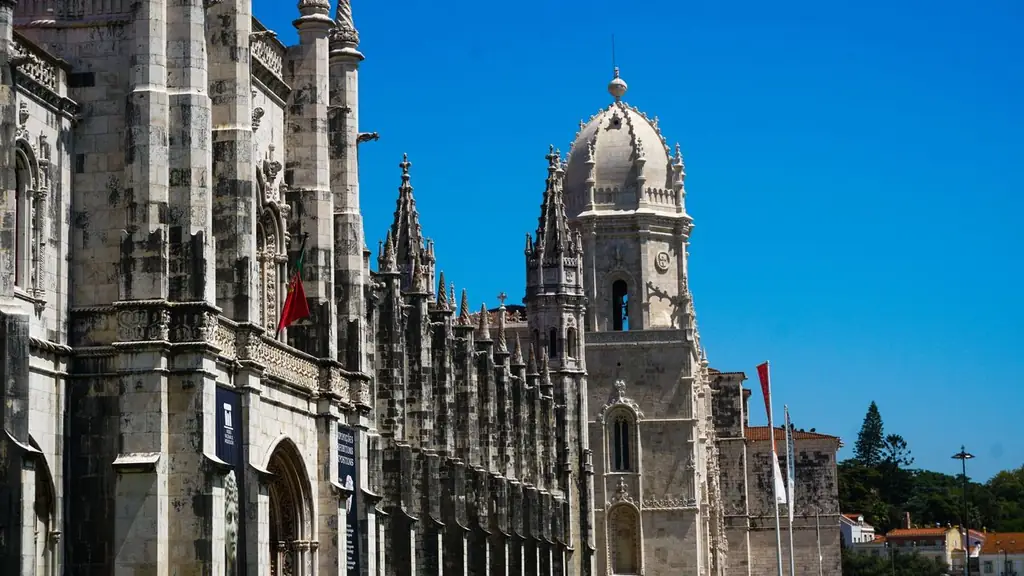
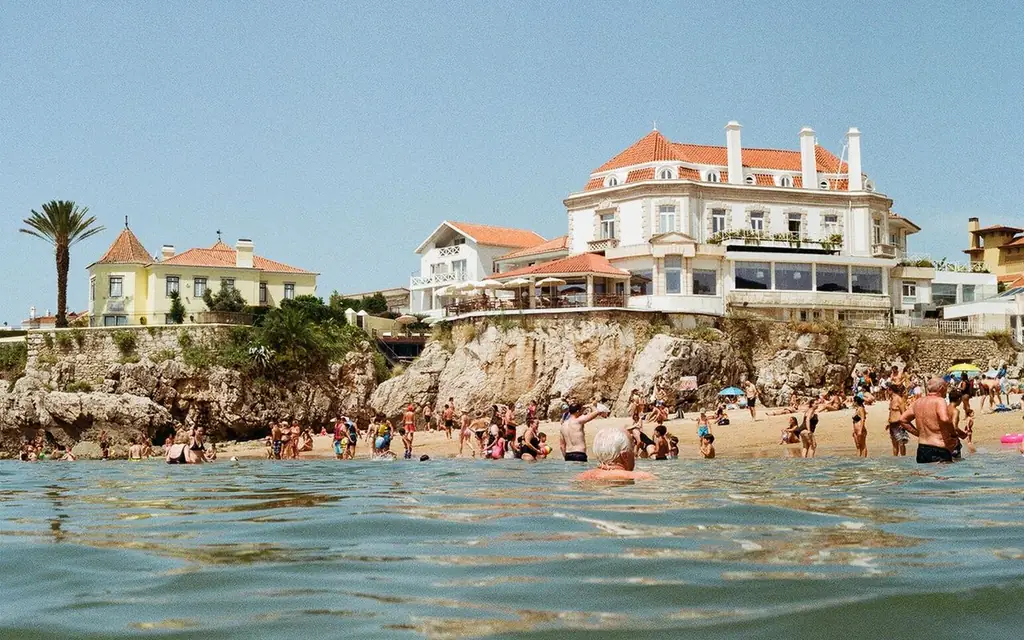
From Lisbon, a day trip is possible but long: the road is about 290 km (180 miles) and 3 hours each way, so we suggest an overnight in the Algarve. Starting from the capital, the Belém Tower and Jerónimos Monastery and the Pena Palace are good stops the day before. For a short Portuguese programme, see also Cascais. The private tours with a driver page explains how multi-day plans are booked, and the Europe directory lists every country we cover.
Respect for the site
The cave stands in a marine park, and its fragile cliff and beach deserve care. Do not throw anything into the water, keep to the instructions of the crew, and never try to swim into the cave or land on its sand. The rules exist because of the pressure that crowds placed on the site. Visitor centres and tourist offices on the Algarve coast can book a chauffeur for their guests by opening a trade account with us.
Frequently asked questions
How far is Benagil Cave from Faro Airport?
About 60 km (37 miles), usually 45 to 60 minutes by road.
Can you walk into Benagil Cave?
No. The cave can only be reached from the water, by licensed boat or guided kayak or paddleboard tour.
Can you swim into Benagil Cave?
No. Swimming into the caves, or entering with flotation aids, is prohibited under the 2024 maritime notice.
Can you land on the beach inside Benagil Cave?
No. The notice prohibits private individuals and companies from landing on or using the beach inside the cave.
Can I rent a kayak without a guide?
No. Kayaks may not be rented without a guide in the Benagil caves area, according to the notice.
Where do boats to Benagil Cave leave from?
From several points along the coast, including the beach at Benagil and nearby harbours. Ask your licensed operator for its departure point.
Is there parking at Benagil?
Local guides describe limited parking that fills early in summer. We have not confirmed official figures; ask the Lagoa municipality.
What is the best time of year for Benagil Cave?
Weekdays in May, June and September offer a good balance of weather and crowds. Summer is busiest, and winter sea conditions can lead to cancellations.
How far is Benagil from Lisbon?
About 290 km (180 miles), around 3 hours by motorway.