
 United StatesJFK
 MexicoMEX
 BrazilGRU
 ArgentinaEZE
 ChileSCL
 ColombiaBOG
 PeruLIM
 PanamaPTY
 Costa RicaSJO
 Dominican RepublicPUJ
 JamaicaMBJ
 BahamasNAS
 BarbadosBGI
 United KingdomLHR
 IrelandDUB
 FranceCDG
 GermanyFRA
 NetherlandsAMS
 BelgiumBRU
 SwitzerlandZRH
 AustriaVIE
 ItalyFCO
 SpainMAD
 PortugalLIS
 GreeceATH
 TurkeyIST
 DenmarkCPH
 SwedenARN
 NorwayOSL
 FinlandHEL
 PolandWAW
 Czech RepublicPRG
 HungaryBUD
 IcelandKEF
 United Arab EmiratesDXB
 QatarDOH
 Saudi ArabiaRUH
 IsraelTLV
 EgyptCAI
 MoroccoCMN
 South AfricaJNB
 KenyaNBO
 NigeriaLOS
 IndiaDEL
 PakistanLHE
 Sri LankaCMB
 SingaporeSIN
 MalaysiaKUL
 ThailandBKK
 VietnamSGN
 PhilippinesMNL
 IndonesiaCGK
 Hong KongHKG
 ChinaPVG
 TaiwanTPE
 JapanHND
 South KoreaICN
 AustraliaSYD
 New ZealandAKL
You will not drive into Óbidos. That is the first thing to know about an Óbidos private tour with driver, and it is a rule that the town's own tourist office makes plain: the car parks are outside the historic centre, and visitors walk in through the gate. What a chauffeur adds is the 80 km (50 miles) from Lisbon, a drop at the right end of the walls, and a pickup that does not require you to walk back to a car park at the end of a long day. The sections below cover how to get to Óbidos by car, what the town offers, and how to build a half day around it.
How do you get to Óbidos by car?
Óbidos is about 80 km (50 miles) north of Lisbon, roughly one hour by the A8 motorway, and a chauffeur sets you down by the town gate, where the tourist office and the main car parks sit outside the walls. You walk in through the Porta da Vila.
The motorway exit is the first for Óbidos coming from the south (exit 15), and the National Road 8 also leads to the town; the tourism board's getting here page sets out the same directions. If your chauffeur arrives by the A8, the approach is a few minutes from the exit to the car parks at the foot of the walls.
Why cars stay outside the walls
Óbidos is a walled settlement on a hill, and its streets were laid out long before motor traffic. The town's tourist office, whose address is Rua da Porta da Vila, stands next to the main car park outside the castle walls, about 200 metres from the entrance to the town. There are several signposted car parks on the outer edge of the historic centre. Three are paid, including the paved ones next to the tourist office, and the park by the Aqueduct is currently managed by the Óbidos firefighters. There is also a paid area for caravans and motorhomes.
For a chauffeured day, that translates to:
- The driver stops at the gate area to set you down. Hazard lights, a minute for the bags, and you are on foot.
- The car then waits in an authorised place, or the driver uses one of the car parks, which are paid.
- For the return, you message and the car reappears at the gate. Do not plan on the vehicle waiting inside the walls.
Taxis are available around the clock at the signposted area by the town gate, which the official tourism site confirms. That is useful as a back-up if your day runs differently from the plan.
The Porta da Vila and the first ten minutes
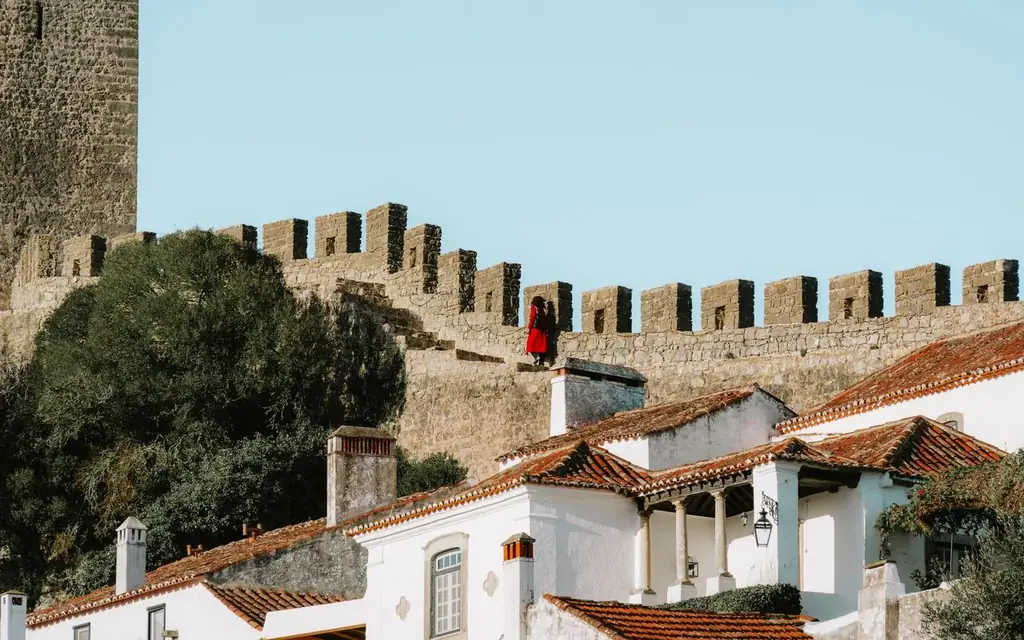
The town gate is the main entrance, decorated with azulejo tile panels, and it is the first thing most people photograph. Beyond it the main street, Rua Direita, runs uphill through the old town towards the castle. The surface is cobbled and slippery after rain, and the gradient is gentle but steady.
If anyone in the group uses a stick or finds long walks hard, it is better to say so when you book. We cannot change the layout of the town, but a driver can choose the drop-off closest to the gate and plan a gentler day around a few short stops instead of the full circuit.
The route from Lisbon and the airport
From central Lisbon the distance is about 80 km (50 miles), and the drive normally takes about an hour on the motorway, longer on a Friday evening or at the start of a holiday weekend. From Lisbon Airport the distance is a little more, about 85 km (53 miles) and 60 to 75 minutes. There is no dedicated airport page for Lisbon in our directory yet, so see our airports hub for the airports we cover, and the Lisbon chauffeur service page for how the city bookings work.
Other ways to reach the town are real options. The official tourism site lists the Rodoviária do Oeste buses, with dozens of daily connections from Lisbon and a stop about 100 metres from the historic centre. It also lists the West line train, which takes about two and a half hours from Lisbon and stops at a station about a kilometre from the town. A taxi can bridge that kilometre.
A town given to a queen
The tourism board's chronology records that King Dinis and Queen Isabel celebrated their wedding in Óbidos in 1282, and that the town was given to her as a wedding present. It then formed part of the queens' estate, the Casa das Rainhas, until 1834, which is why Óbidos is known as the town of the queens. Later monarchs continued the tradition and invested in the town.

The painter Josefa d'Óbidos, one of the best-known Portuguese painters of the seventeenth century, has her own section on the official tourism site, and her work is part of local pride. The town also calls itself a literary town, and an old church at the far end of Rua Direita now houses the Livraria de Santiago, a bookshop in a former church building, with a corner for coffee and a children's section. Whether you buy a book or not, it is worth the walk.
The castle inside the walls is now a Pousada, a hotel run as a historic inn. Guests staying there enjoy a quiet town once the day visitors leave.
Five dates that explain the town
The official town page gives a compact history, and a few dates help when you walk the lanes:
- 1148. King Afonso Henriques took the town from the Moors on 11 January, a date still observed as a municipal holiday.
- 1246. Óbidos stayed loyal to King Sancho II and received the title "Mui Nobre e Sempre Leal", Very Noble and Always Loyal.
- 1282. The royal wedding of Dinis and Isabel, and the start of the queens' ownership.
- 1755. The Lisbon earthquake damaged the town badly, which is one reason the architecture is a blend of periods.
- 2015. UNESCO named Óbidos a Creative City of Literature, which explains the bookshops and the literary festival.
The castle walls were restored between 1910 and 1950, so what you walk beside is a heritage restoration as much as a medieval survivor. The same page mentions the lagoon of Óbidos, local fish stew and golf above the Atlantic for anyone staying longer.
Walls, lanes and ginjinha
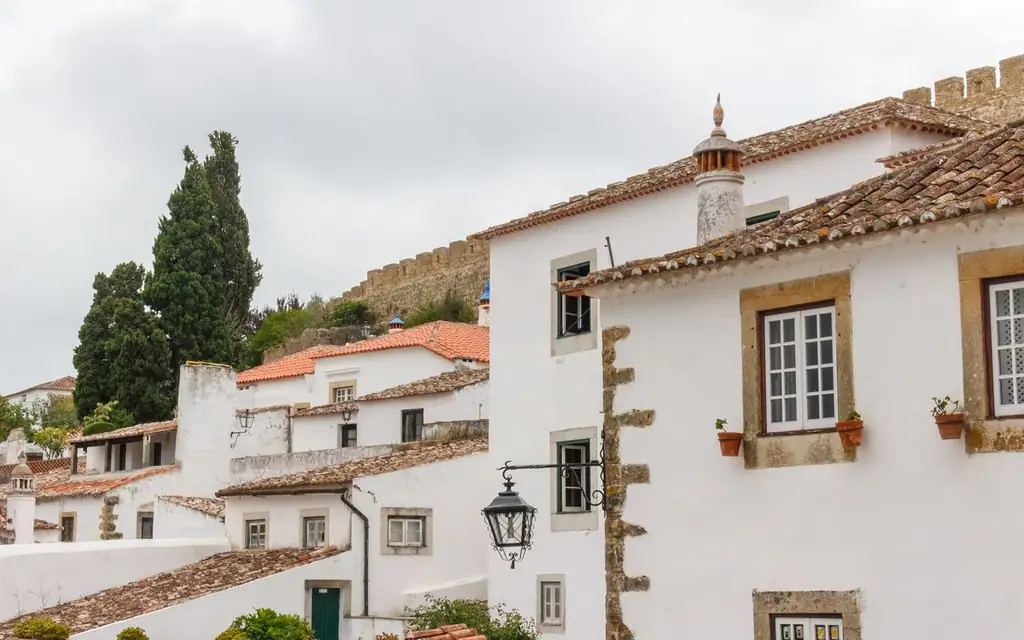
Beyond Rua Direita, the town is a network of narrow, whitewashed lanes with flowers on the doorsteps. The walls and castle define the shape. The tourist office can tell you which stretches of the wall are open to walk on and how exposed they are; an elevated path with open edges is not for everyone, and it needs care with children.
Local life centres on ginjinha, a cherry liqueur, which the official tourism site promotes along with local crafts. It is traditionally offered in a small chocolate cup. A chauffeur-driven day is a sensible time to try it; we never promise drinks on board the vehicle, and local alcohol laws apply.
When to visit, and the festival calendar
The official tourism site lists several events that change the character of the town: a chocolate festival, a Christmas village, a medieval market, the FOLIO literary festival, an opera festival in September, and a theatre festival in June. It does not give fixed months for each, so check the official agenda at the Óbidos tourism website before you choose a date.

The rules for a day on a festival weekend are different. Roads fill, the nearest car parks are full early, and the town is crowded. If you want the lanes to yourself, choose a weekday outside festival weeks, and arrive before 10 am. If you want atmosphere, a festival date is rewarding, though the visit takes longer and the chauffeur needs a clear instruction to arrive early.
If you are in Lisbon for a conference, our page on the Web Summit in Lisbon explains how conference-week transfers are handled.
How long to allow
Two to three hours is enough to walk the main street, visit the bookshop, climb to the castle area and take a coffee. With lunch it becomes a half day. A full day suits those who also walk the walls, visit the churches, or explore the lagoon area nearby. The tourist office, which the official site lists as open through the working day, is a good first stop.
Departures deserve the same planning as arrivals. If you are flying out of Lisbon the same evening, treat Óbidos as a morning outing and leave the town by about 1 pm, which gives the A8 and the approach roads to the airport a margin of safety. Tell the desk your flight time when you book; the pickup is set backwards from check-in, not from a general sense of the afternoon. If your flight is late in the evening, a lingering lunch and an unhurried return are quite possible.
A half-day plan from Lisbon
- 9:00. Pickup in Lisbon, about 80 km (50 miles) to the gate.
- 10:00. Arrive at the gate area. Walk through the Porta da Vila at the quiet hour.
- 10:15 to 11:45. Rua Direita, the bookshop, a ginjinha stop, and the walls if you choose.
- 12:00. Lunch in the old town.
- 13:30. Message the driver. Return to Lisbon by mid-afternoon.
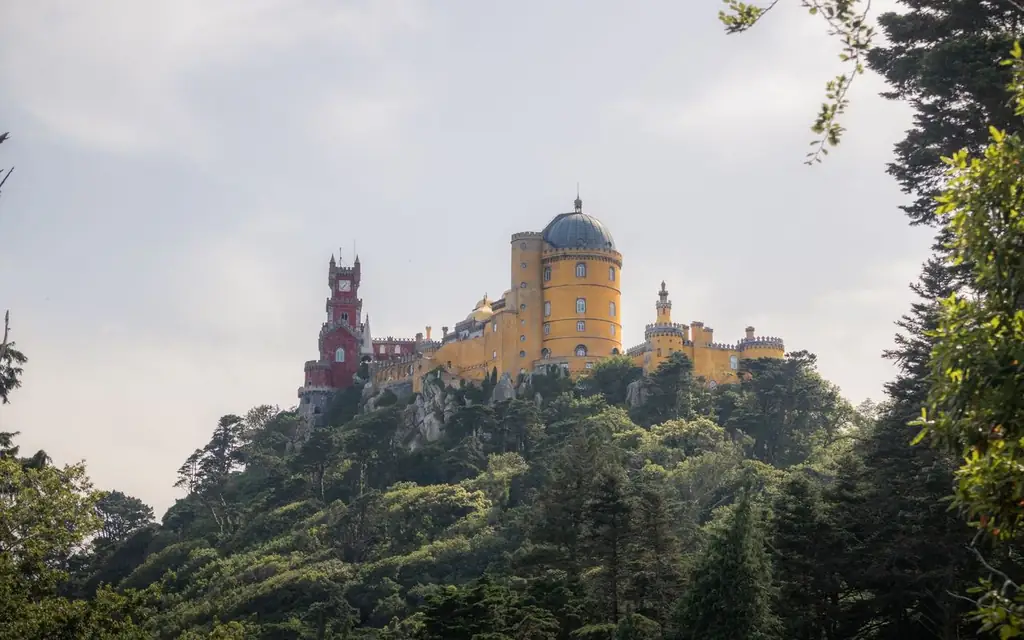
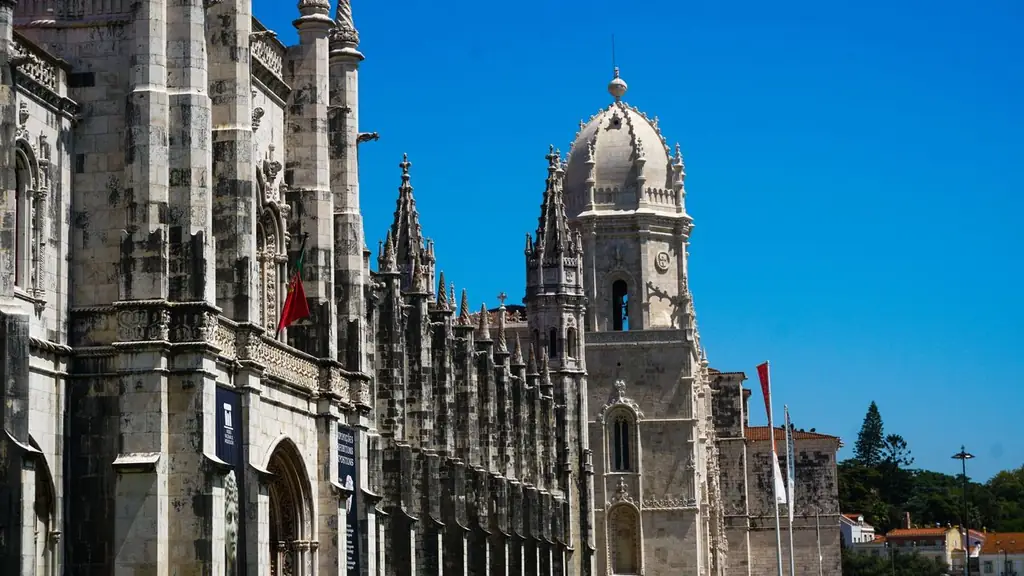
For a longer outing, pair Óbidos with a second day on the coast. Cascais is about 100 km (62 miles) from Óbidos, roughly an hour and ten minutes, and the Pena Palace in Sintra is about 85 km (53 miles), 1 hour to 1 hour 15 minutes. If you are staying in Lisbon, the Belém Tower and Jerónimos Monastery fit neatly on the day before or after. More options are collected on the private tours with a driver page and the Europe directory.
Ways to get to Óbidos compared
| Option | Time from Lisbon | Cost note | Best for |
|---|---|---|---|
| Rodoviária do Oeste bus | Check operator | Lowest | Solo travellers, flexible schedule |
| West line train | About 2.5 hours | Lowest | Rail enthusiasts with time |
| Rental car | About 1 hour | Variable, plus paid parking | Independent drivers |
| Metered taxi | About 1 hour | Metered, high for the distance | Short local hops only |
| Private chauffeur | About 1 hour | Fixed fare via the booker | Groups, luggage, tight schedules |
If you have time and are travelling alone, the bus is the lowest-cost option, with a stop about 100 metres from the historic centre, according to the official site. A chauffeur is worth considering when you want to be at the gate early, when there are several of you, when you are carrying luggage, or when you are adding another stop on the same day.
Comfort, etiquette and practicalities
The cobbles are the main physical challenge. Wear flat shoes with grip, and carry a small bag, since the lanes are narrow. In summer, the town can be hot by midday, with little shade on the walls; carry water and a hat. In winter, the wind can be sharp on the hill.
Towns like Óbidos are lived in. Keep your voice down in the lanes after dark, and ask before photographing people in doorways or shops. Do not climb on walls where signs forbid it. Shops welcome visitors, and there is no obligation to buy.
On vehicle choice: a couple or a trio fits comfortably in a sedan, a family of five or six is better in an SUV, and a wedding party or conference group needs a Sprinter. Availability and the exact model are confirmed once you book, and child seats can be requested at the same time. The tourist office and other visitor centres in the region can book chauffeur services for their guests by setting up a trade account with us.
Frequently asked questions
How far is Óbidos from Lisbon by car?
About 80 km (50 miles), roughly one hour by the A8 motorway, longer in heavy traffic.
Can I drive into Óbidos?
Plan not to. The car parks are outside the walls, near the tourist office and the Aqueduct, and visitors walk in through the Porta da Vila.
Where is the taxi rank in Óbidos?
Taxis are available 24 hours a day at the signposted area by the town gate, according to the official tourism site.
Is parking in Óbidos free?
Three of the car parks are paid, including the paved ones next to the tourist office, and the Aqueduct car park is managed by the Óbidos firefighters. The tourism site does not list rates, so check the signs.
How long does it take to see Óbidos?
Two to three hours covers the main street, the bookshop and the walls area. Add time for lunch.
Can I get to Óbidos by train from Lisbon?
Yes, on the West line, in about two and a half hours, according to the official tourism site. The station is about a kilometre from the historic centre.
Is Óbidos good for people with limited mobility?
The cobbles and gradients make it hard. Tell our desk at booking, choose short stops, and ask the tourist office about the easiest route.
When are the festivals in Óbidos?
The official site lists a chocolate festival, a Christmas village, a medieval market, FOLIO and others, without fixed months. Check its agenda for your dates.
Why is Óbidos called the town of the queens?
According to the tourism board, King Dinis gave the town to Queen Isabel as a wedding gift, and it remained part of the queens' estate until 1834.