
 United StatesJFK
 MexicoMEX
 BrazilGRU
 ArgentinaEZE
 ChileSCL
 ColombiaBOG
 PeruLIM
 PanamaPTY
 Costa RicaSJO
 Dominican RepublicPUJ
 JamaicaMBJ
 BahamasNAS
 BarbadosBGI
 United KingdomLHR
 IrelandDUB
 FranceCDG
 GermanyFRA
 NetherlandsAMS
 BelgiumBRU
 SwitzerlandZRH
 AustriaVIE
 ItalyFCO
 SpainMAD
 PortugalLIS
 GreeceATH
 TurkeyIST
 DenmarkCPH
 SwedenARN
 NorwayOSL
 FinlandHEL
 PolandWAW
 Czech RepublicPRG
 HungaryBUD
 IcelandKEF
 United Arab EmiratesDXB
 QatarDOH
 Saudi ArabiaRUH
 IsraelTLV
 EgyptCAI
 MoroccoCMN
 South AfricaJNB
 KenyaNBO
 NigeriaLOS
 IndiaDEL
 PakistanLHE
 Sri LankaCMB
 SingaporeSIN
 MalaysiaKUL
 ThailandBKK
 VietnamSGN
 PhilippinesMNL
 IndonesiaCGK
 Hong KongHKG
 ChinaPVG
 TaiwanTPE
 JapanHND
 South KoreaICN
 AustraliaSYD
 New ZealandAKL
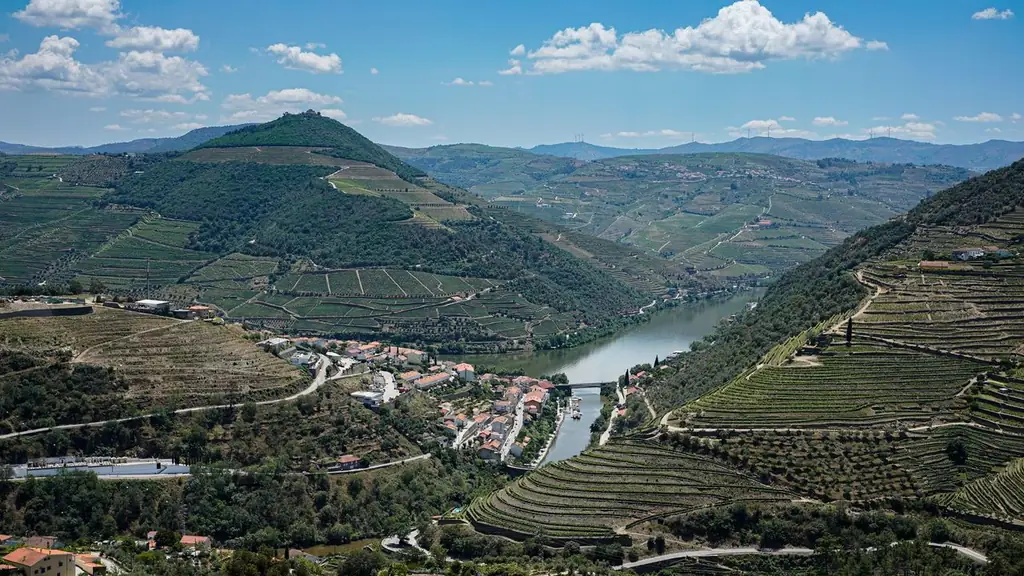
Some places can be seen from the window of a moving car, and the Douro Valley is one of them. The hills fall into the river in steps, the terraces carry vines in straight rows, and the road runs beside the water for much of the way. But the valley is large, the estates are private, and the distances are real. A Douro Valley private tour with driver takes the strain out of 200 km of round trip and puts a person at the wheel who is not tasting wine. This guide explains how to get to the Douro Valley by car from Porto, which towns to choose, and how to book the pieces that cannot be improvised.
How do you get to the Douro Valley by car?
From Porto, Peso da Régua is about 100 km (62 miles) and 1 hour 15 minutes by motorway, and Pinhão about 125 km (78 miles) and 1 hour 45 minutes. A chauffeur drives the whole route, waits during your estate visits, and returns you to Porto, so no one has to drive after a tasting.
Most visitors do one of two things: a full day from Porto to Régua and Pinhão, or an overnight stay in a wine estate, with the chauffeur taking them there and back. Both are straightforward.
A landscape on the World Heritage List
The Alto Douro Wine Region was inscribed by UNESCO in 2001 under criteria (iii), (iv) and (v). UNESCO describes a region that has produced wine for nearly two thousand years, whose landscape has been moulded by human activity, with terraces, quintas (wine-producing farm complexes), villages and chapels as part of the picture. The core property covers about 24,600 hectares, with a much larger buffer zone, and port wine is its best-known product. See the UNESCO entry for the full description.
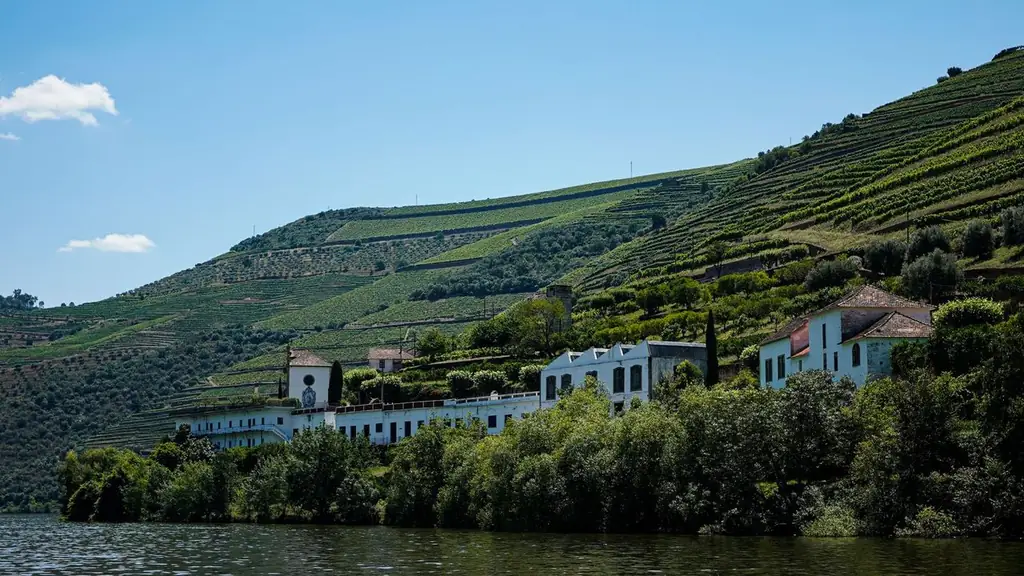
It is a living working landscape, not a museum, and that shapes the way you visit. Estates have their own opening arrangements, many require appointments, and the working calendar of the vines, from spring growth to autumn harvest, sets the mood of the valley through the year.
Choose your Douro: Régua, Pinhão or both
Peso da Régua is the commercial hub of the lower valley and the usual first stop from Porto. The Museu do Douro and the Solar do Vinho do Porto are here, and Visit Portugal describes Régua as the capital of port wine. The São Leonardo de Galafura viewpoint is nearby.
Pinhão is further upriver and is described by Visit Portugal as the geographic centre of the Demarcated Douro Region, where many port wine estates are located. Its railway station, built in the late nineteenth century, is covered inside with tile panels. For many people this is the heart of the valley, though it is a longer drive.
Doing both in a day is possible and tiring. The distance between them is about 25 km (16 miles), usually 30 to 40 minutes by the N222, the road that follows the south bank of the river. If you have just one day and want an unrushed visit, choose one town and its estates, and leave the other for another trip. For two days, base yourself overnight in the valley.
The roads, with distances
- Porto to Peso da Régua: about 100 km (62 miles), around 1 hour 15 minutes on the motorway.
- Porto to Pinhão: about 125 km (78 miles), around 1 hour 45 minutes.
- Peso da Régua to Pinhão: about 25 km (16 miles), 30 to 40 minutes on the N222 along the south bank of the river.
- Porto Airport to Régua: about 105 km (65 miles), roughly 1 hour 15 minutes to 1 hour 30 minutes.
The first stretch from Porto is a fast motorway; the pace slows when you leave it for the river roads. The valley roads are winding, with bends and tractors at harvest time. Drive times above are for good conditions, and a day with a lunch and a tasting should plan for the whole day: leave Porto at about 8:00, return by 19:00 or later.
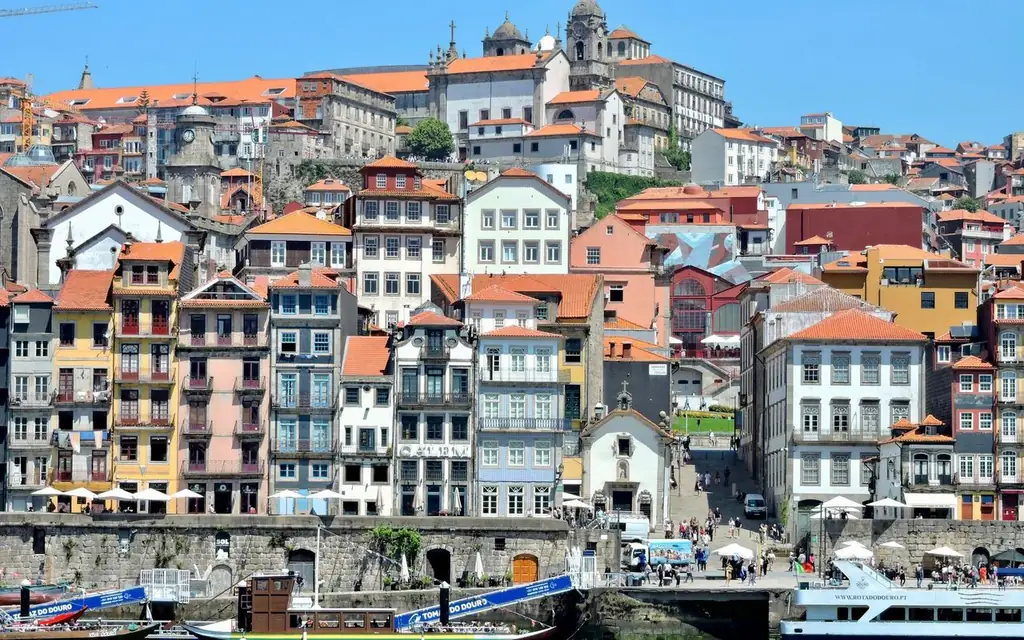
For city context, see our Lisbon chauffeur service page for the capital, and the Porto Ribeira guide for the riverfront in Porto where many Douro days start. We do not yet have a dedicated airport page for Porto, so the airports hub is the best place to see what is covered.
Estates first: book the visit, then the car
Official guidance from Turismo de Portugal is that visits, tastings, meals and rooms at the quintas should be booked in advance with each wine tourism unit, or through the Port Wine Route, and that booking matters most during the harvest. Several well-known estates around Pinhão and Régua welcome visitors by appointment, and others offer guided vineyard walks.
So the order is:
- Choose the estate or estates, and book a time directly.
- Send us the times, the number of passengers and the pickup point.
- We plan the route backwards from your first appointment, including the drive and a buffer for the valley roads.
Never leave an estate visit to chance on a harvest weekend, when estates are at their busiest.
Harvest: the busiest and best weeks
The IVDP, the official Douro and Port wine body, says harvesting begins each year between the end of August and mid-October, depending on the season. Turismo de Portugal says visitors can take part in the grape harvest in September and October at many estates set up for wine tourism. Dates vary with the weather, so ask your estate for its harvest calendar.
The harvest brings the best colour, the most activity and the heaviest demand. It also means slower roads, early starts and a need to book everything. For a quieter valley with the same scenery, May and June (green terraces) or late October into November (autumn colour) are worth a thought. Winter can be very still, with some hospitality closed. We do not give weather forecasts: check the day before you travel.
Museu do Douro in Peso da Régua
The Museu do Douro in Régua tells the story of the region and is a natural indoor stop. According to its official website, it is open daily from 10:00 to 18:00 from 1 March to 31 October and from 10:00 to 17:30 from 1 November to the end of February, with entry possible until 15 minutes before closing. It is closed on 25 December, 1 January and 1 May. Confirm times on the Museu do Douro website before you go.
Plan about an hour. The museum is a good place to start because it explains terraces and port wine, and the visit makes the rest of the day more meaningful.
Pinhão and its tiled station
Pinhão's railway station is worth ten minutes even if you are not taking a train. The Visit Portugal page for the town notes the tile panels that cover the interior of the station building, which dates from the late nineteenth century. The town is small and set on the river. You can take a drink or a meal at a riverside cafe and watch the boats. If you are riding a train as part of the day, the chauffeur can meet you at a different station.
Train, boat or car: a mixed day
The valley can be experienced in three ways, and they combine well.
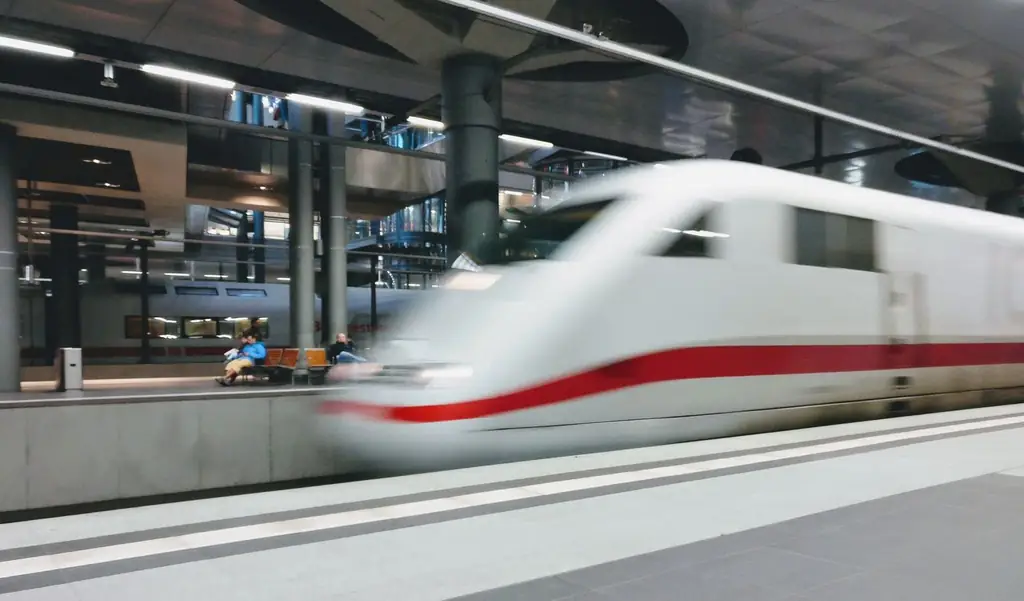
The railway follows the river from Porto and is a scenic option for those who prefer to be carried. The river cruise leaves from the Gaia pier and travels upriver to Régua, according to the regional tourism board's website, with options that include lunch and a historic steam train. The car gives flexibility to stop at estates and viewpoints.
A mixed day could use the car one way and the train or boat the other, with the chauffeur meeting you at the end. This needs a plan: train and boat times are fixed by their operators. Send us the times when you book.
Ways to see the Douro compared
| Option | Time from Porto | Cost note | Best for |
|---|---|---|---|
| Train from Porto | Several hours to Pinhão, check operator | Lowest | Rail lovers, scenic views |
| River cruise with coach return | Full day | Per ticket | Visitors who prefer a guided day |
| Group wine tour by coach | Full day | Per seat | Solo visitors, social groups |
| Rental car | 1 h 15 to Régua | Variable | Confident drivers who skip the tasting |
| Private chauffeur | 1 h 15 to Régua, 1 h 45 to Pinhão | Fixed fare via the booker | Groups, tastings, flexible stops |
If you are alone and want to see the river, the train is excellent and costs less. A chauffeur becomes the better choice when you want to visit several estates at your own pace, when you are tasting, or when you want to be back in Porto at a fixed time.
A sample day from Porto
- 8:00. Pickup in Porto. About 100 km (62 miles) to Régua.
- 9:30. Arrive in Régua. Coffee, then the Museu do Douro or a viewpoint.
- 11:30. Drive 25 km (16 miles) to the first estate near Pinhão, for a booked visit and tasting.
- 13:30. Lunch at the estate or in Pinhão.
- 15:30. The station tiles, then a second estate if you wish.
- 17:00. Return to Porto, about 125 km (78 miles) and 1 hour 45 minutes, arriving around 19:00.
A shorter version leaves out Pinhão, stays near Régua and returns by 17:00. For a pairing, the day before could be spent in the city, using the Porto Ribeira guide, and the Óbidos and Cascais pages cover trips from Lisbon. All can be found through the private tours with a driver page, the attractions hub, and the Europe directory.
An overnight in the valley
Two days suit the Douro better than one. The first day is the drive up, a museum or a viewpoint, one estate and an early dinner; the second starts late and ends with the return to Porto in the afternoon. Visit Portugal notes that some estates around Pinhão offer rural tourism accommodation, so a night in a vineyard is a realistic choice. Book the room and the visit together with the estate, then tell us the arrival and departure times for each day.

For a two-day booking, the chauffeur can stay with you or return to Porto between the legs, depending on the plan. Say which you prefer when you reserve. The advantage of keeping the same driver is that he or she has learned the roads and your preferences by the second morning. The advantage of returning is that you are free to move at your own pace between estates in a taxi or on foot. Either way, the desk is available around the clock if plans change.
Etiquette, comfort and the role of the driver
A chauffeur drives and can suggest stops, but the estate hosts present their wines and cellars. Where a site requires or recommends a guide, we say so. We never promise drinks in the vehicle, and local alcohol laws apply to everyone.
Wear comfortable shoes for vineyard walks, and take layers; river valleys can be cool in the morning and hot by afternoon. The road has many bends: if someone is prone to car sickness, tell the desk and ask for a front seat and a slower pace. Child, toddler and booster seats can be added at booking. For a long day with bags of purchases from the estates, an SUV gives more boot space than a sedan; the exact model is confirmed at booking.
Wine-region tourist offices that want to offer guests a chauffeur can ask about a trade account.
Frequently asked questions
How far is the Douro Valley from Porto by car?
Peso da Régua is about 100 km (62 miles), around 1 hour 15 minutes. Pinhão is about 125 km (78 miles), around 1 hour 45 minutes.
Is the Douro Valley a UNESCO World Heritage site?
Yes. The Alto Douro Wine Region was inscribed in 2001 under criteria (iii), (iv) and (v).
When is the grape harvest in the Douro?
The IVDP says it begins between the end of August and mid-October, depending on the year. Turismo de Portugal mentions September and October for visitor participation.
Do I need to book estate visits in the Douro?
Yes. Official guidance is to book visits, tastings and meals in advance with each estate or through the Port Wine Route, especially during the harvest.
How far is Pinhão from Peso da Régua?
About 25 km (16 miles), 30 to 40 minutes along the N222 on the south bank of the river.
Is the Museu do Douro open every day?
According to its official site it opens daily, from 10:00 to 18:00 in summer and 10:00 to 17:30 in winter, and is closed on 25 December, 1 January and 1 May.
Can a chauffeur wait while I visit a wine estate?
Yes, by arrangement. Give us the booked times and we plan the day around them. The driver does not taste, so you can.
Can I take the train one way and a car the other?
Yes. Train and boat times are set by their operators, so send us the times and we plan the road leg to meet them.
Is a day trip to the Douro too long?
It is a long day, about 11 hours with lunch and two visits. Many visitors prefer to stay overnight in the valley.