 United StatesJFK
 MexicoMEX
 BrazilGRU
 ArgentinaEZE
 ChileSCL
 ColombiaBOG
 PeruLIM
 PanamaPTY
 Costa RicaSJO
 Dominican RepublicPUJ
 JamaicaMBJ
 BahamasNAS
 BarbadosBGI
 United KingdomLHR
 IrelandDUB
 FranceCDG
 GermanyFRA
 NetherlandsAMS
 BelgiumBRU
 SwitzerlandZRH
 AustriaVIE
 ItalyFCO
 SpainMAD
 PortugalLIS
 GreeceATH
 TurkeyIST
 DenmarkCPH
 SwedenARN
 NorwayOSL
 FinlandHEL
 PolandWAW
 Czech RepublicPRG
 HungaryBUD
 IcelandKEF
 United Arab EmiratesDXB
 QatarDOH
 Saudi ArabiaRUH
 IsraelTLV
 EgyptCAI
 MoroccoCMN
 South AfricaJNB
 KenyaNBO
 NigeriaLOS
 IndiaDEL
 PakistanLHE
 Sri LankaCMB
 SingaporeSIN
 MalaysiaKUL
 ThailandBKK
 VietnamSGN
 PhilippinesMNL
 IndonesiaCGK
 Hong KongHKG
 ChinaPVG
 TaiwanTPE
 JapanHND
 South KoreaICN
 AustraliaSYD
 New ZealandAKL
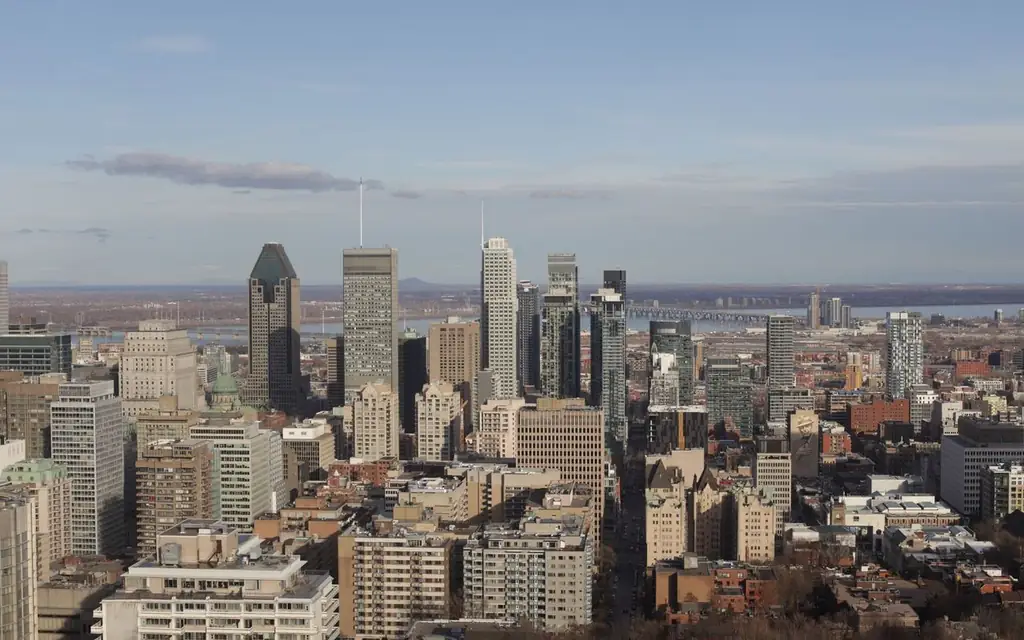
Montréal takes its name from this hill, and for a city built on an island, the summit is the one place that lets you see all of it. The question people ask first is whether a car can reach the top. The honest answer is that it can get close, not all the way. Anyone booking a Mount Royal Park private tour with driver is better served by understanding that boundary than by pretending it is not there.
The year matters. Mount Royal Park opened in 1876, which makes 2026 its 150th anniversary, and the McCord Stewart Museum has marked the date with an outdoor exhibition of about fifty archival images that began on June 1, 2026. The access roads, meanwhile, have been the subject of a long public debate. The notes below separate what is firmly known from what is still being decided.
Can a car take you to the top of Mount Royal?
Not to the Kondiaronk Belvedere itself. The mountain's own site says you cannot drive to the Chalet or the Belvedere, and visitors leave the car at the Smith House parking lot, then walk a short distance. The park is about 19 km (12 mi) and 27 minutes from Montréal-Trudeau, and 4 km (2 mi) from Old Montreal.
The distance from Montréal-Trudeau to the Chalet area is about 19 km (12 mi), and the drive from Old Montreal is about 4 km (2 mi), roughly 9 minutes. From the wider Montréal city page you can see how the desk handles hotels and stations. Traffic around the mountain is heavy on summer weekends and on fall colour days, and a driver works out the approach from the east, the south or the west depending on the day's road works and closures.
A park designed in 1874: what Olmsted left
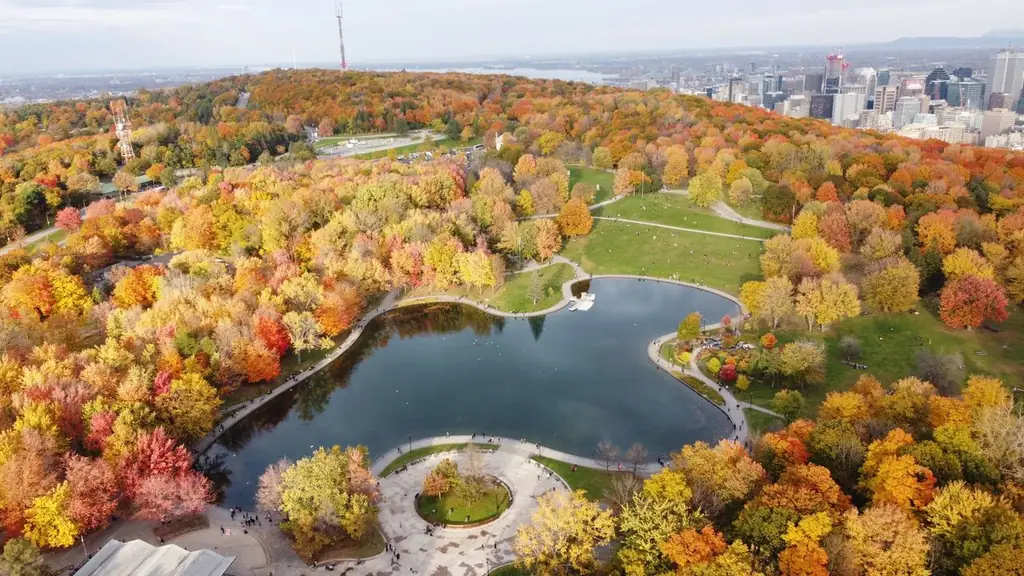
The City of Montréal commissioned Frederick Law Olmsted, the designer of New York's Central Park, in 1874 to design the park. The land had been bought over several years, and in the depression of the mid-1870s construction was rushed, so Olmsted's full plan was never carried out. The park nevertheless opened in 1876. He had imagined a circulation of gentle grades that let a visitor reach the summit without a steep climb, and only parts of the road system were built in a limited way. The landscape architect Frederick Todd, a former Olmsted Brothers apprentice, later designed additions including the cafe structure of 1905 and Beaver Lake in the 1930s.
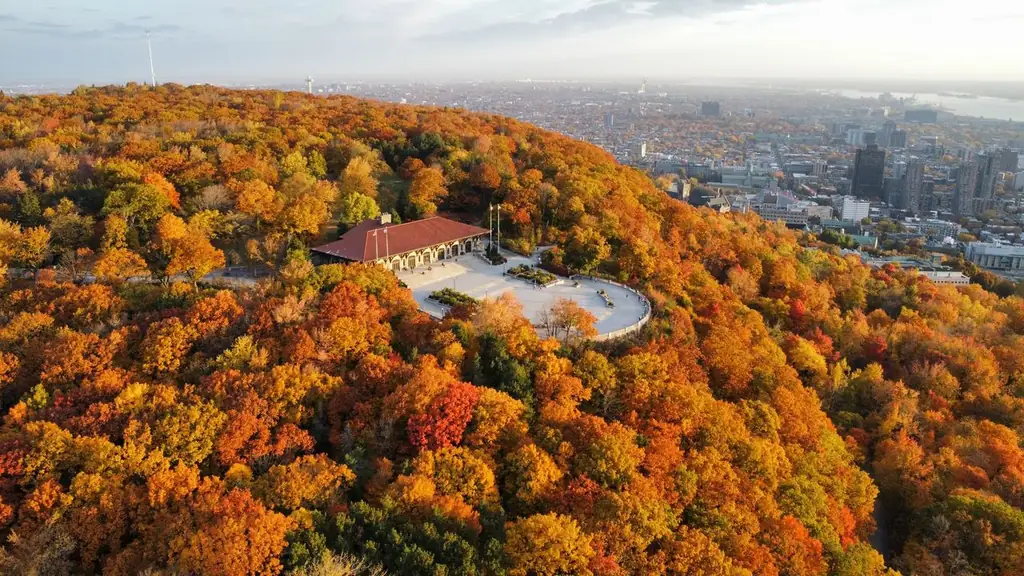
The park covers about 190 hectares, and the wider mountain spans around ten square kilometers with three summits. Everything is within a few kilometers of the city center, and the Tourisme Montréal park guide gives the visitor's overview. The number to keep in mind is distance on the ground: from the Smith House lot to the Chalet is a short walk, and from the Chalet to the Belvedere is shorter still. A visit takes an hour or two, and an unrushed one can fill half a day.
Kondiaronk Belvedere: the view, the walk, the light
The Belvedere is the largest of several lookouts, and it is named in honor of the Huron-Wendat Great Chief Kondiaronk, who facilitated the Great Peace of Montreal in 1701. From it you look south over downtown, the Old Port and the river, with the St. Lawrence and the far shore beyond. The Chalet behind it is a large public hall; the site around it is the park's main social space.
Light matters. Morning gives a clear view south with the sun behind you, afternoon puts the downtown towers in front-lit gold, and dusk is the most photographed hour. A fall weekday at 4 pm often combines good light with a thin crowd.
A 30.5 m illuminated cross built in 1924 stands on the summit elsewhere on the mountain. It is visible from many parts of the city at night.
The Camillien-Houde question: what is being decided
Camillien-Houde Way is the road that crosses the mountain between east and west, and Remembrance Road runs near the summit. The City announced in 2023 that it would close Camillien-Houde to through traffic and turn it into a path for pedestrians and cyclists, with cars reaching the park by Remembrance Road. The Beaver Lake and Smith House lots were to stay, with more spaces for families and people with reduced mobility, and emergency vehicles keep access.
The timing has moved. Reports describe work beginning in 2027 after the original 2026 to 2029 schedule, a later statement that the project would wait until the McTavish reservoir work ended, and a 2025 campaign promise by a candidate for mayor to postpone it. The result of the November 2025 election and the current rule on the road were not confirmed at the time of writing, so this guide does not state them. The practical advice is simple: the chauffeur will check the City of Montréal notices on the morning of your trip, and your itinerary should not depend on one road being open.
The City's Mount Royal pages are the place to look for access updates, though the closure notice that loads there today is an older one from 2021. Treat any road status as provisional until the day.
Smith House, Beaver Lake and the other stopping points
Smith House is the visitor services building run by Les amis de la montagne, which offers trail maps and a permanent exhibition on the mountain's history. It is the logical meeting point because the parking lot beside it is the place from which visitors walk to the Chalet and the Belvedere. Beaver Lake is an artificial pond built in 1938, with a modern pavilion from the 1950s beside it, and it has its own parking lot.
- Smith House lot: the main drop-off and wait point for the Chalet and the Belvedere.
- Beaver Lake lot: a second stopping point, useful for a lakeside walk.
- Chalet and Belvedere: reached on foot only. The chauffeur does not drive you to the terrace.
A driver waits where the vehicle can legally stand and meets you at the lot at the agreed time. Our desk uses a 15-minute free waiting period on non-airport pickups, and a mobile number on the day is part of the plan.
The mountain's neighbors: cemetery, oratory and the Plateau
Mount Royal is surrounded by places that fill out the day. Mount Royal Cemetery lies on the slopes and has historic monuments and quiet drives. Saint Joseph's Oratory, a major pilgrimage site, is on the northwest side of the mountain, about 12 km (7 mi) from the airport and around 5 km (3 mi) from the Chalet. It is a place of worship, and respectful dress and low voices are expected. The Plateau Mont-Royal neighborhood, on the east side, has cafes and shops.
In summer, Sunday afternoons around the George-Étienne Cartier monument bring drummers and crowds. If your time is limited, the weekdays offer the clearest view and the lightest traffic.
Fall, winter and the 150th-anniversary year
October is a good month for the mountain, with maples and oaks changing colour. In winter, the park is for walking, snowshoeing and the quiet of a city under snow, and Québec-registered vehicles must run winter tires from December 1 to March 15. Paths can be icy at the top and steep sections need grip.
The anniversary exhibition is outdoors, and the McCord Stewart Museum's presentation is the reason to seek out archival images along the paths in 2026. Dates and locations are on the museum's site, so confirm before you go.
Sunset and evening: what changes after dark
Dusk is the most requested hour, and it is also the hour that needs the most care. The sun sets early in late fall, and a 5 pm lookout visit in November is already dark by the time you return to the lot. Check the park's posted hours on the day, because opening times for individual areas are not the same as those of the Chalet, and carry a phone light for the path back to the car.

The illuminated cross is the evening landmark, and the downtown towers glow from the Belvedere. A good sequence is to arrive 45 minutes before sunset, walk to the terrace, watch the light change and be back at the lot as the path darkens. Tell the desk the time you want the car and the chauffeur will be in position. After dark the Smith House lot is quieter than the terrace, so the pickup point should be a place you can reach in a few minutes, not the farthest viewpoint.
Weather, clothing and the mountain microclimate
The hill is windier and a few degrees cooler than the streets below, and the temperature at the lookout in October or April can feel like a different season from the city. Bring a layer more than you think you need and shoes with a grip. Rain makes the stone and the leaf-covered paths slick. In winter the same paths ice over, and the stairs from the lower entrances are not an option for guests with limited mobility.
Parents with strollers should know that the paths near the lot are manageable, but the steeper park trails and stairs are not. Our desk can note a stroller, a wheelchair or a walker on the booking so the driver plans the drop-off accordingly.
A three-hour mountain program
- 2:00 pm: pickup at a downtown or Old Montreal hotel.
- 2:15 pm: arrive at the Smith House lot, 4 km (2 mi) from the district; the exhibition and the trail maps.
- 2:45 pm: walk to the Chalet and the Belvedere; photographs and a coffee.
- 3:45 pm: the chauffeur collects you at the lot and drives to Beaver Lake for a short walk, or to the Oratory 5 km (3 mi) away.
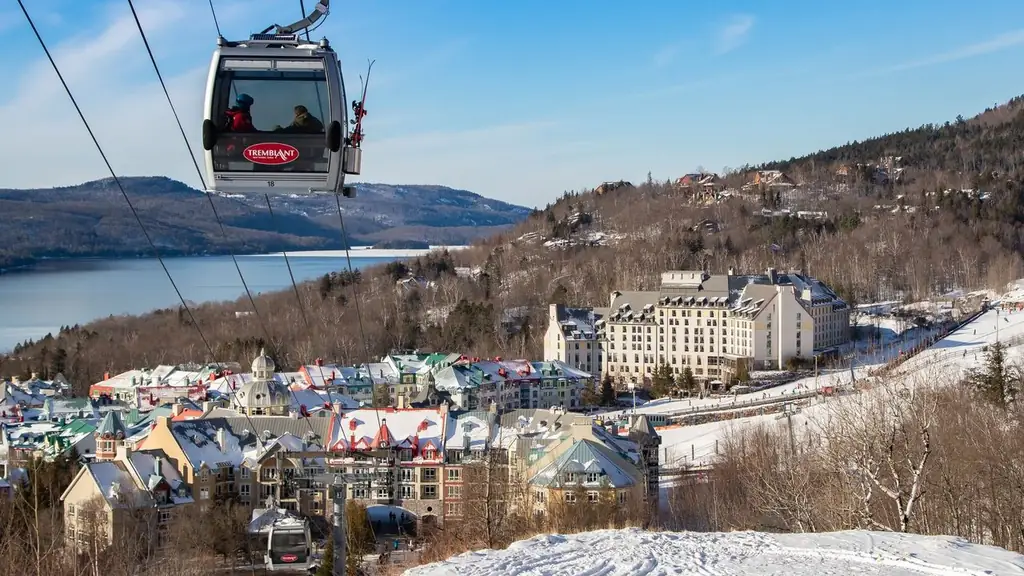
- 4:30 pm: return to your hotel, or continue toward the Laurentians, where Mont-Tremblant is about 146 km (91 mi) from the Chalet.
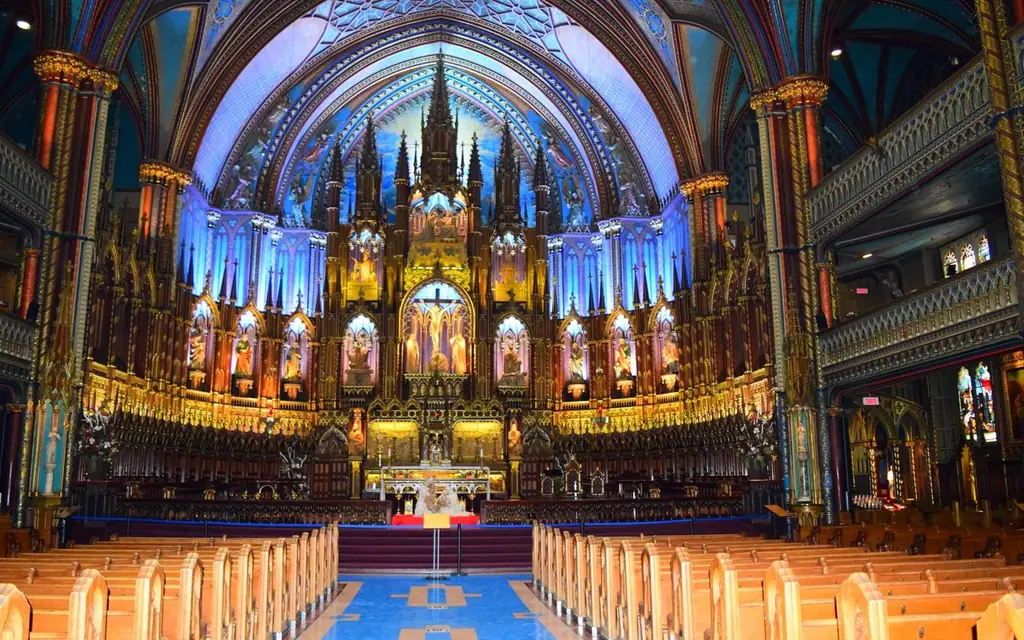
A longer day starts in the district with the Notre-Dame Basilica in the morning and finishes on the mountain at sunset.
Allow for the walk from the Smith House lot. The route to the Chalet and the Belvedere is short, but it is uphill and sloped, so wear shoes with grip and take a layer for the lookout, where the wind is cooler than at the lot. If your group walks at different paces, let the faster walkers go ahead to the terrace and meet the others there, and agree a time to return to the lot so the driver is in position. The Chalet is a large public hall and a sensible place to warm up before the walk back.
Ways to reach the lookout compared
| Approach | Effort and time | Cost basis | Suits |
|---|---|---|---|
| Walk up from downtown or the Plateau | A steady uphill walk of roughly 30 to 45 minutes | Free | Active visitors staying nearby |
| Public bus | Short ride plus a walk from the stop | Transit fare | Solo travelers on a budget |
| Taxi or rideshare | About 10 to 20 minutes from downtown | Metered or surge-priced | Short trips with no luggage |
| Rental car | Park at Smith House, then walk | Daily rate plus parking | Independent travelers combining several stops |
| Private chauffeur | Drop at Smith House; airport about 27 minutes | Fixed fare via the booker | Groups, luggage, tight schedules, mobility needs |
If you are staying on the Plateau and you are fit, walking up is better than any car. If the program includes the airport, luggage, children or guests who cannot manage a hill, the chauffeur is the practical choice. For regional context see the North America directory and the private tours with driver overview.
Accessibility and etiquette
The paths from the Smith House lot to the Chalet are shorter than those from the lower entrances, which makes it the right drop-off for guests with limited mobility, though the surfaces vary and some stretches are sloped. Ask the desk to note any mobility need on the booking. A child seat can be requested at booking. Keep to the paths in the park, take litter with you and keep voices low near the cemetery and the Oratory.
Frequently asked questions
Can I drive to the Mount Royal lookout?
Not to the Kondiaronk Belvedere or the Chalet. The mountain's site says to leave the car at the Smith House parking lot and walk a short distance.
How far is Mount Royal from Montréal-Trudeau Airport?
About 19 km (12 mi) to the Chalet area, around 27 minutes in normal traffic.
How long should I spend on Mount Royal?
One to two hours for the Belvedere and a short walk, up to half a day with Beaver Lake, the Oratory and a long path.
Is Camillien-Houde Way closed to cars?
The City announced a plan to close it to through traffic, but the project has been delayed and politically contested. Check City of Montréal notices on the day, as the current rule was not confirmed.
Who designed Mount Royal Park?
Frederick Law Olmsted, commissioned by the City of Montréal in 1874. The park opened in 1876.
What is the Kondiaronk Belvedere named after?
The Huron-Wendat Great Chief Kondiaronk, who helped bring about the Great Peace of Montreal in 1701.
Is the cross on Mount Royal lit at night?
Yes. The 30.5 m cross, built in 1924, is illuminated and visible from many parts of the city.
Can I visit Mount Royal in winter?
Yes. The park is open for walking and snowshoeing, and paths can be icy. Québec-registered vehicles must run winter tires from December 1 to March 15.
Is there a fixed fare for a Mount Royal visit?
Yes. LimousineWorldwideDirectory.com shows the fare in the booker for your exact pickup, drop-off, vehicle and hours before you pay.