
 United StatesJFK
 MexicoMEX
 BrazilGRU
 ArgentinaEZE
 ChileSCL
 ColombiaBOG
 PeruLIM
 PanamaPTY
 Costa RicaSJO
 Dominican RepublicPUJ
 JamaicaMBJ
 BahamasNAS
 BarbadosBGI
 United KingdomLHR
 IrelandDUB
 FranceCDG
 GermanyFRA
 NetherlandsAMS
 BelgiumBRU
 SwitzerlandZRH
 AustriaVIE
 ItalyFCO
 SpainMAD
 PortugalLIS
 GreeceATH
 TurkeyIST
 DenmarkCPH
 SwedenARN
 NorwayOSL
 FinlandHEL
 PolandWAW
 Czech RepublicPRG
 HungaryBUD
 IcelandKEF
 United Arab EmiratesDXB
 QatarDOH
 Saudi ArabiaRUH
 IsraelTLV
 EgyptCAI
 MoroccoCMN
 South AfricaJNB
 KenyaNBO
 NigeriaLOS
 IndiaDEL
 PakistanLHE
 Sri LankaCMB
 SingaporeSIN
 MalaysiaKUL
 ThailandBKK
 VietnamSGN
 PhilippinesMNL
 IndonesiaCGK
 Hong KongHKG
 ChinaPVG
 TaiwanTPE
 JapanHND
 South KoreaICN
 AustraliaSYD
 New ZealandAKL
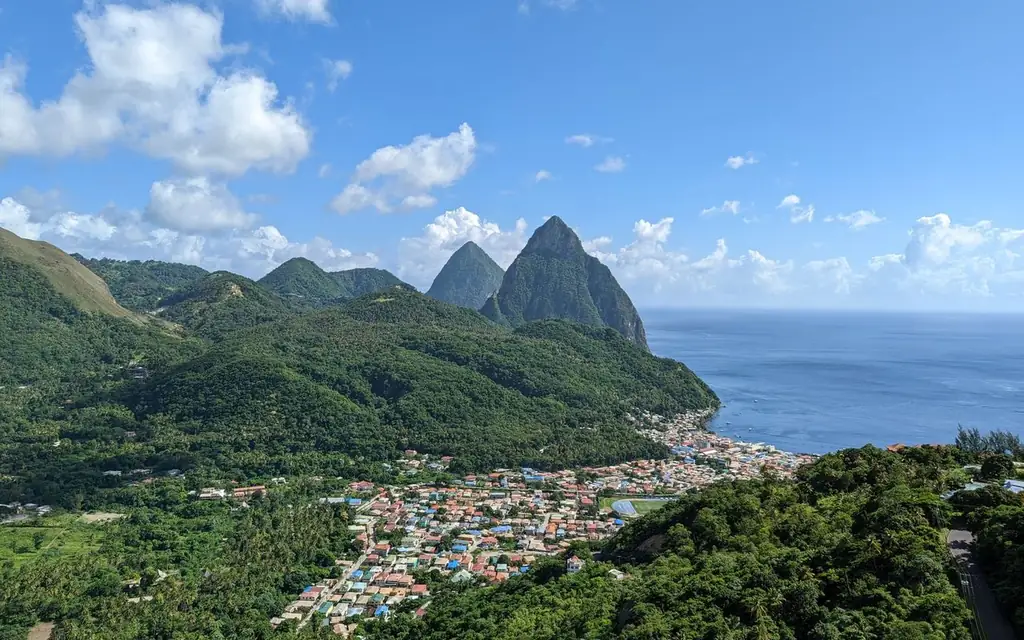
Saint Lucia's most famous view is not at the top of anything you have to climb. The two peaks stand at the sea's edge, a conical pair of forested volcanic plugs on the island's west coast, and from several places on the coast road you see both at once. The question is how to see them, and the answer depends on whether you want a photograph, a hike or a day on the water.
If you are planning the pitons private tour with driver, the first fact to absorb is geography. Saint Lucia is a mountainous island with a small road network, and the drive to Soufriere, the town beneath the peaks, is the slowest part of the trip. The rest of this guide separates the drive, the guided climbs, the easier alternatives and the wider day.
Reserve your Saint Lucia chauffeur
What are the Pitons, and what is the status of the site?
The Pitons are two volcanic peaks, Gros Piton and Petit Piton, beside the town of Soufriere on Saint Lucia's southwest coast. They form the core of the Pitons Management Area, a UNESCO World Heritage Site inscribed in 2004 for their natural beauty and volcanic features. Both climbs require a certified local guide.
Petit Piton is listed by the Saint Lucia Tourism Authority at 743 m (2,438 ft). Gros Piton is given as 798 m (2,619 ft) on the same page, though other published figures place it closer to 770 m (about 2,530 ft), so treat the exact number as approximate. The World Heritage Outlook entry from IUCN says the management area covers about 2,909 hectares, that about 80 percent of the land is privately owned, and that the site receives more than 200,000 visitors a year. That tells you two things as a visitor: the peaks are a managed landscape, not an empty reserve, and you should respect private property and stay on marked routes.
How far are the Pitons from the airports?
Saint Lucia has two airports. Hewanorra International in Vieux Fort, at the south end of the island, handles most international flights. George F. L. Charles Airport, near Castries in the north, handles regional and some other traffic. The Pitons sit between them on the west coast, and the distances in this paragraph are approximate road figures because published numbers vary by source.
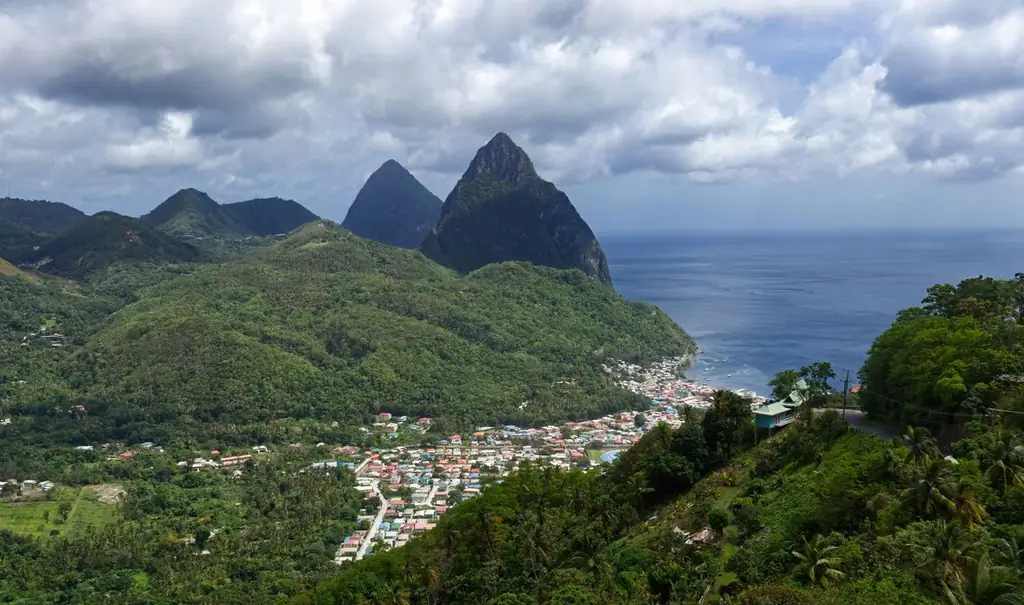
From Hewanorra to Soufriere is roughly 35 to 40 km (22 to 25 mi), and the drive takes 50 to 70 minutes on a road that climbs, bends and passes through villages. From Castries it is roughly 40 to 50 km (25 to 31 mi) and 1 hour 15 minutes to 1 hour 45 minutes. From the resort area of Rodney Bay in the north, allow two hours or slightly less. The difference between a 60-minute estimate and a 90-minute reality is the mix of hairpins, school traffic and slow trucks. We tell you the range, and the driver builds the pickup around the longer one.
Both airports can be requested in the booker, and the airports directory shows the region's other gateways. If you arrive by cruise ship at Castries, the cruise ports directory explains how we plan the Soufriere run so that you are back well ahead of all-aboard. For a ship day the Pitons are a long reach, and we recommend a viewpoint-and-lunch plan, not a climb.
The two climbs, from the official source
The Saint Lucia Tourism Authority publishes the basics on its Piton climbs page.
- Gros Piton. The page describes a 4 km (2.5 mi) round trip, rated moderate to challenging, usually taking 4 to 6 hours. A certified local guide is required to handle the steep, rocky sections safely. The packing list: sturdy boots, light breathable clothing, a rain jacket, at least 2 liters of water per person, snacks, insect repellent, sunscreen, a small pack and a walking stick.
- Petit Piton. A 3.2 km (2 mi) scramble, 3 to 5 hours, rated very challenging and technical, with fixed ropes on vertical rock faces. The page calls a professional guide mandatory.
Neither climb is a sightseeing stop. The trailhead for Gros Piton is reached from the south side of the pair, so it comes before Soufriere town when you drive up from Hewanorra, and guides are arranged at the visitor base there. Because the park does not publish a single booking window and operators set their own schedules, confirm the meeting point, start time and fee with the operator or at the interpretive center.
A chauffeur does not climb. What he does is deliver you to the trailhead at the start time, wait or return for you at an agreed time, and take you to lunch and back to your hotel. Because a Gros Piton day takes four to six hours on the mountain, we plan it as a drop-off and a pickup, not a long wait, unless you ask for the car to stay.
If you do not want to climb: the easier Pitons day
Most visitors see the peaks without climbing them, and a well-planned drive is the better way. The Saint Lucia tourism site lists Sulphur Springs, known for its mud bath, Anse Chastanet, noted for reefs and easy beach access, and views of the Pitons from Sugar Beach. These are all in the Soufriere area, within a short drive of each other, and a chauffeur links them in sequence.
A relaxed day looks like this:
- Morning. Leave Hewanorra or Castries by 8:00, reach Soufriere for mid-morning.
- Viewpoint stop. Pull over at a designated lookout on the coast road, where the peaks appear framed against the sea. The driver chooses a safe pull-in, because the road is narrow and has few shoulders.
- Sulphur Springs. A guided visit, followed, if you wish, by a mud bath. Bring a swimsuit and a towel.
- Lunch in Soufriere. Many small restaurants line the waterfront and hillside.
- Beach or gardens. Anse Chastanet for the reef, or one of the area's estate gardens.
- Return before the light fades. The coast road is less forgiving after dark.
Weather, season and the best light
The tourism pages and local guides agree that December to May is the drier, sunnier half of the year, and that is the safest window for a climb. June to November brings more rain and the Atlantic hurricane season, and a wet trail is slower and slippery. In any month, start early: the mornings are the clear hours, and cloud often builds around the summits after midday.
For photography, the early light on the peaks from the coast road, and the late-afternoon light from the water, are the two best moments. A boat trip along the coast is another way to see the pair, if you can find a licensed operator. Our desk does not book boats, but it can time the car around yours.
Choosing between the climbs, by fitness and time
Gros Piton is the walk for a fit traveler who wants a summit and a view. The official figures, 4 km round trip and 4 to 6 hours, are the shape of the day: a steady ascent, a steep rocky final section and a knee-testing descent. Start in the first hours of daylight, carry the full 2 liters of water the tourism authority recommends, and tell your guide about any injury before you set off. The guide's pace sets the pace.
Petit Piton is a different category. Fixed ropes on vertical faces and a technical scramble make it a climb for experienced, confident travelers, and the tourism authority rates it very challenging. If you are not sure which you are, choose Gros Piton or neither, and spend the day on the road, the beaches and the springs. The mountains do not reward ego.
For the driver, both climbs mean the same thing: an early pickup, a clear return time and a vehicle with room for muddy boots. Tell the desk if your group is carrying walking poles, a change of clothes and a first-aid kit, and we choose a vehicle with room for them.
Transfers between resorts and the Soufriere side
Not every Pitons trip is a day tour. Many guests stay in Soufriere for a few nights and use the north of the island for the rest of the stay, or the other way around. A chauffeur transfer between Rodney Bay or Castries and a Soufriere-side property is a full hour or more of mountain driving, and doing it by taxi with two large suitcases is not a comfortable arrangement.
If you are changing hotels, ask for a daytime transfer so you see the road, and stop at a viewpoint on the way. Allow lunch in Soufriere if you are heading south, and note that the drive from Soufriere to Hewanorra for an evening flight should leave at least three hours before departure. Give the desk the flight number and we track it, so a delayed departure does not turn into a missed connection. For larger parties, the same booking covers the whole group on one confirmation and one invoice, which suits wedding groups and incentive trips. Browse more ideas on the attractions hub.
The road to Soufriere: your options

| Option | Time from Hewanorra airport | Cost feel | Best for |
|---|---|---|---|
| Private chauffeur | 50-70 min | Fixed fare via the booker | Families, groups, climbers with an early start, anyone nervous about the road |
| Taxi | 50-70 min | Agreed with the driver or set by the airport rate board | Simple point-to-point transfers |
| Shared tour van or excursion | 1.5-2.5 h with pickups | Bundled with the tour | Visitors who want a set program |
| Rental car | 50-90 min | Fuel and insurance | Experienced drivers who are comfortable with steep, winding roads |
| Bus | Slow, with changes | Lowest | Independent travelers with time |
The rental car deserves an honest word: Saint Lucia drives on the left, the west coast road is narrow and steep, and the hairpins are tiring. Many visitors who start out with a rental car change their minds after the first descent. A chauffeur is the most relaxed way to do the drive, and for a climber who will be tired at the end of a four-to-six-hour hike, it is also the safest.
Etiquette and care for a fragile landscape
The IUCN assessment rates tourism and development pressure as high and says the site lacks a visitor-management strategy. As a visitor, follow the guide, stay on the marked trail, take your rubbish with you, and do not leave the route to find a better view. Do not trespass on private estates. Ask before photographing people in Soufriere. Because the landscape is fragile, the best behavior is the simplest.
Cars, kit and the booking behind them
Climbers and photographers travel with more than they expect: boots, poles, rain jackets, tripods. A sedan suits one to three people with ordinary bags, a Luxury SUV such as a Cadillac Escalade or GMC Yukon Denali takes four to six with kit, and a Sprinter takes a bigger group. The exact model is confirmed at booking, and child seats are available on request. A driver keeps dry clothes in the car for a muddy return.
Our worldwide booking desk, open round the clock, reserves the ride, confirms it and invoices it, while a vetted, licensed and commercially insured Saint Lucian operator from our directory does the driving. Expect a fixed fare shown in the booker before you pay. Our private tours with driver page covers the hourly and day formats. For other Caribbean guides, see Harrison's Cave in Barbados and Eagle Beach in Aruba, or browse the Latin America and Caribbean directory. The Saint Lucia Tourism Authority homepage carries current entry requirements for arrivals, and the IUCN World Heritage Outlook entry provides background on the site's management.
Frequently asked questions
How far are the Pitons from Hewanorra airport?
Roughly 35 to 40 km (22 to 25 mi) to Soufriere, which takes 50 to 70 minutes on the west coast road. Published figures vary, so allow the longer end.
How long does it take to drive from Castries to the Pitons?
Roughly 40 to 50 km (25 to 31 mi) and 1 hour 15 minutes to 1 hour 45 minutes, depending on traffic and the road's condition.
Do I need a guide to climb the Pitons?
Yes. The Saint Lucia Tourism Authority says a certified local guide is required for Gros Piton, and calls a professional guide mandatory for Petit Piton.
How long does the Gros Piton hike take?
The tourism authority gives 4 to 6 hours for the 4 km (2.5 mi) round trip. Plan your car around that.
Can I see the Pitons without hiking?
Yes. The coast road offers viewpoints, and Sugar Beach and the Soufriere area give views of both peaks. Sulphur Springs and the beaches fill a relaxed day.
When is the best time to visit?
December to May is generally drier and sunnier. Wet-season trails are slower and slippery, and the Atlantic hurricane season runs from June to November.
Is a cruise-ship day enough for the Pitons?
It can be, if you choose a viewpoint-and-lunch plan. A climb takes most of a day, and the road from Castries takes over an hour each way.
Can the car stay for the whole climb?
Yes, but a four-to-six-hour hike means a long wait. Most climbers prefer a drop-off and a pickup at a fixed time. Tell the desk what you prefer.
Do I need an entry form for Saint Lucia?
The tourism authority links an electronic entry form and visa information. Check its page before you travel.