 United StatesJFK
 MexicoMEX
 BrazilGRU
 ArgentinaEZE
 ChileSCL
 ColombiaBOG
 PeruLIM
 PanamaPTY
 Costa RicaSJO
 Dominican RepublicPUJ
 JamaicaMBJ
 BahamasNAS
 BarbadosBGI
 United KingdomLHR
 IrelandDUB
 FranceCDG
 GermanyFRA
 NetherlandsAMS
 BelgiumBRU
 SwitzerlandZRH
 AustriaVIE
 ItalyFCO
 SpainMAD
 PortugalLIS
 GreeceATH
 TurkeyIST
 DenmarkCPH
 SwedenARN
 NorwayOSL
 FinlandHEL
 PolandWAW
 Czech RepublicPRG
 HungaryBUD
 IcelandKEF
 United Arab EmiratesDXB
 QatarDOH
 Saudi ArabiaRUH
 IsraelTLV
 EgyptCAI
 MoroccoCMN
 South AfricaJNB
 KenyaNBO
 NigeriaLOS
 IndiaDEL
 PakistanLHE
 Sri LankaCMB
 SingaporeSIN
 MalaysiaKUL
 ThailandBKK
 VietnamSGN
 PhilippinesMNL
 IndonesiaCGK
 Hong KongHKG
 ChinaPVG
 TaiwanTPE
 JapanHND
 South KoreaICN
 AustraliaSYD
 New ZealandAKL
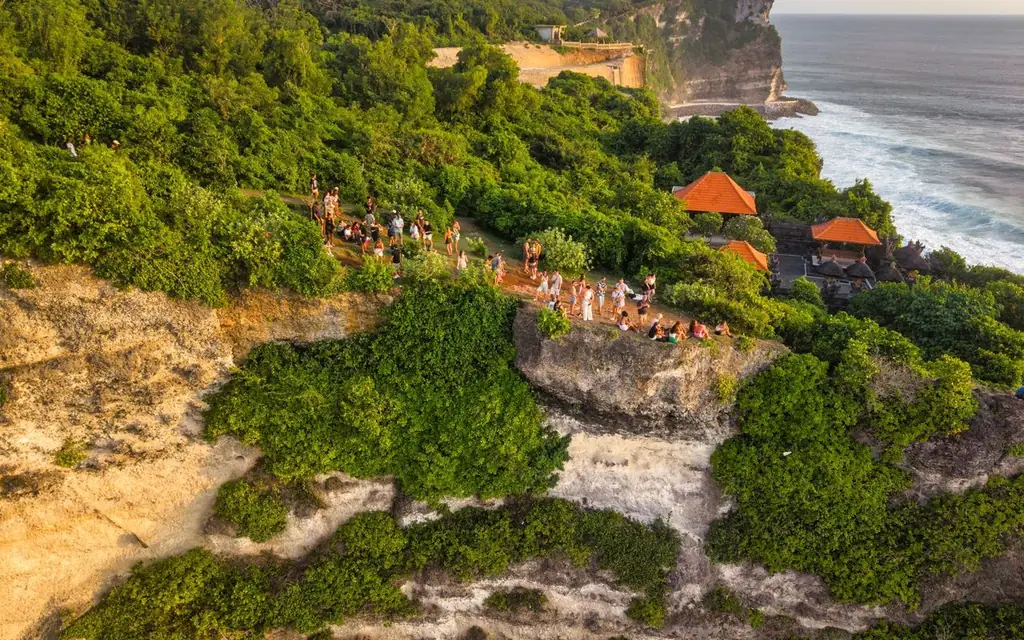
Everybody who goes to Uluwatu wants the same hour of the day, and that is the problem. Late afternoon on Bali's southern peninsula is when the light turns gold over the Indian Ocean, when the Kecak performance gathers its audience and when the single road onto the Bukit peninsula is at its slowest. A Uluwatu Temple private tour with driver is mostly an exercise in beating that arithmetic: choosing a departure time that puts you at the cliff before the crowd, and a return time that does not strand you in the dark in a queue.
This guide is for travelers staying in the south of Bali, in Seminyak, Canggu, Sanur or Nusa Dua, and for those arriving at I Gusti Ngurah Rai International Airport who want to start with the cliff before checking in. The fare for any transfer is quoted by our booking desk for your exact addresses before you pay; no fare is printed on this page.
How far is Uluwatu Temple from Bali airport by car?
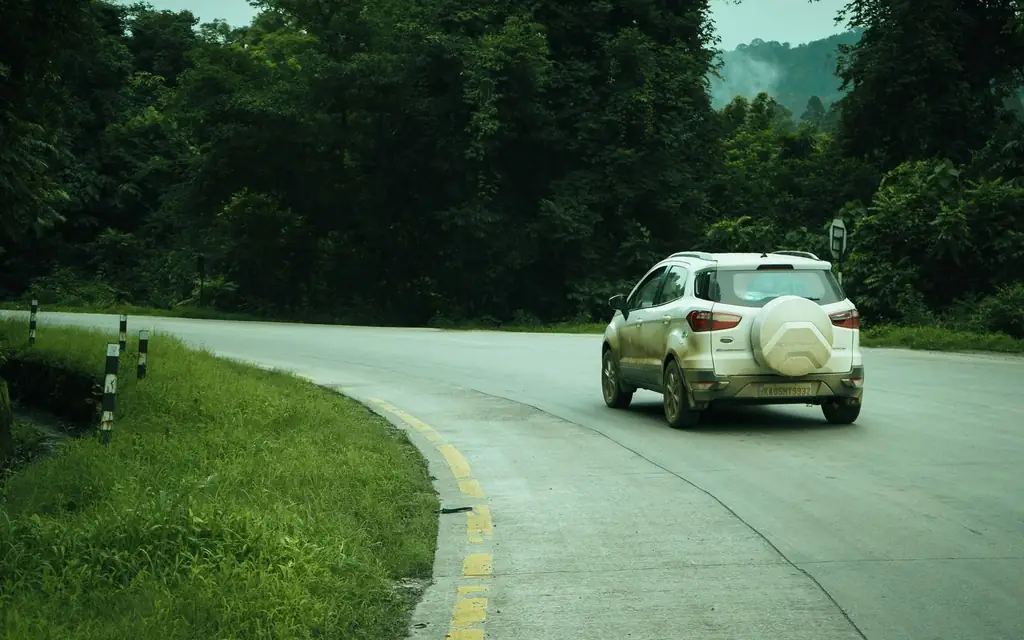
Uluwatu Temple is about 20 to 25 km (12 to 16 mi) from Ngurah Rai Airport. Indonesia's tourism board gives 45 minutes to 1 hour from the airport and about 45 minutes from Kuta or Seminyak, and traffic before sunset can double that. A chauffeur drops you at the temple car park.
Treat the kilometers as a floor, not a promise. Indonesia's official tourism guide to Pura Uluwatu describes the airport trip as 45 minutes to an hour depending on traffic, and local guides warn that around sunset, when most visitors make the trip, journey times can easily double. From Ubud the tourism board gives 1.5 to 2 hours and recommends traveling with a driver, with stops at the Garuda Wisnu Kencana park or Padang Padang beach on the way. Ubud to Uluwatu is roughly 52 to 55 km (32 to 34 mi) on the map, and it is the afternoon, not the distance, that decides the time.
The airport itself publishes visitor information at ngurahrai.injourneyairports.id. Our own flight tracking watches your arrival and we allow 60 minutes of free waiting on international landings, so a driver can be at arrivals even if your flight is early or late.
What the temple is, in four facts
Pura Luhur Uluwatu is one of Bali's most important sea temples, described by the tourism board as the second most important temple on the island. The facts that matter for a visit:
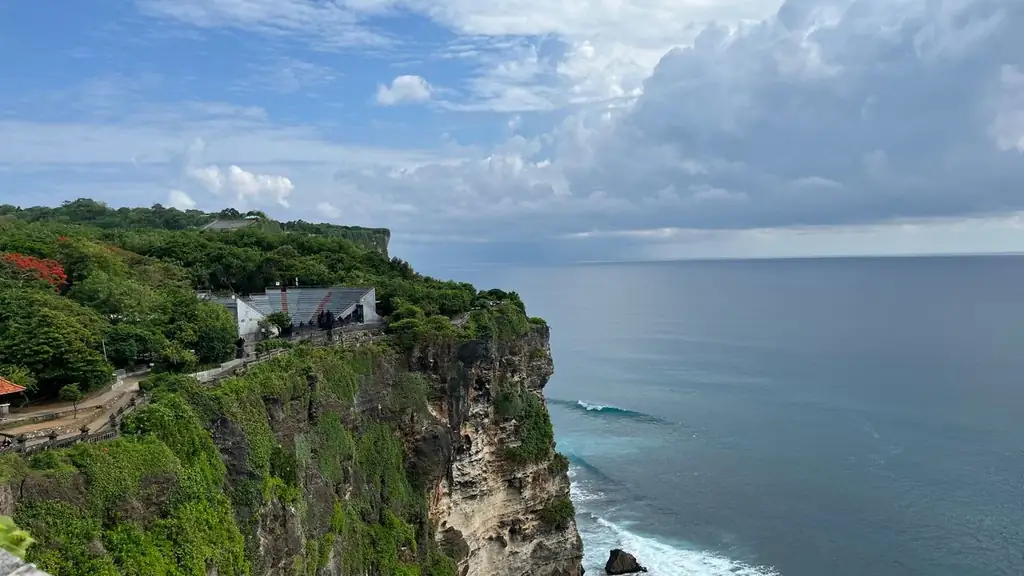
- Setting. It stands on a limestone cliff about 70 meters high in Pecatu Village, South Kuta District, Badung. The name combines ulu, meaning end, and watu, meaning rock.
- Origin. Tradition credits the 11th-century sage Empu Kuturan with its founding, and the 16th-century priest Dang Hyang Nirartha with strengthening it. The same Nirartha is tied to Tanah Lot, which is why the two temples are often paired.
- Material. The tourism board describes it as a state temple dedicated to sea spirits, built largely from white and gray blocks of petrified coral.
- Use. It is a working place of worship. Hundreds of visitors come each day, but the temple belongs to the people who pray there.
That last point shapes everything: the dress rules, the pace and which parts you can enter.
Rules at the gate: sarong, sash, monkeys and manners
Bali's tourism board states the basics plainly. Visitors cover their shoulders and knees. A scarf and sarong are lent at the entrance, and the entrance ticket includes the loan. Keep your voice low, never step onto offerings placed on the ground, do not climb walls or temple structures, and follow the direction of temple staff about areas closed to visitors. Some inner areas are for worshippers only, so the visit is a walk along the outer paths and cliff edge, not a tour of the sanctum.
The macaques. A colony of long-tailed monkeys lives along the paths and has a reputation to match. The tourism board warns that they grab glasses, cameras and hair clips, and notes that they may give things back in exchange for food. Take sunglasses off, zip pockets, hold phones low and do not carry open bags of snacks. Do not stare at them or reach toward them. If one takes something, ask a keeper rather than chasing it.
The cliff. The paths follow a sheer drop with low walls in places. Children should be held by the hand. High winds can come with the afternoon and sudden rain makes the stone slick.
The Kecak performance: timing and what to expect
The evening dance is the other reason for the trip. The tourism board's Kecak feature describes a performance held in front of the temple entrance as the sun goes down, with hundreds of men in black and white sarongs sitting in concentric circles, chanting "ke-cak" in rhythm while lamplight picks out dancers telling the story of Rama and Sita from the Ramayana. The format is less ancient than it looks: the tourism board credits the choreographer Walter Spies with shaping it in the early 1930s from an older ritual chant. Many ensembles close with a fire-walking trance sequence.
Show times and ticket arrangements change, and sources disagree, so we do not quote either. What does not change is the shape of the evening: the show is a separate ticket from temple entry, seats fill, and the tourism board advises arriving before 5 p.m. to secure a place. If you want the performance, the reliable plan is to be at the cliff for the last hour of daylight, walk the paths first, then take your seat.
Entry hours and what the tourism board lists
The Indonesian tourism site lists temple opening hours as 9 a.m. to 7 p.m. Verify on the day, since temple ceremonies can close sections without notice. The board also notes that visitors may witness religious activity during Hindu holidays, so keep a respectful distance from worshippers.

Bali has also introduced a levy for international visitors, collected on the province's official site, lovebali.baliprov.go.id, which shows the amount as IDR 150,000 per person as of 2026. It is paid once per visit, not at each attraction. Keep the voucher on your phone.
The road onto the peninsula
The southern peninsula is joined to the rest of the island by a small number of main roads. Two things follow.
First, delays have a common cause: a single accident, a ceremonial procession or a wet afternoon slows everyone. Second, the return is worse than the outbound. If you stay for the Kecak and leave at the end, you leave with several hundred other cars. A chauffeur can wait, but cannot make the queue shorter. Many visitors choose one of two compromises: leave the temple before the show ends and eat dinner at Jimbaran or elsewhere near the sea, or stay for the performance and then take the slow road back with a driver instead of fighting for a ride.
Note that Nyepi, the Balinese Day of Silence, shuts down the island once a year, in March. Ngurah Rai airport suspends operations for roughly 24 hours, and nobody travels on the roads. In 2027 sources place it on 8 or 9 March, so confirm the date if your trip is near it.
A sunset itinerary from the Seminyak area
- 2:30 p.m. Pickup from your hotel. Leave the beach clubs and shops behind.
- 3:15 p.m. Reach the Bukit peninsula. If you are early, the beach at Padang Padang or the Garuda Wisnu Kencana park is a sensible stop.
- 4:00 p.m. Arrive at the temple car park. Collect the sarong and sash, walk the cliff paths while the light is still strong.
- 5:00 p.m. Take a seat for the Kecak, if you have chosen to see it.
- 6:30 p.m. The show ends. Walk back to the car, which waits at an agreed spot.
- 7:15 p.m. Dinner at Jimbaran or Uluwatu, then return north.
A late-start version, which works when the weather is clear, swaps the temple and the dinner: eat early, reach the cliff for the second half of the afternoon and leave when the stage lights come on.
When to go: season, weather and day of the week
Bali's weather has two moods, and the cliff shows both. In the drier months, which generally run from about April to October, skies are clearer and sunsets more dependable, though the sea wind can be strong on the exposed edge. In the wetter months, an afternoon can start bright and end in a sudden downpour, and a cloud bank on the horizon can swallow the sunset altogether. Neither is a reason to cancel, but both are reasons to keep your timing flexible and to carry a light waterproof.

Weekdays are calmer than weekends, and public holidays or Balinese ceremony days bring both worshippers and large domestic groups. If your dates are fixed and you want to avoid the heaviest days, tell the desk when you book, because a chauffeur who works the island daily will often know which days to avoid before the calendar does.
Vehicle and luggage notes
Most visits are made in a Mercedes-Benz E-Class or S-Class sedan for up to three passengers with two large bags and two cabin bags, or in a Luxury SUV for up to six when the party includes children and their gear. A Mercedes-Benz Sprinter takes larger family groups of 12 to 14. Child, toddler and booster seats are available on request at booking, and the exact vehicle is confirmed in your booking details. Water and phone chargers are carried in most vehicles, which matters on a day when a phone is both your camera and your Kecak ticket.
If you are arriving on a long-haul flight and heading to the temple before your hotel, say so at booking. Luggage stays in the car and you walk the cliff with only a small bag.
Ways to reach Uluwatu
| Option | Time from Seminyak or the airport | Cost note | Who it suits |
|---|---|---|---|
| Organized small-group tour with Kecak | About 45 to 75 minutes each way | Low per person | Solo travelers who accept a fixed route |
| Scooter rental | About 45 to 90 minutes | Lowest | Experienced riders only, in daylight and dry weather |
| Metered taxi or ride-hailing | About 45 to 90 minutes | Metered or surge-priced | One-way trips, but returning at sunset is hard to arrange |
| Private chauffeur car | About 45 to 90 minutes | Fixed fare via the booker | Families, couples, groups and anyone wanting a fixed pickup after the show |
The group tour is the lowest-cost way to see the temple and the performance. A private car is worth considering when you want your own timing, when children are in the party, or when you want a guaranteed ride home after dark. Scooters are popular but unforgiving on cliff roads at night.
Who should skip it, and when
The temple suits travelers who enjoy a dramatic setting and a short walk. It is less suited to those who dislike crowds or monkeys, or who need step-free access: the paths include stairs and uneven stone. A weekday afternoon is calmer than a weekend, and the dry season is more predictable than the wet. If the weather is cloudy, the sunset view may disappoint, but the temple still has value in the soft light, and you can skip the Kecak if the sky looks closed.
Pairing Uluwatu with other Bali stops
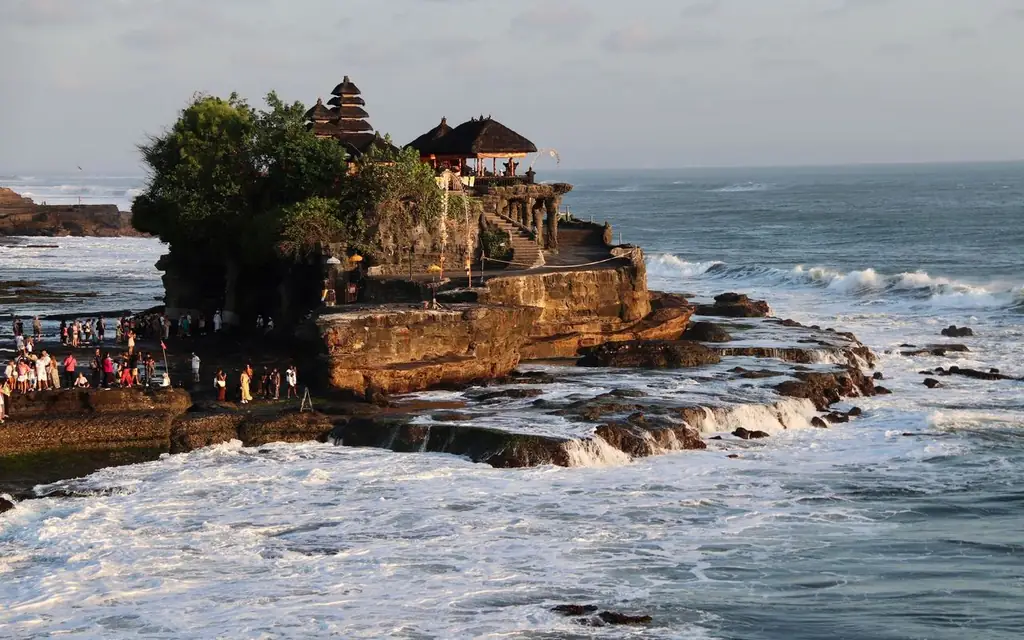
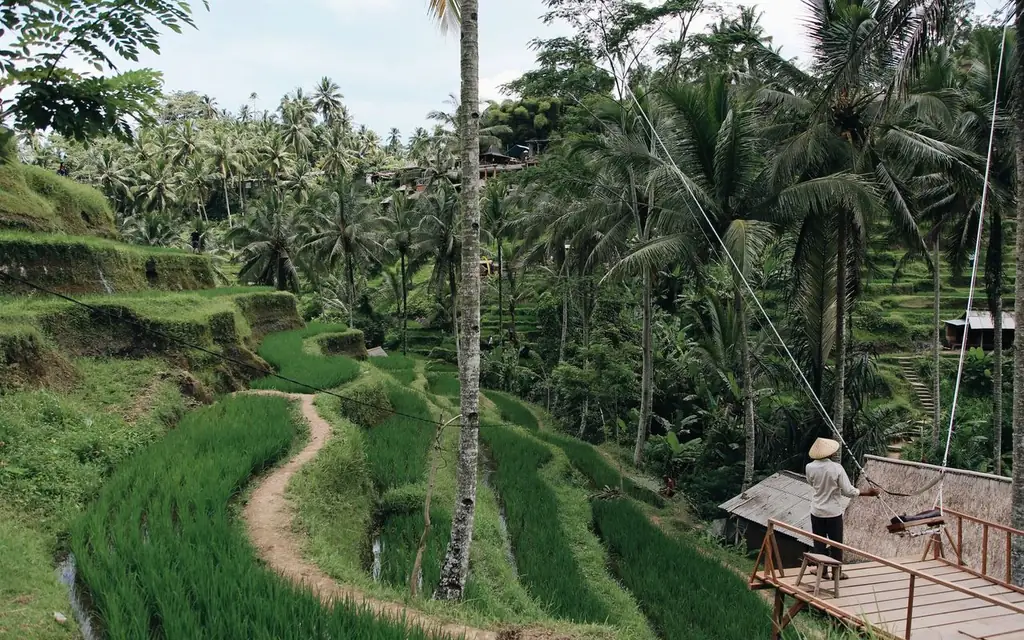
Many travelers combine the cliff with a day in the south, and a second day for Ubud and the north. Tanah Lot is the other celebrated sea temple, on the west coast, and sits on the opposite side of the island's busy south. Tegallalang Rice Terraces are north of Ubud and make a morning counterpart to an afternoon on the cliff. For Java, the great Buddhist monument of Borobudur is a short flight away. Our Bali chauffeur service page covers airport, hourly and city-to-city bookings across the island, the airports hub lists every arrival page, the Asia-Pacific directory lists the cities we cover and the private tours with driver page explains how a full-day booking is run.
Visitor centres, tourism boards and official tourist offices can arrange chauffeur services for the people they host through a LimousineWorldwideDirectory.com trade account.
Frequently asked questions
How far is Uluwatu Temple from Bali airport?
About 20 to 25 km (12 to 16 mi). The tourism board gives 45 minutes to an hour by car, and sunset traffic can double the time.
What time should I arrive for sunset?
Plan to reach the temple at least an hour before sunset so that you can walk the paths first. Arrive before 5 p.m. if you want a seat at the Kecak.
Do I have to wear a sarong?
Shoulders and knees must be covered. A sarong and sash are lent at the entrance, and the loan is included in the entrance ticket.
Are the monkeys dangerous?
They are wild and quick. They snatch glasses, hats, phones and snacks. Secure your belongings and do not tease them.
Can the chauffeur wait through the Kecak performance?
Yes. On a half-day booking the car waits at an agreed spot. Ask the desk to set a pickup time after the show.
Is Uluwatu Temple suitable for children?
Children enjoy the cliff and the dance, but the edge is steep and the monkeys can frighten them. Keep them close and carry the youngest.
Does the temple close for ceremonies?
Sections can close during religious events. Bali's calendar includes frequent ceremonies, so ask the desk to check before your date.
Do I pay the Bali tourist levy for Uluwatu?
The levy is paid once per visit through the province's official site, not at the temple. Carry the voucher on your phone.