 United StatesJFK
 MexicoMEX
 BrazilGRU
 ArgentinaEZE
 ChileSCL
 ColombiaBOG
 PeruLIM
 PanamaPTY
 Costa RicaSJO
 Dominican RepublicPUJ
 JamaicaMBJ
 BahamasNAS
 BarbadosBGI
 United KingdomLHR
 IrelandDUB
 FranceCDG
 GermanyFRA
 NetherlandsAMS
 BelgiumBRU
 SwitzerlandZRH
 AustriaVIE
 ItalyFCO
 SpainMAD
 PortugalLIS
 GreeceATH
 TurkeyIST
 DenmarkCPH
 SwedenARN
 NorwayOSL
 FinlandHEL
 PolandWAW
 Czech RepublicPRG
 HungaryBUD
 IcelandKEF
 United Arab EmiratesDXB
 QatarDOH
 Saudi ArabiaRUH
 IsraelTLV
 EgyptCAI
 MoroccoCMN
 South AfricaJNB
 KenyaNBO
 NigeriaLOS
 IndiaDEL
 PakistanLHE
 Sri LankaCMB
 SingaporeSIN
 MalaysiaKUL
 ThailandBKK
 VietnamSGN
 PhilippinesMNL
 IndonesiaCGK
 Hong KongHKG
 ChinaPVG
 TaiwanTPE
 JapanHND
 South KoreaICN
 AustraliaSYD
 New ZealandAKL
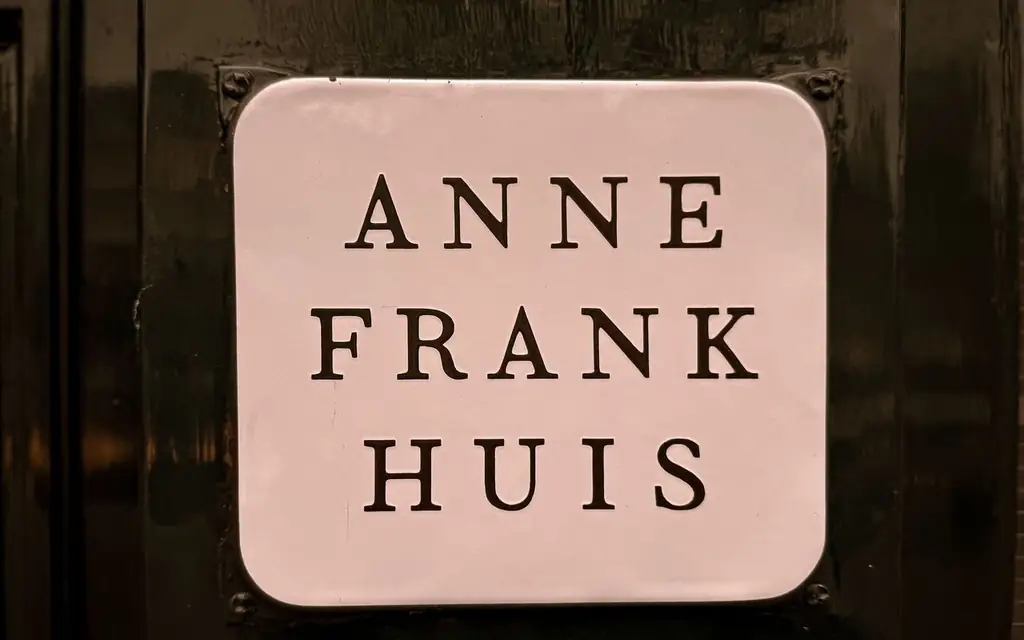
Most museums let you decide on the day. The Anne Frank House does not. Its tickets are sold only online, for a specific time slot, and each Tuesday at 10 am Central European time the museum releases the slots for a visit six weeks later. Anyone planning an Anne Frank House private tour with driver should therefore begin with the ticket, then the car. This guide explains how to get to the Anne Frank House by car, where the vehicle can and cannot stop, what the visit involves, and how to keep the rest of the day calm.
The house is a place of remembrance as well as a visitor attraction. The pace below is set accordingly: nothing rushed on either side of the visit, and a driver who stays out of sight until you call.
How do you get to the Anne Frank House by car?
The Anne Frank House is at Westermarkt 20, on the Prinsengracht canal. Your chauffeur finds the closest permitted stop in the canal belt, you walk a short way, and the car comes back when you call. From Schiphol the ride is about 17 km (10.5 miles), roughly 25 to 35 minutes.
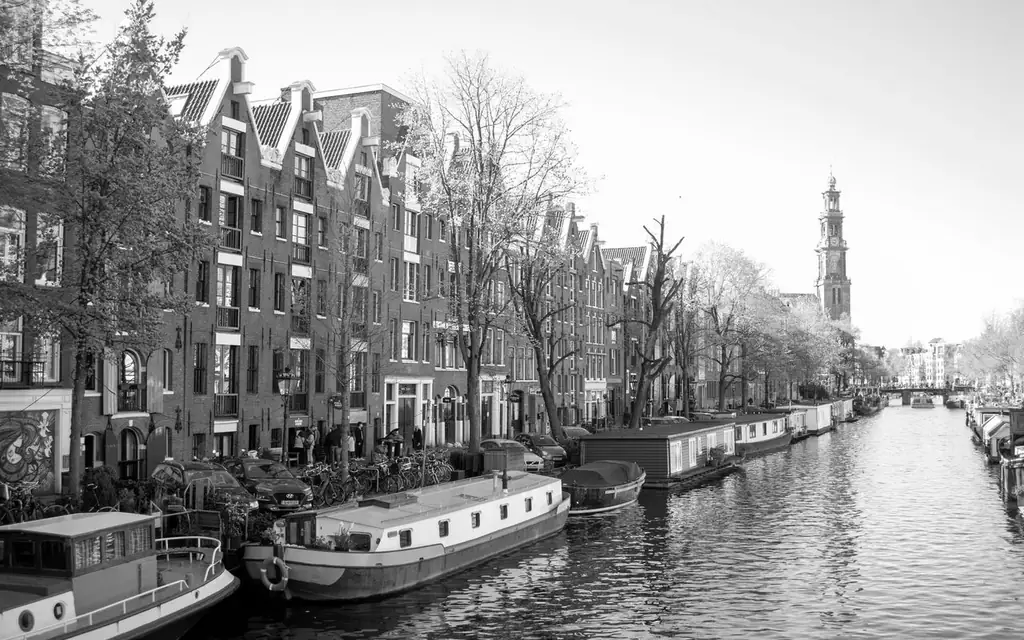
The canal belt is a UNESCO-listed maze of one-way streets, narrow quays and bridges, and the car does not drive up to the museum door. The house faces the Prinsengracht, while the visitor entrance is round the corner on the Westermarkt side. The practical result is a short walk on cobbles or brick pavement with the canal beside you.
Tickets first: the Tuesday release and the six-week window
The museum's ticket page is plain about the rules, and they matter for planning:
- Tickets are not sold at the door, only online, and payment is by bank or credit card.
- Every Tuesday at 10 am CEST, all tickets for a visit six weeks later become available.
- A ticket is for one date and one time slot, cannot be exchanged or refunded, and cannot be transferred.
- Visitors with discount cards still need an online booking.
- As listed in 2026, adult tickets are 16.50 euros, ages 10 to 17 are 7 euros, and ages 0 to 9 are 1 euro, each including a 1 euro booking fee.
If you are travelling in a group with children and several rooms, book the same slot for everyone in a single order so that the group enters together. Then tell our desk the exact time, because the car is planned backwards from it. The museum is open daily from 9 am to 10 pm with a few exceptions, and on King's Day, 27 April, it closes earlier. Always confirm the date on the official ticket page.
If the slots you want are gone
Popular dates, especially in school holidays and the summer, can fill quickly once released. Three habits help. Look at weekday late-afternoon and evening times first, because the museum is open until 10 pm on most days and the last hours are often the calmest. Be ready at 10 am on the Tuesday itself, with the party size decided and cards to hand. And buy only through the museum's own website, since tickets cannot be exchanged, refunded or passed on.
If you are flying in on a fixed date, put the ticket on the calendar first and then choose flights around it. We can plan the airport transfer to fit either way, but the museum cannot move a slot to suit a late aircraft. Our flight tracking follows the landing, and the 60 minutes of free waiting after an international arrival gives a useful buffer, though it is wise to leave a few hours between touchdown and the ticket time on the same day.
What the visit involves
The Frank family went into hiding in July 1942 in the rear annex of a building on this canal, with four other people, and stayed until they were discovered in August 1944. Anne's diary, written in the annex, became one of the most widely read documents of the twentieth century, and the house opened as a museum in 1960. The rooms have been kept sparse on purpose.
A visit takes about an hour on average, though you can take as long as you need. A complimentary audio tour comes with admission, available in nine languages: Dutch, English, French, German, Hebrew, Italian, Japanese, Portuguese and Spanish. The museum also offers an optional introduction of about 30 minutes. Photography and filming are not allowed inside, and that includes smart glasses.
Some travellers prefer to read the diary again, or an excerpt, in the days before the visit. That is a matter of taste, not a requirement.
The address, and why the car stops short of it
The museum's practical page gives the address as Westermarkt 20, 1016 DK Amsterdam, with the canal-side address at Prinsengracht 263 to 267. On foot it is about 20 minutes from Amsterdam Central Station, or 10 minutes from Dam Square. Trams used to stop at Westermarkt, but the museum states that from 15 February 2025 to February 2028 no tram stops there, and trams run to Dam Square instead, around a 10-minute walk away.

For cars, two points matter. First, the streets around Westermarkt and Prinsengracht are narrow and busy with cyclists, so the chauffeur picks a legal stopping place and does not wait. Second, if you want to arrive by car yourself, the museum names IJDock and Q-Park (Europarking) as the nearest car parks. Your driver will not use these, because the car does not stay with you; the vehicle waits in a place of the driver's choosing and returns when you message.
The museum's own page lists walking routes, public transport and two car parks as the ways to arrive. A chauffeur is the better option when you have luggage, mobility needs, young children or a tight onward connection.
Driving in from Schiphol, Centraal Station and nearby hotels
From Amsterdam Schiphol, the distance is about 17 km (10.5 miles). The ride takes roughly 25 to 35 minutes outside the rush hours, longer in the evening peak or when a canal bridge is raised. Your driver tracks your flight and meets you in arrivals. We include 60 minutes of free waiting after an international landing, and 30 minutes after a domestic one.
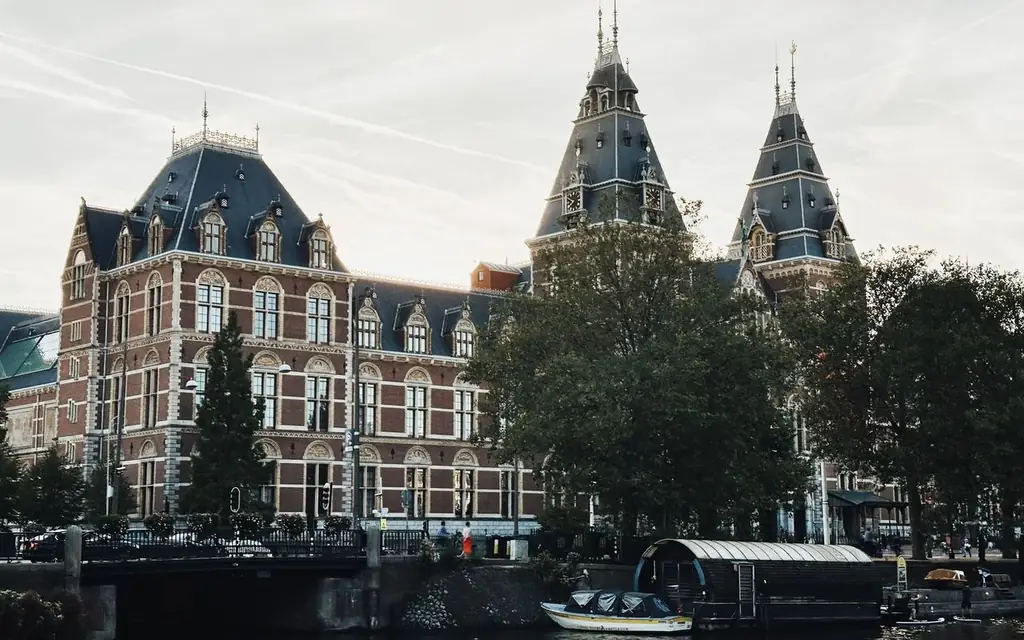
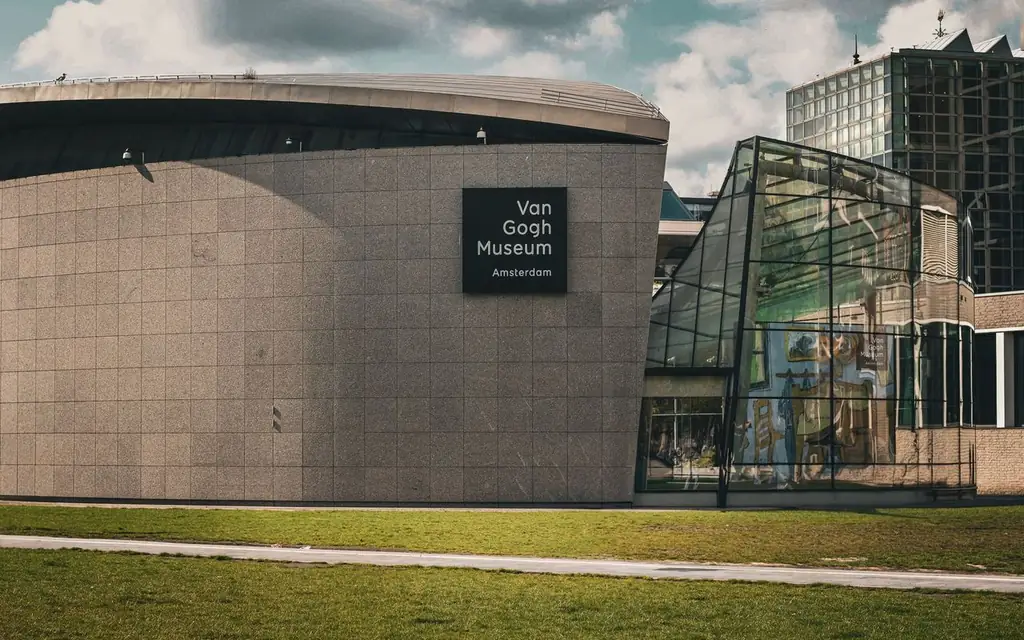
From Amsterdam Centraal, the museum is about 2 km (1.2 miles) by road, 10 to 20 minutes depending on traffic, though the walk is only a little slower. From the museum quarter, where the Rijksmuseum and the Van Gogh Museum stand, the drive is about 3 km (2 miles) and 15 to 20 minutes.
Amsterdam also applies a low-emission zone for diesel vehicles inside the A10 ring road. The local operators who serve this city know which of their cars qualify, and the city explains the wider context in its driving in Amsterdam guide.
Reading the streets from the driver's seat
A short explanation of what the chauffeur is managing helps you understand the plan. The Prinsengracht is one of the three main canals of the seventeenth-century ring. Along it the carriageway is narrow, there are parked cars on one side, a canal without a barrier on the other, and bridges every hundred metres or so. Cyclists, delivery vans and canal tour pedestrians share the same space. A car that stops to unload passengers can block a lane for a minute at most, and drivers are used to making that minute count.
For this reason we suggest using the car for the long legs, such as airport to hotel and hotel to the canal belt, and walking the last few minutes. The result is an arrival that is unhurried, with time to look at the water and the Westerkerk tower before the door opens. The museum's practical information page sets out the bag rule, the audio tour languages and the café.
Bags, stairs and access
Only bags smaller than a sheet of A4 paper may be carried inside, and larger bags, backpacks and suitcases cannot be stored. The museum suggests leaving them at your hotel or at Amsterdam Central Station. This is where a car helps: the driver can hold your luggage during the visit, or take it directly to your next hotel while you are inside. Say so when you book.
The building has steep stairs and a high step. The museum warns visitors who have difficulty climbing to check in advance, and the page on practical information explains the arrangements. If someone in your party cannot manage steep stairs, speak to the museum before buying tickets, and tell our desk too, so that the pickup point can be chosen for the shortest approach.
There is a café overlooking the Prinsengracht, reachable only through the museum, which takes bank and credit cards only.
Setting the day around a fixed slot
Because the slot is fixed, the rest of the day can be tuned to it. A typical outline:
- Ticket time 11:00. Pickup at the hotel at 10:15, arrival in the canal belt by 10:40.
- Walk to the entrance, allowing 10 minutes before the time on the ticket.
- About 60 to 90 minutes inside, including the café if you wish.
- A message to the driver as you leave the building; the car arrives within minutes.
For an afternoon slot, add a quiet lunch in the Jordaan first and time the transfer for the end of it. Do not stack a second timed ticket immediately afterwards. Many visitors find they need to sit and think for a while.
Ways to get to the Anne Frank House compared
| Option | Time from Centraal | Cost note | Best for |
|---|---|---|---|
| Walk | About 20 min | Lowest | Fit visitors, small bags |
| Tram to Dam Square, then walk | About 20 min total | Lowest | Visitors who prefer public transport |
| Metered taxi | 10 to 20 min | Metered, variable | Short trips without luggage |
| Rideshare | 10 to 20 min | Surge-priced | Flexible, one-off |
| Private chauffeur | 10 to 20 min | Fixed fare via the booker | Luggage, mobility needs, airport links |
For a fit traveller with only a small bag, walking from the station is just as quick and costs nothing. The chauffeur makes the difference when you arrive from Schiphol with luggage, travel with older relatives, or need to be on a plane the same evening.
The neighbourhood after the visit
The Westerkerk, whose tower stands beside the house, and the Homomonument on Westermarkt are both within a minute or two of the entrance. Both are quiet places for a pause. The Jordaan district begins across the canal and has cafés where a table for two is not hard to find on a weekday.
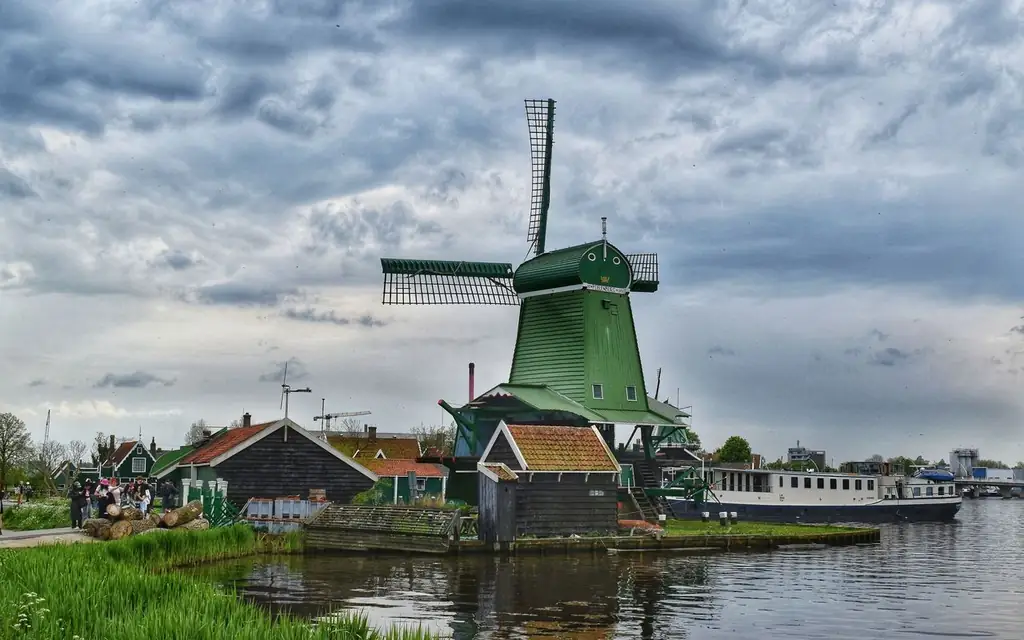
If you want a longer day, the museum quarter is a short ride away, and the Rijksmuseum is the natural afternoon choice. For a day outside the city, the Zaanse Schans windmills are about 17 km (11 miles) north, 25 to 35 minutes by road. Our private tours with a driver page lists other options, and the Europe directory shows how the service is arranged in each region.
Etiquette and group notes
Keep voices low in the rooms; many visitors are moved, and some are in tears. Do not use flash or devices to record, because filming is not permitted. Children are welcome, and the optional introduction and the young visitors' audio version are designed for them, but a parent should judge whether a child is ready.
For larger families, the Executive Sprinter seats up to 12 to 14 passengers, and the Luxury SUV carries up to six. Exact vehicles are confirmed at booking. Child and booster seats can be added on request. Tell the desk about a pushchair or wheelchair when you book so that the right vehicle is allocated.
If you are a hotel concierge or a travel adviser, a trade account lets you book on behalf of guests, and tourist offices can do the same for their visitors. Details are on the Amsterdam chauffeur service page.
Frequently asked questions
How do I get tickets for the Anne Frank House?
Online only, through the museum's own website. Each Tuesday at 10 am CEST the museum releases tickets for a visit six weeks later. Tickets are sold for a specific time slot, and none are sold at the door.
How far is the Anne Frank House from Schiphol Airport by car?
About 17 km (10.5 miles). Expect 25 to 35 minutes outside the rush hours. A chauffeur meets you in arrivals and tracks your flight.
Can a car stop at the Anne Frank House entrance?
Not at the entrance. The canal streets are narrow, shared with cyclists and often one-way, so the final stretch is on foot from wherever the driver can lawfully pull in.
Are there trams to the Anne Frank House?
The museum states that from 15 February 2025 until February 2028 no tram stops at Westermarkt. Trams run to Dam Square, which is about a 10-minute walk away. Check the museum's page for updates.
Can I take a backpack into the Anne Frank House?
No. Only bags smaller than an A4 sheet of paper are allowed inside, and there is no storage for large bags. Leave luggage at your hotel, or keep it in the car.
How long does a visit take?
About an hour on average, and you may stay as long as you need. An optional introduction takes about 30 minutes. Allow extra time to arrive and to sit afterwards.
Is the Anne Frank House suitable for wheelchair users?
The museum warns of steep stairs and a high step. Anyone who has difficulty climbing should check its accessibility information before booking, and tell our desk so the stop is as close as possible.
Can I take photographs inside the Anne Frank House?
No. Photos and filming are not allowed inside, including with smart glasses.
Can I combine the Anne Frank House with the Rijksmuseum?
Yes, but book both on their own timed tickets and leave a gap of at least 90 minutes between them. The drive between the canal belt and Museumplein takes 15 to 20 minutes.