
 United StatesJFK
 MexicoMEX
 BrazilGRU
 ArgentinaEZE
 ChileSCL
 ColombiaBOG
 PeruLIM
 PanamaPTY
 Costa RicaSJO
 Dominican RepublicPUJ
 JamaicaMBJ
 BahamasNAS
 BarbadosBGI
 United KingdomLHR
 IrelandDUB
 FranceCDG
 GermanyFRA
 NetherlandsAMS
 BelgiumBRU
 SwitzerlandZRH
 AustriaVIE
 ItalyFCO
 SpainMAD
 PortugalLIS
 GreeceATH
 TurkeyIST
 DenmarkCPH
 SwedenARN
 NorwayOSL
 FinlandHEL
 PolandWAW
 Czech RepublicPRG
 HungaryBUD
 IcelandKEF
 United Arab EmiratesDXB
 QatarDOH
 Saudi ArabiaRUH
 IsraelTLV
 EgyptCAI
 MoroccoCMN
 South AfricaJNB
 KenyaNBO
 NigeriaLOS
 IndiaDEL
 PakistanLHE
 Sri LankaCMB
 SingaporeSIN
 MalaysiaKUL
 ThailandBKK
 VietnamSGN
 PhilippinesMNL
 IndonesiaCGK
 Hong KongHKG
 ChinaPVG
 TaiwanTPE
 JapanHND
 South KoreaICN
 AustraliaSYD
 New ZealandAKL
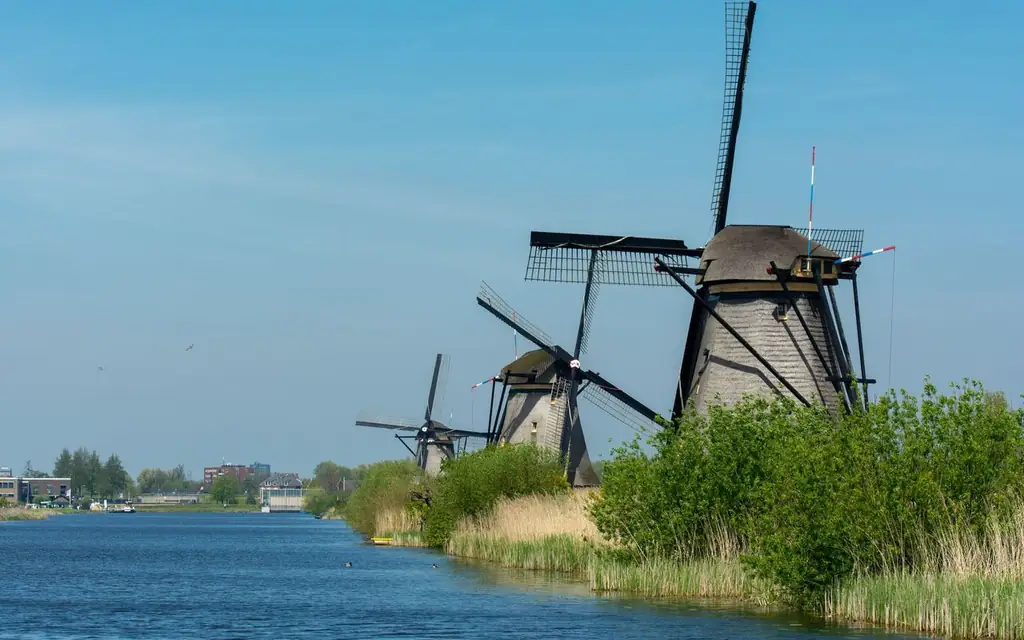
Of all the windmill sites in the Netherlands, Kinderdijk has the most unusual arrival rule. From mid-March to the start of November, a visitor driving a private car does not park at the windmills at all. The car goes to a separate lot in Alblasserdam, and a free shuttle bus carries everyone the rest of the way. That single fact changes how a Kinderdijk private tour with driver should be planned, and it is the first thing to understand about how to get to Kinderdijk by car.
This guide covers the parking rules for both seasons, the UNESCO setting, tickets, what to see in the polder, realistic drive times from Rotterdam, Amsterdam and Schiphol, and a few ways to combine the visit with other places.
How do you get to Kinderdijk by car?
Kinderdijk is about 22 km (14 miles) and 30 to 40 minutes from central Rotterdam, and about 90 km (56 miles) and an hour or more from Amsterdam. In the high season, cars use the Transferium parking in Alblasserdam and a free shuttle bus; in low season you park at the site entrance.
The visitor address is Nederwaard 1b, 2961 AS Kinderdijk. The official site notes that the car park fee is only available together with an admission ticket, and that you can book the parking ticket online alongside your tickets.
Why the rules are what they are
The windmills stand in a polder landscape that UNESCO inscribed in 1997 as the Mill Network at Kinderdijk-Elshout, under criteria (i), (ii) and (iv). The list describes 19 drainage mills, pumping stations, sluices and Water Board assembly houses, and the property is cited as an example of how Dutch hydraulic engineering drained and protected low land. The mills are still in working order and serve as a back-up to the modern pumping equipment.
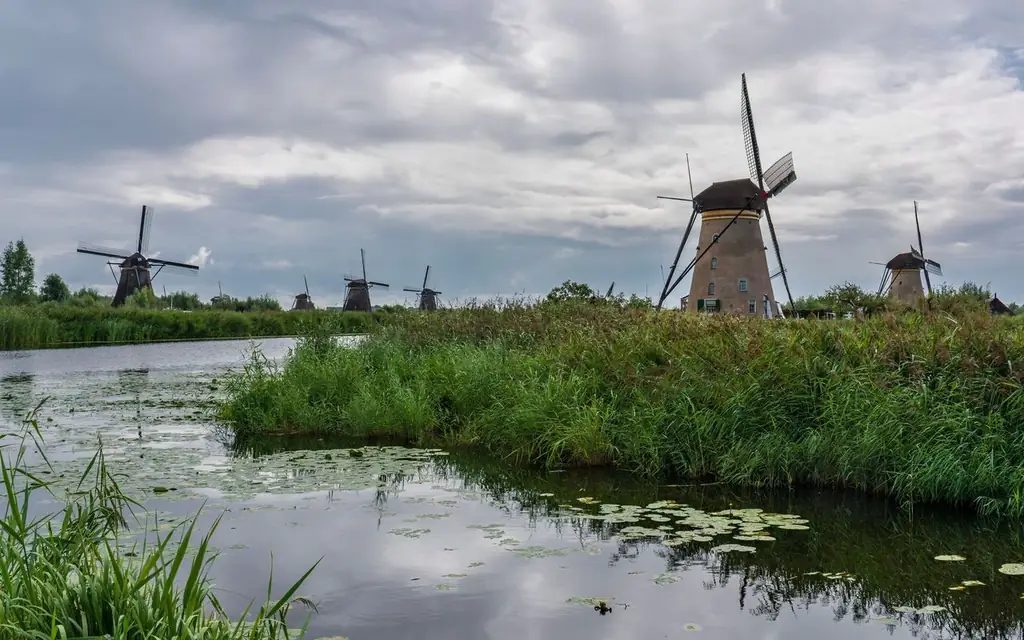
The reason this matters for a chauffeur is practical. The site is a working water-management landscape on narrow dykes, not a purpose-built attraction with a forecourt. Traffic is deliberately kept to the edge of it, and the visitor flow is organised around the shuttle, the boat and the footpaths. The UNESCO entry is available on the World Heritage Centre website.
High season, low season: where the car goes
The official Kinderdijk parking page distinguishes two periods:
- 16 March to 1 November 2026. Park at the Transferium at Kabelbaan 1 in Alblasserdam. The parking fee, listed at 9.75 euros per car, includes the free shuttle bus to Kinderdijk and is only available with an admission ticket. The shuttle runs daily from 9 am to 6 pm.
- 2 November to mid-March. The Transferium is closed. You can park at the World Heritage entrance at Nederwaard 1 for the same fee, again only with an admission ticket. Online parking reservations are not available in this period.
The official page does not describe a drop-off point for taxis or chauffeur-driven cars. We therefore plan a visit on the published parking route unless the visitor centre confirms something different for your date. The shuttle timetable also sets the practical window: if the last bus leaves at 6 pm, the car should not be asked to collect you later. Check the how to get here page for dates after 2026.
For the 2027 high season, the exact opening date of the Transferium is announced by the site; do not assume it mirrors this year.
An alternative: arrive by water from Rotterdam
The site recommends two public ways in: a bus, which runs all year from Dordrecht and Rotterdam to the World Heritage entrance, and the Waterbus WaterShuttle, which takes about 30 minutes from Rotterdam. The WaterShuttle is not part of the regular public-transport pass, so a separate ticket is needed, and the site suggests booking a combination ticket for the visit and the crossing together.
For a chauffeured version of this, consider a split day: the car takes you from your hotel to the Rotterdam quay, you cross by water, spend the day at the polder, and return by the same boat to Rotterdam, where the car collects you. It adds a ride on the river and removes the shuttle step. Confirm the quay and boat times when you book, because they are set by the boat operator. Our desk plans the road legs around whatever times you choose.
Tickets, and what they include
A ticket is needed to enter the visitor locations. The official ticket page lists adult admission at 21 euros and ages 4 to 12 at 9 euros, with young children free, as of 2026, and offers a discount of 10 percent for buying online. The ticket includes the museum mills, the boat tour, the Wisboom pumping station, the film and the exhibition. Tickets cannot be cancelled, returned or exchanged, and e-tickets can be shown on a smartphone.
Buy tickets before you travel, and buy the parking ticket in the same order. For prices on your date, see the Kinderdijk ticket information.
What you will see, and how far you will walk
The windmill area is large. Official guidance describes it as "quite large", and warns visitors to expect fairly long distances on foot. The paths follow the water, and the usual circuit combines the visitor centre, the dyke path with its row of mills, the pumping station, and the boat trip.
The museum mills are the ones you can go into. They have narrow entrances and steep stairs. The visitor centre has a film and an exhibition, and there is a Kinderdijk café on the site. For the classic view of a line of mills along the water, the first and last hours of the day are the quietest.
Illumination Week takes place in the first full week of September, Monday to Saturday, when the mills are lit in the evening. If you want to go, buy tickets early, and ask the desk about pickup times, since the evening transfer back needs to account for the shuttle schedule.
Distances and drive times
- Rotterdam centre: about 22 km (14 miles), 30 to 40 minutes.
- Dordrecht: about 12 km (7.5 miles), 15 to 25 minutes.
- The Hague: about 45 km (28 miles), 45 to 60 minutes.
- Amsterdam Schiphol: about 80 km (50 miles), 60 to 80 minutes.
- Central Amsterdam: about 90 km (56 miles), 1 hour to 1 hour 20 minutes. See Amsterdam chauffeur service for how the desk handles longer transfers.
- Keukenhof: about 70 km (43 miles), roughly 1 hour in spring, longer in the tulip season traffic.
These are driving estimates under normal conditions. The A15 and A16 corridors near Rotterdam and Dordrecht are the main bottleneck, and the evening peak from 4:30 to 6:30 pm is the worst time to be on them.
Planning the day
A reasonable allowance is three to four hours on the site, including the boat tour and one or two museum mills. Add the shuttle ride at each end in high season. If you are staying in Amsterdam, a day trip to Kinderdijk is a long one: allow at least eight hours door to door, and consider whether Rotterdam or Delft would make a better base for a second night.
A sample from Rotterdam:
- 9:00. Pickup at the hotel, 30 to 40 minutes to Alblasserdam in high season.
- 9:45. Shuttle to the entrance, buy or scan tickets.
- 10:00 to 13:00. Visitor centre, boat tour, museum mill and the dyke path.
- 13:00. Lunch at the site or in Alblasserdam.
- 14:30. Back to Rotterdam, or continue to Delft or The Hague.
From Amsterdam, start by 7:30 am. The same schedule holds, with a longer first leg. If you plan to see Keukenhof the next day, you may like the idea of a stay in Rotterdam in between.
Wind, water and the dyke paths
Kinderdijk is open land, and weather is part of the visit. The paths run along the tops of dykes where a westerly wind has nothing to stop it, so a windproof layer matters even in May. The same wind is why the mills were built here. On a calm day the sails often stand still, and on a gusty one the site can feel exposed; neither makes the trip less worthwhile, but it is worth knowing before you choose between the boat and a walk.
Rain turns the paths soft in places, so flat, closed shoes are the right choice. The tour boat is a good use of an hour in poor weather. If someone in your party dislikes walking, the boat plus the visitor centre makes a complete short visit, and the car can wait at the Transferium or return for the last shuttle.
Photographers who want the mills without the crowd should treat the shuttle timetable as their clock. The first buses of the morning and the last hours before the shuttle stops give the quietest paths, and the light is lower and warmer at both ends of the day. Keep the car booking flexible around those windows, and tell the desk if you want a long, slow morning so that the pickup is not set earlier than you need.
Kinderdijk as part of a larger Dutch programme
Few visitors come to the Netherlands for Kinderdijk alone, so it helps to see where it fits. A three-day outline for a first visit with a driver:
- Day one. Arrive at Amsterdam Schiphol, rest, then spend the afternoon on the canal ring and the Anne Frank House on a pre-booked slot.
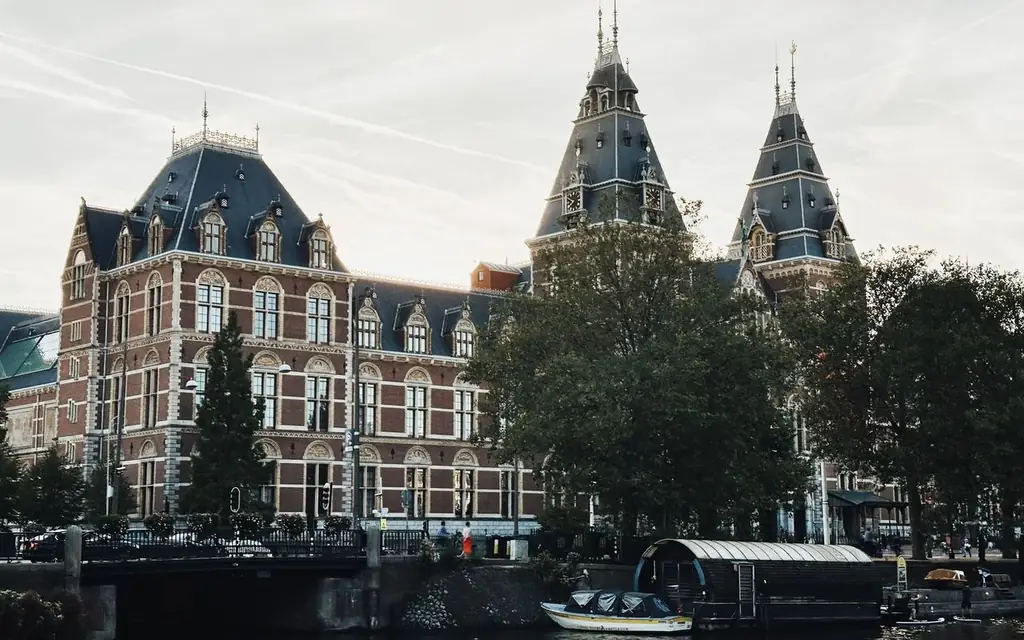
- Day two. The museum quarter in the morning with the Rijksmuseum, then an easy afternoon.
- Day three. A full day south: Kinderdijk in the morning, Rotterdam or Delft for lunch, and the return to Amsterdam by evening, about 90 km (56 miles) and an hour and a quarter at off-peak times.
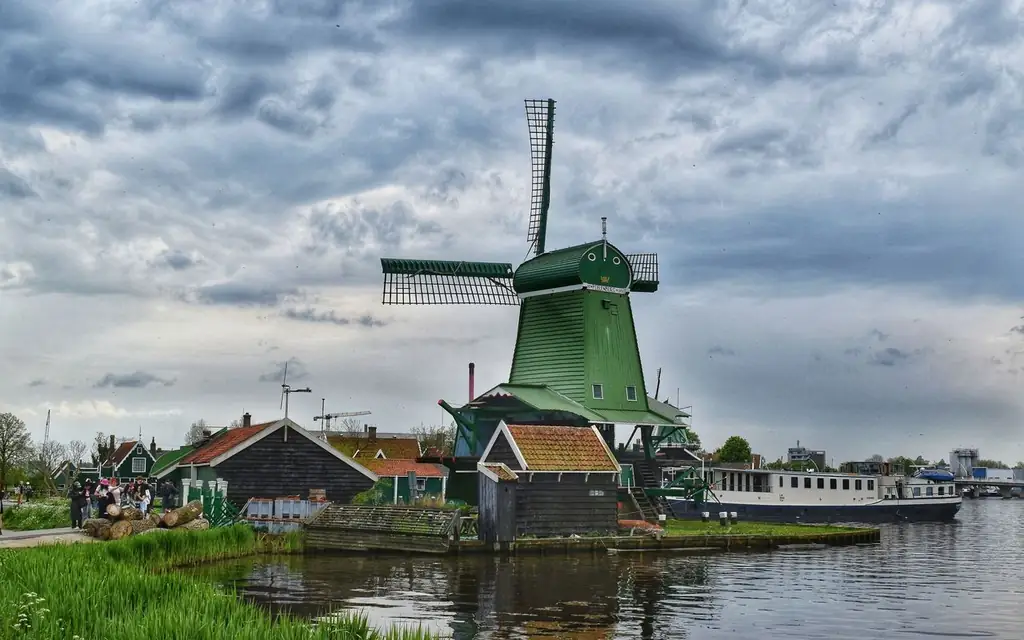
For a lighter alternative to Kinderdijk, the Zaanse Schans is a much shorter drive from Amsterdam, about 17 km (11 miles). It is not a UNESCO site and has a different character, with houses, workshops and museums beside the mills. Many visitors choose one or the other, not both, and the choice depends on whether you prefer the working polder or the crafts village.
Ways to get to Kinderdijk compared
| Option | Time from Rotterdam | Cost note | Best for |
|---|---|---|---|
| WaterShuttle | About 30 min | Separate boat ticket | Visitors who like the river |
| Public bus | Check operator | Lowest | Solo travellers, light bags |
| Rental car with shuttle parking | 30 to 40 min | Variable | Independent drivers |
| Metered taxi | 30 to 40 min | Metered, high for the distance | Short hops |
| Private chauffeur | 30 to 40 min | Fixed fare via the booker | Groups, luggage, tight schedules |
If you are staying in central Rotterdam and travelling light, the WaterShuttle is the best experience and one of the simplest. A chauffeur works better from Amsterdam or Schiphol, where the public routes take longer, or when you are travelling with children, older relatives or luggage.
Access, dogs and bikes
Most of the site is accessible: the walking paths, the tour boats and nearly all visitor locations are easy for wheelchair users, and accessible toilets are at the visitor centre and the group entrance. The museum mills are not accessible because of narrow entrances and steep stairs. The visitor centre has two wheelchairs that can be borrowed free on the day, but they cannot be reserved in advance.
Leashed dogs are welcome at all locations and on the tour boat, except in the café. There is no bike rental on the site itself; the closest options are the tourist information next to the entrance zone and a café about 500 metres away.
For wider context, our private tours with a driver page shows how other day trips are organised, and the Europe directory and attractions hub list further destinations. Tourism offices in the Rotterdam region can ask about a trade account for visitor bookings.
Frequently asked questions
How far is Kinderdijk from Rotterdam by car?
About 22 km (14 miles), usually 30 to 40 minutes. A WaterShuttle boat from Rotterdam takes about 30 minutes.
How far is Kinderdijk from Amsterdam?
About 90 km (56 miles), 1 hour to 1 hour 20 minutes by road. From Schiphol it is about 80 km (50 miles).
Where do I park at Kinderdijk?
From 16 March to 1 November 2026, at the Transferium in Alblasserdam, with a free shuttle bus. From 2 November to mid-March, at the entrance at Nederwaard 1. Parking is sold with an admission ticket.
How much is parking at Kinderdijk?
The official page lists 9.75 euros per car for 2026, including the shuttle in high season, and only together with an admission ticket.
Can a chauffeur drop me at the Kinderdijk windmills?
The official site describes parking, a coach Stop & Go zone and public transport, but no private-car drop-off. We plan on the published parking route unless the visitor centre confirms something else for your date.
Is Kinderdijk a UNESCO World Heritage site?
Yes. The Mill Network at Kinderdijk-Elshout was inscribed in 1997 and includes 19 windmills.
What does the Kinderdijk ticket include?
Entry to the museum mills, the boat tour, the Wisboom pumping station, the film and exhibition, and other visitor attractions, according to the official ticket page.
When is Illumination Week at Kinderdijk?
In the first full week of September, Monday to Saturday. The official site does not give exact dates for future years.
Is Kinderdijk suitable for wheelchair users?
Mostly. The paths, tour boats and most visitor locations are accessible. The museum mills are not, because of narrow entrances and steep stairs.
What should I bring to Kinderdijk?
A windproof layer, flat closed shoes and your e-ticket on a smartphone, together with the parking ticket bought in the same order. The paths follow the dykes and the distances are long, so water and a snack are worth carrying.