 United StatesJFK
 MexicoMEX
 BrazilGRU
 ArgentinaEZE
 ChileSCL
 ColombiaBOG
 PeruLIM
 PanamaPTY
 Costa RicaSJO
 Dominican RepublicPUJ
 JamaicaMBJ
 BahamasNAS
 BarbadosBGI
 United KingdomLHR
 IrelandDUB
 FranceCDG
 GermanyFRA
 NetherlandsAMS
 BelgiumBRU
 SwitzerlandZRH
 AustriaVIE
 ItalyFCO
 SpainMAD
 PortugalLIS
 GreeceATH
 TurkeyIST
 DenmarkCPH
 SwedenARN
 NorwayOSL
 FinlandHEL
 PolandWAW
 Czech RepublicPRG
 HungaryBUD
 IcelandKEF
 United Arab EmiratesDXB
 QatarDOH
 Saudi ArabiaRUH
 IsraelTLV
 EgyptCAI
 MoroccoCMN
 South AfricaJNB
 KenyaNBO
 NigeriaLOS
 IndiaDEL
 PakistanLHE
 Sri LankaCMB
 SingaporeSIN
 MalaysiaKUL
 ThailandBKK
 VietnamSGN
 PhilippinesMNL
 IndonesiaCGK
 Hong KongHKG
 ChinaPVG
 TaiwanTPE
 JapanHND
 South KoreaICN
 AustraliaSYD
 New ZealandAKL
When can you visit Bukchon Hanok Village, and can a car go in?
Visit between 10:00 and 17:00. Seoul's tourism site says visitors may not enter the restricted areas from 17:00 until 10:00 the next day. The lanes are residential and narrow, so a chauffeur drops you at the edge near Anguk Station and you explore on foot.
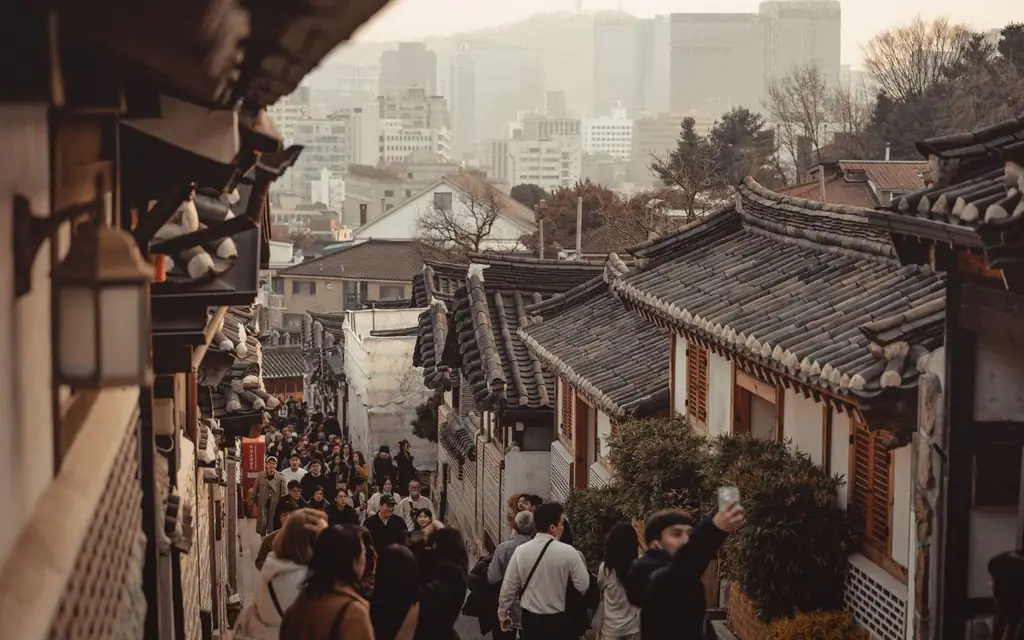
Most attractions ask you to behave. Bukchon is one of the few places in Seoul that now asks you to leave. In the streets around Gahoe-dong, a cluster of traditional Korean houses lies between two royal palaces, and the people who live behind those walls share the lanes with a stream of visitors. After years of complaints about noise, litter and cameras pointed through open doors, the Jongno District Office introduced visiting-hour limits for tourists in 2024. They remain in force, and they shape how a private driver can help.
Here is the practical version. A car is useful for the airport run, for reaching the edge of the neighborhood and for pairing Bukchon with other stops on the same day. It is not useful inside the lanes. If you plan the morning around the hours, keep your group small and quiet, and take photographs of the lanes rather than of anyone's home, Bukchon is a rewarding half hour or hour. For how we plan longer sightseeing days, see our page on private tours with driver.
The rule that changed the village: the red zone
Seoul's own tourism pages describe Bukchon as a Special Management Area, known as the Red Zone, with tourist visiting hours restricted since November 2024. Visit Seoul's entry for the village gives the hours as 10:00 to 17:00 daily, and says visitors may not enter restricted areas from 17:00 to the following 10:00. You can read that statement on the Visit Seoul Bukchon page.
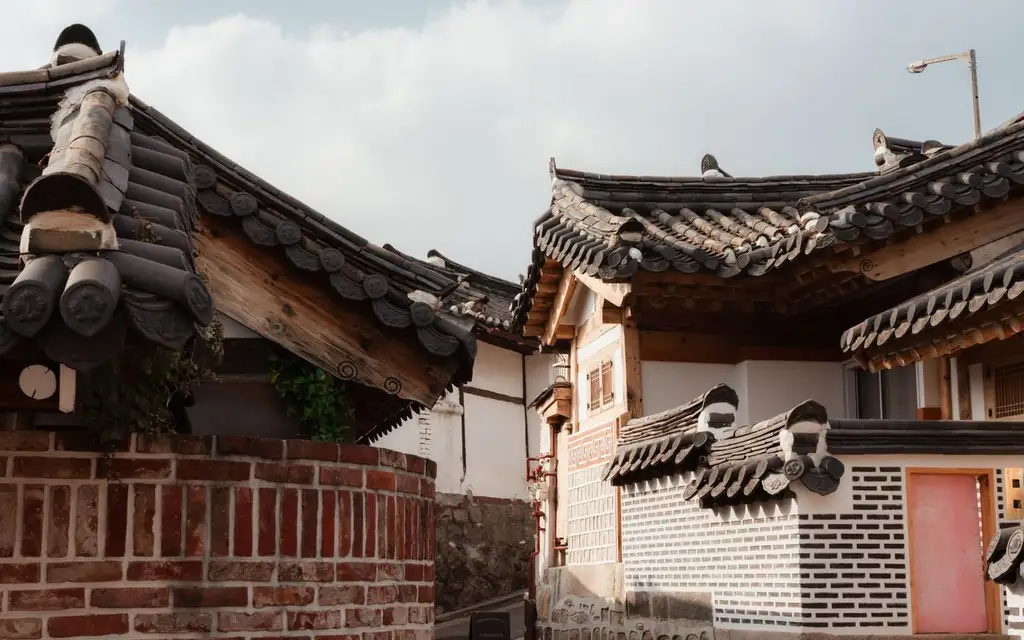
The Korea Times, reporting on the district office's announcement, identified the most heavily restricted street as Bukchon-ro 11-gil, the most popular and densely populated part of the village. The policy began as a trial and then became official in March 2025, with fines of up to 100,000 won for tourists who enter outside the permitted hours (Korea Times report). Rules like this can be adjusted, so treat the official site as the final word on the day.
Who is exempt? The district office exempted residents, business owners and guests staying at hanok accommodations. If you have a booking at a hanok stay or a reservation at a business inside the zone, you are treated differently from a sightseer, but you should still keep quiet and respect the privacy of the neighbors.
What the village is, and what it is not
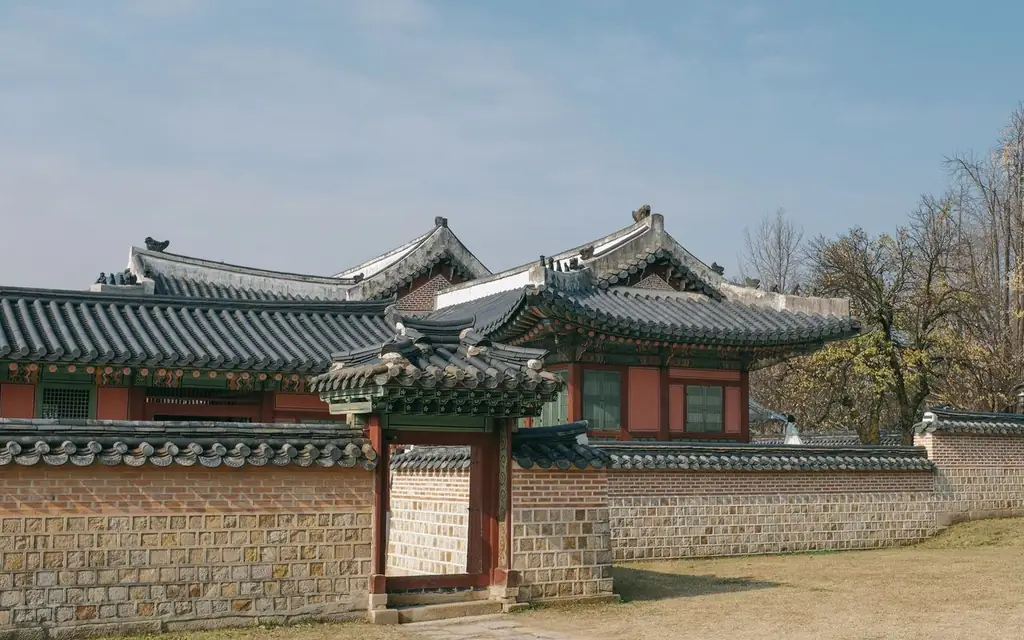
The village sits between Gyeongbokgung and Changdeokgung palaces, on a slope of lanes lined with tiled-roof houses. Visit Seoul says plainly that Bukchon was not built as an attraction like some of the city's reconstructed villages; it is a residential neighborhood. The site's words are that the Hanok Village is a residential space for local citizens before it is a tourist attraction.
That tells you what to expect. Do not look for a gate, a ticket office or an organized route. The experience is walking steep lanes between old houses, with views down toward the city and across to the palace roofs, and stopping at a few small museums and cultural centers. The most photographed spots are the Gahoe-dong lanes, where the houses line up with the skyline behind them. They are also the quietest in the early morning, which is the best argument for arriving at opening time.
The code of conduct, in plain terms
The Visit Seoul page lists the etiquette that the district asks of visitors:
- Keep noise low, especially in the Gahoe-dong 31 area.
- Do not litter.
- Keep groups to 10 people or fewer.
- Do not use microphones, megaphones or loudspeakers.
- Do not photograph or film house interiors, even if doors are open.
The page also notes that cultural tours of two particular Gahoe-dong addresses are being phased out. For a party traveling with a private guide, that means the guide should speak quietly and not stop in front of homes. For a chauffeur-led party it means the driver is not a presence in the village at all: he waits outside.
Where a car actually stops
The village has no vehicle access for visitors in the usual sense. The lanes are narrow, steep and shared with residents' cars, and the policy is aimed at reducing the number of tourists. The practical plan:
- Drop-off near Anguk Station. Visit Seoul gives the nearest subway access as Anguk Station, Line 3, Exit 3, about 516 metres from the village address (37 Gyedong-gil, Jongno-gu). The streets around Anguk are busy, but a short stop to let you out is usually possible. The driver chooses the safest point on the day.
- Drop-off on the Samcheong-dong side. Coming from Gyeongbokgung, the road along the palace wall brings you to the northern approach to the village. A good option if you are connecting from the palace.
- Waiting. The driver does not wait in the lanes. He circles, or waits in a nearby car park, and picks you up on a phone call at a main road.
If a member of your party has difficulty with steep slopes, tell the desk at booking. The lanes are uneven and the climb can be demanding, and a driver can reposition to the downhill end for the pickup.
Reaching Bukchon: airport and city drives
- Incheon International (ICN) to Bukchon: about 62 km (39 miles), typically 65 to 95 minutes by road depending on the hour. Our Seoul Incheon Airport page covers the pickup.
- Central hotels (Myeongdong, City Hall) to the edge of the village: about 3 to 4 km (2 to 2.5 miles), 15 to 25 minutes.
- Gyeongbokgung Palace to Bukchon: under 2 km (1.2 miles). The drive is 5 to 15 minutes and the walk is feasible.
- Namsan and N Seoul Tower to Bukchon: about 5 km (3 miles), 15 to 25 minutes.
For the citywide service, including hourly hire, see the Seoul chauffeur service page. The desk tracks your flight so the driver follows the real landing time, which matters if you want to be in the village at 10:00 on the morning after arrival.
What to look for in an hour
The Visit Seoul pages list a handful of nearby stops. The listings are older, so confirm hours before relying on them:
- Bukchon Traditional Culture Center: classes in calligraphy, tea and crafts in a multipurpose hanok complex.
- Bukchon Village Information Center: inside part of the Jeongdok Public Library, with English, Chinese and Japanese information.
- Baek In-je's House: a Seoul-designated folklore heritage building from the early twentieth century.
- The lanes of Gahoe-dong, for the classic view of tiled roofs descending toward the city.
A walking tour published by Visit Seoul starts at Unhyeongung Palace, climbs to the houses around Gahoe-dong and descends to the library, in two to three hours. A short visit of 45 to 60 minutes is enough if you simply want the lanes and the view.
A morning that ends before 17:00
- 9:15 – Hotel pickup.
- 9:45 – Drop-off near Anguk, with a few minutes to find the lane before the 10:00 opening of the visiting window.
- 10:00 to 11:15 – The village on foot, with a quiet pace, one cluster of photographs and no stops at doors.
- 11:30 – Pickup and transfer to Gyeongbokgung, under 2 km away; the full palace guide is Gyeongbokgung Palace.
- 12:00 to 15:00 – The palace and the guard ceremony schedule. Remember that the palace is closed on Tuesdays.
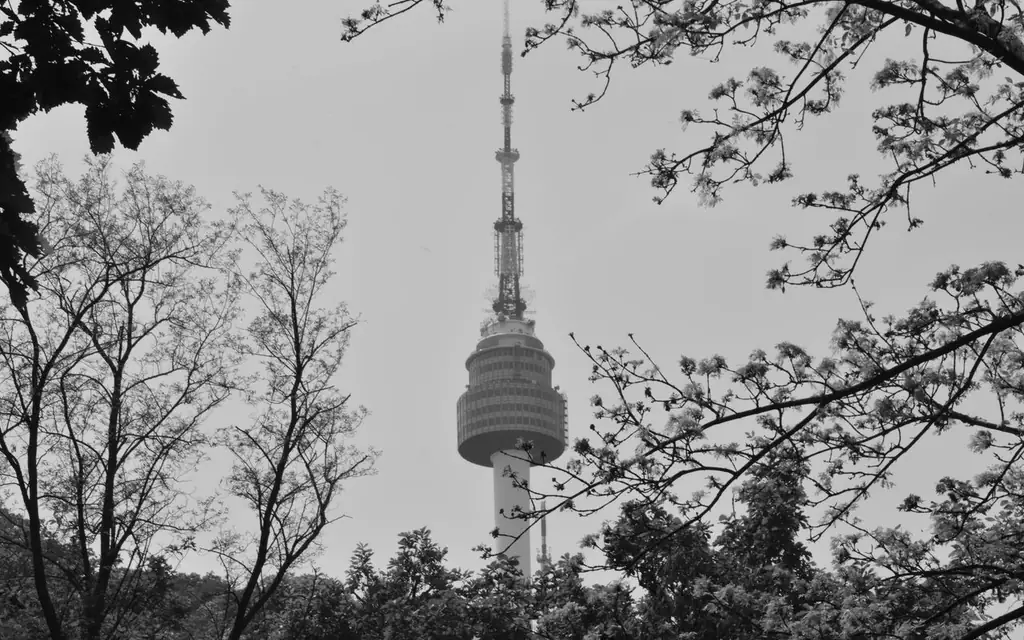
- 16:00 to 18:30 – N Seoul Tower, for sunset; see N Seoul Tower for the cable car and the car-free summit.
Because the village closes to tourists at 17:00, it is a morning or early-afternoon stop, never an evening one. If you are using the same driver for the day, keep Bukchon first.
The wider region is covered in our Asia-Pacific directory, and the attractions hub lists other sights we cover. Tourist offices can arrange visitor transport through a trade account; see Asia-Pacific tourist offices.
Season, light and the hour that works
The 10:00 opening of the visiting window is also the best hour for most of the year. The lanes face different directions, and the eastern light in the first hours picks out the roof tiles and the stone walls without the harsh glare that arrives by midday.
- Spring. Blossom on the palace side of the hill and mild temperatures. The village is busiest at weekends, so a weekday morning is a clear advantage.
- Summer. Heat and humidity build quickly in the lanes, which are steep and have little shade. Go at 10:00 and be finished by noon.
- Autumn. The most photographed season, with warm light and colored leaves, and the heaviest crowds on weekends.
- Winter. Cold, bright and quiet. Frost and snow make the slopes slippery, so grip matters more than anything else you wear.
Remember that the visiting window closes at 17:00 all year, so a short winter afternoon leaves little margin. If a delay on the road would push you past the closing time, the chauffeur will tell you early rather than let you arrive just as the zone shuts.
When the window closes: what to do instead
Plan a fallback for the late afternoon so the day does not depend on squeezing Bukchon in. The streets of Samcheong-dong and Insadong, close to the village, have cafes and craft shops with no visiting-hour restriction. Changdeokgung, the second royal palace bordering the neighborhood, is another option for a different day, with its own opening hours and closing day to check. The Korea Tourism Organization's Gyeongbokgung page shows the seasonal hours and Tuesday closure for the larger palace next door, which is a useful guide to how the neighborhood's other sights operate.
Accessibility and practical notes
The village is hilly, with cobbled and uneven surfaces and narrow lanes. Wheelchairs and strollers are difficult on the upper lanes; the lower lanes near the main road are easier. Wear shoes with grip, particularly after rain or in winter.
Do not bring a drone, do not rent a hanok costume and then pose in front of private gates, and do not shout to friends across the lane. The most common complaint from residents is noise. If you travel with children, brief them before you step out of the car.
Getting to the village: subway, walk, taxi or car
| Approach | Time | Cost note | Suits |
|---|---|---|---|
| Subway, Line 3 to Anguk (Exit 3) | About 516 m walk from the exit | Lowest | Independent travelers; the standard approach |
| Walk from Gyeongbokgung | 15 to 25 minutes | Free | Palace-and-village morning on foot |
| Taxi from a central hotel | 15 to 25 minutes | Metered | Two or three people |
| Bus or tour coach | Variable | Low | Group tours; groups of 10 or fewer are asked for in the village |
| Private chauffeur | 15 to 25 minutes in the city; 65 to 95 minutes from Incheon | Fixed fare via the booker | Airport arrivals, families, linked sights, mixed mobility |
Be honest about the choice: for a solo traveler staying near a Line 3 station, the subway is the most direct way to Bukchon. A chauffeur is the better option when you land at Incheon and want to see the village before check-in, when you are linking Bukchon with the palace and Namsan in a single day, or when anyone in the party finds the hills hard.
Frequently asked questions
What are the visiting hours for Bukchon Hanok Village?
Visit Seoul lists 10:00 to 17:00 daily, and says visitors may not enter the restricted areas from 17:00 until 10:00 the next day. The village is a Special Management Area (Red Zone).
Can cars drive into Bukchon Hanok Village?
A visitor's car should not be taken into the lanes. They are narrow, steep and residential. A chauffeur drops you at the edge, usually near Anguk Station, and waits nearby.
Is there a fine for visiting Bukchon after 17:00?
The Korea Times reported fines of up to 100,000 won for tourists entering the red zone outside the permitted hours, after the policy became official in March 2025. Residents, business owners and hanok stay guests are exempt.
How do I get to Bukchon Hanok Village from Incheon Airport?
By road it is about 62 km (39 miles), typically 65 to 95 minutes. The driver drops you near Anguk Station, Exit 3, and you walk about 516 metres to the village.
How long should I spend in Bukchon?
Allow 45 to 90 minutes for the lanes and the view, or two to three hours if you follow a longer walking route or visit the cultural center.
Can I take photographs in Bukchon?
Yes, of the lanes and rooftops. Do not photograph or film house interiors, even through an open door, and do not use megaphones. Groups should be 10 people or fewer.
Can I combine Bukchon with Gyeongbokgung Palace?
Yes. They are under 2 km (1.2 miles) apart, and a morning in Bukchon followed by an afternoon at the palace is a popular pairing. The palace is closed on Tuesdays.
Can the driver wait for me near Bukchon?
Not inside the lanes. He waits in a nearby car park or circles the area and meets you on a main road when you call. Plan to be out of the restricted area by 17:00 at the latest.