
 United StatesJFK
 MexicoMEX
 BrazilGRU
 ArgentinaEZE
 ChileSCL
 ColombiaBOG
 PeruLIM
 PanamaPTY
 Costa RicaSJO
 Dominican RepublicPUJ
 JamaicaMBJ
 BahamasNAS
 BarbadosBGI
 United KingdomLHR
 IrelandDUB
 FranceCDG
 GermanyFRA
 NetherlandsAMS
 BelgiumBRU
 SwitzerlandZRH
 AustriaVIE
 ItalyFCO
 SpainMAD
 PortugalLIS
 GreeceATH
 TurkeyIST
 DenmarkCPH
 SwedenARN
 NorwayOSL
 FinlandHEL
 PolandWAW
 Czech RepublicPRG
 HungaryBUD
 IcelandKEF
 United Arab EmiratesDXB
 QatarDOH
 Saudi ArabiaRUH
 IsraelTLV
 EgyptCAI
 MoroccoCMN
 South AfricaJNB
 KenyaNBO
 NigeriaLOS
 IndiaDEL
 PakistanLHE
 Sri LankaCMB
 SingaporeSIN
 MalaysiaKUL
 ThailandBKK
 VietnamSGN
 PhilippinesMNL
 IndonesiaCGK
 Hong KongHKG
 ChinaPVG
 TaiwanTPE
 JapanHND
 South KoreaICN
 AustraliaSYD
 New ZealandAKL
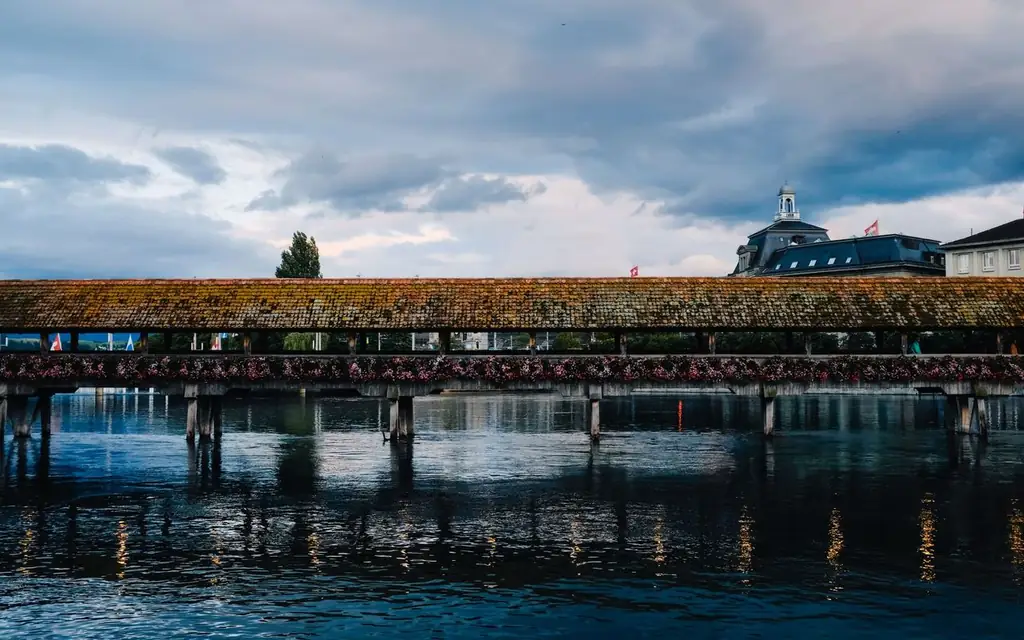
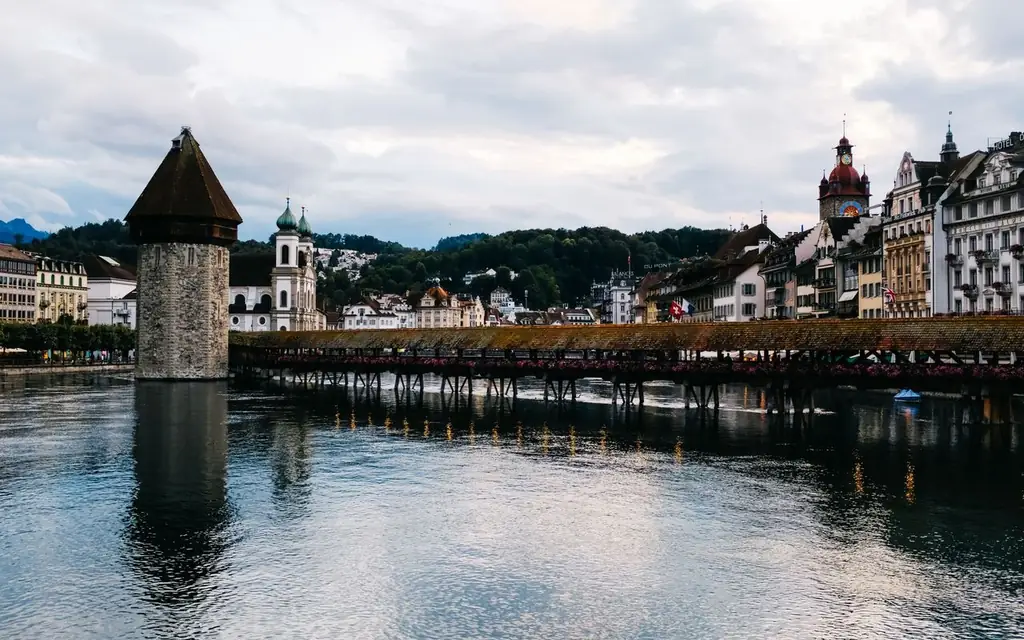
Lucerne is a small city that handles its visitors by controlling where vehicles stop. The Chapel Bridge, the covered wooden footbridge that crosses the river Reuss beside an octagonal stone tower, is the symbol of the city and sits at the very middle of that control. A Chapel Bridge private tour with driver is therefore mostly an exercise in knowing the drop-off points, and this guide sets them out, along with the bridge's history and a two-hour walk that makes the most of a stop in town.
The rules on coaches, minivans and cars come from the city's tourism site, luzern.com, and the history from the bridge's own website. Both were read in October 2026.
How do you get to the Chapel Bridge by car?
The Chapel Bridge in Lucerne is about 65 km (40 miles) from Zurich Airport and 55 km (34 miles) from Zurich main station, roughly an hour by motorway. Cars cannot enter the pedestrian old town, so the chauffeur sets you down at the lake or station side and you walk a few minutes.
The route from Zurich is the A4 and A14 toward Lucerne, which is straightforward outside rush hour. Friday afternoons and the start of school holidays slow the last 15 km, and the lake roads in the city are slow on summer weekends. The Zurich Airport page, the Zurich chauffeur service page and the Zurich Hauptbahnhof page cover the pickups.
Why the car stops at the edge
Lucerne's old town is dense, pedestrian and tiny, and the bridge connects its two halves. Vehicles do not drive across the Chapel Bridge, which is a footbridge, and the streets on either bank around it are pedestrian zones with limited access. The city's policy on vehicles is spelled out for coaches and for smaller vehicles, and the second part matters for a chauffeured visit.
The official coach page says that coaches, defined as buses with more than nine seats, may use fee-based stopping places in the city center, but only with a voucher booked in advance. Minivans and cars are excluded: the page says they must park in the spaces signaled for them and may not stop at the coach stops, and it recommends public parking lots or freight handling areas. In plain terms, a sedan or an SUV never uses the coach bays. A van with more than nine passenger seats, such as a full Sprinter, may fall into the coach category, so the desk confirms the vehicle class and the arrangement before the day.
For a chauffeur this does not mean difficulty, only a plan. The usual pattern is a short set-down at a public street near the lake or the station, followed by parking in a garage and a return when you call.
Set-down points near the bridge
- At the station and the lake front. The main station and the quay beside it are only a few minutes' walk from the bridge. This is the easiest set-down for arrivals from Zurich and for onward trips by train or boat.
- Near Löwenplatz. The Glacier Garden, which sits beside the Löwenplatz, says it has no parking spaces of its own and recommends the Löwencenter or City Parking garages, a few minutes' walk. The Lion Monument is beside it. From Löwenplatz to the Chapel Bridge is a ten-minute walk through the old town, so this suits a plan that begins at the Lion Monument.
- Garages. The railway station has a car park directly beside it, the City Parking and Löwencenter garages are close to Löwenplatz, and the Schweizerhof garage near the Matthäuskirche is a metered garage with limited spaces. Tell the desk if you need a garage or a short set-down so the wait is planned.
Allow ten minutes for the set-down and the walk to the bridge. At peak summer times the quay is crowded with tour groups, and an earlier arrival is calmer.
The bridge: what you are looking at
The Chapel Bridge is roughly 205 meters long, according to the bridge's own site, and runs diagonally across the Reuss with the octagonal Water Tower standing beside it in the river. The sources differ on dates: the tower is older than the bridge, the bridge is usually dated to the fourteenth century, and the construction years given range from 1333 to around 1365. The tower served at various times as a watchtower, a prison, an archive and a treasury.
The roof space holds a series of triangular panels painted in the seventeenth century, showing events from the history of the Swiss Confederation and the lives of Lucerne's patron saints, Leodegar and Maurice. The official site counts 111 original paintings.
On the night of August 17 to 18, 1993, a fire destroyed around two thirds of the bridge. The Water Tower survived with surface damage. The city decided at once to rebuild; the bridge reopened in April 1994 and many of the panels now are replicas, with surviving originals remounted and some still showing fire damage. When you walk the bridge, look up at the panels and look for the darkened ones: they are the originals.
The bridge is a public footbridge. There is no ticket. It is open to pedestrians at all hours, and it is a pleasant place at dusk when the city lights come on and crowds thin.
A two-hour walk from the Chapel Bridge
- Start at the Chapel Bridge and cross to the north bank, reading the panels. (20 minutes.)
- Spreuer Bridge, the second covered bridge a few hundred meters downstream, is quieter and has its own cycle of paintings. (15 minutes.)
- The old town squares and facades, with painted house fronts on the Weinmarkt and a lunch break. (45 minutes.)
- The Lion Monument and the Glacier Garden, about ten minutes' walk northwest of the old town, where the chauffeur can collect you at Löwenplatz. (45 minutes.)

The route is flat, runs about 2 km (1.2 miles) in all and suits most ages. In wet weather the bridge roof gives cover, but the paving is slippery, so shoes with a grip help.
Around the bridge: boats, timing, weather and photographs
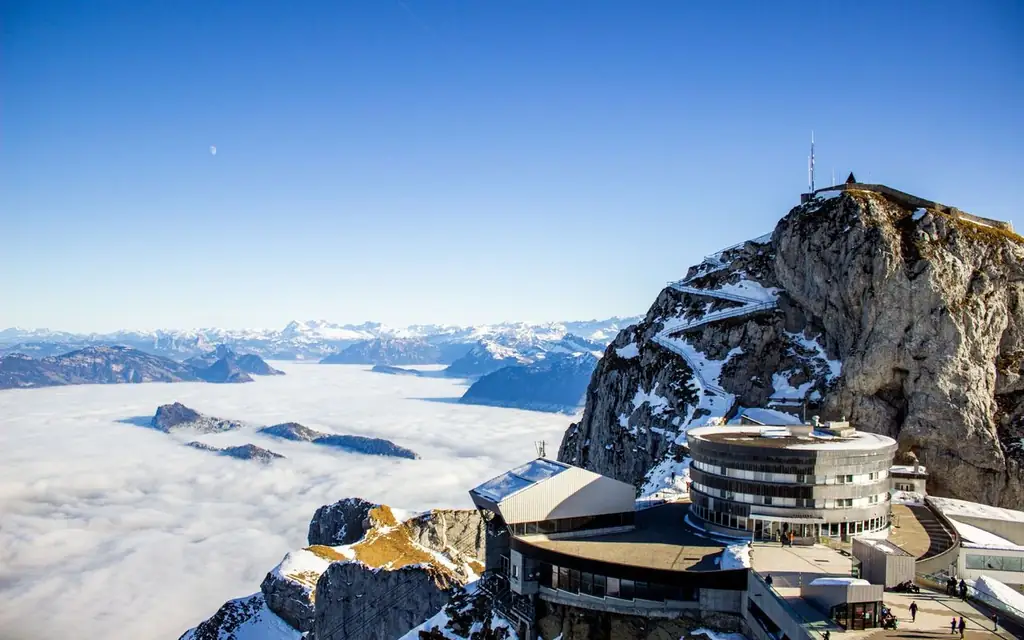
The quay beside the station is where the lake steamers and motor boats leave, and a boat ride is the traditional companion to the bridge. The Pilatus operator's Golden Round Trip begins with a boat from Lucerne to Alpnachstad, so a traveler who wants to see the mountain can leave the car at the lake and meet it again at Kriens or Alpnachstad. The boat timetable is a seasonal one, and the Pilatus page for this autumn lists changes, so confirm both before you plan a lake leg. For most of a half-day in the city the lake is a place to walk, not a destination for a car.
Best time of day and year
Early morning is the calmest period on the bridge, with the light low along the Reuss and few groups. Midday in summer and around Easter is busy, and tour parties arrive in waves between mid-morning and mid-afternoon. In the evening the bridge empties, the panels in the roof are lit and the river reflects the lights. Winter is quiet and often misty, with the mountains out of view; summer is bright and crowded. For a chauffeured day, late afternoon into early evening gives the best mix of light and space, and dinner in the old town can follow.
Rain, cold and accessibility
The bridge has a roof, which makes it one of the few outdoor sights in the city that can be enjoyed in the rain. The walkway is of wooden planks, uneven in places, and the approaches have slight slopes and some steps, so a wheelchair or a stroller manages the main crossings but not every path in the old town. If mobility is a concern, say so at booking and the set-down will be chosen with that in mind. In bad weather the Glacier Garden near the Lion Monument is an indoor alternative, and its own site describes arrival by car and the garages nearby.
Where to photograph the bridge
The best frames of the bridge are from outside it. The lake-side road bridge a short walk upstream (the Seebrücke) gives the long view of the roofline with the Water Tower and the old-town facades behind. The Spreuer Bridge downstream gives the reverse angle with the Chapel Bridge in the distance. Inside, the roof panels are dark and a phone camera with a steady hand does better than flash. Early morning gives the cleanest picture with the fewest people, and the quay at dusk gives reflections in the water.
Concert days, congress days and busy weekends
Lucerne has a concert hall and congress centre beside the station and the lake, and when a major event is on, hotels fill, the quay is crowded and the set-down points near the station become busy. Add a margin to the pickup time when a large event coincides with your date, and ask the desk to check the calendar. Weekends in high summer and the holiday periods around Easter and Christmas carry the same advice: the city is small, the roads are few, and the last kilometer is the slow one.
A day from Zurich with a driver
A straightforward plan, starting from Zurich Airport or the city:
- Pickup, 8:30 am. About an hour to Lucerne by motorway.
- Set-down near the station, 9:45 am. A short walk to the bridge before the tour groups arrive.
- Chapel Bridge and old town, 10:00 to 12:30. The two-hour walk above, with a stop at a café.
- Lunch, 12:30. In the old town or on the lake front.
- Lion Monument and Glacier Garden, 2:00 pm. The chauffeur collects you at Löwenplatz.
- Optional extension, 3:30 pm. Drive 15 km (9 miles) to Alpnachstad or 4 km (2.5 miles) to Kriens for Mount Pilatus, or return to Zurich by 5:00 pm.
- Back in Zurich, 6:00 pm. About an hour from Lucerne, longer at Friday peak.
The plan leaves time on both ends for traffic on the A14 and the A4, and for the flight, if you are leaving the same day: allow at least three hours between the drop-off at the airport and an international departure.
Lucerne as a base: what is within an hour
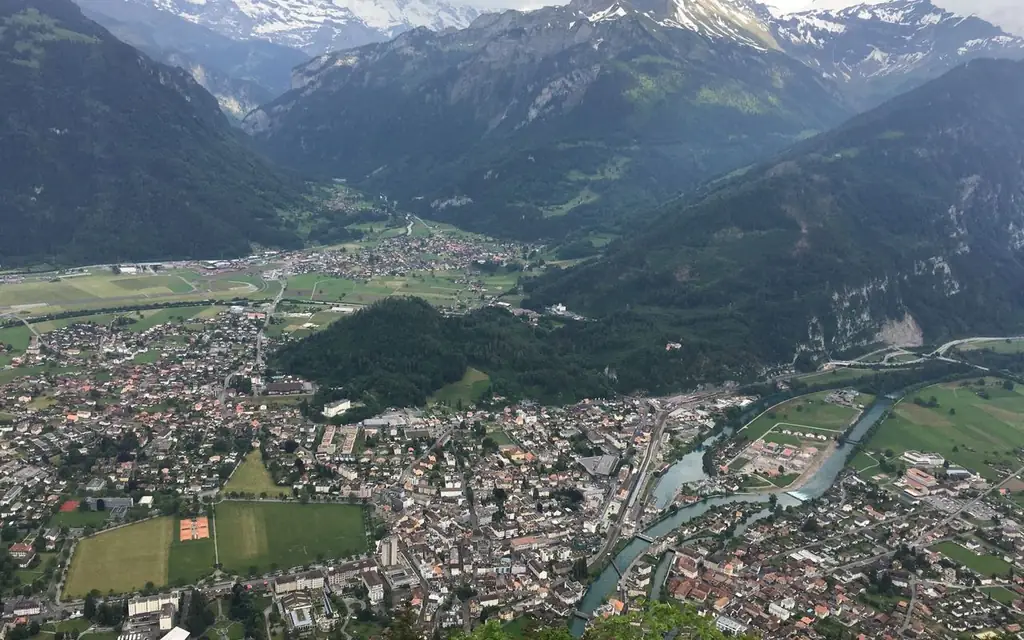
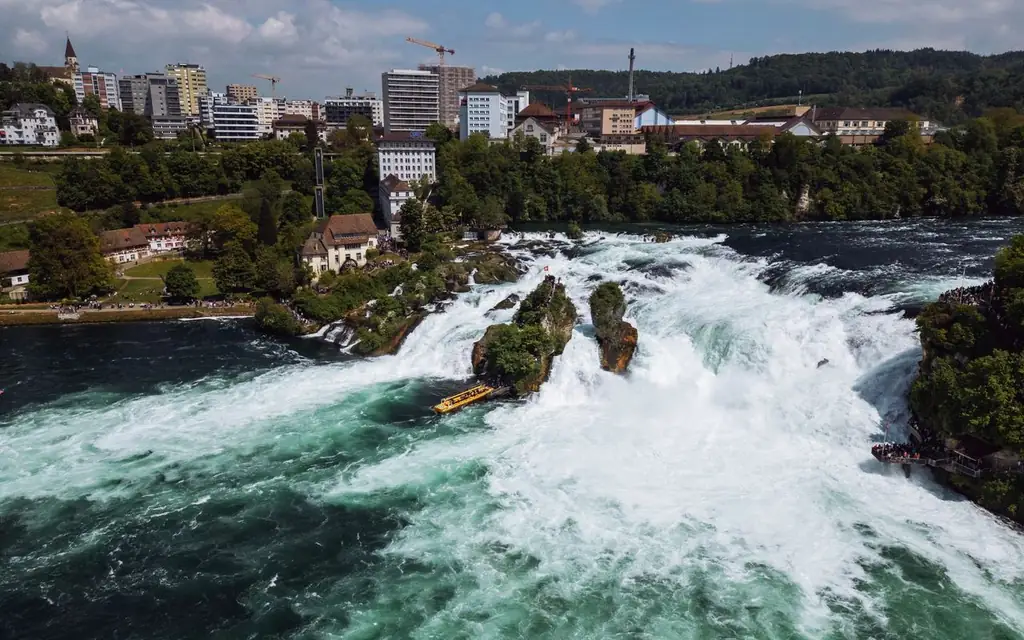
The city is the gateway to central Switzerland, and a chauffeur makes it easy to combine places. Mount Pilatus starts at Alpnachstad, about 15 km (9 miles) south of the bridge, and at Kriens, only 4 km (2.5 miles) away. The Rhine Falls near Schaffhausen are about 100 km (62 miles) to the north, a good Zurich-side addition. To the south and east, Interlaken is about 75 km (47 miles) and a natural next stop on the way to the Jungfraujoch. More are on the Europe directory, the attractions hub and the private tours with driver page.
Lucerne: ways to arrive compared
| Option | Time | Cost note | Best for |
|---|---|---|---|
| Train from Zurich Airport or Zurich HB | About an hour, sometimes with a change | Lowest | Solo visitors, rail-pass holders |
| Organized coach tour | Half-day or full day | Lowest per person | Fixed itineraries |
| Rental car | About 1 hour | Rental plus garage | Self-drivers staying in central Switzerland |
| Taxi from Zurich | About 1 hour | Metered, high on a long trip | Short-notice one-way |
| Private chauffeur | About 1 hour from Zurich | Fixed fare via the booker | Airport arrivals, groups, a route that continues to Pilatus or the Alps |
Switzerland's trains are some of the best in Europe, and the trip from Zurich to Lucerne is easy and inexpensive for a traveler without luggage. A chauffeur is better when you arrive with bags, travel as a family or group, or want to continue by road to Pilatus, Engelberg or the Bernese Oberland.
Frequently asked questions
How far is the Chapel Bridge from Zurich Airport?
About 65 km (40 miles), roughly an hour by motorway. From Zurich main station it is about 55 km (34 miles).
Can a car drive across the Chapel Bridge?
No. The Chapel Bridge is a footbridge in a pedestrian area. Cars set down at the edge of the old town.
Where can a taxi or private car stop near the Chapel Bridge?
At public streets and set-down points near the station and the lake, with garages for waiting. Coaches use a separate fee-based system, and minivans and cars may not use the coach stops.
Is the Chapel Bridge free?
Yes. It is a public footbridge with no ticket, open at all hours.
How long is the Chapel Bridge?
About 205 meters, according to the bridge's official site.
What happened to the Chapel Bridge in 1993?
A fire on the night of August 17 to 18, 1993 destroyed about two thirds of the bridge. It was rebuilt and reopened in April 1994.
How long should I allow in Lucerne?
Two hours for the bridge and old town, a half-day with the Lion Monument and the lake, a full day with a boat trip or a mountain.
Is Lucerne a good day trip from Zurich?
Yes. It is about an hour each way. A day with a driver can add Mount Pilatus or the Rhine Falls.
Can the chauffeur wait while I walk?
Yes. Waiting time is part of the quote. The chauffeur parks and returns when you call.