
 United StatesJFK
 MexicoMEX
 BrazilGRU
 ArgentinaEZE
 ChileSCL
 ColombiaBOG
 PeruLIM
 PanamaPTY
 Costa RicaSJO
 Dominican RepublicPUJ
 JamaicaMBJ
 BahamasNAS
 BarbadosBGI
 United KingdomLHR
 IrelandDUB
 FranceCDG
 GermanyFRA
 NetherlandsAMS
 BelgiumBRU
 SwitzerlandZRH
 AustriaVIE
 ItalyFCO
 SpainMAD
 PortugalLIS
 GreeceATH
 TurkeyIST
 DenmarkCPH
 SwedenARN
 NorwayOSL
 FinlandHEL
 PolandWAW
 Czech RepublicPRG
 HungaryBUD
 IcelandKEF
 United Arab EmiratesDXB
 QatarDOH
 Saudi ArabiaRUH
 IsraelTLV
 EgyptCAI
 MoroccoCMN
 South AfricaJNB
 KenyaNBO
 NigeriaLOS
 IndiaDEL
 PakistanLHE
 Sri LankaCMB
 SingaporeSIN
 MalaysiaKUL
 ThailandBKK
 VietnamSGN
 PhilippinesMNL
 IndonesiaCGK
 Hong KongHKG
 ChinaPVG
 TaiwanTPE
 JapanHND
 South KoreaICN
 AustraliaSYD
 New ZealandAKL
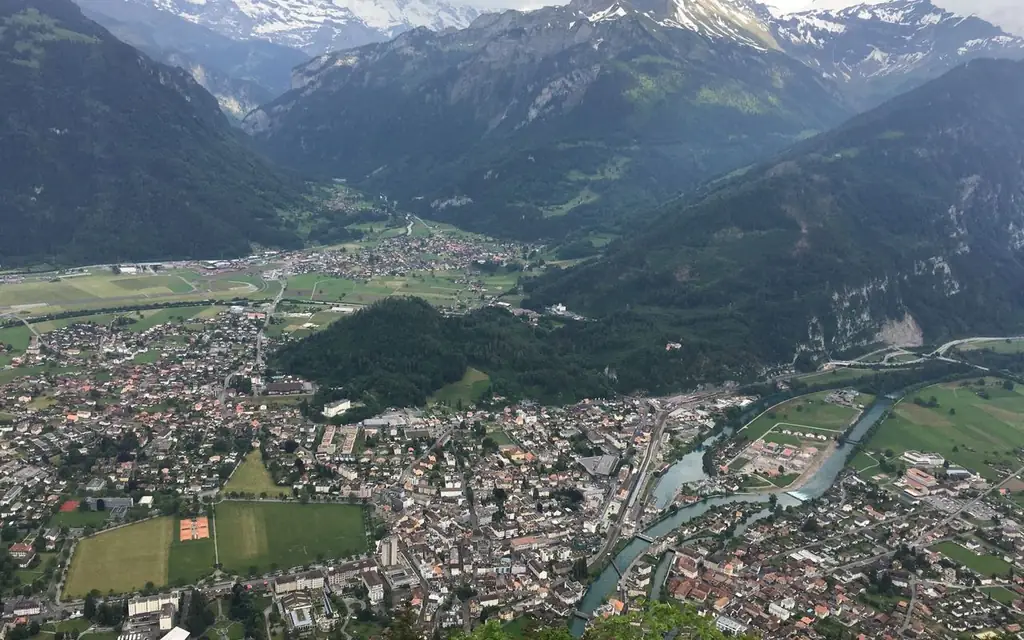
Nobody visits Interlaken for a single monument. The town is a hinge: two turquoise lakes on either side, the Eiger, Mönch and Jungfrau rising to the south, and a road and rail network that fans out from the middle of town to every valley in the region. That is exactly why an Interlaken private tour with a driver works so well: the car does the connecting, and you decide where the day lands. This guide is for travelers arriving by road from Zurich Airport, Bern, Lucerne or Geneva.
Is an Interlaken private tour with a driver worth booking?
Yes, if you are arriving from an airport with luggage, travelling in a group, or combining Interlaken with the lakes and the Jungfrau valleys in one day. Trains are excellent and cost less for a single destination, but a chauffeur removes the transfers, carries the bags and keeps the day flexible.
The honest answer depends on the shape of your trip. If you are staying in Interlaken and heading to one summit by rail, the Swiss train network does that job well for less money. A private car earns its place in three situations: a journey from Zurich, Bern or Geneva with luggage and no train changes, a group that does not want to split across ticket queues, and a day that mixes places the timetable does not connect neatly, such as a lake castle in the morning and a mountain viewpoint in the afternoon.
The booker shows a fixed fare for your exact addresses and vehicle class, quoted before you book.
What Interlaken actually is
The name points to its position between the lakes. Lake Thun lies to the west and Lake Brienz to the east, joined by the short Aare river that runs through town. The official Interlaken tourism site describes the region as centred on the town, with Lake Brienz and Lake Thun on either side.
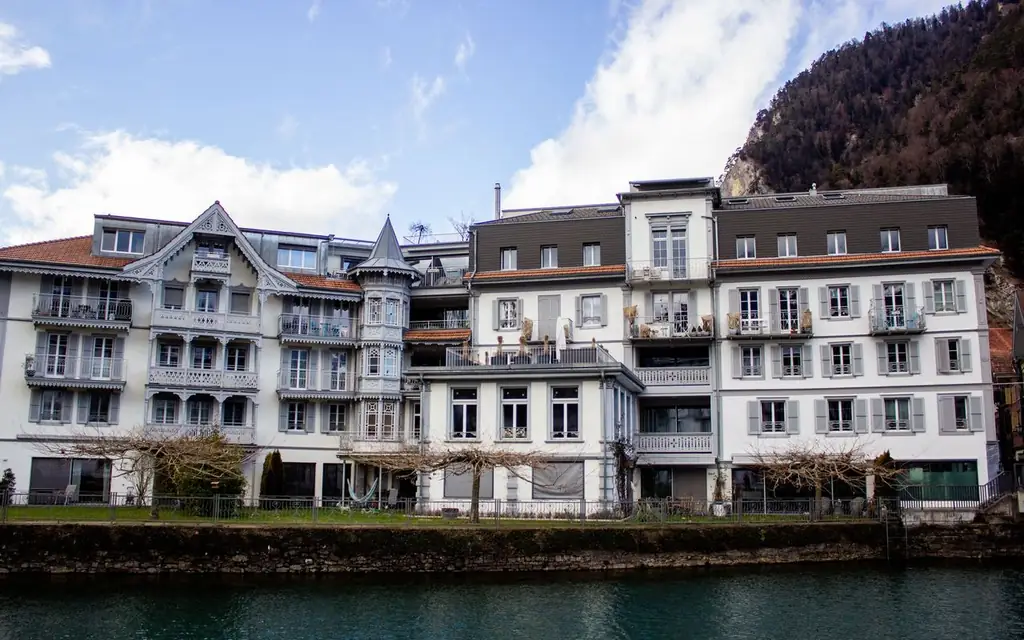
On foot the town is compact. Two railway stations, Interlaken West and Interlaken Ost, sit at opposite ends of the Höheweg, the long promenade lined with hotels. Between them lies the Höhematte, an open meadow in the middle of town that is a natural place for photographs on a clear day. Most of what a first-time visitor wants, from the lake boats to the funicular up the Harder, starts at or within a short walk of one of those stations.
Driving to Interlaken: three approaches and what each one demands
There are three realistic ways in by road, and the choice changes the day.
From Zurich Airport (about 135 km, 84 mi, roughly 1 hour 45 minutes). The shortest route runs through Lucerne and over the Brünig Pass, then along Lake Brienz. The Jungfrau Region tourism board notes that the Brünig route is open in summer and winter. It is more winding than a motorway but scenic, and in summer traffic can slow it down.
From Zurich Airport via Bern (about 175 km, 109 mi, roughly 2 hours 10 minutes). This is mostly motorway to Thun, then the lakeside road to Interlaken. It is longer on paper, but it suits drivers who prefer faster roads and a predictable surface in snow.
From Bern (about 55 km, 34 mi, roughly 50 minutes). This is the easy run: motorway south along Lake Thun. Bern is the usual starting point for travelers arriving by train into the capital.
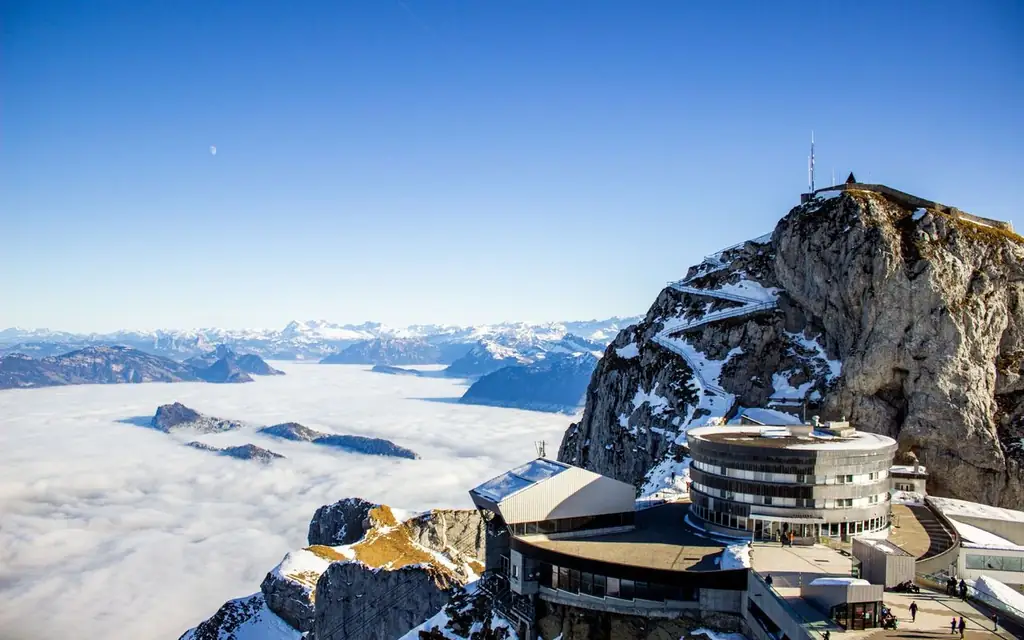
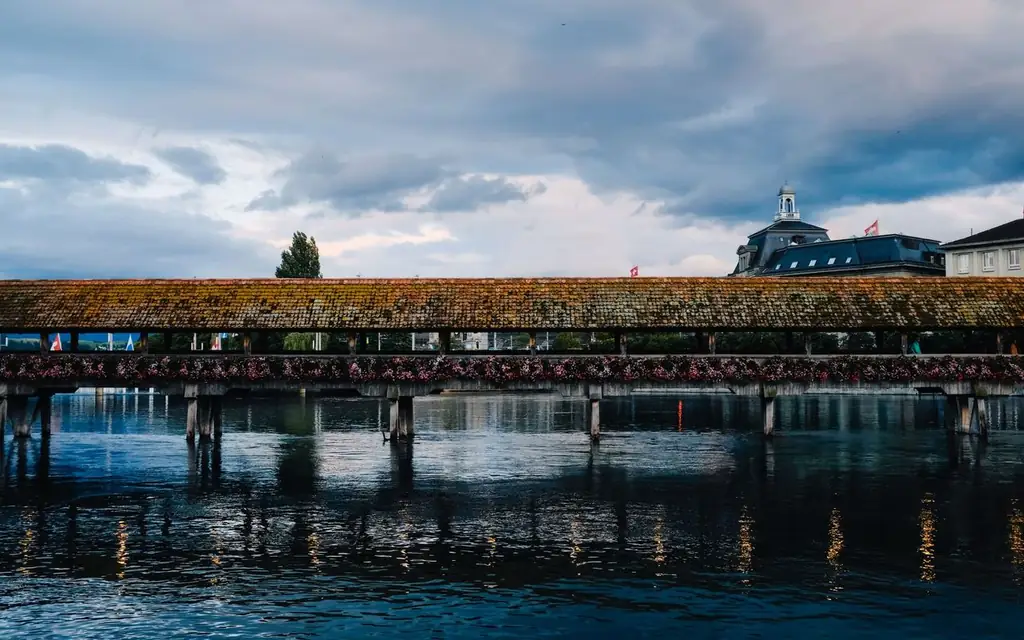
From Lucerne (about 75 km, 47 mi, 1 hour 15 to 1 hour 30 minutes). Over the Brünig and down to Brienz, then along the lake. It pairs naturally with Chapel Bridge in Lucerne or Mount Pilatus in the same trip.
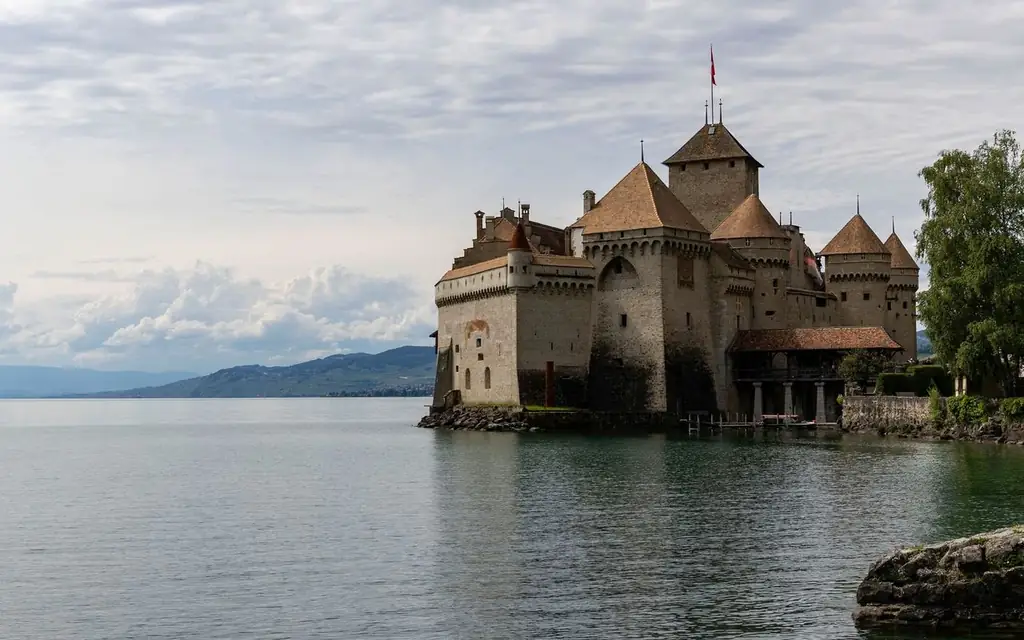
From Geneva Airport (about 215 km, 134 mi, roughly 2 hours 30 minutes). Via Lausanne, Fribourg and Bern. Many guests break this journey at the Château de Chillon on Lake Geneva.
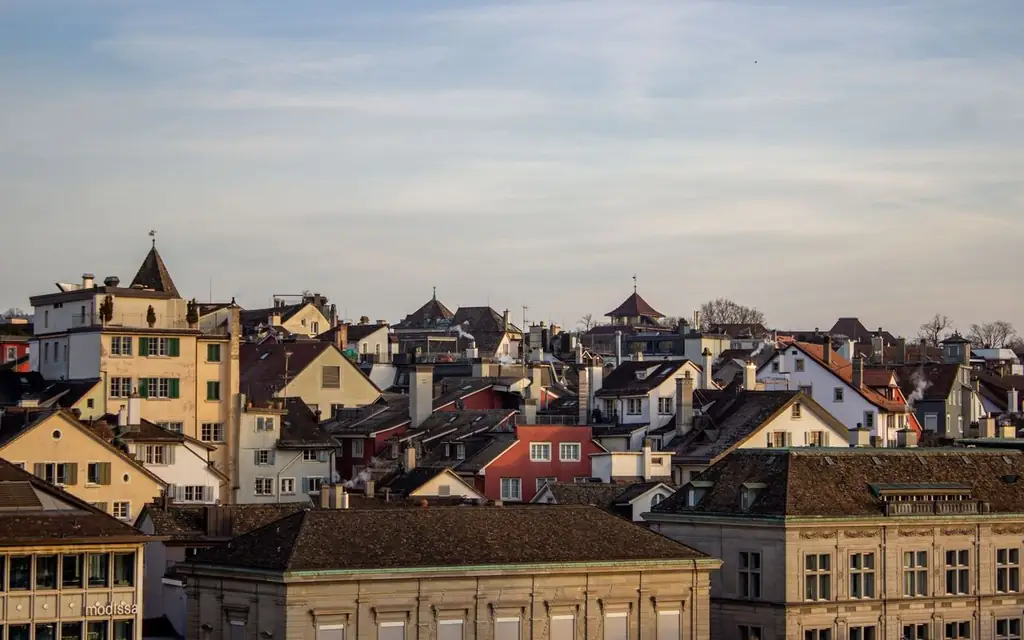
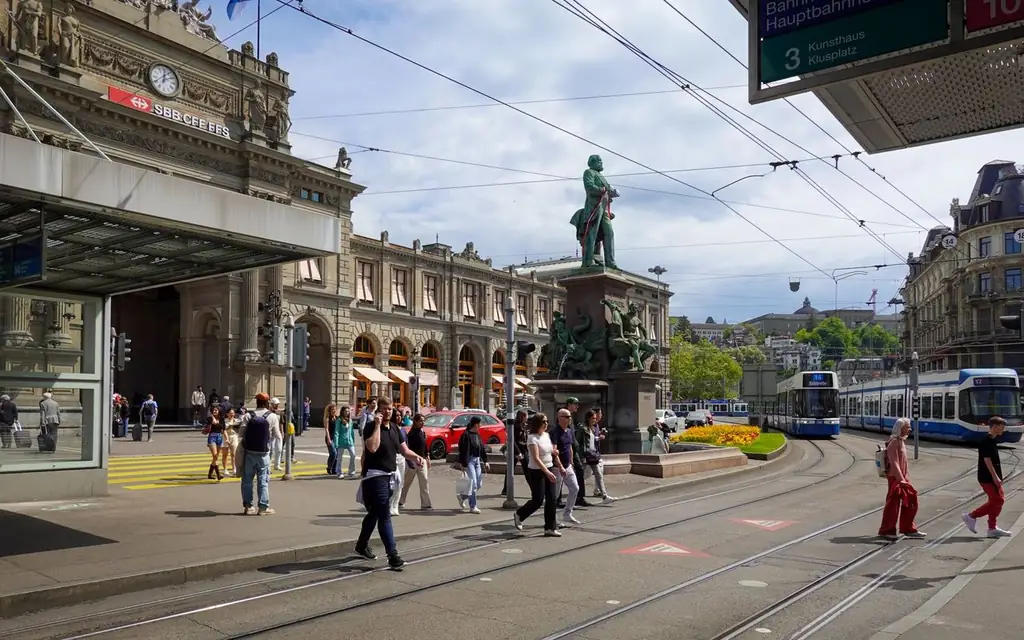
If you are starting in Zurich, our Zurich chauffeur service and the page for Zurich Airport transfers explain how a pickup works on arrival; the same driver can take you straight on to the Bernese Oberland. Swiss motorways require a vignette, and the vehicles used on our bookings are set up for it, so you do not need to think about it.
Where the car stops and where it cannot
Interlaken itself is easy by car, and the surrounding villages are not. This is the single most useful thing to understand before you plan the day.
In town, a chauffeur can set you down close to either station and along the Höheweg, then wait nearby or return at an agreed time. The usual pattern is drop-off, a call when you are ready, and a short pick-up. The Harder funicular valley station is a short walk from Interlaken Ost, so the same drop point serves both.
For day trips into the valleys, the Jungfrau Region tourism board points visitors to the SBB park-and-ride sites at Matten and Wilderswil, and asks visitors to check current car park status on its arrival page. A chauffeur does not need to use them: the car simply goes where the road goes. What matters is the end of the road. Wengen, Mürren and Gimmelwald are car-free villages, and you reach them by rail or cable car from Lauterbrunnen or Stechelberg. The guide to the Lauterbrunnen Valley covers that handover in detail.
Harder Kulm: the two-lake view from above town
If you only climb one hill from Interlaken, make it the Harder Kulm. The summit is at 1,322 m, and the funicular from the valley station near Interlaken Ost takes about ten minutes, according to the operator, Jungfraubahnen. At the top, the Two-Lakes Bridge is a viewing platform that looks down on both Lake Thun and Lake Brienz, with the Eiger, Mönch and Jungfrau across the valley. The operator suggests about 15 minutes for the platform itself, not counting the ride, and the Panorama Restaurant at the top holds daily alphorn concerts at 18:30.
A walking circuit around the Harder Kulm takes about an hour, mostly through forest. The exposed Hardergrat ridge route is for sure-footed hikers only and is not a casual option.
As of 2026, the operator's Harder Kulm page lists a Harder Kulm ticket from CHF 22 and a lunchtime ticket from CHF 39. Check it for the current timetable and end-of-season offers, because 2026 season dates differ between sources.
A chauffeur makes this a clean half-day: drop at the valley station, ride up, take your time at the top, and be collected on the way down. Sunset rides run daily and return about ten minutes after sunset, which is a good use of an arrival day when the weather is clear.
Lake Thun and Lake Brienz by car and by boat
The two lakes behave differently. Lake Thun is broader, with castles at Thun and Spiez and the Sigriswil lookout on its northern shore. Lake Brienz is narrower and deeper in colour, and its villages, including Iseltwald, are smaller. The Interlaken tourism site lists a lakeside path from Iseltwald of about 5.4 km taking around an hour and a half, and a steam mountain railway up the Brienzer Rothorn from Brienz.
Lake boats are operated by BLS, which posts timetables on the BLS site. A driver can combine a road section with a boat section: drive to Spiez or Thun, take a lake crossing, and be met at the far landing. That sort of point-to-point routing is what a timetable struggles to offer.
The lakeside roads are narrow in places and busy on summer weekends. For a quiet morning, start early: the light is better and the viewpoints are empty.
Interlaken as the door to the Jungfrau valleys
From town, two roads lead into the high valleys. One climbs to Lauterbrunnen, the other to Grindelwald, and both are short on the map and slower than they look in season.
- Lauterbrunnen is about 12 km (7 mi) and 20 to 30 minutes from Interlaken by car, depending on the season, and it is the parking and transfer point for Wengen, Mürren and the Trümmelbach Falls.
- Grindelwald is about 20 km (12 mi) and 30 to 40 minutes by car via Zweilütschinen, and the road is winding and can be snowy or icy in winter, according to the regional tourism board. Grindelwald Terminal is where the Eiger Express departs for the Jungfraujoch.
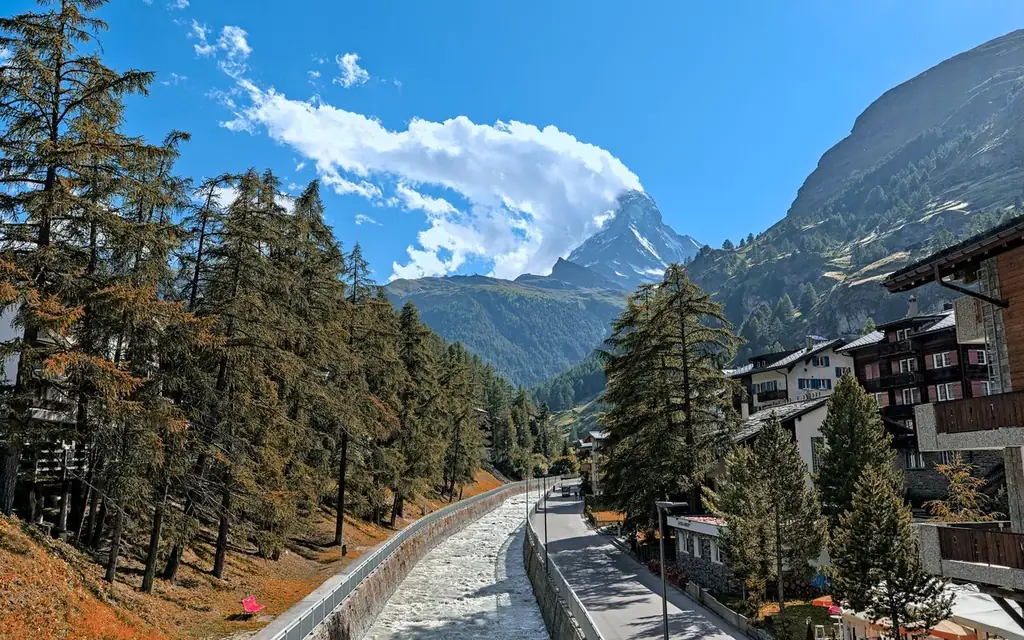
Our guide to the Jungfraujoch explains how the Eiger Express timing shapes a day, and the Matterhorn and Zermatt guide covers the longer run to the Valais side. If you want a full programme that links these places, the private tours with driver page describes how we build a day to your timings.
A chauffeured day that starts in Zurich and ends in Lucerne
This is a good first-visit pattern because it avoids backtracking.
- Morning pickup at Zurich Airport or a Zurich hotel. Leave early enough to reach Interlaken before the midday crowds.
- Drive via Lucerne and the Brünig Pass. A comfort stop at the lake near Brienz gives you the first view of the turquoise water.
- Late morning in Interlaken. Walk the Höheweg, cross the Höhematte, and decide whether the sky suits the Harder Kulm.
- Lunch with a view. The Harder Kulm restaurant is the obvious choice if you go up, or a lakeside table in town if you stay low.
- Afternoon on Lake Thun. A short drive to Thun or Spiez for a castle visit, or a boat crossing if the timetable fits.
- Evening in Lucerne. Return over the Brünig and finish at the lake, where Chapel Bridge is lit after dark.
Driving time is roughly 4 hours in total, and the day runs just as well in reverse from Lucerne. For a longer trip, add a night in the Alps and continue to St. Moritz or Zermatt the next morning.
Season, weather and winter driving
Interlaken has a mild lakeside climate compared with the high valleys behind it, but the roads out of town change quickly with altitude. Three practical points:
- Summer. Long days and heavy traffic on weekends. Start early and put the mountain trips in the morning.
- Autumn. Can bring clear weather and fewer visitors. Boat and mountain railway timetables change in late autumn, so check them before building a day around them.
- Winter. Snow and black ice are common on the roads to Lauterbrunnen and Grindelwald. The regional board warns about this directly, and ski buses run free in the villages in winter. A chauffeur with winter tyres and local experience matters more than speed on these roads.
Cloud is the main enemy of any viewpoint. If the Jungfrau is hidden at breakfast, shift the viewpoints to the afternoon and use the morning for lakes and castles, which care less about cloud.
Interlaken access compared
| Option | Journey time | Cost note | Suits |
|---|---|---|---|
| Train from Zurich Airport (changes at Bern or Lucerne) | About 2 hours to 2 hours 30 minutes | Lowest | Solo travelers with light bags |
| Train from Bern | About 50 minutes | Lowest | Visitors based in Bern |
| Taxi from Bern or Zurich | 50 minutes to 2 hours depending on origin | Metered, high over distance | One-off urgent trips |
| Rental car | Same as driving | Fuel, vignette and parking costs | Confident drivers on mountain roads |
| Private chauffeur | 50 minutes from Bern, about 1 hour 45 minutes from Zurich Airport | Fixed fare via the booker | Groups, luggage, multi-stop days |
If you are travelling alone with one bag and Interlaken is your only destination, the train is the better choice, and we say so plainly. The chauffeur makes sense when the journey has more than one stop, when the party is three or more, or when the connection through Bern or Lucerne would break up a tight schedule.
Booking the Interlaken transfer
Tell us the pickup point, passengers, bags and any mountain stops, and the booking desk confirms the vehicle. A sedan suits two or three passengers, a Luxury SUV suits a family with larger bags, and an Executive Sprinter suits a group of up to 12 to 14. Mention ski equipment and strollers at booking.
Every ride is delivered by a vetted, licensed and commercially insured local chauffeur operator from our worldwide directory, and booked, confirmed and invoiced by our 24/7 desk. See also our Europe directory and the attractions hub. Official tourist offices and tourism boards can book chauffeur services for their visitors with LimousineWorldwideDirectory.com through a trade account.
Frequently asked questions
How far is Interlaken from Zurich Airport by car?
About 135 km (84 mi) via Lucerne and the Brünig Pass, which usually takes around 1 hour 45 minutes. The route through Bern is longer, about 175 km (109 mi) and roughly 2 hours 10 minutes, but mostly on motorway.
How far is Interlaken from Bern by car?
Roughly 55 km (34 mi), which is about 50 minutes on the motorway along Lake Thun in normal conditions. Bern is the shortest road transfer into the Bernese Oberland.
Can a car drive into Lauterbrunnen and Grindelwald?
Yes. Lauterbrunnen is 20 to 30 minutes from Interlaken and Grindelwald 30 to 40 minutes, according to the regional tourism board. The villages above them, Wengen, Mürren and Gimmelwald, are car-free.
Is the Harder Kulm open all year?
The funicular runs in the main season, not all year. Dates for 2026 differ between sources, so check the operator's timetable on jungfrau.ch before you plan the day around it.
How long should I allow in Interlaken itself?
Half a day covers the Höheweg, the Höhematte and the Harder Kulm. A full day adds a boat on Lake Thun or Lake Brienz. Most travelers use Interlaken as a base for two or three nights.
Is it better to base myself in Interlaken or in a mountain village?
Interlaken is better for flexibility, restaurants and transport links. Mountain villages are quieter and closer to the viewpoints, but they are car-free, so luggage and timing need more planning.
Do you provide child seats?
Yes. Child, toddler and booster seats are available on request at booking. Please tell us the ages of the children so we can allocate the right seat and vehicle.
Can I include Interlaken in a longer Switzerland route?
Yes. Many guests combine Interlaken with Lucerne, Zermatt or St. Moritz. Describe the stops in the booker and the desk will confirm the sequence, timings and vehicle.