 United StatesJFK
 MexicoMEX
 BrazilGRU
 ArgentinaEZE
 ChileSCL
 ColombiaBOG
 PeruLIM
 PanamaPTY
 Costa RicaSJO
 Dominican RepublicPUJ
 JamaicaMBJ
 BahamasNAS
 BarbadosBGI
 United KingdomLHR
 IrelandDUB
 FranceCDG
 GermanyFRA
 NetherlandsAMS
 BelgiumBRU
 SwitzerlandZRH
 AustriaVIE
 ItalyFCO
 SpainMAD
 PortugalLIS
 GreeceATH
 TurkeyIST
 DenmarkCPH
 SwedenARN
 NorwayOSL
 FinlandHEL
 PolandWAW
 Czech RepublicPRG
 HungaryBUD
 IcelandKEF
 United Arab EmiratesDXB
 QatarDOH
 Saudi ArabiaRUH
 IsraelTLV
 EgyptCAI
 MoroccoCMN
 South AfricaJNB
 KenyaNBO
 NigeriaLOS
 IndiaDEL
 PakistanLHE
 Sri LankaCMB
 SingaporeSIN
 MalaysiaKUL
 ThailandBKK
 VietnamSGN
 PhilippinesMNL
 IndonesiaCGK
 Hong KongHKG
 ChinaPVG
 TaiwanTPE
 JapanHND
 South KoreaICN
 AustraliaSYD
 New ZealandAKL
The market is over by mid-morning
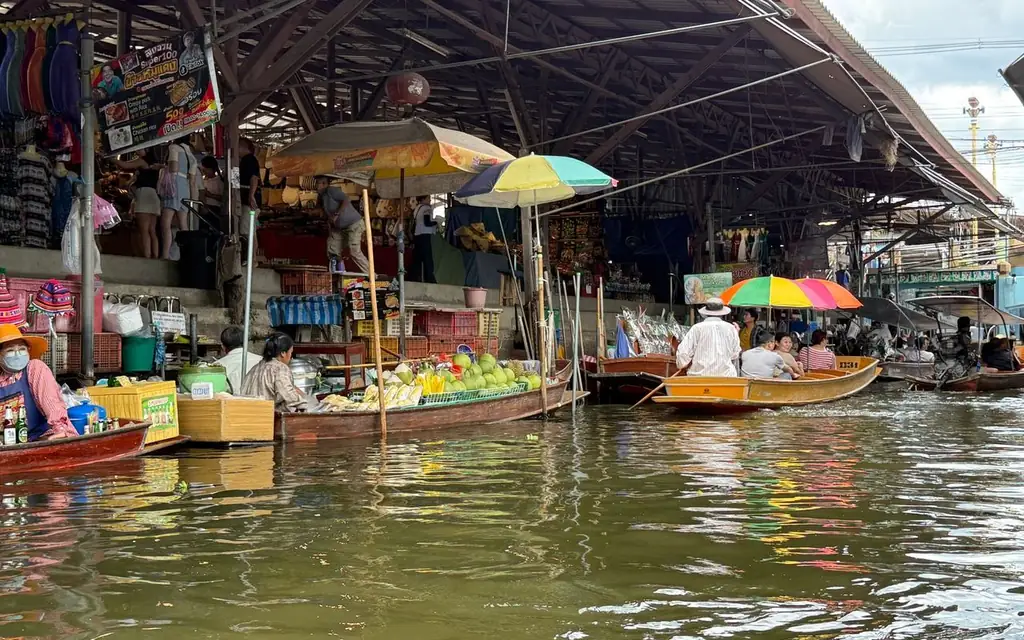
Everything about Damnoen Saduak turns on the clock. The vendors who paddle wooden boats loaded with fruit, noodles, coconut ice cream and souvenirs are working early, and by mid-morning the canal is crowded with tourist boats and the produce sellers have started to go home. Visit at nine and you see a busy waterway with a good amount of real trade. Visit at eleven and you see a crowd photographing a crowd.
That is why a Damnoen Saduak floating market private tour with driver is a sensible way to do it. A car can leave Bangkok before dawn, be at the canal when it is still cool, and be back on the road before the heat and the coaches build. The booking runs through our 24/7 desk, which assigns a vetted, licensed and commercially insured local chauffeur operator from our worldwide directory. The fare is quoted before you pay, and you deal with one desk throughout.
How do you get to Damnoen Saduak by car?
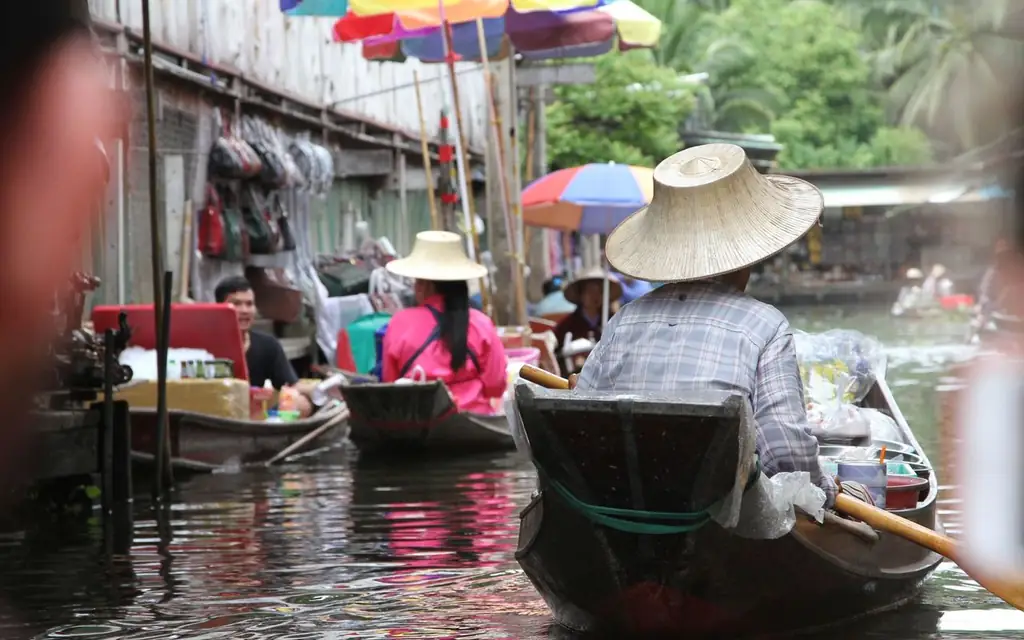
Damnoen Saduak is about 100 km (62 mi) south-west of central Bangkok, in Ratchaburi province, and roughly 1.5 to 2 hours by car. From Suvarnabhumi Airport allow about 2 to 2.5 hours. Leaving Bangkok before 6 am avoids both city traffic and the tour-coach peak at the market.
The road leaves Bangkok along the Phetkasem corridor, the long highway that runs south-west, then follows secondary roads through flat farmland, orchards and canal-side villages into Ratchaburi. Distances in published guides vary between about 80 and 110 km depending on the route and the starting point, so treat the figure as a guide, not a promise. What does not vary is the pattern: the fastest hours are early, and the slowest are Friday and Sunday afternoons.
For arrivals, see our Bangkok Suvarnabhumi chauffeur service page and the airport's own site, suvarnabhumi.airportthai.co.th, for current notices. If you arrive at Don Mueang instead, the airport's official site lists its taxi and bus options. Flight tracking is included on every airport pickup, with 60 minutes of free waiting after an international landing, but do not plan a 5:30 am departure on the morning you land. The Bangkok chauffeur service page sets out hotel pickups and hourly hire.
What you are going to see
The market takes its name from Khlong Damnoen Saduak, a canal dug in the 19th century to link two rivers and to open the area to farming and trade. Boats still carry produce along it, and the surrounding countryside is dense with coconut palms, fruit orchards and small farms. Wooden shopfronts and houses line the banks.
There are two sides to the experience:
- The trade. Women in broad hats paddle small boats, often with a cooking stove on board, to sell grilled seafood, noodles, mango and sticky rice, and sweets. You can buy from the boat or from the stalls on the bank.
- The tourist circuit. Boats carry visitors along the canals, past the busiest stretch, and the bank is lined with souvenir stalls, hats, spices, textiles and carved wood.
Honest advice: it is a tourist market now, and the tourist section is a short, crowded stretch. The calmer canals beyond it are where the older scenes remain. A good driver will know which landing to use and which boatman to trust. The official tourism authority at tourismthailand.org publishes visitor information for the region; its pages are the place to confirm anything that changes.
The boat ride, in practical terms
Nearly every visitor takes a boat, and the sensible choice is a long-tail boat or a paddled boat from a recognised landing. Settle the price, the route and the duration before you step aboard, and ask for the total, not a per-person rate you cannot compare. Keep some small notes for vendors and for tips. The boats are open, so expect sun and the occasional splash; a hat, sun cream and a light cover for your camera or phone are worth bringing.
Travel with caution on the wooden docks, which are uneven and slick. Children should wear life jackets, which operators should provide. If you do not wish to ride, the bank-side paths let you watch the traffic and buy from the stalls on foot.
Time, weather and the best day
Opening is early, in the first hours of the morning, and vendors wind down before midday. Guides give roughly 6 am to noon, but the livelier window is the first three hours. Some vendors take Mondays off, according to visitor accounts, so a weekday other than Monday is the safer choice. Weekends bring more local visitors alongside the tour groups.

Cool season from November to February is the most pleasant for the heat, though it is also the busiest time for visitors. The rainy months turn the canal a muddy brown and bring sudden showers; the boats are covered in places, but the hat and rain jacket help. In any season, bring water.
Combining the market with other stops
Because a driver can leave at dawn, the market is finished by about 9:30 or 10 am, and the rest of the day is open. Three nearby options are popular:
- Maeklong Railway Market. A market whose stalls sit directly beside, and over, an active railway line in Samut Songkhram province, about 30 km (19 mi) from Damnoen Saduak. Vendors fold their awnings back when a train arrives and reopen as it passes. Train times are set by the railway and change, so check them before you plan the visit.
- Amphawa. A canal town in the same area, known for an evening market that runs on selected days of the week, usually the weekend. It sits roughly 15 km (9 mi) from Damnoen Saduak. Check the days before you commit, because it is a different experience from the morning market.
- Coconut sugar and salt farms. The countryside around Samut Songkhram has small family businesses making coconut sugar and sea salt, which can be visited. They suit a slower pace and add context to what you see on the canal.
Neither Maeklong nor Amphawa is a trip you want to rush, and the rail market is best seen at a scheduled train time. A driver allows you to build the day around the train and the light.
Where the car stops and where it waits
The market is not a single gate. The canal has several landings and a long run of shops, and the main tourist pier is a short walk from a car park used by coaches and minivans. Your chauffeur will drop you at the landing that suits your boat plan, then park a short distance away and stay near the phone. If you arrive early, the lot is quiet; by mid-morning, vehicles queue to enter and the road is slow, which is another reason to leave at first light.
Agree two things before you step out: the exact name or landmark of the pickup spot, and a rough time. The canal paths curve and the signs are mostly in Thai, so a photograph of the car park or a dropped pin is better than a verbal description. The free waiting window on non-airport pickups is 15 minutes, and a day or hourly booking keeps the car with you for the whole morning at a fixed fare quoted in the booker.
If you plan to buy bulky souvenirs such as baskets or carved items, the car boot is a convenience that a coach tour does not offer. Tell the driver beforehand so that the luggage space is kept clear.
Buying well and leaving something behind
The market feeds a living community, and a few habits keep the money where it belongs. Buy food directly from the boat-sellers, who earn little from each sale, and pay what is asked for a bowl of noodles or a coconut instead of bargaining over a few baht. Save the haggling for souvenirs. Tip the boatman if the ride was good. Take your rubbish with you or use the bins provided, because a canal is a fragile place and plastic accumulates quickly.
Photograph people with permission. Vendors in costume are working, and a smile and a purchase are the polite price of a picture. Our chauffeurs do not photograph clients or post about trips, and the same quiet courtesy is a good rule for visitors.
Honest comparison of ways to visit
| Way to go | Time from Bangkok | Cost note | Who it suits |
|---|---|---|---|
| Group tour by coach or minivan | 1.5 to 2 hours each way, fixed departure | Lowest | Solo travellers who want a packaged trip |
| Public bus plus local transport | 2 to 3 hours with changes | Lowest | Independent travellers with time |
| Metered taxi or app ride | 1.5 to 2 hours each way | Metered or surge-priced, plus tolls | One-way journeys |
| Rental car | 1.5 to 2 hours each way | Fuel, rental and tolls | Confident drivers who know Thai roads |
| Private chauffeur | 1.5 to 2 hours each way | Fixed fare via the booker | Early starts, families, combined stops |
A group tour is the lowest-cost way to see the market and is fine if you are happy to leave when the coach leaves. Many depart at fixed times that reach the canal when it is already crowded. A private car is the better choice when you want the early window, travel with children or older relatives, or want to add Maeklong or Amphawa without negotiating separate transport. Public buses can reach the area, but the last leg from the main road requires local transport, and the market itself is a short ride from the junction.
A chauffeured morning and afternoon
- 5:00 to 5:30 am. Collect from the hotel. Take water and a light breakfast.
- 7:00 to 7:30 am. Arrive at the canal, take a boat before the coaches.
- 9:00 am. Walk the bank-side stalls and buy snacks.
- 10:00 am. Leave for Maeklong Railway Market, timing the arrival for a train.
- Midday. Lunch in the area, perhaps seafood from the Samut Songkhram side.
- Afternoon. Return to Bangkok, or continue to Amphawa if it is a market day.
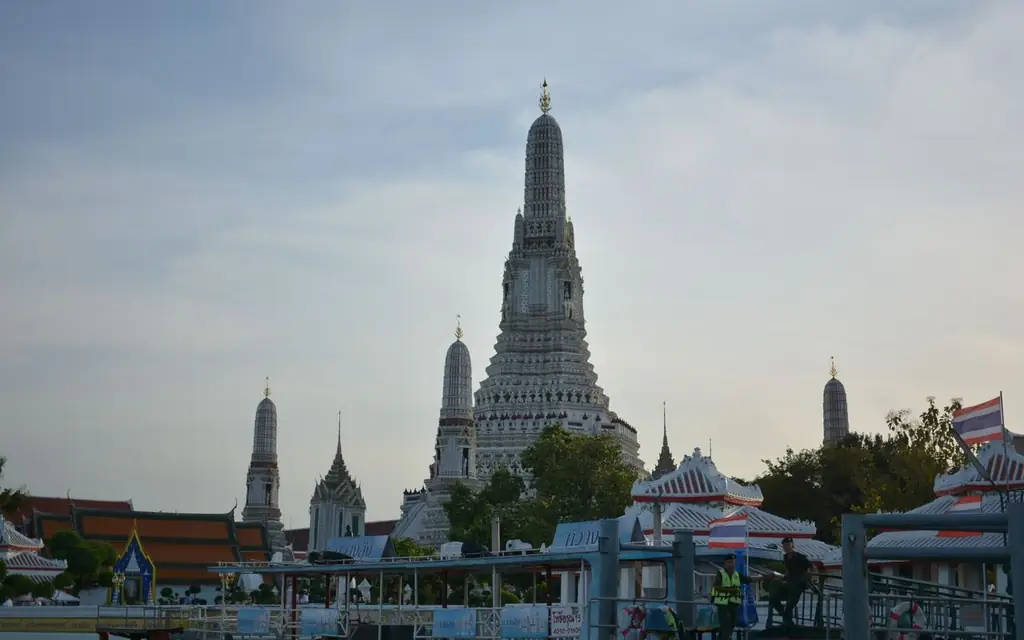
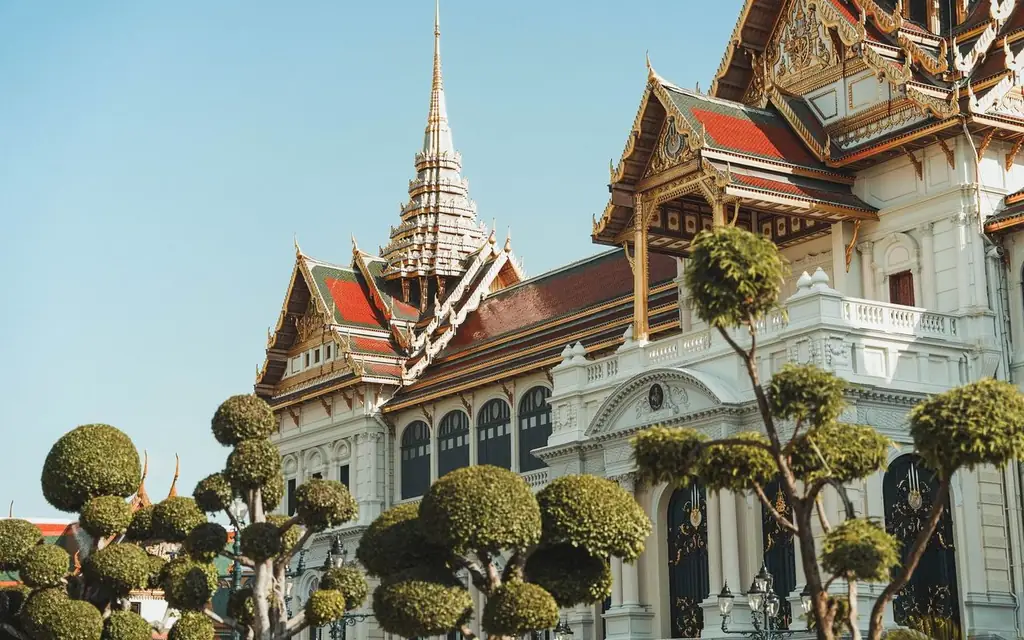
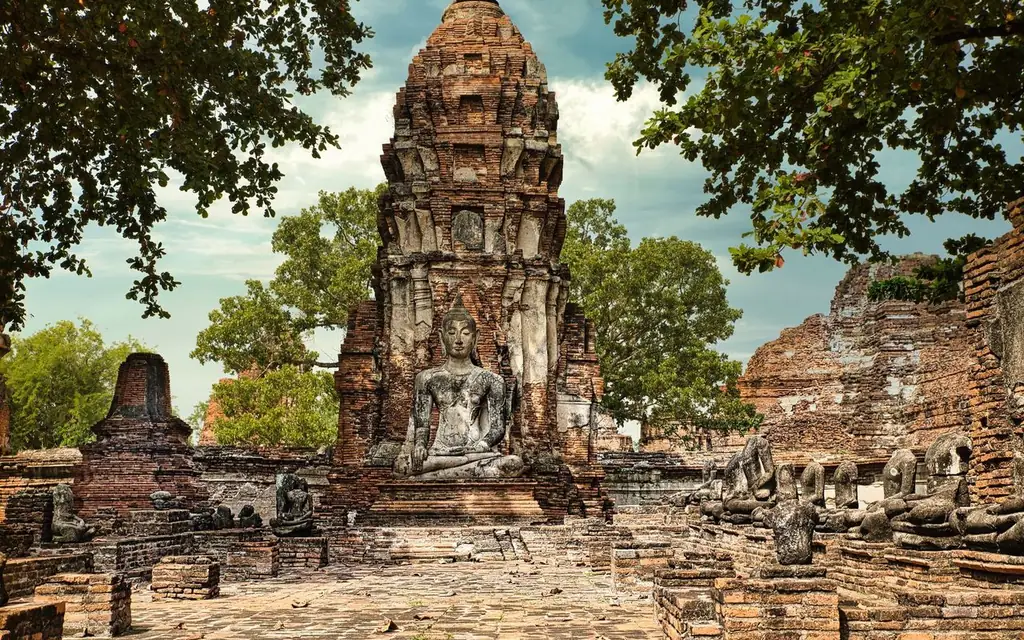
Add a second Thai day for the historic cities: the royal capital of Ayutthaya is the classic northern trip, and in Bangkok the Grand Palace and Wat Arun fit a short city day. The private tours with a driver page explains hourly and day hire, and the attractions hub and Asia-Pacific directory cover the wider region. If you are travelling on to the islands, Phang Nga Bay is the Thai coast option.
Cash, bargaining and common-sense cautions
Bring small denominations. Vendors on boats and on the bank often cannot make change for large notes, and prices for souvenirs are negotiable. Be pleasant, ask the price first and walk on if it does not suit you. Prices on the canal tend to be higher than in a regular market, which is part of what you pay for the setting.
Keep valuables secure on the boat, watch your footing on the docks and drink bottled water. Taste what appeals, but eat from vendors who are busy and cook food in front of you. If you have a sensitive stomach, avoid ice from unknown sources. Avoid feeding or handling wildlife at roadside attractions along the route, and be aware that some animal-based attractions raise welfare concerns.
Families, accessibility and practical points
The market involves uneven wooden docks and boat transfers, so it is not an easy visit for wheelchair users or visitors with limited mobility, though the bank-side paths and stalls can be reached by some. Ask the desk to plan the day accordingly. Tell the desk if you need a child, toddler or booster seat. A Luxury SUV takes up to six people and five to six large bags, which helps when the boot fills with market purchases, and a Sprinter takes 12 to 14. The cars are Mercedes-Benz E-Class, S-Class or V-Class or similar, and the desk names the model at booking. Chauffeurs do not photograph clients or post about trips.
For tourist offices, tourism boards, convention and visitor bureaus and visitor centres, a trade account with LimousineWorldwideDirectory.com covers chauffeur bookings for their visitors.
Frequently asked questions
How far is Damnoen Saduak from Bangkok?
About 100 km (62 mi) south-west of central Bangkok, usually 1.5 to 2 hours by car. Some guides give 80 to 110 km depending on the route.
What is the best time to visit Damnoen Saduak?
Early morning, roughly from the first hours after dawn until about 9 or 10 am, before the coaches and the heat. Avoid Mondays when some vendors rest.
Is Damnoen Saduak worth visiting?
It is a busy tourist market with real canal trade in the early hours. Go early, take a boat from a recognised landing and keep expectations realistic. Amphawa offers a different, more local experience.
Can I combine the market with Maeklong Railway Market?
Yes. It lies about 30 km (19 mi) away, and a driver can time your arrival for a train. Check the railway timetable first.
How much should I pay for the boat?
Agree the price, route and duration before you board, and ask for the total. Prices vary, so settle it first rather than afterwards.
Is a private driver worth it for the floating market?
Yes if you want an early start, travel with family or want to combine stops. A group tour is the lowest-cost option if you are happy with a fixed schedule.
What should I bring?
Small notes, a hat, sun cream, water, a light rain cover and comfortable shoes with grip for the docks.
Can I do Damnoen Saduak as a day trip from Bangkok?
Yes. With a pre-dawn start you can be back in the city by early afternoon, or continue to Amphawa for an evening on a market day.