 United StatesJFK
 MexicoMEX
 BrazilGRU
 ArgentinaEZE
 ChileSCL
 ColombiaBOG
 PeruLIM
 PanamaPTY
 Costa RicaSJO
 Dominican RepublicPUJ
 JamaicaMBJ
 BahamasNAS
 BarbadosBGI
 United KingdomLHR
 IrelandDUB
 FranceCDG
 GermanyFRA
 NetherlandsAMS
 BelgiumBRU
 SwitzerlandZRH
 AustriaVIE
 ItalyFCO
 SpainMAD
 PortugalLIS
 GreeceATH
 TurkeyIST
 DenmarkCPH
 SwedenARN
 NorwayOSL
 FinlandHEL
 PolandWAW
 Czech RepublicPRG
 HungaryBUD
 IcelandKEF
 United Arab EmiratesDXB
 QatarDOH
 Saudi ArabiaRUH
 IsraelTLV
 EgyptCAI
 MoroccoCMN
 South AfricaJNB
 KenyaNBO
 NigeriaLOS
 IndiaDEL
 PakistanLHE
 Sri LankaCMB
 SingaporeSIN
 MalaysiaKUL
 ThailandBKK
 VietnamSGN
 PhilippinesMNL
 IndonesiaCGK
 Hong KongHKG
 ChinaPVG
 TaiwanTPE
 JapanHND
 South KoreaICN
 AustraliaSYD
 New ZealandAKL
The difficulty with a wine tour is arithmetic. A day in Rioja might include three cellar visits, a long lunch and a drive between villages, and most of the people on that day want to taste at every stop. The person at the wheel cannot. That single fact is why a Rioja wine region private tour with a driver is the standard way for groups to see it, and why this guide starts with the roads and the schedule instead of with the wine.
Spanish law sets a limit of 0.5 g/l of alcohol in the blood, which is 0.25 mg/l in exhaled air, and a lower limit applies to professional and novice drivers. Several tastings add up quickly, and the roads between villages are narrow enough that nobody should try.
Is a private driver the right way to tour La Rioja?
Yes, for anyone who plans to taste. A chauffeur connects Bilbao, Vitoria or Logroño with the cellars, waits while you tour, and returns you to your hotel. The alternative is a designated driver from your own group, who spends the day watching the others.
The alternative to a driver is to base yourself in one village and walk between cellars. Haro's station district allows exactly that, and for a first visit it is a sound option. For everything else, such as Rioja Alavesa's villages, which are 30 minutes apart, the car is what makes the schedule possible.
What La Rioja is, in a paragraph
Rioja is a wine appellation of more than 66,000 hectares of vineyards and villages spread over roughly 100 kilometers of the Ebro valley, according to the regulating body, and it is divided into three production areas: Rioja Alta in the west, Rioja Alavesa on the north bank of the river, and Rioja Oriental to the east. The council's site states that nearly 600 wineries offer visitor experiences, from tastings to walks among the vines, and a May 2026 news item records more than a million wine-tourism visits. The council's visitor site has a route builder and a list of wineries by experience.
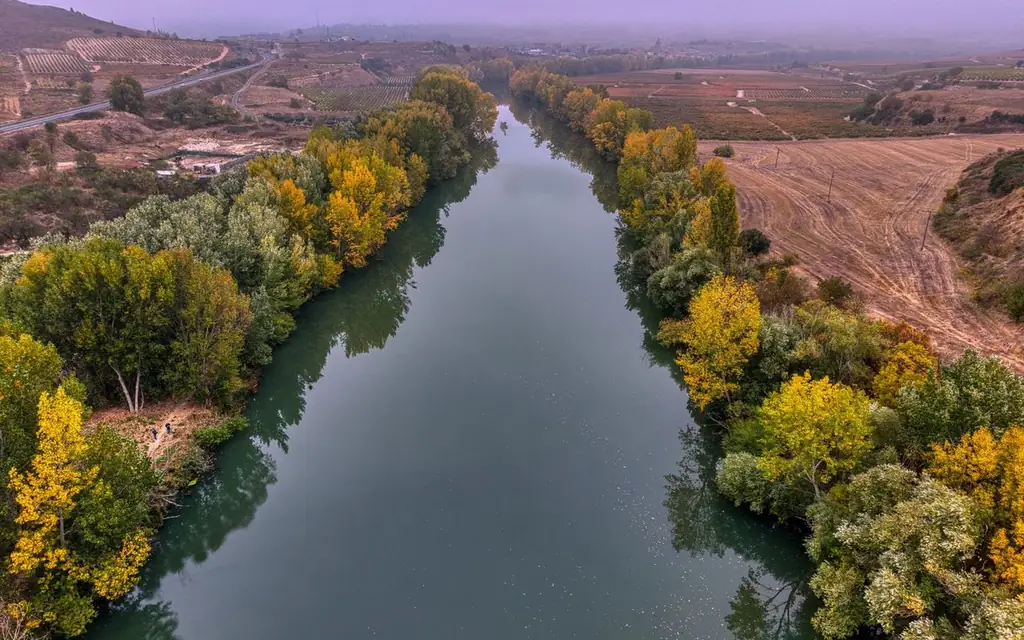
You do not have to understand the classification to enjoy a visit, but you will see the labels Crianza, Reserva and Gran Reserva on bottles; they signal how long a wine was aged, and the council's site explains the classification.
Distances and drive times to the Rioja villages
Approximate road distances.
- Bilbao to Haro: about 110 km (68 miles), roughly 1 hour 15 minutes.
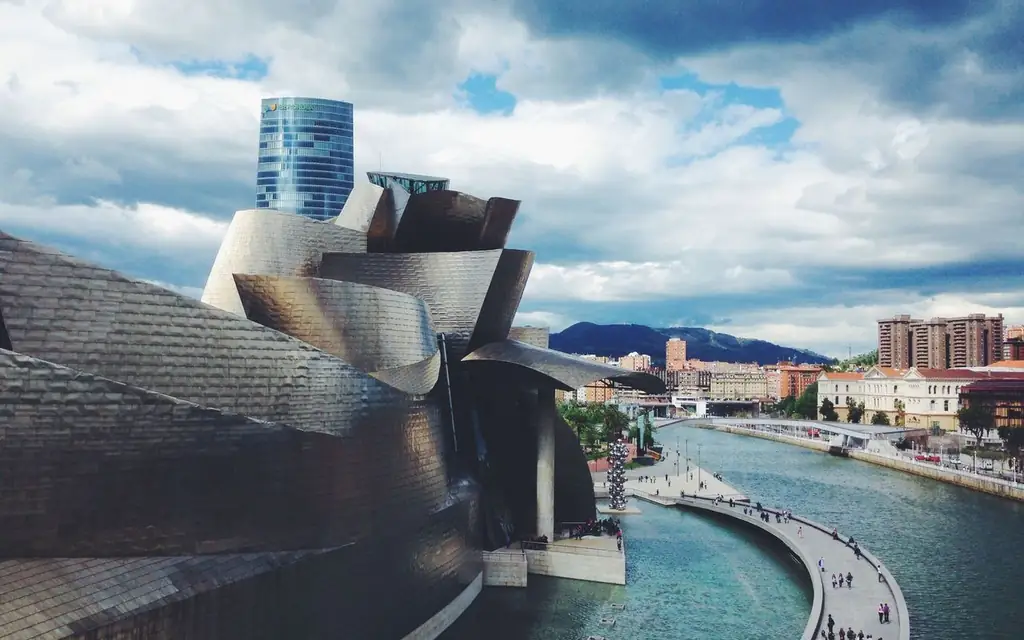
- Bilbao airport to Laguardia: about 105 km (65 miles), roughly 1 hour 15 minutes. The Guggenheim Museum Bilbao is a natural morning on the same trip.
- Vitoria-Gasteiz to Laguardia: about 45 km (28 miles), roughly 40 minutes.
- Logroño to Haro: about 50 km (31 miles), roughly 40 minutes.
- Logroño to Laguardia: about 20 km (12 miles), roughly 25 minutes.
- Haro to Laguardia: about 30 km (19 miles), roughly 35 minutes.
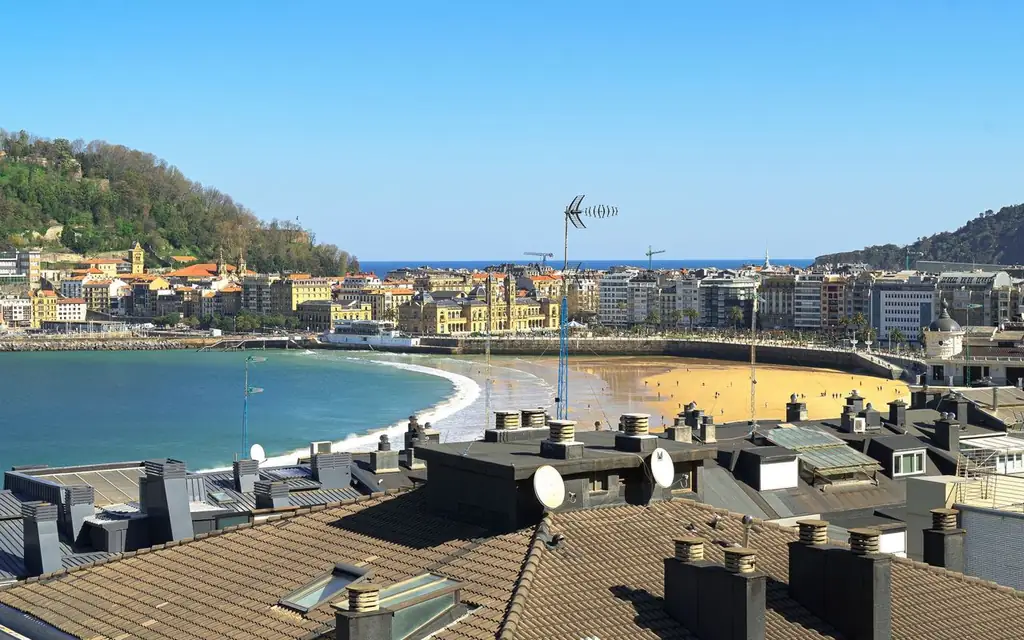
- San Sebastián to Haro: about 190 km (118 miles), roughly 2 hours. See the San Sebastián guide.
- Madrid to Logroño: about 330 km (205 miles), roughly 3 hours 30 minutes. Guests landing at Madrid-Barajas can pick up the Madrid chauffeur service for this leg or choose to fly to Bilbao.
For other cities where chauffeurs are placed, see the Europe directory.
The three subzones and what each is for
Rioja Alavesa sits on the north bank and belongs administratively to the Basque Country. Its villages, including Laguardia and Elciego, are the usual destination from Bilbao and Vitoria. It is the area for architecture-led visits: the Marqués de Riscal winery in Elciego, whose official site links to winery visits and the adjoining luxury hotel, and a number of modern cellars designed by well-known architects. Distances between the villages are short.
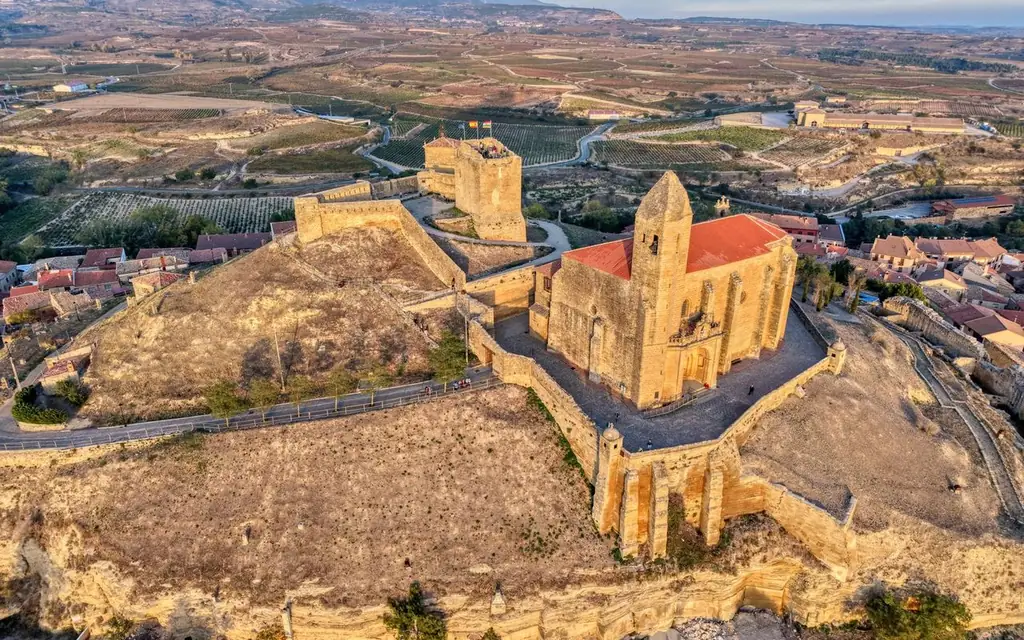
Rioja Alta is centered on Haro, a town with a historic wine-making district around its railway station, and extends to villages such as Briones and San Vicente de la Sonsierra. It suits those who want traditional houses with long histories, and a second-day walk through Haro itself.
Rioja Oriental lies to the east around Alfaro and Calahorra, and is less visited. It is more relevant to travelers continuing toward Navarre or Aragón than to a first Rioja day.
For most visitors a day divides naturally between Alavesa and Alta; planning more than two cellars in one day is a mistake because each visit typically runs 60 to 90 minutes.
Haro's station district: the walkable option
Haro's Barrio de la Estación is where several of the historic cellars cluster. The district grew up around the railway, and house names that come up in guides include CVNE, La Rioja Alta, Bodegas Bilbaínas, Gómez Cruzado, Muga and Roda. It is one of the few places in Rioja where you can move between several cellars on foot in an afternoon.

That affects how you use a car. A chauffeur takes you to the district, parks outside the center, and collects you at a set time; you spend the afternoon walking. Reserve visits in advance, because many houses take visits by appointment and some tasting events sell out well before the date. The district's wineries run a joint booking service, and each cellar also takes bookings on its own website, according to local listings; check the current offer before you go.
Haro is also the site of the Batalla del Vino, usually on 29 June, held at the Riscos de Bilibio about 6 km outside town. Participants dress in white and carry wine to spray, and the event is free to watch. The 2026 edition has passed; the next is expected on 29 June 2027. The town is crowded for the whole San Pedro week, so book hotels and transfers early if your dates coincide.
Booking cellar visits, tastings and lunch
The practical rules:
- Book ahead. Tours and tastings at most bodegas are by reservation, and the popular ones fill in September and October, the harvest season.
- Limit the schedule. Two cellar visits and a long lunch is a full day. Three is possible if one is a short tasting.
- Lunch is part of the plan. Many wineries include a table or recommend a restaurant in the village. Plan lunch for the middle of the afternoon rather than at noon.
- Confirm languages. If the group needs English, French or another language, request it when you book.
- Give the driver your list. The chauffeur works from the order of visits and the reservation times; any change goes through the desk.
The winery visit rules are set by each cellar. Marqués de Riscal's page, for example, directs visitors to a ticket reservation and names the address at Calle Torrea in Elciego. Always check the cellar's own page for hours and languages.
Best season and best day
Autumn is the most atmospheric: vineyards turn red and gold around the harvest, and cellars are busy. Logroño's wine harvest festival is usually held in the second half of September. Spring is green and quieter. Summer is hot, so book morning visits. Winter is the quietest season, and a visit to Haro or Laguardia in the cold is an atmospheric alternative.
Weekdays are quieter than weekends in all seasons. If your itinerary allows only a weekend, book the earliest slots.
A day in La Rioja with a chauffeur
This itinerary starts in Bilbao and suits four to six guests.

- 8:30 depart Bilbao with a coffee stop. About 1 hour 15 minutes to Laguardia.
- 10:00 first cellar visit in Rioja Alavesa, about 90 minutes including a tasting.
- 12:00 walk in Laguardia or Elciego.
- 13:30 to 15:30 lunch in the village.
- 16:00 drive to Haro (30 km, 19 miles, 35 minutes).
- 16:45 second visit in the station district, followed by a stroll.
- 18:30 depart for Bilbao, arriving by 20:00, or for Logroño if you are staying there.
Variations: add the heritage monasteries of San Millán de la Cogolla for a cultural day, or finish at San Sebastián if it is your next base, though the late return is long. Our private tours with driver page explains how day plans are set up.
Choosing a base: Haro, Laguardia or Logroño
Where you sleep decides how much driving the day needs. The regional tourism body, La Rioja Turismo, lists wineries, wine-focused accommodation and tasting courses, and is the place to start when comparing bases.
- Haro is the best base for a first-time visitor interested in traditional houses: the station district is a short walk from the center, evenings are easy on foot, and the Rioja Alta villages are close by.
- Laguardia is a walled hill town in Rioja Alavesa with cellars cut beneath its streets. It suits couples and small groups who want an unhurried stay, and it is the closest base to Bilbao and Vitoria. Narrow lanes inside the walls mean the car stops at the edge and luggage is carried a short distance.
- Logroño is the regional capital, with the widest choice of restaurants and a famous tapas street, the Calle del Laurel. It is the practical base for groups with different interests, and it is the nearest of the three to the eastern villages.
Staying one night or two changes the plan more than any other choice. A day trip from Bilbao is feasible but the day is long, and a night in the vineyards removes the return drive after tastings.
What to expect at a tasting, and a few courtesies
A cellar visit usually follows a rhythm: a walk through the vineyard or the aging halls, an explanation of the barrels and the bottling, and a tasting of two to four wines. Some cellars add food pairings or a table lunch. Wear comfortable shoes with a firm sole, because cellar floors are damp and vineyard paths are uneven, and take a light layer, since underground cellars stay cool whatever the weather outside.
It is courteous to arrive on time, as visits run to a schedule, and to tell the cellar in advance if someone in the group does not drink. Spitting is normal at professional tastings and no one will comment. If you plan to buy cases, ask the winery about shipping before you decide to carry them, and tell the desk if the vehicle needs to hold extra boxes.
Beyond wine: monasteries, museums and villages
Wine is the reason to come, but a full day often needs a pause from tasting. Briones, in Rioja Alta, is a hill village with a museum devoted to wine culture. The monasteries of San Millán de la Cogolla, in the hills south of Haro, are a cultural alternative with an older history, and are a useful half-day for anyone who wants a break from cellars. Laguardia's walled lanes are pleasant on foot, and Elciego's skyline is unmistakable for its titanium-roofed hotel. In each case, check opening times on the official sites before you go, since small museums keep limited hours.
Ways to reach La Rioja compared
| Option | Time from Bilbao | Cost note | Who it suits |
|---|---|---|---|
| Bus plus walking | Slower, with changes | Lowest | Single travelers basing in Haro or Logroño |
| Rental car | About 1 h 15 min | Rental plus a designated driver | Groups with a driver who will not taste |
| Taxi | About 1 h 15 min each way | Metered, high for the distance | One-way hops |
| Organized wine tour | Full day from Bilbao or Logroño | Per seat | Solo visitors who want a set program |
| Private chauffeur | About 1 h 15 min | Fixed fare via the booker | Groups who taste, flexible stops, luggage |
For one person who wants a single tasting, basing in Haro and walking the station district is the lowest-cost route. For any group that wants to taste at more than one cellar, the chauffeur solves the driver problem.
Vehicles, purchases and the booking itself
A tasting day ends with boxes, so think about the trunk. Two or three guests can use an E-Class or S-Class; a group of four to six with purchases is better in a V-Class or a Luxury SUV, and a larger party takes a Sprinter. The exact model is confirmed at booking, and the fleet page describes the classes.
Alcohol is never supplied in the vehicle and local law applies; what the chauffeur provides is the freedom to taste at the cellar. Tourism boards and visitor bureaus may book on behalf of their visitors through a trade account, and the attractions hub lists the other guides.
Frequently asked questions
How far is La Rioja from Bilbao?
About 105 to 110 km (65 to 68 miles) to Laguardia or Haro, roughly 1 hour 15 minutes by road.
Do I need to book winery visits in advance?
Yes, for most. Tours and tastings are usually by reservation, and popular cellars fill during harvest.
Which is better, Rioja Alavesa or Rioja Alta?
Rioja Alavesa is closer to Bilbao and Vitoria, with architecturally striking cellars. Rioja Alta has Haro and the station district, which is walkable. Many days combine both.
Can I drink if I hire a driver?
Yes. The chauffeur drives, so everyone can taste. Alcohol is never supplied in the vehicle, and local law applies.
How many wineries can I visit in a day?
Two visits and a long lunch is a full day. Three is possible if one is a short tasting.
When is the grape harvest?
Usually in September and October. Check with wineries for dates in the year you travel.
What is the Batalla del Vino?
A June festival at Haro, usually 29 June, held at the Riscos de Bilibio, where participants in white spray each other with wine. It is free to watch and the next is expected on 29 June 2027.
Can I combine Rioja with San Sebastián or Bilbao?
Yes. Bilbao is about 105 to 110 km (65 to 68 miles) away and San Sebastián about 190 km (118 miles). A pairing with Bilbao works best as a day trip; with San Sebastián it is better to stay overnight.