
 United StatesJFK
 MexicoMEX
 BrazilGRU
 ArgentinaEZE
 ChileSCL
 ColombiaBOG
 PeruLIM
 PanamaPTY
 Costa RicaSJO
 Dominican RepublicPUJ
 JamaicaMBJ
 BahamasNAS
 BarbadosBGI
 United KingdomLHR
 IrelandDUB
 FranceCDG
 GermanyFRA
 NetherlandsAMS
 BelgiumBRU
 SwitzerlandZRH
 AustriaVIE
 ItalyFCO
 SpainMAD
 PortugalLIS
 GreeceATH
 TurkeyIST
 DenmarkCPH
 SwedenARN
 NorwayOSL
 FinlandHEL
 PolandWAW
 Czech RepublicPRG
 HungaryBUD
 IcelandKEF
 United Arab EmiratesDXB
 QatarDOH
 Saudi ArabiaRUH
 IsraelTLV
 EgyptCAI
 MoroccoCMN
 South AfricaJNB
 KenyaNBO
 NigeriaLOS
 IndiaDEL
 PakistanLHE
 Sri LankaCMB
 SingaporeSIN
 MalaysiaKUL
 ThailandBKK
 VietnamSGN
 PhilippinesMNL
 IndonesiaCGK
 Hong KongHKG
 ChinaPVG
 TaiwanTPE
 JapanHND
 South KoreaICN
 AustraliaSYD
 New ZealandAKL
On a wet morning, the Pantheon does something no photograph prepares you for. Rain falls through the open eye in the center of the dome, lands on the marble floor and runs away through drains hidden in the paving. Rome's tourism office counts 22 drainage holes beneath the floor for exactly that purpose. A Pantheon private tour with driver will not stop the rain, but it can put you at the door at nine, before the groups, with a dry route to the car afterwards.
The building is also a lesson in why the center of Rome is difficult by car. It stands on Piazza della Rotonda, a pedestrian square in the historic core, and the lanes around it are inside the city's limited-traffic regime. What follows is a practical guide: the real distances, the set-down logic, the official opening hours and ticketing, a short route that links the Pantheon to nearby landmarks, and an honest table of the alternatives.
What is the Pantheon, and what holds the dome up?
The Pantheon is a Roman temple turned church, standing in Piazza della Rotonda in central Rome. Hadrian rebuilt it between AD 118 and 125. Its concrete dome, just over 43 meters wide and equally high, is lit by a single round opening. It has been the church of Santa Maria ad Martyres since 609.
The figures come from Rome's official tourism site, Turismo Roma. Agrippa, an associate of Augustus, commissioned the first temple in 27 BC. Hadrian reversed its orientation and added a large portico-fronted square. The dome is hemispherical and coffered, with five rings of 28 coffers, and eight large pylons carry its weight. The opening at the top is 8.92 meters across and is the interior's only natural light.
In 609 the Byzantine emperor Phocas gave the building to Pope Boniface IV, who consecrated it as Santa Maria ad Martyres. That continuity is the reason it survived when so much of ancient Rome did not. It is also why a visit is not only a sightseeing stop: the building is still a church.
How much time does the Pantheon really need?
Less than you expect, which is why it is the ideal tent-peg for a day of driving. A typical visit runs 30 to 45 minutes once you are inside: walk the circuit, stand under the opening, look at the tombs, and leave. Add 15 minutes if you want the audio guide and more if you are traveling with a licensed guide. The surrounding lanes are worth another hour for lunch, a coffee and the short walk to Piazza Navona, which is about 300 m away.
For a first visit, plan the Pantheon as a half-hour inside and a longer circuit outside. A chauffeur does not wait while you eat; on a half-day or full-day booking, you agree a pickup time and the driver positions the car accordingly.
How do tickets and opening hours work?
The official site, pantheonroma.com, lists the church as open every day from 9:00 to 19:00, with last entry at 18:30. Turismo Roma adds that the ticket office closes at 18:00 and that hours may change during religious services. Entry has required a ticket since 2023, and tickets are sold online through the Italian state museums portal; the same page also lists a free entry on the first Sunday of the month. Prices change, so read the current figure on the official page rather than trust a guide book.
A few practical points:
- First Sunday of the month: Free entry means longer queues. If you are visiting with a driver and a tight schedule, choose another day.
- Services: The Pantheon is an active church, and access may be restricted during liturgy. Ask the desk to check the day's schedule if you have a firm slot.
- Booking ahead: On busy weekends and holidays, buy the ticket online before you leave the hotel; your driver cannot buy it for you at the door.
Can a car reach Piazza della Rotonda?
No. The square is pedestrian, and the streets around it fall inside the historic-center regime enforced by cameras. Roma Mobilità publishes the city's limited-traffic zone and permit information, and the rules vary by zone and change with events.
A licensed chauffeur normally uses one of three patterns:
- Set-down at the edge of the core, on a major street such as Via del Corso or Corso del Rinascimento, followed by a walk of a few minutes through lanes.
- Hotel-permit access, when your hotel inside the zone can register the vehicle for an arrival. Tell the desk the exact hotel when you book.
- A meeting point at Largo di Torre Argentina, roughly 400 m from the Pantheon, a wide open junction where a driver can wait briefly.
Which one applies depends on the day. The driver decides on the road, and the 24/7 desk stays on call if a closure changes the plan.
What are the distances from the airport, stations and nearby sights?
All figures are approximate and assume normal traffic:

- Rome Fiumicino (FCO) to the Pantheon: about 33 km (20 mi), 40 to 60 minutes. The Fiumicino airport page explains arrivals and meet-and-greet.
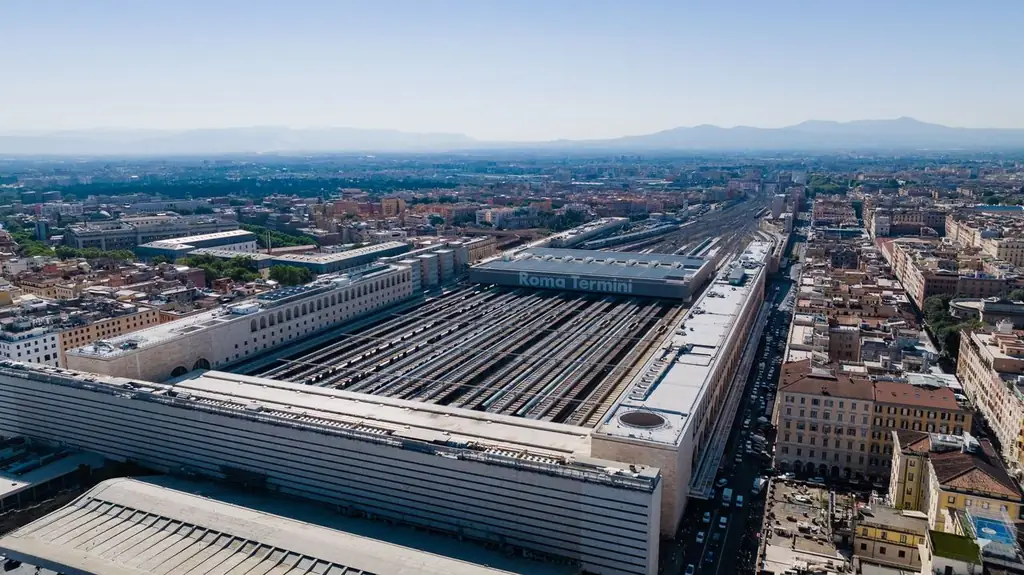
- Roma Termini to the Pantheon: about 3 km (1.9 mi), 15 to 25 minutes. See the Termini station page.
- Civitavecchia cruise terminal to the Pantheon: about 85 km (53 mi), 1 hour 10 minutes to 1 hour 30 minutes. The Civitavecchia guide lists the berths.
- Pantheon to the Trevi Fountain: about 700 m (0.4 mi), a ten-minute walk.
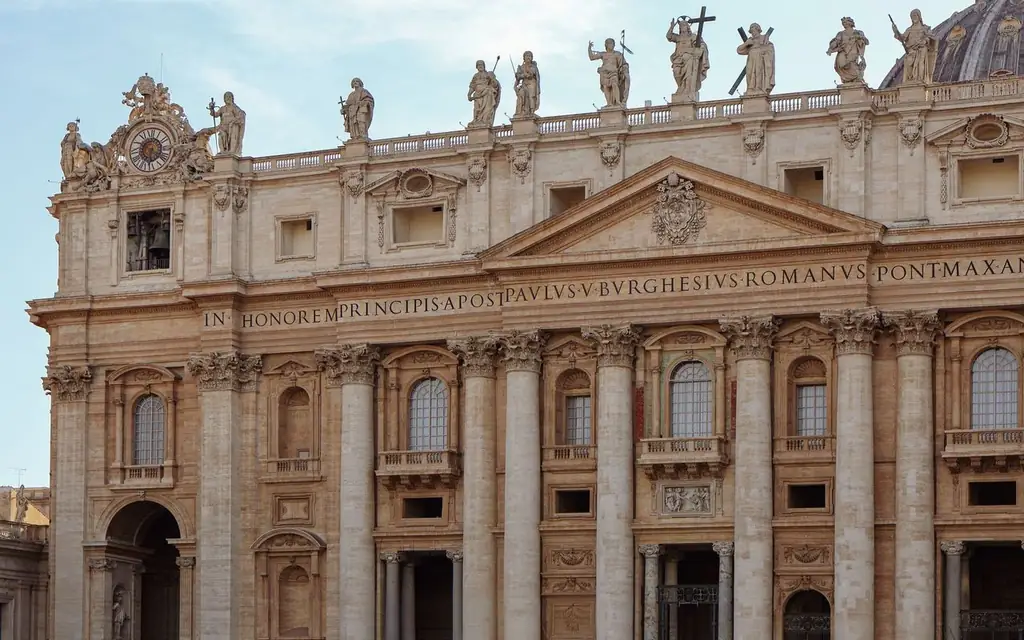
- Pantheon to St Peter's Square: about 2 km (1.2 mi), 10 to 20 minutes by car.
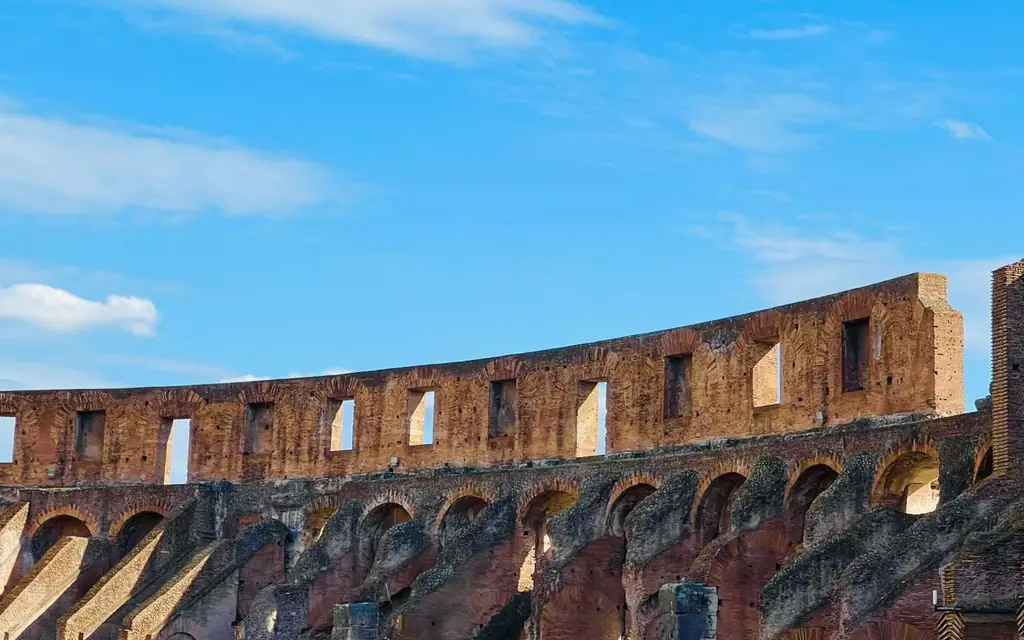
- Pantheon to the Colosseum: about 2 km (1.2 mi), 10 to 20 minutes by car.
The Rome chauffeur service page describes how the desk handles city bookings from airport to hotel.
What should you look for before you step inside?
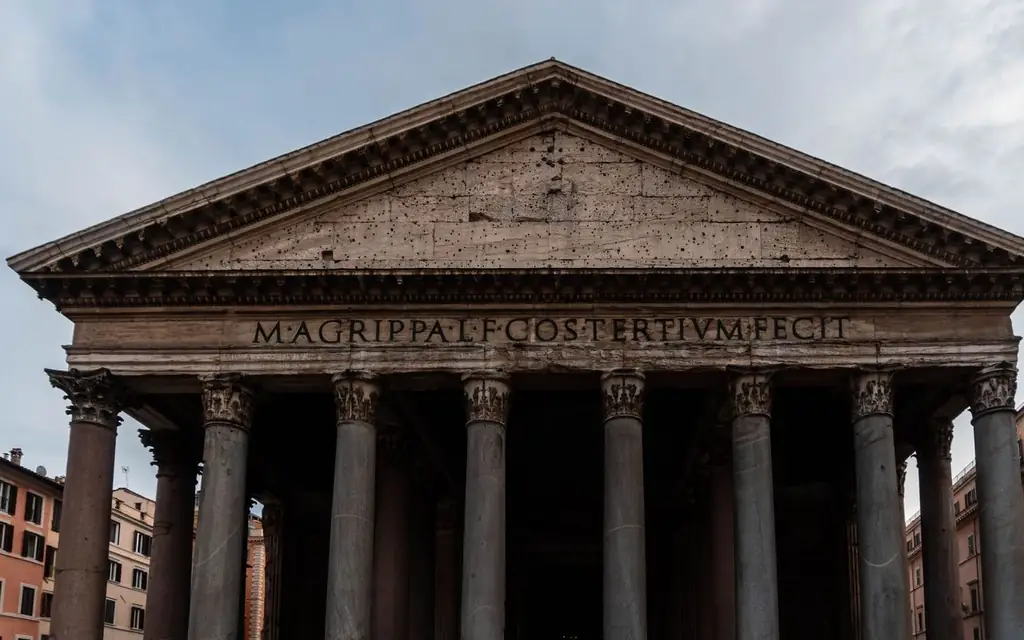
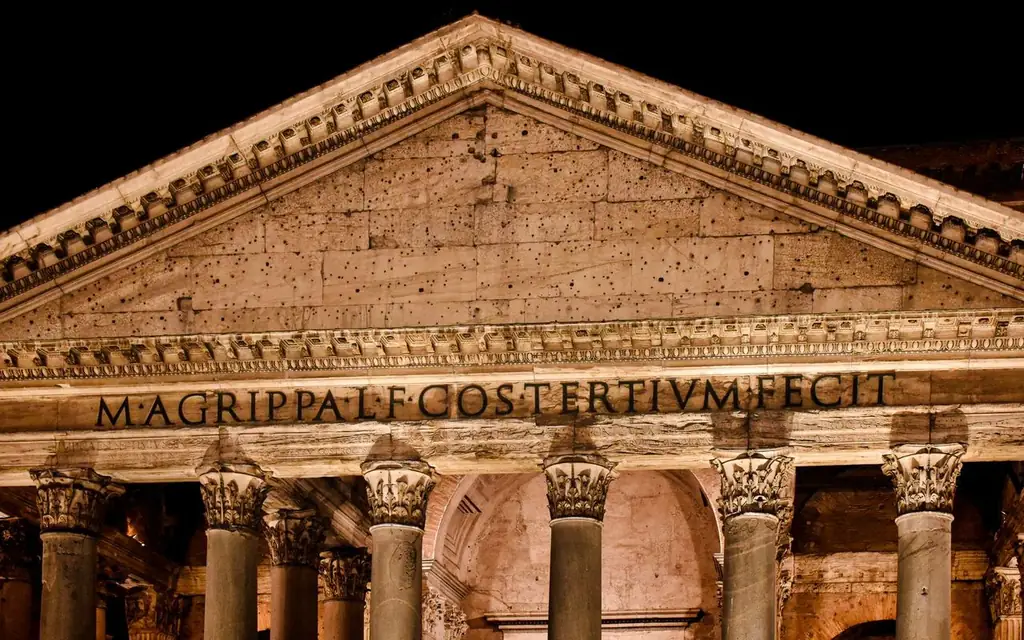
The portico is where the building's later history shows. Rome's tourism site records that in 1625, under Pope Urban VIII Barberini, the portico's bronze coverings were removed to make the canopy at St Peter's and cannons for Castel Sant'Angelo. Two bell towers added at that time were nicknamed the "donkey's ears" and were taken down after Italian unification. When you stand in the square and look up at the pediment, you are looking at a building that has been edited many times and still reads as one idea.
Inside, give your eyes a minute to adjust. The coffering steps the eye upward in rings, the floor pattern keeps the circle readable, and the single opening lights a moving patch on the walls. Look for the Byzantine icon of the Virgin and Child, which Phocas gave in 609. Then stand still. Most people spend ten minutes photographing and one minute looking; the proportions of the room, with the height of the dome equal to its width, are the point.
When is the best time to visit?
The calendar helps more than any clever trick. The doors open at 9:00, and the first hour is when guided groups are still gathering outside. Late afternoon is the second-best window, as long as you are inside before the 18:30 last entry; the ticket office closes at 18:00. Midday is crowded all year, and the first Sunday of the month, when entry is free, is the hardest day to enjoy.
Season matters too. July and August bring heat and long queues in the piazza, so a morning start with the driver waiting at an agreed corner is kinder on everyone. In November, February and early March the piazza is much quieter, and rainy days are the most atmospheric of all. Around the summer solstice, the official description notes that the disk of light on the floor matches the size of the opening, which is a good excuse to plan a midday visit on a clear day in June.
Who is buried inside, and how should visitors behave?
The Pantheon holds the tombs of Vittorio Emanuele II, Umberto I and Queen Margherita of Savoy, as well as the grave of the painter Raphael. Since 1870 the building has served as a memorial chapel for the kings of Italy, and it remains a place of worship.

Treat it as one. Dress modestly, keep voices low and avoid blocking the aisle to photograph. Sunlight through the opening projects a disk of light across the interior, and at the summer solstice the official description notes that the disk matches the size of the opening. The church also marks the end of the Corpus Christi celebration around Pentecost by dropping rose petals through the oculus, so special dates are worth checking when you plan a trip.
Three hours with a driver: a compact Rome loop
A practical plan for a morning, using the Pantheon as the anchor:
- 9:00: Pickup from the hotel and a transfer to the edge of the historic center. Walk to the Pantheon for opening time.
- 9:45: A short walk to Piazza Navona, then back to the car at the meeting point.
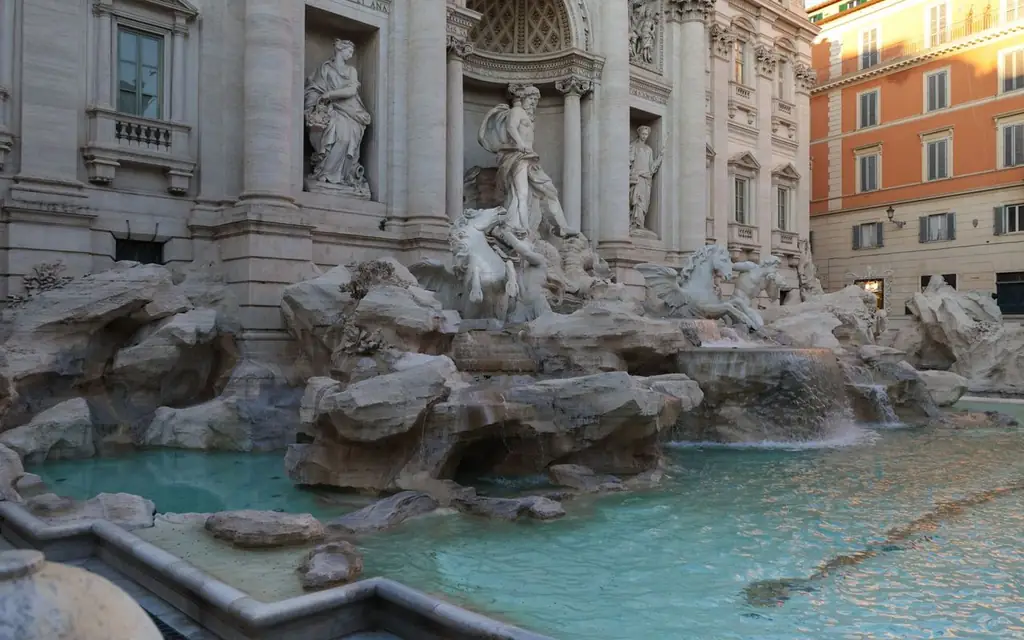
- 10:30: Drive to the Trevi Fountain, where the paid-access basin and the rules are explained in that guide.
- 11:30: A transfer to the Vatican district, where the basilica's screening queue is the main variable.
- Afternoon: The Colosseum, with a licensed guide if you want the story told properly.
The same loop works in reverse for visitors who prefer the Vatican early, and if you only want the Pantheon and a lunch nearby, the first two steps alone make a relaxed half-morning. For a full-day arrangement with a driver, the page on private tours with driver explains the booking.
What is worth adding on foot around the Pantheon?
The Pantheon is the middle of a small walkable cluster, and the cluster is the reason many drivers prefer a single set-down point. Piazza Navona lies about 300 m (0.2 mi) to the west, an oval square that follows the outline of a Roman stadium. Largo di Torre Argentina, with its sunken temple remains, is roughly 400 m (0.25 mi) to the south. The Trevi Fountain is about 700 m (0.4 mi) to the east. All three can be linked in an hour of unhurried walking, with the car waiting at the end of the loop rather than at the start of every leg.
If rain forces a change of plan, the church itself is the driest place to spend half an hour. Tell the desk if you want a pickup time that leaves slack for a coffee, a gelato or a sudden shower.
Which way to reach the Pantheon is best?
| Option | Time from Termini | Cost note | Who it suits |
|---|---|---|---|
| Walk | About 40 minutes | Lowest | Fit travelers with time and no luggage |
| Bus | 20 to 35 minutes plus a short walk | Lowest | Budget travelers with day bags |
| Metered taxi | 15 to 25 minutes | Metered | Couples and short hops, set-down at the nearest legal point |
| Rideshare | 15 to 25 minutes | Surge-priced at peak times | Travelers already using the app |
| Rental car | Not recommended | Parking outside the zone | Almost nobody: limited-traffic zones and fines |
| Private chauffeur | 15 to 25 minutes from Termini; 40 to 60 from Fiumicino | Fixed fare via the booker | Airport arrivals, luggage, mixed-mobility groups, tight schedules |
If you are staying within a ten-minute walk, walk. A car is the better choice for the airport leg, for rainy days and for itineraries that jump between districts.
What about accessibility and families?
The Turismo Roma page points to the city's accessibility section for details on the building, and the floor of the interior is generally level, although the portico and surrounding cobblestones are uneven. Tell the desk if you use a wheelchair or walker, because the choice of set-down changes the length of the approach.
Families can request infant, toddler or booster seats with the booking. Travel agents, hotel concierges and visitor bureaus book through trade accounts, and the European directory shows where else we cover. The attractions hub lists the other guides in this series.
Frequently asked questions
What are the Pantheon's opening hours?
The official site lists daily opening from 9:00 to 19:00, with last entry at 18:30. The ticket office closes at 18:00, and religious services can change access.
Do I need a ticket for the Pantheon?
Yes. Entry has required a ticket since 2023, sold online through the Italian state museums portal. Free entry applies on the first Sunday of the month, according to the official site. Check the current price before you go.
Can a car stop at the Pantheon?
Not at the door. Piazza della Rotonda is pedestrian and the streets around it fall inside Rome's limited-traffic regime. A chauffeur sets you down at the nearest practical point and you walk a few minutes.
How far is the Pantheon from Rome Fiumicino Airport?
About 33 km (20 mi). A private car usually takes 40 to 60 minutes. The pickup follows your flight, not the original schedule.
How long should I spend inside the Pantheon?
Plan 30 to 45 minutes inside. Add time for the audio guide, or for a licensed guide if you are traveling with one.
Is the Pantheon a church?
Yes. It has been the church of Santa Maria ad Martyres since 609, and services can limit visiting. Dress modestly and keep your voice low.
Why is there a hole in the roof?
The opening, or oculus, is 8.92 meters across and is the only natural light source. Rain falls through it, and drains below the floor carry the water away.
Can I walk from the Pantheon to the Trevi Fountain?
Yes. It is about 700 m (0.4 mi), roughly ten minutes through the lanes. The Trevi Fountain now has a paid access area, described in the separate guide.