
 United StatesJFK
 MexicoMEX
 BrazilGRU
 ArgentinaEZE
 ChileSCL
 ColombiaBOG
 PeruLIM
 PanamaPTY
 Costa RicaSJO
 Dominican RepublicPUJ
 JamaicaMBJ
 BahamasNAS
 BarbadosBGI
 United KingdomLHR
 IrelandDUB
 FranceCDG
 GermanyFRA
 NetherlandsAMS
 BelgiumBRU
 SwitzerlandZRH
 AustriaVIE
 ItalyFCO
 SpainMAD
 PortugalLIS
 GreeceATH
 TurkeyIST
 DenmarkCPH
 SwedenARN
 NorwayOSL
 FinlandHEL
 PolandWAW
 Czech RepublicPRG
 HungaryBUD
 IcelandKEF
 United Arab EmiratesDXB
 QatarDOH
 Saudi ArabiaRUH
 IsraelTLV
 EgyptCAI
 MoroccoCMN
 South AfricaJNB
 KenyaNBO
 NigeriaLOS
 IndiaDEL
 PakistanLHE
 Sri LankaCMB
 SingaporeSIN
 MalaysiaKUL
 ThailandBKK
 VietnamSGN
 PhilippinesMNL
 IndonesiaCGK
 Hong KongHKG
 ChinaPVG
 TaiwanTPE
 JapanHND
 South KoreaICN
 AustraliaSYD
 New ZealandAKL
For decades the Trevi Fountain was free and chaotic. Since 2 February 2026, the city of Rome has charged non-residents a small fee to step into the monumental area beside the basin, and the official Rome tourism site and the fountain's own ticketing page both set out the new system. A Trevi Fountain private tour with driver now has two jobs: get you to the right corner of a very tight district, and help you pick an hour when the stairs are not a wall of people.
This guide is written for visitors who will arrive by car from Rome Fiumicino, Roma Termini or a hotel in the center. It explains where a vehicle can stop, how the paid access works, which days start later, what to avoid, and how to turn a ten-minute stop into a pleasant evening.
What changed at the Trevi Fountain in 2026?
From 2 February 2026, non-residents of Rome and its metropolitan area pay a €2 ticket to enter the monumental area next to the basin. The fountain remains visible from the piazza at no cost. Residents, children under six, disabled visitors with one companion, licensed guides and Roma MIC Card holders enter free. Check the official page for updates.
The detail comes from the official Trevi Fountain page, which states that tickets can be bought online, at civic museums and tourist info points, or at the entrance by card only. Pre-purchased tickets carry no set date or time. As of 2026 the price is €2; Rome's own tourism site, Turismo Roma, repeats the same fee and the rule that the fountain is also visible from outside without charge.
Two points make the new system easy to misread. First, it is a ticket to the inner perimeter, not to the piazza itself. Second, the access hours are not the same every day, and they change on holidays and for maintenance, so they are worth rechecking the morning you go.
Which hours work best for a private car and a calm look?
The official timetable at the time of writing runs on two patterns: Monday and Friday from 11:30 to 22:00, and Tuesday to Thursday, Saturday and Sunday from 9:00 to 22:00, with last entry at 21:00. That has consequences for a driver planning your day.
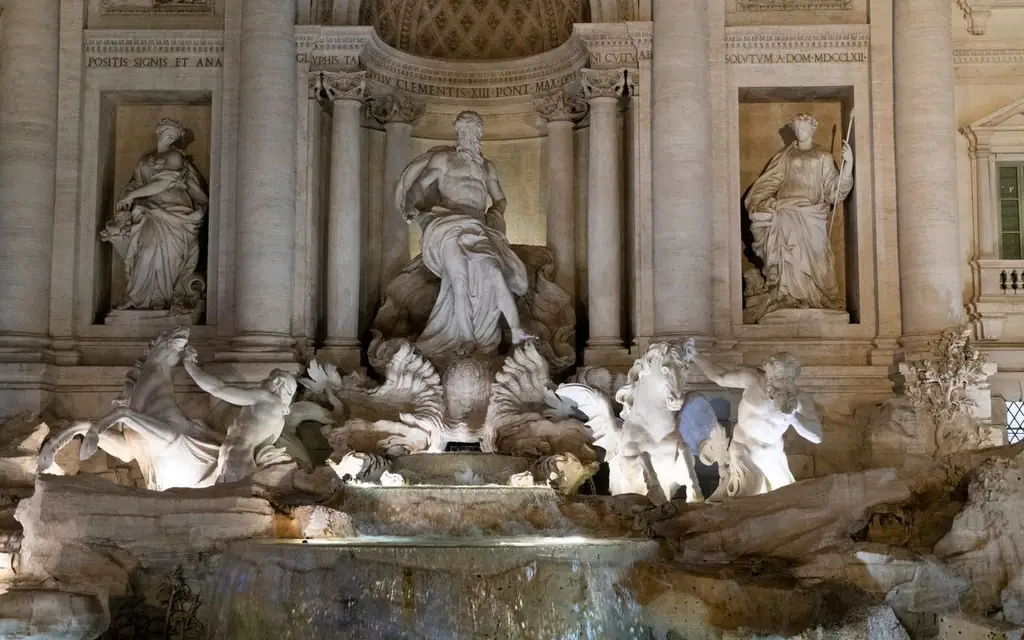
- Early morning, from 9:00: On the days that open at nine, this is the calm window. The light on the travertine is flat, tour groups have not yet arrived, and your car is unlikely to meet a wall of delivery vans.
- Late evening, after 20:00: The crowd thins, the lighting makes the sculpture look theatrical, and the last entry is not until 21:00. Dinner reservations in the nearby lanes slot neatly around this.
- Mid-day: The hardest hour. The piazza is small and every coach tour in Rome seems to arrive at once.
- Mondays and Fridays: The basin opens late. Plan a morning at another site and come to Trevi after 11:30.
Ask the desk to match the pickup to the opening day. The booker shows the exact fixed fare for your addresses and vehicle before you confirm, so you can compare a morning and an evening slot without surprises.
Where does the car stop for the Trevi Fountain?
The honest answer: not at the fountain. Piazza di Trevi is a compact space leaning against Palazzo Poli, and the streets around it belong to the historic center's limited-traffic regime, enforced by cameras. Roma Mobilità, the city's mobility agency, publishes the rules for limited-traffic zones and permits; the zones, hours and exemptions vary and change with events.
What a licensed driver typically does:
- Chooses a set-down point on Via del Tritone, the main road running a couple of blocks to the north, or on another approach that is open on the day.
- Gives you the walking route: a few minutes down narrow lanes. You will hear the water before you see it.
- Agrees a meeting corner for the return, usually the same place or a nearby street with a short stopping window.
- Stays reachable by phone through the 24/7 desk in case a road closes.
Hotels inside the center sometimes hold permits for guest arrivals. If your hotel is close to the fountain, tell the desk the address when you book; the driver then plans the final stretch around the street's rules instead of guessing.
How far is the Trevi Fountain from Fiumicino, Termini and the port?
- Rome Fiumicino (FCO) to the fountain: about 35 km (22 mi), usually 40 to 60 minutes. See the Fiumicino airport page for arrivals and terminals.
- Roma Termini to the fountain: about 2 km (1.2 mi), 10 to 20 minutes by car. Walking takes about 25 minutes, but with luggage you want the car. The Roma Termini page explains the pickup.
- Civitavecchia cruise port to the fountain: about 85 km (53 mi), roughly 1 hour 10 minutes to 1 hour 30 minutes. The Civitavecchia port guide covers the terminals.
- Pantheon to the fountain: about 700 m (0.4 mi), a short walk or a 5 to 10 minute drive when the lanes are clear.
- Trevi Fountain onward to the Vatican: about 3 km (1.9 mi), 15 to 25 minutes by car.
For hotel-to-hotel transfers and a full overview of how the desk handles Rome bookings, see the Rome chauffeur service page.
What are the rules on the stairs around the basin?
The ticket page is unusually specific, and it is worth reading before you go. The official rules say:

- The entrance is on Via della Stamperia, where the ticket office is, and the exit is on Via dei Crociferi, following staff directions.
- The inner perimeter has steps. Strollers can be left temporarily at the access point, but there is no luggage storage.
- There are no toilets and no cloakroom, so a small bag is the right choice.
- Food, drink and smoking are prohibited, and sitting on the edge of the basin is not allowed.
- Throwing objects or pouring liquids is prohibited, with the traditional coin toss as the single exception. Wading in, drawing water or washing anything in the fountain is also prohibited.
- Violations carry administrative fines, from €40 to €450 depending on the rule.
If you travel with luggage, leave it in the car and ask the driver to wait at a nearby corner. A driver cannot wait where parking is banned, but the desk can plan a pickup time to match your visit rather than leave the car idling in the street.
A coin, a legend and a Baroque stage set: what are you looking at?
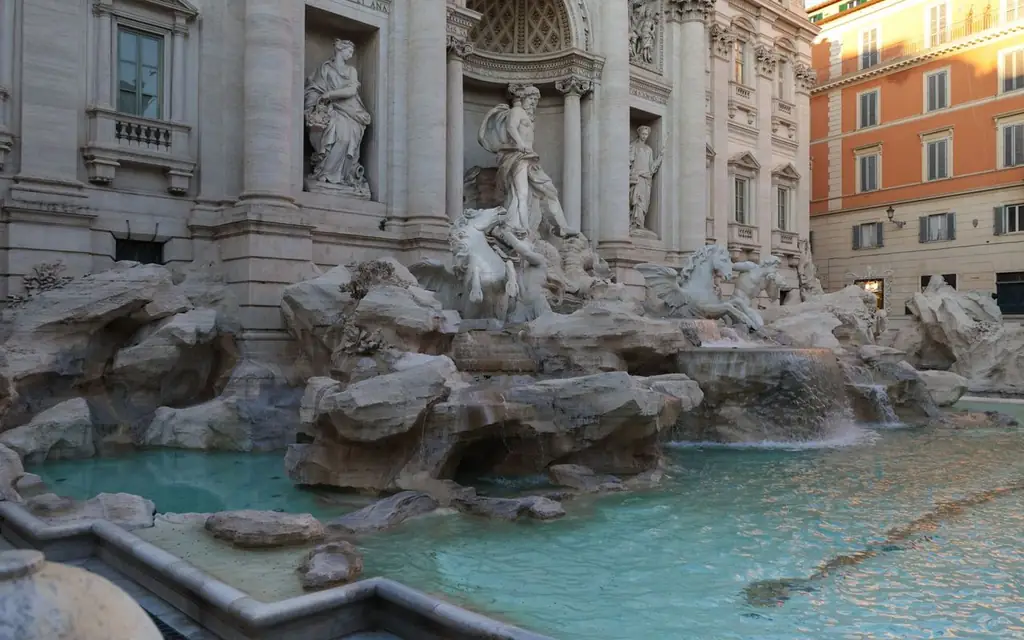
The fountain stands at the end of the Virgo aqueduct, which Turismo Roma describes as the only ancient aqueduct in continuous use. Pope Clement XII launched a design competition in 1732, and the architect Nicola Salvi won it; Giuseppe Pannini completed the work and reshaped the central basins. The restorations of 1989 to 1991 and of 2014, the latter financed by a fashion house, kept the stone readable. The fountain features in Fellini's La Dolce Vita, which is why so many visitors expect it to be empty at night.
The coin tradition is simple. Throw one coin over your shoulder to ensure a return to Rome; more coins are said to bring a wedding. Keep your coins ready: you cannot buy them on the steps, and the throwing rule is the only exception to the prohibition on throwing objects.
What else is within walking distance of the fountain?
The fountain sits in a part of the center where several visits fit into one stroll, which is why a short set-down is rarely a problem. The Quirinale Palace, the official residence of the President of the Italian Republic, is about 400 m (0.25 mi) uphill. The Spanish Steps are about 700 m (0.4 mi) to the north, and Piazza Venezia, at the foot of the Capitoline Hill, is roughly 900 m (0.6 mi) to the south. Each leg takes ten to fifteen minutes on foot through lanes that cars cannot use anyway.
That geography suggests a different way to run the afternoon. Rather than asking the driver to hop between three set-down points, ask for one set-down on Via del Tritone, walk the circuit on foot, and be collected at the end at whichever corner is open. Your driver tracks the traffic and the camera zones, and you keep your hands free for the walking.
How do the seasons change a visit to the fountain?
In July and August the piazza is warm and crowded from mid-morning until the evening, and the stone gives back the heat after dark. Spring and autumn are gentler, with long light in the early evening. Winter has the shortest queues, and rain makes the travertine glisten; wet weather is a good moment to book a car, since the walk from the set-down point is still a few minutes under an umbrella. Dogs must be in a carrier or leashed and muzzled on the access route, according to the official rules, so ask the desk about pets before you travel.
Which way of reaching the fountain makes sense?
| Option | Time from Termini | Cost note | Who it suits |
|---|---|---|---|
| Walk from Termini | About 25 minutes | Lowest | Light travelers in good weather |
| Metro A to Barberini, then walk | 10 to 15 minutes plus a short walk | Lowest | Independent travelers with day bags |
| Metered taxi | 10 to 20 minutes | Metered; stops at the nearest legal point | Couples and short hops |
| Rideshare | 10 to 20 minutes | Surge-priced in peak hours | Travelers already using the app |
| Coach or group tour | Fixed schedule | Ticketed | Those who want commentary with no planning |
| Private chauffeur | 10 to 20 minutes from Termini; 40 to 60 from Fiumicino | Fixed fare via the booker | Late nights, luggage, mixed-mobility groups |
If you are staying close, walking is fine; the fountain is a ten-minute stroll from several hotels. The car earns its place when the trip starts at the airport, runs late, or ends after a dinner that you do not want to finish on foot.
What does a chauffeured Rome evening around Trevi look like?
An approach that works well on the days with a nine o'clock opening and a late close:
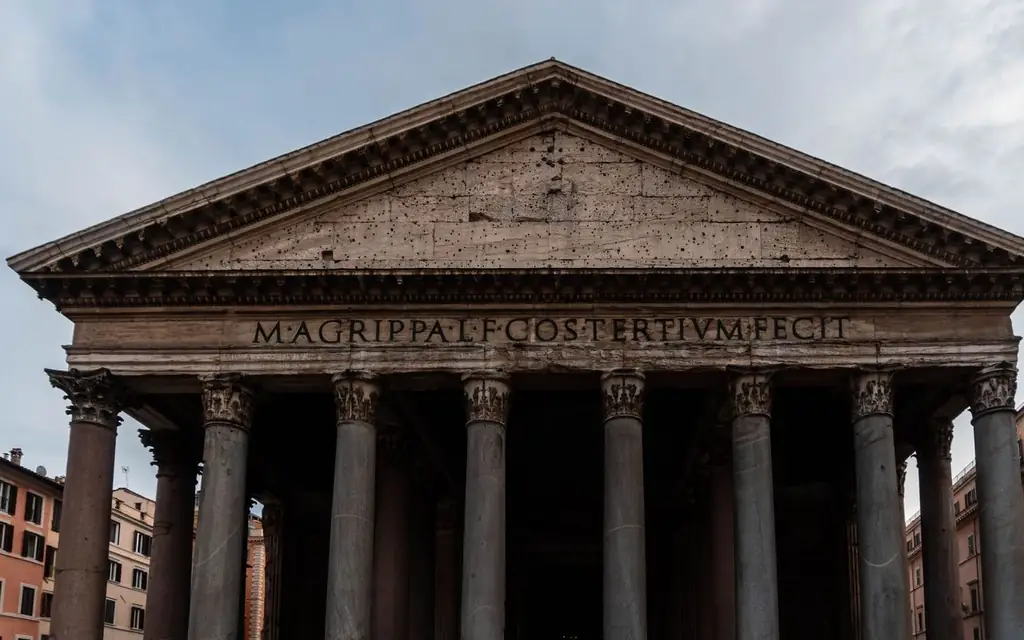
- Late afternoon: Pickup at the hotel for the Pantheon, the closest major stop, which the guide for that church treats in full.
- Early evening: A short drive and walk to the Trevi Fountain before the dinner rush.
- Dinner: A table near the Quirinale or in the lanes between the Corso and the Tritone, with the driver on call.
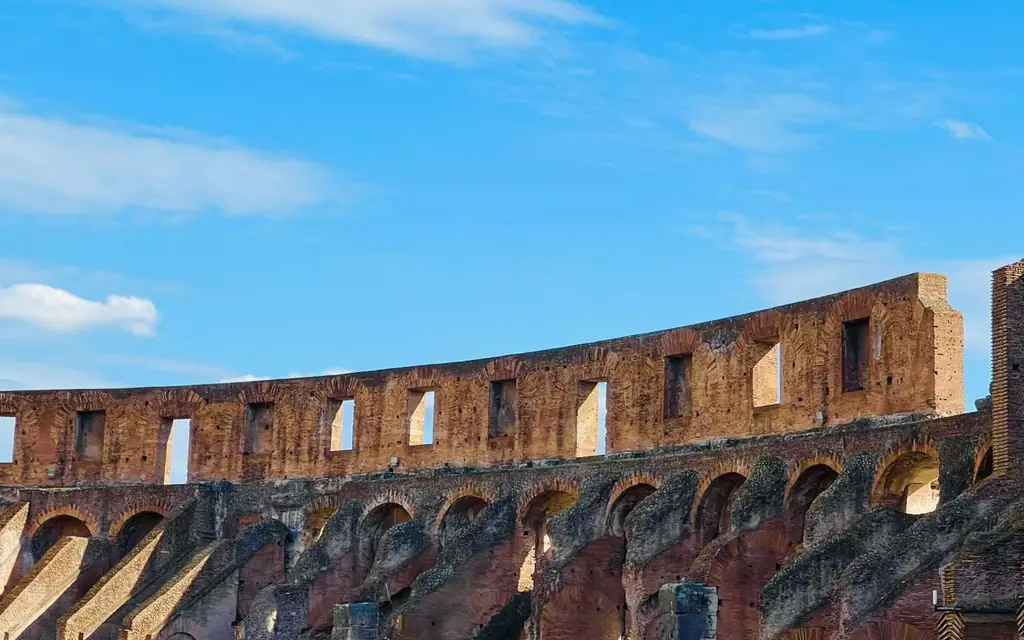
- Night: A slow circuit past the lit monuments, then back to the hotel. The Colosseum guide explains how to see that monument from the car and when to return by day.
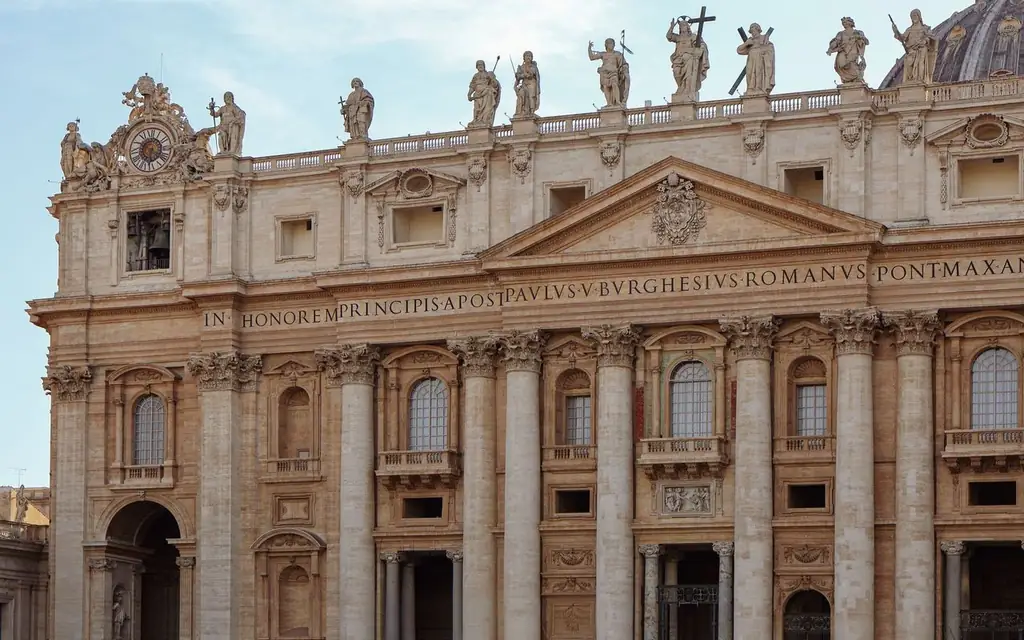
For a longer plan that includes the Vatican, read the St Peter's Basilica guide and the page on private tours with driver to see how half-day and full-day bookings are structured.
What about children, strollers and mobility?
The inner perimeter has steps, and that matters. The official page offers free entry for people with disabilities and one companion, and for children under six. Strollers can be left briefly at the access point, but there is no storage for them or for luggage.

Tell the desk about wheelchair or walker use, and the driver plans the shortest legal approach, which in this district may still involve cobblestones. Ask for a baby, toddler or booster seat when you book. The piazza remains open to everyone without a ticket, so a family with small children can enjoy the view from the square and skip the stairs entirely.
Rome's tourist information points and other visitor bureaus can open a trade account with LimousineWorldwideDirectory.com to book cars for their guests. To see where else we operate, browse the European directory.
Frequently asked questions
Do I have to pay to see the Trevi Fountain?
No. You can view the fountain from the piazza without a ticket. Since 2 February 2026, non-residents pay €2 to enter the monumental area beside the basin, according to the official page, and the price may change, so check before you go.
How do I buy Trevi Fountain tickets?
Online through the official ticketing page, at civic museums and tourist info points, or at the entrance by card only. Pre-purchased tickets have no fixed date or time and are not refundable.
What are the Trevi Fountain opening hours?
The official page lists Monday and Friday from 11:30 to 22:00 and Tuesday to Thursday, Saturday and Sunday from 9:00 to 22:00, with last entry at 21:00. Holidays and maintenance can change these times.
Can a car drop me off at the Trevi Fountain?
Not at the fountain itself. The piazza and many lanes around it fall inside the limited-traffic regime. A chauffeur sets you down at the closest practical point, such as Via del Tritone, and you walk a few minutes.
How far is the Trevi Fountain from Rome Fiumicino Airport?
About 35 km (22 mi), normally 40 to 60 minutes by car. Flight tracking means a late or early landing does not break the pickup.
Is the Trevi Fountain worth visiting at night?
Many visitors prefer it. The crowd is thinner after about 20:00, the lighting is dramatic, and last entry to the basin is at 21:00. Check the weekday, since Monday and Friday open later in the morning.
Can I toss a coin into the fountain?
Yes. The coin toss is the one object-throwing exception in the official rules. Everything else, including wading in, drinking, eating or sitting on the basin, is prohibited.
Can I leave luggage at the fountain?
No. There is no luggage storage or cloakroom at the access point, so leave bags in the car or at the hotel and carry only a small bag.