
 United StatesJFK
 MexicoMEX
 BrazilGRU
 ArgentinaEZE
 ChileSCL
 ColombiaBOG
 PeruLIM
 PanamaPTY
 Costa RicaSJO
 Dominican RepublicPUJ
 JamaicaMBJ
 BahamasNAS
 BarbadosBGI
 United KingdomLHR
 IrelandDUB
 FranceCDG
 GermanyFRA
 NetherlandsAMS
 BelgiumBRU
 SwitzerlandZRH
 AustriaVIE
 ItalyFCO
 SpainMAD
 PortugalLIS
 GreeceATH
 TurkeyIST
 DenmarkCPH
 SwedenARN
 NorwayOSL
 FinlandHEL
 PolandWAW
 Czech RepublicPRG
 HungaryBUD
 IcelandKEF
 United Arab EmiratesDXB
 QatarDOH
 Saudi ArabiaRUH
 IsraelTLV
 EgyptCAI
 MoroccoCMN
 South AfricaJNB
 KenyaNBO
 NigeriaLOS
 IndiaDEL
 PakistanLHE
 Sri LankaCMB
 SingaporeSIN
 MalaysiaKUL
 ThailandBKK
 VietnamSGN
 PhilippinesMNL
 IndonesiaCGK
 Hong KongHKG
 ChinaPVG
 TaiwanTPE
 JapanHND
 South KoreaICN
 AustraliaSYD
 New ZealandAKL
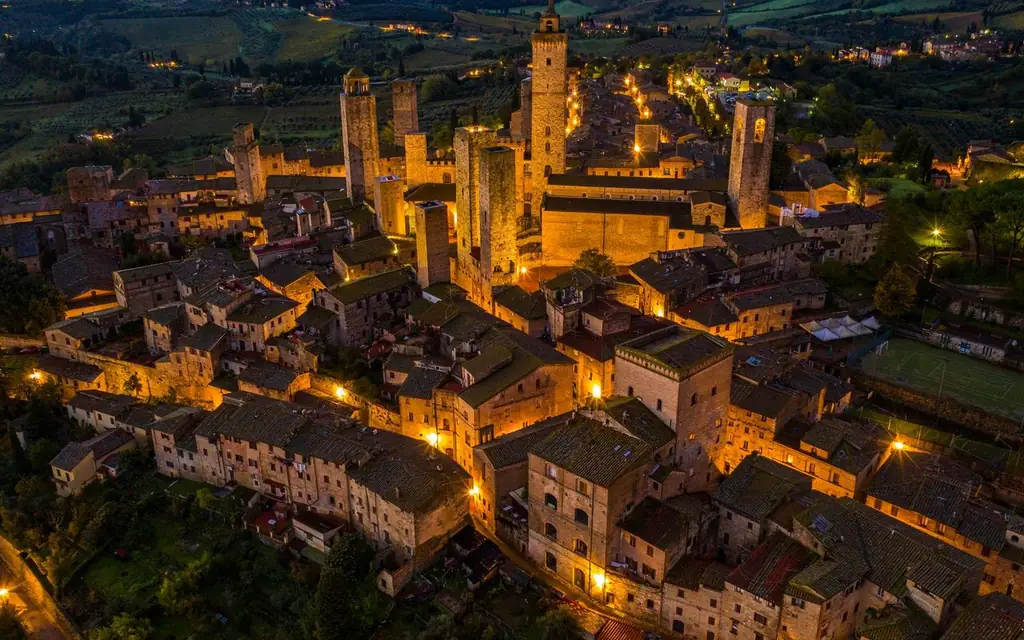
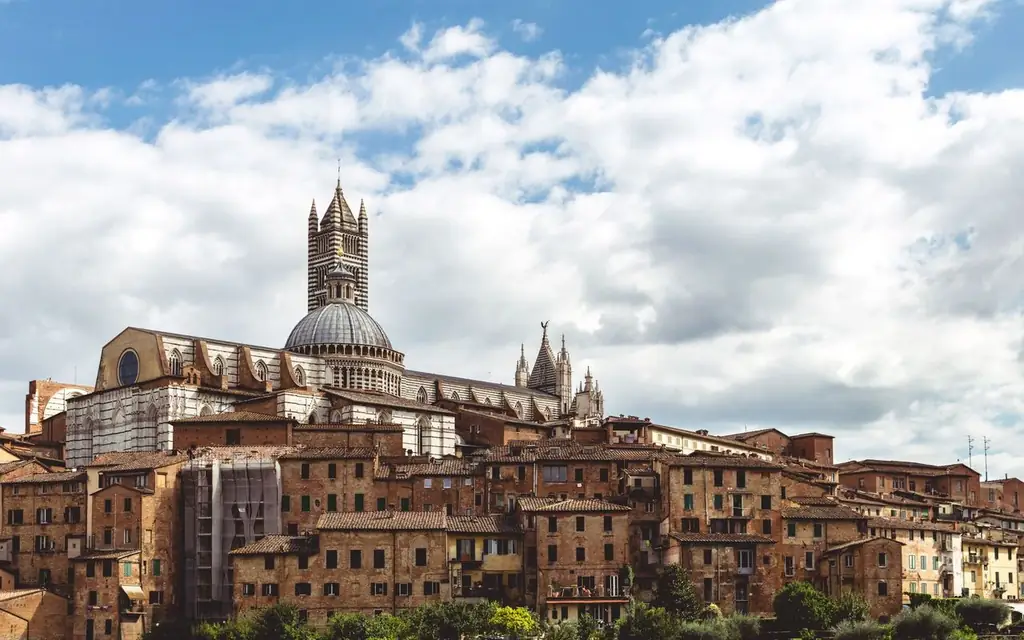
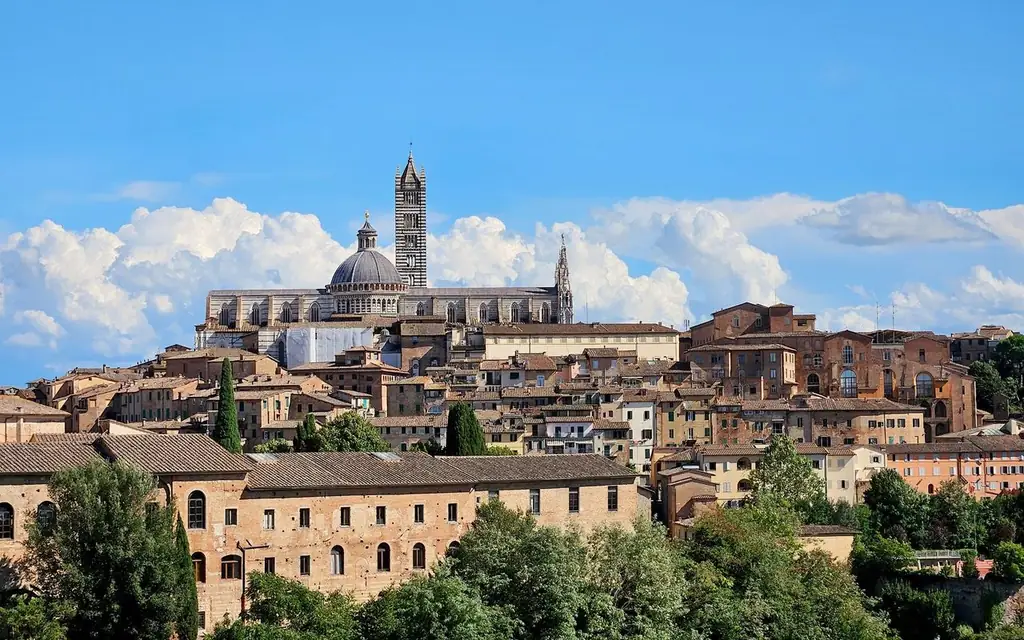
Siena is built on three ridges, and the old city sits on top of them, enclosed by medieval walls and threaded with lanes that were laid out for pedestrians, mules and carts. The result is one of the best-preserved cities in Europe, and one of the most car-unfriendly. A Siena private tour with driver is therefore about arrival, not about touring from the back seat: the car delivers you to the edge, waits, and takes you on to the next stop.
This guide covers how the traffic zone works, how to read the Duomo's opening calendar, what to know about Piazza del Campo and the Palio, and how to combine Siena with Florence, Chianti and the Val d'Orcia in a day or two.
Can a car go into Siena's historic centre?
Generally no. The historic centre inside the walls is a limited-traffic zone controlled around the clock by electronic gates, open to residents, authorized vehicles and registered hotel guests. Visitors park at pay car parks on the edge of the centre and walk or ride escalators into the old town.
Reports on the Siena ZTL agree on the essentials. It covers the historic centre inside the walls, entry is monitored 24 hours a day by electronic gates that issue fines automatically, and the permitted categories are narrow. Being a hotel guest does not give automatic entry; some hotels can register a plate for temporary access, but only if you tell them before you arrive, and the registration is not retroactive. If your hotel is inside the walls, ask it exactly what it needs from the driver and when.
For everyone else, the usual pattern is simple. The chauffeur drops you at the nearest accessible point on the edge of the centre, you walk in, and you are collected from the same edge at an agreed time. The car parks around the perimeter, such as Il Campo and Santa Caterina, are used by visitors who drive themselves, and are pay-by-hour.
Distances from the places you will start
Siena is the natural centre of southern Tuscany, and the roads converge on it. Approximate road distances and typical times:
- Florence to Siena: about 70 km (43 mi), 1 to 1 hour 15 minutes by the direct road, longer by the scenic Chiantigiana.
- Florence airport to Siena: about 80 km (50 mi), around an hour and a quarter.
- Pisa airport to Siena: about 125 km (78 mi), roughly an hour and a half.
- Rome to Siena: about 230 km (143 mi), 2 hours 30 minutes to 3 hours; see the Rome chauffeur service page and the Rome Fiumicino airport page.
- San Gimignano to Siena: about 40 km (25 mi), 45 to 55 minutes.
- Siena to Pienza: about 55 km (34 mi), around an hour.
Traffic in the region is lightest on Sunday mornings and heaviest on Friday afternoons and in July and August. If your transfer must fit around a ticketed entry or a dinner reservation, build in a margin and let us know the fixed time at booking.
Piazza del Campo: the room at the centre of Siena
Piazza del Campo is the shell-shaped square at the heart of the UNESCO-listed historic centre, recognized in 1995. Visit Tuscany describes it as divided into nine sections that recall the Nine Lords who governed the city in the late 13th century. Access is free for everyone, and the square tends to fill by early evening.
Rising from the Palazzo Pubblico is the Torre del Mangia, one of the oldest and tallest towers in Italy, and a climb for those who like heights. Nearby, Santa Maria della Scala, once one of Europe's first hospitals, now hosts exhibitions. Check the museum's own site for hours, as they were not published on the pages we reviewed. The wider city profile is on Visit Tuscany's Siena page.
Locals sit on the paving in the afternoon, and visitors are welcome to do the same. The best practical advice is to arrive in the morning or after 18:00 for photographs, and to eat lunch one street away, not on the square.
The Duomo complex: seasonal hours and the marble floor
The cathedral is the reason many people come, and it is operated by the Opera della Metropolitana, whose official visiting page is the authority. For 2026 it lists these hours:
- 1 April to 31 October: 10:00 to 19:00, with the Opera Museum from 9:30 to 19:30. On Sundays and holidays the cathedral opens 13:30 to 18:00.
- 7 January to 31 March and 1 November to 24 December: 10:30 to 17:30, with Sundays and holidays from 13:30 to 17:30.
- 26 December to 6 January: 10:00 to 19:00.
- Last admission: 30 minutes before closing.
The complex includes the cathedral, the Piccolomini Library, the crypt, the baptistery, the museum and, in season, the Porta del Cielo, the walkway on the roof. The official site sells a single ticket for the complex and a multi-day pass valid for three consecutive days, with free entry for children under seven and for other listed categories. Prices vary by product and by season, so check the page rather than relying on an older figure.
The famous inlaid marble floor is normally covered to protect it. In 2026 it is uncovered from 27 June to 31 July and from 18 August to 31 October, and a supplement applies on those days. In other years, the dates are similar but not identical, so confirm them before you plan a visit around the floor. Tickets can be bought online, by phone, at the ticket office at Piazza Duomo 7, and at the visitor centre at Via di Città 48, near Piazza del Campo.
The Palio: two dates, and what they do to the city
The Palio di Siena (see Visit Tuscany's Palio guide) is run twice a year in Piazza del Campo, on 2 July and on 16 August. Ten of Siena's seventeen contrade (districts) compete, the horses run three laps of the square on a layer of earth laid over the paving, and the race lasts about a minute. The festival around it lasts several days, with trial races and processions.
That has a practical effect on visitors. The days around the race are the busiest in the city's year. Accommodation is booked far in advance, crowds are dense, and getting any vehicle near the centre is impractical. If you want to see the city, not the race, avoid the dates. If you want the race, book accommodation early, plan transfers with generous time, and accept that you will be on foot for most of it. The Palio is not run on demand for tourists; it is a civic ritual, and watching it from the infield or a window is subject to local arrangements.
Beyond the two headline sights
Most day visitors see the Campo and the Duomo and leave. The city repays a third and fourth stop, and they are both calmer.
- The Basilica of San Domenico, on the western ridge, is tied to Saint Catherine of Siena and has a plain, brick interior in contrast to the cathedral's striped marble. It is a short walk from the Campo and a good place to rest.
- The Medici fortress, at the northern edge, has walls you can walk, with views back to the towers of the centre.
- The contrade districts, each with its own flag, fountain and small church, are the residential heart of Siena. Wander them in the late afternoon, when the lanes are quiet.
- Pasticcerie and delis sell the city's sweets, such as panforte and ricciarelli, and pici pasta is the local dish. Buy sweets as gifts for the flight home.
Plan for lunch at about 13:00 and book a table in high season. Many small restaurants close on one weekday, and kitchens close between lunch and dinner.
Etiquette in the Duomo and on the square
The cathedral is a working church. Cover shoulders and knees, remove hats, and keep your voice low during services, when visiting times can change. The official site notes that religious services can alter access, so check the day's hours before you go.
On Piazza del Campo, sitting on the paving is part of local life, but leave nothing behind, and do not block the corners where the contrade processions pass on festival days. During the Palio period, barriers and seating go up and the square is not open for casual use.
Photography is welcome in most places, though flash and tripods are restricted in museums. Your chauffeur does not photograph or post about clients, and NDAs and alias bookings are available on request for travelers who need discretion.
Siena compared: ways to get there
| How you travel | From Florence | Cost note | Suits |
|---|---|---|---|
| Train via Empoli, then walk or bus up | about 1.5 to 2 hours | low | rail travelers with light bags; the station is outside the centre |
| Regional bus from Florence | about 1.25 to 1.5 hours | lowest | solo travelers; the bus terminal is close to the centre |
| Taxi | about 1 hour 10 minutes | metered | a one-way transfer when the group is small |
| Rental car | about 1 hour | rental plus parking | confident drivers staying outside the centre |
| Private chauffeur | 1 to 1 hour 15 minutes | fixed fare via the booker | groups, luggage, and a route through Chianti or on to Pienza |
For a solo traveler without bags, the regional bus is the lowest-cost way to get to Siena and drops you close to the centre. The train is slower. A rental car makes sense if you are touring several days and your hotel provides parking. A private chauffeur earns the fare when you want to see Siena between other destinations and avoid the car park shuffle.
A day from Florence, with the Duomo and the Campo
- 08:30 depart Florence by the direct road, or via Chianti if you want a scenic start. See our Chianti guide.
- 10:00 arrive at the edge of the centre; walk in to the Duomo as it opens.
- 12:30 lunch in a side street near the Campo.
- 14:00 Torre del Mangia, or a wander through the contrade districts.
- 16:00 drive on to San Gimignano, about 40 km away, or north to Florence.
- Evening return to Florence, where the Florence Cathedral guide covers the following morning.
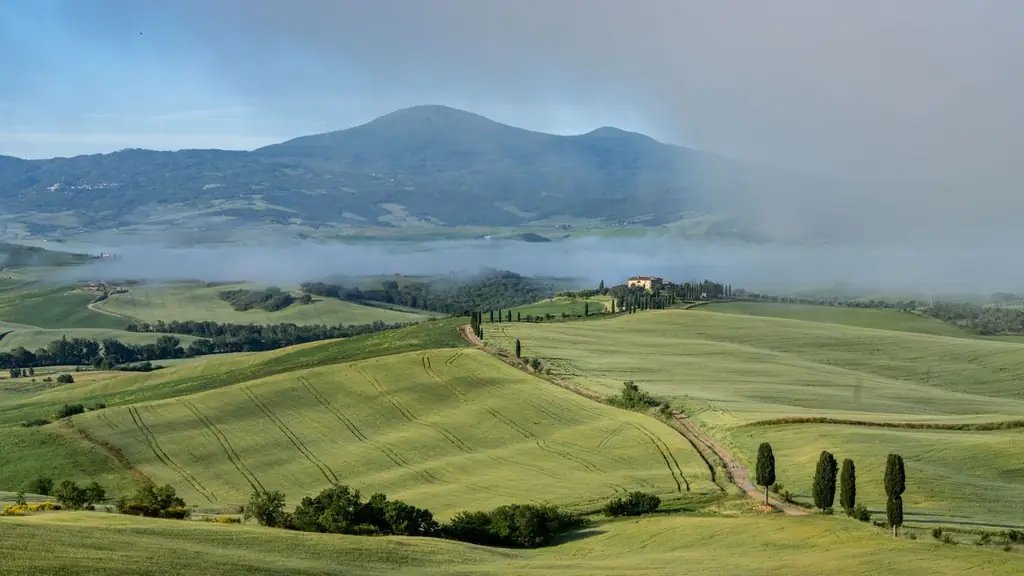
Siena also pairs with the Val d'Orcia, about an hour south. For a longer program that includes several stops, read about our private tours with a driver and the Europe directory for other regions.
Walking, hills and accessibility
Siena is hilly, and many lanes are steep and cobbled. Escalators and lifts connect some of the edge car parks to the centre, but the walk to the Duomo from the Campo is uphill. Wear comfortable shoes. For visitors with limited mobility, the Opera's free admission category for people with disabilities and a companion is listed on the official page. Tell us at booking if anyone needs the closest possible drop-off, and ask your hotel about any permitted access before arrival.
Chauffeurs provide child, toddler and booster seats on request. Water and phone chargers are in most vehicles.
Frequently asked questions
How far is Siena from Florence by car?
About 70 km (43 miles), normally 1 to 1 hour 15 minutes by the direct road. The scenic Chiantigiana route is longer, around 69 km but slower because of the curves.
Can you drive into Siena's old town?
No, except for residents and authorized vehicles. The historic centre is a ZTL monitored by electronic gates around the clock. Hotel guests must have their plate registered by the hotel before entering.
When does the Siena Duomo floor open?
The marble floor is normally covered. For 2026 the Opera lists it as uncovered from 27 June to 31 July and from 18 August to 31 October. Check the official page for other years.
What are the Siena Duomo opening hours?
From 1 April to 31 October, 10:00 to 19:00, with the museum from 9:30. From 7 January to 31 March and 1 November to 24 December, 10:30 to 17:30. The last admission is 30 minutes before closing.
When is the Palio di Siena?
The Palio runs on 2 July and 16 August each year. The next is in July 2027. Plan transfers with extra time, and expect crowds and closures around the square.
How long do you need in Siena?
A half day covers the Campo and the Duomo. A full day adds the museum, the Torre del Mangia and an unhurried lunch. An overnight lets you see the city after the day-trippers leave.
Can I visit Siena and San Gimignano in one day?
Yes. San Gimignano is about 40 km (25 miles) from Siena, 45 to 55 minutes by road. Start in Siena in the morning and reach San Gimignano by mid-afternoon.
Can you collect me from Pisa airport for Siena?
Yes. Your arrival is tracked, so a delayed flight does not cost you the booking, and you get an hour of free waiting on international arrivals. The drive to Siena is about 125 km (78 miles).
Can a visitor centre book a driver for its guests?
Official visitor centres and tourism boards can reserve chauffeur services for the people they advise by opening a trade account with LimousineWorldwideDirectory.com. Details are on the tourist offices hub.