
 United StatesJFK
 MexicoMEX
 BrazilGRU
 ArgentinaEZE
 ChileSCL
 ColombiaBOG
 PeruLIM
 PanamaPTY
 Costa RicaSJO
 Dominican RepublicPUJ
 JamaicaMBJ
 BahamasNAS
 BarbadosBGI
 United KingdomLHR
 IrelandDUB
 FranceCDG
 GermanyFRA
 NetherlandsAMS
 BelgiumBRU
 SwitzerlandZRH
 AustriaVIE
 ItalyFCO
 SpainMAD
 PortugalLIS
 GreeceATH
 TurkeyIST
 DenmarkCPH
 SwedenARN
 NorwayOSL
 FinlandHEL
 PolandWAW
 Czech RepublicPRG
 HungaryBUD
 IcelandKEF
 United Arab EmiratesDXB
 QatarDOH
 Saudi ArabiaRUH
 IsraelTLV
 EgyptCAI
 MoroccoCMN
 South AfricaJNB
 KenyaNBO
 NigeriaLOS
 IndiaDEL
 PakistanLHE
 Sri LankaCMB
 SingaporeSIN
 MalaysiaKUL
 ThailandBKK
 VietnamSGN
 PhilippinesMNL
 IndonesiaCGK
 Hong KongHKG
 ChinaPVG
 TaiwanTPE
 JapanHND
 South KoreaICN
 AustraliaSYD
 New ZealandAKL
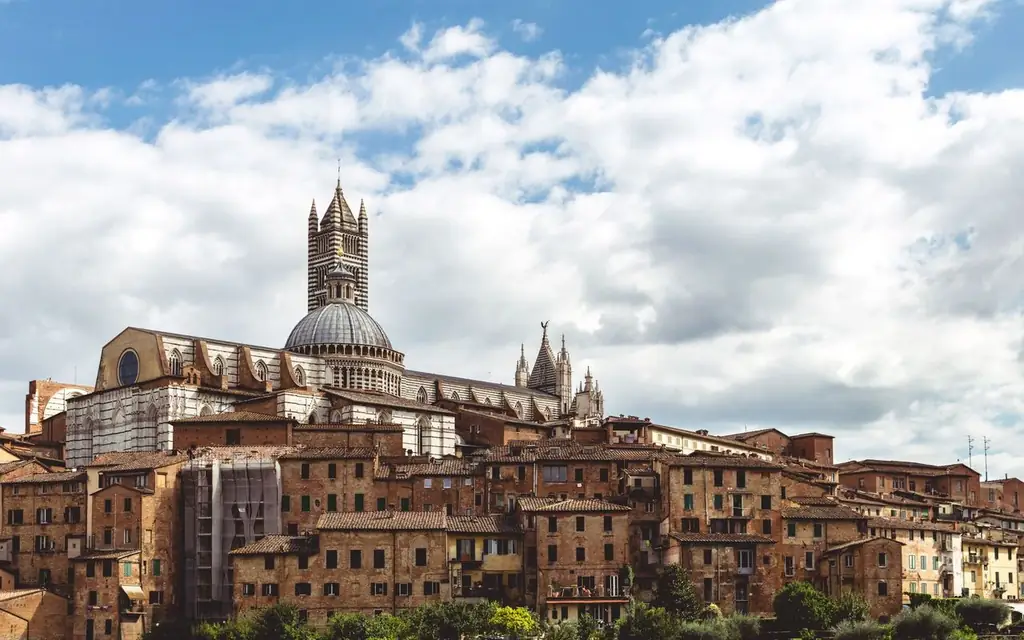
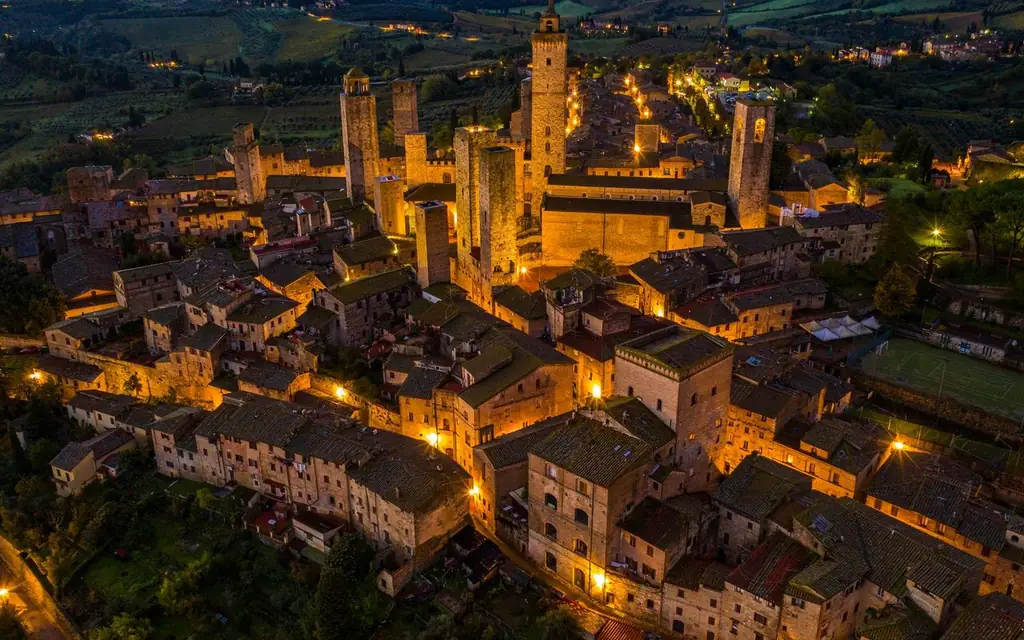
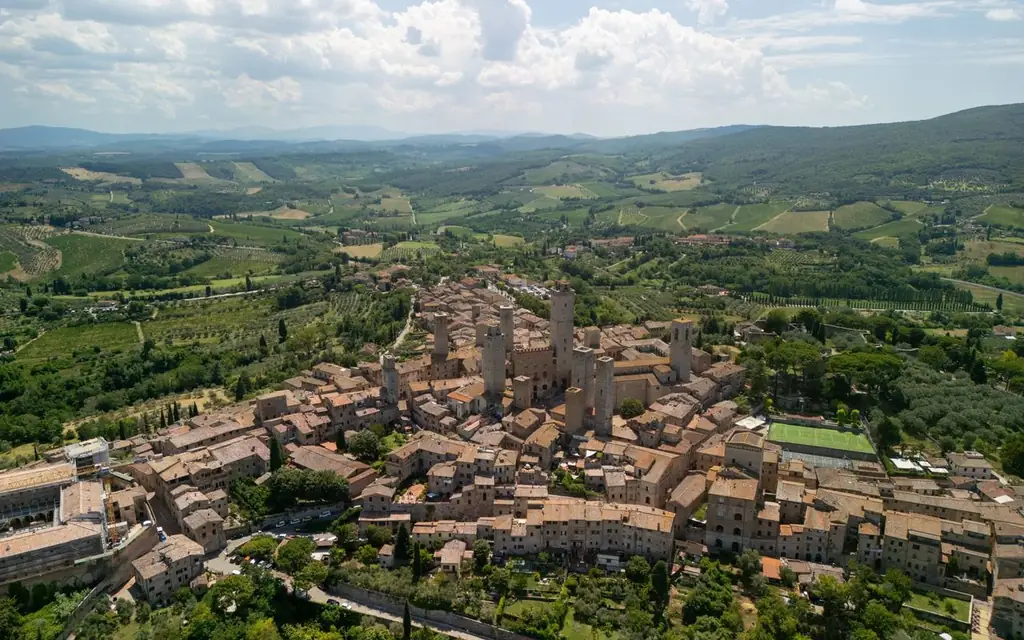
San Gimignano is visible long before you reach it. The towers rise from a ridge above the Elsa valley like a small, pale city skyline, and on the approach roads you can see them from several kilometres away. Then the road delivers a lesson in how hill towns work: the closer you get, the less a car can do. The walls are intact, the lanes are cobbled and steep, and the centre is a limited-traffic zone.
That is the starting point for any San Gimignano private tour with driver. This guide explains where the car goes, what the town contains, what is worth paying to climb, and how to arrange the day so you see San Gimignano at a pace the day-trippers do not.
Where do you park for San Gimignano, and can a car enter the town?
Visitor cars do not enter the historic centre, which is a limited-traffic zone. Pay car parks sit outside the walls, the closest near Porta San Giovanni, and you walk in through the gate. A chauffeur drops you near the gate, parks, and collects you when you call.
The town's own tourist office, the Pro Loco, runs the information desk on Piazza del Duomo and lists a "Parking and City bus" page on its official site, which is the place to check rates and any shuttle timetable before you go. Third-party guides describe an electric shuttle linking the main gate with the central squares; confirm it is running on your date.
The practical sequence is short. Your chauffeur drives to the car park near Porta San Giovanni, you walk up Via San Giovanni, the main street that leads straight to the squares, and the car waits outside. If anyone in your party has difficulty with slopes, tell us at booking so we can ask for the nearest possible drop-off, and ask your hotel about permitted access if you stay inside the walls.
How far is San Gimignano from the places you are starting?
San Gimignano sits in the Val d'Elsa, between Florence and Siena. The approach roads are good, but the last stretch is local.
- Florence to San Gimignano: about 57 km (35 mi), 1 hour to 1 hour 15 minutes.
- Siena to San Gimignano: about 40 km (25 mi), 45 to 55 minutes.
- Pisa airport to San Gimignano: about 100 km (62 mi), roughly an hour and a half.
- Florence airport (Peretola) to San Gimignano: about 60 km (37 mi), around an hour and a quarter.
- Rome to San Gimignano: about 310 km (193 mi), roughly 3 hours 30 minutes.
For the capital end, see the Rome Fiumicino airport page and our airports hub, which explain how pickups, flight tracking and waiting times work. These are planning figures; allow more on Friday afternoons and in July and August.
The shape of the town
It helps to hold a simple map in your head. San Gimignano is a spine, not a maze.
- Porta San Giovanni, the southern gate where most visitors enter.
- Via San Giovanni, the main street, lined with shops, running uphill.
- Piazza della Cisterna, a triangular, brick-paved square named after a cistern built in 1287, where the Via Francigena pilgrim route once crossed the road between Pisa and Siena.
- Piazza del Duomo, next door, with the Collegiata, the civic palace and the tourist office.
- Porta San Matteo, the northern gate, with a quieter stretch of street beyond it.
You can walk from one gate to the other in about fifteen minutes without stopping. With stops, a first visit takes three to four hours, and the best parts are the lanes off the spine, where the day-trippers do not go. Visit Tuscany's profile of Piazza della Cisterna gives more on the square.
Why a small town has so many towers
San Gimignano grew rich because of where it stands. The Via Francigena, the pilgrim road from northern Europe to Rome, ran through the valley below, and traders and pilgrims climbed to the town to buy, sell and sleep. The wealthy families who profited built towers as statements of status, and the town competed with itself in height. The plague of the mid-14th century hit the region hard, and the town came under Florentine rule in the 1350s. Growth stopped, which is why the medieval fabric survived almost untouched, and why UNESCO could later describe a town that looks as if time had paused.
You do not need that history to enjoy the walk, but a little of it changes how you look at the street. The lanes are narrow because they were built for defence and for foot traffic, the arches over the gates are original, and the stone is the same pale local stone from top to bottom. For a broader view of the area, read Visit Tuscany's profile of San Gimignano.
The towers: what survives, and which one you can climb
San Gimignano is a UNESCO World Heritage Site, listed in 1990, and the towers are the reason. In the Middle Ages, noble families built them as symbols of wealth and power. The number that survive depends on the source: Visit Tuscany's pages give thirteen in one place and fourteen in another, from a medieval total of several dozen. Whatever the count, the effect is the same.
You can climb one. The Torre Grossa, also called the Torre del Podestà, is the tallest, at about 54 metres, and was built in 1311. It is visited with the same ticket as the Civic Museum in the Palazzo del Popolo on Piazza del Duomo, and one guide counts 218 steps to the top. The view runs across rooftops to the Elsa valley and the vineyards.
A caution on prices and hours: published figures conflict. Some sources list seasonal opening of roughly 9:30 to 18:30 in the high season; others give different hours and tickets. Do not rely on any number you read in a blog, including ours. Confirm both on the town's official channels before you plan.
The Collegiata and the civic museum
The Collegiata, the town's main church, is plain on the outside and richly decorated within, with fresco cycles from the 14th century covering its walls. It is a place of worship, so cover shoulders and knees and keep the visit quiet. Allow 30 to 45 minutes.
The Civic Museum is in the Palazzo del Popolo, beside the Collegiata, and holds paintings from the Sienese and Florentine schools, as well as the route to the Torre Grossa. Combined tickets for the museum, the tower and sometimes the church are sold, though the structure has changed over the years. Look at the Visit Tuscany guide to climbing the region's towers for context and then check the official source for the current combination.
Food and wine: Vernaccia and saffron
San Gimignano's best-known wine is Vernaccia di San Gimignano, a dry white grown on the hills around the town, and the area is also known for saffron. A lunch with a glass of Vernaccia is a pleasant way to spend the hot middle of the day, and a chauffeur means nobody has to calculate the drive afterwards.
Alcohol is never served on board, and local law applies. If you plan a vineyard visit outside the walls, book the estate in advance and tell us the time so the transfer is planned around it. For the larger wine region to the east, read our Chianti guide.
When to visit: avoiding the middle of the day
San Gimignano is a classic day trip, and the day trippers follow a pattern. They arrive from about 10:30, peak between noon and 15:00, and leave by late afternoon. The town is at its best at the edges.
- Early morning: walk the spine before the shops open. The light is soft and the streets are empty.
- Late afternoon and evening: after 17:00 the coaches go, and the towers glow in the low sun. This is the time to climb the Torre Grossa if hours allow.
- Seasons: April, May, late September and October are the most comfortable. July and August are hot and crowded. Winter is quiet and some shops close.
- Overnight: a night in the town changes the visit. If you can stay, do.
The Pro Loco's hours at Piazza del Duomo 1 are posted on its site, and it can help with local maps and parking questions.
If you want the evening walk but do not want to be on the road after dark, say so when you book. The drive back to Florence or Siena in the evening is straightforward, but the last stretch is a country road with few lights, and a driver who knows it is more relaxed than a visitor with a sat-nav and a full dinner behind them. We suggest agreeing the pickup time with a small margin, and sending a message if the table runs late.
San Gimignano compared: ways to get there
| Method | Florence to the town | Cost note | Best fit |
|---|---|---|---|
| Train to Poggibonsi, then local bus | about 2 hours with connections | low | rail travelers with time and light bags |
| Regional bus via Poggibonsi | about 1.5 to 2 hours | lowest | solo travelers and students |
| Organized day tour | 1 hour each way plus stops | low | first-timers who want a ready program |
| Rental car | about 1 hour to 1 hour 15 minutes | rental plus parking | confident drivers who will park outside the walls |
| Private chauffeur | 1 hour to 1 hour 15 minutes | fixed fare via the booker | groups, luggage, and a route that includes Siena or Chianti |
Public transport works but needs a change at Poggibonsi, a town in the valley below. A group tour is the lowest-cost way to see the town on a short schedule. A private car is the better choice if you want to reach the town early or late, to see it away from the group-tour hours.
Itineraries with a driver
Florence, San Gimignano and Siena in a day. Leave Florence by 08:00. Reach the gate by 09:15 and walk the town until noon, with lunch in a side lane. Drive to Siena for the afternoon, about 40 km further. Return to Florence in the evening, or stay in Siena.
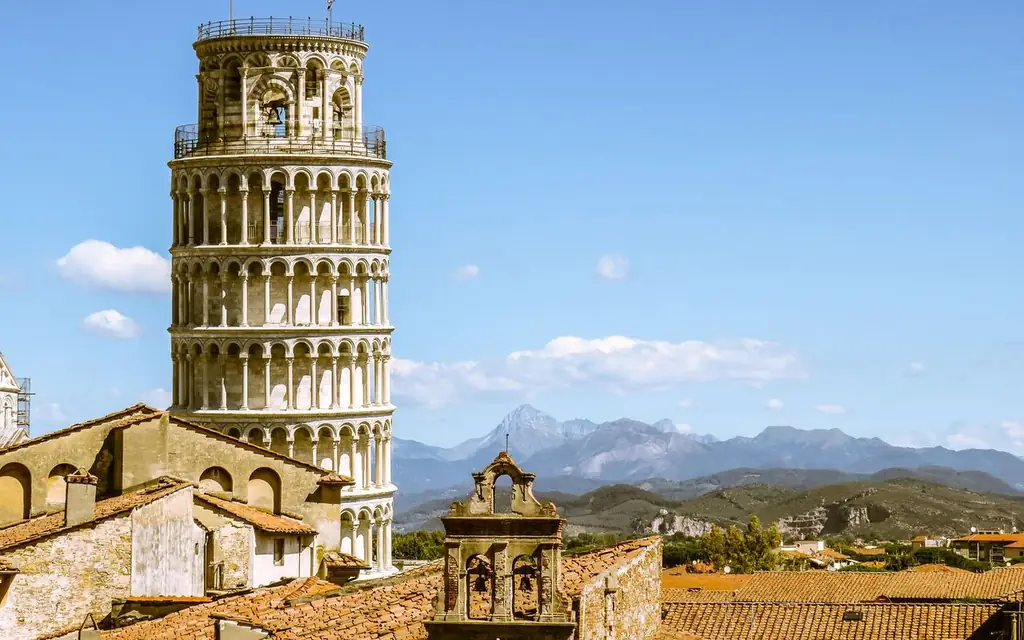
Pisa airport to San Gimignano. If you land in the morning, the drive to the town is about 100 km (62 miles). You can leave your luggage in the car at the gate, or go straight to your hotel. The Leaning Tower of Pisa guide covers the Pisa end of that route.
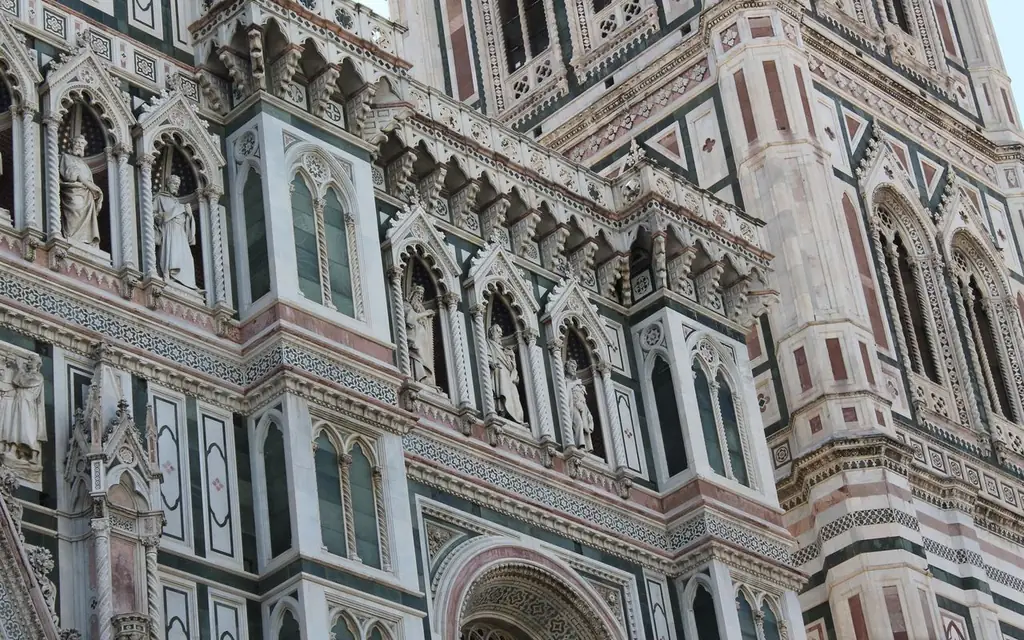
A two-night base. Stay in San Gimignano or a nearby farm hotel, and use the car for day trips to the Chianti wine region, the Florence Cathedral and the Val d'Orcia.
For a general explanation of how a day booking works, see our private tours with a driver page, and for other regions the Europe directory.
Accessibility and families
Most of San Gimignano is steep and cobbled. Via San Giovanni climbs from the gate to the squares, the lanes off it are stepped in places, and the towers are stair-only. People who find slopes difficult should plan shorter segments with benches and cafés, and may choose to see the lower streets and the squares, not the museum and tower.
Prams are manageable on the main street but awkward elsewhere. We provide child, toddler and booster seats on request at booking, and most vehicles carry water and phone chargers.
Frequently asked questions
How far is San Gimignano from Florence by car?
About 57 km (35 miles), usually 1 hour to 1 hour 15 minutes. From Siena it is about 40 km (25 miles) and 45 to 55 minutes.
Can you drive into San Gimignano?
Not as a visitor. The historic centre is a limited-traffic zone. Pay car parks sit outside the walls, near Porta San Giovanni, and you walk in. Hotel guests inside the walls should ask their hotel about access.
Is San Gimignano worth a day trip?
Yes, particularly if you arrive early or stay late. The town is small, so combine it with Siena, Chianti or the Val d'Orcia to fill a day.
How long do you need in San Gimignano?
Three to four hours covers the squares, the Collegiata and one climb. Add an hour for lunch. An overnight stay gives you the town after the coaches leave.
Can you climb a tower in San Gimignano?
Yes, the Torre Grossa, at about 54 metres, is open to visitors with the Civic Museum ticket. One guide counts 218 steps. Confirm hours and price on the town's official channels.
What is San Gimignano famous for?
Its medieval towers and UNESCO-listed historic centre, listed in 1990, and for Vernaccia di San Gimignano, a dry white wine from the surrounding hills.
Is San Gimignano accessible for wheelchairs?
Partly. The main street is cobbled and steep, and the tower is stair-only. Tell us about mobility needs at booking so we can ask for the closest drop-off.
Can you collect me from Pisa or Florence airport?
Yes, from either. Flight tracking is standard, and domestic arrivals get 30 minutes of free waiting against 60 for international ones. Pisa is about 100 km (62 miles) away and Florence about 60 km (37 miles).
Can a tourist office arrange a transfer for visitors?
Tourist offices, visitor bureaus and travel agents can book on behalf of a traveler through a trade account. We make no claim that any named office is a partner; the account simply gives the office a way to place the booking. See the tourist offices hub.