 United StatesJFK
 MexicoMEX
 BrazilGRU
 ArgentinaEZE
 ChileSCL
 ColombiaBOG
 PeruLIM
 PanamaPTY
 Costa RicaSJO
 Dominican RepublicPUJ
 JamaicaMBJ
 BahamasNAS
 BarbadosBGI
 United KingdomLHR
 IrelandDUB
 FranceCDG
 GermanyFRA
 NetherlandsAMS
 BelgiumBRU
 SwitzerlandZRH
 AustriaVIE
 ItalyFCO
 SpainMAD
 PortugalLIS
 GreeceATH
 TurkeyIST
 DenmarkCPH
 SwedenARN
 NorwayOSL
 FinlandHEL
 PolandWAW
 Czech RepublicPRG
 HungaryBUD
 IcelandKEF
 United Arab EmiratesDXB
 QatarDOH
 Saudi ArabiaRUH
 IsraelTLV
 EgyptCAI
 MoroccoCMN
 South AfricaJNB
 KenyaNBO
 NigeriaLOS
 IndiaDEL
 PakistanLHE
 Sri LankaCMB
 SingaporeSIN
 MalaysiaKUL
 ThailandBKK
 VietnamSGN
 PhilippinesMNL
 IndonesiaCGK
 Hong KongHKG
 ChinaPVG
 TaiwanTPE
 JapanHND
 South KoreaICN
 AustraliaSYD
 New ZealandAKL
Most visitors lose the first hour of their Plitvice day before they have seen a single waterfall. They circle a car park, queue for a ticket that has already sold out for the slot they wanted, then discover that the entrance they chose is not the one where their car is waiting. None of that is the park's fault. It is what happens when a site with a hard visitor system is approached like an ordinary roadside stop.
A private tour with driver removes those friction points. This guide is written for travelers who will arrive by chauffeured car from Zagreb, Zadar or Split and want to know exactly what the day looks like.
How do you get to Plitvice Lakes National Park by car?
Plitvice Lakes National Park sits roughly 130 km (80 mi) south of Zagreb and 120 to 130 km (75 to 80 mi) north-east of Zadar Airport, about two hours' driving from either. Split is around 250 km (155 mi), or three hours. Cars use the D429 or D52 to one of two parking areas.
The park's own travel page names two approach roads: the D429, which carries traffic coming from Zagreb and Zadar past the eastern edge of the park, and the D52 from Otočac, which links to the A1 motorway. Both main entrances sit beside the D429 and are about 3 km (2 mi) apart. Each has paid visitor parking, which matters later in this guide because it is the key to a clean one-way walk.
From Zagreb the drive is mostly motorway, then a regional road for the final stretch. Allow about two hours without stops, a little more in winter when fog and ice slow the upland sections. From Zadar Airport, which is the closest airport to the park, plan on roughly 90 to 110 minutes. From Split the drive is long enough that most travelers treat it as a full travel day with Plitvice in the middle. For that reason many guests who land at Zagreb's Franjo Tuđman Airport simply start from the capital.
For a direct fare for your exact pickup address, use the booker:
Entrance 1 or Entrance 2: choose before you buy
Plitvice sells tickets for a specific day, time slot and entrance. The park's e-ticket system asks for the date first and then the time, and it displays how many tickets remain for that hour. Printed or phone tickets must be validated at the entrance chosen at purchase, within the booked window. Entering before your slot is not allowed, while arriving up to an hour late is tolerated. Tickets are also sold at the gates, but only if capacity remains, and on busy days it often does not.
The two gates are not interchangeable:
- Entrance 1 is the northern gate, with its official coordinates close to 44.905 N, 15.611 E. It is the natural starting point for a full day of walking the Lower Lakes at your own pace.
- Entrance 2 is the southern gate, about 3 km (2 mi) away. It connects directly to the internal electric boats and the panoramic train, which makes it the better choice when time is short.
Because the boat and train are covered by the entrance ticket, a common plan is to start at one gate, cross the lake system by water and rail, and finish at the other. The chauffeur drives the 3 km between the two car parks while you walk, and the day ends without a retrace. Book the ticket for the gate where your walk begins, and tell your driver where you will finish.
The official ticket shop is at ticketing.np-plitvicka-jezera.hr. The park publishes its seasonal price list on its main site, and the entrance fee varies by season and visitor category.
What the park is, and why it carries a World Heritage listing
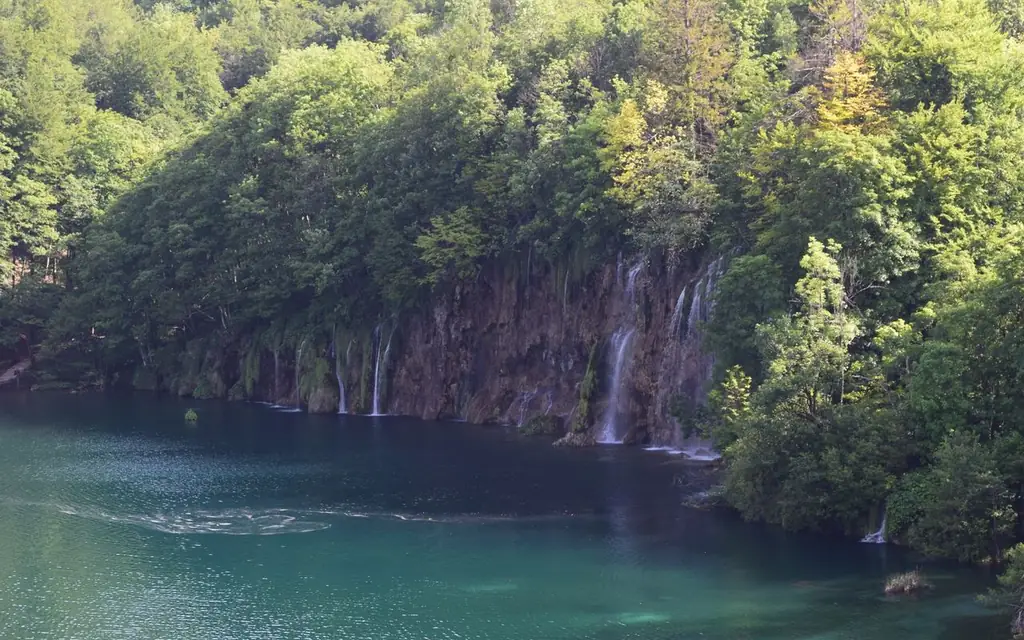
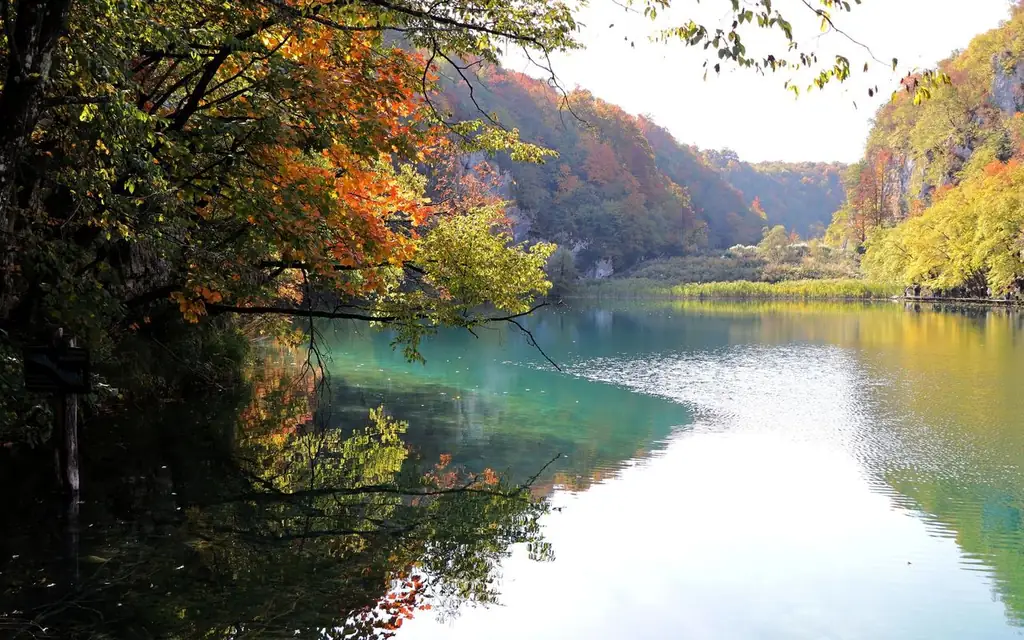
Plitvice is a chain of terraced lakes in the Lika region, held back by natural travertine barriers that keep growing as moss and algae collect lime from the water. The lakes spill into each other through waterfalls and cascades, so the water at your feet is usually a different color from the water in the next basin: turquoise, green, grey-blue, depending on minerals and light. The landscape has been protected since the 1940s, and UNESCO listed it in 1979, with a boundary extension in 2000. The listing page is at UNESCO World Heritage Centre.
The practical consequence of that protection is a strict set of rules. Swimming in the lakes is prohibited. Leaving the marked trails is prohibited. Aerial photography with drones is prohibited. Dogs are allowed only on a leash, including on boats and trains. Rangers enforce all of it, and the rules apply equally to guests arriving in a chauffeured car. Read the park's official visitor information before you go.
Which season suits you
The park is open all year, and each season delivers something different.
Spring brings the strongest water flow and the greenest surroundings, with some trails wet underfoot. The Upper Lakes can stay closed until early April in years with late snow.
Summer is the busiest period and the one where timed tickets sell out first. The official summer pages list ticket sales running from 7:00 to 16:00 with parking open from 7:00 to 20:00, so an early slot is both cooler and calmer.
Autumn is the color season, with beech and maple shifting through gold and copper above the water. It is also quieter than August. We rate it the best balance between scenery and crowds.
Winter is cold and spare. The Lower Lakes are generally open while the Upper Lakes are closed, and ice on the boardwalks turns the walk into something close to a different park. Hours shorten in winter, so call the park on its published numbers or check its alerts page before leaving Zagreb.
Whatever the season, the park asks visitors to confirm current conditions before arrival, because weather and water levels can change what is open.
How long to allow
The park's own information lists a trail network of 22 km (14 mi) through the lake system and tells guided groups to expect up to four hours for a half-day tour and five to six hours for a full-day tour. For most independent visitors, a rewarding visit takes between four and six hours, plus the transfer.

A practical split:
- Short visit, about 2 to 3 hours: Lower Lakes loop from the nearest gate, using boat and train.
- Standard visit, 4 to 5 hours: Lower and Upper Lakes with the one-way gate-to-gate plan above.
- Full day, 6 hours or more: both lake groups at a slow pace, a long lunch, and photographs without a schedule.
A one-day ticket covers one day. A two-day ticket is valid for two consecutive days from the date of sale, which suits guests staying overnight near the park.
Where the car waits
Parking at both entrances is paid, and the lots fill on peak days. This is one of the quiet advantages of a private driver: the chauffeur handles the parking, waits with the car, and can reposition between the two gates as your plans change. You step out at the gate, scan your ticket, and the logistics are no longer your concern.
For arrivals and pickups, agree a meeting point and a time window in advance. Mobile coverage inside the gorges is uneven, so a fixed meeting time works better than a call from the far end of the park. Guests with limited mobility should tell the booking desk at the time of reservation so the driver knows how close the vehicle can get to the ticket area. Families of four or five usually travel in a Mercedes-Benz V-Class; see the fleet page for the full list of vehicle classes.
The park is not a place for wheeled luggage. If you are traveling from Zagreb to the coast with bags, the chauffeur keeps them in the vehicle for the whole visit.
Plitvice as one stop in a Croatian route
Plitvice sits naturally between the capital and the Adriatic coast, which makes it a good midpoint on a long transfer rather than a detour.
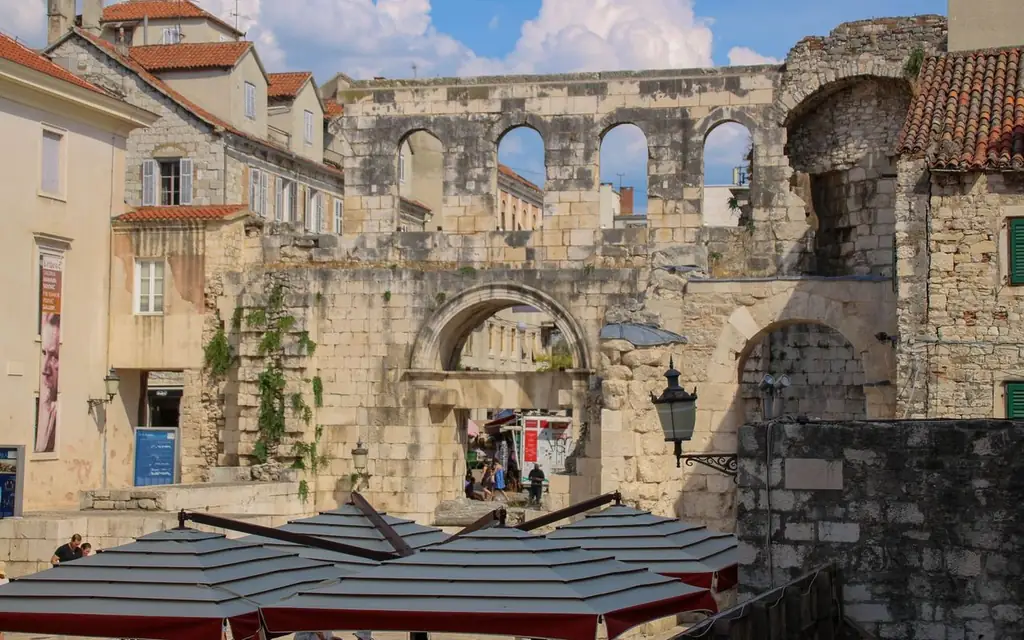
- Zagreb to Split via Plitvice: about 130 km (80 mi) to the park, then roughly 250 km (155 mi) to Split, with the park in the middle of the day. The coast then opens up at Diocletian's Palace: see our guide to Diocletian's Palace in Split.
- Zadar to Zagreb via Plitvice: the park lies on the line of the road, so the visit adds hours but little distance.
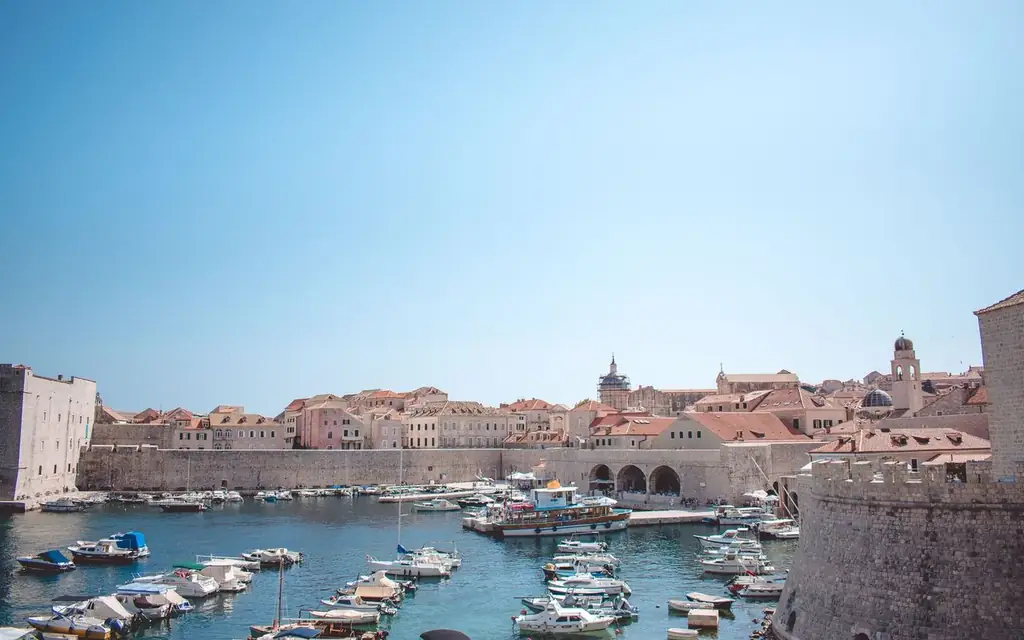
- Zagreb to Dubrovnik: a long overland day. Most travelers prefer to break it at Plitvice, then carry on to the south, where Dubrovnik Old Town closes the route.
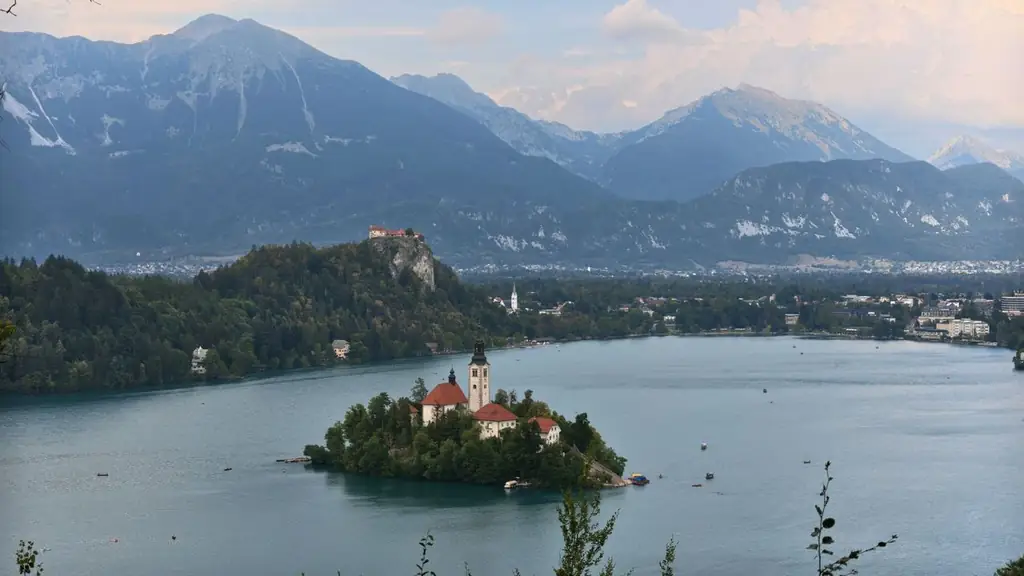
- Plitvice and Slovenia: Lake Bled is roughly 270 km (170 mi) away through Zagreb, and our guide to Lake Bled covers the other side of that border, which is open between Schengen countries.
Arrivals into Croatia can be matched to a pickup through our airport transfer directory, and the attractions hub links every guide in this series. Our broader private tours with driver page explains how we plan multi-stop days, and the European directory lists the operators we use across the region.
A sample day from Zagreb
This is an illustration, not a fixed itinerary. Your own timetable follows your ticket slot.

- 06:45 Pickup at your Zagreb hotel.
- 08:45 Arrival at the car park for the entrance on your ticket. The driver drops you at the gate.
- 09:00 Your timed entry. Start with the lower terraces and the Veliki slap, the park's tallest waterfall.
- 11:30 Cross Kozjak lake by electric boat to the other side.
- 12:30 Lunch at one of the park's restaurants, which the official site lists.
- 14:00 Upper Lakes walk or panoramic train, depending on energy.
- 15:30 Meet the car at the exit gate.
- 17:45 Back in Zagreb, or onward to the coast.
If you are heading on to Split or Zadar instead, the same plan ends with a drive south, and the car carries your luggage the whole way.
Ways to reach Plitvice compared
| Option | Typical time from Zagreb | Cost note | Best for |
|---|---|---|---|
| Private chauffeur | About 2 hours each way | Fixed fare via the booker | Groups, families, one-way coastal transfers, tight schedules |
| Rental car | About 2 hours each way | Fuel, tolls and parking extra | Confident drivers who want to stay flexible |
| Scheduled intercity coach | About 2.5 to 3 hours with stops | Lowest | Solo travelers on a budget who do not mind a fixed timetable |
| Organized day tour by coach | 12 to 14 hours door to door | Fixed price per seat | First-timers who want a guide and no planning |
| Taxi | About 2 hours each way | Metered or negotiated | Rarely sensible for a return day trip |
If you are traveling alone and a scheduled coach fits your dates, it is the lower-cost option, and nothing is gained by booking a car for a single seat. The private car earns its place with two or more travelers, with luggage, with a one-way onward leg, or with a ticket slot that public timetables cannot match.
Practical notes before you go
- Footwear: boardwalks are slippery after rain or frost. Wear shoes with grip.
- Clothing: the gorges are cooler than the road, even in summer. Pack a layer.
- Food: the park has restaurants, and the official site lists them. Bring water.
- Cash and cards: confirm payment methods at the gate, particularly if you plan to buy on the spot.
- Children: boat and train access makes the Lower Lakes comfortable for families. Child, toddler and booster seats can be requested when you book the transfer.
- Weather alerts: check the park's current-conditions page on the morning of travel.
Frequently asked questions
How far is Plitvice Lakes from Zagreb by car?
About 130 km (80 mi), and the drive normally takes around two hours. Plan a little extra in winter, and on summer weekends when the approach roads fill with day-trippers heading to the coast.
Which airport is closest to Plitvice Lakes National Park?
Zadar Airport, at roughly 120 to 130 km (75 to 80 mi) and 90 to 110 minutes by road. Zagreb is the next most practical gateway at about two hours, and Split Airport is around three hours away.
Do I have to book Plitvice tickets in advance?
It is strongly advisable. Tickets are sold for a specific day, time slot and entrance, and the system shows remaining capacity per hour. On-the-spot tickets are sold only if capacity remains, so in busy periods a booking made at home protects the day.
Can a driver wait for me at Plitvice?
Yes. Both entrances have visitor parking, and a chauffeur can wait there, or move between the two car parks about 3 km (2 mi) apart so you can walk one way and be collected at the other gate.
Can I swim in the lakes at Plitvice?
No. Swimming is prohibited throughout the park, as are leaving the marked trails and flying drones. The rules protect the travertine barriers that create the waterfalls.
How long should I allow at Plitvice Lakes?
Four to six hours covers the lakes comfortably, plus the drive. Guided programs listed by the park run up to four hours for half a day and five to six hours for a full day.
Is Plitvice open in winter?
The park is open all year, though the Upper Lakes typically close in winter and hours are shorter. Check current conditions on the official site before traveling.
Can I combine Plitvice with a transfer to Split or Dubrovnik?
Yes. Plitvice works as a midpoint between Zagreb and the coast. The booking desk plans the leg, the stop and the onward drive as one reservation with a single fixed fare quoted before you book.
Can the park's visitor information partners arrange transfers for guests?
Croatian tourist offices and visitor centers can book chauffeur services for their visitors with LimousineWorldwideDirectory.com through a trade account, which suits lodges and agencies near the park.