
 United StatesJFK
 MexicoMEX
 BrazilGRU
 ArgentinaEZE
 ChileSCL
 ColombiaBOG
 PeruLIM
 PanamaPTY
 Costa RicaSJO
 Dominican RepublicPUJ
 JamaicaMBJ
 BahamasNAS
 BarbadosBGI
 United KingdomLHR
 IrelandDUB
 FranceCDG
 GermanyFRA
 NetherlandsAMS
 BelgiumBRU
 SwitzerlandZRH
 AustriaVIE
 ItalyFCO
 SpainMAD
 PortugalLIS
 GreeceATH
 TurkeyIST
 DenmarkCPH
 SwedenARN
 NorwayOSL
 FinlandHEL
 PolandWAW
 Czech RepublicPRG
 HungaryBUD
 IcelandKEF
 United Arab EmiratesDXB
 QatarDOH
 Saudi ArabiaRUH
 IsraelTLV
 EgyptCAI
 MoroccoCMN
 South AfricaJNB
 KenyaNBO
 NigeriaLOS
 IndiaDEL
 PakistanLHE
 Sri LankaCMB
 SingaporeSIN
 MalaysiaKUL
 ThailandBKK
 VietnamSGN
 PhilippinesMNL
 IndonesiaCGK
 Hong KongHKG
 ChinaPVG
 TaiwanTPE
 JapanHND
 South KoreaICN
 AustraliaSYD
 New ZealandAKL
On a morning when two large ships are berthed at Gruž, the stretch of road in front of Pile Gate can feel like the entrance to a stadium. Buses unload, taxis queue, and thousands of people funnel across a single stone bridge into one street. Travelers who plan around that moment have a very different day from those who walk into it.
This guide is for guests who want to see Dubrovnik's Old Town properly and arrive by chauffeured car. It explains what a driver can and cannot do, which gate to use, how the walls are ticketed, and how to avoid the worst of the crowds.
Can you drive into Dubrovnik Old Town?
No. The walled city is largely closed to ordinary vehicles, and access roads around it are controlled. A chauffeur drops you at Pile Gate on the western side or near Ploče Gate on the east, and you enter on foot. Ruđer Bošković Airport is about 20 km (12 mi) away, roughly 25 to 35 minutes.
The City of Dubrovnik's own website carries a link to what it calls a special traffic regime zone around the center, and a live traffic section for the approaches. Permits are issued to residents, delivery vehicles and licensed operators. Whether a given vehicle holds a permit is the city's decision, so we plan every transfer around the nearest legal point, and the walk from there to the gate is short.
Expect the final kerb to change with the day's conditions. In peak season the driver may use the area near Pile Gate, which has a bus terminus, or the harbor road to the south. The booking desk confirms your drop point in advance, and the driver messages you on the day.
Pile Gate and Ploče Gate: which one to use
Dubrovnik's two land gates are very different arrival experiences.
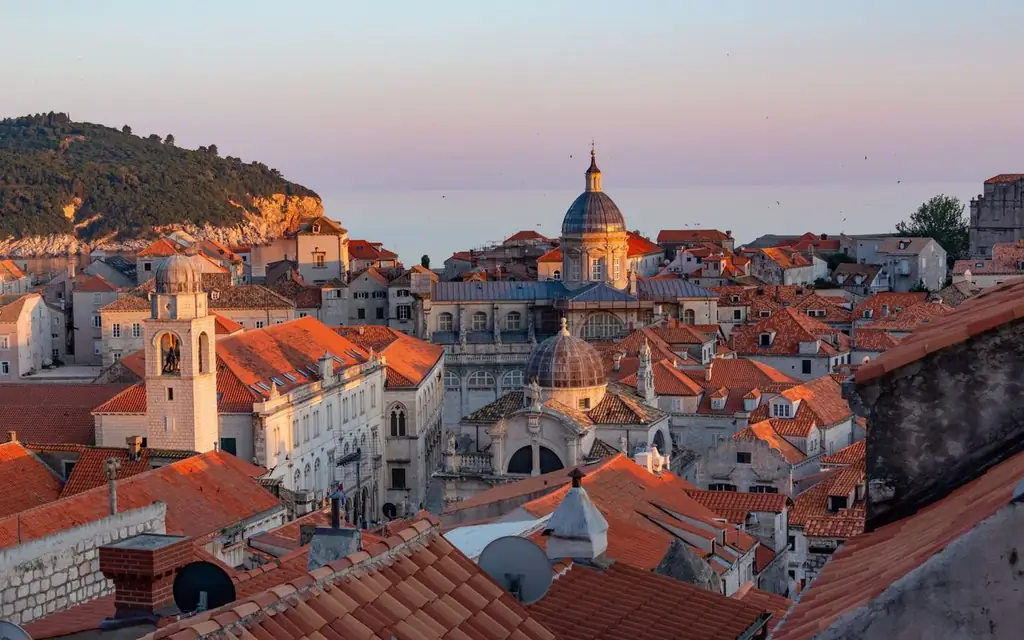
Pile Gate is on the western side and is the principal entrance. It opens onto the main street, the Stradun, and onto the Onofrio fountain close by. It is also where most day visitors arrive, so it is the busiest point in the city between late morning and mid-afternoon.
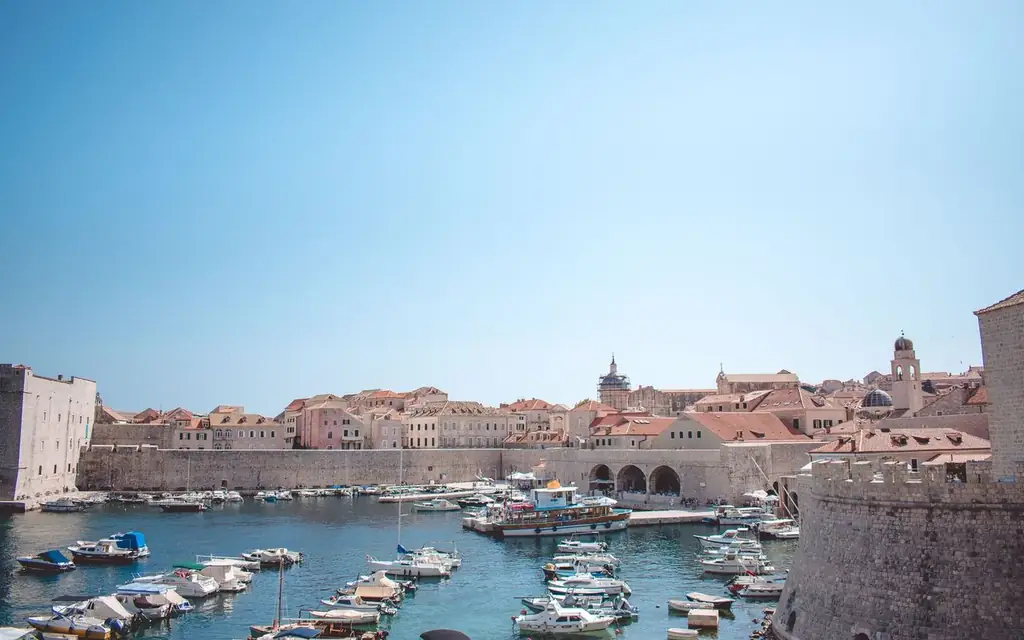
Ploče Gate is on the eastern side, close to the old harbor. It is quieter, and it suits guests staying in the hotels strung along the Ploče coast, or anyone who wants to start at the harbor and walk west. Private vehicles are mostly restricted here to residents.
For a first visit, most travelers choose to be dropped at Pile Gate early in the morning, then collected at Ploče or the harbor road in the afternoon. That avoids retracing steps and puts the car on the quieter side at the end of the day.
From Ruđer Bošković Airport to the walls
The airport's official name is Ruđer Bošković Airport Dubrovnik, and it lies south-east of the city, about 20 km (12 mi) from the Old Town. The drive normally takes 25 to 35 minutes, and the road is the coastal highway, which can slow noticeably when ships are in and in the early evening. The airport's own site, dbv.hr, lists taxi, car rental and parking information.
For arrivals, a chauffeur tracks the flight and meets you with the 60-minute free waiting window that applies to international arrivals. Add a name board if you want the driver at the door of arrivals. Hotels inside the walls will often ask the driver to stop outside and send a porter, so mention your hotel name when booking.
Visitors from Split arrive by road, about 230 km (143 mi) and 3.5 to 4 hours, and the Pelješac Bridge now lets the route avoid the border crossing at Neum. Our guide to Diocletian's Palace in Split covers the other end of that drive.
Walking the city walls
The wall circuit is the signature experience, and it is run as a separate, ticketed attraction. The Society of Friends of Dubrovnik Antiquities describes the walls as 1,940 m long, with a main wall, sixteen towers and three fortresses. A ticket is valid for a single tour, and re-entry is not permitted, so decide where you want to finish before you start. Staff may ask to see your ticket until the end. The ticket shop and the official explanation are at citywallsdubrovnik.hr.
Plan around these points:
- Go early or late. The walls are exposed, the stone is hot, and midday crowds make the narrow sections slow.
- Comfortable shoes are essential. Steps are steep and uneven.
- Allow about 90 minutes to 2 hours for a relaxed circuit with photographs.
- Bring water. Kiosks exist, but they are limited.
- Closing hours move with the season. In autumn the walls close earlier than in summer, and the last entry is before closing. Read the current times on the official page before you commit to a late slot.
If you have a mobility concern, discuss it with the ticket office. The walls involve many stairs and are not suited to wheelchairs.
Inside the walls: a sensible order
The old town is small enough to cover in half a day without strain. A walking order that avoids doubling back:
- Enter by Pile Gate and look up at the stone bridge and the statue of St Blaise, the city's patron.
- Pass the large Onofrio fountain and walk the length of the Stradun, the limestone main street that has been polished by centuries of feet.
- Continue to Luža Square at the eastern end, with the Sponza Palace, the bell tower and the column of Orlando.
- Visit the Rector's Palace and the cathedral nearby, then step into the side streets that climb the slope.
- Finish at the old port, where small boats leave for Lokrum island.
The city has been used as a film location for a well-known fantasy series, and you will see groups of fans photographing stairways and walls. That is part of why summer crowds have grown, and part of why the city now manages numbers.
How Dubrovnik manages crowds
The city operates a visitor-management initiative called Respect the City, and its website publishes a counter of visitor numbers. Authorities have also worked with the cruise industry to spread ship arrivals and with tour operators to regulate bus arrivals. The details change, so confirm current rules on the City of Dubrovnik website before traveling.
For you, the effect is practical rather than legal. The best protection against crowds is timing:
- Be inside the gate by 08:00 or 09:00 in summer.
- Walk the walls early or in the last hours of the day.
- Eat lunch away from the Stradun, on one of the side streets or outside the walls.
- Avoid the narrow staircases when a large group is entering.
- Consider visiting in shoulder months, when fewer ships call.
In October the city is quieter than August, though ships still call and the light on the stone is excellent.
Luggage, hotels and the last stretch on foot
The last few hundred meters decide how the arrival feels. Inside the walls the lanes are stepped, the paving is polished and rolling a suitcase over it is noisy and slow. Guests staying in a property inside the walls generally have two choices: ask the hotel to send a porter to meet the car at the gate, or leave heavy luggage in the vehicle and have the driver deliver it later to a point the hotel can reach. Say which you prefer when you book, give the full hotel name and the name of the street, and keep the hotel's reception number to hand. For stays outside the walls, in Ploče, Lapad or on the Babin Kuk peninsula, the car can usually reach the entrance, which makes check-in far simpler.
The same logic applies at departure. Agree a pickup time that leaves a margin for the walk, and remember that coach traffic around Pile Gate is heaviest between late morning and mid-afternoon. A departure in the early morning or the evening is rarely affected.
What to expect in autumn and winter
After the cruise season thins out, the character of the city changes. Some seaside restaurants and boat services reduce their hours, the walls close earlier, and the light on the limestone is softer. Rain can make the Stradun slick, so shoes with grip help. The upside is space: you can stand in the middle of the main street, photograph the Onofrio fountain without a crowd, and talk to the people who live here. If you can choose your dates, late September to October and April to early June give the best balance of weather, opening hours and calm.
Ways to reach the Old Town compared
| Option | Time from airport | Cost note | Best for |
|---|---|---|---|
| Airport bus to Pile | 40 to 60 minutes with stops | Lowest | Solo travelers with light bags |
| Taxi | 25 to 35 minutes | Metered or agreed in advance | Couples and small groups |
| Rideshare | 25 to 35 minutes | Variable, less reliable at the gates | App users on short trips |
| Rental car | 25 to 35 minutes plus parking | Fuel and garage fees extra | Guests continuing along the coast |
| Private chauffeur | 25 to 35 minutes | Fixed fare via the booker | Families, groups, hotel pickups, luggage |
If you travel light and arrive in daylight, the scheduled bus is the lower-cost and perfectly sound option. A private car makes sense for groups, luggage, late arrivals and onward legs, for example from the Old Town to a hotel outside the center.
The view from above: Mount Srđ
The hill above the Old Town gives the best overview of the walls, the red roofs and the Adriatic. A cable car climbs it, and the summit is also reachable by road, so a chauffeur can drive you up for sunset, wait, and return. It makes a good bookend to a day that starts on the walls: a late-afternoon ascent, a stop at the viewing terrace, and a descent to dinner. Wind can close the cable car, so ask on the day.
Half-day and full-day plans
Half day, 4 hours:

- Hotel pickup and Pile Gate drop-off at 08:30.
- Walls circuit, then the Stradun.
- Coffee or an early lunch away from the main street.
- Collection at Ploče or the harbor road.
Full day, 8 to 9 hours: add a boat to Lokrum, a drive up Srđ in the afternoon and a seaside dinner.
Day trips from Dubrovnik: the Pelješac peninsula and the walled town of Ston lie north-west; Cavtat is a harbor village just south of the airport; Trsteno arboretum is about 20 km (12 mi) north-west along the coast. Our private tours with driver page shows how we structure these days. If you continue north, Plitvice Lakes National Park is the long overland leg, usually split across two days.
Crossing borders from Dubrovnik
Dubrovnik is a convenient base for Montenegro. Kotor lies about 90 km (56 mi) south, and the drive takes around two hours before border queues. Montenegro is outside the Schengen area, so passports are checked at the crossing, and queues can add significantly in summer. Confirm entry requirements for your nationality with the relevant government before traveling, and mention the crossing when booking so the desk can arrange a vehicle and driver cleared for it. Cabotage and cross-border rules apply to the operator who delivers the ride.
For wider planning see the European directory, the attractions hub and the airport transfer directory.
Frequently asked questions
How far is Dubrovnik Airport from the Old Town?
About 20 km (12 mi), and the drive takes 25 to 35 minutes depending on traffic. Ruđer Bošković Airport lies south-east of the city.
Can taxis and private cars enter the walled city?
No. Vehicle access is controlled, and permits go to residents, deliveries and licensed operators. Cars stop at Pile Gate or near Ploče Gate, and you enter on foot.
Do I need a ticket for the Dubrovnik city walls?
Yes. The walls are ticketed separately from the town, and a ticket covers a single tour without re-entry. Buy it from the official site at citywallsdubrovnik.hr.
How long does the wall walk take?
Allow roughly 90 minutes to two hours for a relaxed pace with photographs. The route is 1,940 m long, but the stairs and the queues on narrow sections add time.
What is the best time to visit Dubrovnik Old Town?
Early morning or late afternoon, and shoulder months such as May, June, September and October. Midday in July and August is the most crowded and the hottest time.
Is Dubrovnik Old Town a UNESCO site?
Yes. The Old City of Dubrovnik was inscribed in 1979 and the listing was extended in 1994. See the UNESCO World Heritage Centre entry.
Can I take a driver from Dubrovnik to Kotor?
Yes. The distance is about 90 km (56 mi), and the border crossing can add waiting time. Tell the booking desk at the time of reservation so the transfer is planned for a cross-border run.
Is it better to stay inside or outside the walls?
Inside the walls puts you on the Stradun at dawn but requires luggage on foot. Outside, in Ploče or Lapad, gives easier car access. Either way the driver positions the car at the nearest legal point.
Do trade accounts exist for tourism offices and concierges?
Yes. Tourism boards, visitor centers and hotel concierges can book chauffeur services for their visitors with LimousineWorldwideDirectory.com through a trade account.