 United StatesJFK
 MexicoMEX
 BrazilGRU
 ArgentinaEZE
 ChileSCL
 ColombiaBOG
 PeruLIM
 PanamaPTY
 Costa RicaSJO
 Dominican RepublicPUJ
 JamaicaMBJ
 BahamasNAS
 BarbadosBGI
 United KingdomLHR
 IrelandDUB
 FranceCDG
 GermanyFRA
 NetherlandsAMS
 BelgiumBRU
 SwitzerlandZRH
 AustriaVIE
 ItalyFCO
 SpainMAD
 PortugalLIS
 GreeceATH
 TurkeyIST
 DenmarkCPH
 SwedenARN
 NorwayOSL
 FinlandHEL
 PolandWAW
 Czech RepublicPRG
 HungaryBUD
 IcelandKEF
 United Arab EmiratesDXB
 QatarDOH
 Saudi ArabiaRUH
 IsraelTLV
 EgyptCAI
 MoroccoCMN
 South AfricaJNB
 KenyaNBO
 NigeriaLOS
 IndiaDEL
 PakistanLHE
 Sri LankaCMB
 SingaporeSIN
 MalaysiaKUL
 ThailandBKK
 VietnamSGN
 PhilippinesMNL
 IndonesiaCGK
 Hong KongHKG
 ChinaPVG
 TaiwanTPE
 JapanHND
 South KoreaICN
 AustraliaSYD
 New ZealandAKL
How do you get to the Varanasi ghats by car from the airport?
Lal Bahadur Shastri International Airport (VNS) is about 25 km (16 mi) from the city centre, and the drive to the ghat area takes 45 to 90 minutes depending on traffic. Cars cannot enter the old-city lanes, so your chauffeur stops at the road above the ghats and you walk down.
A Varanasi ghats private tour with driver is a day of two halves: the road, where the car is useful, and the riverbank, where it is not. The ghats lie at the foot of the old city, behind lanes that are too narrow and too crowded for vehicles, and the river is crossed by boat, not by road. The plan below puts the chauffeur where it helps most, which is the airport run, the long cross-town transfers and the return to your hotel at the end of a very full day.
What the ghats are
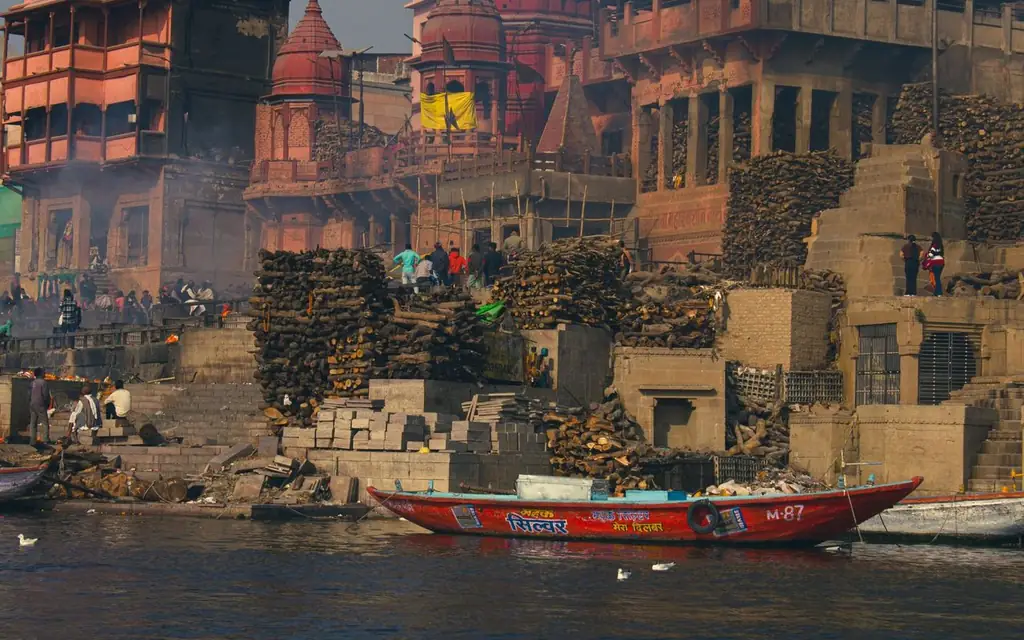
The ghats are the stepped embankments that run for several kilometres along the Ganga in Varanasi, where pilgrims bathe, priests perform rites and the city meets the river. Incredible India's Varanasi page highlights three in particular. Dashashwamedh Ghat is the best known and the site of the evening Ganga aarti. Assi Ghat, at the southern end, is known for Subah-e-Banaras, a sunrise gathering of yoga, music and devotion. Manikarnika Ghat is described as one of Hinduism's holiest cremation grounds.
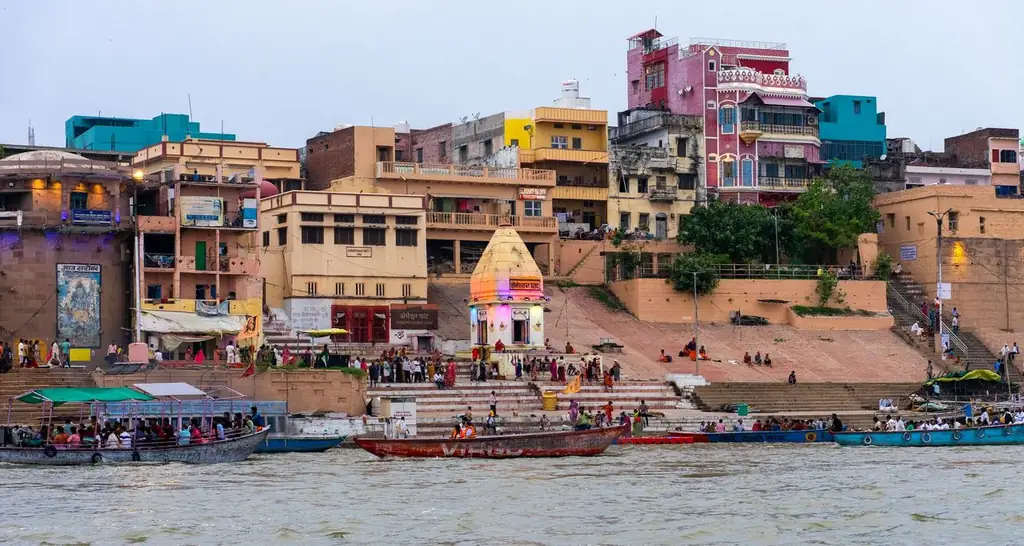
Varanasi is a living pilgrimage city, not a museum, and the ghats are best understood that way. People come to bathe, to pray, to scatter ashes and to die in the belief that it brings liberation. Visitors are welcome to watch with respect, and the contrast of intense devotion and ordinary city life is the point of the visit.
From the airport: the road leg
The airport lies north-west of the city. Incredible India gives it as about 25 km from the city centre; other sources place it a little farther from the old-city ghats, so expect 25 to 27 km (about 16 mi).
- Daytime, allow 50 to 90 minutes. The approach roads are congested, and the last few kilometres through the central districts are the slowest.
- At night or before dawn, the run is faster, often 40 to 60 minutes, which makes an early-morning pickup for a sunrise boat practical.
- From Varanasi Junction railway station, the trip to the old-city edge is short, usually 20 to 40 minutes, though the roads are busy.
- From Sarnath, the drive is about 10 km (6 mi) and takes 25 to 50 minutes depending on traffic.
Our Delhi chauffeur service page explains how we handle onward connections for travelers who arrive through the capital, and the airports hub describes flight tracking and the free waiting time on airport pickups.
Where the car stops and where you walk
Most of the old city is closed to vehicles or effectively impassable by car. The lanes near the Vishwanath temple are largely pedestrian, and some approach roads are declared no-vehicle zones during major festivals and crowds. Taxi operators describe a common pattern: the car works from the edge of the old city, such as the Godowlia area, the road toward Dashashwamedh or Assi, and the rest is walked or done by a short rickshaw or boat.
What this means in practice:
- Tell the desk where you want to start, Assi or Dashashwamedh, and we will plan the drop-off and pickup around that point.
- Expect to walk from the road to the water. Steps, wet stone and crowds are normal, and the distance can be a few hundred metres.
- Agree a pickup point and a time. The lanes make it hard for a driver to find you, so a fixed place is better than a phone call.
- Festival days change everything. On major bathing days and festivals the roads near the ghats can close for the day, and the car may have to wait much farther away. Ask the desk about closures when you choose your date.
The chauffeur cannot take you through the lanes and cannot wait at the water's edge, so treat the car as the link between the hotel, the airport and the edge of the old city.
The dawn boat
The Incredible India page recommends a dawn boat ride, with priests at prayer, devotees bathing and the ghats lit by the sunrise. Most visitors take a rowing boat from a ghat and glide along the bank for an hour or so, looking at the buildings, the temples and the crowd.

- Go early. The light is gentle, the air is cool in the cooler months and the ghats are at their most alive. Winter mornings often bring fog over the river.
- Fix the price and the duration before boarding. Boat fares are negotiated, and your hotel can arrange a reliable boatman.
- Keep to the boat's route. Your boatman knows which stretches are interesting and which are best left alone.
- Be discreet near the burning ghats. The cremation grounds are working sites, and photography of the pyres is not appropriate. Follow your guide's advice, and do not point a camera at mourners.
The river level changes with the season. In and after the monsoon, the water rises and covers the lower steps, and boat routes and landing points can change. Ask your hotel before you plan around a particular ghat.
The evening aarti
The Ganga aarti is held every evening at Dashashwamedh Ghat, according to Incredible India. The ceremony begins around sunset, so its start time moves through the year, and most guides describe it as lasting about 45 minutes. Check the time on the day rather than relying on a printed schedule.
For a good view, arrive well before the start, because the steps and the boats on the water fill early. Many visitors watch from a boat anchored off the ghat, while others take a place on the steps or a balcony. Both work, but the boat view is the most spacious. Keep bags close, expect crowds, and plan your pickup for after the dispersal, when the lanes are full.
Kashi Vishwanath and the old city
The Kashi Vishwanath temple, dedicated to Shiva, is the spiritual heart of the old city. The temple's official site describes it as built in 1780 by Maharani Ahilyabai Holkar and offers online booking for a queue-free darshan, called Sugam Darshan, as well as a live darshan feed. Rules on phones, bags, footwear and dress are set by the temple and can change, so read the site or ask the help desk before you go, and leave valuables at the hotel.
The old city is a labyrinth of lanes, shops and shrines, and it is easiest explored with a local guide who knows the way. A guide also helps with etiquette. Your chauffeur drives and can suggest stops, but a driver is not a substitute for a licensed guide who can explain the rituals and keep you out of difficulty.
Sarnath: a morning or afternoon add-on
Sarnath, where the Buddha gave his first teachings, lies about 10 km (6 mi) from the ghats. Incredible India lists the site as open from 8:00 to 18:00 and highlights the Dhamekh Stupa, said to be 42 metres tall, the Chaukhandi Stupa, the Ashoka Pillar and the museum. The museum has its own hours and a weekly closing day that third-party guides place on Friday, so check the Archaeological Survey of India's official site or the ticket portal it links before you plan the day.
Sarnath is calm after the ghats. Most visitors give it two to three hours, and it pairs well with a late-morning slot when the river is hot and crowded. It is a drive, not a walk, and the car is at its most useful here.
A chauffeured day in Varanasi
- 05:00 pickup at your hotel, and a drive to the road nearest your chosen ghat.
- 05:45 a walk to the water and a dawn boat ride of about an hour.
- 07:30 breakfast near the ghats, then a walk through the old city with a guide.
- 09:30 return to the car and drive to the hotel for a rest.
- 11:00 a drive to Sarnath for the stupa and museum.
- 14:00 lunch and a break in the heat.
- 16:30 the old city, the Vishwanath temple area and the shops.
- 18:00 to the evening aarti at Dashashwamedh, then the return to your hotel.
This is a full day. If you prefer a gentler pace, drop Sarnath or the temple area and keep the two river moments, which are the heart of the visit. For other major north Indian monuments that work well on a multi-day itinerary, see our Taj Mahal guide, the Red Fort guide and the Golden Temple guide. Our private tours with a driver page explains how an hourly or day booking works.
Best season and time of day
Incredible India recommends October to March, when the weather suits walking the ghats, exploring the old city and taking boat rides. Festivals such as Dev Deepawali, Ganga Mahotsav and Mahashivaratri are the most spectacular times and also the most crowded and the most restricted for vehicles. Summer is hot and the river is low, and the monsoon brings flooding and changed boat routes.
Sunrise and sunset are the key hours. Midday is for rest. Keep a margin of time before any flight, since the road from the old city to the airport is slow at peak hours.
Choosing between Assi and Dashashwamedh
The two ghats suit different moods. Assi sits at the southern end of the riverfront and is the calmer of the two, with the Subah-e-Banaras sunrise programme of yoga, music and devotion that Incredible India describes. Dashashwamedh is central, busier and closer to the old-city lanes and the Vishwanath temple, and it is where the evening aarti takes place.
Many visitors start at Assi before dawn, take the boat north along the bank and step off nearer the centre. That works well, but it is a one-way journey on the water, so the car must collect you from where you land, not where you began. Tell the desk your intended start and finish ghats when you book, and keep the boatman's landing point flexible, because the river and the crowds decide where you can step ashore.
Ways to reach the ghats compared
| Option | Typical time from the airport | Cost note | Suits |
|---|---|---|---|
| Private chauffeur | 50 to 90 minutes to the old-city edge | Fixed fare via the booker | Groups, luggage, early starts |
| Pre-paid airport taxi | Similar to a car | Fixed at the counter | Solo arrivals |
| App-based cab | Similar to a car | Surge-priced at peaks | Travelers with local data |
| Bus or shared transport | Slow, with changes | Lowest | Light packers with time |
| Rickshaw or walking in the old city | Short hops only | Negotiated | The last stretch to the ghats |
No car reaches the water, so the cheaper options are only cheaper on the airport leg. If you travel light and arrive in daylight, a pre-paid taxi is reasonable. A chauffeur earns its place when you arrive at night, have luggage, want a fixed schedule or need an early pickup for the dawn boat.
What to wear and what to carry
Dress modestly, with shoulders and knees covered, and wear shoes that are easy to remove. Carry water, a light scarf, small change and sun protection. Leave jewelry and unnecessary valuables at the hotel, since the crowds are dense, and keep your phone and wallet in a front pocket or a zipped bag. Wet steps are slippery, so shoes with grip are worth the trouble.
Be respectful. Do not photograph bathers at close range, ask before photographing people, and stay clear of the burning ghats and of any ritual in progress.
Planning notes and wider trips
Varanasi sits on the road between Delhi and eastern India, and many visitors fly in and out on a short stay of two nights. Tourist offices and visitor centres can arrange a chauffeured day for their guests through a trade account. Our Asia-Pacific directory lists the other regions we cover, and the attractions hub lists the other regional guides.
Frequently asked questions
How far is Varanasi airport from the ghats?
About 25 to 27 km (16 mi). The drive takes roughly 50 to 90 minutes by day and less before dawn. Cars stop at the edge of the old city.
Can a car drive to the Varanasi ghats?
No. The old-city lanes are largely pedestrian, and the ghats are on the riverbank. Your chauffeur stops at the road above and you walk down.
What is the best time to see the Varanasi ghats?
Dawn for the boat and sunset for the aarti. October to March is the most comfortable season.
What time is the Ganga aarti?
It is held every evening at Dashashwamedh Ghat and starts around sunset. The time shifts through the year, so check on the day.
Is it appropriate to take photographs at the ghats?
Yes at most ghats, with discretion. Do not photograph cremations or mourners, and ask before photographing people.
How far is Sarnath from Varanasi?
About 10 km (6 mi), a drive of 25 to 50 minutes. Incredible India lists the site as open from 8:00 to 18:00, and the museum has its own hours.
Do I need a guide in Varanasi?
A licensed guide is strongly recommended for the old city and the rituals. Your chauffeur drives and can suggest stops but is not a licensed guide.
How do I book a chauffeured Varanasi day?
Enter your pickup and the ghat area in the booker, and choose an hourly or day booking so the car waits between stops. The fixed fare appears before you confirm.