
 United StatesJFK
 MexicoMEX
 BrazilGRU
 ArgentinaEZE
 ChileSCL
 ColombiaBOG
 PeruLIM
 PanamaPTY
 Costa RicaSJO
 Dominican RepublicPUJ
 JamaicaMBJ
 BahamasNAS
 BarbadosBGI
 United KingdomLHR
 IrelandDUB
 FranceCDG
 GermanyFRA
 NetherlandsAMS
 BelgiumBRU
 SwitzerlandZRH
 AustriaVIE
 ItalyFCO
 SpainMAD
 PortugalLIS
 GreeceATH
 TurkeyIST
 DenmarkCPH
 SwedenARN
 NorwayOSL
 FinlandHEL
 PolandWAW
 Czech RepublicPRG
 HungaryBUD
 IcelandKEF
 United Arab EmiratesDXB
 QatarDOH
 Saudi ArabiaRUH
 IsraelTLV
 EgyptCAI
 MoroccoCMN
 South AfricaJNB
 KenyaNBO
 NigeriaLOS
 IndiaDEL
 PakistanLHE
 Sri LankaCMB
 SingaporeSIN
 MalaysiaKUL
 ThailandBKK
 VietnamSGN
 PhilippinesMNL
 IndonesiaCGK
 Hong KongHKG
 ChinaPVG
 TaiwanTPE
 JapanHND
 South KoreaICN
 AustraliaSYD
 New ZealandAKL
The ancient Greeks placed Delphi at the center of the world, and the road still feels like a pilgrimage. From the plain of Boeotia the highway lifts into limestone country, passes the ski-village of Arachova, and then drops toward a hillside ledge where the Sanctuary of Apollo and a gorge of olive trees lie below the cliffs of Mount Parnassus. It is a beautiful drive, and a long one.
What follows is a plan for visiting Delphi with a private driver: how long the journey really takes, how the tickets work, how to handle the climb, and whether you should come back to Athens the same night.
How far is Delphi from Athens by car?
Delphi is about 160 km (100 mi) from central Athens by road, normally around three hours, with route planners giving between 2 hours 45 minutes and 3 hours. From Athens International Airport the road distance is closer to 185 km (115 mi), a little over three hours.
The Ministry of Culture's Hellenic Heritage page for Delphi states about three hours by car from Athens. Journey times shift with traffic at the Athens exit, the weather on the mountain sections, and roadworks, so build in margin. A driver collecting you from a central hotel at 07:00 will normally reach Delphi before 10:30, including a short break.
If you are landing at Athens Airport and heading straight to Delphi, tell the booking desk so the transfer is planned as a single leg with a flight-tracked pickup.
The road in: Thebes, Livadeia and Arachova
The usual route leaves Athens northward on the national motorway, then turns west toward Thebes and the plain of Livadeia. After that the road climbs into the foothills of Mount Parnassus and passes through Arachova, a stone village known for winter sports and for its weavings and cheese. Delphi lies roughly ten kilometers beyond, on a slope facing the Gulf of Corinth.
Two stretches matter for planning:
- The mountain road after Livadeia, which is two-lane in sections and can be slow behind trucks and coaches.
- The final descent from Arachova, where the bends are tight, the views are wide and a calm driver is worth having.
In winter, snow can close the approach, and chains are required when the road is covered. The booking desk watches conditions on the day. If you travel between November and March, accept that the schedule may shift.
Day trip or overnight?
A round trip from Athens means about six hours in the car and four or five hours on foot at the site. That is workable, but it is a long day. Many guests choose one of two alternatives.
Overnight at Delphi or Arachova. You see the museum in the late afternoon, sleep in the mountains, and return to the site or move on the next morning. The trip is then relaxed and the evening is yours.
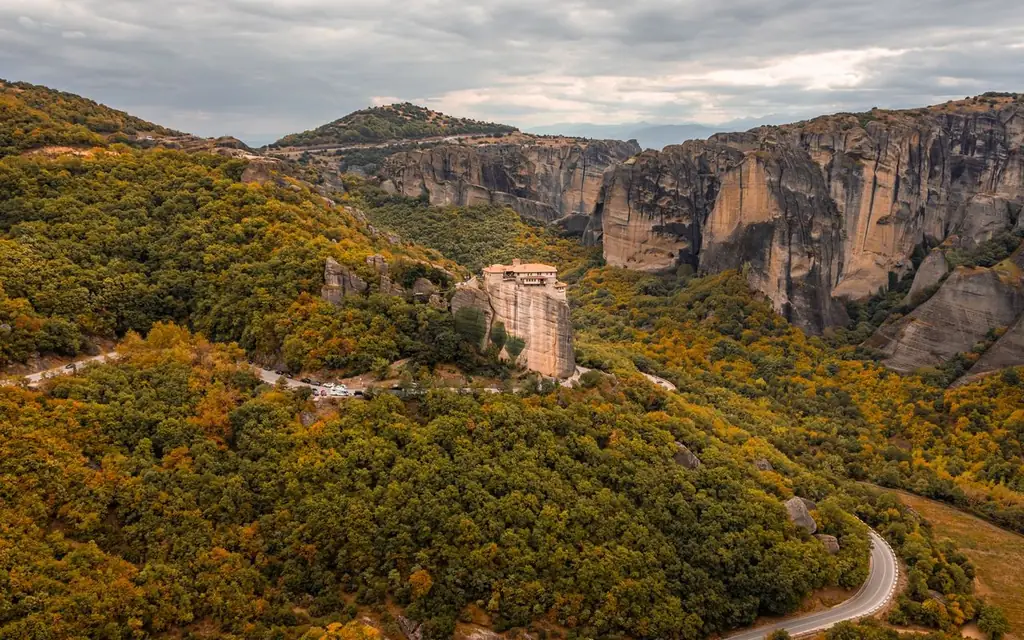
Delphi as a leg toward Meteora. The drive from Delphi to Meteora is roughly 250 to 280 km (155 to 175 mi) and takes about 3.5 to 4 hours, so Delphi works as an overnight stop between Athens and Meteora. See our guide to Meteora.
If you must do a round trip, start early, avoid the weekend afternoon exodus from the mountains, and accept that sunset will arrive on the road.
Guests who overnight usually prefer Arachova for its restaurants and winter atmosphere, or the hotels closer to the sanctuary for an early start. Either way, tell the booking desk where you are staying so the driver can plan the next morning's pickup, and remember that the site closes at mid-afternoon in winter, so a late-morning departure still leaves enough time for the walk.
One ticket, two places
A single ticket covers the archaeological site and the Archaeological Museum of Delphi, according to the official pages. Tickets are sold online via the Ministry's ticketing service at tickets.hh.gr and at the site.
The two places have different timetables:
- Archaeological site: daily 08:00 to 20:00 from 1 April to 31 August, with closing time stepping down to 19:30, 19:00, 18:30 and 18:00 through autumn, reaching 18:00 from 16 to 31 October. From 1 November to 31 March it is 08:30 to 15:30. Last admission falls 20 minutes before closing.
- Museum: the official museum listing gives winter hours of 08:30 to 15:30 and summer hours of 08:00 to 20:00, with different hours on Tuesdays in summer. Confirm on the museum's official page before planning a Tuesday.
Both are closed on 1 January, 25 March, 1 May, Orthodox Easter Sunday, and 25 and 26 December. Free days include 6 March, 18 April, 18 May, the last weekend of September, 28 October and the first and third Sundays from November to March.
Winter closing at 15:30 is the quiet trap. A lunch stop in Arachova can turn into a missed visit if you leave Athens late in November. Aim to be through the gate by midday.
Site first or museum first?
Most travelers visit the site in the cooler hours and the museum when they need shade. The site is exposed and sloped, and the museum is indoors.
- Early arrival, site first: you climb in the cooler part of the morning and finish at the museum before lunch.
- Late arrival, museum first: you see the objects first, then use the remaining light to walk the sanctuary, which gives context to the architecture.
- Short visit: if you have only 90 minutes, do the sanctuary's Sacred Way and the Temple of Apollo and give the museum a rapid pass for the Charioteer.
Whichever order you choose, keep a gap between them. Concentrating all the walking in the middle of the day is the common mistake.
Walking the sanctuary
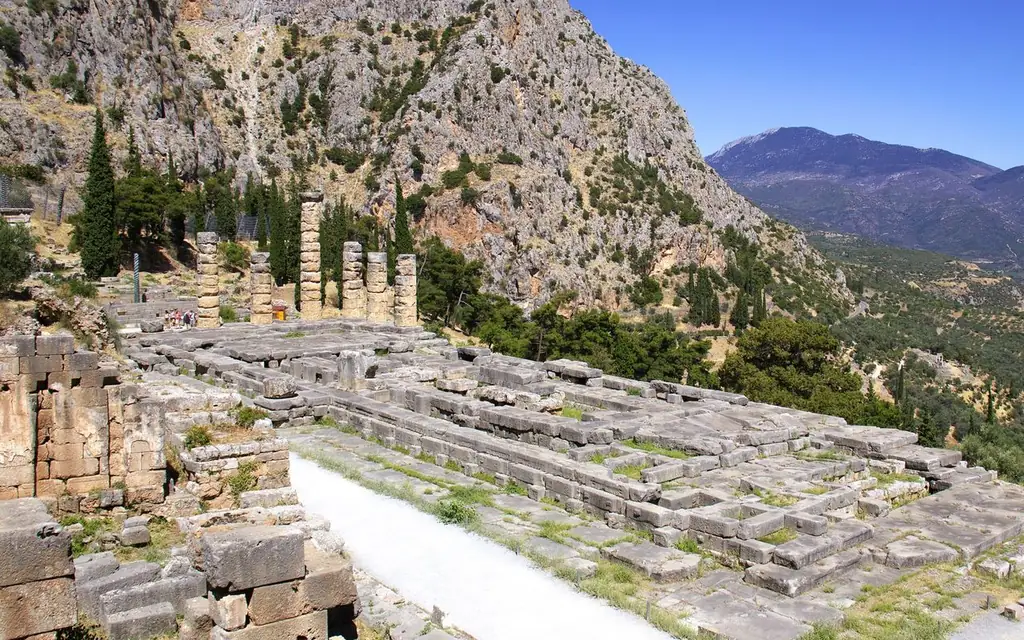
The sanctuary climbs the hillside along the Sacred Way, a paved zigzag lined with the foundations of treasuries, the small buildings in which Greek cities stored offerings to Apollo. The most recognizable is the reconstructed Treasury of the Athenians. At the top of the path stands the Temple of Apollo, where the Pythia, the priestess of the oracle, gave her answers. Above the temple are the ancient theatre, with a view across the valley, and the stadium, higher still, where the Pythian Games were held.
The climb is genuine. The ground is uneven, the paths are stepped and the summer sun is strong. Wear shoes with grip, carry water, and take it slowly. If the stadium looks too far, the theatre gives the best view for the least effort.
It helps to know what you are walking through. For roughly a thousand years, individuals and city-states traveled here to put questions to Apollo through the Pythia, on matters from founding colonies to going to war. The answers were famously ambiguous, and the sanctuary grew rich on the offerings of those who consulted it. The treasuries lining the Sacred Way were the way cities advertised that wealth, so the path is in effect a street of competing monuments. Reading the route this way turns a series of ruins into a story.
For interpretation, use the site signage or hire a licensed guide. A chauffeur drives and suggests stops, but Delphi is a site where a guide who can explain the oracle's role is worth having.
The museum and the Charioteer
The Archaeological Museum of Delphi stands beside the site and holds the finds from the sanctuary. The best known piece is the bronze Charioteer, a statue with inlaid eyes and a calm expression that survives from the early fifth century BC. Other highlights include the Sphinx of the Naxians, the colossal sculpture offered to Apollo, and the omphalos, the carved stone that marked the centre of the world.
The museum lists ramp and lift access, tactile material, Braille signage and accessible toilets, which makes it the easiest part of Delphi for guests with reduced mobility. If steps are difficult, you can spend most of your time here and see only the lowest sanctuary.
Marmaria, the Tholos and the Castalian Spring
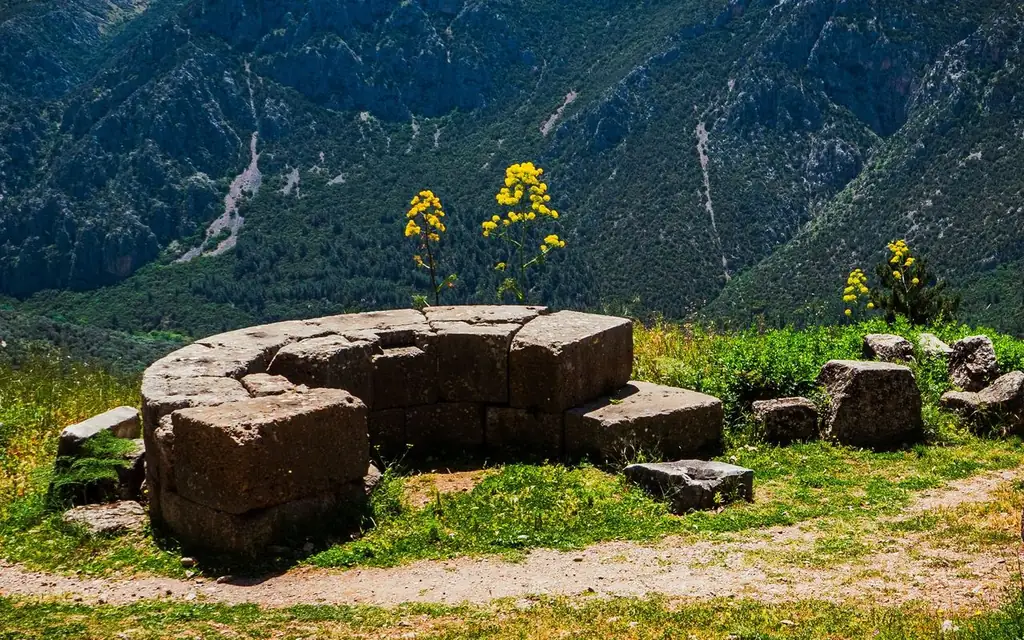
Coming from Arachova, the road passes Marmaria, the sanctuary of Athena Pronaia, just before the main site. Its elegant circular Tholos is one of the most photographed ruins in Greece. Close by is the Castalian Spring, where pilgrims washed before consulting the oracle. Ask at the ticket office how each area is covered on the day, as arrangements can change, and let your driver know if you want to stop here on the way in or out.

The Tholos is best in the late afternoon when the sun rakes across the columns. If you have time, finish here as the day cools.
Parking, the car and accessibility
Parking is listed among the amenities at the site. Your driver can drop you near the entrance and wait, and in high season the parking area fills with coaches around midday. Plan to be early or late to find easy space. Luggage stays in the vehicle while you walk, which matters for guests continuing north to Meteora, and the driver can use the wait to rest, since the mountain section after Arachova is demanding in both directions. Water and phone chargers are available in most vehicles, but the sanctuary has little shade, so carry your own bottle.
The official pages for the site do not detail accessibility. The museum is accessible. For the sanctuary, steps and sloping ground make independent access difficult. Contact the Ephorate of Antiquities of Phocis or the museum before you travel if you have mobility needs, and tell the booking desk so a suitable vehicle and drop-off point are arranged.
A day timetable from Athens
The timetable below shows the shape of the day; your own pickup time sets the rest.
- 07:00 Pickup in central Athens.
- 08:30 Short coffee stop at Livadeia or on the road.
- 10:15 Arrive at Delphi and park near the entrance.
- 10:30 Walk the sanctuary to the stadium and back.
- 13:00 Lunch in Delphi or Arachova.
- 14:30 Museum visit, Marmaria and the Tholos.
- 16:30 Departure for Athens, or the drive to your overnight stay.
- 19:30 Back in Athens in good time for dinner.
On days with a winter closing at 15:30, move the museum earlier and skip the long lunch.
How the options compare

| Option | Time from central Athens | Cost note | Best for |
|---|---|---|---|
| Intercity bus (KTEL) | About 3 hours | Lowest | Solo travelers with a flexible schedule |
| Organized day tour by coach | 10 to 12 hours return | Fixed price per seat | First-timers who want commentary |
| Rental car | About 3 hours each way | Fuel, tolls and parking | Confident drivers on mountain roads |
| Private chauffeur | About 3 hours each way | Fixed fare via the booker | Groups, families, overnight itineraries |
For one traveler on a day trip, the bus is the lowest-cost honest option, and an organized tour is easier if you want a guide. A private car wins when you travel in a group, need to stop at Arachova or Osios Loukas, or want to carry on to Meteora in the same booking.
Onward: Meteora, the Acropolis and the coast
Delphi pairs with two other guides in this series.
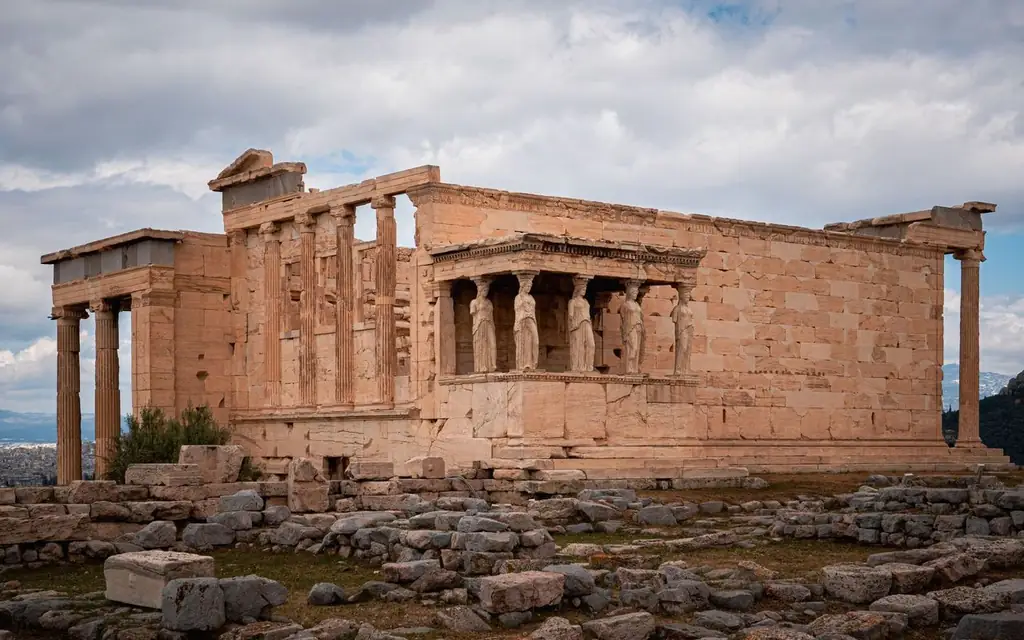
- Back in Athens, the Acropolis of Athens is the logical morning of the next day, with its own timed-ticket rules.
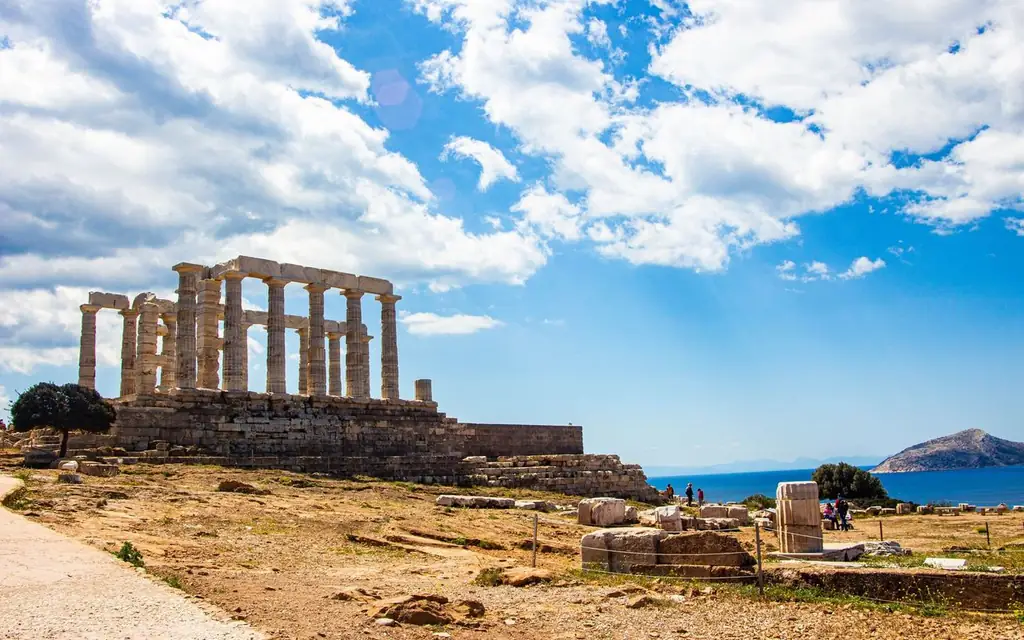
- Sounion lies on the opposite side of the capital. Our guide to the Temple of Poseidon at Cape Sounion suits a sunset on a different day.
- Osios Loukas, a UNESCO-listed Byzantine monastery, lies off the main road between Livadeia and Delphi and can be added as a short stop.
Delphi is also listed by UNESCO, which inscribed the Archaeological Site of Delphi in 1987 and describes it on the World Heritage Centre site. Our private tours with driver page explains how we plan multi-stop trips, and the European directory and airport transfer directory help with arrivals.
Frequently asked questions
How long does it take to drive from Athens to Delphi?
About three hours each way for roughly 160 km (100 mi), depending on traffic and weather on the mountain sections.
Is Delphi worth a day trip from Athens?
Yes, if you start early and accept a long day. An overnight stay in Delphi or Arachova makes the trip more relaxed.
Is one ticket valid for the site and the museum?
Yes. A single ticket covers both the archaeological site and the Archaeological Museum of Delphi, and it can be bought online via the Ministry's ticketing service.
What time does Delphi close in winter?
From 1 November to 31 March the site closes at 15:30, with the last admission 20 minutes earlier, so plan to be through the gate by midday.
Is Delphi accessible for wheelchair users?
The museum has ramps, a lift and accessible toilets. The sanctuary is steep and uneven, so contact the site before you travel.
Can I combine Delphi with Meteora?
Yes. The drive between them is roughly 250 to 280 km (155 to 175 mi), about 3.5 to 4 hours, and the stop works well as an overnight.
Do I need a licensed guide?
It is not required, but a guide adds context at the sanctuary. A chauffeur drives and can suggest stops, and guides are separate professionals.
Can regional tourism bodies book a driver for their visitors?
Tourism boards, tourist offices and visitor centers can book chauffeur services for their visitors with LimousineWorldwideDirectory.com through a trade account.