
 United StatesJFK
 MexicoMEX
 BrazilGRU
 ArgentinaEZE
 ChileSCL
 ColombiaBOG
 PeruLIM
 PanamaPTY
 Costa RicaSJO
 Dominican RepublicPUJ
 JamaicaMBJ
 BahamasNAS
 BarbadosBGI
 United KingdomLHR
 IrelandDUB
 FranceCDG
 GermanyFRA
 NetherlandsAMS
 BelgiumBRU
 SwitzerlandZRH
 AustriaVIE
 ItalyFCO
 SpainMAD
 PortugalLIS
 GreeceATH
 TurkeyIST
 DenmarkCPH
 SwedenARN
 NorwayOSL
 FinlandHEL
 PolandWAW
 Czech RepublicPRG
 HungaryBUD
 IcelandKEF
 United Arab EmiratesDXB
 QatarDOH
 Saudi ArabiaRUH
 IsraelTLV
 EgyptCAI
 MoroccoCMN
 South AfricaJNB
 KenyaNBO
 NigeriaLOS
 IndiaDEL
 PakistanLHE
 Sri LankaCMB
 SingaporeSIN
 MalaysiaKUL
 ThailandBKK
 VietnamSGN
 PhilippinesMNL
 IndonesiaCGK
 Hong KongHKG
 ChinaPVG
 TaiwanTPE
 JapanHND
 South KoreaICN
 AustraliaSYD
 New ZealandAKL
Arriving at Meteora on the wrong weekday is the standard mistake. The sandstone pillars are there every day, the town of Kalambaka below them is open every day, but the monasteries on top are not. Each one closes on a different day of the week, and several shut early in winter. A group that drives four hours from Athens to see Great Meteoron on a Tuesday will meet a locked gate.
This guide explains how to avoid that, how to get to Meteora by private car, and how to use the days you have.
How do you get to Meteora by car?
Meteora lies near Kalambaka in Thessaly, roughly 350 km (220 mi) from Athens, a drive of about four to five hours, and about 227 km (141 mi) from Thessaloniki, around 2.5 to 3 hours. From Delphi it is roughly 250 to 280 km (155 to 175 mi).
The drive from Athens follows the E65 highway north through central Greece, past Lamia, and into the plain of Thessaly before it approaches Trikala and then Kalambaka. From Thessaloniki the route heads south-west across the plain. In both cases the last miles climb through the village of Kastraki into the rocks themselves.
The VisitGreece site describes Kalambaka as the entry point to the rocks, and notes that buses from Athens take roughly 4.5 to 5 hours and from Thessaloniki about 3 to 3.5. A private car is faster door to door and gives you control over the stop at the end of the day. The national tourism organization's own site, visitgreece.gr, carries regional background for Thessaly if you want to extend the trip.
Check the closing days before you fix the date
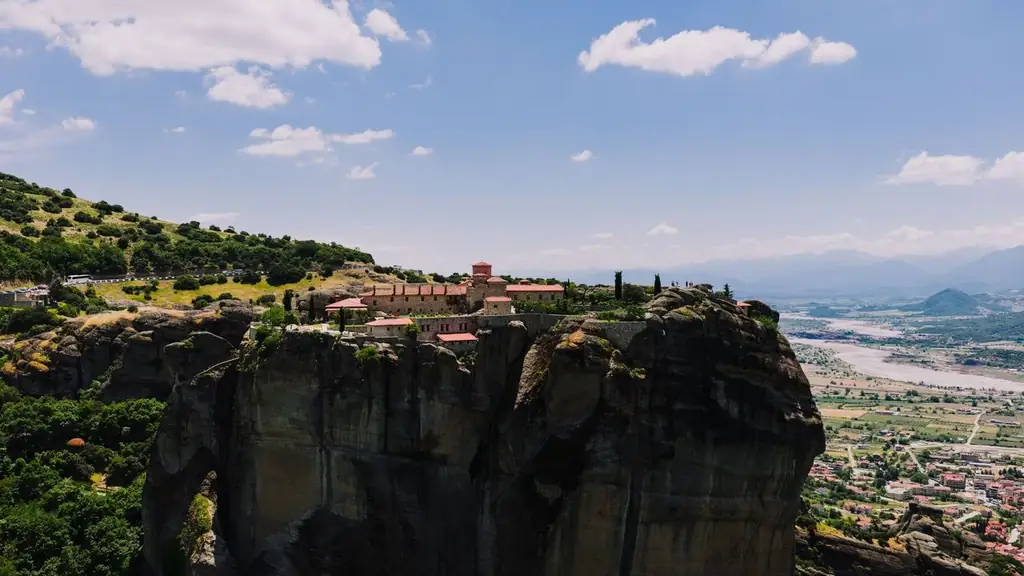
Each of the six active monasteries closes for one day every week, and the days differ so that visitors can always find something open. The commonly published pattern is:
- Great Meteoron: closed Tuesday.
- Varlaam: closed Friday.
- Roussanou: closed Wednesday.
- Holy Trinity (Agia Triada): closed Thursday.
- St Stephen (Agios Stefanos): closed Monday.
- St Nicholas Anapafsas: commonly closed Friday.
Take this as a guide, not a guarantee. The monasteries set their own hours, winter schedules are shorter, some close more than one day a week between November and March, and Orthodox feast days override the weekly pattern. Typical summer hours run from about 09:00 to between 15:00 and 17:00. Always confirm on the day or ask your hotel to phone ahead.
When two of your preferred monasteries are closed on the same day, split your time differently rather than forcing the route. Use the closed monastery as a photograph from the road, and spend the saved minutes at one that is open, where you can sit in the courtyard and look at the plain. Guests who have a second day, even a short one, should save the largest monastery for the morning that it is open.
The practical rule: choose your date first, then pick the monasteries that are open on it. You will still see the rock formations and the viewpoints every day.
Dress code and conduct
These are working monasteries, and the dress code is enforced at the entrance.
- Women: skirts below the knee and tops that cover the shoulders. Trousers are generally not accepted, although wrap-around skirts are available at the entrances.
- Men: long trousers. Shorts above the knee are refused.
- Everyone: no sleeveless tops, and covered shoulders.
A small cash entrance fee is charged at each monastery, so carry euro notes and coins. Photography inside the churches is generally not permitted, and monks and nuns should not be photographed without permission. Speak quietly and follow the signs.
Pack the clothing in the car's boot, and change before you leave the vehicle. Your chauffeur will stop where you can do so.
Carry a small bag for the climb: the entrance fee in cash, a bottle of water and the wrap or scarf you may need at the gate. Larger items stay in the car, because the monasteries are reached by stairs and the courtyards are tight. The driver can wait at the car park or on the road below while you walk, and the pickup can be at a different monastery if you prefer a route that only goes one way.
Choosing which monasteries to visit
Most visitors manage two or three monasteries in a half-day and four in a full day. A selection that suits first-timers:
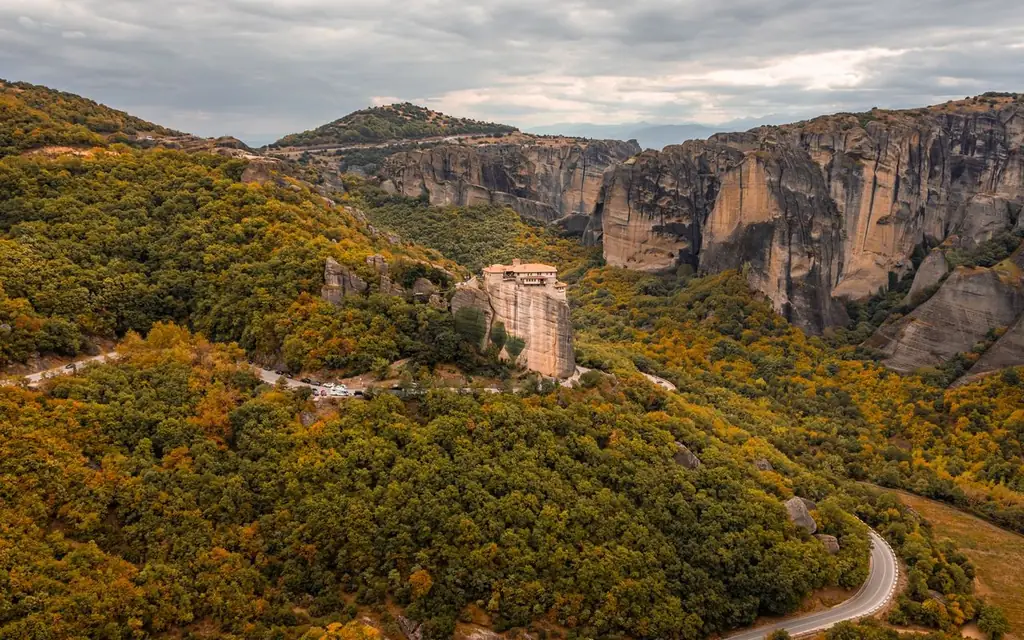
- Great Meteoron, the largest and highest, with museum rooms and a view across the plain. It involves a stair climb.
- Varlaam, with richly painted interiors and a history of access by rope and net.
- Roussanou, reached by a bridge, with a delicate position on its rock and a more intimate scale.
- Holy Trinity, the monastery that appeared in a well-known 1981 spy film, with a steep stepped path.
- St Stephen, the most accessible of the six and a quieter place to finish.
- St Nicholas Anapafsas, small, steep and rarely crowded.
The VisitGreece page on the Meteora monasteries notes that access to the monasteries involves staircases and uphill walking, except for Agios Stefanos, which is more accessible. It also lists the six active monasteries. UNESCO inscribed Meteora in 1988 as a mixed natural and cultural property, and its World Heritage entry gives the formal description.
The road and the viewpoints
The roads that loop around the rocks are narrow, winding and shared with coaches and walkers. They are also one of the main attractions: pull-offs give views of the pinnacles in changing light, and the road passes between the formations in a way no photograph quite captures.
A chauffeur is useful here for three reasons:
- Parking: monastery car parks are small and fill at mid-morning. A driver can drop you at the entrance, park, and wait.
- Drops and pickups: you can walk uphill to one monastery and be collected at another, which is hard to do with a rental car.
- Sunset: the traditional viewpoint at the western rocks draws crowds an hour before dusk. A driver can pre-position the car so you leave without a queue.
The roads can be icy in winter and misty in the early morning, so drive times are an estimate.
Light, mist and the best hour for photographs
Meteora changes more with the light than most landscapes. At dawn in autumn and winter the plain of Thessaly can fill with low cloud, and the rock tops stand clear above it like islands, which is the image on many postcards and one of the reasons to stay overnight. Mid-morning light is flat and often hazy in summer. The late afternoon, when the sun drops toward the western rocks, brings warm color to the sandstone and long shadows across the monastery walls.
A practical approach is to treat the day in two halves. Visit the monasteries in the morning, when they are open and the coach groups have not yet arrived. Use the late afternoon for the viewpoints along the road, where your driver can stop at a safe pull-off and wait. Do not stand in the carriageway for a picture: the road is narrow, and coaches take the bends wide. Drones are a problem in a place where religious sites and nesting birds share the rock, so check the rules and respect them.
If a morning mist is forecast, tell the booking desk. A driver can adapt the first stop so you reach a viewpoint before the cloud lifts, then move on to the monastery gates at opening time.
Where to stay: Kalambaka or Kastraki
Both villages sit at the foot of the rocks.
Kalambaka is the larger town, with shops, restaurants, the main bus and train link and a wider choice of hotels. It is the practical base for travelers without a car.
Kastraki is a smaller village closer to the formations, with hotels and guesthouses facing the rock walls. It is quieter, and the views at breakfast are the reason to choose it.
A private driver makes the choice less important, because the monasteries are a short ride from either. Tell the booking desk the name of your hotel when you book so the first pickup is planned from the right address.
Accessibility and effort
Expect stairs. Some monasteries require dozens of steps, and a few, such as Holy Trinity, have a steep stepped path from the road. Great Meteoron has a long climb from the car park. St Stephen's is the most accessible, with a short bridge approach, and is the best choice for guests with limited mobility. Even there, the interiors are uneven and the doorways low.
If your party includes older travelers, plan two monasteries rather than four, bring water, and take rests. A family with young children should expect to carry strollers, which are impractical on the stairs. Child, toddler and booster seats can be requested at booking for the transfer itself.
Distances at a glance
| Journey | Distance | Typical drive |
|---|---|---|
| Athens to Kalambaka | About 350 km (220 mi) | 4 to 5 hours |
| Thessaloniki to Kalambaka | About 227 km (141 mi) | 2.5 to 3 hours |
| Delphi to Kalambaka | About 250 to 280 km (155 to 175 mi) | 3.5 to 4 hours |
The route from Thessaloniki is the most convenient for travelers flying into northern Greece, and the Delphi link makes a natural central Greece circuit.
A two-day plan from Athens
Day 1: Depart Athens early and break the drive at Lamia or Trikala. Arrive in Kalambaka by mid-afternoon, check in, then drive the rock loop at golden hour. Dinner in the village.
Day 2: Be at your first-choice monastery at opening, since coach groups tend to arrive later in the morning. See two or three, break for lunch in Kastraki, and leave in the early afternoon for Athens or Thessaloniki. Leave Kalambaka by 14:00 if you need to be in Athens for dinner, and build in a rest stop, because the drive is long and the last section into the capital is busy on Sunday evenings.
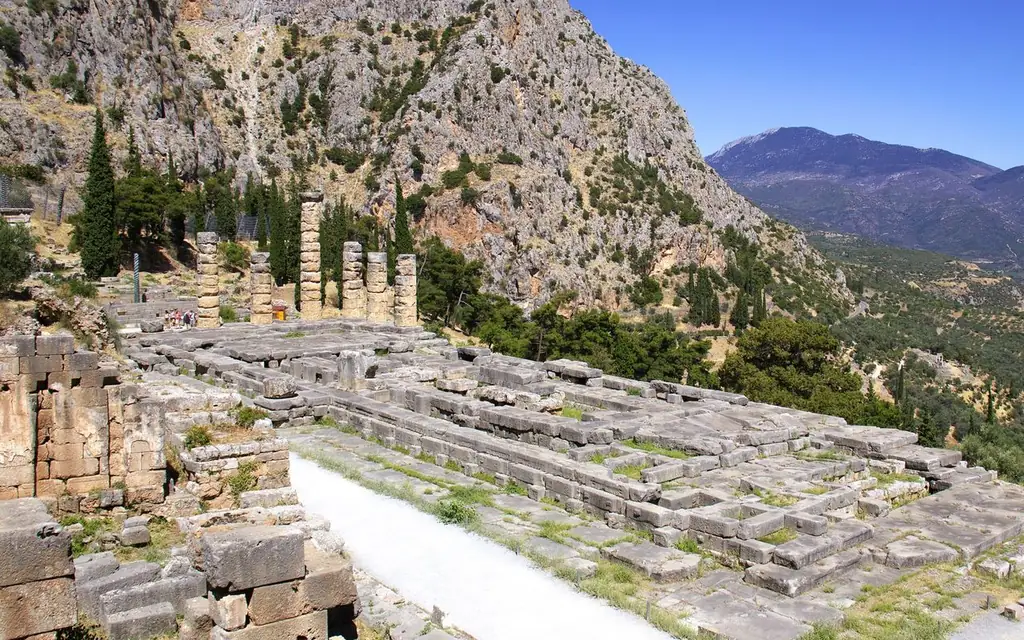
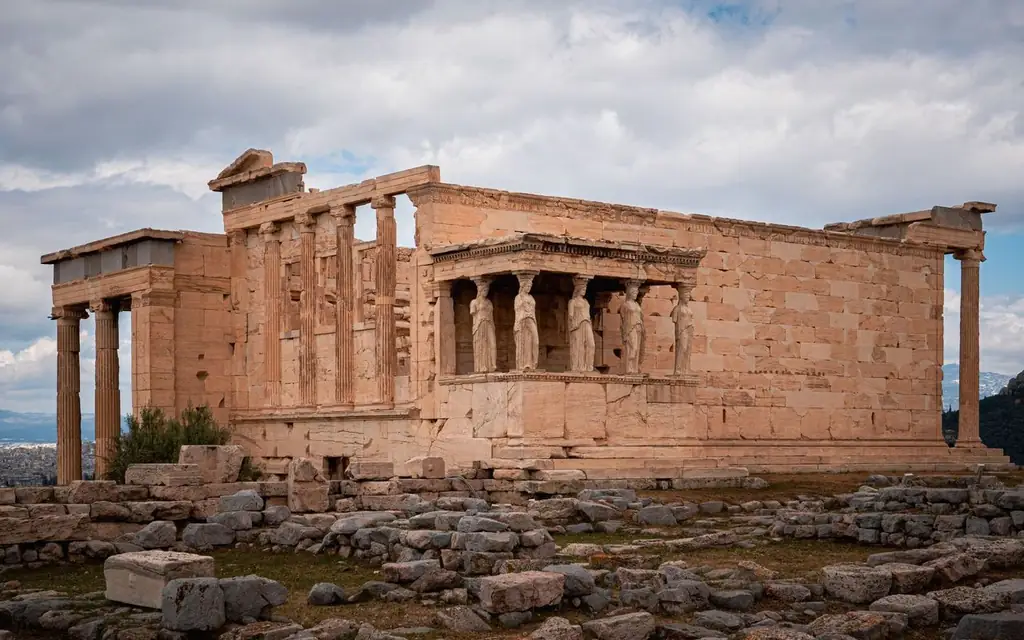
If you have only one day, treat it as a very early start and a late return, and focus on two monasteries. If you can spare three days, add Delphi on the way. See our guide to Delphi for the stopover details, and the Acropolis of Athens for the capital before or after.
How the options compare
| Option | Time from Athens | Cost note | Best for |
|---|---|---|---|
| Intercity bus | About 4.5 to 5 hours | Lowest | Solo travelers who base themselves in Kalambaka |
| Organized day tour by coach | 14 to 16 hours return | Fixed price per seat | First-timers who want a commentary |
| Rental car | 4 to 5 hours each way | Fuel, tolls and parking | Confident drivers on mountain roads |
| Private chauffeur | 4 to 5 hours each way | Fixed fare via the booker | Groups, families, a two-day itinerary |
For one traveler staying in Kalambaka, the bus plus the local taxis is the lower-cost plan. A private car is better with a group, with luggage, with an onward leg to Thessaloniki, or when you want to reach the monasteries early.
Seasons at Meteora
Spring is green and mild. Summer is hot, busy and bright, with the longest opening hours. Autumn gives soft light and thinner crowds. Winter is quiet and can be snowy, with fog in the valleys and shorter hours at the monasteries. Spring and autumn are the best months for walking between the rocks, according to the national tourism organization.
Season also affects the road. In winter, ice and fog can make the climb above Kastraki slow, and a driver may choose a later start to let the sun clear the bends. In high summer the issue is the opposite: heat on the stairs and long queues at the car parks. Wherever you fall in the calendar, carry water, wear sturdy shoes and keep a light layer in the car for the evening, when temperatures on the plain drop quickly. Guests planning around a religious holiday, especially Easter, should expect altered hours and larger local crowds, and should confirm everything in advance.
For other regional context, see the European directory, the airport transfer directory, the attractions hub and our private tours with driver page.
Frequently asked questions
How far is Meteora from Athens?
About 350 km (220 mi), and the drive takes roughly four to five hours depending on traffic.
How far is Meteora from Thessaloniki?
About 227 km (141 mi), around 2.5 to 3 hours by car.
Which day are the Meteora monasteries closed?
Each monastery closes one weekday, and the days differ. Great Meteoron is commonly listed as closed on Tuesday, but confirm on the day because monasteries set their own hours.
What should I wear to visit the monasteries?
Women should wear skirts below the knee and cover their shoulders, men long trousers, and no one should wear sleeveless tops. Wrap skirts are available at the entrances.
Can you visit Meteora in one day from Athens?
It is possible but long. An early start allows two monasteries, then a late return. Most guests prefer an overnight in Kalambaka or Kastraki.
Is Meteora accessible for older visitors?
Several monasteries require many steps. St Stephen's is the most accessible. Choose fewer monasteries and rest often.
Can a driver take me from Meteora to Delphi or Thessaloniki?
Yes. The booking desk plans one-way transfers and multi-stop days with a fixed fare quoted before you book.
Can Kalambaka hotels and tourist offices book drivers for guests?
Hotels with a concierge, tourist offices and visitor centers can book chauffeur services for their visitors with LimousineWorldwideDirectory.com through a trade account.
How many monasteries should I plan to visit?
Two or three in a half day and four in a full day is the usual pace, and older travelers do better with two and regular rests. Choose your date first, then pick the monasteries that are open on it.