
 United StatesJFK
 MexicoMEX
 BrazilGRU
 ArgentinaEZE
 ChileSCL
 ColombiaBOG
 PeruLIM
 PanamaPTY
 Costa RicaSJO
 Dominican RepublicPUJ
 JamaicaMBJ
 BahamasNAS
 BarbadosBGI
 United KingdomLHR
 IrelandDUB
 FranceCDG
 GermanyFRA
 NetherlandsAMS
 BelgiumBRU
 SwitzerlandZRH
 AustriaVIE
 ItalyFCO
 SpainMAD
 PortugalLIS
 GreeceATH
 TurkeyIST
 DenmarkCPH
 SwedenARN
 NorwayOSL
 FinlandHEL
 PolandWAW
 Czech RepublicPRG
 HungaryBUD
 IcelandKEF
 United Arab EmiratesDXB
 QatarDOH
 Saudi ArabiaRUH
 IsraelTLV
 EgyptCAI
 MoroccoCMN
 South AfricaJNB
 KenyaNBO
 NigeriaLOS
 IndiaDEL
 PakistanLHE
 Sri LankaCMB
 SingaporeSIN
 MalaysiaKUL
 ThailandBKK
 VietnamSGN
 PhilippinesMNL
 IndonesiaCGK
 Hong KongHKG
 ChinaPVG
 TaiwanTPE
 JapanHND
 South KoreaICN
 AustraliaSYD
 New ZealandAKL
Cape Sounion is a sunset appointment. Visitors who treat it as a midday sightseeing stop find a sunbaked headland, a short queue and a long drive back. Visitors who arrive ninety minutes before the sun touches the horizon find a different place: warm stone, a low sea wind, and a line of columns that appear to be lit from inside.
This guide explains how to plan that evening when you arrive with a private driver, from road choice and tickets to the awkward detail of what happens at closing time.
How far is Cape Sounion from Athens, and how long does the drive take?
Cape Sounion is about 70 km (43 mi) from central Athens. The Ministry of Culture puts the drive at roughly 65 minutes from the city, and slower at rush hour or in summer. Athens International Airport is closer, around 42 to 45 km (26 to 28 mi), 40 to 60 minutes.
The Ministry of Culture's Hellenic Heritage page for Sounion places the archaeological site at the 68th kilometer of the Athens to Sounion highway. That road is the ribbon of coastal asphalt known as the Athens Riviera. A taxi or chauffeur leaving a central hotel normally allows 75 to 90 minutes so there is room for the evening traffic leaving the city.
Public buses make the trip too, with a stated journey of about two hours from Aigyptou Square, which is why most guests who want to be at the temple for sunset prefer a car: the return after dark is what makes the bus awkward.
Two roads to the cape
Drivers heading for Sounion have two sensible routes.
The coast road. From Athens it passes through the seaside suburbs and along a series of bays: Glyfada, Vouliagmeni, Varkiza, Lagonissi and Anavyssos. It is slow in places because of traffic lights and local bus stops, but the sea is visible for much of it, and it is the route most travelers want on the way out. Late in the afternoon the sun sits ahead of you.
The inland road. Coming from the airport, or when you want to save time, a driver can cross the Mesogeia plain and approach the cape from the north-east via the Lavrio direction. It is quicker from Athens International Airport, with less scenery, and avoids the coastal lights.
A common plan is to take the inland road out when time is tight and return along the coast in the dusk, or the reverse. Your driver decides on the day according to traffic.
Why sunset sets the schedule
The site is open daily from 09:30 until sunset, according to the Hellenic Heritage page, and last admission is 20 minutes before closing. That has two practical consequences.
First, the temple is not open after the light has gone. Do not plan to arrive at sunset and expect to stay on the stone for an hour. The attendants clear the site close to sundown. Second, the best light on the columns is in the hour before closing, so the ideal arrival is around 90 minutes to two hours before sunset, giving you time to walk the perimeter, wait for the color, and descend.
Sunset time changes through the year, so check it for your date. In the cooler months it comes early, and the whole visit shifts to mid-afternoon. In midsummer it is late, and the heat is fierce at 15:00. A late-afternoon arrival is therefore kinder in every season.
What you are looking at
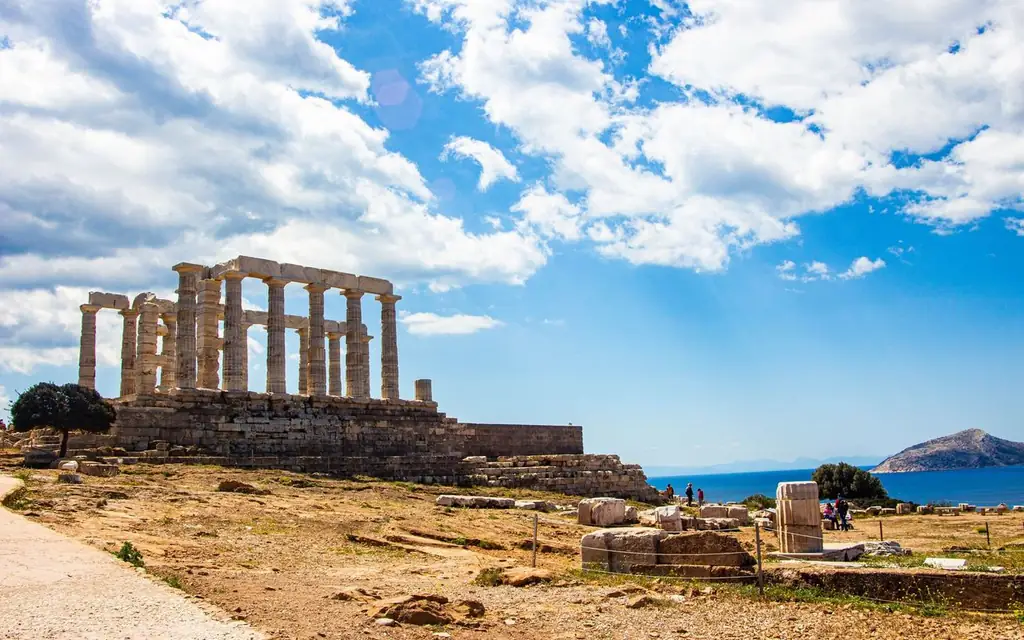
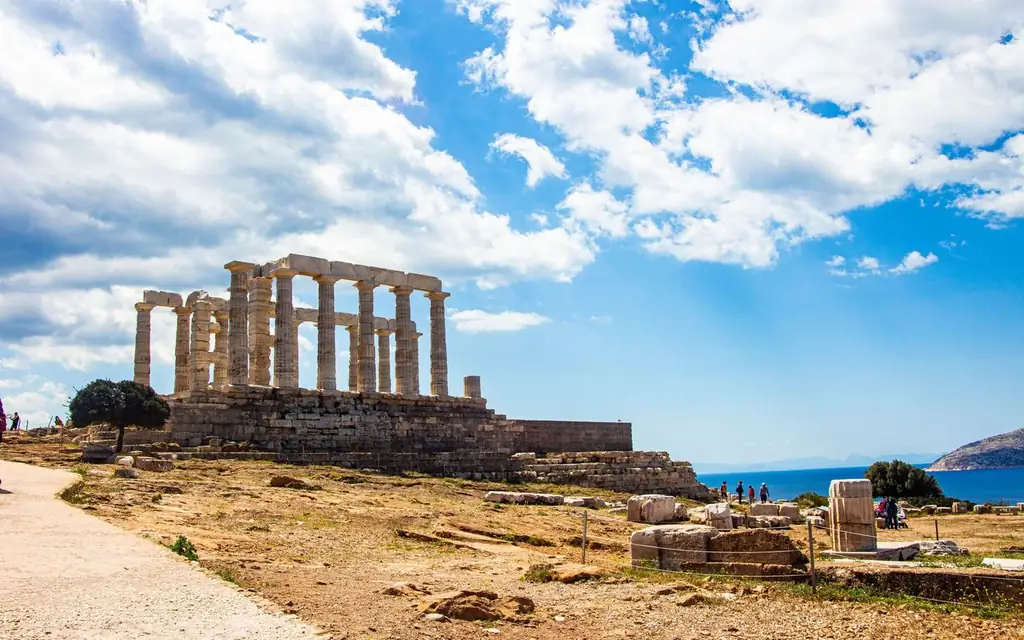
The Temple of Poseidon stands on the southern tip of Attica, a Doric temple of the fifth century BC built in the Periclean era when Athens rebuilt its sacred places. It was visible from the sea to sailors rounding the cape, and the headland has long been associated with the god of the sea. The ruins also include the remains of a smaller sanctuary dedicated to Athena Sounias on the same promontory, and fortification walls from the late fifth century BC.
The columns are slender and weathered. The marble on the sea side carries centuries of salt and wind marks. Visitors walk around the temple rather than between the columns, and the cliff edges nearby are unguarded, so watch your footing and move slowly in a stiff breeze. Ancient writers and later travelers knew this cape as a landmark: when you reach it by car, you are following a very old coastal route.
For a deeper understanding, read the site signs or hire a licensed guide in advance. A chauffeur drives and can suggest stops, but an archaeologist or licensed guide is the right person to interpret the monument.
Tickets, closing days and free days
The Hellenic Heritage page lists online tickets through tickets.hh.gr, with the usual full and reduced categories. Check current prices there. Free admission applies on a set of dates that match other state-run sites: 6 March, 18 April, 18 May, the last weekend of September, 28 October, and the first and third Sundays of each month from 1 November to 31 March.

The site is closed on 1 January, 25 March, 1 May, Orthodox Easter Sunday, and 25 and 26 December. Hours can change during holidays, so confirm before you travel in those periods.
The page lists amenities at the site, including a shop, toilets, parking and Wi-Fi. It does not detail accessibility, so contact the site beforehand if you or a guest have limited mobility. The route from the car park to the temple is a walk uphill on an uneven path.
The car park, the gate and the last climb
The archaeological site has parking at the entrance. A chauffeur can wait there, and in peak season it is the busiest spot on the cape between 17:00 and sunset, when coaches and rental cars arrive together. Your driver will usually drop you at the gate and park, then be ready at the same spot when you come down.
Expect a walk of several minutes from the ticket office up to the temple. The path is exposed, and in summer it is very hot. In winter it can be windy and wet. Wear shoes with grip, bring a layer for the wind, and carry water.
If you want the least crowded shot of the columns, go to the temple at the beginning of your visit rather than at the end, when everyone gathers on the same side. Then circle slowly and finish at the western side for sunset.
A sunset evening, hour by hour
The shape of the evening matters more than the monument. This outline assumes a sunset around 18:00, which you should adjust to your date.
- 14:30 Leave central Athens by the coast road, with an unhurried stop at a viewpoint if the light is good.
- 16:00 Arrive at the car park. Buy or show your ticket, and take the path up while the stone is still warm.
- 16:15 Walk the perimeter of the temple first, and read the signs on the Athena Sounias sanctuary below the main platform.
- 17:00 Choose your position on the western side. Wait. The color on the marble changes slowly and then quickly.
- 17:45 Sundown, and the attendants begin to clear the site. Walk down in the last light.
- 18:30 Dinner at a waterfront restaurant in the village, or a longer drive back to Athens if you prefer to eat in the city.
- 21:30 Drop at the hotel.
For a hotel near the cape, such as the resorts on the headland, the sequence is shorter and the driver is needed only for the transfer in and out. Tell the booking desk where you are staying so the pickup is planned from the right address.
Think about the drive back in the dark. The coast road is lit through the towns but dim between them, and traffic from other visitors leaves the cape at the same time. If anyone is prone to travel sickness on the bends, say so at booking so they can sit at the front. Keep a layer within reach, because the evening cools quickly after sundown, and consider dinner in the village before leaving, which lets the first rush of cars clear the cape.
What to wear, bring and respect
Footwear matters on the path. Smooth soles slide on the worn limestone, particularly after rain. A light jacket or scarf is useful because the wind on the headland is cooler than the coast road, even in late summer. Bring water, sunglasses and a charged phone. Photographers should ask the attendants about tripods before setting one up, and leave drones in the bag, because flights over archaeological sites need permission.

The site is an archaeological monument and also a place many Greeks associate with the sea. Do not climb on the walls or the platform, do not carve or write on the stone, and keep voices low near others who are watching the sunset. If you travel with children, keep them on the marked path.
Stops along the way
The Riviera route has several worthwhile stops, and a driver can pause at any of them.
- Vouliagmeni Lake, a thermal lake within a short distance of the coast road, popular for a swim and a coffee if you have extra time. Check its hours before you plan on it.
- Coastal viewpoints above Lagonissi and Anavyssos, where a driver can pull into a safe lay-by for a photograph.
- Dinner by the water at the small harbor near Sounion, with fish restaurants open in the evening, although many are seasonal.
Plan dinner after the sunset visit, not before. Restaurants in the village are well used to arrivals timed around the temple, and the drive back to Athens takes about the same 65 to 90 minutes as the way out.
Combining Sounion with other days
Sounion fits neatly with other Greek guides in this series.
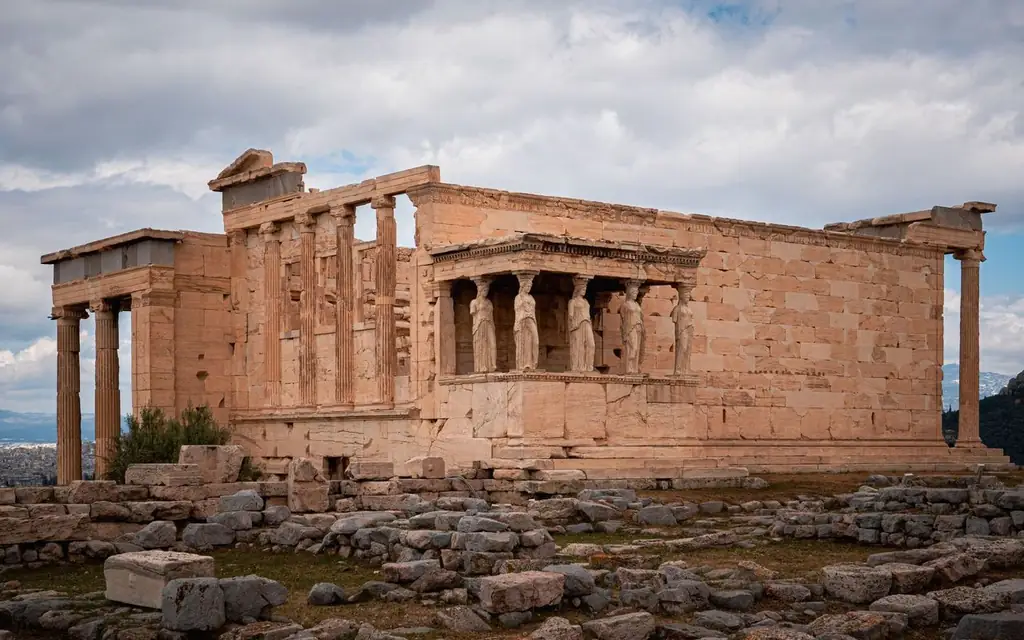
- Morning at the Acropolis, evening at Sounion. See our guide to the Acropolis of Athens for ticket slots and drop-off points, then drive south in the afternoon.
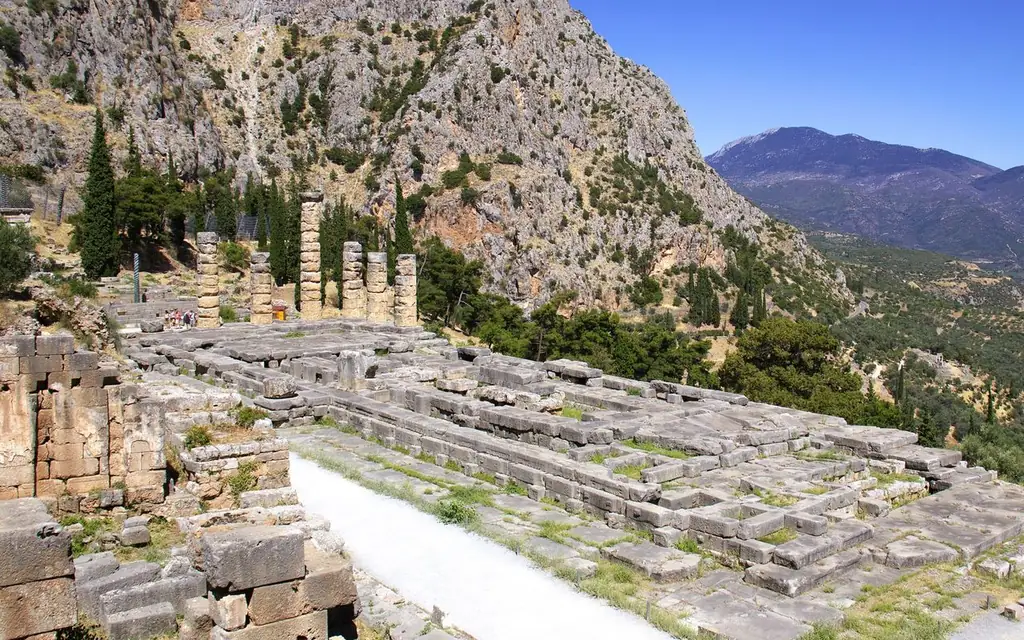
- Delphi and Sounion are in opposite directions, so treat them as separate days. Our guide to Delphi explains the three-hour drive north-west.
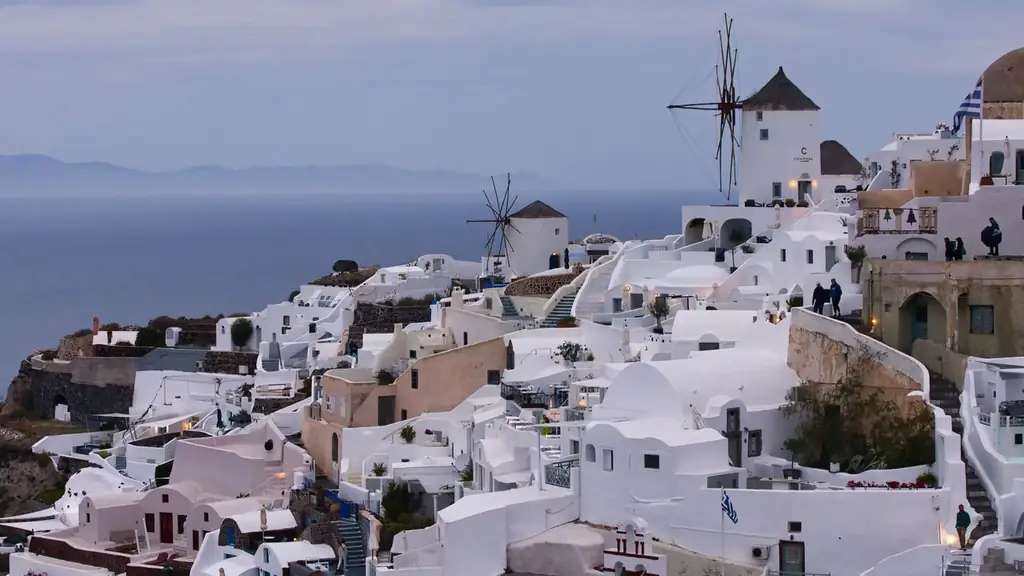
- Santorini: if you are flying on to the islands, see Oia for what to expect on arrival.
The national tourism organization at visitgreece.gr has regional background on Attica, and the private tours with driver page explains how we plan these days, and the European directory lists the regional operators we work with. For arrivals and departures, use the airport transfer directory.
Wind, safety and the season
Sounion is exposed. In July and August the dry northerly winds called the meltemi can blow hard enough to make the headland uncomfortable, and in winter storms the site can be wet and cold. Cliff edges are unprotected in places, so keep children close.
In the quieter months, the road is lighter, the sea is clearer and the ruins are far less crowded. The temple is open year-round. If you are traveling in November to March, plan for earlier sunsets and a chilly drive back after dark.
How to get to Sounion compared
| Option | Typical time from central Athens | Cost note | Best for |
|---|---|---|---|
| Intercity bus | About 2 hours | Lowest | Solo travelers on a flexible plan |
| Metered taxi | 65 to 90 minutes | Metered, agree the trip in advance | Couples wanting a one-way journey |
| Rideshare | 65 to 90 minutes | Variable, hard to find a return | Short daytime visits |
| Rental car | 65 to 90 minutes | Fuel, parking and the return drive | Confident drivers who like the coast road |
| Organized sunset tour by coach | 4 to 5 hours return | Fixed price per seat | First-timers who want a commentary |
| Private chauffeur | 65 to 90 minutes | Fixed fare via the booker | Groups, couples, a timed sunset visit |
The bus has the lowest fare, but it ties you to a timetable and makes a sunset visit hard to enjoy. The private car is the best way to arrive in good light and leave without waiting.
Frequently asked questions
How far is Cape Sounion from Athens?
About 70 km (43 mi) from the city center, and the Ministry puts the drive at roughly 65 minutes. Allow longer at rush hour and in high season.
What time does the Temple of Poseidon close?
The site is open daily from 09:30 until sunset, with the last admission 20 minutes before closing. Check the sunset time for your date and arrive about two hours before.
Is Cape Sounion worth visiting at sunset?
It is the main reason most travelers go. The light on the columns is at its best in the last hour before closing, but the site clears at sundown.
Do I need to book tickets in advance?
Online tickets are available through the Hellenic Heritage service, and booking avoids queues on busy evenings. Free-entry days draw crowds.
How long should I allow at the site?
One to two hours on the headland, plus the drive. Add time for dinner if you plan to eat at the village.
Is Cape Sounion accessible for wheelchairs?
The official page lists accessibility as an amenity but gives no detail. The path up to the temple is uphill and uneven, so contact the site before you plan the visit.
Can I go to Sounion from Athens Airport?
Yes. The distance is around 42 to 45 km (26 to 28 mi), and the transfer takes 40 to 60 minutes. A driver can take you directly after landing.
Is there a trade option for travel agents and tourist offices?
Yes. Travel agents, tourist offices and visitor centers can book chauffeur services for their visitors with LimousineWorldwideDirectory.com through a trade account.