
 United StatesJFK
 MexicoMEX
 BrazilGRU
 ArgentinaEZE
 ChileSCL
 ColombiaBOG
 PeruLIM
 PanamaPTY
 Costa RicaSJO
 Dominican RepublicPUJ
 JamaicaMBJ
 BahamasNAS
 BarbadosBGI
 United KingdomLHR
 IrelandDUB
 FranceCDG
 GermanyFRA
 NetherlandsAMS
 BelgiumBRU
 SwitzerlandZRH
 AustriaVIE
 ItalyFCO
 SpainMAD
 PortugalLIS
 GreeceATH
 TurkeyIST
 DenmarkCPH
 SwedenARN
 NorwayOSL
 FinlandHEL
 PolandWAW
 Czech RepublicPRG
 HungaryBUD
 IcelandKEF
 United Arab EmiratesDXB
 QatarDOH
 Saudi ArabiaRUH
 IsraelTLV
 EgyptCAI
 MoroccoCMN
 South AfricaJNB
 KenyaNBO
 NigeriaLOS
 IndiaDEL
 PakistanLHE
 Sri LankaCMB
 SingaporeSIN
 MalaysiaKUL
 ThailandBKK
 VietnamSGN
 PhilippinesMNL
 IndonesiaCGK
 Hong KongHKG
 ChinaPVG
 TaiwanTPE
 JapanHND
 South KoreaICN
 AustraliaSYD
 New ZealandAKL
Mount Etna is Europe's highest active volcano, a little over 3,300 metres, though the exact figure moves with each eruption. It is a UNESCO World Heritage Site and the centre of a regional nature park. It is also a working mountain, which means that a Mount Etna private tour with driver is not like a day at a palace. The car brings you to roughly 1,900 metres. After that, the mountain sets the rules, and so do the people licensed to guide on it.
What follows is written for visitors who want to do this well: how far the road goes, what the cable car and the 4x4 buses add, which parts need a guide by law, what to wear, and how to build a day that is still pleasant if the wind closes the upper station.
What a driver can do on Etna, and what only a guide can
A chauffeur can carry you from Catania, Taormina or your hotel on the slopes to the lower cable-car station, wait for you, and bring you back. A chauffeur cannot, and should not, drive you onto the volcano's service tracks or lead you toward the craters.
Above the cable-car stations the mountain is controlled by local ordinances, and the practical rule that follows from them is simple: the summit craters can be visited only with an authorized volcanological or mountain guide. The guide decides the route that day, and the volcano's monitoring status decides whether there is a route at all.
That is why this guide separates the day into three layers.
- The approach by road, which belongs to your chauffeur.
- The cable car and the 4x4 or snow-cat ride, operated by licensed companies.
- The walk to the crater zone, led by a guide.
You can enjoy the first layer alone. The second and third are sold together by the cable-car operator in one of its packages.
How far can you get by car, and where does the road stop?
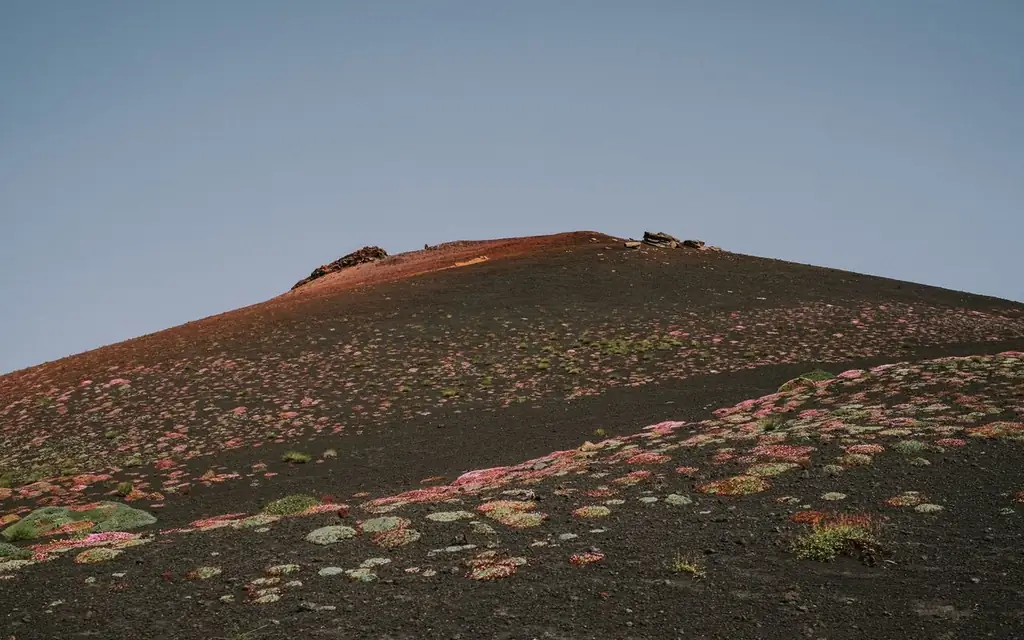
On the south side, the paved road climbs from Nicolosi to Rifugio Sapienza at about 1,900 metres, where the cable car starts. From Catania airport expect roughly 45 to 50 km (28 to 31 miles) and 60 to 75 minutes. Above Sapienza only licensed vehicles and guides continue.
The south side is the one most visitors use. It has the car park, the cable car, the cafés and the shops, and it is the closest to Catania. Plan the transfer from the airport or the city, not the other way around: the mountain is a morning destination, and arriving after midday, you are competing with the afternoon cloud as well as the coaches.
From Taormina the distance is greater, about 90 km (56 miles), and normally one and a half to two hours, because the road runs south along the coast and then climbs. If you are staying in Taormina and want Etna on the same day, read our guide to Taormina by car so the two halves of the day fit together.
For arrivals, the Catania airport site is the official source for flights. For other airports and how the European directory is organised, see our regional page.
South side or north side: two different mountains
Etna can be visited from several directions, and they are not interchangeable.
South side (Rifugio Sapienza, Nicolosi). This is the standard route. The cable car starts at about 1,920 metres. It is the only side with a cable car, the largest car park and the greatest choice of excursions.
North side (Piano Provenzana, near Linguaglossa). The base is about 1,800 metres, there is no cable car, and the way up is by off-road vehicles of authorized operators. The Linguaglossa ordinance restricts excursions during ash or lapilli fall and allows them only with qualified guides. It is quieter, greener and better for forest walks, and it combines naturally with wine estates on the northern slopes.
If you are short on time and want the classic experience, choose the south. If you prefer silence and trees, ask for the north. Either way, check the operator's site for the status on the day, because both can be suspended at short notice.
The cable car, the 4x4 and the guided walk
The operator is Funivia dell'Etna. Its site describes the structure of the visit clearly:
- Cable car: from the station at 1,920 metres to the station at 2,500 metres.
- 4x4 bus or snow cat: from 2,500 to about 2,800 metres. In winter the vehicle is a snow cat.
- Guided hike: from there, a short walk with a volcanologist guide leads up to about 3,000 metres, to the summit craters area.
The operator sells three main products, and the names are worth knowing because they decide what you will physically do:
- Tour 3000: cable car, 4x4 bus and volcanologist guide, the full ascent.
- 2500: cable car only, with no guide and no 4x4, good for views and a short walk on the upper station's platform.
- Sunsetna: a late-day option with the 4x4 bus and a volcanologist guide.
The site does not publish the ride duration, opening hours or wind-closure policy on the pages we reviewed, so confirm those with the operator the day before. Service stops in strong wind, ash fall or raised volcanic activity. A good itinerary has a plan B for exactly this reason.
The park, the craters and what the authorities say
The Parco dell'Etna was the first nature park created in Sicily, by a regional decree of 17 March 1987, and it protects around 59,000 hectares around the volcano. Its office is in Nicolosi, at Via del Convento. The park's own site has trails, points of interest and an app, though the pages are in Italian.
Italy's national tourism portal describes the park's main draws: the Central Crater, which includes the Voragine and Bocca Nuova, the North-East Crater and the South-East Crater, all visited with expert guides; lava tunnels that can be explored; and the Valle del Bove, a depression on the eastern side about 1 km deep and 7 km long. Read the Parco dell'Etna entry on italia.it for the overview.
For anything beyond the standard tourist routes, the legal framework is a set of ordinances from the local prefecture and municipalities, not a single published rulebook. That is another reason to book the guided packages through an operator that already complies, rather than improvising with a driver and a map.
When to go, and what the weather does to the plan
The mountain makes its own weather. Even on a hot day in Catania, the upper stations can be cold and windy. Clouds often build around the summit from late morning.
- Morning: the best visibility and the lowest wind.
- Late afternoon and sunset: the product called Sunsetna exists because the light is beautiful, but the descent is cold, so go prepared.
- Summer: the easiest conditions for the 4x4, with the longest days.
- Winter and spring: snow is possible, the 4x4 is replaced by a snow cat, and closures are more likely.
Dress in layers. Wear closed shoes with grip, because the ground above the station is loose volcanic ash and cinder. Bring a windproof jacket, sunglasses and a hat even in summer. If you plan only the 2,500-metre cable-car ride, you still need a jacket.
Because the summit area can close with little notice, we suggest booking the Etna day with a flexible start: the chauffeur arrives early, checks the operator's status, and if the upper station is shut, the day pivots to the wine estates and lava landscapes at lower altitude.
Ways to reach Etna compared
| Option | From Catania | Cost note | Who it suits |
|---|---|---|---|
| Operator excursion minibus | about 1 hour 15 minutes each way | lowest | solo travelers who want the whole package in one booking |
| Public bus to Rifugio Sapienza | slower, timetable-dependent | low | flexible travelers with time and light bags |
| Taxi | about 1 hour | metered | a quick one-way, with no return arranged |
| Rental car | about 1 hour | rental plus parking | confident mountain drivers; the road has hairpins and fog |
| Private chauffeur | 60 to 75 minutes | fixed fare via the booker | families, groups, anyone combining Etna with Taormina or wine |
A shared excursion is the lowest-cost route and handles the cable car purchase for you, which is a real advantage when the packages sell out. A rental car works if you are comfortable on narrow mountain roads. A private chauffeur is the better choice when you need a fixed pickup time, when you want to combine Etna with another stop, or when the group includes children or older relatives.
A half-day and a full-day plan
Half day from Catania (about five hours):
- 08:00 leave the hotel.
- 09:15 arrive at Rifugio Sapienza, buy or collect the cable car product.
- 09:30 to 12:00 cable car, 4x4 and guided walk, or the 2500 ride and a walk on the lower craters.
- 12:30 descend to a lava-field lunch at a village on the lower slope.
Full day from Taormina (about ten hours):
- 07:30 leave Taormina. Allow one and a half to two hours.
- 09:30 start the Etna program.
- 13:00 lunch on the slopes.
- 15:00 a winery visit on the Etna slopes, if booked ahead.
- 17:30 return to Taormina.
On any day, ask your chauffeur to check the ordinance and operator notices before leaving the hotel. For a combined day with the Greek theatre, put the theatre first, at opening time, and the volcano after; the other order means you arrive at the stone steps in the heat of the afternoon.
For a general explanation of how a day booking works, see our private tours with a driver page. The Etna and Sicily tourism overview is the regional board's portal.
Accessibility, children and health
The terrain above the cable car is rough and uneven. The upper walk is not suitable for wheelchairs, and it is demanding for anyone with heart or lung conditions because of the altitude. Children can join the standard packages with appropriate clothing, though operators may set age or height limits for the 4x4, so confirm them when booking. Pregnant travelers and those with respiratory conditions should speak to their doctor.
Your chauffeur can help with the parts of the day that are on level ground: the car park, the lower station and the cafés. Child, toddler and booster seats are available on request at booking.
What else to see on the slopes
Etna is not only the summit. The lower slopes have village squares, lava-stone buildings, wineries and old lava flows that are easy to walk. If the upper station is closed, these become the main program. Zafferana Etnea and Bronte are mentioned by the national tourism portal as villages at the foot of the volcano, and the Valle del Bove can be seen from viewpoints below the summit zone.
Travelers who like volcanoes will also enjoy Vesuvius and the buried city beneath it: our Pompeii guide explains the logistics from Naples. For a very different southern Italian landscape, see Matera and the Sassi.
Frequently asked questions
How far is Mount Etna from Catania by car?
About 45 to 50 km (28 to 31 miles) to Rifugio Sapienza, the south-side cable-car base. The drive normally takes 60 to 75 minutes. From Taormina it is about 90 km (56 miles), around one and a half to two hours.
Can you drive to the top of Mount Etna?
No. The paved road ends at the cable-car base, about 1,900 metres. Above that you need the cable car, the 4x4 or snow cat, and a guide. The summit crater area can only be visited with an authorized guide.
Do you need a guide to climb Mount Etna?
Yes, for the summit craters. Above roughly 2,500 metres a licensed volcanological or mountain guide is required, and the cable-car operator's top package includes one. Lower trails around the base can be walked without a guide.
What is the difference between the cable car and Tour 3000?
The cable car alone, called 2500, goes from 1,920 to 2,500 metres. Tour 3000 adds the 4x4 bus or snow cat to about 2,800 metres and a short guided walk up toward 3,000 metres.
Is Etna safe to visit?
Access is managed by the authorities and operators, and closures happen when winds, ash or volcanic activity rise. Stay within the permitted areas, follow your guide, and expect your plans to change at short notice.
What should I wear?
Layers, a windproof jacket, closed shoes with grip, sunglasses and a hat. The surface is loose ash and cinder, and the temperature at the top can be far below the temperature in Catania.
Which airport is best for Etna?
Catania Fontanarossa is the closest, about 45 to 50 km (28 to 31 miles) from the cable-car base. Flights land there directly from many European cities, and our airports hub explains how airport pickups work, including flight tracking and free waiting time after landing. If your trip starts in Rome, the Rome Fiumicino page covers the Rome end of the journey.
Can LimousineWorldwideDirectory.com wait while I go up?
Yes, the chauffeur waits at the lower station. Tell us your expected duration when you book; for pickups other than airports, 15 minutes of waiting are included.
Can a visitor centre book the Etna day for its guests?
A trade account lets official visitor centres and tourism boards reserve the chauffeur on behalf of a traveler. The cable-car and guide products are still bought from the operator, so the account holder and the traveler should agree who books what. Start at the tourist offices hub.