 United StatesJFK
 MexicoMEX
 BrazilGRU
 ArgentinaEZE
 ChileSCL
 ColombiaBOG
 PeruLIM
 PanamaPTY
 Costa RicaSJO
 Dominican RepublicPUJ
 JamaicaMBJ
 BahamasNAS
 BarbadosBGI
 United KingdomLHR
 IrelandDUB
 FranceCDG
 GermanyFRA
 NetherlandsAMS
 BelgiumBRU
 SwitzerlandZRH
 AustriaVIE
 ItalyFCO
 SpainMAD
 PortugalLIS
 GreeceATH
 TurkeyIST
 DenmarkCPH
 SwedenARN
 NorwayOSL
 FinlandHEL
 PolandWAW
 Czech RepublicPRG
 HungaryBUD
 IcelandKEF
 United Arab EmiratesDXB
 QatarDOH
 Saudi ArabiaRUH
 IsraelTLV
 EgyptCAI
 MoroccoCMN
 South AfricaJNB
 KenyaNBO
 NigeriaLOS
 IndiaDEL
 PakistanLHE
 Sri LankaCMB
 SingaporeSIN
 MalaysiaKUL
 ThailandBKK
 VietnamSGN
 PhilippinesMNL
 IndonesiaCGK
 Hong KongHKG
 ChinaPVG
 TaiwanTPE
 JapanHND
 South KoreaICN
 AustraliaSYD
 New ZealandAKL
Shoes come off at Pamukkale. Go Türkiye states it directly: to preserve the travertines, visitors must remove shoes and socks before entering the terraces. The rule shapes how the whole day works, from what you wear to where the driver meets you, and it is a good way into the practical side of getting to a site that most travelers reach only after a long road.
How do you get to Pamukkale by car, and from which airport?
Pamukkale private tour with a driver is easiest from Denizli Çardak Airport (DNZ), roughly 75 to 85 km (47 to 53 miles) and about an hour. From İzmir it is about 240 km (150 miles), 2.5 hours; from Antalya about 235 to 250 km (146 to 155 miles), 3 to 3.5 hours.
Çardak's distance is quoted differently by different sources, because the airport lies well outside Denizli and some figures stop at the city. Treat 75 to 85 km as the planning range for the drive to the terraces and expect about an hour to an hour and ten minutes. Turkish Airlines and Pegasus both serve Denizli, with a flight from Istanbul of about an hour and ten minutes according to Go Türkiye.
Denizli city itself is 18 to 20 km (11 to 12 miles) south of the terraces, a drive of 20 to 30 minutes. If you are staying in the town of Pamukkale at the foot of the site, the hotel is a few minutes from the lower entrance. If you stay in Denizli, you add that short run each way.
What the white terraces are, and what the rule protects
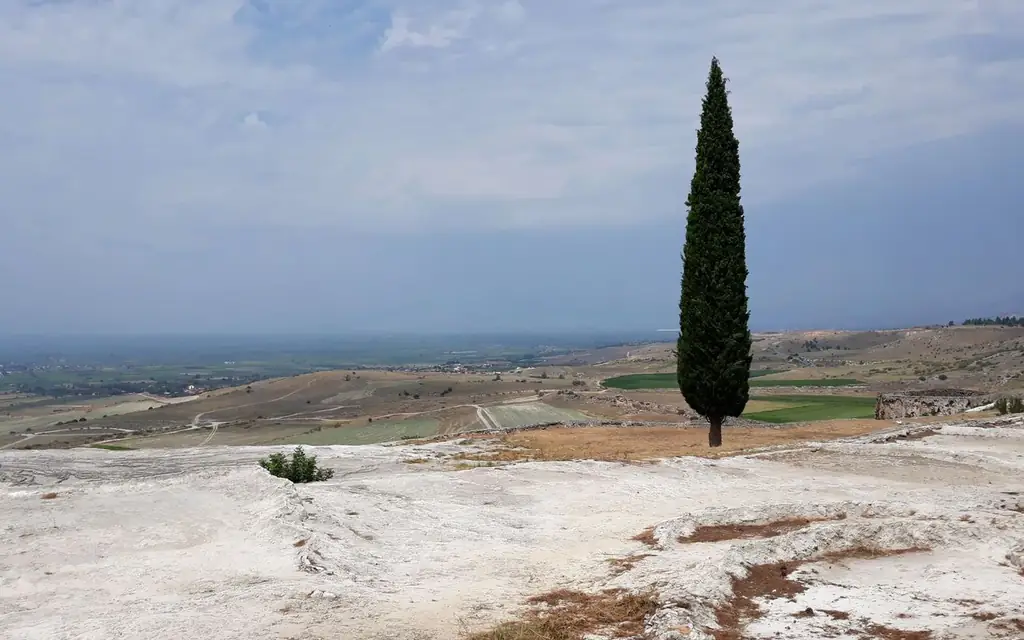
UNESCO inscribed Hierapolis-Pamukkale in 1988 and now lists it as a mixed property under criteria (iii), (iv) and (vii). The natural criterion describes calcite-laden hot-spring water that emerges from a cliff almost 200 meters high above the plain and creates a landscape of travertine terraces. Go Türkiye adds the mechanism: thermal water supersaturated with calcium carbonate meets oxygen at the surface, creating shapes like frozen waterfalls and small terrace pools.
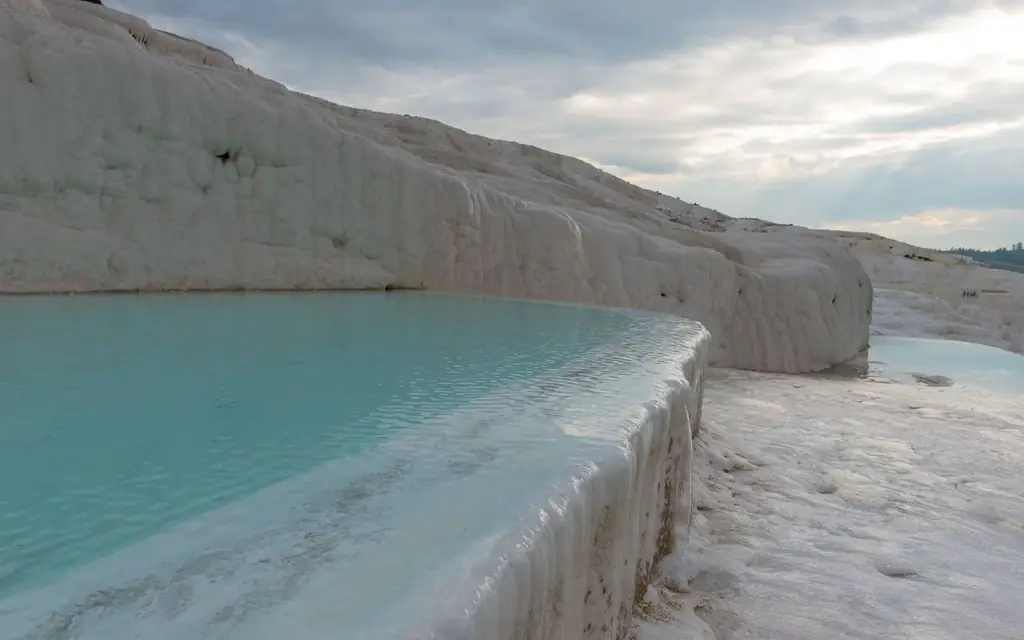
The terraces are fragile. Parts are protected and closed, and visitors can walk freely only in designated sections with small pools. Walking is barefoot, the surface is ridged in wet areas and can be slick where dry, and staff stand on the slopes to enforce the rule. A small bag for your shoes is useful. The water in the terraces is managed, so do not assume that every terrace holds water on the day you come; that varies with the season and with conservation work.
Swimming is a separate matter. The terraces are for walking, and swimming is possible only at the Antique Pool described below.
Hierapolis: the city behind the terraces
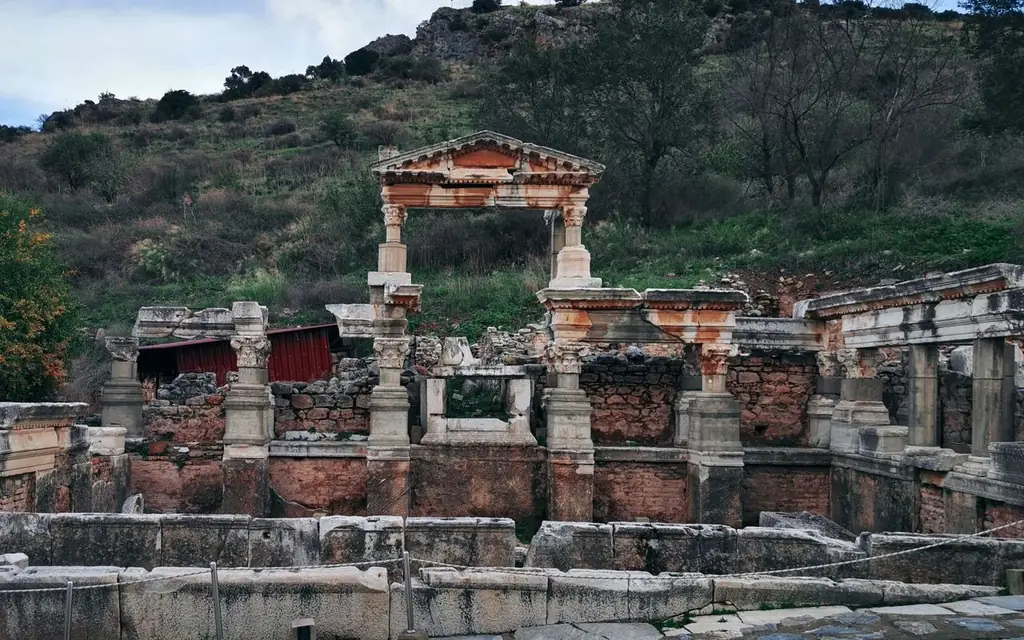
Above the terraces lies the Roman and Byzantine city of Hierapolis, and for many visitors it is as interesting as the white slope. Go Türkiye lists the Gymnasium, the Hierapolis Ancient Theater, the Martyrium and Church of Saint Philip the Apostle, the Northern Necropolis, the Frontinus Gate and Street, and the Hierapolis Archaeological Museum. The museum occupies an old Roman bath, which is a fitting setting for finds from a city built around hot springs.
UNESCO's record gives the cultural reasoning: the site is an exceptional example of a Greco-Roman thermal installation on an extraordinary natural site, and the Christian monuments are an outstanding example of an early Christian architectural group with a cathedral, baptistery and churches. The Northern Necropolis, a cemetery of tombs in many shapes, is one of the quieter parts of the site.
The distances inside the site are larger than they look, and the ruins are open to the weather. Allow at least two hours for Hierapolis alone, and more if you add the museum.
The Antique Pool
The Antique Pool, sometimes called Cleopatra's Pool, is fed by thermal water. Go Türkiye gives its temperature as 36°C throughout the year and says swimming is possible, with the pool linked to a Cleopatra legend. It carries a separate fee in addition to the main site ticket, according to visitor guides, and it is the only place on the site where swimwear is expected.
The pool's status has changed in recent seasons, with restoration work closing it for a time. One airline magazine reported it reopened to visitors in 2026, while earlier tour listings described it as closed until March. Check on the day, and bring swimwear in the car in case it is open. A changing room is part of the facility.
Gates, parking and the single-day ticket
The site has more than one entrance, and visitor guides disagree on which is which. Most describe a gate at the top of the hill with a large parking area and another at the foot of the terraces, in the town. Some call the upper one the North Gate and some the South. Rather than rely on the names, ask the driver to confirm on the day which entrance is at the top.

The useful pattern is a downhill route. A chauffeur drops you at the upper entrance, you walk through Hierapolis and then descend the terraces barefoot, and the driver meets you at the town-side gate. This avoids the long uphill walk in the sun that most tour groups endure. Reports also say that the ticket is valid for one day only and that you cannot re-enter once you leave through any gate, so decide on your exit before you go in.
Driving inside the site is not allowed, and the ticket price and the hours vary by source, which is why we send you to the Ministry's museum portal at muze.gov.tr for the figures on your date. Summer hours open early and close late; winter hours are shorter. Plan arrival accordingly.
Timing the light and the heat
Pamukkale rewards early and late visits. The terraces look whiter in the soft light of morning and take on color toward sunset, and Go Türkiye says balloon and paragliding flights over the site are often timed for sunset. Midday in July and August is hard: the white surface reflects heat, the ruins have little shade, and the barefoot rule makes the ground feel hotter.
If you stay in the area overnight, you can see the terraces at dusk, sleep, and enter at opening for the quiet light. If you are coming for a day trip, arrive as early as the road allows. In autumn the temperatures are kinder, but daylight is shorter, so check sunset and plan the exit before dark.
Sunglasses matter more here than at most sites. The white travertine throws back strong light, and the glare is more tiring than visitors expect after an hour on the slope. A wide-brimmed hat helps, and so does a light shirt that covers the shoulders, since there is little shade between the terraces and the ruins. If you finish the walk late in the day, keep a spare layer in the car for the drive back, because the evening can cool quickly and damp feet feel colder than they should. Tell the chauffeur if you would like a drink stop on the way out of town.
Ways to reach Pamukkale compared
| Choice | Journey time | Cost | Choose it for |
|---|---|---|---|
| Flight to Denizli, then taxi | Flight about 1 hour 10 minutes from Istanbul, then about 1 hour by road | Air fare plus transfer | Visitors coming from Istanbul or Ankara |
| Bus to Denizli, then dolmuş | 3 to 5 hours from the coast, plus the last leg | Lowest | Budget travelers with time |
| Coach day tour from the coast | 10 to 14 hours, fixed stops | Per person | Visitors who accept a long, set day |
| Rental car | 2.5 to 3.5 hours each way from İzmir or Antalya | Fuel and hire | Experienced drivers with time |
| Private chauffeur | DNZ about 1 hour; İzmir about 2.5 hours; Antalya 3 to 3.5 hours | Fixed fare via the booker | Families, groups, travelers who value the downhill gate plan |
If you are traveling alone on a budget, the bus is the lowest-cost choice. The chauffeur is the best answer when the schedule is tight, when you travel as a family, or when you want the day to run at your own pace. You see the fixed fare in the booker before you commit.
Making a day trip from the coast bearable
Pamukkale is often sold as a day trip from İzmir, Kuşadası or Antalya. The distances explain why that is a hard day: about 240 km (150 miles) and roughly two and a half hours from İzmir, 215 to 220 km (134 to 137 miles) and about three and a half hours from Ephesus, and 235 to 250 km (146 to 155 miles) and three to three and a half hours from Antalya, each way.

A private car makes the trip less punishing, since there is no coach schedule, but the arithmetic remains. A realistic day trip has an early start, three hours on site and a late return. A better plan adds a night in the area, so you can see the terraces at sunset and at opening. The desk can build either; tell us the hotel and the return time, and we will say plainly if the schedule is too tight.
Travelers combining the Aegean sights can pair this with the Ephesus guide, and those continuing to central Turkey can read the Cappadocia guide.
Beyond the terraces
Go Türkiye lists several extras nearby. Karahayıt, nearby, has red travertine and hot springs. Laodikeia, one of the Seven Churches mentioned in the Bible, is about 15 km (9 miles) from Pamukkale and Denizli. Denizli itself has the Bağbaşı Plateau with a cable car, and the local dish, Denizli kebab, is cooked in a stone oven. A second day could cover these at a slower pace.
Accessibility and comfort
Barefoot walking on a ridged, wet surface is not for everyone. Visitors with limited mobility can still enjoy the views and part of Hierapolis, but should tell the desk at booking so the driver chooses the closest gate and the plan avoids steep or slippery sections. Request child, toddler or booster seats when you book, since the drive is long. Bring a bag for shoes, a hat, water, sun protection and a light layer for the evening. Dry the soles of your feet before you put your shoes back on, and keep a small towel in the day bag; a spare pair of socks for the ride home is worth packing.
What to tell the desk when you book
A Pamukkale booking has more moving parts than most, so a few details at the start save trouble later. Give the arrival airport or the hotel, and say whether you are staying overnight or returning the same day. Name the latest time you must be back, because the road home is the part of the trip that cannot be shortened. Say who will be walking the terraces and whether anyone prefers to stay on level ground, and tell us if you plan to swim, so the driver keeps your swimwear and towels accessible.
At all three airports the flight is tracked, and an international arrival is covered by an hour of free waiting. For a trip that begins in Istanbul, the Istanbul chauffeur service page covers the city end, and the long-distance car service page explains how multi-hour intercity transfers are structured. The airports hub lists the terminals we serve elsewhere.
More on the region
For how a full day with a driver is arranged, see the private tours with a driver page; more Turkey and Europe guides sit on the attractions hub and in the Europe directory. For official background, see UNESCO's Hierapolis-Pamukkale listing, Go Türkiye's Pamukkale guide and the Denizli guide.
Frequently asked questions
How far is Pamukkale from Denizli Çardak Airport?
Roughly 75 to 85 km (47 to 53 miles), about an hour to an hour and ten minutes by private car. Sources quote the distance differently, because some stop at Denizli city, which is closer.
How far is Pamukkale from İzmir?
About 240 km (150 miles) by road, roughly two and a half hours each way. It is a long day trip; an overnight stay is more comfortable.
Do you have to walk barefoot at Pamukkale?
Yes, on the travertine terraces. Go Türkiye says visitors must remove shoes and socks before entering to preserve the formations. Carry a small bag for your shoes.
Can I swim at Pamukkale?
Only in the Antique Pool, which Go Türkiye describes as thermally heated to 36°C all year. The terraces are for walking. The pool charges an extra fee and has had closures for restoration, so check its status on the day.
Which gate should I use at Pamukkale?
Ask the driver to confirm which entrance is at the top. The usual advice is to enter at the top, walk through Hierapolis, descend the terraces and meet the car at the town-side gate. The ticket is reported to be single-day with no re-entry.
How long do I need at Pamukkale and Hierapolis?
Allow at least three hours for the terraces and ruins, and more with the museum or the Antique Pool. A night in the area makes for a better visit than a rushed day trip.
What is the best time of day to visit Pamukkale?
Early morning for the quiet and cooler air, or late afternoon through sunset for the color. Midday in summer is hot and crowded.
Can I visit Pamukkale and Ephesus in one day?
It is a long day, about 215 to 220 km (134 to 137 miles) and three and a half hours between them. It can be done with an early start, but most travelers do better with a night in between.