
 United StatesJFK
 MexicoMEX
 BrazilGRU
 ArgentinaEZE
 ChileSCL
 ColombiaBOG
 PeruLIM
 PanamaPTY
 Costa RicaSJO
 Dominican RepublicPUJ
 JamaicaMBJ
 BahamasNAS
 BarbadosBGI
 United KingdomLHR
 IrelandDUB
 FranceCDG
 GermanyFRA
 NetherlandsAMS
 BelgiumBRU
 SwitzerlandZRH
 AustriaVIE
 ItalyFCO
 SpainMAD
 PortugalLIS
 GreeceATH
 TurkeyIST
 DenmarkCPH
 SwedenARN
 NorwayOSL
 FinlandHEL
 PolandWAW
 Czech RepublicPRG
 HungaryBUD
 IcelandKEF
 United Arab EmiratesDXB
 QatarDOH
 Saudi ArabiaRUH
 IsraelTLV
 EgyptCAI
 MoroccoCMN
 South AfricaJNB
 KenyaNBO
 NigeriaLOS
 IndiaDEL
 PakistanLHE
 Sri LankaCMB
 SingaporeSIN
 MalaysiaKUL
 ThailandBKK
 VietnamSGN
 PhilippinesMNL
 IndonesiaCGK
 Hong KongHKG
 ChinaPVG
 TaiwanTPE
 JapanHND
 South KoreaICN
 AustraliaSYD
 New ZealandAKL
Corporate ground transportation is usually the last part of a travel program to get organized. Flights run through a travel management company (TMC), hotels sit behind negotiated rates, and then the traveler lands and the car is booked by an assistant on a phone, a local favorite, a ride-hailing app or whoever answered first. For a company with a few hundred travelers that is untidy. For a multinational with thousands, it is a blind spot in spend, in safety and in disclosure.
This guide explains how large companies bring that spend under control: who owns it, how the request for proposal (RFP) is run, why consolidation matters, what data to capture on every ride, and how duty of care turns into supplier requirements. It closes with a phased rollout you can adapt.
Why do cars escape the travel program?
Scale is one reason. The Global Business Travel Association's 2026 Business Travel Index forecasts global business travel spending at a record US$1.71 trillion for 2026, with about 1.84 billion trips. Nearly every one of those trips involves at least one car at each end, and almost none of those cars are bought the way a flight is.
The other reasons are structural:
- Fragmented supply. Chauffeur operators are local. A company that travels to 40 cities can end up with 40 vendors, each with its own booking channel, invoice format and standard.
- Off-channel booking. Executive assistants book cars directly because it is fast, so the TMC never sees the ride.
- Mixed purpose. The same car may carry an executive to a client meeting and then to a dinner with family, which matters for tax and disclosure.
- Different stakeholders. Procurement wants price, security wants vetting, finance wants clean invoices and the traveler wants the car to be there.
A program fixes these by putting one set of rules, one data standard and as few booking channels as possible around every ride.
What is a corporate ground transportation program?

A corporate ground transportation program is a company's policy, supplier arrangement and data standard for chauffeured cars, transfers and hourly hire. It defines who may book, which vehicle classes each traveler gets, which suppliers are approved, what is captured on each booking and how rides are invoiced, reported and checked for safety.
In large companies, the program usually sits inside the wider travel policy but has its own owner. The executive transportation program for the C-suite and board is often a tier within it, with stricter vetting, named-chauffeur continuity and tighter privacy rules. The day-to-day mechanics of a single account are covered in our guide to corporate car service accounts; this post is about the program level above that.
Who owns ground transportation inside a large company?
The answer varies, but a working program needs all five of these people at the table:
- Travel manager. Owns policy and the relationship with the TMC, and usually chairs the RFP.
- Procurement. Runs the commercial process, contracts and supplier performance reviews.
- Corporate security or travel risk. Sets vetting requirements, incident handling and the rules for high-profile travelers.
- Finance and tax. Defines the data needed on each invoice line, the allocation codes and the treatment of personal use.
- Executive assistants. The real bookers. If the program is harder to use than calling a local operator, they will call the local operator.
The fifth group is the one most often left out, and it is the one that decides whether the program is adopted. Design the booking flow with assistants, not for them.
How do large companies run a ground transportation RFP?
A ground transportation RFP looks like an air or hotel RFP on paper, but the questions that separate good suppliers from weak ones are different. Price per ride matters less than coverage, consistency and data.

Questions worth asking every bidder:
- Coverage model. Do you own vehicles, use affiliates, or work as a booking desk over vetted local operators? How do you vet them, and how often do you re-check?
- Licensing. Is every operator licensed by its city or national regulator, and commercially insured? Can you show evidence for our top ten cities?
- Vehicle standards. What is the age limit and inspection regime? (Our own standard is late-model vehicles no more than four model years old, seven for Rolls-Royce, Bentley and Maybach.)
- Service rules. Free waiting after landing, flight tracking, meet-and-greet options and the cancellation scale, stated in writing.
- Data. Which fields appear on each invoice line? Can you accept our cost center, project and traveler ID fields at booking?
- Escalation. Who answers at 3 a.m. on a Sunday, and what happens when a car does not arrive?
- Privacy. Will you sign NDAs, accept alias bookings and confirm that chauffeurs do not photograph or post about passengers?
Ask for a live test, not only a written answer. Book three real trips in three regions during the evaluation and judge the confirmations, the drivers and the invoice lines. Our why book with us page sets out how our own desk answers these questions.
Consolidating suppliers: one desk or many local vendors?
Consolidation is the core decision. Large companies usually choose between three models, and many end up blending two of them.
| Model | How it works | Strengths | Weak points |
|---|---|---|---|
| Many local vendors | A preferred operator in each city, contracted directly | Deep local knowledge; strong personal relationships | Dozens of contracts, invoice formats and standards; hard to report on |
| Single global supplier | One company books and invoices every city | One contract, one data standard, one escalation line | Quality depends on how well the supplier vets local operators |
| Hybrid | Global desk for most cities, direct contracts kept in two or three home markets | Keeps loyal home-market drivers while cleaning up everything else | Two data feeds to merge; policy must say which channel applies where |
| App-based ride-hail for junior travel | Employees use a business ride-hail profile for short local trips | Low admin for routine trips | Variable vehicles and drivers; not suited to executives or clients |
Our model is the single-supplier one: a 24/7 desk that books, confirms and invoices rides delivered by vetted, licensed and commercially insured local operators from a worldwide directory. How that works across borders is explained on our global chauffeur service page and in the post on one booking across many cities.
Whatever the model, keep junior and senior travel apart in policy. An app ride is often the right answer for a short daytime hop by a single employee. It is the wrong answer for a chief executive arriving at night, a visiting board member or a client.
Working with the TMC
The TMC already holds the traveler profile, the itinerary and the approval flow. A ground program is stronger when it plugs into that rather than running beside it.
Practical integration points:
- Itinerary triggers. When a flight is ticketed for a traveler in an eligible tier, the TMC agent or the booking tool prompts for an arrival and departure car.
- Profile sharing. Name, mobile number, preferred vehicle class and any alias rule travel with the request.
- Single reference. The trip or PNR reference appears on the car booking and on the invoice line so finance can match the whole trip.
- Trade booking. TMCs and agencies can book our desk through a travel trade account, so the agent can add a car without leaving the client's workflow.
Need the car for a trip like this? Price it here; the fare is confirmed before you pay.
What data should a travel management ground program capture?
The data standard is what turns a list of rides into a program. Capture these fields at booking, and require them on every invoice line:
- Traveler name or ID, and booker name
- Cost center, project or matter code, and purchase order where used
- Pickup and drop-off addresses, date and time, with flight or rail number
- Vehicle class and service type (transfer, hourly, roadshow)
- Fare, extras and waiting time as separate items
- Business purpose, and a flag for any personal or mixed-use segment
The purpose flag is not bureaucracy. In the United States, the IRS treats a service an employer provides as a tax-free working condition benefit only to the extent the cost would have been deductible as a business expense had the employee paid for it, and the employee must meet any substantiation requirements, as Publication 15-B explains. A car that takes an executive from the office to a family event is a different item from the airport run before it.
For listed companies there is a second reason. The SEC's executive compensation rules in Item 402 of Regulation S-K let a company leave perquisites out of the summary table only while their total for a named executive officer stays under US$10,000. Above that, each perquisite must be identified by type, and any single item above the greater of US$25,000 or 10% of the total must be quantified in a footnote, valued at aggregate incremental cost. Personal use of company-paid cars is the kind of item that can push an executive over that line, so clean ride-level data makes the proxy statement easier and more accurate. Your counsel decides the treatment; the program's job is to supply the facts.
Duty of care and licensing as supplier requirements
Duty of care is the reason many security teams push for a ground program in the first place. ISO's ISO 31030:2021, Travel risk management: Guidance for organizations, gives a structured approach to policy, program development, threat and hazard identification, risk assessment and mitigation. It applies to organizations of any type and size and does not cover leisure travel except where travelers are traveling on behalf of the organization. It is guidance, not a certification, and no supplier can make a company compliant with it.
What it does is give security a framework to translate into supplier requirements. The most concrete of these is licensing, because regulators already do much of the vetting. In London, for example, Transport for London says anyone accepting private hire bookings must be licensed as a private hire operator, that using a licensed operator gives passengers confidence the driver and vehicle are licensed too, and that since July 2024 licensed operators must report any arrest, charge, caution or conviction within 48 hours. A program that insists on licensed operators inherits those checks in every city that has them.
Our sibling guide on duty of care in corporate ground transportation goes deeper on incident handling and traveler tracking. We are a chauffeur service, not a security company: no armed drivers and no bodyguards, though our chauffeurs work alongside a client's own protection team.
Rolling out an executive transportation program in four phases
- Baseline (one quarter). Pull every ground transport expense line from the last twelve months: card data, expense reports and vendor invoices. Map spend by city, vendor and traveler tier. Most companies are surprised by the number of vendors.
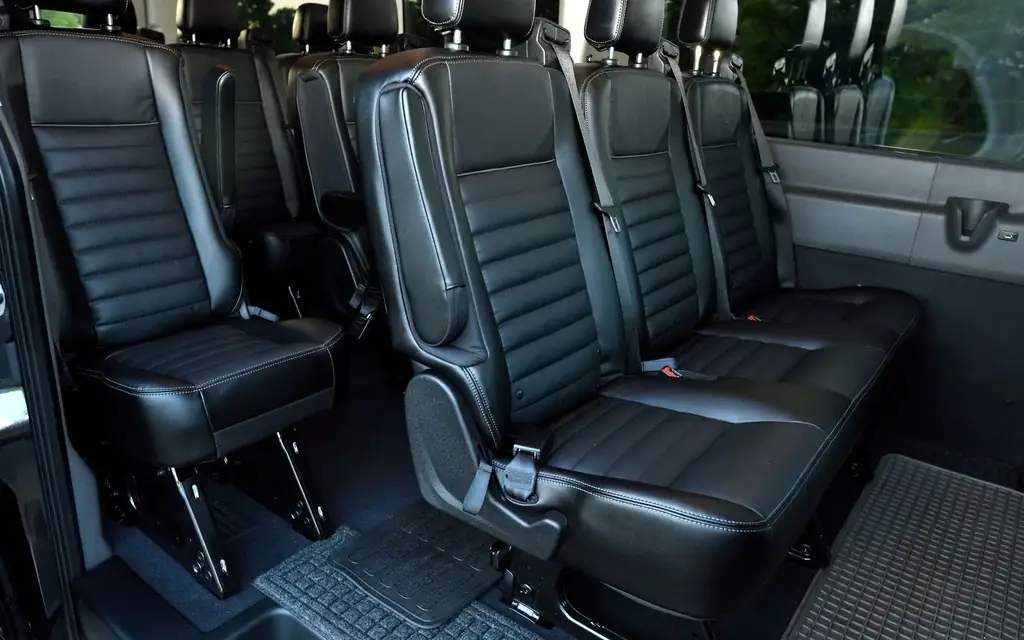
- Policy and tiers. Define eligibility. A common pattern is a First Class Sedan for the C-suite and board, an Executive Sedan for other senior travelers, and an SUV or Sprinter van for groups. Write the rules for airport, hourly and roadshow car service bookings.
- Pilot. Run the chosen supplier in your three busiest cities for a quarter, with assistants booking real trips. Track on-time pickups, complaints and invoice accuracy.
- Scale and review. Extend to all cities, switch off duplicate vendors, and review data quarterly with finance and security. Re-run the RFP every two to three years.
Two service rules belong in the written policy so nobody argues later. Free waiting is 60 minutes after international landings, 30 minutes after domestic landings and 15 minutes for other pickups. Cancellations counted from the scheduled pickup are free with more than 72 hours' notice, 10% inside 72 hours, 50% inside 48 hours and 100% inside 24 hours or for a no-show.
For the operational side of everyday bookings, see our corporate car service, executive chauffeur service, meet and greet service and conference transportation pages. Companies planning annual meetings should also read our guide to board meeting transportation.
Sources
- 2026 Business Travel Index, Global Business Travel Association
- Publication 15-B, Employer's Tax Guide to Fringe Benefits, Internal Revenue Service
- 17 CFR 229.402, Item 402 Executive compensation, Electronic Code of Federal Regulations
- ISO 31030:2021 Travel risk management, International Organization for Standardization
- Apply for a private hire operator licence, Transport for London
Frequently asked questions
What is corporate ground transportation?
It is the chauffeured cars, transfers, hourly hire and group vans a company uses for business travel, booked and paid for under a company policy. In large companies it is managed as a program with approved suppliers, booking rules, vehicle tiers, a data standard for invoices and safety requirements for operators.
Should ground transportation go through our TMC?
It works best when it is linked to the TMC rather than separate. The TMC holds the itinerary and traveler profile, so it can trigger car bookings for eligible travelers and carry the trip reference onto the car invoice. Our desk accepts bookings from TMCs and agencies through a travel trade account.
How many ground transportation suppliers should a large company use?
Many companies aim for one global supplier, sometimes keeping one or two direct relationships in home markets. Fewer suppliers mean one data standard and one escalation line. The trade-off is that quality then depends on how well that supplier vets its local operators, so test it before signing.
What should a ground transportation RFP ask?
Ask about the coverage model, licensing and insurance evidence, vehicle age limits, waiting and cancellation rules, invoice data fields, overnight escalation and privacy commitments. Then book live trips in several regions during the evaluation, because written answers rarely reveal how a supplier performs at 3 a.m.
Why does the purpose of each ride matter?
Tax and disclosure depend on it. Business rides and personal rides can be treated differently, and for public companies personal use may count toward executive perquisites. Capturing a purpose flag at booking gives finance and counsel accurate facts instead of reconstructing them months later.
Does ISO 31030 certify a chauffeur supplier?
No. ISO 31030 is guidance for organizations on managing travel risk, not a certification for suppliers. Companies use it to shape their own policy and supplier requirements, such as licensed operators, vetted chauffeurs and clear incident handling. Any supplier that claims to make you compliant with it is overstating what the standard does.
Plan the rest of the trip
 Booking WorldwideOnline travel agency · our travel desk partner
Your chauffeur is booked here. Book the rest of the trip in one place: hotels, flights, resorts, activities, packages and car rentals in every country.
Plan your trip