


 United StatesJFK
 MexicoMEX
 BrazilGRU
 ArgentinaEZE
 ChileSCL
 ColombiaBOG
 PeruLIM
 PanamaPTY
 Costa RicaSJO
 Dominican RepublicPUJ
 JamaicaMBJ
 BahamasNAS
 BarbadosBGI
 United KingdomLHR
 IrelandDUB
 FranceCDG
 GermanyFRA
 NetherlandsAMS
 BelgiumBRU
 SwitzerlandZRH
 AustriaVIE
 ItalyFCO
 SpainMAD
 PortugalLIS
 GreeceATH
 TurkeyIST
 DenmarkCPH
 SwedenARN
 NorwayOSL
 FinlandHEL
 PolandWAW
 Czech RepublicPRG
 HungaryBUD
 IcelandKEF
 United Arab EmiratesDXB
 QatarDOH
 Saudi ArabiaRUH
 IsraelTLV
 EgyptCAI
 MoroccoCMN
 South AfricaJNB
 KenyaNBO
 NigeriaLOS
 IndiaDEL
 PakistanLHE
 Sri LankaCMB
 SingaporeSIN
 MalaysiaKUL
 ThailandBKK
 VietnamSGN
 PhilippinesMNL
 IndonesiaCGK
 Hong KongHKG
 ChinaPVG
 TaiwanTPE
 JapanHND
 South KoreaICN
 AustraliaSYD
 New ZealandAKL
Every executive car service describes itself as reliable, discreet and fully insured. A company buying one needs to know what those words mean in writing. Procurement wants limits and certificates, security wants to know who the chauffeur is, finance wants clean data, and the executive assistant wants to know what happens at 05:40 when a flight lands early.
This guide sets out what corporations reasonably expect from a chauffeur provider and how to test each claim. It is written for the people who evaluate suppliers, not for the passenger, and it cites the rules that define the minimum so you can tell when a provider is merely meeting it.
What is executive car service?
Executive car service is pre-booked chauffeured transport for senior staff and their guests, delivered to agreed service levels. It combines licensed, insured operators, vetted professional chauffeurs, late-model sedans or SUVs, confidentiality rules, and account billing, so a company can rely on it for airport runs, meetings and board travel.
The difference from an ordinary car booking is accountability. A consumer accepts a car that arrives. A company needs a provider that can prove how the car arrived, who drove it, under what insurance, and what would have happened if it had not. Our executive chauffeur service page describes the passenger experience; this article covers the supplier side.
The service level agreement: write the promises down
A useful SLA turns vague assurances into measurable commitments. It does not need to be long. It needs to answer these questions:
- What counts as on time? Define it as the car on location and the chauffeur ready a set number of minutes before the scheduled pickup, not "arriving at pickup time."
- How fast are changes acknowledged? Set a response window for amendments and a separate, shorter one for same-day emergencies.
- Who answers out of hours? A named desk with a 24/7 number, not an inbox.
- What happens when something fails? The substitution rule if a vehicle breaks down, the escalation path, and how the incident is reported afterward.
- What vehicles qualify? Class, minimum standard and maximum age. Our network keeps cars within 4 model years (7 for Rolls-Royce, Bentley and Maybach).
- How is waiting handled? For airport pickups we include 60 minutes free after landing on international arrivals, 30 minutes domestic and 15 minutes for other pickups.
Set targets that suit your own risk appetite. A provider that refuses to commit anything to writing has answered the question for you.
Then test the agreement before you scale it. Run a pilot of a few weeks covering the bookings that matter most: an early international arrival, a multi-stop day, a same-day change made out of hours, and a trip in a city where your company has never booked before. Score each one against the SLA rather than against impressions. Pilots expose the gaps that sales meetings hide, such as a desk that answers quickly by day but slowly at night, or confirmations that omit the chauffeur's name.
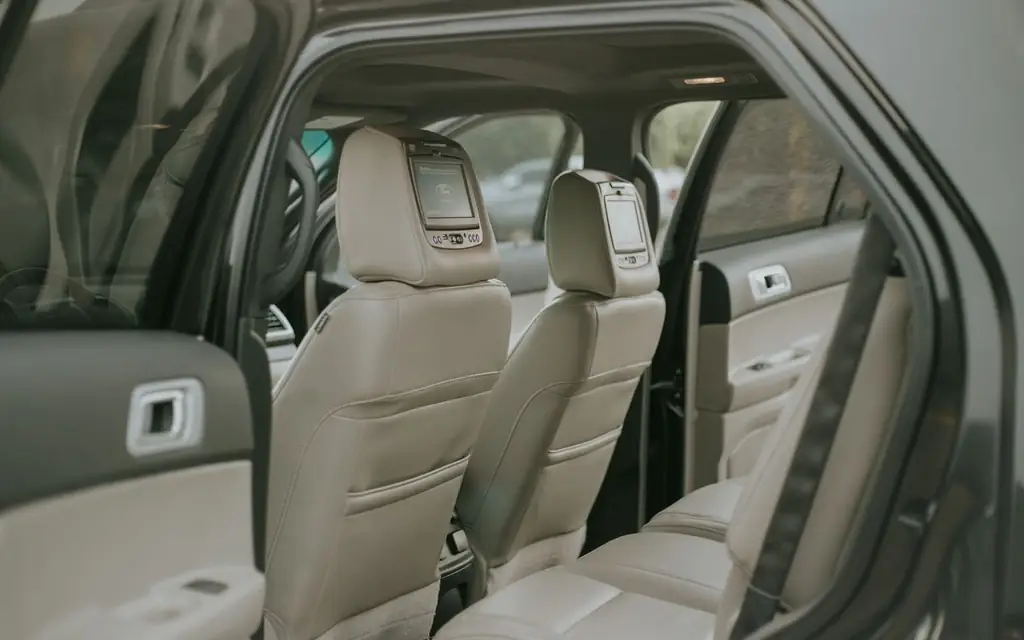
Presentation belongs in the agreement too. Executives notice a car that smells of smoke, a chauffeur in a fleece, or a rear seat full of the previous passenger's newspapers. Specify dress standards, interior condition, water and phone chargers, and a quiet cabin with no radio unless requested. These details cost the provider little and prevent the complaints that otherwise land on a travel manager's desk.
Insurance: the numbers behind "fully insured"
Insurance is where marketing language and legal minimums diverge most. Ask for certificates, not statements, and know the floors.

In the United States, for-hire passenger carriers operating in interstate commerce must carry at least US$1.5 million in public liability for a vehicle seating 15 or fewer including the driver, and US$5 million for 16 or more (49 CFR 387.33T, eCFR). States set their own floors for local work. California's regulator lists US$750,000 for vehicles seating 7 or fewer passengers, US$1.5 million for 8 through 15, and US$5 million for 16 or more (CPUC Passenger Carrier FAQs).
Three practical points for procurement:
- Minimums are floors. Many corporate policies ask for more, and many established operators carry more. Decide your own threshold.
- Check the named insured and the vehicles. The certificate should match the operator that actually dispatches the car, not a parent brand.
- Ask about subcontracting. If a provider farms out work, every operator in the chain needs its own cover.
Every operator in the LimousineWorldwideDirectory.com directory is licensed in its own city or country and commercially insured, and the why book with us page summarizes how the network is vetted.
Chauffeur vetting: what licensing checks, and what it does not
Licensing regimes already vet drivers in many cities. Knowing what they cover tells you which gaps your own requirements must fill.

London. Transport for London requires private hire drivers to pass an enhanced criminal records check through the Disclosure and Barring Service, meet DVLA Group 2 medical standards, and pass a topographical skills assessment along with English language and safety and regulatory assessments (TfL private hire driver licence).
California. Passenger carriers must enroll in the state's DMV Employer Pull-Notice System, which provides ongoing review of driver records, and must run a mandatory controlled-substance and alcohol testing program (CPUC).
New York City. The Taxi and Limousine Commission licenses bases, drivers and vehicles; luxury limousine bases must dispatch every trip on a pre-arranged basis (NYC TLC).
What licensing rarely covers is the executive-specific layer: experience with senior passengers, briefing discipline, confidentiality, and appearance. That layer is what a corporate buyer adds. Ask for the operator's own screening and training process, whether NDAs can be signed, and whether alias bookings are supported. For high-risk travel, read our guide to how an executive protection driver works alongside a security team.
Fatigue and duty hours: the risk nobody puts in the RFP
Executive days are long. An early airport pickup, a full day of meetings and a late dinner can stretch one chauffeur past 16 hours. Federal rules for passenger-carrying commercial vehicles in the US cap driving at 10 hours and prohibit driving after 15 hours on duty, each following 8 consecutive hours off (49 CFR 395.5, eCFR). Those limits apply to larger vehicles in interstate service, but the logic applies to every car carrying your people.
Write a fatigue rule into the agreement: for any booking beyond a set length, the provider supplies a relief chauffeur or a second car for the late leg. A good provider will raise this before you do.
Ready to test a provider on a real trip? Price one here; the fare is confirmed before you pay.
Duty of care: what the program must show
Employers are expected to take reasonable steps to protect people who travel for work. ISO 31030:2021, Managing travel risks: Guidance for organizations, frames travel as an essential activity that can expose organizations and travellers to significant risk (ISO/TC 262). It is guidance, not a certification, but it shapes how risk teams evaluate suppliers.
For ground transport, duty of care becomes operational detail:
- Traceability. Every ride has a booking reference, a named chauffeur and vehicle details on the confirmation.
- Live status. Flight tracking on airport pickups and a desk that knows where the car is.
- Incident handling. A defined process for accidents, breakdowns, medical events and missed pickups, with a written report afterward.
- Data protection. Passenger names, phone numbers and itineraries are personal data. Ask who at the provider and its local operators can see them, how long they are kept, and how they are deleted.
- Safe meeting points. Meet-and-greet inside the terminal rather than an anonymous curbside wave; see meet and greet service.
Our sibling article on duty of care in corporate ground transportation goes deeper on policy design.
Invoicing and data: what finance expects
Finance teams expect one invoice per period, consistent fields on every line, and references they can allocate without chasing anyone. At minimum each line should show date, passenger or alias, pickup and drop-off, vehicle class, base fare, extras and the booking reference or cost centre. How to structure that across departments and countries is covered in our guide to corporate car service accounts.
A vendor scorecard you can reuse
| Requirement | Evidence to request | Red flag |
|---|---|---|
| Licensing | License numbers for each operator and city | "We use partners" with no names |
| Insurance | Current certificates, named insured, limits | Limits quoted verbally only |
| Driver vetting | Screening steps, training, NDA option | No answer beyond "all our drivers are professional" |
| Fatigue control | Written rule for long days and relief drivers | One chauffeur for an 18-hour day |
| 24/7 desk | Phone test at an inconvenient hour | Voicemail or email-only support |
| Vehicle standard | Class definitions and age limit | Model promised without "or similar" caveat, then substituted |
| Invoicing | Sample invoice with your reference fields | Receipts per ride, no consolidation |
| Coverage | City list with local operators | Coverage claimed where no operator exists |
Corporate car service vs executive chauffeur: where the line sits
The two phrases overlap. Corporate car service usually describes the account and the volume: many travelers, policies and monthly billing. An executive chauffeur describes the individual standard for senior people: continuity, discretion and a car that waits. Most companies need both under one contract, with the policy stating who qualifies for which vehicle class. Our corporate car service page covers the account side.
A simple way to write the policy is in tiers. The first tier, usually the board and the C-suite, gets a First Class Sedan, chauffeur continuity where the city allows it, and hourly booking at the assistant's discretion. The second tier, senior managers and visiting clients, gets an Executive Sedan for airport and meeting transfers. Teams of four or more move in an SUV or a Sprinter rather than several cars. Writing the tiers down stops every booking from becoming a negotiation, and it gives the provider a clear rule to apply when an assistant is unavailable.
How LimousineWorldwideDirectory.com meets these expectations
Our desk runs 24/7 and books, confirms and invoices every ride. Each trip is delivered by a vetted, licensed and commercially insured local operator from the directory, so one contract covers London, New York, San Francisco and the rest of the network on one standard. Fares are fixed in the online booker before confirmation, NDAs are signed on request, and alias bookings are supported. We are a chauffeur service, not a security company, so we do not supply armed drivers, but our chauffeurs work alongside your security team. For multi-city programmes, see global chauffeur service and our roadshow car service.
Cancellation terms are fixed so finance can forecast them: free with more than 72 hours' notice, 10% inside 72 hours, 50% inside 48 hours, and 100% inside 24 hours or on a no-show.
Sources
- eCFR: 49 CFR 387.33T, Financial responsibility, minimum levels
- California Public Utilities Commission: Passenger Carrier FAQs
- Transport for London: Private hire driver licence
- NYC Taxi and Limousine Commission: Luxury Limousine Bases
- eCFR: 49 CFR 395.5, Maximum driving time for passenger-carrying vehicles
- ISO/TC 262: ISO 31030:2021 Managing travel risks
Frequently asked questions
What should a company require from an executive car service?
Written service levels, current insurance certificates, proof of licensing in each city, a description of chauffeur screening and training, a fatigue rule for long days, a 24/7 desk, consolidated invoicing with your reference fields, and a confidentiality process including NDAs on request and alias bookings.
How much insurance should an executive car provider carry?
Legal minimums vary by place and vehicle size. US interstate passenger carriers need at least US$1.5 million for vehicles seating 15 or fewer and US$5 million for 16 or more. Many companies set higher thresholds in their own policy, so decide yours and ask for certificates rather than verbal assurances.
Are executive chauffeurs background-checked?
In many cities licensing includes checks. London private hire drivers, for example, need an enhanced criminal records check and a medical. Corporate buyers should still ask about the operator's own screening, experience with senior passengers, and confidentiality commitments, because licensing sets a floor rather than an executive standard.
How is executive car service different from a regular black car?
The vehicles can be the same. The difference is the service wrapper: agreed service levels, continuity of chauffeur where possible, discretion rules, account billing and a desk accountable for every ride. Many companies use both, black car for routine transfers and executive service for senior travel. See black car service for the standard product.
Can one provider cover every city our executives visit?
A single booking desk can, if it works with licensed local operators in each city. That gives you one contract, one confirmation format and one invoice while the cars are driven by people who know the local rules. Check the provider's city list before signing.
What happens if a car fails to arrive?
A good agreement defines this in advance: the desk sends a substitute vehicle, keeps the traveler informed, and files an incident report. Ask every provider to describe its last missed pickup and what changed afterward. The answer tells you more than any brochure.
Plan the rest of the trip
 Booking WorldwideOnline travel agency · our travel desk partner
Your chauffeur is booked here. Book the rest of the trip in one place: hotels, flights, resorts, activities, packages and car rentals in every country.
Plan your trip