 United StatesJFK
 MexicoMEX
 BrazilGRU
 ArgentinaEZE
 ChileSCL
 ColombiaBOG
 PeruLIM
 PanamaPTY
 Costa RicaSJO
 Dominican RepublicPUJ
 JamaicaMBJ
 BahamasNAS
 BarbadosBGI
 United KingdomLHR
 IrelandDUB
 FranceCDG
 GermanyFRA
 NetherlandsAMS
 BelgiumBRU
 SwitzerlandZRH
 AustriaVIE
 ItalyFCO
 SpainMAD
 PortugalLIS
 GreeceATH
 TurkeyIST
 DenmarkCPH
 SwedenARN
 NorwayOSL
 FinlandHEL
 PolandWAW
 Czech RepublicPRG
 HungaryBUD
 IcelandKEF
 United Arab EmiratesDXB
 QatarDOH
 Saudi ArabiaRUH
 IsraelTLV
 EgyptCAI
 MoroccoCMN
 South AfricaJNB
 KenyaNBO
 NigeriaLOS
 IndiaDEL
 PakistanLHE
 Sri LankaCMB
 SingaporeSIN
 MalaysiaKUL
 ThailandBKK
 VietnamSGN
 PhilippinesMNL
 IndonesiaCGK
 Hong KongHKG
 ChinaPVG
 TaiwanTPE
 JapanHND
 South KoreaICN
 AustraliaSYD
 New ZealandAKL
When a company assigns protection to a chief executive, or a family office hires a security team for a principal, the car quickly becomes the center of the plan. Most of the risk in a protective program sits in transit: the walk to the vehicle, the stop at a junction, the arrival at a predictable address. That is why the executive protection driver is a specialist role, and why it is often confused with the chauffeur who drives the same type of car on an ordinary day.
This guide separates the roles, explains how vehicle formations work, outlines the licensing landscape in a few major jurisdictions and shows how a chauffeur service such as LimousineWorldwideDirectory.com plugs into a security team's plan without pretending to be one.
What is an executive protection driver?
An executive protection driver is a member of a security detail whose job is to move a protected person safely. Beyond driving, they plan routes and alternates, keep the vehicle secured and ready, recognize threats on the road and react with trained techniques, all under the direction of the detail leader.
The title varies. Some teams say security driver, others say close protection driver, and in some organizations the driver is simply one of the protection officers who happens to hold the keys. What defines the role is accountability. The protection driver answers to the detail leader, is briefed on the threat assessment, and treats the vehicle as part of the protective envelope rather than as a means of getting from A to B.
A professional chauffeur, by contrast, is responsible for punctuality, comfort, discretion and safe, lawful driving. Both are skilled jobs. They are not interchangeable, and a client is best served when everyone is honest about which one they are paying for.
Who does what inside a protective detail?
Details vary from a single protection officer who also drives to multi-vehicle teams for heads of state. The table below shows the roles you will meet most often on a corporate or private program.

| Role | Main responsibility | Where they sit | Typical licensing question |
|---|---|---|---|
| Detail leader | Plans the day, makes the calls when plans change | Front passenger seat of the principal's car | Security licence where the jurisdiction requires one |
| Protection officer | Stays with the principal on foot | With the principal | Security licence where required |
| Security driver | Drives the principal's car, keeps it secured | Driver's seat, principal car | Driving licence plus security licence if guarding duties apply |
| Follow-car team | Covers the principal car, carries extra staff | Second vehicle behind | As above, per role |
| Advance agent | Visits venues and routes before the principal | Ahead of the movement | Security licence where required |
| Chauffeur | Drives a hired car safely and on time | Driver's seat, hired vehicle | Passenger-transport licence for the city |
Smaller programs blend these roles. A common corporate pattern is one protection officer traveling with the executive, paired with a hired chauffeur and car arranged through an executive chauffeur service. In that setup, the protection officer runs the plan and the chauffeur drives it.
Security driver vs chauffeur: two different jobs
The difference shows up in a few moments that matter.
Before the trip. A security driver studies the route against a threat assessment and identifies safe havens, such as hospitals and police stations along the way. A chauffeur studies the route for timing, traffic and access.
At the pickup. A security driver usually stays with the vehicle, engine ready, doors controlled, while the protection officer brings the principal out. A chauffeur may step out to open the door and handle luggage, which looks courteous and is exactly what a security plan may not want. The briefing should say which behavior is expected.
When something goes wrong. A trained security driver has practiced emergency maneuvers on a closed course. A chauffeur's response is to follow the law, keep calm, call the desk and follow instructions from the team. That is an honest description of the limits of the job, not a criticism.
LimousineWorldwideDirectory.com books licensed, commercially insured chauffeur operators. It does not supply armed drivers, bodyguards or protection officers, and it does not describe its chauffeurs as security staff. Where a client has a security team, the chauffeur works inside that team's plan. The same position is stated on our VIP chauffeur service page.
What training do close protection drivers receive?
There is no single global syllabus, and course titles vary widely, so ask a provider what their drivers actually completed rather than relying on labels like "evasive" or "tactical". In general terms, protective driving courses cover:

- Vehicle dynamics. How weight transfer, braking and steering behave at the limit of grip.
- Avoidance and recovery. Practiced on closed ranges, not public roads.
- Route analysis. Choke points, predictable stops and alternates.
- Formation driving. Holding position with a lead or follow car and communicating changes.
- Attack recognition. Spotting surveillance and unusual behavior early enough to change plan.
- Medical response. Many security courses require first aid as a prerequisite.
Formal security licensing often brings its own training rules. In the United Kingdom, for example, the Security Industry Authority requires a licence-linked qualification for close protection, and its guidance sets out what training you need for an SIA licence, which currently means a Level 3 Certificate for Close Protection Operatives, and applicants must hold a valid first aid qualification before they can start that training.
If you need a chauffeured car to support a security team on a coming trip, price it below; the fare is confirmed before you pay.
Licensing context: who needs a security licence?
Rules depend on where the work happens and what the person actually does. A few examples show the range:
- United Kingdom. The Security Industry Authority states that you need a close protection licence if you guard people against physical assault or injury, while noting that in-house staff employed directly by the company they protect usually do not need an SIA licence.
- Texas. The Department of Public Safety's private security program says personal protection officer applicants must submit Level II, Level III and Level IV training certificates together with a declaration of psychological and emotional health.
- California. The Bureau of Security and Investigative Services registers security guards who are hired to protect persons or property, requires a Department of Justice and FBI background check, and sets 32 hours of security skills training within six months of registration.
The practical takeaway: a driver whose job includes guarding the passenger may need a security licence on top of a driving licence, depending on the jurisdiction. A chauffeur who only drives is licensed as a passenger-transport driver by the relevant city or state. Ask every provider which licences cover which person in the convoy, and ask for proof.
How lead and follow cars work
Vehicle formations are where a chauffeur service and a security team most often meet, because the second and third vehicles are frequently hired.
- Principal car. Carries the protected person, the detail leader in front and, depending on the team, the security driver.
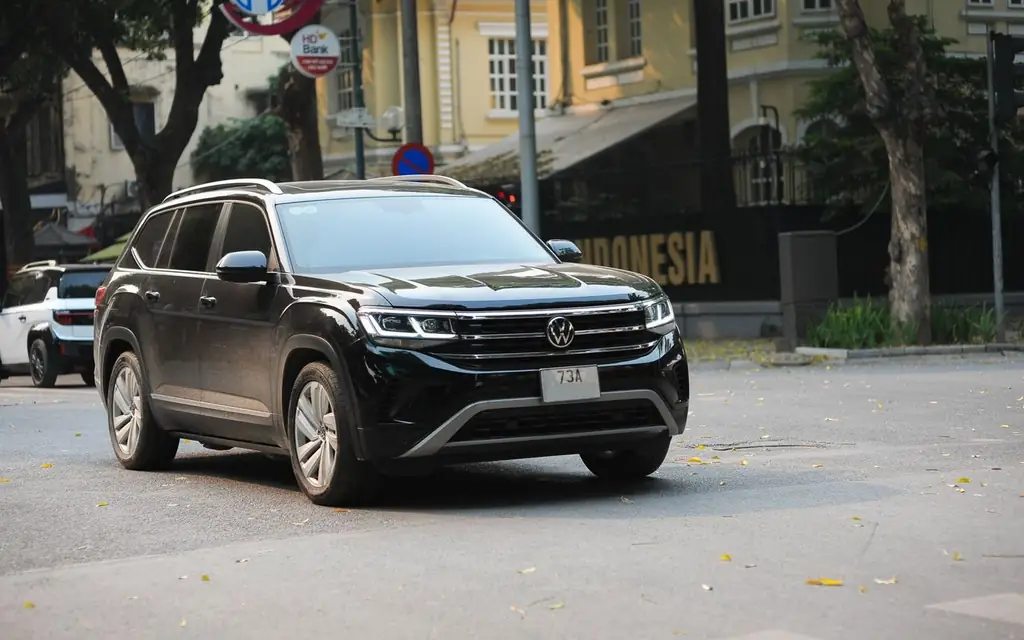
- Follow car. Runs close behind, carries additional officers or staff and can block or cover if the principal car must stop or move. Many teams use a large SUV here.
- Lead car. Used on larger movements to scout ahead, hold junctions or arrive first at the venue.
- Staff vehicle. Assistants, communications staff and luggage travel separately so the principal car stays light. An Executive Sprinter is the usual choice for six or more people.
A hired chauffeur may drive the staff vehicle, the follow car on a low-threat program, or the principal car when the client's security officer rides in front. The detail leader decides. What the chauffeur needs is a clear briefing: their position in the order, the communication method, the signal to stop, what to do if separated and the rendezvous point.
For multi-vehicle days, book on an hourly basis so every vehicle stays with the movement. Car classes and capacities are on the fleet page.
Planning secure transportation abroad
Secure transportation in an unfamiliar country starts with information. U.S. organizations often begin with the State Department's Overseas Security Advisory Council, whose country pages are developed with Regional Security Officers at U.S. embassies and consulates. Security managers then layer in their own provider's assessment.
Ground choices follow from the assessment:
- Low-threat business travel. A licensed chauffeur, an alias on the booking and a meet-and-greet at the airport usually suffice. See corporate car service.
- Elevated risk or high profile. A protection officer travels with the principal; the chauffeur is briefed by them.
- High-threat environments. Specialist security providers with trained security drivers and, where justified, protected vehicles. A chauffeur service is not a substitute.
Events concentrate risk and traffic at the same time. During the World Economic Forum, for example, delegations move between Zurich and Davos, a drive of roughly 150 km (93 miles) that usually takes two to two and a half hours before winter conditions are added. Our WEF Davos page covers the ground logistics. Cities where corporate security teams often plan carefully also get dedicated treatment in our guide to executive car service in São Paulo.
Organizations formalizing their program sometimes look to ISO 18788, the international standard for a management system for private security operations, when selecting security providers.
How a chauffeur should be briefed by the security lead
A five-minute briefing prevents most problems. We suggest the detail leader confirms these points with the chauffeur at the start of each day:
- Chain of command. Instructions on route, timing and stops come from the named security lead, within the law and safe vehicle operation.
- Door policy. Whether the chauffeur opens doors, stays at the wheel or keeps the engine running.
- Vehicle custody. Whether the car may ever be left unattended, and where it holds.
- Communications. Phone or radio, a backup number, and agreed short phrases.
- Contingencies. What happens if the car is separated from the formation or the venue exit changes.
- Confidentiality. No discussion of passengers, routes or timings with anyone. Our guide to discreet travel, NDAs and aliases covers the paperwork side.
The desk can pass these instructions to the operator when the booking is made, so the chauffeur arrives already briefed. For arrivals by private aircraft, the security lead should also coordinate with the FBO through our private jet car service.
Questions to ask before you hire anyone
Whether you are hiring a protection provider or a chauffeur to support one, the same direct questions apply:
- Which person holds which licence, and can you see it?
- Who is insured for what, and does the policy cover the vehicle in commercial use?
- What driver training has each person completed, by whom and when?
- Who gives instructions on the day, and who is the escalation contact at night?
- How are names, schedules and addresses stored and who can see them?
The answers should come in writing. Any provider that hesitates on licences or insurance is answering the question for you. For how corporate travel managers build these checks into policy, see our guide to duty of care in ground transportation, and for multi-country programs, global chauffeur service.
Sources
- GOV.UK (Security Industry Authority): Find out if you need an SIA licence
- GOV.UK (Security Industry Authority): Check what training you need to get an SIA licence
- Texas Department of Public Safety: Private Security individual license FAQ
- California Bureau of Security and Investigative Services: Security guard fact sheet
- U.S. Department of State: Overseas Security Advisory Council
- ISO: ISO 18788:2015 Management system for private security operations
Frequently asked questions
Can a chauffeur act as an executive protection driver?
Only if they are trained and, where required, licensed for security work, and the client has engaged them in that role. The chauffeurs booked through LimousineWorldwideDirectory.com are passenger-transport professionals, not security staff. They support a client's own protection team by following its instructions on routes, timing and stops.
What is a follow car?
A follow car is a second vehicle that travels directly behind the principal's car. It carries additional protection officers or staff and gives the team options if the principal car must stop or change route. Many programs use a large SUV for this role, driven by a security driver or a briefed chauffeur, as the detail leader decides.
Do close protection drivers need a special licence?
It depends on the country and the duties. In the UK, guarding a person against assault or injury requires a Security Industry Authority close protection licence unless an in-house exemption applies. Several US states license personal protection officers separately. A person who only drives needs the passenger-transport licence for that city.
Should the chauffeur open the door for a protected principal?
Only if the security lead says so. Many protection teams prefer the driver to stay at the wheel with the vehicle ready while an officer manages the door. Agree the door policy in the morning briefing and the desk will pass it to the operator.
Can I book several cars for a security convoy?
Yes. Book each vehicle through the online booker or ask the desk to arrange a principal car, follow car and staff vehicle together on an hourly basis. Tell the desk which vehicle is which and who the security lead is so each chauffeur is briefed.
How do I keep the itinerary confidential?
Limit who holds it. Book under an alias, name one booker and one security contact, and ask for an NDA if your policy requires it. Chauffeurs never photograph passengers or post about trips, and the desk shares details only with the people named on the reservation.
Plan the rest of the trip
 Booking WorldwideOnline travel agency · our travel desk partner
Your chauffeur is booked here. Book the rest of the trip in one place: hotels, flights, resorts, activities, packages and car rentals in every country.
Plan your trip