
 United StatesJFK
 MexicoMEX
 BrazilGRU
 ArgentinaEZE
 ChileSCL
 ColombiaBOG
 PeruLIM
 PanamaPTY
 Costa RicaSJO
 Dominican RepublicPUJ
 JamaicaMBJ
 BahamasNAS
 BarbadosBGI
 United KingdomLHR
 IrelandDUB
 FranceCDG
 GermanyFRA
 NetherlandsAMS
 BelgiumBRU
 SwitzerlandZRH
 AustriaVIE
 ItalyFCO
 SpainMAD
 PortugalLIS
 GreeceATH
 TurkeyIST
 DenmarkCPH
 SwedenARN
 NorwayOSL
 FinlandHEL
 PolandWAW
 Czech RepublicPRG
 HungaryBUD
 IcelandKEF
 United Arab EmiratesDXB
 QatarDOH
 Saudi ArabiaRUH
 IsraelTLV
 EgyptCAI
 MoroccoCMN
 South AfricaJNB
 KenyaNBO
 NigeriaLOS
 IndiaDEL
 PakistanLHE
 Sri LankaCMB
 SingaporeSIN
 MalaysiaKUL
 ThailandBKK
 VietnamSGN
 PhilippinesMNL
 IndonesiaCGK
 Hong KongHKG
 ChinaPVG
 TaiwanTPE
 JapanHND
 South KoreaICN
 AustraliaSYD
 New ZealandAKL
A São Paulo executive car service does more than move a visitor from Guarulhos to a hotel. For banks, funds, law firms and family offices, the car is part of a plan: which vehicle is used, whether it is armored, which entrance it uses, when it leaves to beat the evening peak and where it meets a helicopter. Companies that send people to São Paulo regularly tend to treat ground transport the way they treat hotels, with standards, approved suppliers and a duty-of-care checklist.
This guide covers the three topics that set São Paulo apart: armored vehicles, helicopter handoffs and the traffic windows that shape the day. For airports, districts, the rodízio basics and day trips, see our São Paulo chauffeur service page.
Why do executives in São Paulo use armored cars?
Armored cars are common in São Paulo because executives and families weigh street-crime risk, especially in traffic. Brazilian armoring is controlled by the Army: a certified shop needs Army authorization, and the finished car receives an Army declaration that the state DETRAN records on the vehicle documents. Request one at booking if your policy requires it.
The scale is striking. Army SICOVAB figures published by the Brazilian armoring association ABRABLIN show 19,807 armored vehicles completed nationwide in the first half of 2025, of which 16,310, about 82%, were in São Paulo state. Armoring is a mainstream purchase in the city, not an exotic one.
Government travel advice explains part of the demand. The UK government's Brazil safety and security guidance says robberies are common in many cities, that short-term "express kidnapping" can happen, and that carjacking can occur, particularly on major roads and in tunnels, advising particular care at traffic lights. The same page tells visitors not to hail taxis in the street and to be wary of unregulated drivers posing as app drivers, especially at airports.
None of this means São Paulo is a no-go city. Millions of people work there safely every day, and business travel is routine. It does mean that a pre-booked, named driver at a named meeting point is the sensible default, and that some companies' security policies go further and specify armored vehicles.
How armored-car certification works in Brazil
If your policy calls for an armored car, it helps to know what "certified" means locally. ABRABLIN's step-by-step guide for owners sets out the process.
- An Army-registered shop. Vehicle armoring is an activity controlled by the Army, and the armoring company must hold an active Army registration authorizing ballistic work.
- Authorization before work starts. The shop applies through the Army's SICOVAB system, and work may only begin once the authorization is issued.
- A responsibility statement. On completion, the shop's legal representative and responsible engineer sign a statement that is attached to the SICOVAB file for Army review.
- The Army's declaration. The review ends with a Declaração de Blindagem carrying a QR code, and the car may only leave the shop after it is issued.
- DETRAN registration. The owner then has the "blindagem" modification recorded on the vehicle's registration documents (CRV/CRLV) at the state traffic department.
For a booking, that gives you three practical questions to ask, and the desk asks them on your behalf: is the vehicle's armoring recorded on its registration, what protection level was it built to, and how old is the armor? Ballistic glass and materials age, and a well-maintained armored car is a serviced one.
Should you book an armored car or a standard executive sedan?
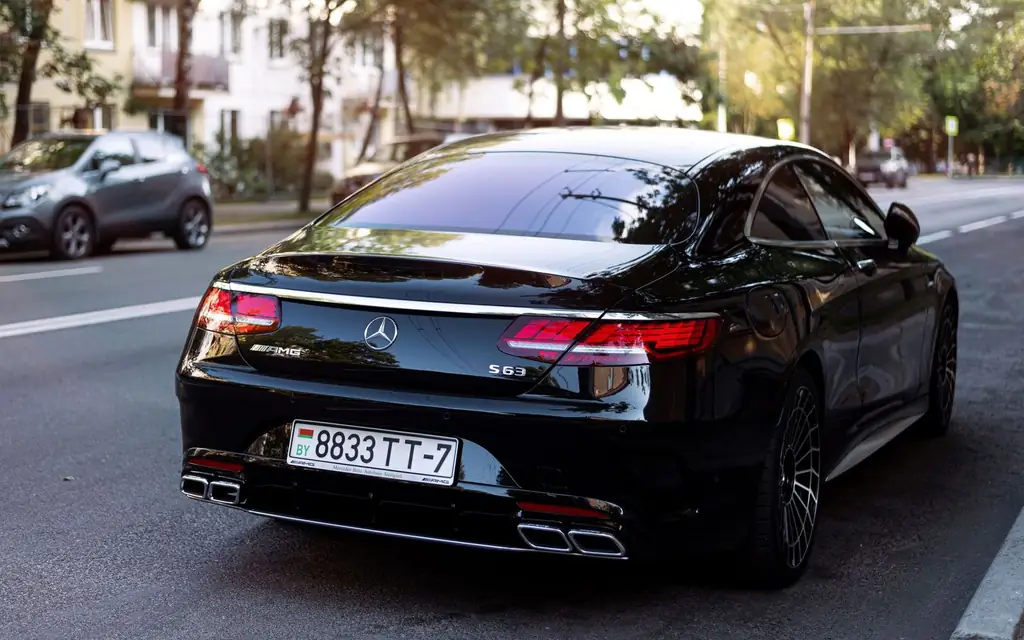
The honest answer depends on your profile and your company's policy, not on the city's reputation. This comparison is how many travel managers frame it.
| Factor | Standard executive car | Armored executive car |
|---|---|---|
| Typical user | Most business visitors, delegations, families | Principals with a public profile, policy-driven travel |
| Availability | Broad, at short notice | Limited; request early and confirm in writing |
| Vehicle choice | Sedans, SUVs, vans and Sprinters | Narrower; confirmed vehicle by vehicle |
| Ride and handling | Normal | Heavier; the driver plans braking and routes accordingly |
| Windows | Open normally | May open only partly; ask the operator |
| Documentation | Standard licensing and insurance | Plus Army declaration and DETRAN record |
| What it does not replace | Good planning and a named driver | Close protection, if your risk assessment needs it |
Two points matter. First, an armored car is a vehicle, not a security detail. We are a chauffeur service, not a security company: our chauffeurs are not armed and do not act as bodyguards, though they work smoothly alongside a client's own protection team. Our series guide to the executive protection driver explains how those roles divide. Second, availability of armored vehicles depends on the local operator. Ask at booking, and treat it as confirmed only when your written confirmation says so.
Helicopters and the car: planning the handoff
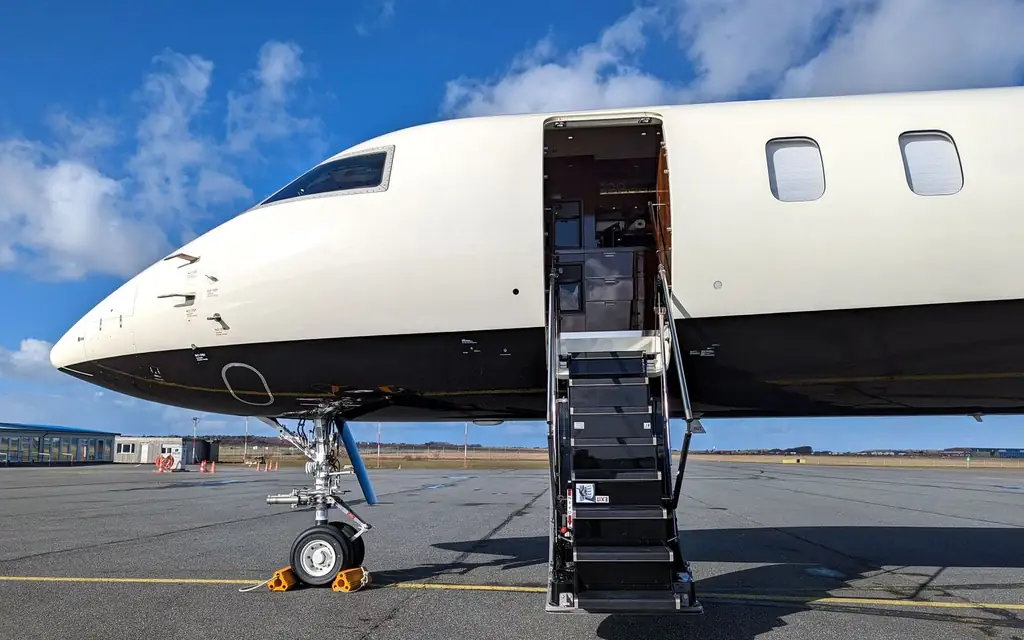
Executive helicopter use is a familiar part of São Paulo business life, and the car's job is to make the ground legs seamless. The most common pattern is a car from the hotel or office to a helipad or airfield, a short flight across the city or out to the coast, and a car waiting on landing.
What makes a handoff work:
- The exact helipad and building. Rooftop pads sit on office towers and hotels with their own access procedures. Give the desk the building name, the entrance used by passengers and a contact at the helipad operator if you have one.
- Two cars, not one. If the helicopter goes from point A to point B, the car that dropped you cannot also be waiting at B. Book a car at each end, or one hourly car that repositions while you fly.
- Weather fallback. Helicopter flights can be held for weather. An hourly booking lets the same car drive the whole leg if the flight is cancelled, without starting over.
- Luggage. Helicopter baggage limits are tighter than car limits. The car can carry the heavy bags by road and meet you at the destination.
LimousineWorldwideDirectory.com is not an aviation operator and does not arrange helicopters; we coordinate the cars around your aviation booking. Our sibling guide to helicopter transfers covers the aviation side, and private jet car service explains how planeside and FBO pickups work when you arrive by business aircraft.
Building a São Paulo day like this? Price the car here; the fare is confirmed before you pay.
Building the day around traffic windows
São Paulo traffic is not uniformly bad; it is predictably bad at certain hours. The city's traffic authority, CET, restricts cars by the last digit of the plate inside the mini-anel viário on weekdays from 7:00 to 10:00 and from 17:00 to 20:00. Those hours are also when the arteries are at their worst, and they are the windows an experienced assistant plans around.
- Front-load the morning. Schedule the first meeting near the hotel and move across town after 10:00.
- Cluster by district. Put Faria Lima and Itaim meetings together, and Paulista and Jardins meetings together, rather than criss-crossing the river corridors.
- Leave early for the airport. A Guarulhos departure in the evening peak needs a generous buffer. Rome2Rio puts Guarulhos about 29 km from Avenida Paulista by road, roughly half an hour in free-flowing traffic; at peak it can be several times that.
- Use Congonhas for domestic hops. Rome2Rio puts Congonhas about 10 km from Faria Lima by road, which is why it is the airport of choice for the Rio shuttle.
The rodízio rarely touches a chauffeured booking, because the operator assigns a car whose plate is allowed at your pickup time. An hourly booking takes care of the rest: the car stays with you through the day, so a meeting that overruns into the evening peak does not leave you searching for a ride. The hourly chauffeur service page explains minimums and overtime.
A sample executive day, hour by hour
Here is how an assistant might build a Tuesday for a visiting fund manager staying near Avenida Paulista, using one hourly car.
- 07:45, hotel pickup. The first meeting is ten minutes away in Jardins, so the morning peak barely matters.
- 10:15, cross to Faria Lima. The worst of the morning traffic has eased, and two meetings sit in neighboring towers in Itaim Bibi. The driver waits nearby and returns when messaged.
- 13:00, lunch in Itaim. Walking distance; the car stays parked.
- 14:30, Berrini. A short run along the river corridor to a multinational's office, with the guest name pre-registered at reception so the car enters the drive without delay.
- 16:30, helipad. A car drops the guest at a rooftop pad for a flight to a site visit, while the luggage goes ahead by road to the next hotel.
- 19:00, dinner in Pinheiros. The car collects the guest on landing and makes a short run to a restaurant chosen close to the hotel, so the evening peak costs little.
The same day by app rides would mean six separate pickups, several of them in the peak, each with a new driver and a new meeting point.
Arrival at Guarulhos
The airport operator's official site lists Terminals 1, 2 and 3 and ground options including taxi, bus, train, transfer services and a pick-up plaza. For an executive arrival the routine is:
- Your flight number goes in the booking, and the driver tracks it, so delays move the pickup automatically.
- International arrivals include 60 minutes of free waiting after landing; domestic arrivals 30 minutes.
- A meet and greet inside arrivals can be added, with an alias on the name board if you prefer not to display a company or personal name.
- Your confirmation names the terminal, the meeting point and the driver, so there is no reason to engage anyone offering rides in the hall.
Terminal detail is on our Guarulhos airport transfer page.
Corporate programs and duty of care
Companies that move staff through São Paulo every month usually formalize the arrangement: approved vehicle classes, an armored-car policy by traveler profile, rules on meeting points and sharing itineraries, and one invoice. Our corporate car service accounts and the executive chauffeur service desk support that, and investor visits with tight meeting grids fit the roadshow car service format. For families and principals, see the HNWI and family-office chauffeur page.
The series guide to duty of care in ground transport covers how travel managers document supplier vetting, and why book with us sets out how operators in our Latin America directory are checked. Chauffeurs do not photograph clients or post about trips, and NDAs are signed on request.
Choosing the vehicle
- Executive Sedan: one to three passengers with light bags, city meetings.
- First Class Sedan: senior executives and client entertaining.
- Luxury SUV: up to six passengers with 5 to 6 large bags.
- Executive Sprinter: delegations of up to 12 to 14 with luggage; see Sprinter van with driver.
Classes and capacities are on the fleet page. Armored versions, where available, are confirmed individually.
How to book an executive car in São Paulo
- Open the online booker, choose a transfer or hourly service, and enter the flight number or first address.
- In the notes, list stops with building names and entrances, any helipad legs, and whether your policy requires an armored vehicle.
- Review the fare, which is fixed before you confirm, and book. Armored requests are confirmed in writing before payment.
Cancellation is free with more than 72 hours' notice, then 10% inside 72 hours, 50% inside 48 hours and 100% inside 24 hours or for a no-show, counted from the scheduled pickup. The 24/7 desk is on (877) 860-3388.
Book a São Paulo executive car
Sources
- ABRABLIN: Sector data (Army SICOVAB figures, first half 2025)
- ABRABLIN: How vehicle armoring is authorized and registered
- UK Foreign, Commonwealth and Development Office: Brazil safety and security
- CET São Paulo: How the municipal rodízio works
- GRU Airport: Official site
- Rome2Rio: Guarulhos Airport to Avenida Paulista
- Rome2Rio: Congonhas Airport to Faria Lima
Frequently asked questions
Can I book an armored car service in São Paulo?
Yes, on request. Armored vehicles depend on the local operator's fleet, so ask at booking and treat the car as confirmed only when your written confirmation says so. The desk checks that the armoring is recorded on the vehicle's registration and asks about its protection level.
Is an armored car necessary for a business trip to São Paulo?
For most visitors, no. A pre-booked, licensed driver meeting you at a named point covers the main risks that government travel advice describes. Armored cars are usually chosen by principals with a public profile or by companies whose travel policy requires them.
Who certifies armored cars in Brazil?
The Army. Armoring shops need Army registration and authorization through the SICOVAB system before work starts, and the finished car receives an Army declaration of armoring. The owner then records the modification on the vehicle documents at the state DETRAN.
Can my car meet me at a helipad?
Yes. Give the desk the building, the passenger entrance and the flight times. If the helicopter takes you from one point to another, book a car at each end or an hourly car that repositions. We coordinate cars around your flight but do not arrange helicopters.
When is traffic worst in São Paulo?
On weekdays the morning and evening peaks are the hardest, broadly matching the rodízio hours of 7:00 to 10:00 and 17:00 to 20:00. Cluster meetings by district, cross the city between peaks and leave extra time for any airport run during those windows.
How far is Guarulhos Airport from Avenida Paulista?
About 29 km by road. Route planners show roughly half an hour in free-flowing traffic, but at peak the drive can take far longer. Your driver tracks the flight, and international arrivals include 60 minutes of free waiting after landing.
Plan the rest of the trip
 Booking WorldwideOnline travel agency · our travel desk partner
Your chauffeur is booked here. Book the rest of the trip in one place: hotels, flights, resorts, activities, packages and car rentals in every country.
Plan your trip