 United StatesJFK
 MexicoMEX
 BrazilGRU
 ArgentinaEZE
 ChileSCL
 ColombiaBOG
 PeruLIM
 PanamaPTY
 Costa RicaSJO
 Dominican RepublicPUJ
 JamaicaMBJ
 BahamasNAS
 BarbadosBGI
 United KingdomLHR
 IrelandDUB
 FranceCDG
 GermanyFRA
 NetherlandsAMS
 BelgiumBRU
 SwitzerlandZRH
 AustriaVIE
 ItalyFCO
 SpainMAD
 PortugalLIS
 GreeceATH
 TurkeyIST
 DenmarkCPH
 SwedenARN
 NorwayOSL
 FinlandHEL
 PolandWAW
 Czech RepublicPRG
 HungaryBUD
 IcelandKEF
 United Arab EmiratesDXB
 QatarDOH
 Saudi ArabiaRUH
 IsraelTLV
 EgyptCAI
 MoroccoCMN
 South AfricaJNB
 KenyaNBO
 NigeriaLOS
 IndiaDEL
 PakistanLHE
 Sri LankaCMB
 SingaporeSIN
 MalaysiaKUL
 ThailandBKK
 VietnamSGN
 PhilippinesMNL
 IndonesiaCGK
 Hong KongHKG
 ChinaPVG
 TaiwanTPE
 JapanHND
 South KoreaICN
 AustraliaSYD
 New ZealandAKL
Booking a private jet and chauffeur together is less about luxury than about removing gaps. A charter flight can save hours compared with an airline itinerary, but those hours leak away if the car is waiting at the wrong FBO, the driver is watching a tail number that was swapped overnight, or nobody has decided what happens if the flight diverts to a neighboring airport. Door-to-door private travel is the discipline of closing those gaps before they open.
This guide explains who is responsible for each segment, what information has to move between them, and how a well-run trip handles the things that go wrong. It is written for executive assistants, family office staff, travel advisors and travelers who want to understand what happens behind a seamless arrival.
Who is responsible for each part of a private jet and chauffeur trip?
A door-to-door trip has several owners. The licensed air operator holds operational control of the flight; the FBO handles the aircraft and passengers on the ground; a vetted local chauffeur operator drives each car; and one coordinating desk books, confirms and passes changes between all of them so the traveler deals with a single contact.
It helps to name the parties explicitly, because most failures happen at the boundaries between them.
- The air operator. In the United States, on-demand charter is flown under a Part 135 certificate; the FAA describes Part 135 as the authority it grants to operate on-demand, unscheduled air service. That operator, not the broker and not the booking agent, holds operational control: it decides whether, when and where the aircraft flies. In Europe the equivalent is an air operator certificate issued under EASA or UK CAA rules.
- The booking agent. For flights, LimousineWorldwideDirectory.com acts as the client's booking agent with licensed carriers. We do not own or operate aircraft.
- The FBO. The fixed-base operator at each airport parks and services the aircraft, runs the private terminal, and controls who drives onto the ramp. Our explainer on what an FBO is covers the details.
- The chauffeur operator. A vetted, licensed, commercially insured local operator from our directory drives each ground leg. The desk books, confirms and invoices it.
- The coordinator. One desk that holds the whole itinerary and owns the job of passing every change to every party.
When those roles are clear, each party can be held to its own standard. When they blur, a late change reaches the pilot but never reaches the driver.
The information that has to travel with the trip
Every handoff depends on a small set of facts. If any one of them is wrong, the plan degrades quickly. A good coordinator maintains a single trip record with these fields and updates it as things change:

| Data point | Why the chauffeur needs it | Who usually supplies it |
|---|---|---|
| Departure and arrival airports | Which city and which airfield, not just the metro area | Client or flight department |
| FBO name at each end | Large airports have several FBOs on different sides of the field | Air operator or handler |
| Tail number (registration) | Lets the desk track the actual aircraft, not a schedule | Air operator |
| Estimated departure and arrival, local time | Sets the chauffeur's staging time | Air operator, updated en route |
| Passenger count and names | Vehicle size, name board, alias if requested | Client |
| Bag count, including skis, golf or pet crates | Vehicle class and whether a second car is needed | Client |
| Ramp access rules | Whether the car can meet the aircraft planeside | FBO |
| Customs status (international arrivals) | Whether passengers clear inside the FBO or elsewhere | Air operator and FBO |
| Final destination address | Route planning and fare | Client |
Two of these deserve special attention. The FBO name is the most common source of wasted time: at a busy airfield the wrong FBO can mean a long drive around the perimeter. The tail number is the most commonly changed: if an aircraft goes technical, the operator may substitute another aircraft, and the new registration needs to reach the chauffeur's tracking immediately.
Tail-number tracking, and why it sometimes goes dark
Airline flights are easy to follow by flight number. Private flights are tracked by registration or by call sign, which is why the desk asks for the tail number on every booking. Our jet and car service, set out on the private jet car service page, uses it to move the chauffeur's staging time as the aircraft's real progress changes.
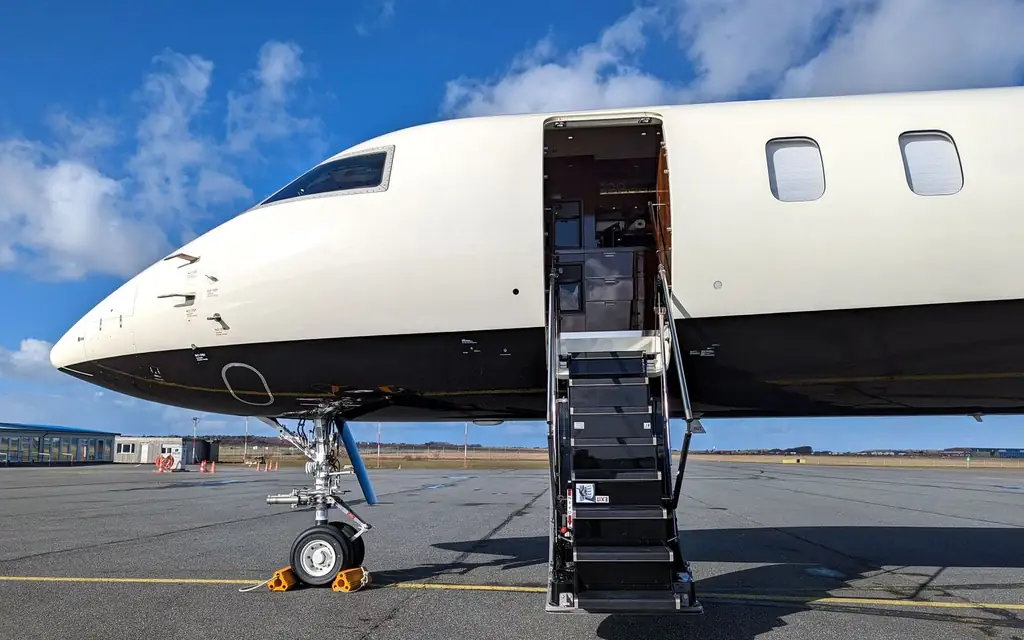
There is a wrinkle that surprises many travel planners. In the United States, aircraft owners can ask the FAA to keep their flights off public tracking websites. The FAA's Limiting Aircraft Data Displayed (LADD) program lets owners have flight data filtered from the FAA's data feed or from public display by participating websites. Separately, the FAA's Privacy ICAO Address (PIA) program assigns an alternate aircraft address to limit how easily an aircraft can be identified by commercially available receivers.
For privacy-minded principals this is welcome. For the person staging a car it means public tracking may show nothing at all. The practical fix is simple: the coordinator asks the flight department or the charter operator for direct updates (wheels-up time, revised arrival estimate, any diversion) and passes them to the chauffeur. On blocked aircraft, a direct line to the operations team replaces the tracking app.
A door-to-door timeline, from the day before to the front door
The sequence below is how a well-coordinated trip runs. Times are relative to wheels-up and wheels-down, not to the clock.
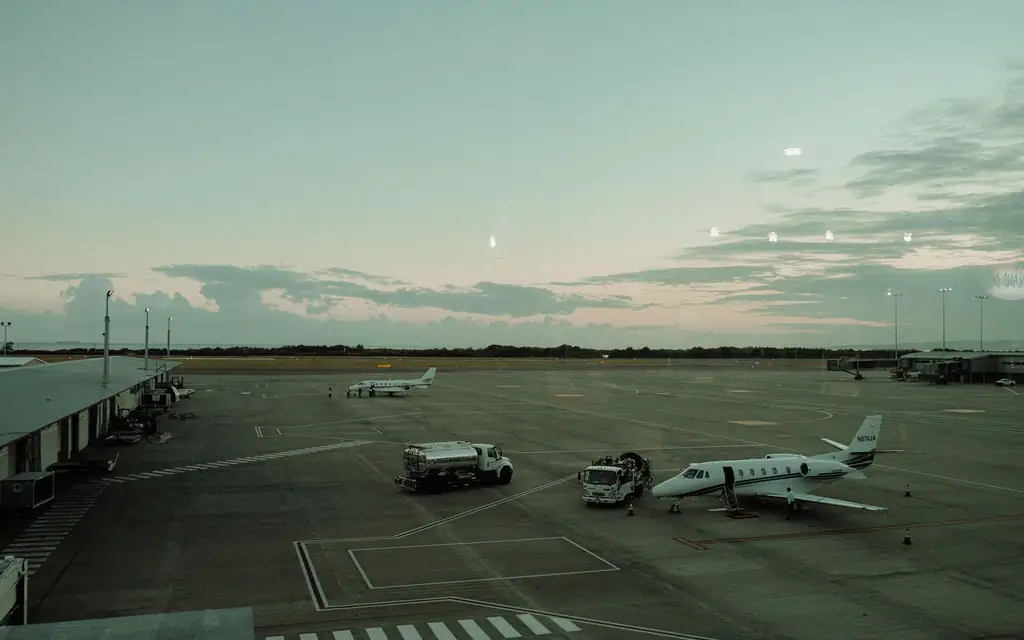
- The day before. The trip record is complete: airports, FBOs, tail number, passengers, bags, addresses. The chauffeur operators at both ends confirm vehicles and drivers. If the aircraft is landing at an FBO that restricts ramp access, the coordinator asks whether a planeside meet is allowed; the series guide to FBO car service and planeside pickups explains where that is usually possible.
- Origin pickup. The first chauffeur collects passengers at home, office or hotel with enough margin for traffic. A private flight's departure time is flexible within the operator's plan, but the slot, crew duty limits and onward commitments are not infinitely elastic, so leaving early is still the rule.
- Drop at the departure FBO. The car pulls up at the private terminal, or onto the ramp if the FBO allows it. Bags pass to line staff or the crew.
- Wheels-up. The operator's update triggers the arrival side. The destination chauffeur's staging time is set from the real departure, not the scheduled one.
- En route. The coordinator watches for revised arrival estimates and for any change in destination.
- Wheels-down. The chauffeur is already at the FBO. For international arrivals, formalities are completed first; free waiting starts after landing (60 minutes for international arrivals, 30 minutes for domestic ones).
- The last mile. The car takes passengers to the door, by a route chosen for the hour.
What happens when the plan breaks?
Private aviation is flexible, which is exactly why ground plans break. The best coordinators assume something will change and agree the fallback before it does.
| What goes wrong | What it does to the car plan | The usual fix |
|---|---|---|
| Departure slips by an hour | Arrival chauffeur would wait or be early | Staging time moved from the wheels-up update |
| Aircraft substituted | Tracking points at the wrong tail number | New registration sent to the desk immediately |
| Weather diversion to a nearby airport | Car is at the wrong airfield | Desk re-dispatches the same or a closer operator |
| FBO changed on arrival | Car at the wrong private terminal | Handler confirms the new FBO; car repositions |
| Customs delay on an international arrival | Passengers held longer than expected | Free waiting, then waiting time billed as agreed |
| Extra passengers at the last minute | Vehicle too small | Second car or a Sprinter van added |
Diversions are the case to plan for explicitly. If the destination is a mountain or coastal airport with tight weather minimums, ask the operator for the likely alternate, and ask the desk to identify a chauffeur operator who can cover it. The cost of a backup plan is usually a phone call; the cost of not having one is passengers standing in an unfamiliar FBO at night.
Ready to line up the ground side of your flight? Price each car here; the fare is confirmed before you pay.
International arrivals: customs decides where the car waits
Crossing a border changes the ground plan, because passengers must clear customs before they can meet the car, and not every airport offers that service.
For flights entering or leaving the United States, the FAA's international flight information notes that the traveler manifest and the notices of arrival and departure must be transmitted electronically to U.S. Customs and Border Protection no less than 60 minutes before takeoff. The operator handles that filing, but it is a useful reminder that last-minute passenger additions are not trivial on international legs.
Arrival airports matter too. U.S. Customs and Border Protection runs operations at hundreds of ports of entry, and private flights from abroad must clear at a location where CBP service is available, so the first landing in the country may not be the airport closest to your destination. The chauffeur should be staged at the clearing airport, with a plan for the onward leg if the aircraft then repositions. Our guide to private jet customs and immigration covers eAPIS, ports of entry and arrival rules in more depth.
Matching the vehicle to the aircraft
A light jet with four passengers and a heavy jet with twelve need very different ground support. Bags matter as much as people: ski cases, golf bags and hard-shell luggage fill a sedan's trunk quickly.
- Two or three passengers, modest bags: an executive or first-class sedan.
- Four to six passengers or bulky bags: a luxury SUV, sometimes with a second car for luggage.
- Larger groups or entourages: a Sprinter, or several vehicles running on one schedule.
- Principals with a security detail: a lead car plus a follow car, coordinated with the client's own protection team. We provide chauffeurs, not armed security.
The fleet page shows each class and its capacity. For families, child seats are added at booking. For principals who travel often, our HNWI and family office chauffeur service keeps a profile of preferences so each trip starts from the same brief.
Airports where the handoff is well rehearsed
Some private aviation airports see so much traffic that the coordination is routine. Our FBO pages describe the private terminals, distances and typical drive times:
- Teterboro (TEB) for New York, with onward cars via our New York limo service.
- Van Nuys (VNY) for Los Angeles.
- Paris Le Bourget (LBG) for Paris.
- Farnborough (FAB) for London, linked to the London chauffeur service.
- Geneva (GVA) and Nice Côte d'Azur (NCE) for the Alps and the Riviera.
The full list is on the private aviation hub.
When door-to-door coordination is overkill
Not every private flight needs a full plan. If the aircraft lands at a small airfield five minutes from the house, the FBO's courtesy car may be all that is needed. If the trip is a short domestic hop with no bags, a single transfer at each end works without an elaborate run sheet. The value of full coordination rises with complexity: international legs, multiple passengers, tight connections, security requirements, unfamiliar cities, or a principal whose time is genuinely expensive.
Those are also the cases where we suggest booking the flight and the cars through one desk. Request the aircraft through private jet charter, price the cars on the online booker, and the desk ties both to the same trip record.
Sources
- Charter-Type Services (Part 135) – Federal Aviation Administration
- Limiting Aircraft Data Displayed (LADD) – Federal Aviation Administration
- ADS-B Privacy and the Privacy ICAO Address program – Federal Aviation Administration
- U.S. international flight and airspace information – Federal Aviation Administration
- Pleasure boats and private flyers – U.S. Customs and Border Protection
Frequently asked questions
Can I book the private jet and the chauffeur in one place?
Yes. LimousineWorldwideDirectory.com acts as your booking agent for the flight, which is operated by a licensed air carrier, and books the cars at each end through vetted local operators. One desk holds the full trip record, so a change to the flight is passed to both chauffeurs. Start with a charter request.
What details does the chauffeur need for a private jet pickup?
The airport, the FBO name, the tail number, the estimated arrival in local time, the passenger and bag count, and the final address. For international arrivals, it also helps to know where passengers will clear customs. The desk collects these once and passes them to the driver.
What if the aircraft's flight data is blocked from tracking websites?
Some owners use FAA privacy programs that keep flights off public tracking sites. In that case the desk asks the flight department or charter operator for direct updates on departure, arrival and any diversion, and relays them to the chauffeur. A direct operations contact replaces the tracking app.
What happens if the jet diverts to a different airport?
The desk re-dispatches a car to the alternate airport, using the same operator if it is close or a different vetted operator if not. For destinations with frequent weather diversions, it is worth naming the likely alternate in advance so a backup chauffeur can be identified before the flight.
Can the car meet the aircraft on the ramp?
Sometimes. Planeside access depends on the FBO and the airport's security rules. Where it is allowed, the chauffeur drives to the aircraft under FBO escort; where it is not, the meeting point is the FBO lobby. The desk confirms which applies when booking. See our private jet car service page.
How long will the chauffeur wait after an international arrival?
Free waiting is 60 minutes after an international landing and 30 minutes after a domestic one, so customs and baggage do not start a clock. If formalities take longer, waiting time is billed as agreed at booking, and the chauffeur stays until the passengers are out.
Plan the rest of the trip
 Booking WorldwideOnline travel agency · our travel desk partner
Your chauffeur is booked here. Book the rest of the trip in one place: hotels, flights, resorts, activities, packages and car rentals in every country.
Plan your trip