 United StatesJFK
 MexicoMEX
 BrazilGRU
 ArgentinaEZE
 ChileSCL
 ColombiaBOG
 PeruLIM
 PanamaPTY
 Costa RicaSJO
 Dominican RepublicPUJ
 JamaicaMBJ
 BahamasNAS
 BarbadosBGI
 United KingdomLHR
 IrelandDUB
 FranceCDG
 GermanyFRA
 NetherlandsAMS
 BelgiumBRU
 SwitzerlandZRH
 AustriaVIE
 ItalyFCO
 SpainMAD
 PortugalLIS
 GreeceATH
 TurkeyIST
 DenmarkCPH
 SwedenARN
 NorwayOSL
 FinlandHEL
 PolandWAW
 Czech RepublicPRG
 HungaryBUD
 IcelandKEF
 United Arab EmiratesDXB
 QatarDOH
 Saudi ArabiaRUH
 IsraelTLV
 EgyptCAI
 MoroccoCMN
 South AfricaJNB
 KenyaNBO
 NigeriaLOS
 IndiaDEL
 PakistanLHE
 Sri LankaCMB
 SingaporeSIN
 MalaysiaKUL
 ThailandBKK
 VietnamSGN
 PhilippinesMNL
 IndonesiaCGK
 Hong KongHKG
 ChinaPVG
 TaiwanTPE
 JapanHND
 South KoreaICN
 AustraliaSYD
 New ZealandAKL
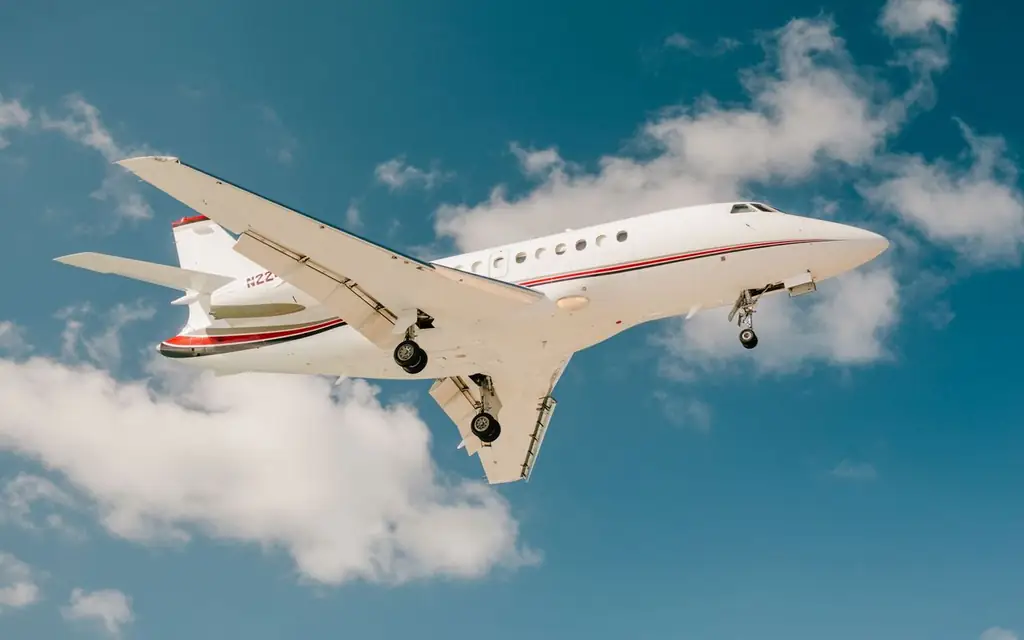
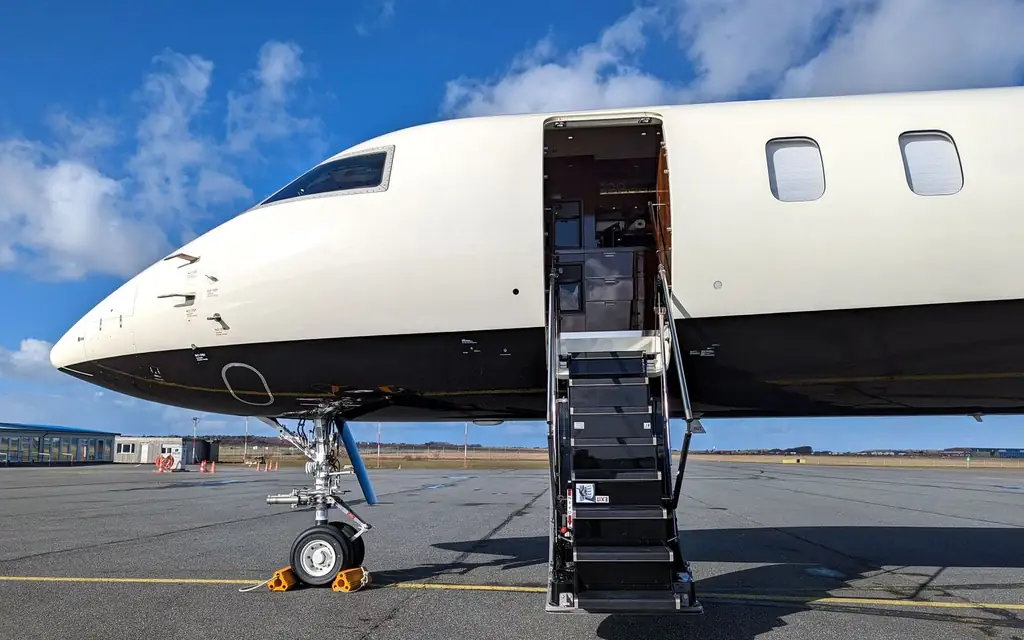
If you have booked a private flight, someone has probably told you to "go to the FBO" instead of the airport terminal. So what is an FBO? It is a fixed base operator: a business that holds the airport's permission to sell fuel and ground services to private and business aircraft, and that usually runs the small private jet terminal where passengers meet their crew. It is not an airline, and it is not the company that flies you.
This guide explains the FBO meaning in plain terms, what you will find inside, how customs and cars work at these facilities, and the questions worth asking before you land.
What is an FBO, exactly?
An FBO (fixed base operator) is a commercial business authorized by an airport owner to provide services to private and business aircraft: fuel, parking, hangar space, maintenance and passenger handling. For travelers, the FBO is the private jet terminal where you check in, wait, board and are met by your car.
The US Federal Aviation Administration defines a fixed base operator in its advisory circular on airport minimum standards as a commercial business granted the right by the airport sponsor to operate on the airport and provide aeronautical services such as fueling, hangaring, tie-down and parking, aircraft rental, maintenance and flight instruction (FAA AC 150/5190-7). Notice what is missing from that list: flying you anywhere. The FBO serves the aircraft and the people on it; the aircraft itself belongs to an owner or a charter operator.
The National Air Transportation Association, the US trade group for these businesses, calls FBOs the primary service providers to general aviation aircraft operators and puts the US industry at nearly 3,000 locations, with fuel and maintenance as the two core services (NATA, Get to Know FBOs). Outside North America the same function is often called a business aviation terminal, a general aviation terminal or a handling agent, but the job is the same.
What services does an FBO provide?
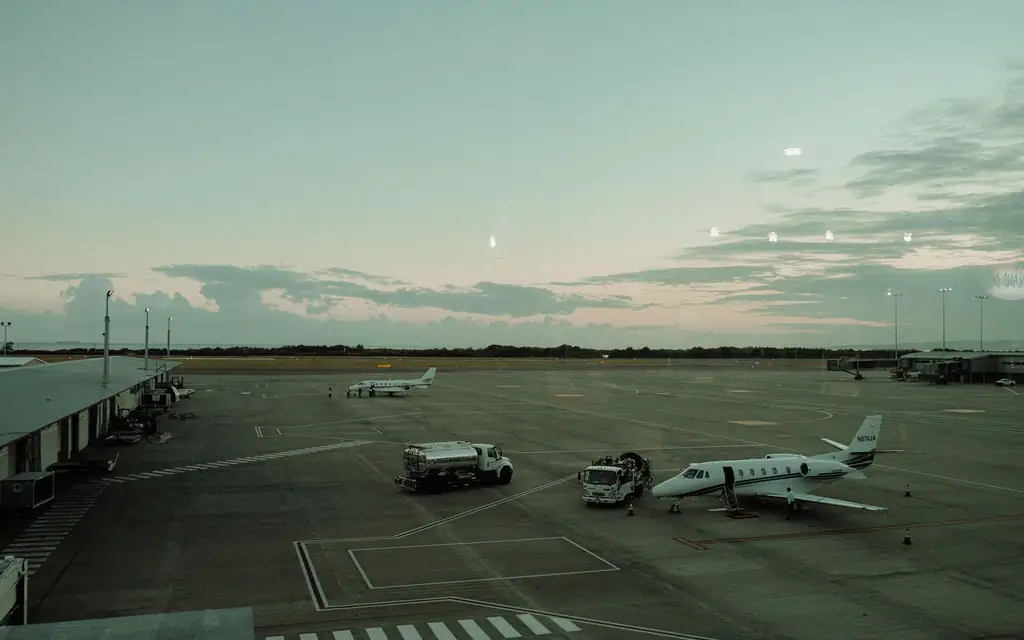
A large FBO at a busy business airport is closer to a small boutique terminal than a fuel stand. A rural one may be a counter, a coffee machine and a fuel truck. Most sit somewhere in between. Services fall into two groups.
Services for the aircraft and crew
- Fuel. Jet fuel and avgas sales are the financial core of the business.
- Ramp handling. Marshalling the aircraft to its parking spot, chocks, towing, ground power, lavatory and potable water service.
- Hangar and ramp parking. Overnight storage, sometimes heated hangars in winter destinations.
- Crew support. Flight planning rooms, weather displays, crew lounges and rest rooms, courtesy cars and hotel bookings.
- Maintenance. Some FBOs run their own repair shops; others host independent maintenance firms.
- Catering coordination. Most FBOs do not cook, but they receive and hold catering from outside kitchens and deliver it to the aircraft. The order is normally placed by the operator or the passenger's assistant.
Services for passengers
- A lobby and lounge, usually with refreshments, restrooms and Wi-Fi.
- Conference rooms that can be booked by the hour, which is why many corporate roadshow days start and end at an FBO.
- Concierge help with rental cars, hotels and restaurant reservations.
- Baggage handling between the car and the aircraft.
- At larger facilities, a customs and immigration area where border officers process arriving international flights.
How is an FBO different from the main airport terminal?
The differences are practical, not just cosmetic. The comparison below reflects how a typical FBO operates against a commercial terminal at the same airport; details vary by facility and country.
| Feature | Commercial airline terminal | FBO (private terminal) |
|---|---|---|
| Who runs it | Airport authority or terminal operator | A private business under lease from the airport |
| Who uses it | Ticketed airline passengers | Charter, fractional, corporate and private aircraft passengers and crews |
| Check-in | Airline counter or kiosk, bag drop | Name on the operator's passenger list, ID check by the crew or FBO staff |
| Walk to aircraft | Gate, jet bridge or bus | A short walk across the ramp, often a few meters |
| Car access | Curbside, then a walk inside | Front entrance; some FBOs permit escorted ramp access by prior arrangement |
| Customs (international) | Large federal inspection hall | Officers attend the FBO or a nearby general aviation facility, where available |
| Typical wait | Set by airline boarding times | Set by the crew's planned departure time |
Many airports have both: a large terminal on one side of the field and two or three FBOs on the other. Before you send a car, confirm which side of the airport the aircraft will use. A driver who heads to the airline terminal by mistake may have a long loop around the perimeter road to reach the right building.
Who regulates FBOs?
There is no single rulebook for the whole FBO industry. In the US, the airport owner sets "minimum standards" that any business must meet to operate there, and the FAA encourages those standards be tailored to the airport, noting that applying the standards of a large hub to a small field serving piston aircraft would be unreasonable (FAA AC 150/5190-7). Specific activities, such as maintenance or fueling safety, fall under their own rules.

For ground-handling safety, the industry built a voluntary benchmark. The International Standard for Business Aircraft Handling (IS-BAH) was developed by the International Business Aviation Council and NATA, launched in 2014, follows the structure of the IS-BAO standard for flight operators, and centers on a safety management system; conformance is confirmed by audit (SKYbrary, IS-BAH). When a charter operator or flight department chooses between two FBOs at the same airport, IS-BAH registration is one of the things they look at.
It is worth separating the FBO from the aircraft operator. The company that flies you on a charter holds an air operator certificate, such as FAA Part 135 in the US, and keeps operational control of the flight. The FBO hands the aircraft fuel and hands you coffee; it does not decide whether the flight is safe to go. Our explainer on Part 135 vs Part 91 covers that distinction.
How do customs and immigration work at an FBO?
On an international arrival, customs is usually the biggest difference between FBOs at the same city. Some facilities have officers on site or very close by; others require the aircraft to clear first at a designated port of entry.
In the US, pilots arriving from abroad must transmit an advance passenger manifest and secure explicit permission to land from the specific CBP port of arrival before leaving the foreign airport, and CBP publishes a list of designated general aviation airports where inspection is normally available (CBP General Aviation Processing). At many of those airports the inspection happens in an area at or beside the FBO, so passengers hand over passports, answer questions and walk out to their car without seeing the main terminal.
Two practical points for passengers:
- Your operator or broker files the paperwork, but you supply accurate passport details early. A late passenger change can mean refiling.
- Your car should not be released to the ramp or front door until the officers have finished. Build that time into pickup planning.
We cover arrival rules country by country in private jet customs and immigration.
Need a car waiting when the doors open? Price it here; the fare is confirmed before you pay.
Can my car drive to the plane at an FBO?
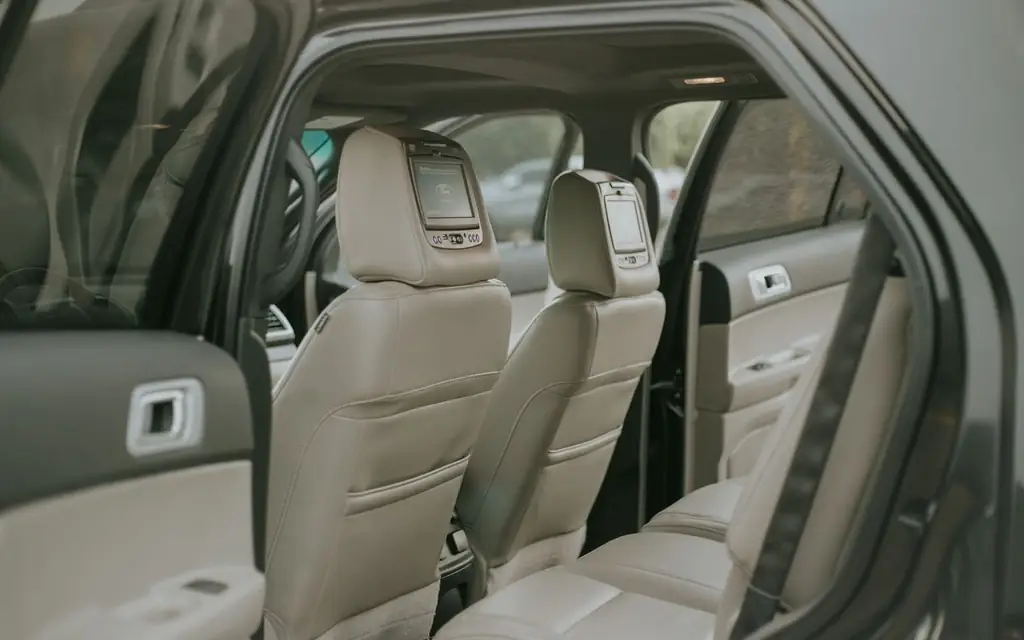
Sometimes. This is the question we hear most, and the honest answer is that it depends on the airport, the FBO and the security rules in force that day. Some facilities allow pre-registered vehicles on the ramp with an escort; others keep every car at the front door and walk passengers through the lobby. The driver's details, license plate and sometimes identity documents are typically sent ahead.
Our dedicated guide to FBO car service and planeside pickups goes through where planeside access is normally possible and how to request it. The short version for planning:
- Tell the booking desk which FBO, not just which airport.
- Share the tail number if you have it, so the FBO can match the car to the aircraft.
- Ask the operator whether planeside access is permitted; never assume.
When you book a private jet car service through LimousineWorldwideDirectory.com, the chauffeur's details go to the FBO in advance where the facility requests them, and the driver tracks the flight's actual landing. Free waiting starts at landing: 60 minutes after international arrivals, 30 minutes after domestic ones.
Examples: how the FBO shapes your ground transfer
Choosing the airport and FBO decides how long the drive is, so it pays to look at the map before the flight is fixed.
- New York. Teterboro is about 19 km (12 miles) from Midtown Manhattan; off-peak the drive takes roughly 25 to 35 minutes, and it can stretch toward 90 minutes when the Lincoln Tunnel backs up. Its FBOs sit along the edge of the field, so the address matters.
- Los Angeles. Van Nuys is about 20 km (12 to 13 miles) from Beverly Hills, 25 to 45 minutes off-peak and well over an hour at the evening rush.
- Paris. Le Bourget is about 14 km (9 miles) from central Paris, with 25 to 50 minutes to the Étoile or the Eiffel Tower area in normal traffic.
- London. Farnborough is about 56 km (35 miles) from central London; allow 60 to 110 minutes on a weekday.
- Geneva. The business aviation side of Geneva airport is about 5 km (3 miles) from the city center and about 90 km (56 miles) from Chamonix.
If the passenger then needs a car for meetings, an hourly chauffeur who stays with the group from FBO to the last appointment is usually simpler than a string of separate transfers. Our full list of private aviation terminals shows the drive times we plan around.
How to choose and use an FBO well
Passengers rarely choose the FBO; the operator or flight department does, based on fuel price, handling quality and parking. You can still ask for a preference, and on a charter it is reasonable to ask why a particular facility was chosen.
A short checklist before the trip:
- Confirm the exact FBO name and address with your operator or charter broker. If you are booking a flight through our private jet charter desk, the confirmation lists it.
- Ask about customs on international legs: on site, nearby, or a separate first stop?
- Check opening hours. Smaller FBOs may close overnight; after-hours handling may need notice and carry a fee.
- Arrange catering early if you want specific food; the FBO usually only receives and loads it.
- Book the car to the FBO, not the airport, and include the tail number in the notes.
- Ask for a conference room if you will hold meetings between flights.
If you are a commercial airline passenger who wants a similar private experience, some large airports offer separate VIP terminal products for airline travelers; see airport VIP terminals. For airline arrivals, a meet and greet service covers the walk from the gate to the car.
When an FBO is not the right answer
Private terminals are fast, but not always the best choice. If you are flying on a scheduled airline, you cannot use an FBO at all (VIP terminal products are a separate thing). If an FBO is far from your destination on the wrong side of a large airport, a different airfield may save time on the ground. And at quiet regional FBOs, an evening arrival can mean a locked lobby and nobody to meet you unless the crew or handler has arranged it. A one-line message to the FBO a day ahead solves most of these problems.
Sources
- Federal Aviation Administration, Advisory Circular 150/5190-7, Minimum Standards for Commercial Aeronautical Activities
- National Air Transportation Association, Get to Know FBOs
- SKYbrary, International Standard for Business Aircraft Handling (IS-BAH)
- U.S. Customs and Border Protection, General Aviation Processing
Frequently asked questions
What does FBO stand for?
FBO stands for fixed base operator. It is a business authorized by an airport to sell fuel and ground services to private and business aircraft, and it usually runs the private jet terminal where passengers check in and wait. Outside North America the same facility may be called a business aviation terminal or a handling agent.
Is an FBO the same as a private airport?
No. An FBO is a business located on an airport, often a public one that also has airline traffic. Teterboro, Van Nuys and Le Bourget each host several FBOs. A private airport is a different thing entirely: an airfield owned by an individual or company that may not be open to the public at all.
Do I need to go through security at an FBO?
Screening at an FBO is not the same as airline screening, and rules vary by country, airport and type of flight. On a charter, the crew or FBO staff will usually check your identification against the passenger list. Your operator will tell you what to bring; on international trips that always includes your passport.
How early should I arrive at the FBO?
Your operator or crew will give you a planned departure time and tell you when to arrive. Because there is no airline check-in queue, the window is much shorter than at a commercial terminal. Allow extra time on international departures and when traveling with pets or heavy bags, and book your car with traffic in mind.
Can I use an FBO lounge if I am picking someone up?
Most FBOs allow people meeting an arriving flight to wait in the lobby, and chauffeurs commonly wait there with a name sign. Policies differ, so check with the FBO. If you are sending a car through LimousineWorldwideDirectory.com, give the desk the FBO name and tail number so the driver is in the right building.
Who pays the FBO fees?
Fuel, handling, parking and similar FBO charges are billed to the aircraft operator. On a charter, those costs are normally built into the quote or passed through as itemized extras, depending on the contract. Ask your broker how FBO fees and any after-hours charges are handled before you sign.
Can I choose which FBO my charter uses?
You can ask. The operator usually picks the FBO based on fuel contracts, handling quality and parking availability, but a passenger preference for customs location, conference rooms or a shorter drive is reasonable to raise. Our charter desk can pass that request to the operator when quoting.
Plan the rest of the trip
 Booking WorldwideOnline travel agency · our travel desk partner
Your chauffeur is booked here. Book the rest of the trip in one place: hotels, flights, resorts, activities, packages and car rentals in every country.
Plan your trip