 United StatesJFK
 MexicoMEX
 BrazilGRU
 ArgentinaEZE
 ChileSCL
 ColombiaBOG
 PeruLIM
 PanamaPTY
 Costa RicaSJO
 Dominican RepublicPUJ
 JamaicaMBJ
 BahamasNAS
 BarbadosBGI
 United KingdomLHR
 IrelandDUB
 FranceCDG
 GermanyFRA
 NetherlandsAMS
 BelgiumBRU
 SwitzerlandZRH
 AustriaVIE
 ItalyFCO
 SpainMAD
 PortugalLIS
 GreeceATH
 TurkeyIST
 DenmarkCPH
 SwedenARN
 NorwayOSL
 FinlandHEL
 PolandWAW
 Czech RepublicPRG
 HungaryBUD
 IcelandKEF
 United Arab EmiratesDXB
 QatarDOH
 Saudi ArabiaRUH
 IsraelTLV
 EgyptCAI
 MoroccoCMN
 South AfricaJNB
 KenyaNBO
 NigeriaLOS
 IndiaDEL
 PakistanLHE
 Sri LankaCMB
 SingaporeSIN
 MalaysiaKUL
 ThailandBKK
 VietnamSGN
 PhilippinesMNL
 IndonesiaCGK
 Hong KongHKG
 ChinaPVG
 TaiwanTPE
 JapanHND
 South KoreaICN
 AustraliaSYD
 New ZealandAKL
A ski resort private jet trip looks straightforward on a map: fly to the airport nearest the slopes, step into a warm car, arrive at the chalet. In winter the mountains add conditions that do not exist on a city trip. Runways at altitude have operating hours tied to daylight, pilots need specific qualifications, weather sends aircraft to alternate airports, and the roads up to the resorts are governed by traction and chain laws. A good plan treats the flight and the ground transfer as one problem.
This guide looks at three classic destinations, Aspen in Colorado, Courchevel in the French Alps and St Moritz in Switzerland, and then at the ground side that ties them together: winter tire rules, vehicle choice for ski luggage, and what to do when the weather changes the plan.
How do you book a ski resort private jet?
You charter an aircraft through a booking agent or broker to the closest airport that suits the aircraft and the season, then take a pre-booked chauffeur or helicopter for the final leg. Mountain airports often have daylight-only hours, special pilot briefings and noise curfews, so the nearest airport is not always the right one.
Every flight is operated by a licensed air carrier that holds operational control; LimousineWorldwideDirectory.com acts as the client's booking agent and does not own or operate aircraft. The airport choice is made with the operator, because it depends on the aircraft's performance, the crew's qualifications and the forecast. The ground plan then follows the airport, not the other way round.
Aspen: a mountain airport with firm hours
Aspen/Pitkin County Airport (ASE) is the closest airport to Aspen and Snowmass, and it runs on fixed hours. The airport's noise and curfew page states that the airport is closed from 23:00 to 07:00 local time, that the control tower operates from 07:00 to 20:00, and that the field is uncontrolled from 20:00 to 23:00. Operators who break the curfew face the county's enforcement process and possible fines.
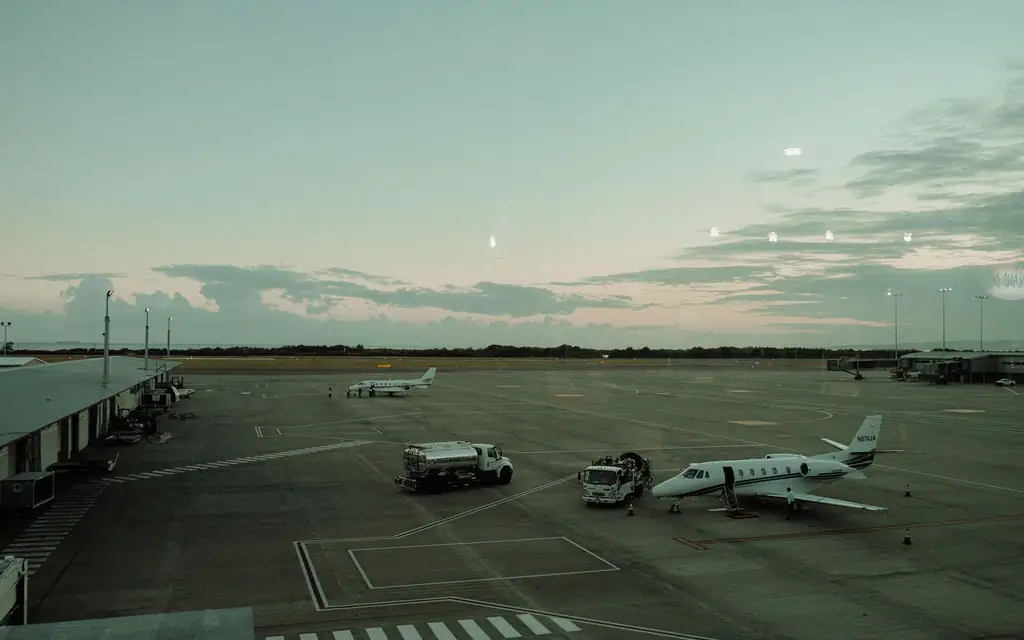
For travelers, the practical effect is that late-evening arrivals are risky. A departure from the East Coast that slips by two hours can run into the curfew, and the flight then lands somewhere else. The chauffeur plan needs a named fallback.
There is a larger change coming. According to the airport's closure information, ASE will close from 11:00 pm on Sunday, April 4, 2027, through 7:00 pm on Friday, November 19, 2027, to rebuild the runway to current FAA standards, with work on a new terminal and FBO starting the same month. Late-season spring trips and early-season planning for the 2027–28 winter should take that into account and use alternative airports and longer road transfers while the runway is out of service.
The series guide to flying private to Aspen covers ASE rules and alternates in depth. For the road, Colorado's mountain highways come with their own laws, covered below.
Courchevel private jet arrivals: altiport, valley airports and the road up
Courchevel has its own altiport, a very short, steeply sloping mountain strip with no instrument approach. It serves small propeller aircraft and helicopters in good visibility, not business jets. Jets land in the lowlands and passengers continue by road or by helicopter.

The usual jet gateway for the Three Valleys is Geneva. Our Geneva FBO page describes the private terminal, and the Geneva chauffeur service page gives the road figures: Courchevel and Méribel are about 190 km (118 miles) away, typically 2.5 to 3.5 hours, with Saturday changeover traffic and snowfall at the long end of that range. The route crosses from Switzerland into France, so the operator plans the border crossing and the mountain section together.
A helicopter cuts that transfer dramatically when the weather allows, and it is the classic Courchevel arrival for many travelers. Weather is the catch: the same low cloud that closes a visual mountain landing site leaves you with the road, so keep a chauffeur on standby even when a helicopter is booked. Our series guide to helicopter transfers explains how city, airport and resort hops are arranged.
St Moritz: flying into Samedan
St Moritz is served by Engadin Airport at Samedan, which describes itself as Europe's highest-altitude airport. That altitude, and the narrow alpine valley around it, shape everything about flying there.
- Hours. The airport operates 365 days a year. In winter it opens at 08:00 local time and closes at the end of evening civil twilight, so the afternoon window is short in December and January. Customs clearance is available throughout operating hours.
- Pilot requirements. The airport requires a "familiarisation briefing and test" for pilots of fixed-wing aircraft and helicopters before they fly in, and pilots must carry proof of completion with their flight documents.
- Events. The airport also publishes airspace restrictions, such as those around the World Economic Forum in nearby Davos.
Because of the daylight window, a late departure from London or Paris may not reach Samedan in time. The common alternative is Zurich, followed by a long road transfer. Our Zurich chauffeur service page puts St Moritz at about 205 km (127 miles), roughly three hours, and the Zurich airport page covers the arrival side. If your trip combines a ski stay with meetings in Davos, the series guide to Geneva, Zurich and Davos private jet logistics and our World Economic Forum page cover that week.
Comparing the three ski destinations
| Destination | Closest airfield | What limits it | Usual jet fallback | Ground leg from the fallback |
|---|---|---|---|---|
| Aspen / Snowmass | Aspen/Pitkin County (ASE) | Curfew 23:00–07:00; full closure Apr–Nov 2027 | Other Colorado airports, chosen with the operator | Longer mountain drive under Colorado traction laws |
| Courchevel / Méribel | Courchevel altiport | Small aircraft and helicopters only, visual weather | Geneva (GVA), among others | About 190 km (118 mi), 2.5 to 3.5 h, or helicopter |
| St Moritz | Engadin Airport, Samedan | Daylight hours in winter; pilot briefing required | Zurich (ZRH) | About 205 km (127 mi), about 3 h |
The rule of thumb across all three: the closer the airfield is to the slopes, the more the weather and the clock control it. The fallback airport always comes with a longer chauffeur leg, and that leg should be pre-agreed rather than improvised at the FBO.
Need the car for a mountain transfer? Price it here; the fare is confirmed before you pay.
Winter tire and chain rules the chauffeur must follow
A chauffeur who drives mountain roads every winter knows the rules. A visitor renting a car often does not. That difference alone is a good reason to book ski transfers with a professional driver.
Colorado
The Colorado Department of Transportation can activate a Traction Law or a Chain Law on any state highway when conditions require. Under the Passenger Vehicle Traction Law, cars need tires with at least 3/16 inch of tread rated for winter or all-weather use (the mountain-snowflake symbol, or M+S), or must carry chains or an approved alternative traction device; CDOT also strongly recommends four-wheel or all-wheel drive in the mountains. On I-70 between Dotsero and Morrison, the laws can be enforced with fines from September 1 to May 31. When the Passenger Vehicle Chain Law is in force, every vehicle needs chains or an approved alternative, and CDOT describes it as the final step before closing the highway. Non-compliance carries a $100 fine plus a $33 surcharge, with higher penalties if it causes a lane closure.
British Columbia
For Whistler, the Sea-to-Sky Highway is a signed winter route. The Government of British Columbia requires drivers to obey winter tire and chain signs from October 1 to April 30, with some highways outside mountain passes ending on March 31. Drivers who pass the signs without proper equipment can be turned around and fined. Our Whistler limo service page covers the 127 km (79 mile) drive from Vancouver, and the Vancouver airport page the arrival.
The Alps
French and Swiss mountain roads have their own winter equipment rules and local signage requiring chains in severe conditions, and the requirements differ by country and road. Local operators in the Alps run winter-equipped vehicles through the season and carry chains as standard; ask the desk to confirm this when you book any Alpine transfer.
Choosing the vehicle for skis, boots and a family
Ski trips carry more luggage than almost any other leisure trip. Skis or snowboards in hard cases, boot bags, helmets and winter clothing quickly overwhelm a sedan.
- Couple with skis: a luxury SUV, which takes up to six passengers and five to six large bags, gives room for ski cases.
- Family of four or five: a luxury SUV for passengers plus a second vehicle for equipment, or a single larger vehicle.
- Group of friends or a chalet party: a Sprinter van with driver, which carries up to 12 to 14 passengers and 12 bags; ski boxes need confirming at booking.
- Principal travel: a first-class sedan or SUV with a second car for staff and equipment. Our HNWI and family office chauffeur service keeps a preference profile so each winter starts from the same brief.
The fleet page lists vehicle classes. Child seats are added at booking, and the chauffeur is told about ski equipment so the right vehicle is sent.
Timing the arrival around mountain weather
A few habits make winter trips run smoothly:
- Fly early in the day. Daylight-only airports and curfews punish late departures. A morning wheels-up leaves room for de-icing delays and a diversion.
- Agree the alternate before departure. Ask the operator which airport it would divert to, and book a chauffeur who can cover it.
- Track the aircraft, not the schedule. Give the desk the tail number; our private jet car service moves the chauffeur's timing with the real flight.
- Expect slower roads on changeover days. Saturday is when many chalets turn over, and the valley roads fill.
- Keep a car for the stay if you will move around. An hourly chauffeur is useful for dinners in a neighboring village or a day trip to another resort.
Free waiting applies after landing: 60 minutes for international arrivals and 30 minutes for domestic ones. Ground cancellations are free more than 72 hours before pickup, 10% inside 72 hours, 50% inside 48 hours and 100% inside 24 hours or for a no-show.
When not to fly private to the mountains
Private aviation is not always the smart choice for a ski trip. If you live near a major hub with direct airline service to Geneva, Zurich or Denver, a scheduled flight plus a chauffeur transfer may cost a fraction of a charter and take only a little longer. If the forecast is poor and your closest airfield has tight weather limits, a jet landing at a lowland airport followed by a long-distance car may be more reliable than chasing the nearest strip. A private jet earns its place when the group is large, the luggage is heavy, the schedule is tight, or privacy matters.
When it does make sense, request the aircraft through private jet charter and price the cars on the online booker, so the desk can tie both to one trip.
Sources
- Airport noise and curfew – Aspen/Pitkin County Airport
- 2027 airport closure information – Aspen/Pitkin County Airport
- Hours of operation – Engadin Airport St. Moritz–Samedan
- Pilot briefing and test – Engadin Airport St. Moritz–Samedan
- Passenger vehicle traction and chain laws – Colorado Department of Transportation
- Winter driving – Government of British Columbia
Frequently asked questions
Can a private jet land at Courchevel?
Not a business jet. Courchevel's altiport is a very short, sloping mountain strip used by small propeller aircraft and helicopters in good visibility. Jets usually land at a lowland airport such as Geneva, and passengers continue by car, about 2.5 to 3.5 hours, or by helicopter when the weather allows.
What is the best airport for a St Moritz private jet trip?
Engadin Airport at Samedan is the closest, but in winter it operates only from 08:00 to the end of evening civil twilight, and pilots must complete a special briefing and test. Zurich is the usual alternative, followed by a road transfer of about three hours to St Moritz.
Why do ski airports cause flight diversions?
Mountain airfields often have daylight-only hours, curfews, demanding approaches and weather limits. A late departure, de-icing delay or low cloud can push a flight to an alternate airport. Agreeing the alternate in advance and booking a chauffeur who can cover it avoids a stranded arrival.
Do chauffeurs use winter tires and chains on ski transfers?
Professional operators in mountain regions run winter-equipped vehicles in season and follow local laws. Colorado can activate traction and chain laws on any state highway, and British Columbia requires winter tires or chains on signed routes from October 1 to April 30. Ask the desk to confirm equipment for any Alpine transfer.
What vehicle fits ski equipment?
A luxury SUV fits a couple or small family with skis. Larger groups often use a Sprinter van, which carries up to 12 to 14 passengers, or a second vehicle for luggage. Tell the desk about ski cases when you book so the right vehicle class is sent.
Is Aspen airport closing?
Yes, temporarily. Aspen/Pitkin County Airport has announced a full closure from April 4, 2027, to November 19, 2027, for runway reconstruction. Trips in that period need an alternative airport and a longer road transfer, which the desk can plan with your charter operator.
Plan the rest of the trip
 Booking WorldwideOnline travel agency · our travel desk partner
Your chauffeur is booked here. Book the rest of the trip in one place: hotels, flights, resorts, activities, packages and car rentals in every country.
Plan your trip