 United StatesJFK
 MexicoMEX
 BrazilGRU
 ArgentinaEZE
 ChileSCL
 ColombiaBOG
 PeruLIM
 PanamaPTY
 Costa RicaSJO
 Dominican RepublicPUJ
 JamaicaMBJ
 BahamasNAS
 BarbadosBGI
 United KingdomLHR
 IrelandDUB
 FranceCDG
 GermanyFRA
 NetherlandsAMS
 BelgiumBRU
 SwitzerlandZRH
 AustriaVIE
 ItalyFCO
 SpainMAD
 PortugalLIS
 GreeceATH
 TurkeyIST
 DenmarkCPH
 SwedenARN
 NorwayOSL
 FinlandHEL
 PolandWAW
 Czech RepublicPRG
 HungaryBUD
 IcelandKEF
 United Arab EmiratesDXB
 QatarDOH
 Saudi ArabiaRUH
 IsraelTLV
 EgyptCAI
 MoroccoCMN
 South AfricaJNB
 KenyaNBO
 NigeriaLOS
 IndiaDEL
 PakistanLHE
 Sri LankaCMB
 SingaporeSIN
 MalaysiaKUL
 ThailandBKK
 VietnamSGN
 PhilippinesMNL
 IndonesiaCGK
 Hong KongHKG
 ChinaPVG
 TaiwanTPE
 JapanHND
 South KoreaICN
 AustraliaSYD
 New ZealandAKL
Ask a corporate travel manager in New York which car their chief executive prefers and the answer is often a black Escalade. Ask the same question in Paris, Geneva or Frankfurt and it is far more likely to be a Mercedes-Benz S-Class. The Escalade vs S-Class debate is not really about which car is better. It is about which one fits the passenger, the luggage, the streets and the image the arrival needs to project.
This comparison looks at both vehicles from the back seat, where chauffeured passengers actually sit. The figures come from Mercedes-Benz USA, Cadillac and the US government's fuel economy site, and are linked so you can check the current model year yourself. Specifications change between model years and trims, and a chauffeured fleet may run an earlier model than the one in the showroom, so treat the numbers as a guide to each vehicle's character rather than a promise about a specific car.
Escalade vs S-Class: which is better for executives?
Choose the S-Class for one or two executives who want a quiet, low-key ride with a reclining rear seat, especially in dense European and Asian city centers. Choose the Escalade for three or more passengers, heavy luggage, high seating and privacy, and for American cities and airports where size is not a problem.
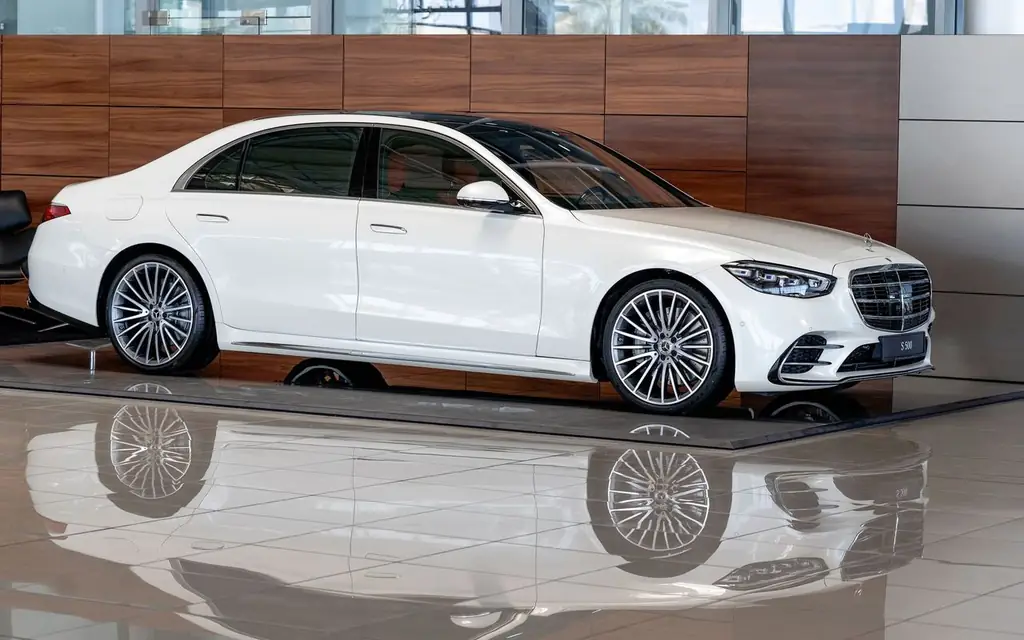
Both cars have a natural home. The S-Class is a flagship sedan designed around the rear passenger, with features such as reclining outboard rear seats and an available executive seat with a calf rest. The Escalade is a full-size, three-row SUV built for space: room for a team, room for bags and a commanding seating position.
The right choice comes down to five questions. How many people? How much luggage? How tight are the streets and garages? How visible should the arrival be? And what will the passenger do during the ride: sleep, work, take calls or talk to colleagues?
The numbers side by side
| Mercedes-Benz S-Class sedan | Cadillac Escalade (standard) | Cadillac Escalade ESV (long) | |
|---|---|---|---|
| Passenger capacity | 5 | Up to 8 | Up to 8 |
| Second-row legroom | Not listed on the US model page | 41.7 in | 41.7 in |
| Executive rear seating | Available Executive right rear seat, reclines to 43° | Available Executive Second Row, 41.5 in legroom | Available Executive Second Row, 41.5 in legroom |
| Cargo, all seats in use | 12.5 cu ft | 25.5 cu ft | 41.5 cu ft |
| Cargo, behind second row | Not applicable | 72.9 cu ft | 94.1 cu ft |
| Length | Not compared here | 211.9 in | 226.9 in |
| Engines (current US range) | 3.0L inline-6 mild hybrid (442 hp) or 4.0L V8 mild hybrid (530 hp) | 6.2L V8 (420 hp) | 6.2L V8 (420 hp) |
| EPA combined fuel economy | 20 mpg (S 580 4MATIC, 2026) | 16 mpg (4WD, 2026) | Not compared here |
Sources for the table: Mercedes-Benz USA's S 580 4MATIC page and S-Class sedan range page, Cadillac's Escalade specifications, and the US Department of Energy and EPA listings on FuelEconomy.gov for the 2026 S-Class and 2026 Escalade.
Rear seat comfort: recline versus room
The S-Class is built around one idea: the most important person sits behind the front passenger. Mercedes-Benz USA describes 4-way power reclining outboard rear seats whose backs recline up to 37 degrees without reducing legroom, and an available Executive right rear seat that power-reclines to 43 degrees with a power calf rest and footrest. On a long airport run, that turns the rear seat into something close to a lounge chair. Rear seat-belt presenters, which extend the belt automatically when the door closes, are a small touch that matters to passengers who are used to being driven.
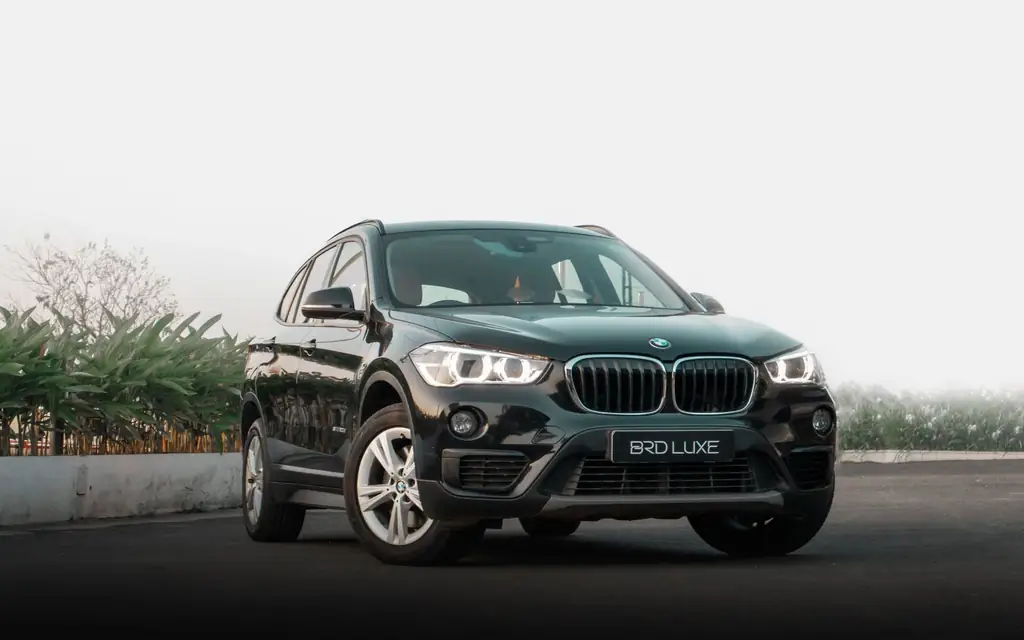
The Escalade takes a different approach. Instead of reclining one seat dramatically, it gives every seat space. Cadillac lists 41.7 inches of second-row legroom, and the available Executive Second Row, with 41.5 inches of legroom, a 10-point massage system and 14-way adjustable seats, is aimed squarely at chauffeured use. Shoulder room in that configuration is listed at 64.1 inches, which is what makes two broad-shouldered adults comfortable side by side for an hour.
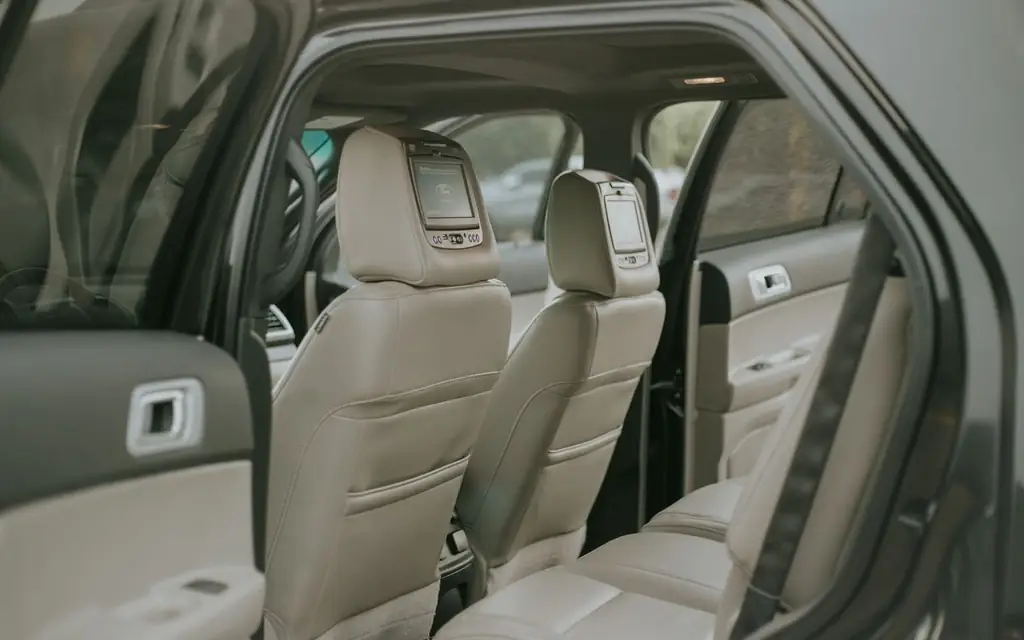
Working in the car is the other test. An S-Class rear seat is a good place to take a confidential call, because the cabin is quiet and the passenger sits alone behind the front seat. Mercedes-Benz lists four-zone automatic climate control, so the rear can be set independently of the driver, and fast-charging USB-C ports in the rear armrest. The Escalade is the better office for a team: three people can face the same direction with laptops open, and the second row is wide enough that nobody's elbow is in a colleague's lap. Cadillac also lists an available rear seat entertainment system with dual 12.6-inch displays, which suits families on long transfers.
In practice: one tired traveler who wants to sleep on the way in from a red-eye flight will usually prefer an S-Class. Two or three colleagues who want to talk, spread out papers or sit without touching shoulders will prefer an Escalade.
Want to book either car for your next trip? Price it here; the fare is confirmed before you pay.
Luggage: where the Escalade wins outright
There is no contest on bags. Mercedes-Benz lists the S-Class at 12.5 cubic feet of cargo capacity. Cadillac lists 25.5 cubic feet behind the Escalade's third row, 72.9 cubic feet with the third row folded, and 94.1 cubic feet behind the second row of the long ESV.
For a chauffeured trip that means the S-Class suits one or two people with normal business luggage. The Escalade suits a family arriving for a two-week holiday, an executive with golf clubs, or a production team with equipment cases. For private jet arrivals, where passengers often carry more than airline limits would allow, the SUV is usually the safer default. Our private jet car service team will ask for the bag count and match the vehicle accordingly. For a broader view across sedans, SUVs and stretch limousines, see our limo vs black car vs SUV guide.
Privacy, presence and how the arrival looks
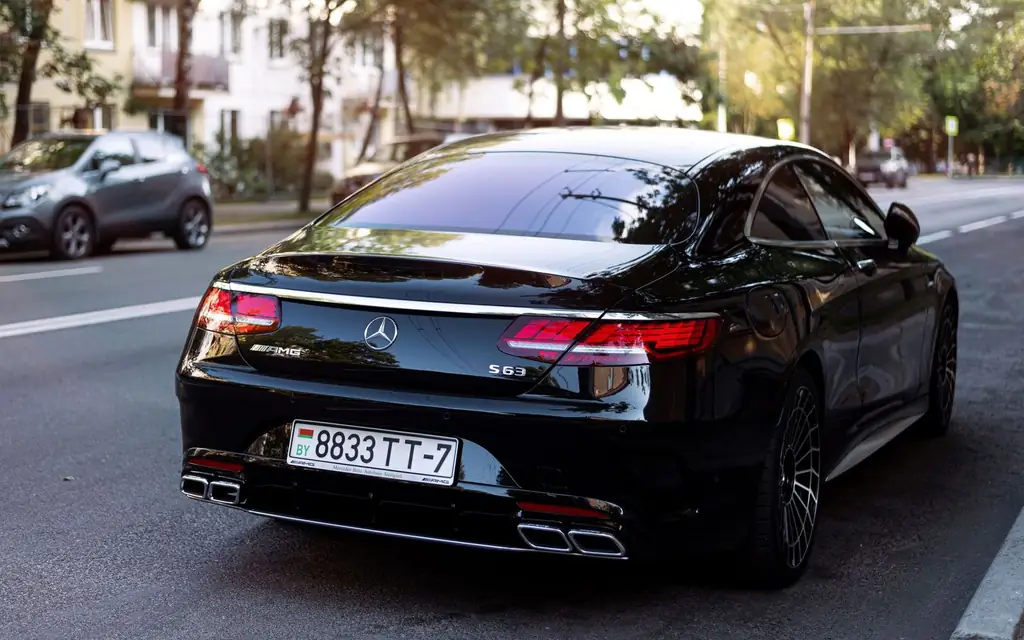
An S-Class arrival is understated. It looks like what it is, a very good sedan, and in many European business districts it blends into the traffic. That understatement is a large part of its appeal for bankers, lawyers and family offices. Mercedes-Benz also lists acoustic laminated glass on the windshield, side and rear windows, which helps keep street noise out and conversations in.
An Escalade arrival is visible. The seating position is high, rear privacy glass hides passengers from street level, and the vehicle's size creates a natural screen when it pulls up at a curb. That combination appeals to clients who are recognizable and want to step out of the car directly into a building without being seen first. Cadillac's power retractable assist steps also make entry easier in formal clothes.
For high-profile passengers, the vehicle is only one part of privacy. The chauffeur's briefing, the pickup point and the information shared with the operator matter more. Our VIP and celebrity chauffeur service and the guide to executive protection and the chauffeur cover those practices.
Security considerations
Neither standard car is armored, and a chauffeur service should never imply otherwise. Armored vehicles are a specialist category, built and certified to recognized ballistic standards, and they need drivers trained for their weight and handling. If protection is part of the brief, ask for the certification level in writing and for the driver's specific training, and involve the client's security lead early.
For most executive travel, security comes from process rather than steel: vetted drivers, a confirmed vehicle and plate shared in advance, a pickup point away from public view and a route plan with alternatives. Larger SUVs suit teams that include a security adviser, because the adviser can sit in front while principals use the second row. A sedan suits a lower profile where blending in is the security strategy. Families and principals with complex needs often use our HNWI and family office chauffeur service, which plans these details with the household team.
Region: why preferences differ
You will generally find large SUVs at the top of chauffeur fleets in the United States and in Gulf cities, and executive sedans at the top in Europe and much of Asia. Three practical factors explain the pattern.
Street size. The standard Escalade is 211.9 inches (about 5.4 m) long and the ESV 226.9 inches (about 5.8 m), according to Cadillac. That is comfortable on a Manhattan avenue or a Dubai boulevard, and harder in a Paris side street or an underground hotel garage in London.
Fuel use. The EPA lists the 2026 Escalade 4WD at 16 mpg combined and the 2026 S 580 4MATIC at 20 mpg combined. In markets with high fuel costs and stricter city traffic policies, that gap can shape what operators choose to buy.
Expectation. Corporate clients tend to book what their peers book locally. In New York, an Escalade from the airport feels normal. From Le Bourget to the Champs-Élysées (about 14 km, 9 mi, and 25 to 50 minutes), an S-Class is what most business travelers expect; see our Paris Le Bourget FBO guide and Paris chauffeur service. From Heathrow to Mayfair (24 km, 15 mi, 45 to 90 minutes), the same is true; our Heathrow airport page has the details.
Which car for which trip?
| Trip | Better choice | Why |
|---|---|---|
| Solo executive, red-eye arrival | S-Class | Reclining rear seat, quiet cabin |
| Two partners heading to a meeting downtown | S-Class | Low profile, fits garages and forecourts |
| Three or more colleagues | Escalade | Shoulder room, no need for two cars |
| Family with luggage from a private jet | Escalade ESV | Cargo space with all seats in use |
| Roadshow with frequent stops | Either, by city | Sedan in old centers, SUV in US cities |
| Recognizable passenger, public curb | Escalade | High seat, privacy glass, screening |
| Winter mountain transfer | Escalade (4WD) | Ground clearance and luggage |
| Long-distance city-to-city day | Either | Comfort for one or two, SUV for groups |
For a full day of meetings, book by the hour with our executive chauffeur service, and for multi-city investor schedules see the roadshow car service. Intercity runs are covered by the long-distance car service.
How to request a specific model
Most chauffeur services book by vehicle class rather than exact model, because fleets vary by city. When you book a luxury chauffeur service through LimousineWorldwideDirectory.com, choose the class (executive sedan or luxury SUV), then add a note if a specific model matters, for example "S-Class or equivalent flagship sedan" or "Escalade ESV for luggage." The desk confirms what the local operator can supply before you pay. Our fleet page shows the classes available worldwide, and companies booking regularly can agree vehicle standards for their travelers through the corporate car service.
Sources
- Mercedes-Benz USA: S 580 4MATIC Sedan
- Mercedes-Benz USA: S-Class Sedan range
- Cadillac: Escalade and Escalade ESV specifications
- FuelEconomy.gov (US DOE and EPA): 2026 Mercedes-Benz S-Class
- FuelEconomy.gov (US DOE and EPA): 2026 Cadillac Escalade
Frequently asked questions
Is the S-Class or the Escalade more comfortable in the back?
It depends on the passenger. For one person who wants to recline or sleep, the S-Class rear seat, with its reclining backrest and available calf rest, is hard to beat. For two or three adults, the Escalade's wider cabin and generous second-row legroom are usually more comfortable, because nobody has to share a narrow bench.
How many passengers fit in a chauffeured S-Class?
Mercedes-Benz lists the S-Class sedan with five seats, but chauffeured bookings normally carry one to three passengers, all in the rear. With the front passenger seat kept clear, the principal can move it forward for extra legroom. For four or more, book an SUV or a second car.
Does an Escalade car service cost more than an S-Class?
Pricing varies by city and operator, and in some markets the SUV class is priced above the executive sedan while in others the two are close. The online booker shows the exact fare for each vehicle class on your route before you confirm, so you can compare the two directly.
Can I guarantee a specific model when I book?
Bookings are made by vehicle class, because local fleets differ. You can add a model preference to the booking, and the desk will confirm what the assigned operator can supply before payment. In a few markets a particular model may not be available, and the desk will tell you the closest equivalent.
Which is better for airport pickups with lots of luggage?
The Escalade, clearly. Cadillac lists 25.5 cubic feet of cargo space behind the third row of the standard Escalade and 41.5 in the long ESV, against 12.5 cubic feet for the S-Class. For a family or a team arriving with checked bags, an SUV avoids a second car.
Are these cars armored for security clients?
Standard chauffeured S-Class and Escalade vehicles are not armored. Armored versions are a separate, specialist category with their own certification and driver training. If you need one, say so at booking and ask for the protection level in writing, and involve your security adviser in the plan.
Plan the rest of the trip
 Booking WorldwideOnline travel agency · our travel desk partner
Your chauffeur is booked here. Book the rest of the trip in one place: hotels, flights, resorts, activities, packages and car rentals in every country.
Plan your trip