
 United StatesJFK
 MexicoMEX
 BrazilGRU
 ArgentinaEZE
 ChileSCL
 ColombiaBOG
 PeruLIM
 PanamaPTY
 Costa RicaSJO
 Dominican RepublicPUJ
 JamaicaMBJ
 BahamasNAS
 BarbadosBGI
 United KingdomLHR
 IrelandDUB
 FranceCDG
 GermanyFRA
 NetherlandsAMS
 BelgiumBRU
 SwitzerlandZRH
 AustriaVIE
 ItalyFCO
 SpainMAD
 PortugalLIS
 GreeceATH
 TurkeyIST
 DenmarkCPH
 SwedenARN
 NorwayOSL
 FinlandHEL
 PolandWAW
 Czech RepublicPRG
 HungaryBUD
 IcelandKEF
 United Arab EmiratesDXB
 QatarDOH
 Saudi ArabiaRUH
 IsraelTLV
 EgyptCAI
 MoroccoCMN
 South AfricaJNB
 KenyaNBO
 NigeriaLOS
 IndiaDEL
 PakistanLHE
 Sri LankaCMB
 SingaporeSIN
 MalaysiaKUL
 ThailandBKK
 VietnamSGN
 PhilippinesMNL
 IndonesiaCGK
 Hong KongHKG
 ChinaPVG
 TaiwanTPE
 JapanHND
 South KoreaICN
 AustraliaSYD
 New ZealandAKL
A group private jet charter turns a guest list into a passenger manifest. Whether it is a destination wedding, a leadership retreat or an incentive trip for top performers, the appeal is the same: everyone departs together, on a schedule the host chooses, from an airport close to home, and arrives as a group rather than scattered across connecting flights. This guide explains how group size drives the aircraft choice, where the line between a heavy jet and an airliner charter falls, what drives cost, and how the ground transport on arrival should be planned before the first deposit is paid.
LimousineWorldwideDirectory.com acts as the client's booking agent for charter flights, which are operated by licensed air carriers that hold operational control. We also book the coaches, vans and chauffeured cars that meet the group on the ground.
What is a group private jet charter?
A group private jet charter is a whole aircraft hired for one party, flying on the group's chosen dates, times and airports. Groups of up to about 16 usually fly a large-cabin or heavy business jet; larger groups need a regional jet or airliner chartered from a carrier certificated for bigger aircraft. The cost is shared across the seats.
Unlike buying a block of airline seats, the group controls the timetable and the guest experience: one check-in time, private terminal access where available, catering chosen in advance and luggage loaded once. The trade-off is commitment. The host contracts for the whole aircraft, so empty seats still cost money.
How many seats do you need? Matching the group to the aircraft
Start with the real head count, then add luggage. Wedding parties bring garment bags, and incentive groups bring golf clubs. Seat capacity varies by model and cabin layout, so the figures below are typical ranges rather than guarantees; our guide to private jet sizes explains each class in more depth.

| Group size | Typical aircraft | Typical use | Planning note |
|---|---|---|---|
| 6 to 8 | Midsize or super-midsize jet | Bridal party, small board retreat | Bag space limits golf clubs and dress bags |
| 9 to 16 | Large-cabin or heavy jet | Family wedding guests, executive offsite | Best comfort per seat for longer legs |
| 17 to 30 | Two jets, or a regional jet charter | Mid-size wedding, team retreat | Two jets can use different departure cities |
| 31 to 100+ | Airliner charter from a supplemental operator | Incentive trips, large weddings | Larger airports, longer lead time |
Splitting a group across two business jets is more common than people expect. It lets guests from two cities depart near home, keeps each aircraft within its luggage limits, and reduces the risk of one mechanical delay stranding everyone.
Heavy jet or airliner charter: where the 30-seat line falls
The aircraft's size also decides which rules it flies under. In U.S. regulations, 14 CFR 110.2 defines on-demand common carriage as operations with airplanes of 30 or fewer passenger seats and a payload capacity of 7,500 pounds or less. Aircraft with more than 30 seats, or more than 7,500 pounds of payload, fall under the definition of supplemental operations, which are flown by carriers holding the appropriate certificate and operating rules.

For the host, that means:
- Up to 30 passengers: a wide pool of business-jet and regional operators, smaller airports and FBOs, faster quotes.
- Above 30 passengers: fewer available aircraft, more advance notice, airline-style terminals or dedicated charter facilities, and contracts closer to airline terms.
Whatever the size, verify the operator. The FAA recommends asking whether the aircraft is operating under an FAA-issued air carrier or operator certificate and requesting the operations specification D-085 that lists aircraft authorized for charter, as set out in its guide to avoiding illegal charters. Abroad, the national civil aviation authority issues the equivalent air operator certificate.
Planning a private jet for a wedding
A private jet for a wedding usually serves one of three needs: flying the couple and immediate family to a destination, bringing a wave of guests from one city, or a getaway flight after the reception.
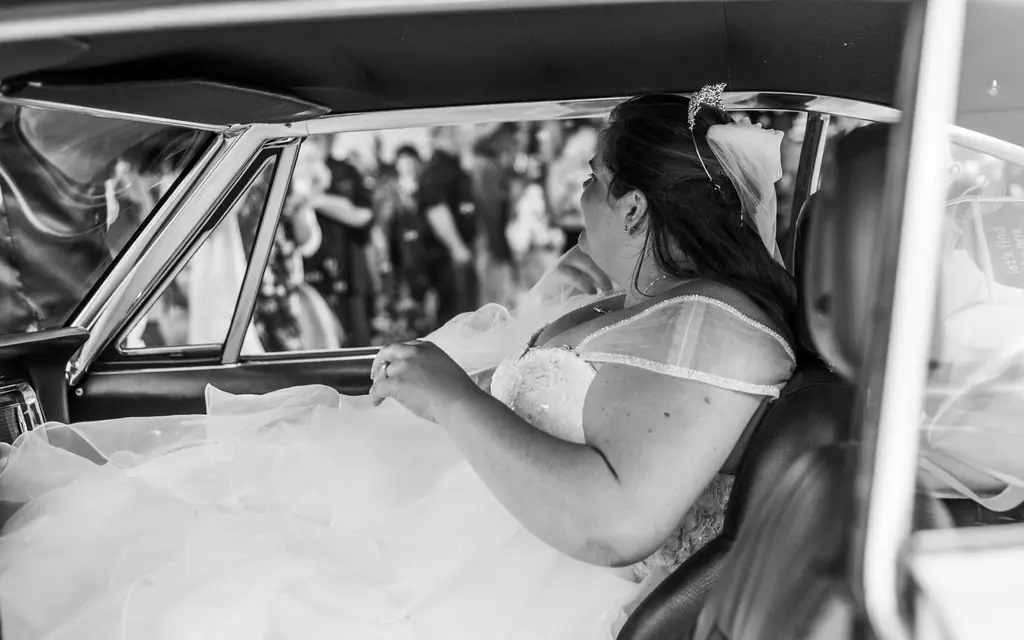
Practical points that wedding planners learn the hard way:
- Fly in at least a day before. Weather, crew duty limits and maintenance can delay any flight. A day's buffer protects the ceremony.
- Collect guest names and ID details early. The operator needs a full passenger manifest; for international legs, passports must match bookings exactly.
- Plan the garment bags. Wedding dresses and suits need hanging space. Tell the operator the number and size so they can confirm cabin or baggage storage.
- Coordinate the ground wave. Thirty guests landing at once need a coach or several vans, not a queue of taxis. Our wedding limo service and sibling guide to high-profile wedding transportation cover guest shuttles and privacy.
Popular destination routes show why ground planning matters. Guests landing at Cancun International for a Riviera Maya wedding face about 50 km (31 miles) to Playa del Carmen, typically 40 to 60 minutes, or roughly 120 km (75 miles) to Tulum, about 1.5 to 2 hours. A group arriving at Nice Côte d'Azur for a Riviera celebration is about 30 km (19 miles) from Monaco, usually 35 to 60 minutes along the coast.
In each destination the same desk books the local legs: Cancun chauffeur service for Riviera Maya villas and resorts, Los Cabos chauffeur service for guests landing at San José del Cabo, roughly 48 km (30 miles) from Cabo San Lucas and usually 40 to 50 minutes by road, and Nice and Monaco chauffeur service for the Riviera. One itinerary means the planner sees every guest movement, from the departure FBO to the reception venue, on a single page instead of three supplier spreadsheets.
Getting the arrival cars right is half the experience. Price a car or van for your group here; the fare is confirmed before you pay.
Retreats and incentive trips: flying a team together
Corporate groups charter for different reasons. A leadership retreat values confidentiality and working time on board; an incentive trip values the "wow" moment when winners board a private aircraft. Both benefit from one departure, one arrival and no lost attendees on connections.
Points to settle with HR and finance before booking:
- Who is eligible to fly, and is spousal travel included? This sets the head count.
- Duty of care. Keep an up-to-date manifest and an emergency contact for each traveller, and share it with the ground team.
- Program timing. Incentive groups often depart Thursday and return Sunday, peak days for charter demand, so book early.
- On-site movements. Daily excursions, dinners and golf rounds all need vehicles. A conference transportation plan or an event transportation package covers repeating loops.
Coaches, vans and cars on arrival: building the ground manifest
Ground transport for a group charter should be booked from the flight manifest, not guessed. A simple method:
- Split the manifest by destination. Hotel A, hotel B, private villa.
- Assign vehicles by passengers plus bags. A Sprinter van with driver typically suits about 10 to 12 guests with luggage; larger waves need a coach and a separate luggage van.
- Add VIP cars. The couple, the CEO or the guests of honour usually ride in a sedan or SUV ahead of the group.
- Brief one lead driver who coordinates the convoy with the FBO or terminal and the hotel.
- Hold a spare vehicle for late bags or a guest who needs to leave early.
At business airports such as Palm Beach, cars can often meet the group at the FBO door, and the drive to Palm Beach island is short, roughly 6 km (4 miles) and 10 to 20 minutes. Large airliner charters usually arrive at a main terminal or a dedicated charter area, where a meet and greet host holding a group sign keeps everyone together through immigration and baggage claim.
Free waiting time is built in: 60 minutes after an international landing, 30 after a domestic one and 15 for other pickups. If the flight slips further, the desk adjusts the convoy rather than leaving drivers to guess. Ground bookings follow standard terms: free cancellation more than 72 hours ahead, then 10% inside 72 hours, 50% inside 48 hours and 100% inside 24 hours or for a no-show.
What does a group charter flight cost?
The aircraft is priced by the hour (or by the trip for airliners), and the group divides the total. As a market reference, Private Jet Card Comparisons' October 2026 analysis put average entry-level jet card rates, including fuel surcharges and the 7.5% federal excise tax, at roughly US$12,500 to US$14,800 per hour for super-midsize and large-cabin jets, the classes most groups of 8 to 16 fly. Spread across a full cabin, the per-seat share falls quickly; spread across a half-empty one, it does not. Airliner charters are quoted differently and depend heavily on positioning.
Taxes and fees are part of the math. The FAA's guidance on legal charter notes that compliant operators collect the 7.5% federal excise tax on air transportation, and NATA reports that for 2026 the IRS set per-passenger amounts of US$5.30 for the domestic segment fee and US$23.40 for the international facilities fee, while the 7.5% rate is unchanged. Ask the operator to show how each applies to your trip.
Other cost drivers to check on every quote:
- Positioning: if the aircraft is based far from your departure city, you pay to bring it.
- Overnight crew costs when the aircraft waits at the destination for a return.
- Catering per head, which scales quickly for large groups.
- Peak-day surcharges around holidays and major events.
Public charters vs private group charters
You may see "public charter" offers marketed to groups. Under 14 CFR 380.2, a Public Charter is a one-way or round-trip charter flight performed by one or more direct air carriers that is arranged and sponsored by a charter operator. In other words, the public charter operator sells seats and the air carrier flies the aircraft. A private group charter is different: one host contracts for the entire aircraft for its own invited group.
For weddings and corporate trips, the private group charter is usually the right structure because the host controls the guest list, the schedule and the cancellation terms. Read those terms carefully; our guide to charter contracts and cancellation terms explains deposits, change fees and weather clauses.
Contracts, deposits and the passenger list
Before you sign:
- Confirm the operator's name and certificate, not just the broker or agent.
- Check who may change the manifest and the cut-off for name changes.
- Ask what happens if the aircraft goes unserviceable: substitution, refund or rescheduling.
- Agree one lead contact for the group who receives updates and passes them on.
On the ground, a corporate car service account keeps invoices for retreats and incentives in one place, and the online booker shows each vehicle's fare before you confirm.
Sources
- eCFR: 14 CFR 110.2, Definitions (on-demand and supplemental operations)
- eCFR: 14 CFR 380.2, Definitions (Public Charter)
- Federal Aviation Administration: Best Super Bowl Play: Avoid Illegal Air Charters
- NATA: IRS Announces 2026 FET Rates
- Private Jet Card Comparisons: Jet Card prices fall 3.1% in Q3 (October 2026)
Frequently asked questions
How many people can fly on a private jet?
Most business jets seat between about 6 and 16 passengers depending on size and cabin layout. Groups larger than that either split across two jets or charter a regional jet or airliner. Above 30 passenger seats, U.S. rules treat the operation differently, so fewer operators can quote and more lead time is needed.
Is a group charter cheaper than flying first class?
Sometimes, when the group fills the aircraft and the route is short. The whole charter price divided by the number of passengers can approach premium airline fares on full flights, but empty seats raise the per-person cost quickly. Compare the total quote against the full cost of the airline tickets plus time saved.
How far ahead should we book a wedding charter?
For business jets, several weeks ahead is sensible, and earlier for peak weekends and holidays. Airliner-sized charters for large groups generally need more lead time because fewer aircraft are available. Book the ground transport at the same time so vehicles match the confirmed schedule.
Can guests from different cities share one charter?
Yes, but each extra stop adds flight time and cost. Often it is better to use two smaller jets departing from each city and arriving close together. The ground team then meets both aircraft and merges the group at the hotel.
What happens to ground transport if the flight is late?
Drivers track the flight using the tail number or flight details. Waiting time is free for 60 minutes after international landings and 30 after domestic ones; beyond that, the desk adjusts vehicles and timings with the operators so the group is not left waiting at the curb.
Do all guests need ID for a private charter?
Yes. Operators need a passenger manifest with names matching government ID, and international flights require passports and any visas. Collect details early, check that every name matches its document exactly, and send the list to the operator through one contact to avoid last-minute boarding problems.
Plan the rest of the trip
 Booking WorldwideOnline travel agency · our travel desk partner
Your chauffeur is booked here. Book the rest of the trip in one place: hotels, flights, resorts, activities, packages and car rentals in every country.
Plan your trip