
 United StatesJFK
 MexicoMEX
 BrazilGRU
 ArgentinaEZE
 ChileSCL
 ColombiaBOG
 PeruLIM
 PanamaPTY
 Costa RicaSJO
 Dominican RepublicPUJ
 JamaicaMBJ
 BahamasNAS
 BarbadosBGI
 United KingdomLHR
 IrelandDUB
 FranceCDG
 GermanyFRA
 NetherlandsAMS
 BelgiumBRU
 SwitzerlandZRH
 AustriaVIE
 ItalyFCO
 SpainMAD
 PortugalLIS
 GreeceATH
 TurkeyIST
 DenmarkCPH
 SwedenARN
 NorwayOSL
 FinlandHEL
 PolandWAW
 Czech RepublicPRG
 HungaryBUD
 IcelandKEF
 United Arab EmiratesDXB
 QatarDOH
 Saudi ArabiaRUH
 IsraelTLV
 EgyptCAI
 MoroccoCMN
 South AfricaJNB
 KenyaNBO
 NigeriaLOS
 IndiaDEL
 PakistanLHE
 Sri LankaCMB
 SingaporeSIN
 MalaysiaKUL
 ThailandBKK
 VietnamSGN
 PhilippinesMNL
 IndonesiaCGK
 Hong KongHKG
 ChinaPVG
 TaiwanTPE
 JapanHND
 South KoreaICN
 AustraliaSYD
 New ZealandAKL
Ask for a private jet for sports teams and you will quickly learn that most teams do not fly in what people picture as a private jet. A full traveling party with players, coaches, medical staff, video analysts, equipment managers and media relations can run well past the size of any business jet cabin. That changes the aircraft, the regulations, the security screening and the ground plan.
This guide walks through how team travel managers decide between a business jet and an airliner-size charter, what US rules apply at each size, and how the ground side (coaches, SUVs and equipment vans) is choreographed so the team never waits. The same logic applies to academies, national squads, touring clubs and smaller pro and college programs.
What aircraft do sports teams charter?
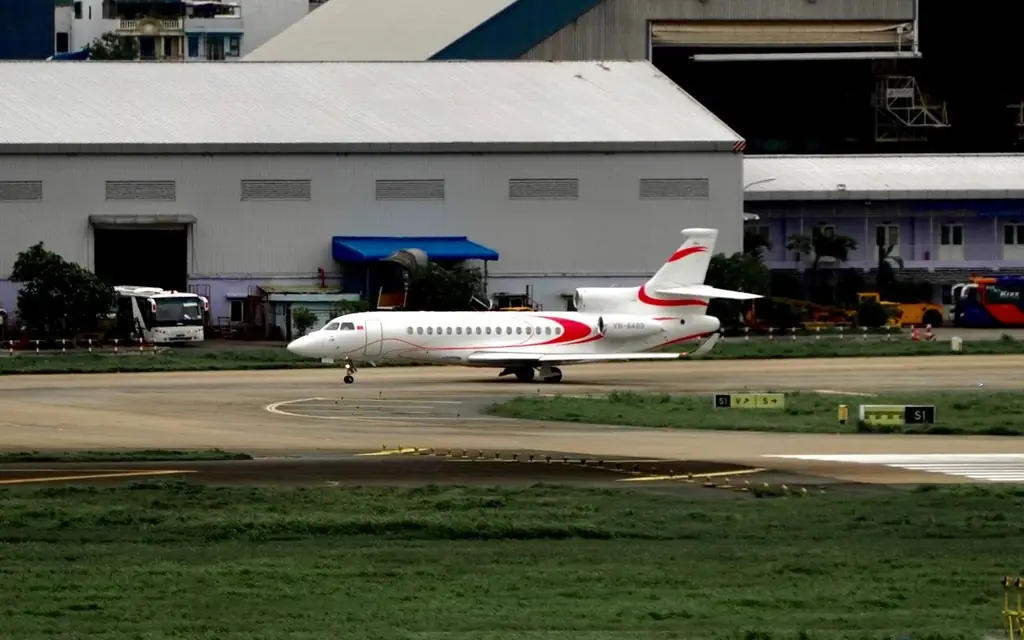
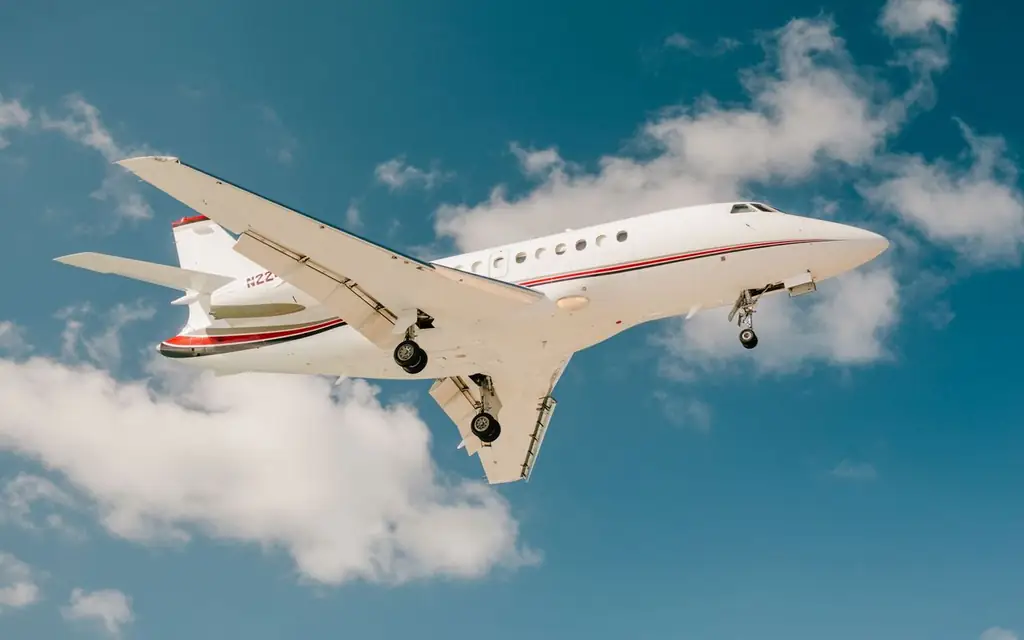
It depends on the size of the traveling party. Small groups such as an individual athlete, a coaching staff or a scouting team fit a business jet chartered under Part 135. Full rosters with staff and equipment usually need airliner-size aircraft operated by a Part 121 supplemental carrier, which brings different security and handling rules.
The dividing line in US regulations is clear. Under the FAA's definitions in 14 CFR 110.2, an on-demand charter in an airplane is limited to a passenger-seat configuration of 30 seats or fewer (excluding crew seats) and a payload capacity of 7,500 pounds or less. Charter operations with aircraft above those limits are classed as supplemental operations.
Section 119.21 then sets which rulebook applies: on-demand operations are conducted under Part 135, and supplemental operations under Part 121, the same family of rules that governs airlines. So a 12-seat jet for a coaching staff and a 180-seat airliner for the whole club are both "charters", but they are operated under different certificates and standards.
| Traveling party | Typical aircraft | Operating rules | Screening and handling |
|---|---|---|---|
| 1 to 15 people (athlete, staff, scouts) | Light to large-cabin business jet | Part 135 on-demand | FBO, private terminal |
| 16 to 30 people (small squad, academy) | Large-cabin jet or regional aircraft | Part 135 if within 30 seats and 7,500 lb payload | FBO or charter terminal |
| Full roster with staff and equipment | Narrowbody airliner | Part 121 supplemental | TSA program may apply; ramp-side bus boarding |
| Multiple teams or a tournament | Several aircraft or a widebody | Part 121 supplemental | Coordinated with airport and handler |
Team charter flights: the Part 121 side
Team charter flights for a full roster are usually sourced from carriers holding Part 121 supplemental authority, which operate airliners configured for charter work. The traveling party, cargo and equipment are planned together, because an equipment load for a team sport can be substantial: trunks of kit, medical supplies, video gear and sometimes food.

Payload is the hidden constraint. The 7,500-pound payload limit in the on-demand definition is easy to exceed with a roster plus equipment, even if the passenger count would fit a large business jet. That is one reason clubs move to airliners even for moderate-size groups. Our guide to private jet baggage limits shows how quickly bags fill a business jet's hold.
The other constraint is the airport. Airliner charters need a runway, ramp and handling capable of the aircraft type, and the charter terminal or ramp-side boarding area has to be arranged in advance. That planning sits with the operator and its handler, who hold operational control.
Do charter teams go through TSA screening?
Sometimes, depending on aircraft size and where passengers board. Under 49 CFR 1544.101, an aircraft operator must carry out a TSA-approved security program for private charter operations where passengers board from or deplane into a sterile area, or where the aircraft has a maximum certificated takeoff weight over 45,500 kg (100,309.3 pounds) or 61 or more passenger seats, except certain government charters.

In practice, a full-roster airliner charter often falls inside that program, and the operator works with TSA and the airport on how the party and their bags are screened, including at ramp-side boarding points. A business jet charter for a small group usually departs from an FBO under a lighter regime.
For the travel manager, the takeaway is timing. Screening steps are planned with the operator in advance, so build them into the departure schedule rather than discovering them at the ramp.
When does a private jet for sports teams make sense?
Business jets fill specific roles in sports travel even when the main roster flies on an airliner:

- Star or injured players traveling separately for treatment, appearances or family reasons.
- Coaching staff and executives scouting, recruiting or attending league meetings on tight schedules.
- Individual-sport athletes in golf, tennis, motorsport or combat sports, whose "team" is a handful of people.
- Advance and logistics crews who need to reach the next venue before the team.
These flights are usually arranged under Part 135. Our explainer on Part 135 vs Part 91 covers why it matters that a charter is flown by a properly certificated operator, and the FAA's Part 135 certification page describes the certificates involved. LimousineWorldwideDirectory.com acts as the booking agent for these charters and never as the operator; every flight is operated by a licensed air carrier.
For groups between a business jet and a full roster, see our guide to group private jet charter, written for weddings, retreats and incentive groups but built on the same aircraft-sizing logic.
How do teams move from the aircraft to the hotel?
Once the aircraft is on the ground, the team becomes a convoy. A typical setup has four elements:
- Motorcoaches for the roster. Full-size coaches, sometimes allowed to meet the aircraft at a ramp-side point when the airport and handler permit it, so players walk straight from the steps to the bus.
- SUVs or sedans for leadership. Head coach, general manager, owners or VIP guests travel separately, often on a different schedule. A dedicated executive chauffeur car per principal is common.
- Vans for staff and short-notice moves. A Sprinter van with driver handles medical staff, media teams and anyone who needs to leave before or after the main group.
- Equipment transport. A cargo van or truck takes the kit directly to the venue, so it is in the locker room before the team arrives.
Each element has its own driver briefing, route and timing, coordinated by a single dispatcher who talks to the team's travel manager. Our event transportation desk runs exactly this kind of multi-vehicle movement, and our private jet car service handles the FBO and planeside side for smaller parties.
Need cars, SUVs or vans for a team movement? Price them here; the fare is confirmed before you pay.
What rules apply to the bus side of sports team travel?
Sports team travel by coach is regulated too, and the driver's hours shape long road trips. Under the federal hours-of-service rule for passenger-carrying vehicles, 49 CFR 395.5, a driver may not drive more than 10 hours following 8 consecutive hours off duty, or drive at all after being on duty 15 hours following those 8 hours off. Weekly limits of 60 hours in 7 days or 70 hours in 8 days also apply, depending on the carrier's schedule.
Those limits matter when a team plans a bus trip after a night game. A late kickoff, a post-game media session and a long drive to the next city can push a single driver past the limit, so the coach company may need a second driver or a relief point. Plan it at the booking stage. For long point-to-point drives in cars and SUVs, our long distance car service applies the same thinking to driver rest.
Security and privacy on the ground
Team movements attract fans and media, and some players have their own protection arrangements. Good practice includes:
- No team branding on vehicles unless the club wants it, and no name boards for individual players at public arrival points.
- Controlled pickup points agreed with the airport, hotel and venue, rather than the public curb.
- Driver briefings that include the team security lead's contacts, the movement plan and confidentiality expectations.
- Separate vehicles for players with their own security, coordinated with that detail. Our guide to executive protection and the chauffeur explains how drivers and protection officers work together.
High-profile individuals often prefer a dedicated VIP chauffeur for personal movements during a road trip, separate from the team's convoy.
A sample away-trip timeline
Here is how a mid-season away game might run for a full roster:
- Two to three weeks ahead: the travel manager confirms the charter with the carrier, the hotel, the coach company and the car desk. Passenger manifest and equipment estimate go to the operator.
- Day before departure: final manifest; drivers receive the movement sheet with ramp access details, hotel entrance and venue loading dock.
- Departure day: coaches stage at the team facility; equipment truck leaves first; executives travel in separate cars.
- Arrival: coaches meet the aircraft where the airport permits, or at the charter terminal; SUVs for leadership; the equipment goes straight to the venue.
- Game day: coaches run the hotel-to-venue shuttle; a van stays on standby for medical or late moves.
- Post-game: coaches wait at the venue's team exit; departure timed to the aircraft's slot and crew duty limits.
The same pattern scales down for an individual athlete: one car at the FBO, one at the hotel, and a standby vehicle on match day.
How to book team aviation and ground transport with us
For business jet legs, send the party size, dates and route through our private jet charter request; we source aircraft from licensed operators and coordinate the ground plan around them. For airliner-size charters, we can coordinate the ground program around the carrier your team has contracted.
For the cars, SUVs and vans, price each movement on the online booker, where the exact fare is shown before you confirm, or set up a corporate car service account for season-long travel. Vehicles and drivers come from vetted, licensed and commercially insured local operators in our worldwide directory, with one desk handling confirmation and invoicing across cities, which is the idea behind our global chauffeur service. For teams touring internationally, our travel trade desk works directly with team travel agencies. The desk is open 24/7 on (877) 860-3388.
Ground cancellations follow our standard terms: more than 72 hours before pickup free; inside 72 hours 10%; inside 48 hours 50%; inside 24 hours or a no-show 100%.
Sources
- eCFR: 14 CFR 110.2, definitions of on-demand and supplemental operations
- eCFR: 14 CFR 119.21, which rules apply to each kind of operation
- eCFR: 49 CFR 1544.101, TSA aircraft operator security programs
- eCFR: 49 CFR 395.5, maximum driving time for passenger-carrying vehicles
- Federal Aviation Administration: Part 135 air carrier and operator certification
Frequently asked questions
Do professional sports teams fly on private jets?
Full rosters usually fly on airliner-size charter aircraft rather than business jets, because the traveling party and equipment exceed business jet capacity. Under FAA definitions, on-demand charters are limited to 30 passenger seats and 7,500 pounds of payload; larger charters are supplemental operations under Part 121. Business jets are used for smaller groups, executives and individual athletes.
What is the difference between Part 135 and Part 121 team charters?
Part 135 covers on-demand charters in smaller aircraft, typically business jets, within the 30-seat and 7,500-pound payload limits. Part 121 covers airline-style operations, including supplemental charters in larger aircraft. A full team on a narrowbody airliner flies under Part 121; a coaching staff on a midsize jet flies under Part 135.
Do charter flights for teams go through TSA security?
They can. Federal rules require a TSA security program for private charters that board from or into a sterile area, or that use aircraft over 45,500 kg maximum takeoff weight or with 61 or more seats. Many full-roster charters fall into that category, so screening is planned with the operator and airport in advance.
Can the team bus drive onto the ramp next to the aircraft?
Sometimes, with permission from the airport and the ground handler, and under their escort and security rules. Some airports allow ramp-side boarding for charter flights by arrangement; others require the team to use a charter terminal or gate. The operator's handler confirms what is possible, and the coach company follows those instructions.
How many hours can a team bus driver drive?
Under federal hours-of-service rules for passenger-carrying vehicles, a driver may drive up to 10 hours after 8 consecutive hours off duty, and may not drive after 15 hours on duty. Weekly limits of 60 or 70 hours also apply. For late games and long overnight drives, plan a second driver at booking.
Can you arrange cars for a team in several cities?
Yes. We book cars, SUVs, Sprinter vans and coordinate group movements in cities across our worldwide directory, with one desk confirming and invoicing every leg. Share the season or tour schedule and we set up each city's ground program with a vetted, licensed local operator, plus a Sprinter van with driver wherever smaller groups need to move.
Plan the rest of the trip
 Booking WorldwideOnline travel agency · our travel desk partner
Your chauffeur is booked here. Book the rest of the trip in one place: hotels, flights, resorts, activities, packages and car rentals in every country.
Plan your trip