
 United StatesJFK
 MexicoMEX
 BrazilGRU
 ArgentinaEZE
 ChileSCL
 ColombiaBOG
 PeruLIM
 PanamaPTY
 Costa RicaSJO
 Dominican RepublicPUJ
 JamaicaMBJ
 BahamasNAS
 BarbadosBGI
 United KingdomLHR
 IrelandDUB
 FranceCDG
 GermanyFRA
 NetherlandsAMS
 BelgiumBRU
 SwitzerlandZRH
 AustriaVIE
 ItalyFCO
 SpainMAD
 PortugalLIS
 GreeceATH
 TurkeyIST
 DenmarkCPH
 SwedenARN
 NorwayOSL
 FinlandHEL
 PolandWAW
 Czech RepublicPRG
 HungaryBUD
 IcelandKEF
 United Arab EmiratesDXB
 QatarDOH
 Saudi ArabiaRUH
 IsraelTLV
 EgyptCAI
 MoroccoCMN
 South AfricaJNB
 KenyaNBO
 NigeriaLOS
 IndiaDEL
 PakistanLHE
 Sri LankaCMB
 SingaporeSIN
 MalaysiaKUL
 ThailandBKK
 VietnamSGN
 PhilippinesMNL
 IndonesiaCGK
 Hong KongHKG
 ChinaPVG
 TaiwanTPE
 JapanHND
 South KoreaICN
 AustraliaSYD
 New ZealandAKL
The road to the Cape of Good Hope ends at a car park, and everything after that is done on foot or on rails. A chauffeur can bring you to the tip of the Cape Peninsula without the stress of narrow coast roads and a full car park, but the last stretch is yours: a funicular ride, a staircase, and a wind that often decides how long you stay.
This guide is for anyone planning a Cape Point private tour with driver or simply working out how to get to the Cape of Good Hope and Cape Point by car. It covers the two routes from Cape Town, the park gates, what the funicular does, where the baboons and the weather catch visitors out, and how to build a day that does not feel rushed. The itinerary links to our guides to Boulders Beach, Table Mountain and the V&A Waterfront, all of which share the same peninsula.
Where exactly is Cape Point, and is it the same as the Cape of Good Hope?
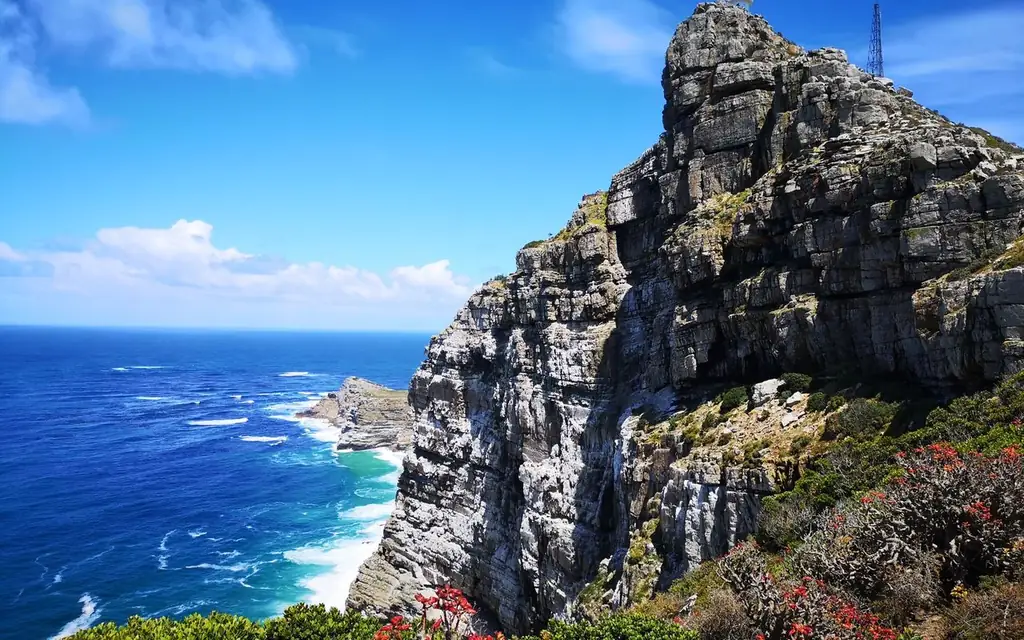
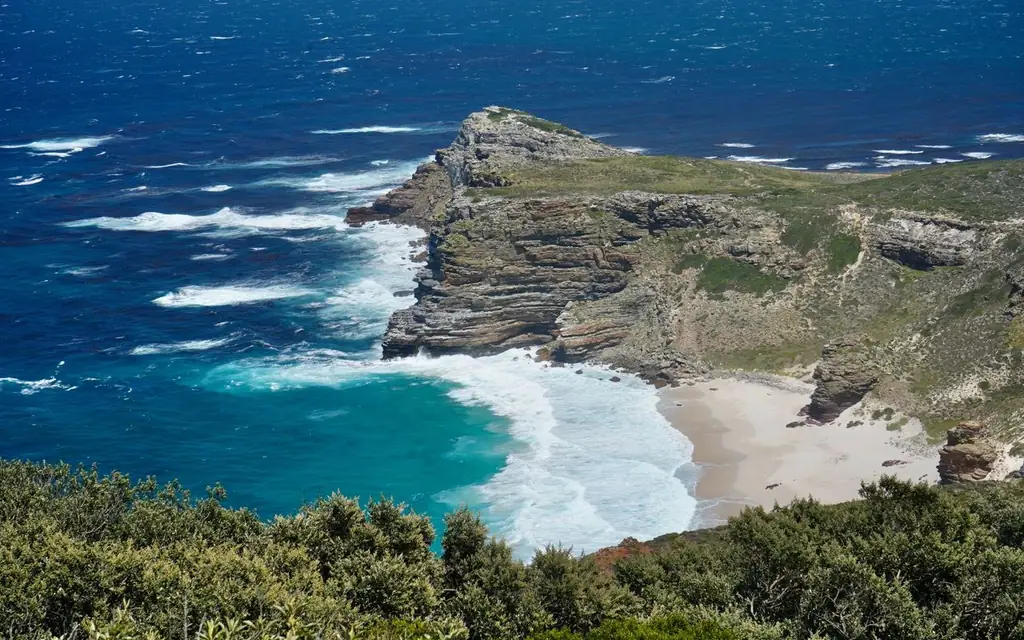
They are neighboring places inside one fenced reserve at the southern tip of Table Mountain National Park. Cape Point holds the lighthouses and the funicular; the Cape of Good Hope is the rocky headland a few kilometers west with the famous signboard. Both sit about 65 km (40 miles) south of central Cape Town.
Visitors often use the names interchangeably, and the park does little to discourage it, because both sit inside the same gate. The Cape of Good Hope section is the only part of the national park that is fenced, and SANParks lists eland, red hartebeest, bontebok and zebra among the animals you may see from the road. Cape Point is the dramatic cliff with the lighthouses, rising more than 200 meters above the sea according to the funicular operator.
SANParks notes that Dias first called this coast the Cape of Storms in 1488, and that Sir Francis Drake called it the fairest cape in the world in 1580. The Buffelsfontein Visitor Centre, early inside the reserve, explains which plants and animals to look for in each season and is a useful stop before the long drive down to the point.
Two practical notes before you plan the day. First, the whole reserve is a protected area with its own gate, hours and tickets; you cannot treat it as a roadside viewpoint. Second, the lighthouse and funicular are run by a separate operator inside the park, so the park gate ticket and the funicular ticket are two different things. The official pages are SANParks for the park and the Cape Point funicular site.
Gate times, tickets and what the park expects
The park operates on daylight hours, and the hours change with the season. The Cape Point operator publishes park entry from 06:00 to 18:00 between October and March and from 07:00 to 17:00 between April and September, with exit by sunset. The funicular runs on a shorter day, from 09:00 to 17:30 in the same summer months and 09:00 to 17:00 in winter. Those are the published hours as of 2026; confirm them on the day you travel, because SANParks states that times may change without notice.
Tickets are bought at the gate or through SANParks, with separate international and South African tariffs; Wild Card holders show identification at the gate. We do not quote the gate fee because it changes, and the tariff page is the only reliable source. What matters for planning is that the gate queue is part of the schedule, and on a summer weekend morning or public holiday it can cost you a quarter of an hour or more.
Two rules from SANParks are worth knowing in advance. There is no swimming at Dias Beach because of strong rip currents, and there are no lifeguards on any of the beaches at Cape Point. Free guided walks run on selected Sunday mornings during the year, and the park also lists hiking, cycling, picnicking and angling, several of which need permits. A private chauffeur does not replace a ranger or licensed guide; if you want a botanical or birding walk, ask SANParks about guided options.
Two routes from Cape Town, and why the chauffeur picks one for you
There is no single best road. SANParks describes two main approaches to Cape Point.
The first goes down the False Bay side, along the M4 through Muizenberg, Fish Hoek and Simon's Town, then on through Miller's Point. It is the more historical route, with the naval town and the railway running beside the sea, and it is the one that passes the penguin colony. The second goes down the Atlantic side and across the peninsula, using the M64 and M65 via Ou Kaapse Weg, Sun Valley, Kommetjie and Scarborough. A third variation takes the M6 over Chapman's Peak Drive between Hout Bay and Noordhoek.
Chapman's Peak Drive is a toll road with a live status page at chapmanspeakdrive.co.za. SANParks notes that it is sometimes temporarily closed for repairs after heavy rain, with signage posted before the road. If the drive is shut, the chauffeur simply takes the Ou Kaapse Weg crossing instead, which adds a little time but no drama.
Our usual pattern is to go out one way and come back the other. A morning departure from the city travels down the Atlantic coast over Chapman's Peak, spends the middle of the day inside the reserve, and returns through Simon's Town so the afternoon stop at the penguins is on the way. The reverse is also sensible if the morning is cloudy on the Atlantic side. The drive from central Cape Town to the Cape Point gate is about 65 km (40 miles) and normally takes 1 hour 15 minutes to 1 hour 30 minutes without delays. From Cape Town International Airport it is roughly 80 km (50 miles), usually 1 hour 30 minutes.
What actually happens at Cape Point
The road from the gate to the point runs several kilometers through low fynbos, and the car park is at the base of the headland. From there you have three ways up. You can walk the path to the old lighthouse, which is the long climb. You can take the Flying Dutchman funicular, which carries you to the steps of the new lighthouse and the lookouts above, so the final stretch is a short staircase. Or you can combine them, riding up and walking down along the ledges.
The two lighthouses are not the same building. The old one sits on rocky ledges below the summit; the newer one is higher and still fully functional, according to SANParks. The funicular site offers a free VoiceMap audio tour, and mobile signal is limited in the park, so download it before you leave the city.
Allow at least two hours at the point itself. The wind can be fierce and the cliffs are exposed, so bring a windbreaker even in January. The walk down to the old lighthouse is short but steep, so visitors with limited mobility should take the funicular both ways.
For lunch, the Two Oceans Restaurant at the point operates roughly 11:00 to 17:30 in summer and 11:00 to 17:00 in winter according to the funicular operator, with ocean views and a take-away food shop. In busy months, book a table or eat early; the car park fills by midday.
Baboons, wind and weather: the honest warnings
Chacma baboons live in the reserve and in the surrounding suburbs. They are not tame. The sensible rule is to keep food out of sight, windows shut when the car is stopped, and never feed them. A chauffeur will park where the baboons are least interested, but they can open a door handle as well as anyone.

The wind is the other recurring factor, and mist can sit on the point for hours even when Cape Town is sunny, so a clear view is never guaranteed. Check the funicular site on the morning, since strong wind can affect operations. If the cloud is low, swap the order of the day: do the penguins and Simon's Town first, and give the point another hour to clear.
Comparing the ways to reach Cape Point
| Option | Time from central Cape Town | Cost note | Who it suits |
|---|---|---|---|
| Rental car, self-drive | 1 h 15 to 1 h 30 each way | Lowest for a group, plus fuel, tolls and gate parking | Confident drivers who want to stay flexible |
| Shared day tour by minibus | 8 to 9 hours round trip | Per-seat price, fixed stops | Solo travelers on a tight schedule |
| Rideshare | 1 h 15 each way | Surge-priced, and return fares are hard to find at the point | One-way trips only |
| Private chauffeur, half day | 5 to 6 hours | Fixed fare via the booker | Couples and families who want a quiet start |
| Private chauffeur, full day | 8 to 9 hours | Fixed fare via the booker | Groups combining Cape Point, Boulders and Chapman's Peak |
Self-drive is the lower-cost choice, and for confident drivers used to left-hand traffic it is the most flexible. The chauffeur option wins when you are arriving with luggage after a long flight, want wine at lunch, or travel in a group large enough for a Luxury SUV or Executive Sprinter. For a solo traveler on a tight budget, a shared tour is the honest answer. Rideshare is the weakest option because signal at the point is poor and a return car is unreliable.
A chauffeured full day: Cape Town, Cape Point and the penguins
The sequence below fits an eight to nine hour day and respects the gate hours.
07:30 to 08:00, depart the hotel. Leave the city early so you arrive at the gate soon after it opens and ahead of the tour buses. Atlantic route over Chapman's Peak if the road is open.
09:15 to 10:00, Cape of Good Hope signboard. Take the signboard photograph before the groups arrive, and walk the short boardwalk to the viewpoint.
10:00 to 12:30, Cape Point. Funicular, lighthouse, cliff path. Download the audio tour while you still have signal.
12:30 to 13:30, lunch. At the point, or leave the reserve and eat in Simon's Town.
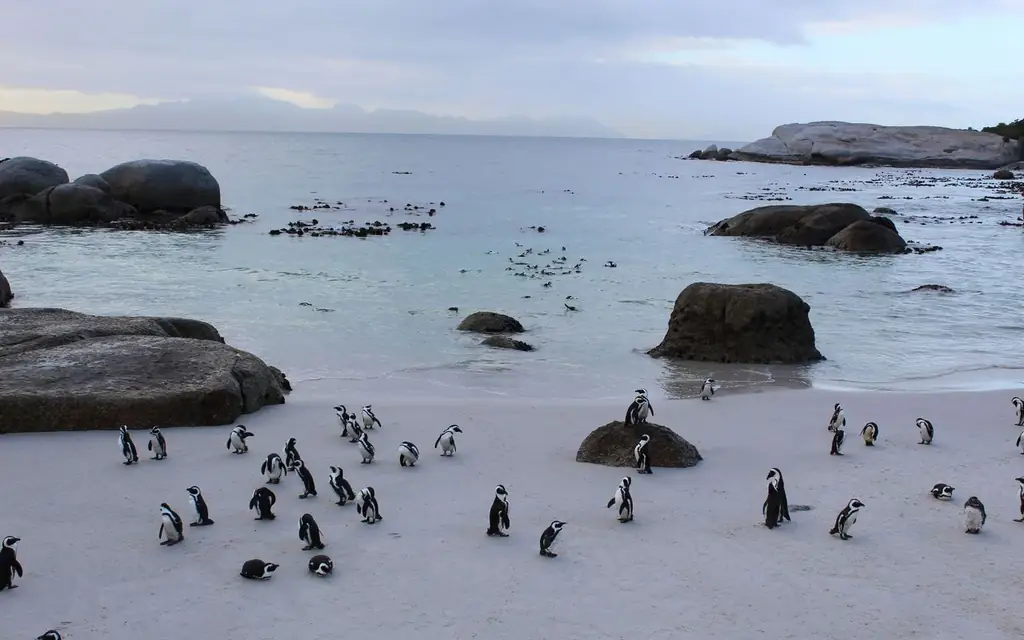
14:00 to 15:00, Boulders Beach. The African penguin colony is 25 km (16 miles) up the False Bay coast, roughly 35 minutes from the point. Our guide to Boulders Beach covers the boardwalks and the parking limits.
15:00 to 17:00, return through Fish Hoek and Muizenberg. The coastal M4 is slow at the end of the day, so the chauffeur may switch to the M3 at Muizenberg to reach the city.
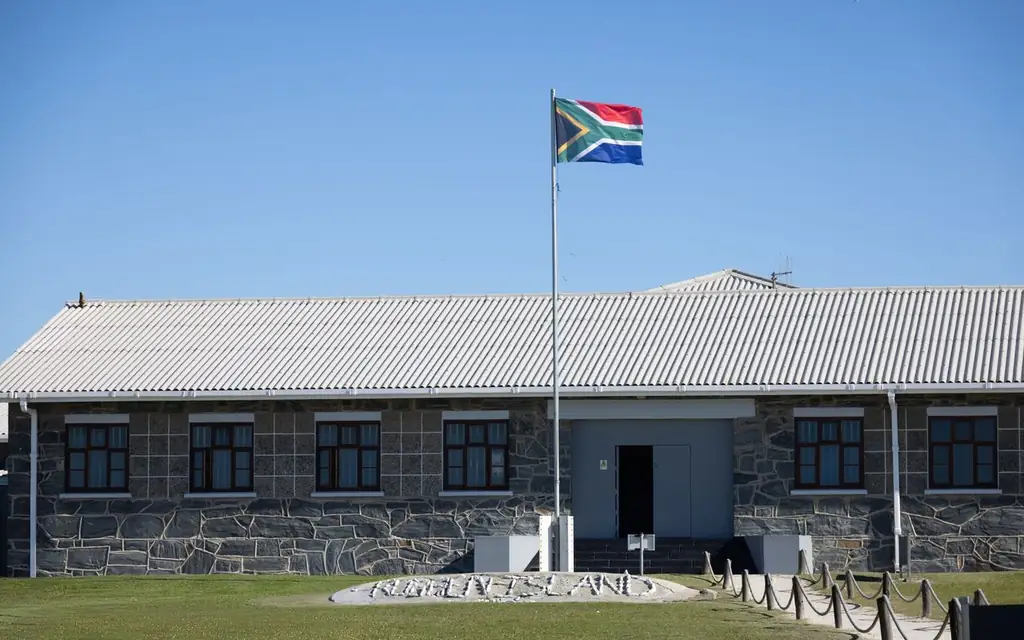
For a longer stay, pair this day with a morning on Table Mountain and an evening at the V&A Waterfront, or add a trip across Table Bay to Robben Island. More ideas for guided days are on our private tours with driver page.
Accessibility and who should skip the stairs
The funicular is the accessible heart of the visit, but the staircase beyond it is steep and the cliff paths are uneven. Tell the desk at booking if anyone needs step-free access so the chauffeur plans the stops. Folding wheelchairs fit in the vehicle, and child, toddler and booster seats are available on request. Wear flat shoes with grip; the rock is wet when mist rolls in.

Chauffeur logistics: luggage, timing and the gate
A chauffeur handles three things you would otherwise manage yourself: the gate paperwork (SANParks asks visitors to complete a registration and indemnity form before arrival), your luggage if you are coming straight from the airport, and the return, where the car is waiting rather than depending on a rideshare from a point with weak signal.
Book the driver for the hours you want, not for a distance, so a fogged-in point does not cut the day short. Private tours are booked, confirmed and invoiced by LimousineWorldwideDirectory.com, and the local operator who drives is vetted, licensed and commercially insured. Start your plan from the Cape Town chauffeur service page, and see our Africa directory for other regional guides. For arrivals, the airports hub explains how flight tracking and waiting time work on pickups.
Frequently asked questions
How far is Cape Point from Cape Town by car?
It is about 65 km (40 miles) from central Cape Town and takes roughly 1 hour 15 minutes to 1 hour 30 minutes without traffic. From Cape Town International Airport it is about 80 km (50 miles), usually 1 hour 30 minutes. Weekend traffic and the gate queue can add 30 minutes.
What time does the Cape of Good Hope reserve open?
Cape Point publishes park entry from 06:00 to 18:00 between October and March and 07:00 to 17:00 between April and September, as of 2026. The funicular starts at 09:00. Times can change without notice, so check SANParks before you go.
Can a car drive all the way to the lighthouse?
No. Cars stop at the large car park at the base of the headland. From there you walk up or ride the Flying Dutchman funicular. The old lighthouse is lower and reachable on foot; the new lighthouse is reached by the funicular and a short staircase.
Do I need to book tickets in advance?
Gate tickets are sold at the entrance and through SANParks, with international and South African tariffs. Booking the funicular is optional in quiet months but sensible in December and January. Your chauffeur can carry your gate documents, and the desk will confirm what is needed when you book.
Is Chapman's Peak Drive open?
It is usually open but is a toll road that closes after heavy rain or rockfall. The operator publishes a live road status page, and signs warn you before the closure point. If it is shut, the drive over Ou Kaapse Weg adds a little time.
Can we swim at Cape Point?
SANParks does not allow swimming at Dias Beach because of strong rip currents, and there are no lifeguards on any Cape Point beach. Swimming at Boulders Beach is allowed and is a better choice for children.
How long should we allow for the full day?
Allow eight to nine hours from the hotel if you also visit Boulders Beach. A half day to the point alone is about five to six hours. In fog or high wind, give the day an extra hour.
Can a tourist office arrange this for visitors?
Official tourist offices, tourism boards and visitor centers can book chauffeur services for their visitors with LimousineWorldwideDirectory.com through a trade account. See the tourist offices for the Middle East and Africa page.