
 United StatesJFK
 MexicoMEX
 BrazilGRU
 ArgentinaEZE
 ChileSCL
 ColombiaBOG
 PeruLIM
 PanamaPTY
 Costa RicaSJO
 Dominican RepublicPUJ
 JamaicaMBJ
 BahamasNAS
 BarbadosBGI
 United KingdomLHR
 IrelandDUB
 FranceCDG
 GermanyFRA
 NetherlandsAMS
 BelgiumBRU
 SwitzerlandZRH
 AustriaVIE
 ItalyFCO
 SpainMAD
 PortugalLIS
 GreeceATH
 TurkeyIST
 DenmarkCPH
 SwedenARN
 NorwayOSL
 FinlandHEL
 PolandWAW
 Czech RepublicPRG
 HungaryBUD
 IcelandKEF
 United Arab EmiratesDXB
 QatarDOH
 Saudi ArabiaRUH
 IsraelTLV
 EgyptCAI
 MoroccoCMN
 South AfricaJNB
 KenyaNBO
 NigeriaLOS
 IndiaDEL
 PakistanLHE
 Sri LankaCMB
 SingaporeSIN
 MalaysiaKUL
 ThailandBKK
 VietnamSGN
 PhilippinesMNL
 IndonesiaCGK
 Hong KongHKG
 ChinaPVG
 TaiwanTPE
 JapanHND
 South KoreaICN
 AustraliaSYD
 New ZealandAKL
Most visitors treat the V&A Waterfront as one place. On the ground it is ten, and the district you ask the driver to stop at decides whether the next hour is a short walk or a long one. A guest heading to the Robben Island ferry needs a different door from one heading to a contemporary art museum, and both are different again from a family bound for the aquarium.
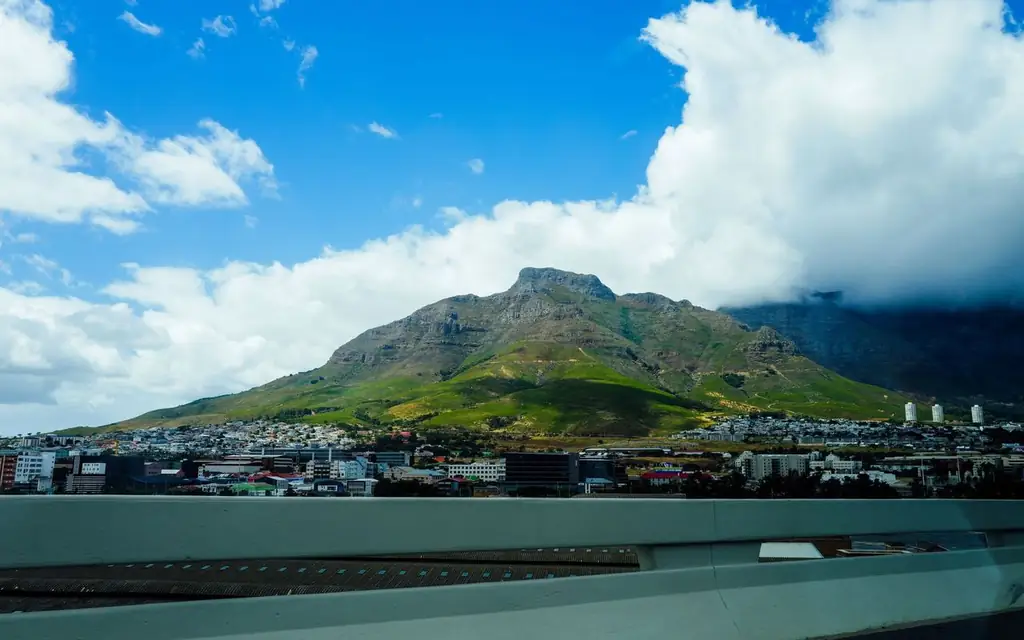
This is a guide to the V&A Waterfront private tour with driver and to how to get to the V&A Waterfront by car, written for people who will be dropped off rather than parking. It sits in the center of a cluster of Cape Town guides: Table Mountain is the mountain behind it, Robben Island is the ferry from it, and Cape Point is the long drive south.
Where does a private car drop you at the V&A Waterfront?
Ask for the district, not the address. The Clock Tower District serves the Robben Island ferry, the Silo District serves Zeitz MOCAA, and the Dry Dock District serves the Two Oceans Aquarium and the Watershed. The Waterfront is roughly 3 km (2 miles) from central Cape Town and about 20 km (12 miles) from the airport.
The V&A Waterfront describes itself as a walkable neighborhood of ten districts, each with its own character: Quays, Clock Tower, Dry Dock, Granger Bay, Portswood Ridge, Pierhead, Silo, Canal, South Arm and the working harbor edge beyond. Between them are swing bridges, a working harbor and a lot of tourists, so a short transfer can feel long when the wrong door is chosen.
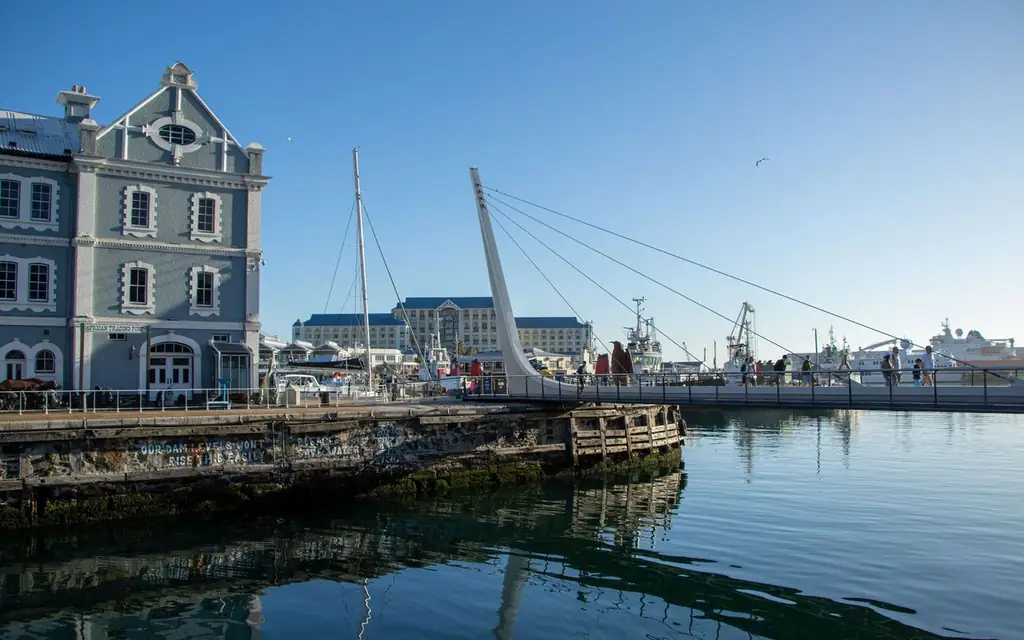
For first-time guests the Clock Tower District is the natural anchor. The red tower has stood at the entrance to the Alfred Basin since 1882, and the original clock, made in Edinburgh, still runs. The Nelson Mandela Gateway to Robben Island sits here, along with harbor-facing restaurants and the crossing toward the Silo. If you tell the chauffeur you are going to the Gateway, you will be dropped within sight of the departure point.
The ten districts, in the order a visitor actually meets them
You do not need to memorize the list. You need to know the five that matter.
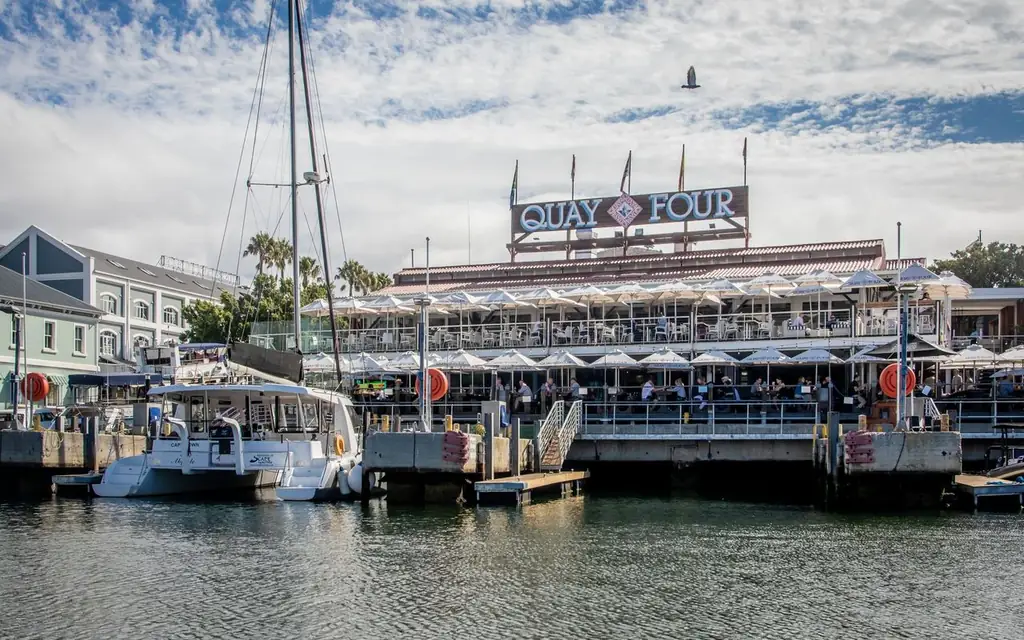
Quays District. This is where Victoria Wharf has traded since 1992, along with Nobel Square, the amphitheater and the waterline. It is the most concentrated part of the neighborhood and the place most people mean when they say they are going to the Waterfront. Harbor sunset cruises leave from the jetties here every evening, according to the Waterfront.
Clock Tower District. Gateway, Clock Tower, restaurants. The pace is calm in the morning and busy from about 10:00.
Dry Dock District. A working dry dock where boats are repaired, with the Two Oceans Aquarium beside it. The aquarium lists daily opening from 09:30 to 18:00. Next door the Watershed holds more than 150 independent makers, designers and traders.
Silo District. The decommissioned grain silo now houses Zeitz MOCAA, described by the Waterfront as the world's largest museum of contemporary African art. Check the museum's own site for hours, because they are not published on its home page.
Canal District. Battery Park, Waterway House and Signal View connect the Waterfront to the city. It is useful as a parking or drop-off alternative when the main roads are congested.
The remaining districts, Portswood Ridge, Pierhead, Granger Bay and South Arm, are quieter, with offices, the swing bridge, and working vessels. They matter for business guests with meetings in the Ridge or Breakwater buildings, but they are not usually the reason for a visit.
Roadworks, Dock Road and weekend arrivals
At the time of writing, the V&A Waterfront's own notice warns that roadworks moving toward Ebenezer Circle may cause delays on Dock Road. Its suggestion is to use the free weekend parking at Silo, Clock Tower or Battery Park and to approach via Helen Suzman Boulevard into Portswood Road where possible.
That advice is aimed at drivers who park, but it is also useful to a chauffeur plan. A good rule is to avoid Dock Road at mid-morning on Saturdays and during the Christmas and New Year weeks, and to let the driver choose the approach on the day. If your destination is the aquarium, expect the drop-off to be slower than for the Gateway. If your destination is a meeting in a Portswood Ridge office, the Portswood Road approach is usually the cleaner one. The Waterfront posts live updates on its site; the chauffeur checks the same page before departing.
Chauffeurs wait in a designated lot or circle the area rather than parking at the curb. Message your driver when you finish and they return to the same drop-off point. Typical waiting time for a restaurant lunch is 90 minutes to two hours, and the fare is quoted before you book.
Robben Island starts here: timing the Gateway
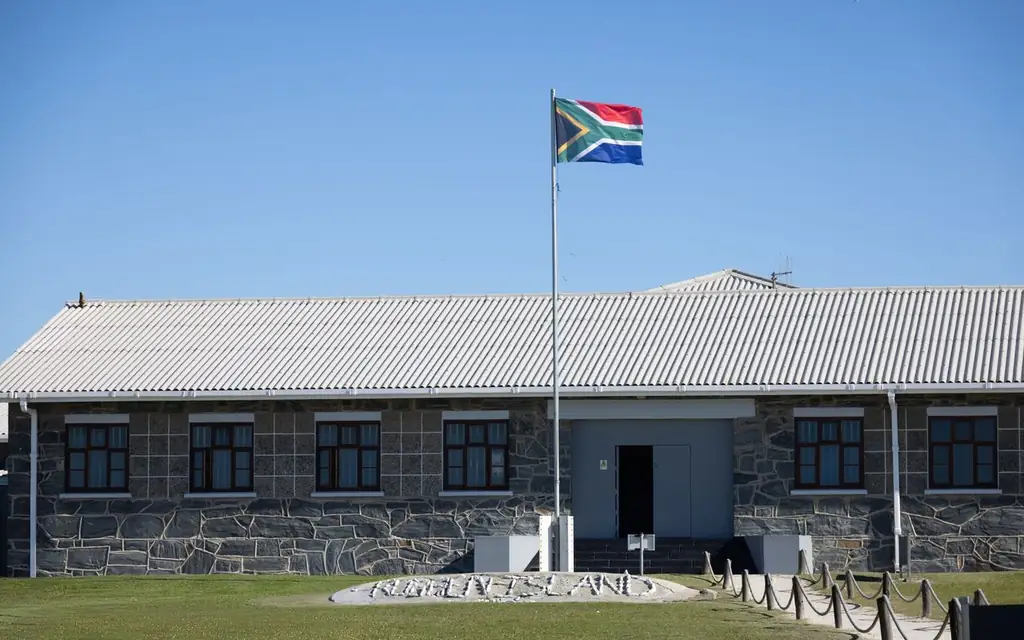
The ferries to Robben Island leave from the Nelson Mandela Gateway, and this is the single most time-sensitive reason to visit. The museum lists sailings at 09:00, 11:00, 13:00 and 15:00, and says the tour takes three and a half hours including the crossing. Our separate guide to Robben Island covers the booking and what to expect, but the Waterfront angle is simple: arrive at the Gateway with time in hand, not on the departure minute.
For a morning sailing, a good plan is to leave the hotel 75 minutes ahead of the boarding time. That leaves room for a slow Dock Road, a toilet stop and a coffee. For an afternoon sailing, lunch in the Clock Tower District first, then walk. The chauffeur returns for you at the Gateway when the boat is due back, not when you booked, which matters when the sea delays the return.
Zeitz MOCAA, the aquarium and the Watershed: what deserves an hour
Not everything at the Waterfront deserves your time. Three places do.

The Two Oceans Aquarium has a kelp forest exhibit described by the operator as one of its biggest attractions, and it is easily done in a morning. Tickets are sold online through the aquarium's shop.
Zeitz MOCAA fills the old silo, at South Arm Road in the Silo District. Plan on a block of time if you care about contemporary African art, and check the museum's current exhibitions and opening days on its own site before you go.
The Watershed is the best browsing hour for gifts, with more than 150 independent makers under one roof. It is also where a car-free hour makes sense: the chauffeur waits, you walk, and your bags stay in the vehicle instead of on your arm.
Shopping at Victoria Wharf and the Alfred Mall is unremarkable by international standards and entirely sensible for forgotten items, but it is not a reason to schedule a transfer.
Evening at the harbor
The Waterfront changes after four o'clock. Sunset cruises depart from the jetties, the restaurants fill and the swing bridges can pause foot and vehicle traffic when vessels pass, a short delay worth building into a dinner reservation. Book dinner for 19:00 or later to avoid the first rush, and tell the chauffeur whether you want to leave by the Portswood Road side or the Dock Road side when you finish.
Late in the evening, the city becomes less predictable, and a booked car is the simplest way to return to a hotel in Camps Bay, the Atlantic Seaboard or Constantia. Chauffeurs from our directory are experienced professionals driving late-model, fully maintained vehicles, and the fare is fixed and quoted before you book. They are not a security service. Guests who travel with their own security team simply coordinate arrival points with the desk beforehand.
Choosing the day, the season and the hour
The Waterfront is busiest on weekends, public holidays and through the December and January school holidays, when the car approaches thicken and the Gateway fills early. A weekday morning is the calm option: the Clock Tower District is quiet before about 10:00, the aquarium has space, and the Dock Road approach is at its easiest.
Weather sets the order of the day more than the calendar does. In summer, the strong southeasterly wind can make the harbor edge unpleasant in the afternoon and can interrupt the Table Mountain cableway, so schedule the mountain first and the harbor second if the forecast is windy. In winter, cold fronts bring rain and a lower mood to the harbor, which suits the aquarium, the Watershed and a long museum visit. Autumn and spring are the most comfortable seasons for walking between districts.
If you are arriving on an overnight flight, do not schedule the Gateway for the same morning. A late breakfast in the Quays, a slow walk to the Clock Tower and an afternoon Robben Island sailing is kinder than a rushed 09:00 boat.
Comparing the ways to reach the Waterfront

| Option | Time to the Waterfront | Cost note | Who it suits |
|---|---|---|---|
| MyCiTi bus | Varies by route | Lowest, needs a myconnect card | Budget travelers on route |
| Walking from the city | About 30 minutes from the Foreshore | Free | Fit visitors in daylight |
| Metered taxi | 10 minutes from the center | Metered | Short hops from nearby hotels |
| Rideshare | 10 to 35 minutes | Surge-priced at peaks | Quick one-way trips |
| Hotel shuttle | Varies | Often free for guests | Guests of Waterfront hotels |
| Private chauffeur | 20 to 35 minutes from the airport | Fixed fare via the booker | Arrivals, groups, business guests |
For one traveler staying near a MyCiTi stop, the bus is the better choice and costs far less. The chauffeur makes sense for airport arrivals with luggage, families with strollers and children, groups of four or more, and anyone with a fixed Robben Island sailing. MyCiTi has its own journey planner on the MyCiTi site, which is where to check routes.
From the airport and the city: how the transfer works
Cape Town International Airport is about 20 km (12 miles) from the Waterfront, usually 20 to 35 minutes depending on the N2 and the foreshore. Flight tracking is standard on airport pickups, with 60 minutes of free waiting after landing on international arrivals and 30 minutes on domestic arrivals. A name-board meet-and-greet in arrivals is available as an add-on. Child, toddler and booster seats are available on request.
From a city hotel the transfer is short, so the question is the return rather than the outbound. Most guests ask for a pick-up at an agreed hour, with the chauffeur flexible by 15 minutes. For a longer stay, compare this with the Cape Town chauffeur service page and the airports hub.
Two plans: a half day and a full day
Half day (about four hours). Start at 09:00 with the Gateway sailing if you are going to Robben Island, otherwise begin at the aquarium. Lunch in the Clock Tower District. Finish at the Watershed. The chauffeur returns you to the hotel by 14:00.
Full day. Start at the Waterfront at 08:30 for a coffee at the Clock Tower, then take the 09:00 or 11:00 Robben Island sailing. Lunch after the return, then a drive to the Table Mountain cableway for late afternoon, using our Table Mountain guide to check the wind and queue. Dinner back at the harbor. Wine drinkers can use the next day for Stellenbosch.
For anything longer, see the private tours with driver page, the Africa directory and the attractions hub.
Access, families and practical notes
Most of the Waterfront is flat, paved and step-free, and the chauffeur can usually drop within a short roll of the Clock Tower and Victoria Wharf entrances. Swing bridges can add a wait. If anyone in your party uses a wheelchair, tell the desk so the driver picks the nearest level approach. Strollers are easy here. The sun is strong in summer, and the wind off the harbor is stronger than it looks, so carry a light layer.
The official guide to what is on is the V&A Waterfront site, which lists attractions, events and parking updates.
Frequently asked questions
How far is the V&A Waterfront from Cape Town International Airport?
About 20 km (12 miles), normally 20 to 35 minutes by car. Weekday peaks on the N2 and the foreshore add time, so the chauffeur tracks your flight and the traffic.
Where do I get dropped for the Robben Island ferry?
At the Nelson Mandela Gateway in the Clock Tower District. Tell the driver the Gateway, not the Waterfront, and aim to arrive well before the sailing time shown on your ticket.
Is parking free at the V&A Waterfront?
The Waterfront's own notice mentions free weekend parking at Silo, Clock Tower and Battery Park. Rules change, so check the current page. With a chauffeur you are dropped at the door and the car waits elsewhere.
What time does the Two Oceans Aquarium open?
The aquarium lists daily opening from 09:30 to 18:00. Tickets are sold online. Confirm the hours before you travel.
Can a car wait while I shop?
Yes. The chauffeur waits nearby and comes back to the same drop-off on your message. Allow 90 minutes to two hours for a lunch stop.
Is the Waterfront safe in the evening?
It is a busy, managed neighborhood with a steady crowd until late. For the ride back to a hotel, a booked car is the simplest option. Our drivers are chauffeurs, not security guards.
Can I combine the Waterfront with Table Mountain?
Yes, and it is the classic Cape Town day. Check wind conditions in the morning, ride the cableway when it is running and return for dinner at the harbor. Our Table Mountain guide has the details.
Do tourist offices book through you?
Official tourist offices and visitor centers can book chauffeur services for their visitors with LimousineWorldwideDirectory.com through a trade account.