
 United StatesJFK
 MexicoMEX
 BrazilGRU
 ArgentinaEZE
 ChileSCL
 ColombiaBOG
 PeruLIM
 PanamaPTY
 Costa RicaSJO
 Dominican RepublicPUJ
 JamaicaMBJ
 BahamasNAS
 BarbadosBGI
 United KingdomLHR
 IrelandDUB
 FranceCDG
 GermanyFRA
 NetherlandsAMS
 BelgiumBRU
 SwitzerlandZRH
 AustriaVIE
 ItalyFCO
 SpainMAD
 PortugalLIS
 GreeceATH
 TurkeyIST
 DenmarkCPH
 SwedenARN
 NorwayOSL
 FinlandHEL
 PolandWAW
 Czech RepublicPRG
 HungaryBUD
 IcelandKEF
 United Arab EmiratesDXB
 QatarDOH
 Saudi ArabiaRUH
 IsraelTLV
 EgyptCAI
 MoroccoCMN
 South AfricaJNB
 KenyaNBO
 NigeriaLOS
 IndiaDEL
 PakistanLHE
 Sri LankaCMB
 SingaporeSIN
 MalaysiaKUL
 ThailandBKK
 VietnamSGN
 PhilippinesMNL
 IndonesiaCGK
 Hong KongHKG
 ChinaPVG
 TaiwanTPE
 JapanHND
 South KoreaICN
 AustraliaSYD
 New ZealandAKL
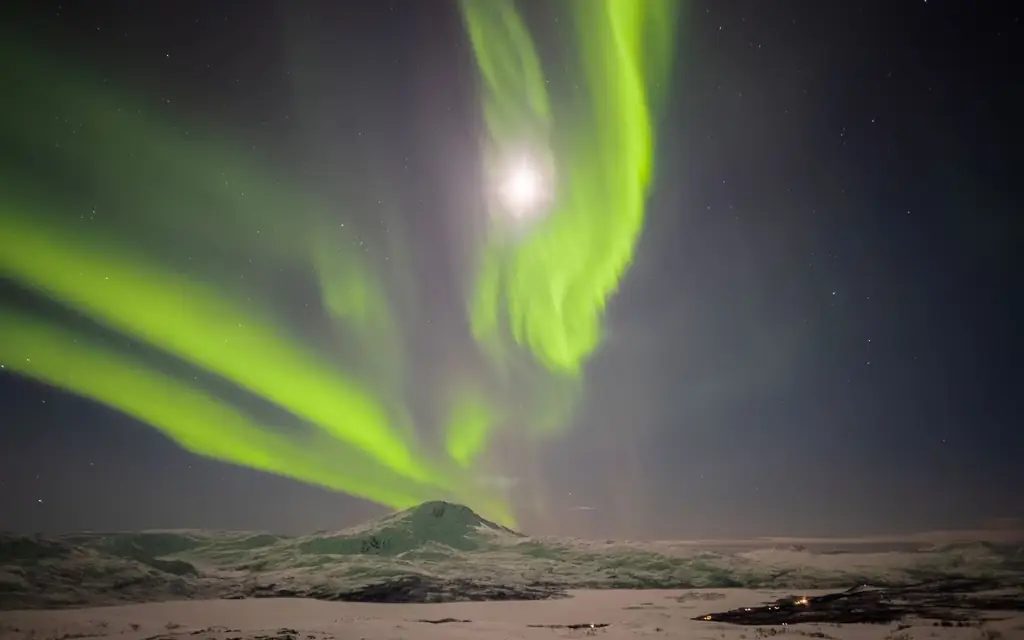
You cannot buy a ticket to the northern lights, and no operator can promise them. What you can control in Tromso is mobility: the town sits at about 69.6 degrees north, inside the zone where the aurora appears often, and the question on any given night is where the sky is clear. A northern lights in Tromso private tour with driver is built around that single fact. Instead of boarding a coach on a fixed loop, you leave from your hotel in a private vehicle, with a chauffeur who watches the forecast and drives toward the gap in the cloud. This guide covers the season, the realistic routes, the border question, the winter driving conditions and what a chauffeur can and cannot do.
Is there a ticket or booking for the northern lights in Tromso?
No. The aurora is a natural event, free to watch, and nobody can guarantee it. Visit Tromso says the lights may be visible from late August to early April, provided the sky is dark and clear. What you book is the transport and, if you want one, a guide to find a good spot.
The official Visit Tromso northern lights page gives the season and links to tours, photography advice and clothing guidance. Its message matches what experienced operators say: darkness and clear sky are essential, and the city's latitude is the reason it is a reliable base.
Most visitors choose between three formats: a large coach tour, a small-group minibus, or a private vehicle. The coach is the lowest-cost option and the least flexible. The private vehicle costs more per person for small parties but removes the schedule, the shared photo stops and the wait for other passengers. Our booker shows a fixed fare for your exact pickup and vehicle before you confirm.
What three conditions produce a good aurora night?
The aurora needs darkness, solar activity and clear sky. Of the three, clear sky is the one that changes by the hour, which is why mobility matters.
- Darkness. Between late August and early April, nights are long enough. The midnight sun in late spring and summer rules out the aurora, while the polar night in midwinter gives long dark hours but weak daylight for daytime sightseeing.
- Solar activity. Forecasters measure this with the Kp index, from 0 to 9. At Tromso's latitude, even modest activity can produce visible lights, which is the reason the region is so reliable compared with southern Scandinavia.
- Clear sky. Cloud blocks the aurora completely, and strong activity behind overcast is invisible. The Norwegian Meteorological Institute's Yr aurora forecast for Tromso reports aurora activity alongside cloud cover; on a typical night it is the cloud figure that decides.
A good chauffeur operator treats the evening as a decision tree: check cloud maps, pick a direction, drive, reassess. That works best in a vehicle you control.
Why choose a private car for a Tromso aurora night?
Tromso tours do not follow a fixed route. Guides choose a direction from the latest forecast and often decide as late as possible. Some drive more than 200 km or cross into Finland or Sweden, and tours typically run five to eight hours depending on conditions. Visit Tromso also lists private northern lights chases run by local operators. A private vehicle gives you three advantages: you decide when to leave, you decide when to give up on one spot and move, and you can stop for the hot drink, the toilet or the photograph when you want to.
It also suits particular guests: families with children who tire early, photographers with heavy kit, couples who want quiet, and executives who want to combine the night with a late dinner. Be clear about what you are buying, though. A chauffeur drives and can suggest viewing areas. If you want a trained aurora guide with camera help and a thermal suit, book that operator separately and use the private car to reach the meeting point, or to chase the same lights independently.
No sighting is guaranteed. Clear nights vary from week to week, and a clear forecast can turn in an hour. Plan two or three nights if the aurora is the main reason for your trip.
Where does a driver go from Tromso?
These are typical destinations; the actual choice depends on cloud on the night.
| Area | Distance from Tromso | Typical time | Why go |
|---|---|---|---|
| Ersfjordbotn, Kvaløya | about 20 km (12 mi) | 25 to 30 minutes | closest dark spot, often tried first |
| Sommarøy and the island coast | about 50 km (31 mi) | 1 hour | open coastal horizon |
| Lyngen coast and Skibotn | about 150 km (93 mi) | 2 to 2.5 hours | drier inland pocket, mountain backdrop |
| Finnish border area | about 230 km (143 mi) | 3 to 3.5 hours | the fallback when the coast is overcast |
The first two are the usual short chase. The longer drives are for nights when the coast is covered in cloud while inland skies are clear, which is common because the mountains stop weather coming across. Your chauffeur will check road conditions: winter roads in northern Norway are well serviced, but snow, wind and ice can slow travel, and mountain passes sometimes close.
Remember that driving times quoted here assume normal conditions; in snow they stretch. A late return at three in the morning is normal on a long chase, so tell your driver how late you want to go.
Do you need a passport for a border chase?
Yes, carry it. Some Tromso tours cross into Finland, and the route may extend toward Sweden. Norway, Finland and Sweden are all in the Schengen area, which usually means no routine border checks, but travelers should still carry passports or national ID, and non-EU visitors must meet the entry rules for the Schengen area. Check the current requirements for your nationality on your government travel advice page before you fly; entry rules, including the EU Entry/Exit System and ETIAS, are changing, and we do not give visa advice. Cross-border trips also follow local cabotage rules, which means the vehicle and chauffeur arrangements for a trip into Finland are confirmed at booking.
How does a private aurora evening usually run?
A typical evening, for a night with a forecast of clear sky inland:
- 17:00 to 18:30. Pickup at the hotel. Dress warmly; a thermal layer, insulated boots, hat and gloves matter more than the vehicle.
- 18:30 to 20:00. Drive toward the first target, with a stop for a hot drink. The chauffeur reviews cloud and aurora forecasts and may revise the target.
- 20:00 to 23:00. Watch and photograph. Aurora displays come and go in waves, and an hour of waiting can be followed by ten minutes of spectacular movement.
- 23:00 to 01:00. If the display fades, either move to a second spot or return.
- Return. Typically between midnight and 02:00 for short chases, later for long ones.
Ask for the vehicle to be warm on return and allow time for rest the next morning.
When is the best time of year?
The official season runs from late August to early April, but the experience varies.
- September and early October. Mild by Arctic standards, with darkness arriving earlier each week. Roads are clear, and the aurora can be paired with autumn colors. Moonlight can be a factor in either direction.
- November to January. The polar night: the sun stays below the horizon for several weeks around midwinter, which makes for long dark hours but short, dim daytime. Temperatures are lowest, snow is deepest and the driving is most demanding.
- February and March. A popular balance: long dark nights, returning daylight and good snow cover for photographs. Many travelers choose this period.
- Late March to early April. The season is closing; nights are shorter, but the weather is often clearer.
A bright full moon makes the sky pale but does not stop the lights. Most visitors prefer a darker sky for photographs, and clear forecasts matter more than the lunar phase.
Winter roads, tires and what a local driver knows
Northern Norway keeps its main roads open through the winter, but the surface is rarely bare. Expect compacted snow, ice, wind-blown drifts and, on the mountain sections, sudden whiteouts. Winter tires or studded tires are standard, speeds drop, and a journey that takes two hours in summer can take three. Convoy driving and short closures occur on exposed passes, and the road authority publishes conditions that a local operator checks before every departure.
Wildlife is the other hazard. Reindeer walk on roads, particularly toward Finland, and moose are present in valleys. A driver who knows the road reads the dark shapes at the verge early, which is a good reason not to hire a car and drive a long chase yourself on your first winter night in the Arctic. If your party includes children or elderly travelers, say so at booking so the chauffeur plans heated stops and an earlier return.
What should you wear and bring?
Cold, wind and long waits are the real enemies. Wear a base layer of wool or synthetic material, an insulating mid-layer, a windproof outer layer, a hat that covers the ears, liner gloves under insulated mitts, and boots with a warm sole. Hand and foot warmers help during long photographic waits. Bring a phone charger and a spare camera battery; cold drains batteries quickly. A tripod is essential for long exposures. Operators sometimes provide thermal suits, so ask before booking. Keep cameras inside the vehicle between shots to avoid condensation.
What can you do in Tromso by day?
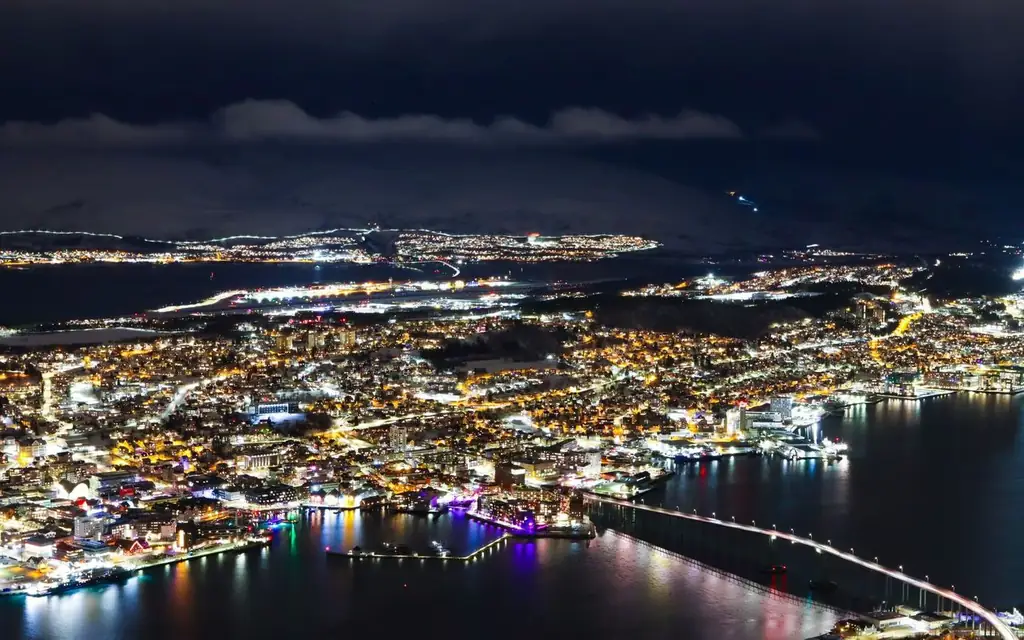
Because the dark hours are long, plan a quiet day. Take the cable car up Mount Storsteinen for a view of the island city, visit the Arctic Cathedral across the bridge, or drive along the fjords on Kvaløya. Our private tours with driver page explains how daytime sightseeing can be combined with an evening aurora chase.
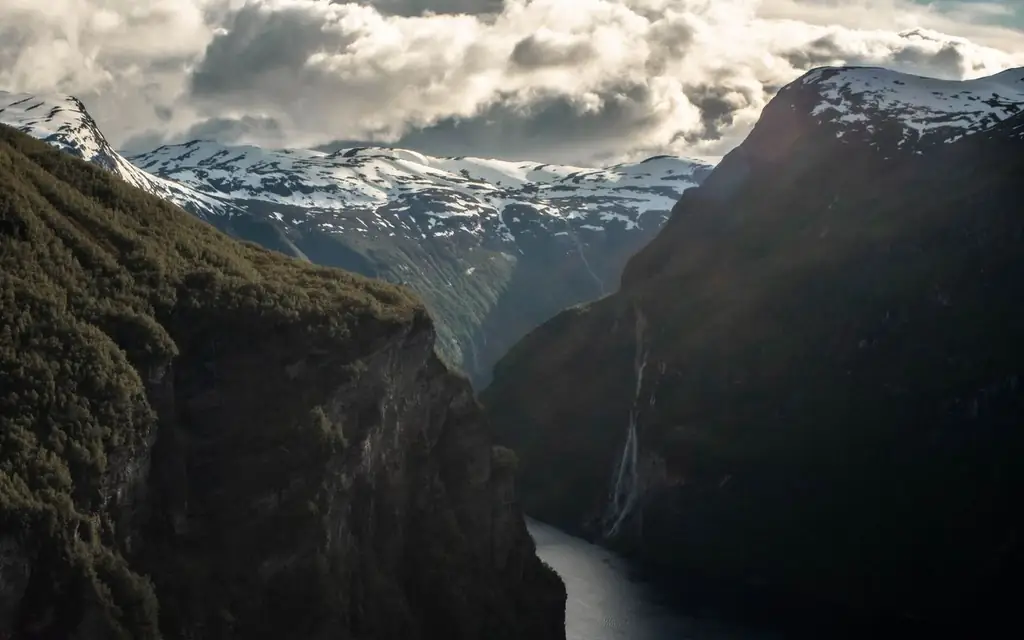
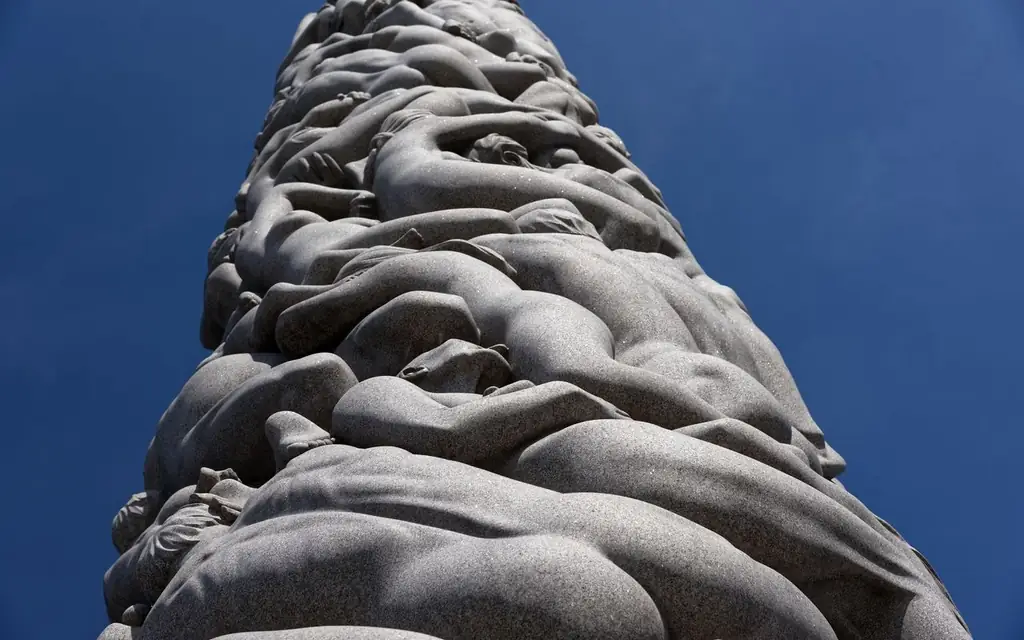
If your Norway trip extends south, the Geirangerfjord and Bryggen in Bergen are the classic fjord-country stops, and the Vigeland Sculpture Park in Oslo is the capital's easiest visit. For aurora seekers heading to Iceland, the Golden Circle and the Blue Lagoon are the usual pairings.
How do you get to Tromso and between the airport and town?
Tromso Airport (Langnes) is close to the center, about 5 km (3 mi) and roughly 10 minutes by car. Flights connect through Oslo and other Norwegian hubs. Direct international flights vary by season, so check your airline. Our airports hub explains how airport pickups work, and the airport limo service page covers flight tracking. For the wider regional map, see the Europe chauffeur directory.
Winter flights are sometimes delayed by weather, so flight tracking matters: if your plane is late, the pickup moves with it. For an arrival the same day as your aurora night, allow a buffer for check-in and dinner.
How do your options for seeing the aurora compare?
| Option | Typical length | Cost note | Best for |
|---|---|---|---|
| Large coach tour | 5 to 7 hours | lowest | budget travelers who accept a fixed route |
| Small-group minibus | 5 to 8 hours | mid | guided photography help |
| Self-drive hire car | flexible | rental plus fuel plus winter risk | confident winter drivers |
| Private chauffeur | flexible | fixed fare via the booker | families, photographers, privacy, flexibility |
The honest summary: a coach or minibus with a trained guide is the best-value way to see the lights if you are happy to follow their schedule. A chauffeur is the better choice when you want privacy, a long or late route, or a combination with dinner and hotel transfers. Self-driving in the dark on winter roads, unfamiliar with local conditions, is the option we advise against.
Frequently asked questions
When is the best time to see the northern lights in Tromso?
The official season runs from late August to early April. February and March are popular for the mix of long nights, snow and returning daylight. Clear sky matters more than the date.
How far do private drivers go to find clear sky?
Short chases go 20 to 50 km (12 to 31 mi). Longer ones go 150 km (93 mi) to the Lyngen coast and as far as 230 km (143 mi) to the Finnish border area. Your chauffeur decides from the cloud forecast.
Do I need a passport for a northern lights tour from Tromso?
Carry it. Some routes cross into Finland or Sweden, and entry rules apply to non-EU travelers. Check your government's travel advice.
Is the northern lights guaranteed in Tromso?
No. Nobody can promise the aurora. Plan more than one night where possible.
How long is a private aurora evening?
Usually five to eight hours, depending on distance and conditions, with returns often after midnight.
Can a chauffeur act as a guide?
A chauffeur drives and suggests viewing areas. Trained aurora guides, photographers and thermal suits are separate services; book them directly and use the car to reach them.
How far is Tromso Airport from the city?
About 5 km (3 mi), roughly 10 minutes by car. See our airport hub.
What should I wear for a night in the cold?
Thermal base layers, insulation, windproof outerwear, a warm hat, mittens and insulated boots. Bring spare camera batteries.